DonateMembershipVisit Heritage
  • Tūrangawaewae
    Places
  • Tira Māori
    Māori Heritage
  • Poutairangahia
    Archaeology
  • Rauemi
    Resources
  • Mō Tātou
    About Us
  • New Zealand Heritage List
  • Nominate and submit
  • Explore the List
  • National Historic Landmarks
  • Plaques
  • Rainbow List Project
  • Lost heritage
  • Visit Heritage
  • Our properties
  • Turnbull House Project
  • Collections
  • Shop
  • Tohu Whenua
  • Tira Māori
  • Conserving Māori heritage
  • Marae built heritage
  • Māori heritage on the List
  • Hinemihi—Te Hokinga Mai
  • What is archaeology?
  • Is there a site on my property?
  • What are my legal requirements?
  • Affecting an archaeological site
  • Declaring an archaeological site
  • Archaeology FAQs
  • Archaeology Digital Library
  • Archaeology guidelines and templates
  • Resources
  • Funding
  • Publications
  • Sustainable management guides
  • Disaster recovery
  • Podcasts & digital resources
  • Education Hub
  • Conservation plans
  • About
  • Board
  • Māori Heritage Council
  • Senior Staff
  • Offices
  • Contact us
  • Careers
  • Covenants
  • Fast-track
  • Corporate documents
  • Currently consulting on
  • Our submissions
  • News
  • Covid-19 response
Quick links
Rārangi Kōrero | The List
Explore the List
National Historic Landmarks
Ngā Manawhenua o Aotearoa me ōna Kōrero Tūturu
Quick links
Tapuwae
A Vision for Places of Māori Heritage
Funding for Māori Heritage
Resources
Quick links
Archaeological Authority Portal
Applying for an archaeological authority
Archaeology FAQs
Browse the most frequently asked questions about archaeological authorities and the archaeological process.
Quick links
Quick links
News
News Keep up to date with Heritage New Zealand Pouhere Taonga
Membership
Membership Find out more and sign up today
DonateMembershipVisit Heritage
  • Tūrangawaewae
    Places
  • Tira Māori
    Māori Heritage
  • Poutairangahia
    Archaeology
  • Rauemi
    Resources
  • Mō Tātou
    About Us
  • New Zealand Heritage List
  • Nominate and submit
  • Explore the List
  • National Historic Landmarks
  • Plaques
  • Rainbow List Project
  • Lost heritage
  • Visit Heritage
  • Our properties
  • Turnbull House Project
  • Collections
  • Shop
  • Tohu Whenua
  • Tira Māori
  • Conserving Māori heritage
  • Marae built heritage
  • Māori heritage on the List
  • Hinemihi—Te Hokinga Mai
  • What is archaeology?
  • Is there a site on my property?
  • What are my legal requirements?
  • Affecting an archaeological site
  • Declaring an archaeological site
  • Archaeology FAQs
  • Archaeology Digital Library
  • Archaeology guidelines and templates
  • Resources
  • Funding
  • Publications
  • Sustainable management guides
  • Disaster recovery
  • Podcasts & digital resources
  • Education Hub
  • Conservation plans
  • About
  • Board
  • Māori Heritage Council
  • Senior Staff
  • Offices
  • Contact us
  • Careers
  • Covenants
  • Fast-track
  • Corporate documents
  • Currently consulting on
  • Our submissions
  • News
  • Covid-19 response
Quick links
Rārangi Kōrero | The List
Explore the List
National Historic Landmarks
Ngā Manawhenua o Aotearoa me ōna Kōrero Tūturu
Quick links
Tapuwae
A Vision for Places of Māori Heritage
Funding for Māori Heritage
Resources
Quick links
Archaeological Authority Portal
Applying for an archaeological authority
Archaeology FAQs
Browse the most frequently asked questions about archaeological authorities and the archaeological process.
Quick links
Quick links
News
News Keep up to date with Heritage New Zealand Pouhere Taonga
Membership
Membership Find out more and sign up today
  • Nominate and submit
  • National Historic Landmarks
  • Nominate and submit
  • National Historic Landmarks
  • Conserving Māori heritage
  • Marae built heritage
  • Conserving Māori heritage
  • Marae built heritage
  • Archaeological authorities
  • Archaeology Digital Library
  • Archaeological authorities
  • Archaeology Digital Library
  • All resources
  • Publications
  • Funding
  • All resources
  • Publications
  • Funding
  • FAQs
  • FAQs
Follow us on:
Places
  • Nominate and submit
  • National Historic Landmarks
Tira Māori
  • Conserving Māori heritage
  • Marae built heritage
Archaeology
  • Archaeological authorities
  • Archaeology Digital Library
Resources
  • All resources
  • Publications
  • Funding
FAQs
  • FAQs
Follow us on
HomePrivacyTerms and conditionsAbout this site
© Heritage New Zealand Pouhere Taonga 2026.
 
Frankton Junction Railway Settlement Historic Area

Frankton, HAMILTON

Private

Historic Area

List No. 7014

Quick links:
List GalleryLocationDetails
This historic area was registered under the Historic Places Act 1993. This report includes text from the original Recommendation for Registration considered by the NZHPT Board at the time of registration.

GENERAL DESCRIPTION:
The Frankton Junction New Zealand Railways Settlement was established in the early 1920's to provide much needed accommodation for railways employees. The settlement's House Factory was the centre for North Island production of pre-cut, low cost, architecturally designed houses.

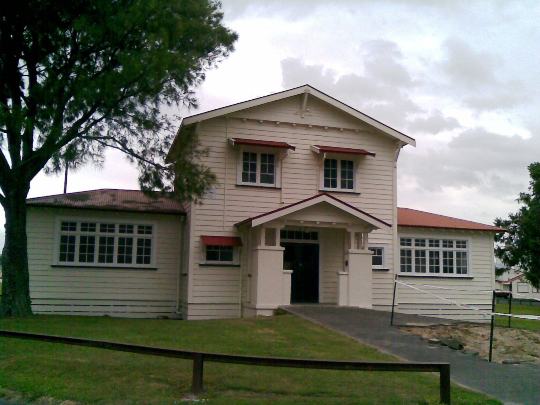
The Architectural Branch of the Railways Department was established late in 1919 to design and supervise the construction of what became known as "railway houses". George Troup planned the Frankton settlement with a central square, the Weka St Reserve, which now functions as a public park and recreation grounds. The Institute building, changing sheds and sports association are located in the park This is centrally linked by Kea St to a secondary, semi circular, recreational area containing the pavilion, the former tennis club courts (now a carpark) and bowling greens. A street grid was planned around these two key community spaces and the resulting blocks are split into one-quarter and one-fifth acre sections for the houses. This use of recreational space was loosely based on Ebenezer Howard's "garden suburb" ideology.

The House Factory started production in 1922 and over the following six years produced over 1300 staff houses, of preset design, plus other railway buildings. Many were constructed on site while others were transported to other North Island railway areas. While cutting started in July 1923, the main operations were not underway until 1924-25 by which time about 400 houses were being cut each year. The factory was enlarged in 1924. By 1926 there was a congestion of houses on the racks and some were placed at the disposal of the local bodies. The operation was deemed too efficient. In the factory's last year, 1928, only 50 houses were cut and following the closure of the factory in 1929 most plant equipment was moved from the site.

After the factory's closure, the Frankton Junction settlement continued to house railway employees.
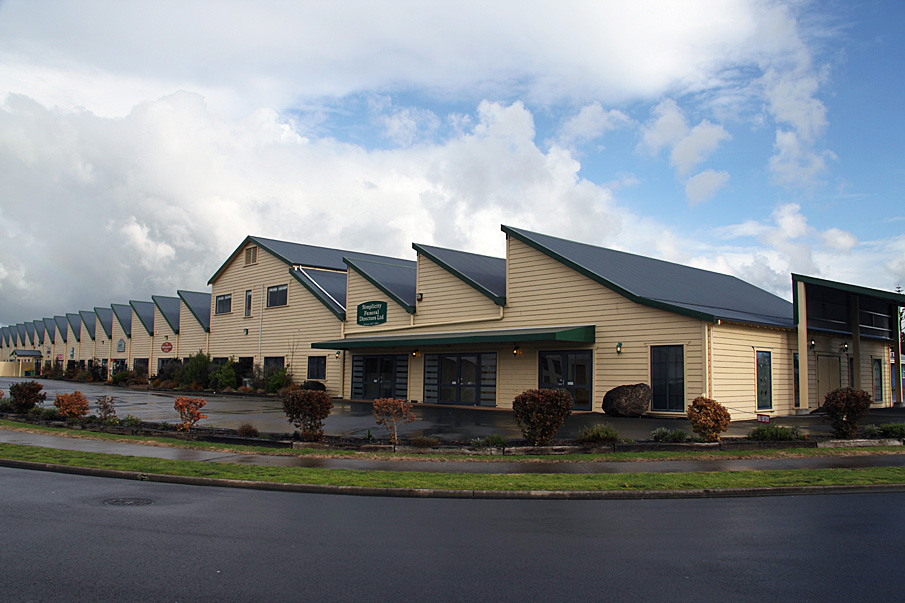
Frankton Junction Railway Settlement Historic Area, Frankton, Hamilton. Frankton Junction Railway House Factory | K Pfeiffer | 18/07/2010 | Heritage New Zealand Pouhere Taonga
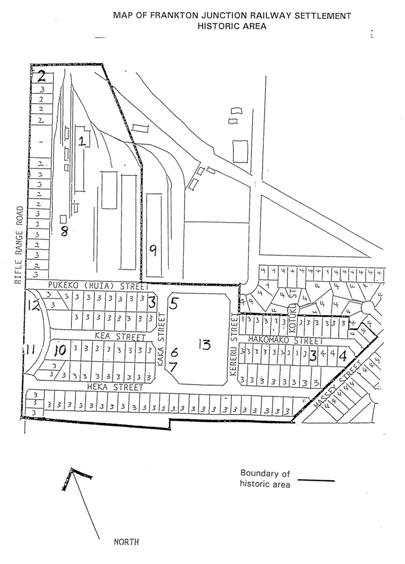
Frankton Junction Railway Settlement Historic Area, Frankton, Hamilton. Plan of Historic Area from registration report. | 27/10/1994 | Heritage New Zealand Pouhere Taonga
Frankton Junction Railway Settlement Historic Area, Frankton, Hamilton. Frankton Junction Railway House Factory | K Pfeiffer | 18/07/2010 | Heritage New Zealand Pouhere Taonga
Frankton Junction Railway Settlement Historic Area, Frankton, Hamilton. Plan of Historic Area from registration report. | 27/10/1994 | Heritage New Zealand Pouhere Taonga

List Entry Information

Overview

Status
Listed

List Entry Status
Historic Area

Access
Private/No Public Access

List Number
7014

Date Entered
27th October 1994

Date of Effect
27th October 1994

City/District Council
Hamilton City

Region
Waikato Region

Extent of List Entry

This area comprises the land within the city of Hamilton, and the structures on it, fronting Pukeko (Huia) St, Kea St, Weka St, Makomako St, Moa Cres, Kaka St, Kereru St, the east side of Rifle Range Rd and the north side of Massey St. Includes buildings and structures in Frankton Junction area, including railway house factory; factory constructed houses; and recreation facilities for community.

Detailed List Entry
Significance

Cultural Significance

This historic area was registered under the Historic Places Act 1993. This report includes text from the original Recommendation for Registration considered by the NZHPT Board at the time of registration. Cultural/Social: Due to the itinerant nature of railway work, a need for low cost housing developed especially in the years following WW 1. Together with architecturally designed houses, care was taken to provide for the social and cultural needs of the occupants. It was the first time an employer had provided both employment and permanent accommodation on a large scale in New Zealand. State housing was also introduced at Frankton Junction from 1942 under the Housing Construction Department.

Historic Significance

Historical Significance or Value This historic area was registered under the Historic Places Act 1993. This report includes text from the original Recommendation for Registration considered by the NZHPT Board at the time of registration. Historical: The Railways Department was established in 1880 but in was not until the late nineteenth century that railways assumed greater importance for transport and communication in New Zealand. A minister was appointed in 1895. The Frankton Junction Railway Settlement was established under the then Railways Minister, William Ferguson Massey and was the largest and most complete settlement in New Zealand erected under a single large scale scheme before the advent of state housing. It was one of ten major North Island settlements. Frankton Junction was chosen as the site of the House Factory because of its central location and the large number of employees resident in the area. The corporatisation of NZ Railways in 1988 saw many of the properties sold into private ownership. CONCLUSION: The Frankton Junction settlement represents a significant part of New Zealand Railways history. It was the first time an employer had provided employment plus accommodation for its staff. Designed by George Troup, the settlement was a forerunner in suburban planning with its low cost, architecturally designed housing together with recreational spaces. The House Factory adds significance to this area. Though it only operated for a few years, it produced most of the houses within the settlement and was the only one of its kind in the southern hemisphere at its peak production in the 1920's.

Physical Significance

This historic area was registered under the Historic Places Act 1993. This report includes text from the original Recommendation for Registration considered by the NZHPT Board at the time of registration. Architectural: The Architectural Branch of the Railways Department, headed by George Troup, was established specifically for this housing programme and operated from Frankton for 9 years (1920-29). Troup had a significant career with the Railways Department designing many railway stations, one of the most notable being the Dunedin Railway Station (1904-07). He was made a Fellow of the Royal Institute of British Architects in 1907 and was knighted for his services to New Zealand in 1937. The House Factory started its mass production of architecturally designed houses in 1923. Standardised parts were cut, numbered and marked for specific house types and complete house "bundles" were then sent by rail to the various sites near railway stations around the North Island. The pre-cut houses, accompanied by "drawings" covering every facet to aid the unskilled labourer, took 2 to 3 weeks to assemble. Over 100 pre-factory and factory cut houses of low cost, functional design were constructed. The Bungalow style of the timber houses and the variations on a single repetitive house plan make railway houses an important contribution to New Zealand's architectural history. Most of the houses remained unaltered until the 1980's when corporatisation saw many sold into private ownership. The Frankton scheme was a forerunner of modern suburban planning. Technological: The Frankton Junction settlement was the North Island centre of the railways housing scheme with operations on site including the Architectural Branch, the sawmill and the House Factory which began production in 1923. The House Factory was the only one of its kind in the southern hemisphere in the 1920's. Houses were designed and cut on site. Some were assembled at Frankton while others were railed to various locations around the North Island. It is a permanent reminder of an innovative and revolutionary concept in New Zealand's industrial heritage. Aesthetic: The Frankton Junction scheme was a combination of standardised house design, grid street planning and the use of large green spaces. Railways architect, George Troup, saw the need for open space and trees etc, near the place of work. He loosely based his design on Englishman, Ebenezer Howard's 'garden suburbs' ideology but adapted it to the Railway's needs.

Physical Description

This historic area was registered under the Historic Places Act 1993. The following text is from the original Recommendation for Registration considered by the NZHPT Board at the time of registration. Commercial buildings are encroaching on the area, especially in the north-east corner just outside the historic area boundary.

Reference

Information Sources

Kellaway, 1990

Laura Kellaway, Frankton Junction New Zealand Railways Settlement Conservation Area, New Zealand Historic Places Trust, (1990), (Edited and prepared by Julia Gatley and Paula van Raalte.)

Report Written By

A copy of the original report is available from the NZHPT Northern region office Please note that entry on the New Zealand Heritage List/Rarangi Korero identifies only the heritage values of the property concerned, and should not be construed as advice on the state of the property, or as a comment of its soundness or safety, including in regard to earthquake risk, safety in the event of fire, or insanitary conditions.

Further Information

Current Usages

Former Usages

General Usage:: Accommodation

Specific Usage: House

General Usage:: Civic Facilities

Specific Usage: Hall, Community

General Usage:: Manufacturing

Specific Usage: Factory/workshop

Themes

North Island Main Trunk Line

Web Links

Overview

Status

Listed

List Entry Status

Historic Area

Access

Private/No Public Access

List Number

7014

Date Entered

27th October 1994

Date of Effect

27th October 1994

City/District Council

Hamilton City

Region

Waikato Region

Extent of List Entry

This area comprises the land within the city of Hamilton, and the structures on it, fronting Pukeko (Huia) St, Kea St, Weka St, Makomako St, Moa Cres, Kaka St, Kereru St, the east side of Rifle Range Rd and the north side of Massey St. Includes buildings and structures in Frankton Junction area, including railway house factory; factory constructed houses; and recreation facilities for community.

Status

Listed

List Entry Status

Historic Area

Access

Private/No Public Access

List Number

7014

Date Entered

27th October 1994

Date of Effect

27th October 1994

City/District Council

Hamilton City

Region

Waikato Region

Extent of List Entry

This area comprises the land within the city of Hamilton, and the structures on it, fronting Pukeko (Huia) St, Kea St, Weka St, Makomako St, Moa Cres, Kaka St, Kereru St, the east side of Rifle Range Rd and the north side of Massey St. Includes buildings and structures in Frankton Junction area, including railway house factory; factory constructed houses; and recreation facilities for community.

Significance

Why is this place significant?

Cultural Significance

This historic area was registered under the Historic Places Act 1993. This report includes text from the original Recommendation for Registration considered by the NZHPT Board at the time of registration. Cultural/Social: Due to the itinerant nature of railway work, a need for low cost housing developed especially in the years following WW 1. Together with architecturally designed houses, care was taken to provide for the social and cultural needs of the occupants. It was the first time an employer had provided both employment and permanent accommodation on a large scale in New Zealand. State housing was also introduced at Frankton Junction from 1942 under the Housing Construction Department.

Historic Significance

Historical Significance or Value This historic area was registered under the Historic Places Act 1993. This report includes text from the original Recommendation for Registration considered by the NZHPT Board at the time of registration. Historical: The Railways Department was established in 1880 but in was not until the late nineteenth century that railways assumed greater importance for transport and communication in New Zealand. A minister was appointed in 1895. The Frankton Junction Railway Settlement was established under the then Railways Minister, William Ferguson Massey and was the largest and most complete settlement in New Zealand erected under a single large scale scheme before the advent of state housing. It was one of ten major North Island settlements. Frankton Junction was chosen as the site of the House Factory because of its central location and the large number of employees resident in the area. The corporatisation of NZ Railways in 1988 saw many of the properties sold into private ownership. CONCLUSION: The Frankton Junction settlement represents a significant part of New Zealand Railways history. It was the first time an employer had provided employment plus accommodation for its staff. Designed by George Troup, the settlement was a forerunner in suburban planning with its low cost, architecturally designed housing together with recreational spaces. The House Factory adds significance to this area. Though it only operated for a few years, it produced most of the houses within the settlement and was the only one of its kind in the southern hemisphere at its peak production in the 1920's.

Physical Significance

This historic area was registered under the Historic Places Act 1993. This report includes text from the original Recommendation for Registration considered by the NZHPT Board at the time of registration. Architectural: The Architectural Branch of the Railways Department, headed by George Troup, was established specifically for this housing programme and operated from Frankton for 9 years (1920-29). Troup had a significant career with the Railways Department designing many railway stations, one of the most notable being the Dunedin Railway Station (1904-07). He was made a Fellow of the Royal Institute of British Architects in 1907 and was knighted for his services to New Zealand in 1937. The House Factory started its mass production of architecturally designed houses in 1923. Standardised parts were cut, numbered and marked for specific house types and complete house "bundles" were then sent by rail to the various sites near railway stations around the North Island. The pre-cut houses, accompanied by "drawings" covering every facet to aid the unskilled labourer, took 2 to 3 weeks to assemble. Over 100 pre-factory and factory cut houses of low cost, functional design were constructed. The Bungalow style of the timber houses and the variations on a single repetitive house plan make railway houses an important contribution to New Zealand's architectural history. Most of the houses remained unaltered until the 1980's when corporatisation saw many sold into private ownership. The Frankton scheme was a forerunner of modern suburban planning. Technological: The Frankton Junction settlement was the North Island centre of the railways housing scheme with operations on site including the Architectural Branch, the sawmill and the House Factory which began production in 1923. The House Factory was the only one of its kind in the southern hemisphere in the 1920's. Houses were designed and cut on site. Some were assembled at Frankton while others were railed to various locations around the North Island. It is a permanent reminder of an innovative and revolutionary concept in New Zealand's industrial heritage. Aesthetic: The Frankton Junction scheme was a combination of standardised house design, grid street planning and the use of large green spaces. Railways architect, George Troup, saw the need for open space and trees etc, near the place of work. He loosely based his design on Englishman, Ebenezer Howard's 'garden suburbs' ideology but adapted it to the Railway's needs.

Why is this place significant?

Cultural Significance

This historic area was registered under the Historic Places Act 1993. This report includes text from the original Recommendation for Registration considered by the NZHPT Board at the time of registration. Cultural/Social: Due to the itinerant nature of railway work, a need for low cost housing developed especially in the years following WW 1. Together with architecturally designed houses, care was taken to provide for the social and cultural needs of the occupants. It was the first time an employer had provided both employment and permanent accommodation on a large scale in New Zealand. State housing was also introduced at Frankton Junction from 1942 under the Housing Construction Department.

Historic Significance

Historical Significance or Value This historic area was registered under the Historic Places Act 1993. This report includes text from the original Recommendation for Registration considered by the NZHPT Board at the time of registration. Historical: The Railways Department was established in 1880 but in was not until the late nineteenth century that railways assumed greater importance for transport and communication in New Zealand. A minister was appointed in 1895. The Frankton Junction Railway Settlement was established under the then Railways Minister, William Ferguson Massey and was the largest and most complete settlement in New Zealand erected under a single large scale scheme before the advent of state housing. It was one of ten major North Island settlements. Frankton Junction was chosen as the site of the House Factory because of its central location and the large number of employees resident in the area. The corporatisation of NZ Railways in 1988 saw many of the properties sold into private ownership. CONCLUSION: The Frankton Junction settlement represents a significant part of New Zealand Railways history. It was the first time an employer had provided employment plus accommodation for its staff. Designed by George Troup, the settlement was a forerunner in suburban planning with its low cost, architecturally designed housing together with recreational spaces. The House Factory adds significance to this area. Though it only operated for a few years, it produced most of the houses within the settlement and was the only one of its kind in the southern hemisphere at its peak production in the 1920's.

Physical Significance

This historic area was registered under the Historic Places Act 1993. This report includes text from the original Recommendation for Registration considered by the NZHPT Board at the time of registration. Architectural: The Architectural Branch of the Railways Department, headed by George Troup, was established specifically for this housing programme and operated from Frankton for 9 years (1920-29). Troup had a significant career with the Railways Department designing many railway stations, one of the most notable being the Dunedin Railway Station (1904-07). He was made a Fellow of the Royal Institute of British Architects in 1907 and was knighted for his services to New Zealand in 1937. The House Factory started its mass production of architecturally designed houses in 1923. Standardised parts were cut, numbered and marked for specific house types and complete house "bundles" were then sent by rail to the various sites near railway stations around the North Island. The pre-cut houses, accompanied by "drawings" covering every facet to aid the unskilled labourer, took 2 to 3 weeks to assemble. Over 100 pre-factory and factory cut houses of low cost, functional design were constructed. The Bungalow style of the timber houses and the variations on a single repetitive house plan make railway houses an important contribution to New Zealand's architectural history. Most of the houses remained unaltered until the 1980's when corporatisation saw many sold into private ownership. The Frankton scheme was a forerunner of modern suburban planning. Technological: The Frankton Junction settlement was the North Island centre of the railways housing scheme with operations on site including the Architectural Branch, the sawmill and the House Factory which began production in 1923. The House Factory was the only one of its kind in the southern hemisphere in the 1920's. Houses were designed and cut on site. Some were assembled at Frankton while others were railed to various locations around the North Island. It is a permanent reminder of an innovative and revolutionary concept in New Zealand's industrial heritage. Aesthetic: The Frankton Junction scheme was a combination of standardised house design, grid street planning and the use of large green spaces. Railways architect, George Troup, saw the need for open space and trees etc, near the place of work. He loosely based his design on Englishman, Ebenezer Howard's 'garden suburbs' ideology but adapted it to the Railway's needs.

Physical Description

This historic area was registered under the Historic Places Act 1993. The following text is from the original Recommendation for Registration considered by the NZHPT Board at the time of registration. Commercial buildings are encroaching on the area, especially in the north-east corner just outside the historic area boundary.

This historic area was registered under the Historic Places Act 1993. The following text is from the original Recommendation for Registration considered by the NZHPT Board at the time of registration. Commercial buildings are encroaching on the area, especially in the north-east corner just outside the historic area boundary.

Reference

Historical and Associated Iwi / Hapū / Whānau

Information Sources

Kellaway, 1990

Laura Kellaway, Frankton Junction New Zealand Railways Settlement Conservation Area, New Zealand Historic Places Trust, (1990), (Edited and prepared by Julia Gatley and Paula van Raalte.)

Other Information

A copy of the original report is available from the NZHPT Northern region office Please note that entry on the New Zealand Heritage List/Rarangi Korero identifies only the heritage values of the property concerned, and should not be construed as advice on the state of the property, or as a comment of its soundness or safety, including in regard to earthquake risk, safety in the event of fire, or insanitary conditions.

Historical and Associated Iwi / Hapū / Whānau

Information Sources

Kellaway, 1990

Laura Kellaway, Frankton Junction New Zealand Railways Settlement Conservation Area, New Zealand Historic Places Trust, (1990), (Edited and prepared by Julia Gatley and Paula van Raalte.)

Other Information

A copy of the original report is available from the NZHPT Northern region office Please note that entry on the New Zealand Heritage List/Rarangi Korero identifies only the heritage values of the property concerned, and should not be construed as advice on the state of the property, or as a comment of its soundness or safety, including in regard to earthquake risk, safety in the event of fire, or insanitary conditions.

Further Information

Former Usages

General Usage: Accommodation

Specific Usage: House

General Usage: Civic Facilities

Specific Usage: Hall, Community

General Usage: Manufacturing

Specific Usage: Factory/workshop

Themes

North Island Main Trunk Line

Former Usages

General Usage: Accommodation

Specific Usage: House

General Usage: Civic Facilities

Specific Usage: Hall, Community

General Usage: Manufacturing

Specific Usage: Factory/workshop

Themes

North Island Main Trunk Line

Location

Loading
Related listings
Frankton Junction New Zealand Railways Institute
Frankton Junction Railway House Factory, Hamilton
Frankton Junction Railway House Factory
Frankton Junction Railway House Factory, Hamilton
Frankton Junction Railway House Factory
Frankton Junction New Zealand Railways Institute
Stay up to date with Heritage this month
