

From the late nineteenth century railways became increasingly important for transport and communication in New Zealand. The itinerant nature of railway work meant that readily available low cost housing was a recurring problem. Following World War 1 the housing problem escalated and while the Railways Department had provided some accommodation before 1919, it was from then that the need to provide housing close to railway stations, both rural and urban, throughout New Zealand became apparent. Under Minister of Railways William Fergusson Massey the Department decided to enter into a large scale housing scheme which would provide accommodation for all permanent members of its staff.
Headed by George Troup the Architectural Branch of the Railways Department was established late in 1919 to design and supervise the construction of what became known as "railway houses".
Frankton Junction was chosen as the site for the House Factory in which houses were to be pre-cut and as one of ten major North Island settlements planned, surveyed and laid out by 1922. It became the biggest and most complete of the Railways Department settlements comprising some 160 pre-factory, factory-cut, post-factory and state houses.
An integral part of the Frankton Junction settlement was the inclusion of recreational buildings including the Institute which was to cater for the "social, mental and health needs" of the railway families. It was probably pre-cut at the house factory and built voluntarily by railway employees including the staff of the Mill and House Factory who were responsible for most of the construction and the locomotive and railway men who did the unskilled work.
From 1925 to 1988 the Institute was the headquarters of the Frankton Railway Sports Association, the parent body of five clubs including the bowling, football, croquet, cricket and tennis clubs. It was sold to the Frankton Junction Bowling Club Association Incorporated in 1989. In August that year a demolition permit was issued and the building was partly demolished. It was saved by a protest campaign and the intervention of the New Zealand Historic Places Trust, Hamilton City Council and Department of Conservation by providing money for its relocation. On 31 October 1989 the Institute was relocated on its present site. Restoration was undertaken by the Frankton Junction Railways Institute Hall Society Incorporated.
List Entry Information
Status
Listed
List Entry Status
Historic Place Category 2
Access
Private/No Public Access
List Number
5297
Date Entered
13th December 1990
Date of Effect
13th December 1990
City/District Council
Hamilton City
Region
Waikato Region
Legal description
Lot 1 DPS 37471 (RT 130197, NZ Gazette 2003, p.3988), South Auckland Land District
Status
Listed
List Entry Status
Historic Place Category 2
Access
Private/No Public Access
List Number
5297
Date Entered
13th December 1990
Date of Effect
13th December 1990
City/District Council
Hamilton City
Region
Waikato Region
Legal description
Lot 1 DPS 37471 (RT 130197, NZ Gazette 2003, p.3988), South Auckland Land District
Why is this place significant?
Historic Significance
Historical Significance or Value The Frankton Junction Institute was the principal social and recreational venue in the railways settlement. A deliberate provision in keeping with the "garden suburb" concept practised at Frankton Junction the Institute was home to numerous sporting clubs and occupied a central position in the settlement. Although now visually separated from the bulk of the suburb the Institute remains the most substantial visual reminder of the importance placed on recreational activities in the Frankton Junction settlement.
Physical Significance
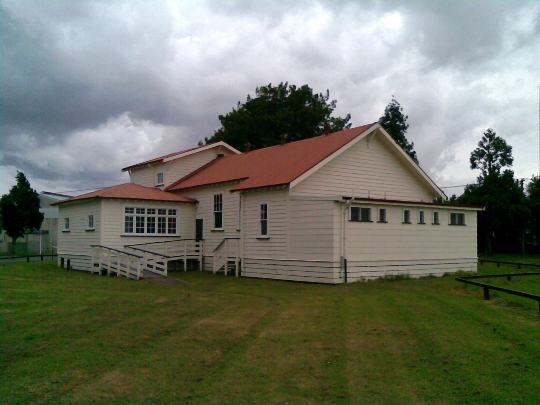
ARCHITECTURAL QUALITY: The Frankton Junction New Zealand Railways Institute is a rare example of a recreational building purpose-built by the Railways Department. An integral part of the 1920s housing scheme and the concept of the "garden suburb", it was built voluntarily by employees of the Department. Despite its dimensions the Institute's rather bungalow-style appearance enhanced its relationship with the houses with which it once stood. TOWNSCAPE/LANDMARK VALUE: Moved from Moa Crescent to the Weka Street Reserve, the Institute has lost much of its townscape value, it now being sited with its rear elevation to the road, it remains, however, a prominent but somewhat isolated building.
Why is this place significant?
Historic Significance
Historical Significance or Value The Frankton Junction Institute was the principal social and recreational venue in the railways settlement. A deliberate provision in keeping with the "garden suburb" concept practised at Frankton Junction the Institute was home to numerous sporting clubs and occupied a central position in the settlement. Although now visually separated from the bulk of the suburb the Institute remains the most substantial visual reminder of the importance placed on recreational activities in the Frankton Junction settlement.
Physical Significance
ARCHITECTURAL QUALITY: The Frankton Junction New Zealand Railways Institute is a rare example of a recreational building purpose-built by the Railways Department. An integral part of the 1920s housing scheme and the concept of the "garden suburb", it was built voluntarily by employees of the Department. Despite its dimensions the Institute's rather bungalow-style appearance enhanced its relationship with the houses with which it once stood. TOWNSCAPE/LANDMARK VALUE: Moved from Moa Crescent to the Weka Street Reserve, the Institute has lost much of its townscape value, it now being sited with its rear elevation to the road, it remains, however, a prominent but somewhat isolated building.
Construction Professional
Name
Troup, George Alexander
Type
Architect
Biography
G A Troup (1863-1941) was born in London in 1863 and educated in Scotland. He trained as an architect and engineer under C E Calvert of Edinburgh and came to New Zealand in 1884. After a short time with the Survey Department in Otago he became a draughtsman for New Zealand Railways in Dunedin and then, from 1888, in Wellington. Troup became Chief Draughtsman in 1894. He designed many station buildings throughout the county, some of which are still in use today; these buildings form an important part of New Zealand's landscape. His best known building is the Dunedin Railway Station (1904-07). He also designed the head office building in Wellington for Railways (1901, now demolished). Troup became a Fellow of the Royal Institute of British Architects in 1907. After World War I he was promoted to head the newly established Architectural Branch of New Zealand Railways. On retirement from Railways in 1925 he entered local body politics and was Mayor of Wellington from 1927 to 1931. Troup was prominent in the Presbyterian Church and founded the Presbyterian Young Men's Bible Class Union. He was an elder of the church for 47 years and also served on the governing bodies of several Wellington secondary schools. Education was a life-long interest and he was keenly involved in the training of engineering cadets in New Zealand Railways. Troup was knighted in 1937 and died in 1941. Last updated 1 October 2014 See also: James Veitch. 'Troup, George Alexander', Dictionary of New Zealand Biography, first published in 1993. Te Ara - the Encyclopedia of New Zealand, https://teara.govt.nz/en/biographies/2t49/troup-george-alexander
Construction Details
Start Year
1925
Type
Original Construction
Type
Modification
Description
Balustrades on porch removed and replaced with steel pipes.
Period
1950s
Start Year
1977
Finish Year
1978
Type
Modification
Description
Cloakrooms altered and a new ablution block constructed.
Type
Modification
Description
Reroofed, repiled, relined.
Start Year
1989
Type
Demolished - Other
Description
August - Partial demolition including removal of doors, windows, linings.
Start Year
1989
Type
Relocation
Description
Moved to present site (31 October). Entrance porch, chimneys, external stairs and name plate removed.
Start Year
1989
Finish Year
1990
Type
Other
Description
Restoration.
Start Year
1926
Type
Other
Description
Unspecified fire damage
Construction Materials
Concrete piles (originally wooden); timber frame clad with weatherboards; roof clad with corrugated iron; interior panelling in rimu.
Construction Professional
Name
Troup, George Alexander
Type
Architect
Biography
G A Troup (1863-1941) was born in London in 1863 and educated in Scotland. He trained as an architect and engineer under C E Calvert of Edinburgh and came to New Zealand in 1884. After a short time with the Survey Department in Otago he became a draughtsman for New Zealand Railways in Dunedin and then, from 1888, in Wellington. Troup became Chief Draughtsman in 1894. He designed many station buildings throughout the county, some of which are still in use today; these buildings form an important part of New Zealand's landscape. His best known building is the Dunedin Railway Station (1904-07). He also designed the head office building in Wellington for Railways (1901, now demolished). Troup became a Fellow of the Royal Institute of British Architects in 1907. After World War I he was promoted to head the newly established Architectural Branch of New Zealand Railways. On retirement from Railways in 1925 he entered local body politics and was Mayor of Wellington from 1927 to 1931. Troup was prominent in the Presbyterian Church and founded the Presbyterian Young Men's Bible Class Union. He was an elder of the church for 47 years and also served on the governing bodies of several Wellington secondary schools. Education was a life-long interest and he was keenly involved in the training of engineering cadets in New Zealand Railways. Troup was knighted in 1937 and died in 1941. Last updated 1 October 2014 See also: James Veitch. 'Troup, George Alexander', Dictionary of New Zealand Biography, first published in 1993. Te Ara - the Encyclopedia of New Zealand, https://teara.govt.nz/en/biographies/2t49/troup-george-alexander
Construction Details
Start Year
1925
Type
Original Construction
Type
Modification
Description
Balustrades on porch removed and replaced with steel pipes.
Period
1950s
Start Year
1977
Finish Year
1978
Type
Modification
Description
Cloakrooms altered and a new ablution block constructed.
Type
Modification
Description
Reroofed, repiled, relined.
Start Year
1989
Type
Demolished - Other
Description
August - Partial demolition including removal of doors, windows, linings.
Start Year
1989
Type
Relocation
Description
Moved to present site (31 October). Entrance porch, chimneys, external stairs and name plate removed.
Start Year
1989
Finish Year
1990
Type
Other
Description
Restoration.
Start Year
1926
Type
Other
Description
Unspecified fire damage
Construction Materials
Concrete piles (originally wooden); timber frame clad with weatherboards; roof clad with corrugated iron; interior panelling in rimu.
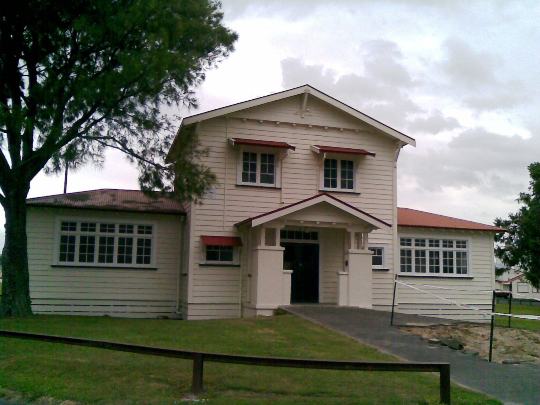
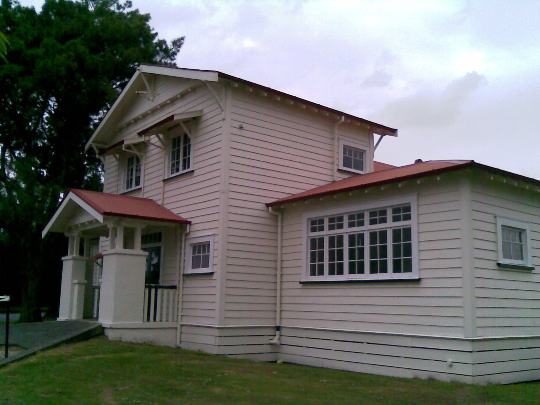
ARCHITECTURAL DESCRIPTION: The Institute is cruciform in plan having a central hall space, a room on either side and a gabled entrance. The central core of the building is two-storeyed with a caretaker's flat at first floor level. There is a pitched roof which formerly bore the name "NZ Railway Institute" (removed 1989) on the gable end. The main roof is hipped and broken with ventilators. Windows are a variety of multi-light casements. Parallel with the front elevation is a passage leading to the Reading Room on one side and the Billiard Room on the other. In line with the entrance is the hall space, complete with a semi-circular stage. The hall is lined with rimu panelling to dado level. MODIFICATIONS: 1926: - Unspecified fire damage. 1950s: - Balustrades on porch removed and replaced with steel pipes. 1977-78: - Cloakrooms altered and a new ablution block constructed. Dates not known: - Reroofed, repiled, relined. August 1989: - Partial demolition including removal of doors, windows, linings. 31 October 1989: - Moved to present site. Entrance porch, chimneys, external stairs and name plate removed. 1989-90: - Restoration.
ARCHITECTURAL DESCRIPTION: The Institute is cruciform in plan having a central hall space, a room on either side and a gabled entrance. The central core of the building is two-storeyed with a caretaker's flat at first floor level. There is a pitched roof which formerly bore the name "NZ Railway Institute" (removed 1989) on the gable end. The main roof is hipped and broken with ventilators. Windows are a variety of multi-light casements. Parallel with the front elevation is a passage leading to the Reading Room on one side and the Billiard Room on the other. In line with the entrance is the hall space, complete with a semi-circular stage. The hall is lined with rimu panelling to dado level. MODIFICATIONS: 1926: - Unspecified fire damage. 1950s: - Balustrades on porch removed and replaced with steel pipes. 1977-78: - Cloakrooms altered and a new ablution block constructed. Dates not known: - Reroofed, repiled, relined. August 1989: - Partial demolition including removal of doors, windows, linings. 31 October 1989: - Moved to present site. Entrance porch, chimneys, external stairs and name plate removed. 1989-90: - Restoration.
Historical and Associated Iwi / Hapū / Whānau
Information Sources
Archives New Zealand (Wgtn)
Archives New Zealand (Wellington)
New Zealand Building Progress
New Zealand Building Progress
Other Information
This historic place was registered under the Historic Places Act 1980. This report includes the text from the original Building Classification Committee report considered by the NZHPT Board at the time of registration. Please note that entry on the New Zealand Heritage List/Rarangi Korero identifies only the heritage values of the property concerned, and should not be construed as advice on the state of the property, or as a comment of its soundness or safety, including in regard to earthquake risk, safety in the event of fire, or insanitary conditions.
Historical and Associated Iwi / Hapū / Whānau
Information Sources
Archives New Zealand (Wgtn)
Archives New Zealand (Wellington)
New Zealand Building Progress
New Zealand Building Progress
Other Information
This historic place was registered under the Historic Places Act 1980. This report includes the text from the original Building Classification Committee report considered by the NZHPT Board at the time of registration. Please note that entry on the New Zealand Heritage List/Rarangi Korero identifies only the heritage values of the property concerned, and should not be construed as advice on the state of the property, or as a comment of its soundness or safety, including in regard to earthquake risk, safety in the event of fire, or insanitary conditions.
Former Usages
General Usage: Civic Facilities
Specific Usage: Hall, Community
Themes
North Island Main Trunk Line
Former Usages
General Usage: Civic Facilities
Specific Usage: Hall, Community
Themes
North Island Main Trunk Line
Location
Related listings
Stay up to date with Heritage this month
