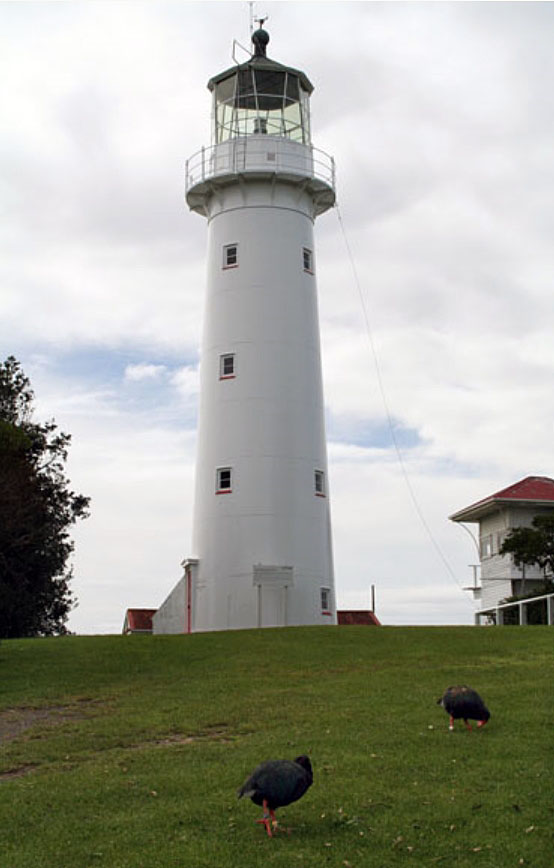
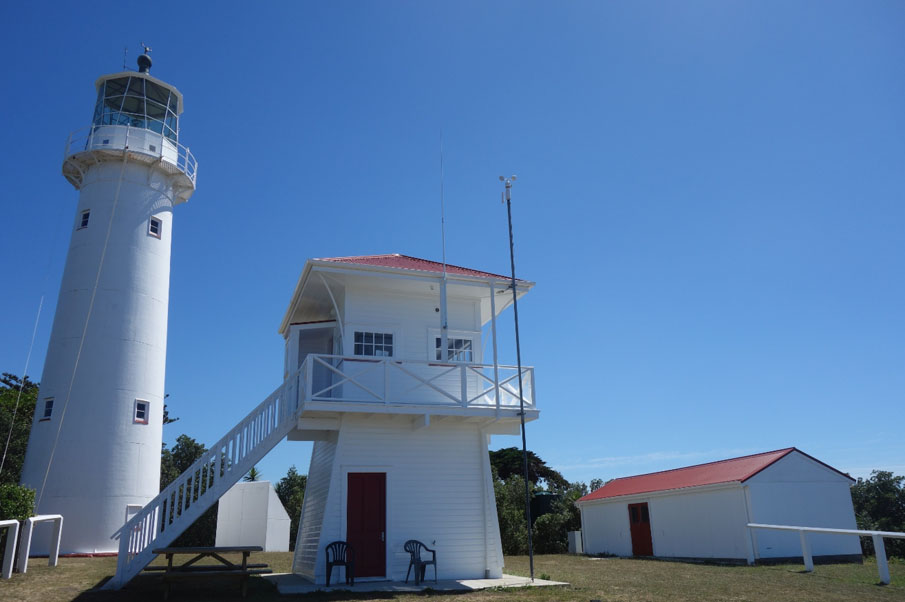
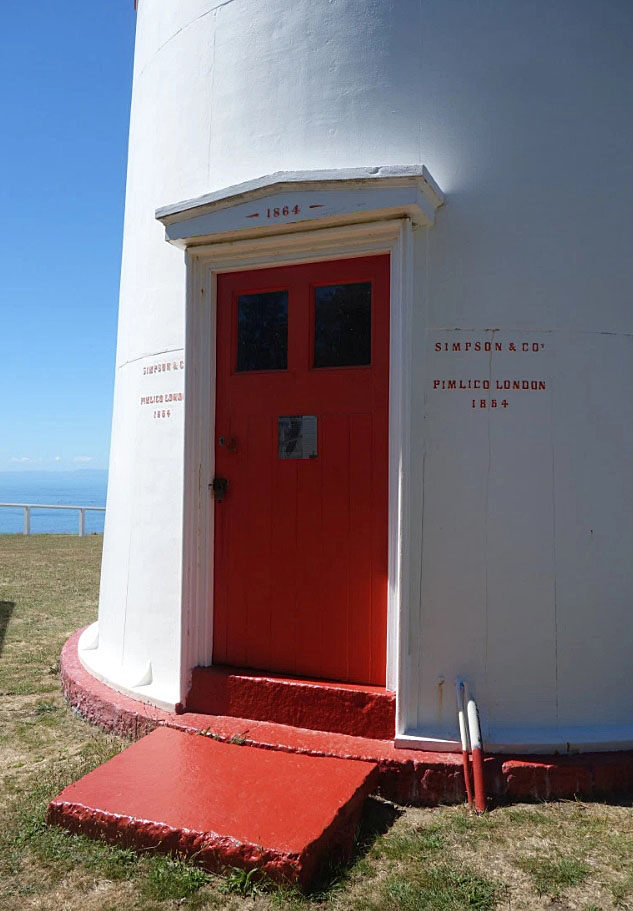
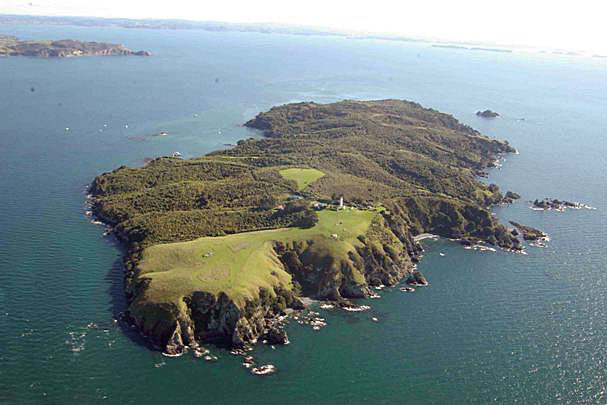
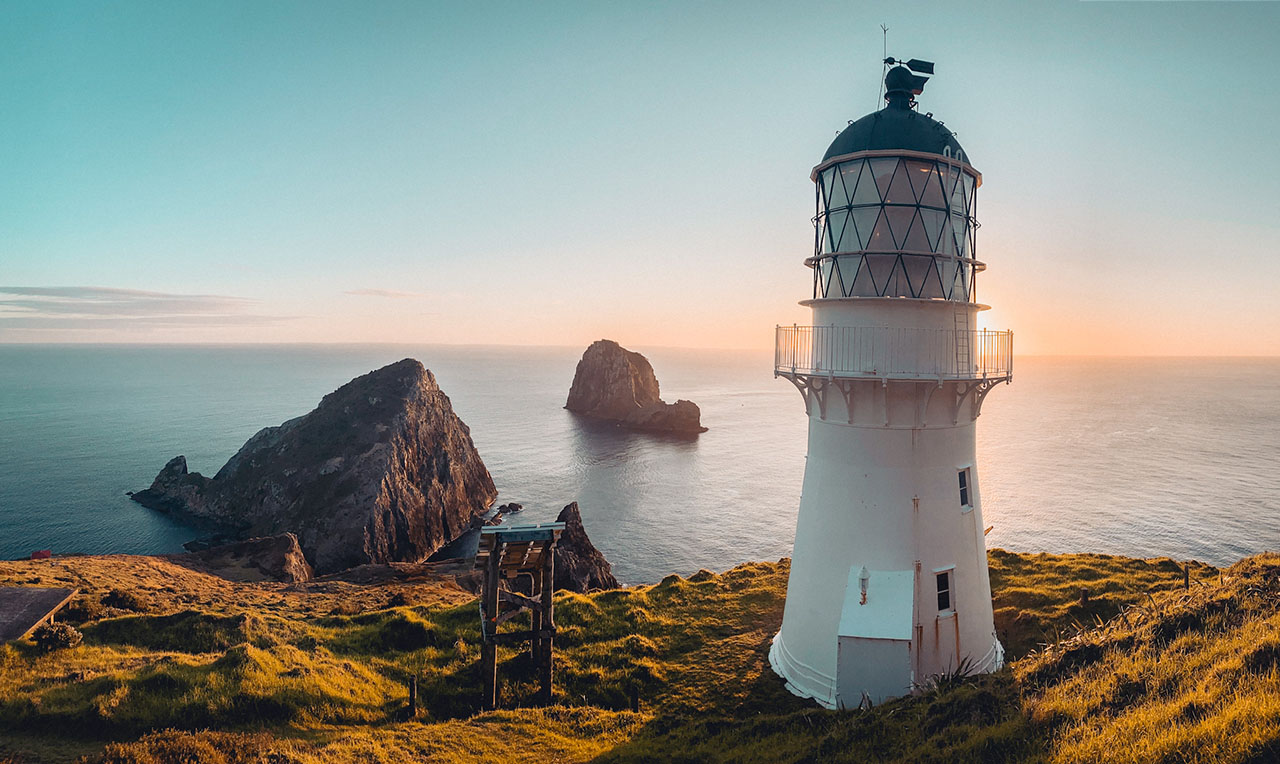
Tiritiri Matangi Lighthouse, erected in 1864, is the oldest continuously operating lighthouse in New Zealand and illustrates changes in marine light technology and the manning of lighthouses over the past century and a half. The first lighthouse to be established on the approaches to Auckland in the Waitemata Harbour and the first to be erected in the Auckland province, Tiritiri was also the first lighthouse completed by the Marine Board, and only the third erected in the colony after Pencarrow (1859) and Boulder Bank (1862). The cast-iron tower pre-fabricated in Britain is the centrepiece of a rare lighthouse settlement, the only such location easily accessible to the public. One of the world’s strongest lights in the 1960s, Tiritiri remains one of New Zealand’s best-known lighthouses due to its Hauraki Gulf location visited by thousands of people annually.
As one of the Hauraki Gulf Islands, Tiritiri Matangi was one of the floats of the ancestral fishing net of the explorer Toi te-Tuatahi. Within four years of the founding of Auckland in 1840, a buoy was placed off the east side of the island as a warning to European vessels approaching the colonial capital. One of thirteen locations mooted on the New Zealand Coast in 1861, the lighthouse was a provincial government initiative and was adopted in 1863 by the Marine Board which oversaw the erection of five of the seven lighthouses constructed before creation of the Marine Department in 1866.
The tower was one of three designed for the colony by MacLean and Stilman of Westminster with input from Otago engineer James Balfour. It was cast in England in half-ton sections to enable haulage by bullocks to the elevated site. The foundations incorporated concrete at the base, an early use of the material in the colony. The first plate for the lighthouse was hoisted into place on 21 October 1864. Internally, the completed structure contained five stages: the lower level was an oil store; the second, the lamp-cleaning room; the third, the watch-room; the fourth and fifth contained the lamp. Construction was supervised by Richard Alymer and H. Rolton who accompanied the lighthouse, and equipment manufactured by Chance Brothers of Birmingham, from Britain. The exhibiting of the light on 1 January 1865, was followed a day later by that at Tairoa Heads; by Mana Island (Tiritiri’s twin) on 1 February; and Godley Head, and Dog Island later the same year.
Notwithstanding the light’s range of 23 nautical miles, shipwrecks continued in the vicinity and included Marwell (1870), Triumph (1881) and Royal Tar (1901). Tiritiri was modified in 1879 when Doty burners were installed replacing colza (rapeseed) oil with paraffin as the fuel. In 1883, a red pane was added to the lantern, remaining until 1922. Reflecting changing technology, other maritime-related structures added included an Auckland Harbour Board signal station when pilotage became mandatory for most overseas vessels in 1912. The 1864 keepers’ houses were replaced in 1918. A Slaughters-Gun-Cotton-Foghorn and store was introduced in 1920, technology replaced in turn by a diaphone foghorn (1935), and an automatic fog detector (1975). In 1925, the light was converted to a flashing automatic acetylene light and came under Auckland Harbour Board control. Marine Department keepers were reintroduced in 1947 when the light returned to the coastal network under the Marine Department. A xenon light funded by a former Auckland Mayor Sir Ernest Davis was installed in 1964-5. The site was gazetted as scientific reserve in 1980. The keeper was withdrawn, later returning under the Department of Conservation. The lighthouse was solar powered and fully automated in 1990. In 2002, the light assembly was replaced by a modern rotating beacon powered by solar panels.
As one of the Hauraki Gulf Islands, Tiritiri Matangi was one of the floats of the ancestral fishing net of the explorer Toi te-Tuatahi. Within four years of the founding of Auckland in 1840, a buoy was placed off the east side of the island as a warning to European vessels approaching the colonial capital. One of thirteen locations mooted on the New Zealand Coast in 1861, the lighthouse was a provincial government initiative and was adopted in 1863 by the Marine Board which oversaw the erection of five of the seven lighthouses constructed before creation of the Marine Department in 1866.
The tower was one of three designed for the colony by MacLean and Stilman of Westminster with input from Otago engineer James Balfour. It was cast in England in half-ton sections to enable haulage by bullocks to the elevated site. The foundations incorporated concrete at the base, an early use of the material in the colony. The first plate for the lighthouse was hoisted into place on 21 October 1864. Internally, the completed structure contained five stages: the lower level was an oil store; the second, the lamp-cleaning room; the third, the watch-room; the fourth and fifth contained the lamp. Construction was supervised by Richard Alymer and H. Rolton who accompanied the lighthouse, and equipment manufactured by Chance Brothers of Birmingham, from Britain. The exhibiting of the light on 1 January 1865, was followed a day later by that at Tairoa Heads; by Mana Island (Tiritiri’s twin) on 1 February; and Godley Head, and Dog Island later the same year.
Notwithstanding the light’s range of 23 nautical miles, shipwrecks continued in the vicinity and included Marwell (1870), Triumph (1881) and Royal Tar (1901). Tiritiri was modified in 1879 when Doty burners were installed replacing colza (rapeseed) oil with paraffin as the fuel. In 1883, a red pane was added to the lantern, remaining until 1922. Reflecting changing technology, other maritime-related structures added included an Auckland Harbour Board signal station when pilotage became mandatory for most overseas vessels in 1912. The 1864 keepers’ houses were replaced in 1918. A Slaughters-Gun-Cotton-Foghorn and store was introduced in 1920, technology replaced in turn by a diaphone foghorn (1935), and an automatic fog detector (1975). In 1925, the light was converted to a flashing automatic acetylene light and came under Auckland Harbour Board control. Marine Department keepers were reintroduced in 1947 when the light returned to the coastal network under the Marine Department. A xenon light funded by a former Auckland Mayor Sir Ernest Davis was installed in 1964-5. The site was gazetted as scientific reserve in 1980. The keeper was withdrawn, later returning under the Department of Conservation. The lighthouse was solar powered and fully automated in 1990. In 2002, the light assembly was replaced by a modern rotating beacon powered by solar panels.