The Arrowtown Chinese Settlement was one of at least ten Chinese settlements that grew up adjacent to gold mining towns in nineteenth-century Otago. In 1865 many miners left Otago for the newly discovered West Coast goldfields, leading the Otago Provincial Council to invite Chinese miners from the Australian goldfields of Victoria to work the fields in Otago. The first Chinese miners arrived in Otago in 1866. The heyday of Chinese mining was during the 1870s and 1880s, when many Chinese began reworking gold-bearing areas that had been deserted by European miners. The miners in Otago, as in other areas, frequently met with hostility from both miners and bureaucrats.
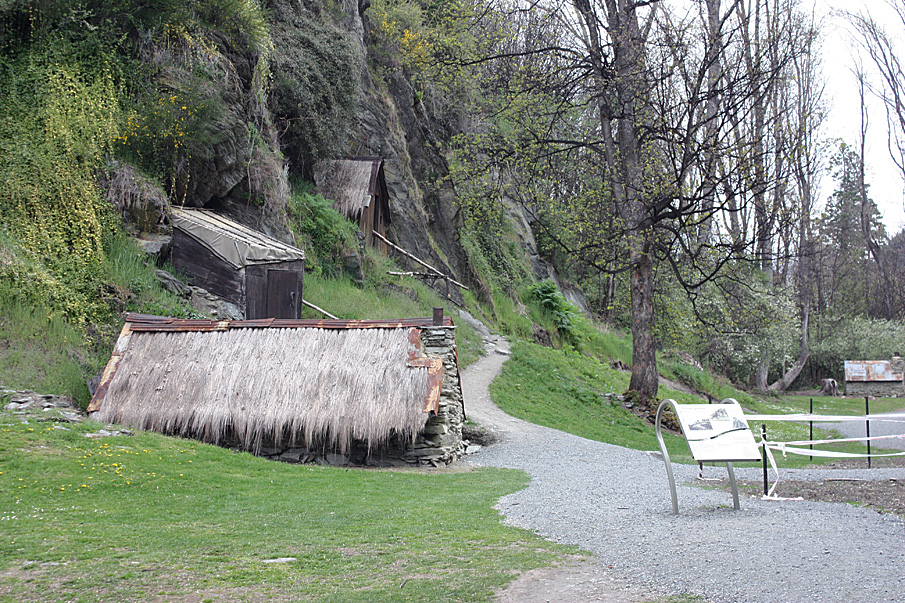
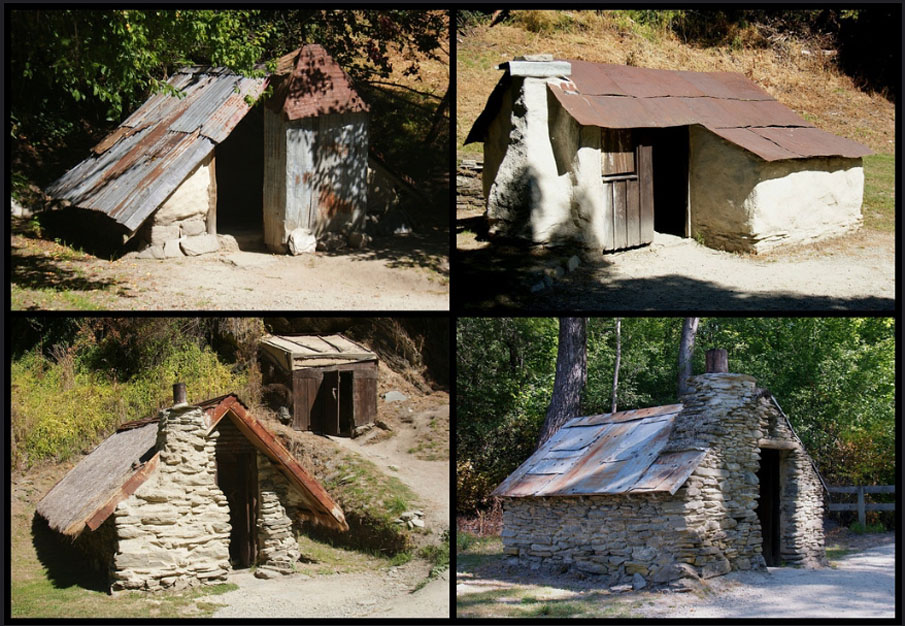
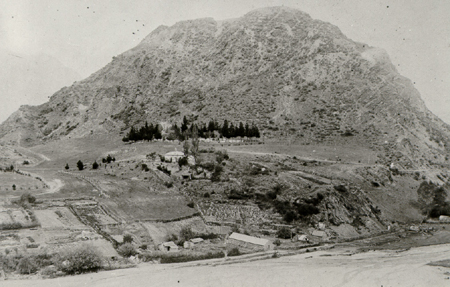
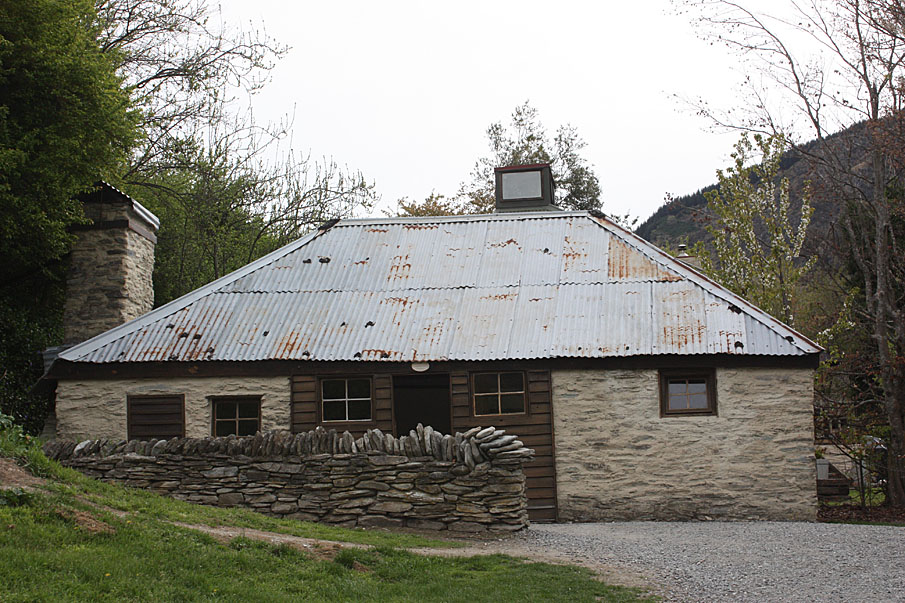
The Chinese settlement at Arrowtown, on the south bank of Bush Creek, was only around 200 metres away from the main street of Arrowtown. Despite this, the settlement and its occupants were socially quite separate from the rest of the town. By 1885, the Arrowtown settlement had grown to consist of about ten huts, a large social hall and at least two stores. There was also an extensive garden area. A range of construction techniques was used for the buildings, including mud brick, mortared stone, wood, corrugated iron, and canvas. Some buildings were thatched while others were roofed with corrugated iron. At first the men lived together in communal huts, usually between two and six men to a house. It seems that the community centred around the large social hall, which was perhaps 15 metres long, until it collapsed or was demolished in around 1900. It seems that Ah Lum's store (separately registered as an historic place) later took over this social function. It is unlikely if any women ever lived in the settlement; the first recorded arrival of a Chinese woman in New Zealand was not until 1873 and by 1896 there were only eleven throughout the country.
By 1888 the Chinese population living in the settlement may have reached as high as 60 men, but as the profitability of gold mining declined in the years that followed, many Chinese men returned home to China or moved to other areas. By 1910 many of the huts were uninhabited and the shop known as Ah Lum's store was the only one still operating. The residential area was virtually abandoned by 1923, when only Ah Lum, and his boarder Ah He, still lived there. They continued to live there until Ah Lum's death in 1927.
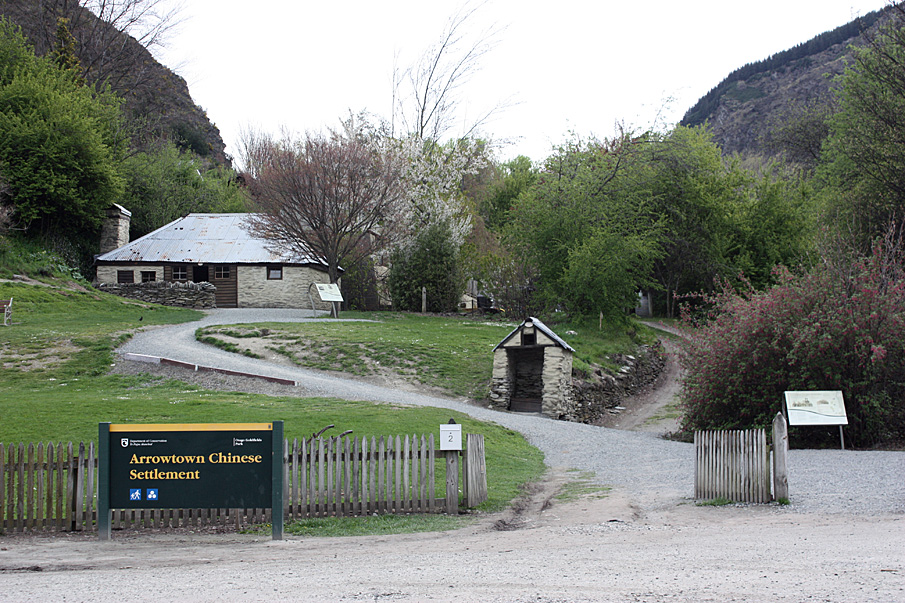
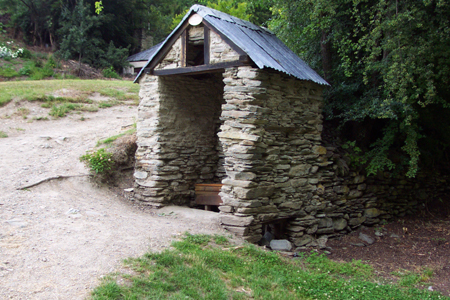
The large wooden social hall which for a time formed the centre of the community has unfortunately been demolished. Ah Lum's store, and the outhouse that was once behind the community's other store owned by Ah Wak, still remain. The Arrowtown Chinese Settlement was the subject of archaeological excavations in 1983 by the Department of Lands and Survey. Remnants of a number of huts were found during this work, and a number have since been reconstructed. Many of the items found during that work can be seen in displays at the Lakes District Museum in Arrowtown. The area is now a popular place to visit.
The Arrowtown settlement is the last remaining Chinese settlement in a relatively intact state in Otago, the others having been affected by residential, horticultural or hydroelectric development. The area is a significant reminder of the Chinese presence on the Central Otago goldfields, and the way in which the miners lived.
The Chinese settlement at Arrowtown, on the south bank of Bush Creek, was only around 200 metres away from the main street of Arrowtown. Despite this, the settlement and its occupants were socially quite separate from the rest of the town. By 1885, the Arrowtown settlement had grown to consist of about ten huts, a large social hall and at least two stores. There was also an extensive garden area. A range of construction techniques was used for the buildings, including mud brick, mortared stone, wood, corrugated iron, and canvas. Some buildings were thatched while others were roofed with corrugated iron. At first the men lived together in communal huts, usually between two and six men to a house. It seems that the community centred around the large social hall, which was perhaps 15 metres long, until it collapsed or was demolished in around 1900. It seems that Ah Lum's store (separately registered as an historic place) later took over this social function. It is unlikely if any women ever lived in the settlement; the first recorded arrival of a Chinese woman in New Zealand was not until 1873 and by 1896 there were only eleven throughout the country.
By 1888 the Chinese population living in the settlement may have reached as high as 60 men, but as the profitability of gold mining declined in the years that followed, many Chinese men returned home to China or moved to other areas. By 1910 many of the huts were uninhabited and the shop known as Ah Lum's store was the only one still operating. The residential area was virtually abandoned by 1923, when only Ah Lum, and his boarder Ah He, still lived there. They continued to live there until Ah Lum's death in 1927.
The large wooden social hall which for a time formed the centre of the community has unfortunately been demolished. Ah Lum's store, and the outhouse that was once behind the community's other store owned by Ah Wak, still remain. The Arrowtown Chinese Settlement was the subject of archaeological excavations in 1983 by the Department of Lands and Survey. Remnants of a number of huts were found during this work, and a number have since been reconstructed. Many of the items found during that work can be seen in displays at the Lakes District Museum in Arrowtown. The area is now a popular place to visit.
The Arrowtown settlement is the last remaining Chinese settlement in a relatively intact state in Otago, the others having been affected by residential, horticultural or hydroelectric development. The area is a significant reminder of the Chinese presence on the Central Otago goldfields, and the way in which the miners lived.