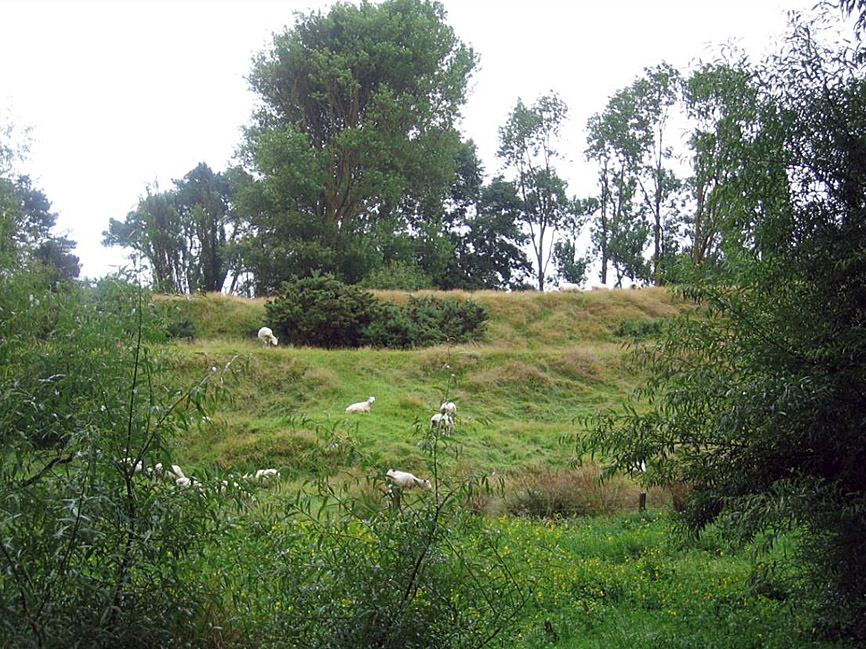
The Turuturu-mokai complex near Hawera encompasses three sites: Te Umu a Tongahake Pā (New Zealand Archaeological Association (NZAA) Site Q21/4), and Turuturu-mokai Pā (NZAA Q21/3) and Armed Constabulary Redoubt and Memorial (NZAA Q21/328).
This place is widely acknowledged as a site of cultural, historical, social and archaeological significance to both Pakeha and Māori communities. The pā sites have long been recognised as outstanding examples of pre-European Māori earthworks, and a valued tourist destination. The Turuturu-mokai Redoubt, constructed near the pā during the Taranaki Land Wars of 1866–1869, was famously attacked by Ngā Ruahine leader Riwha Titokowaru's forces in July 1868. A monument to those who took part in the engagement has been erected at the site.
The Turuturu-mokai Redoubt, gazetted as a blockhouse site in 1871, was vested in the Borough of Hawera in 1901 so that ‘the fortifications standing thereon may be preserved’. In 1905, Turuturu-mokai Pā was also gazetted as a Historic Reserve. Te Umu-a-Tongahake Pā was added to the reserve in July 1936. The entire complex was returned to the guardianship of the Ngāti Tupaia hapū of Ngāti Ruanui in 2003, who allow access for the general public to visit the site.
TURUTURU-MOKAI PĀ
Traditional accounts of Turuturu-mokai Pā state that the pā, originally named Potihakena, was constructed by the Ngāti Tupaia or Ngāti Rakei hapū up to 400 years ago. The name Turuturu-mokai refers to the events surrounding the abandonment of the pā following the massacre of its residents by rival hapū over 200 years ago. All histories of the site relate, more or less, the same story:
‘A Nga Taki Ruahine rangatira…offered the services of a famous tohunga-ta-moko to tattoo the warriors of Ngati Rakei... The process…incapacitated the warriors for several days… [so] a Ngati Taka Ruahine taua attacked the pa and secured an easy victory. After the carnage the tattooed heads (mokai) were rested on stakes (turuturu)... For centuries Turuturu-mokai lay abandoned under a tapu of blood.’
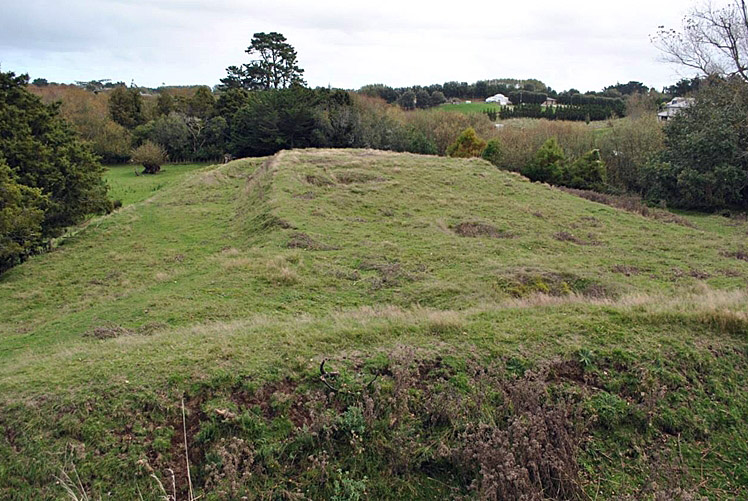
The entire site of Turuturu-mokai Pā has been modified during its reconstruction as a public monument and tourist attraction, beginning in 1931. The defensive ditches and storage pits were cleaned out and the scarps and banks reshaped, probably following the contours of the original earthworks.
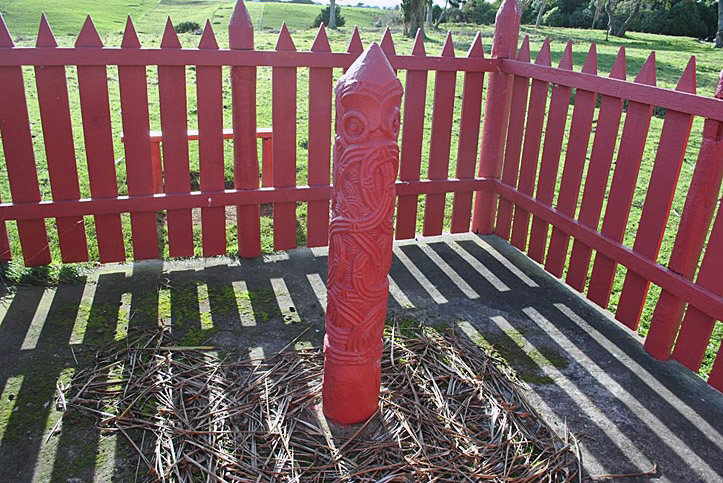
On 12 July, 1938 a carved pou was erected on the upper platform following a whakanoa (ceremony) to remove the tapu from the pā site. The pā is in generally excellent condition and its low grass cover makes it a special site to understand Māori pā construction. It is currently being conserved by Ngati Tupaia. The neighbouring pā site of Te Umu-a-Tongahake is visible to the west - a reminder that Turuturu-mokai was the largest of a cluster of pā sites at this location.
TURUTURU-MOKAI ARMED CONSTABULARY REDOUBT AND MEMORIAL
The Turuturu-mokai Armed Constabulary Redoubt was constructed in 1866 by troops from the 18th Royal Irish regiment. However, imperial forces withdrew from remote outposts in February 1867. The site occupied the higher ground 140 metres west of the defences of Turuturu-mokai Pā. By June 1868 it was in the process of being rebuilt by the Armed Constabulary, having in the interim been used as a sheep yard by a local settler. It consisted of a 20m2earthwork with semi-circular bastions at the west and east corners. The small size required cooking facilities, tents and even officers’ huts to be located outside of the defences.
The redoubt was attacked by Titokowaru's forces on 12 July 1868. The pre-dawn attack completely surprised the garrison. Ten Armed Constabulary and three Māori warriors were confirmed dead. The redoubt was rebuilt following the attack but dwindled in tactical significance as Titokowaru's war moved south.
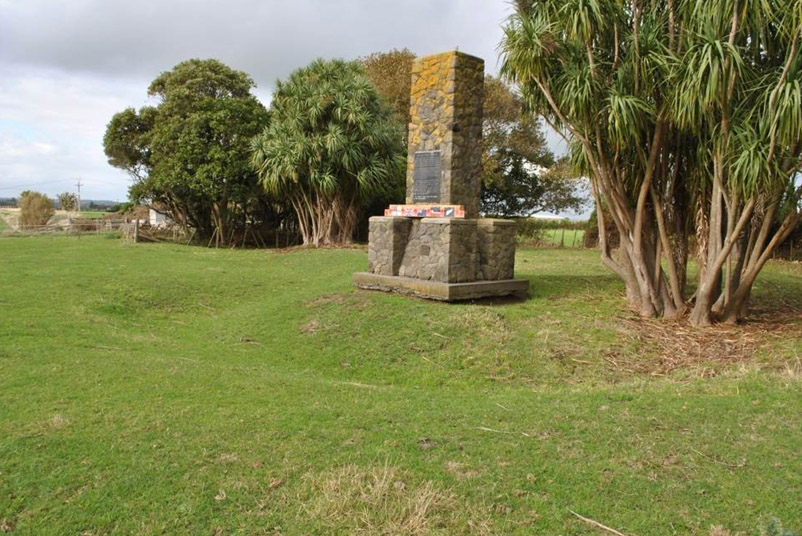
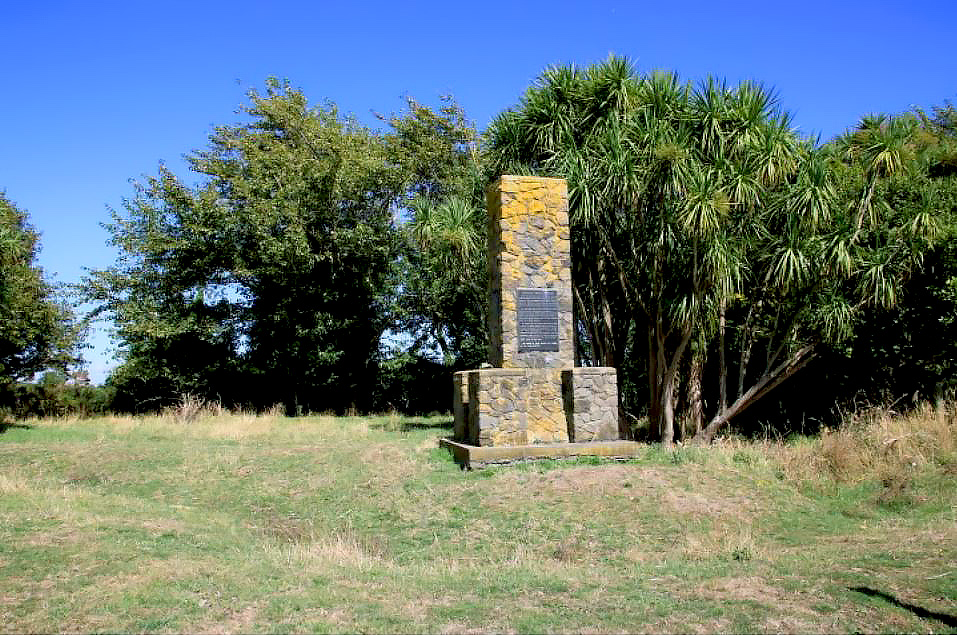
In 1929, some 51 years after the attack, a memorial was erected on the western bastion of the redoubt, to the Armed Constabulary who were killed and involved in the engagement. The redoubt and the paddock surrounding the memorial are currently grazed by sheep and horses resulting in good surface visibility. The eastern bastion has been partially removed by the straightening of Tawhiti Road. Pedestrian access to the monument is gained through the main entrance to Turuturu-mokai and follows the sealed road up the hill to the site.
This place is widely acknowledged as a site of cultural, historical, social and archaeological significance to both Pakeha and Māori communities. The pā sites have long been recognised as outstanding examples of pre-European Māori earthworks, and a valued tourist destination. The Turuturu-mokai Redoubt, constructed near the pā during the Taranaki Land Wars of 1866–1869, was famously attacked by Ngā Ruahine leader Riwha Titokowaru's forces in July 1868. A monument to those who took part in the engagement has been erected at the site.
The Turuturu-mokai Redoubt, gazetted as a blockhouse site in 1871, was vested in the Borough of Hawera in 1901 so that ‘the fortifications standing thereon may be preserved’. In 1905, Turuturu-mokai Pā was also gazetted as a Historic Reserve. Te Umu-a-Tongahake Pā was added to the reserve in July 1936. The entire complex was returned to the guardianship of the Ngāti Tupaia hapū of Ngāti Ruanui in 2003, who allow access for the general public to visit the site.
TURUTURU-MOKAI PĀ
Traditional accounts of Turuturu-mokai Pā state that the pā, originally named Potihakena, was constructed by the Ngāti Tupaia or Ngāti Rakei hapū up to 400 years ago. The name Turuturu-mokai refers to the events surrounding the abandonment of the pā following the massacre of its residents by rival hapū over 200 years ago. All histories of the site relate, more or less, the same story:
‘A Nga Taki Ruahine rangatira…offered the services of a famous tohunga-ta-moko to tattoo the warriors of Ngati Rakei... The process…incapacitated the warriors for several days… [so] a Ngati Taka Ruahine taua attacked the pa and secured an easy victory. After the carnage the tattooed heads (mokai) were rested on stakes (turuturu)... For centuries Turuturu-mokai lay abandoned under a tapu of blood.’
The entire site of Turuturu-mokai Pā has been modified during its reconstruction as a public monument and tourist attraction, beginning in 1931. The defensive ditches and storage pits were cleaned out and the scarps and banks reshaped, probably following the contours of the original earthworks.
On 12 July, 1938 a carved pou was erected on the upper platform following a whakanoa (ceremony) to remove the tapu from the pā site. The pā is in generally excellent condition and its low grass cover makes it a special site to understand Māori pā construction. It is currently being conserved by Ngati Tupaia. The neighbouring pā site of Te Umu-a-Tongahake is visible to the west - a reminder that Turuturu-mokai was the largest of a cluster of pā sites at this location.
TURUTURU-MOKAI ARMED CONSTABULARY REDOUBT AND MEMORIAL
The Turuturu-mokai Armed Constabulary Redoubt was constructed in 1866 by troops from the 18th Royal Irish regiment. However, imperial forces withdrew from remote outposts in February 1867. The site occupied the higher ground 140 metres west of the defences of Turuturu-mokai Pā. By June 1868 it was in the process of being rebuilt by the Armed Constabulary, having in the interim been used as a sheep yard by a local settler. It consisted of a 20m2earthwork with semi-circular bastions at the west and east corners. The small size required cooking facilities, tents and even officers’ huts to be located outside of the defences.
The redoubt was attacked by Titokowaru's forces on 12 July 1868. The pre-dawn attack completely surprised the garrison. Ten Armed Constabulary and three Māori warriors were confirmed dead. The redoubt was rebuilt following the attack but dwindled in tactical significance as Titokowaru's war moved south.
In 1929, some 51 years after the attack, a memorial was erected on the western bastion of the redoubt, to the Armed Constabulary who were killed and involved in the engagement. The redoubt and the paddock surrounding the memorial are currently grazed by sheep and horses resulting in good surface visibility. The eastern bastion has been partially removed by the straightening of Tawhiti Road. Pedestrian access to the monument is gained through the main entrance to Turuturu-mokai and follows the sealed road up the hill to the site.