DonateSupporterVisit Heritage
  • Tūrangawaewae
    Places
  • Tira Māori
    Māori Heritage
  • Poutairangahia
    Archaeology
  • Rauemi
    Resources
  • Mō Tātou
    About Us
  • New Zealand Heritage List
  • Nominate and submit
  • Explore the List
  • National Historic Landmarks
  • Plaques
  • Rainbow List Project
  • Lost heritage
  • Visit Heritage
  • Our properties
  • Turnbull House Project
  • Collections
  • Shop
  • Tohu Whenua
  • Tira Māori
  • Conserving Māori heritage
  • Marae built heritage
  • Māori heritage on the List
  • Hinemihi—Te Hokinga Mai
  • What is archaeology?
  • Is there a site on my property?
  • What are my legal requirements?
  • Affecting an archaeological site
  • Declaring an archaeological site
  • Archaeology FAQs
  • Archaeology Digital Library
  • Archaeology guidelines and templates
  • Resources
  • Funding
  • Publications
  • Sustainable management guides
  • Disaster recovery
  • Podcasts & digital resources
  • Education Hub
  • Conservation plans
  • About
  • Board
  • Māori Heritage Council
  • Senior Staff
  • Offices
  • Contact us
  • Careers
  • Covenants
  • Fast-track
  • Corporate documents
  • Currently consulting on
  • Our submissions
  • News
  • Covid-19 response
Quick links
Rārangi Kōrero | The List
Explore the List
National Historic Landmarks
Ngā Manawhenua o Aotearoa me ōna Kōrero Tūturu
Quick links
Tapuwae
A Vision for Places of Māori Heritage
Funding for Māori Heritage
Resources
Quick links
Archaeological Authority Portal
Applying for an archaeological authority
Archaeology FAQs
Browse the most frequently asked questions about archaeological authorities and the archaeological process.
Quick links
Quick links
Contact us
Offices
DonateSupporterVisit Heritage
  • Tūrangawaewae
    Places
  • Tira Māori
    Māori Heritage
  • Poutairangahia
    Archaeology
  • Rauemi
    Resources
  • Mō Tātou
    About Us
  • New Zealand Heritage List
  • Nominate and submit
  • Explore the List
  • National Historic Landmarks
  • Plaques
  • Rainbow List Project
  • Lost heritage
  • Visit Heritage
  • Our properties
  • Turnbull House Project
  • Collections
  • Shop
  • Tohu Whenua
  • Tira Māori
  • Conserving Māori heritage
  • Marae built heritage
  • Māori heritage on the List
  • Hinemihi—Te Hokinga Mai
  • What is archaeology?
  • Is there a site on my property?
  • What are my legal requirements?
  • Affecting an archaeological site
  • Declaring an archaeological site
  • Archaeology FAQs
  • Archaeology Digital Library
  • Archaeology guidelines and templates
  • Resources
  • Funding
  • Publications
  • Sustainable management guides
  • Disaster recovery
  • Podcasts & digital resources
  • Education Hub
  • Conservation plans
  • About
  • Board
  • Māori Heritage Council
  • Senior Staff
  • Offices
  • Contact us
  • Careers
  • Covenants
  • Fast-track
  • Corporate documents
  • Currently consulting on
  • Our submissions
  • News
  • Covid-19 response
Quick links
Rārangi Kōrero | The List
Explore the List
National Historic Landmarks
Ngā Manawhenua o Aotearoa me ōna Kōrero Tūturu
Quick links
Tapuwae
A Vision for Places of Māori Heritage
Funding for Māori Heritage
Resources
Quick links
Archaeological Authority Portal
Applying for an archaeological authority
Archaeology FAQs
Browse the most frequently asked questions about archaeological authorities and the archaeological process.
Quick links
Quick links
Contact us
Offices
  • Places
  • Nominate and submit
  • National Historic Landmarks
  • Places
  • Nominate and submit
  • National Historic Landmarks
  • Tira Māori
  • Conserving Māori heritage
  • Marae built heritage
  • Tira Māori
  • Conserving Māori heritage
  • Marae built heritage
  • Archaeological authorities
  • Archaeology Digital Library
  • Archaeological authorities
  • Archaeology Digital Library
  • All resources
  • Publications
  • Funding
  • All resources
  • Publications
  • Funding
  • FAQs
  • FAQs
Follow us on:
Places
  • Places
  • Nominate and submit
  • National Historic Landmarks
Tira Māori
  • Tira Māori
  • Conserving Māori heritage
  • Marae built heritage
Archaeology
  • Archaeological authorities
  • Archaeology Digital Library
Resources
  • All resources
  • Publications
  • Funding
FAQs
  • FAQs
Follow us on
HomePrivacyTerms and conditionsAbout this site
© Heritage New Zealand Pouhere Taonga 2026.
 
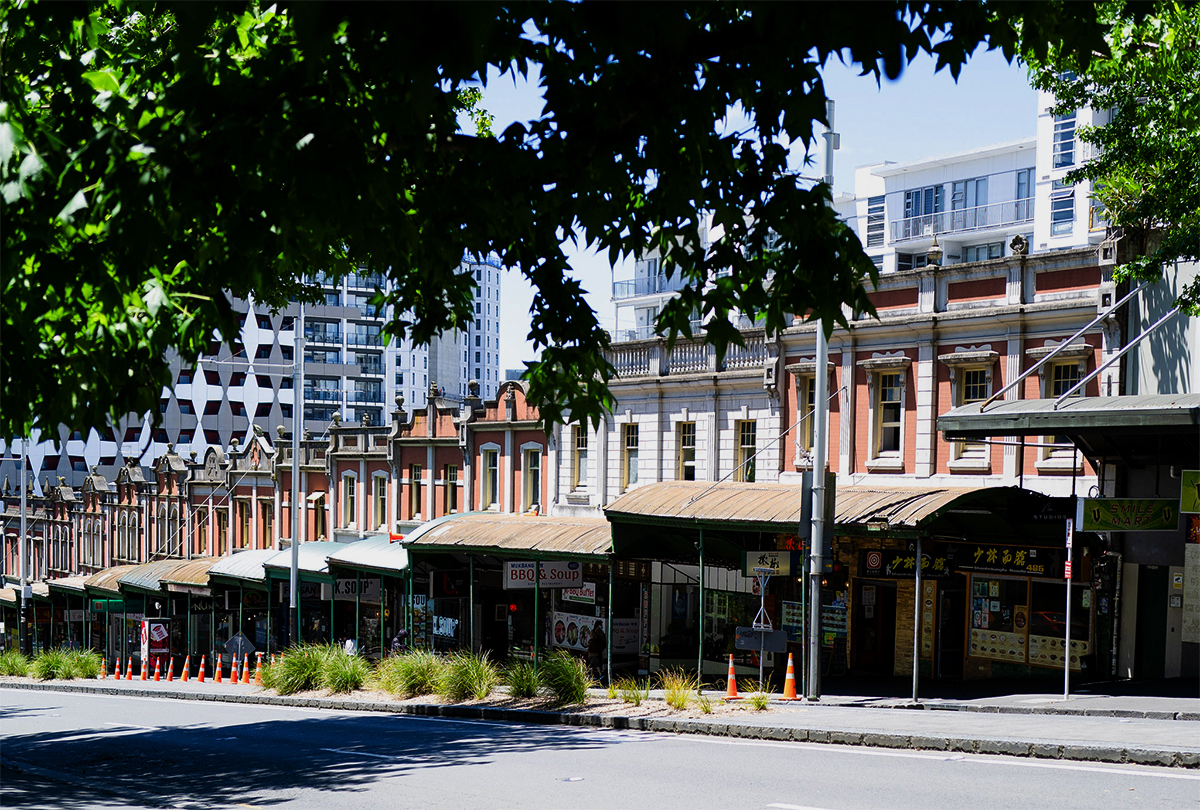
Terrace of Shops

456-486 Queen Street, AUCKLAND

Private

Historic Place Category 1

List No. 655

Quick links:
List GalleryLocationDetails
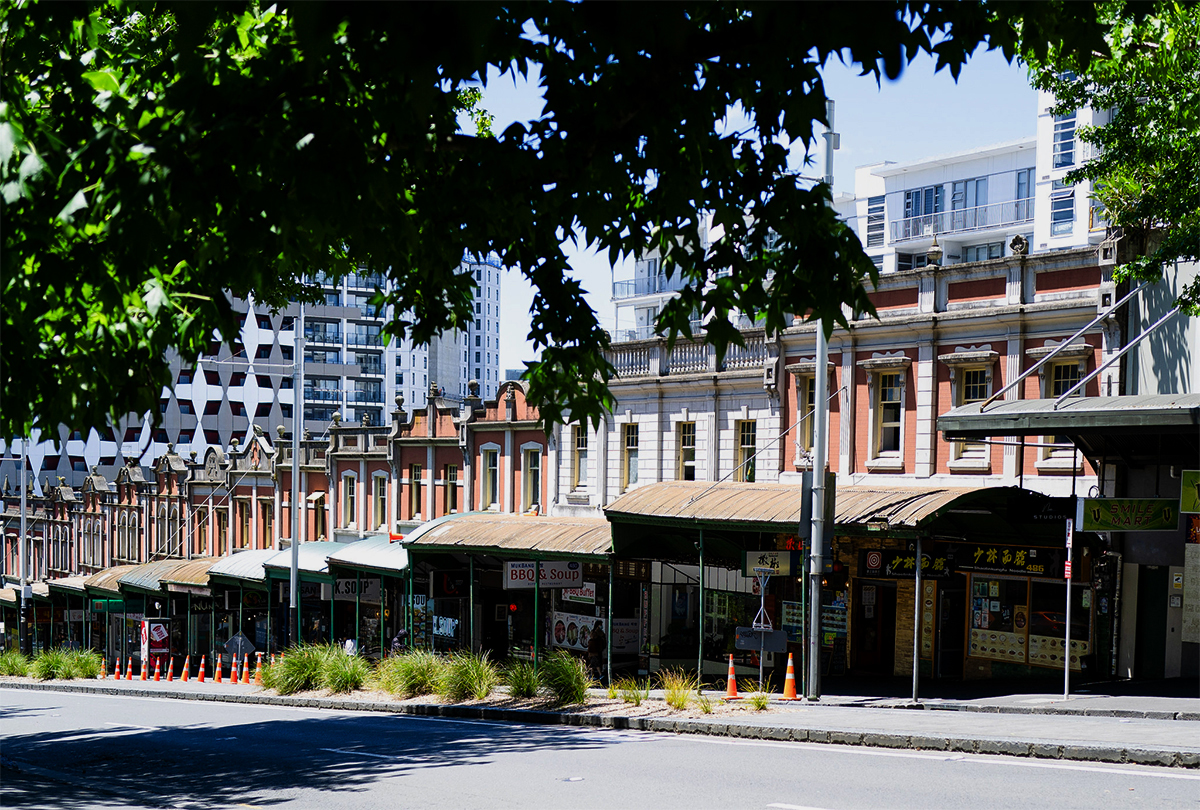
Terrace of Shops, 456-486 Queen Street, Auckland. Image courtesy of www.flickr.com | Phil Clark | 27/11/2020 | phil1066photography.com
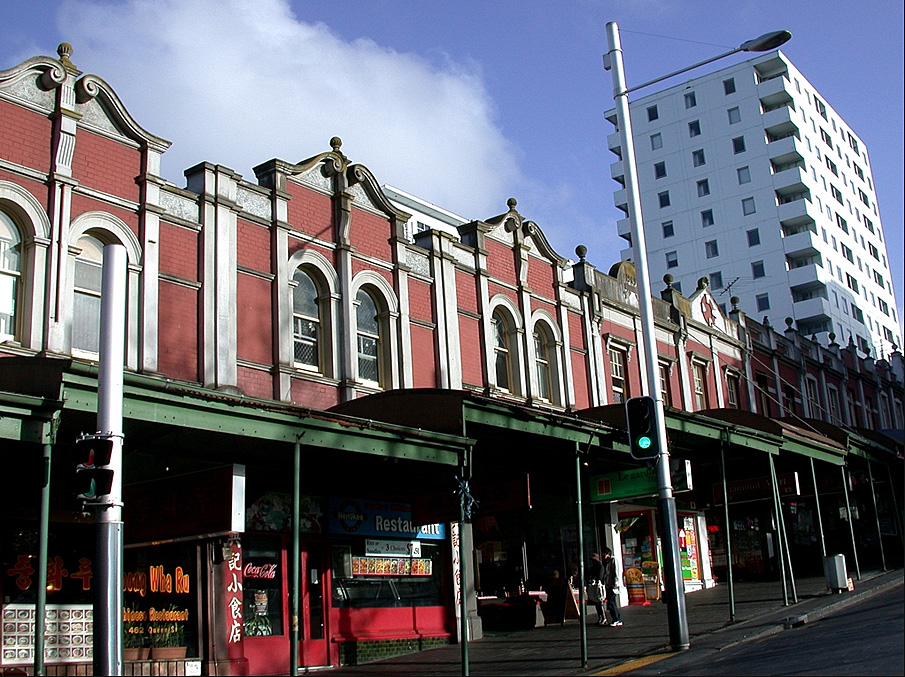
Terrace of Shops, 456-486 Queen Street, Auckland. Image courtesy of www.flickr.com | PhilBee NZ - Phil Braithwaite | 16/09/2011 | Phil Braithwaite
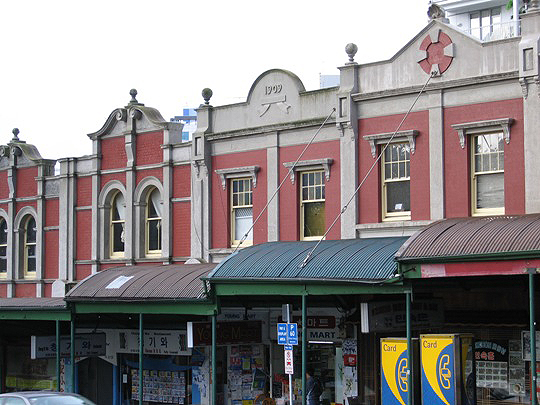
Terrace of Shops, 456-486 Queen Street, Auckland | Heritage New Zealand Pouhere Taonga
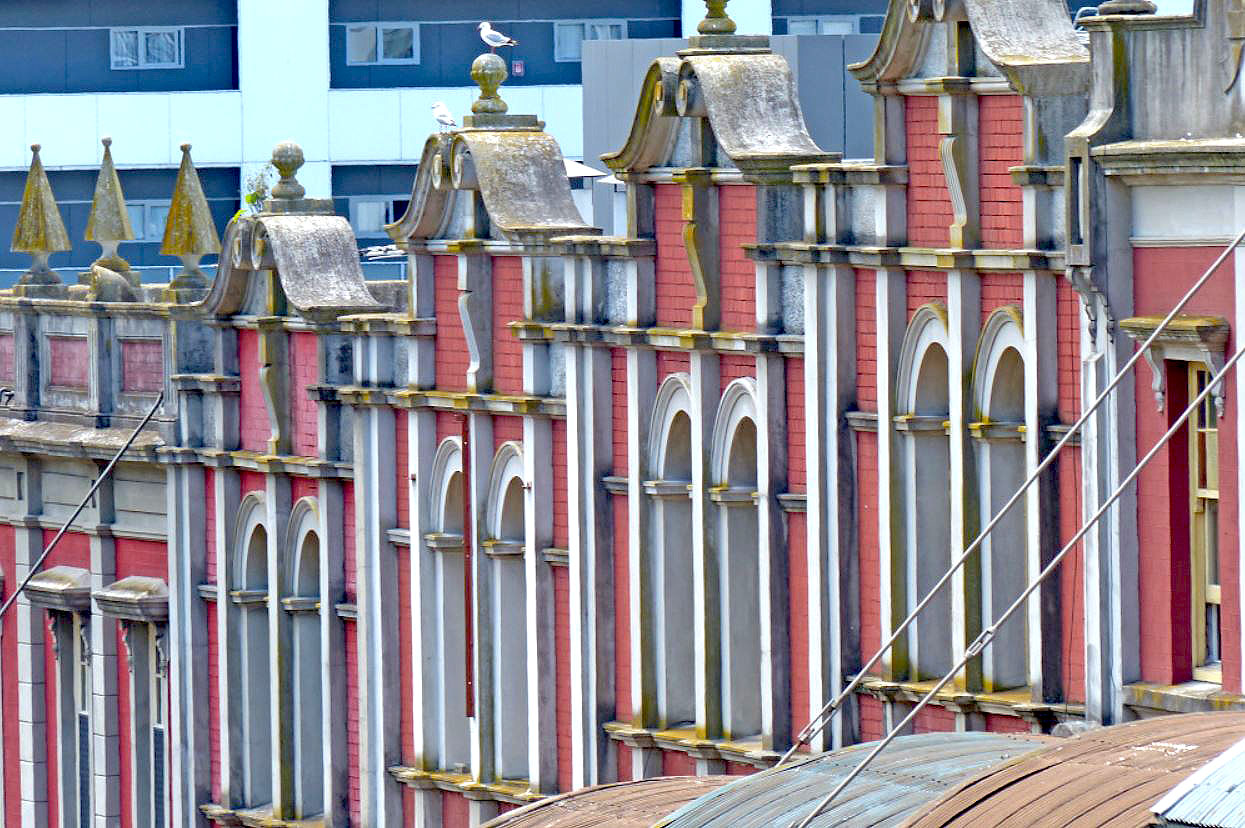
Terrace of Shops, 456-486 Queen Street, Auckland. Image courtesy of www.flickr.com | 32 Blocks | 23/02/2013 | 32 Blocks
Terrace of Shops, 456-486 Queen Street, Auckland. Image courtesy of www.flickr.com | Phil Clark | 27/11/2020 | phil1066photography.com
Terrace of Shops, 456-486 Queen Street, Auckland. Image courtesy of www.flickr.com | PhilBee NZ - Phil Braithwaite | 16/09/2011 | Phil Braithwaite
Terrace of Shops, 456-486 Queen Street, Auckland | Heritage New Zealand Pouhere Taonga
Terrace of Shops, 456-486 Queen Street, Auckland. Image courtesy of www.flickr.com | 32 Blocks | 23/02/2013 | 32 Blocks

List Entry Information

Overview

Status
Listed

List Entry Status
Historic Place Category 1

Access
Private/No Public Access

List Number
655

Date Entered
2nd July 1987

Date of Effect
2nd July 1987

City/District Council
Auckland Council

Region
Auckland Council

Legal description

Pts 6 7 8 of Sec 37 City of Auckland

Detailed List Entry
Significance

Historic Significance

Historical Significance or Value The site has been owned by the Methodist Church since the 1840s and up until 1906 the Prince Albert Boys' and Girls' schools were housed there. The Boys' School building later became the Rembrandt Hotel at 490 Queen Street (now demolished). 460-466 Queen Street was built for Neville Newcomb in 1908 and was the first block in the complex. The shops have been a distinctive feature of this part of Queen Street for most of this century and the block still contains a number of interesting shops including the last surviving inner city grocery and a traditional bike shop.

Physical Significance

ARCHITECTURAL SIGNIFICANCE Auckland's longest continuous row of early twentieth century shops which are still to a large degree intact and still in use as shop/dwelling units. Architect designed terraces of shops are very rare in New Zealand and this group is one of the most distinguished and best preserved in the country. The buildings contribute to our understanding of the capabilities of two Auckland architects, T W May and Alexander Wiseman. TOWNSCAPE/LANDSCAPE SIGNIFICANCE The shops are a prominent feature of the townscape with the attractive continuous façade and stepped verandah visible from both a northerly and southerly direction along Queen Street and from Myers Park directly opposite.

Construction Professional

Name

May, T W

Type

Architect

Biography

An Auckland architect responsible for a number of residential and commercial buildings around the city including three 7 storey concrete warehouses for Arthur Yates and Co. Designed Shop/Dwellings for the Terrace Shops, 456-486 Queen Street, Auckland in 1909.

Name

Wiseman, Alexander

Type

Architect

Biography

Alexander Wiseman (1865-1915) - Articled to Edward Bartley 1881-85. Began practising as an architect in 1904. The Auckland Ferry building (classified 'B') is his best known work and shows he was an architect of considerable ability.

Construction Details

Start Year

1912

Type

Original Construction

Construction Materials

Brick and plaster walls, corrugated iron roofs and shop verandahs.

Notable Features

Stepped verandah and original pediments at the top of the facades. Also some original Edwardian shop fronts. Some original interiors as well.

Physical Description

ARCHITECTURAL DESCRIPTION (Style) A continuous row of 16 shops designed by at least two architects between 1908-1912. Although the individual blocks of shops in a row possess subtle variations in design, they all combine to form a single terrace, homogeneous in scale and appearance. The buildings incorporate Neo-Baroque, Georgian and Italianate features in their design illustrating the eclectic nature of Edwardian architecture. A series of convex verandahs form a stepped effect along the street frontage and help give the impression of one continuous building. MODIFICATIONS Cast iron verandah posts have been removed and alterations have been made to shop fronts. Otherwise the buildings are in remarkably good condition.

Reference

Information Sources

Auckland City Council

Auckland City Council

Report Written By

This historic place was registered under the Historic Places Act 1980. This report includes the text from the original Building Classification Committee report considered by the NZHPT Board at the time of registration. NZHPT Heritage Order (29 June 1989) Please note that entry on the New Zealand Heritage List/Rarangi Korero identifies only the heritage values of the property concerned, and should not be construed as advice on the state of the property, or as a comment of its soundness or safety, including in regard to earthquake risk, safety in the event of fire, or insanitary conditions.

Further Information

Current Usages

Uses: Trade

Specific Usage: Shop
Former Usages

Themes

Web Links

Overview

Status

Listed

List Entry Status

Historic Place Category 1

Access

Private/No Public Access

List Number

655

Date Entered

2nd July 1987

Date of Effect

2nd July 1987

City/District Council

Auckland Council

Region

Auckland Council

Legal description

Pts 6 7 8 of Sec 37 City of Auckland

Status

Listed

List Entry Status

Historic Place Category 1

Access

Private/No Public Access

List Number

655

Date Entered

2nd July 1987

Date of Effect

2nd July 1987

City/District Council

Auckland Council

Region

Auckland Council

Legal description

Pts 6 7 8 of Sec 37 City of Auckland

Significance

Why is this place significant?

Historic Significance

Historical Significance or Value The site has been owned by the Methodist Church since the 1840s and up until 1906 the Prince Albert Boys' and Girls' schools were housed there. The Boys' School building later became the Rembrandt Hotel at 490 Queen Street (now demolished). 460-466 Queen Street was built for Neville Newcomb in 1908 and was the first block in the complex. The shops have been a distinctive feature of this part of Queen Street for most of this century and the block still contains a number of interesting shops including the last surviving inner city grocery and a traditional bike shop.

Physical Significance

ARCHITECTURAL SIGNIFICANCE Auckland's longest continuous row of early twentieth century shops which are still to a large degree intact and still in use as shop/dwelling units. Architect designed terraces of shops are very rare in New Zealand and this group is one of the most distinguished and best preserved in the country. The buildings contribute to our understanding of the capabilities of two Auckland architects, T W May and Alexander Wiseman. TOWNSCAPE/LANDSCAPE SIGNIFICANCE The shops are a prominent feature of the townscape with the attractive continuous façade and stepped verandah visible from both a northerly and southerly direction along Queen Street and from Myers Park directly opposite.

Why is this place significant?

Historic Significance

Historical Significance or Value The site has been owned by the Methodist Church since the 1840s and up until 1906 the Prince Albert Boys' and Girls' schools were housed there. The Boys' School building later became the Rembrandt Hotel at 490 Queen Street (now demolished). 460-466 Queen Street was built for Neville Newcomb in 1908 and was the first block in the complex. The shops have been a distinctive feature of this part of Queen Street for most of this century and the block still contains a number of interesting shops including the last surviving inner city grocery and a traditional bike shop.

Physical Significance

ARCHITECTURAL SIGNIFICANCE Auckland's longest continuous row of early twentieth century shops which are still to a large degree intact and still in use as shop/dwelling units. Architect designed terraces of shops are very rare in New Zealand and this group is one of the most distinguished and best preserved in the country. The buildings contribute to our understanding of the capabilities of two Auckland architects, T W May and Alexander Wiseman. TOWNSCAPE/LANDSCAPE SIGNIFICANCE The shops are a prominent feature of the townscape with the attractive continuous façade and stepped verandah visible from both a northerly and southerly direction along Queen Street and from Myers Park directly opposite.

Construction Information

Construction Professional

Name

May, T W

Type

Architect

Biography

An Auckland architect responsible for a number of residential and commercial buildings around the city including three 7 storey concrete warehouses for Arthur Yates and Co. Designed Shop/Dwellings for the Terrace Shops, 456-486 Queen Street, Auckland in 1909.

Name

Wiseman, Alexander

Type

Architect

Biography

Alexander Wiseman (1865-1915) - Articled to Edward Bartley 1881-85. Began practising as an architect in 1904. The Auckland Ferry building (classified 'B') is his best known work and shows he was an architect of considerable ability.

Construction Details

Start Year

1912

Type

Original Construction

Construction Materials

Brick and plaster walls, corrugated iron roofs and shop verandahs.

Notable Features

Stepped verandah and original pediments at the top of the facades. Also some original Edwardian shop fronts. Some original interiors as well.

Construction Professional

Name

May, T W

Type

Architect

Biography

An Auckland architect responsible for a number of residential and commercial buildings around the city including three 7 storey concrete warehouses for Arthur Yates and Co. Designed Shop/Dwellings for the Terrace Shops, 456-486 Queen Street, Auckland in 1909.

Name

Wiseman, Alexander

Type

Architect

Biography

Alexander Wiseman (1865-1915) - Articled to Edward Bartley 1881-85. Began practising as an architect in 1904. The Auckland Ferry building (classified 'B') is his best known work and shows he was an architect of considerable ability.

Construction Details

Start Year

1912

Type

Original Construction

Construction Materials

Brick and plaster walls, corrugated iron roofs and shop verandahs.

Notable Features

Stepped verandah and original pediments at the top of the facades. Also some original Edwardian shop fronts. Some original interiors as well.

Physical Description

ARCHITECTURAL DESCRIPTION (Style) A continuous row of 16 shops designed by at least two architects between 1908-1912. Although the individual blocks of shops in a row possess subtle variations in design, they all combine to form a single terrace, homogeneous in scale and appearance. The buildings incorporate Neo-Baroque, Georgian and Italianate features in their design illustrating the eclectic nature of Edwardian architecture. A series of convex verandahs form a stepped effect along the street frontage and help give the impression of one continuous building. MODIFICATIONS Cast iron verandah posts have been removed and alterations have been made to shop fronts. Otherwise the buildings are in remarkably good condition.

ARCHITECTURAL DESCRIPTION (Style) A continuous row of 16 shops designed by at least two architects between 1908-1912. Although the individual blocks of shops in a row possess subtle variations in design, they all combine to form a single terrace, homogeneous in scale and appearance. The buildings incorporate Neo-Baroque, Georgian and Italianate features in their design illustrating the eclectic nature of Edwardian architecture. A series of convex verandahs form a stepped effect along the street frontage and help give the impression of one continuous building. MODIFICATIONS Cast iron verandah posts have been removed and alterations have been made to shop fronts. Otherwise the buildings are in remarkably good condition.

Reference

Historical and Associated Iwi / Hapū / Whānau

Information Sources

Auckland City Council

Auckland City Council

Other Information

This historic place was registered under the Historic Places Act 1980. This report includes the text from the original Building Classification Committee report considered by the NZHPT Board at the time of registration. NZHPT Heritage Order (29 June 1989) Please note that entry on the New Zealand Heritage List/Rarangi Korero identifies only the heritage values of the property concerned, and should not be construed as advice on the state of the property, or as a comment of its soundness or safety, including in regard to earthquake risk, safety in the event of fire, or insanitary conditions.

Historical and Associated Iwi / Hapū / Whānau

Information Sources

Auckland City Council

Auckland City Council

Other Information

This historic place was registered under the Historic Places Act 1980. This report includes the text from the original Building Classification Committee report considered by the NZHPT Board at the time of registration. NZHPT Heritage Order (29 June 1989) Please note that entry on the New Zealand Heritage List/Rarangi Korero identifies only the heritage values of the property concerned, and should not be construed as advice on the state of the property, or as a comment of its soundness or safety, including in regard to earthquake risk, safety in the event of fire, or insanitary conditions.

Further Information

Current Usages

Uses: Trade

Specific Usage: Shop

Current Usages

Uses: Trade

Specific Usage: Shop

Location

Loading
Related listings
Myers Park Historic Area, Auckland. Terrace of Shops, 456-486 Queen St, Auckland. Image courtesy of www.flickr.com
Myers Park Historic Area
Myers Park Historic Area, Auckland. Terrace of Shops, 456-486 Queen St, Auckland. Image courtesy of www.flickr.com
Myers Park Historic Area
Sign up to hear more

Get the latest heritage news, features and events delivered
straight to your inbox.

Subscribe