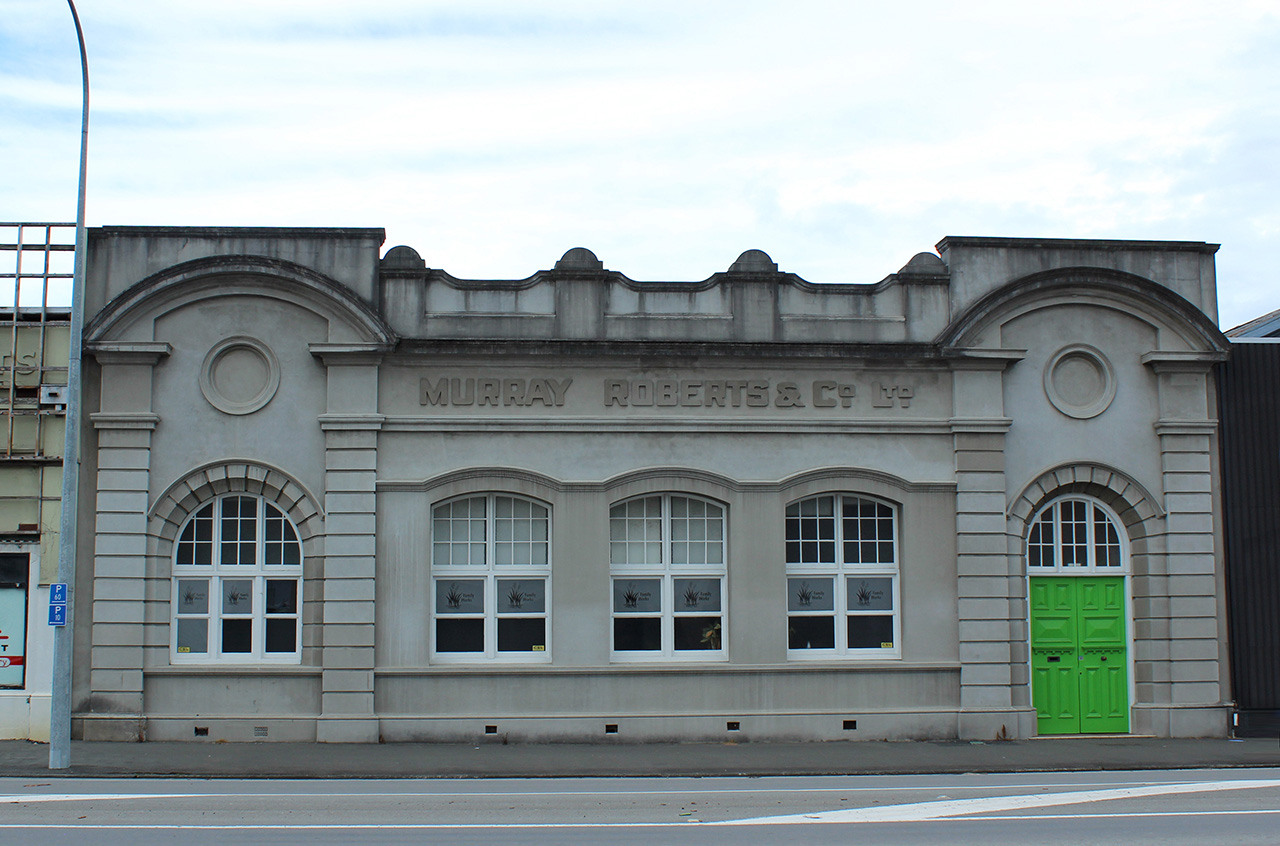
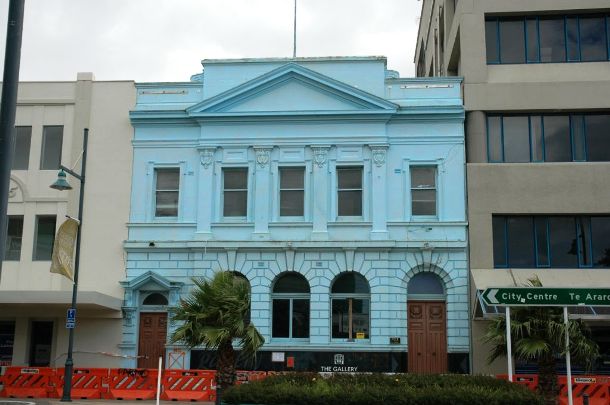
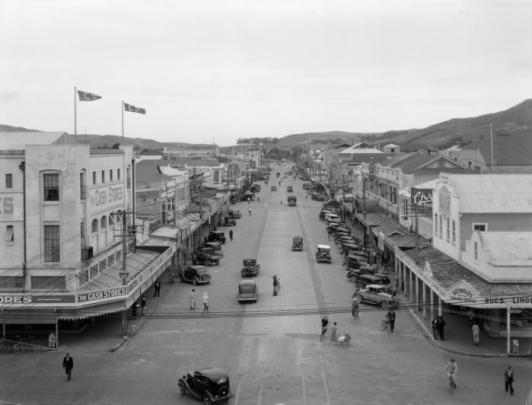
From the early 1870's through to WWI Gisborne flourished due to the trade generated by a farming boom. Original timber buildings were replaced with masonry structures in the early decades of this century reflecting the town's confidence in the future. The majority of the buildings within the Peel St/Gladstone area are former banks or commercial premises that have had a variety of uses over the years and are significant for their streetscape value.
The Albion, opened by Captain Read in 1868, was the first hotel in Gisborne to offer accommodation as well as provide rooms for the first gentlemen's club in the town.
List Entry Information
Status
Listed
List Entry Status
Historic Area
Access
Private/No Public Access
List Number
7017
Date Entered
28th April 1995
Date of Effect
28th April 1995
City/District Council
Gisborne District
Region
Gisborne Region
Extent of List Entry
Includes buildings between 9 and 37 Gladstone Road, including Eastern Co-op Building Society Building; Albion Club Hotel; National Bank; Sun City Pharmacy Building.
Status
Listed
List Entry Status
Historic Area
Access
Private/No Public Access
List Number
7017
Date Entered
28th April 1995
Date of Effect
28th April 1995
City/District Council
Gisborne District
Region
Gisborne Region
Extent of List Entry
Includes buildings between 9 and 37 Gladstone Road, including Eastern Co-op Building Society Building; Albion Club Hotel; National Bank; Sun City Pharmacy Building.
Why is this place significant?
Cultural Significance
Social: The mix of old and new commercial architecture within this historic business area reflects the changes in Gisborne over the last seventy years. Hotels such as the Albion have played a major role in the town's social activities and development. They have served the local community as venues and gathering places since the 1870's despite considerable changes in lifestyle.
Historic Significance
Historical Significance or Value The Gladstone Rd area has continued to be the business centre of Gisborne since Captain Read's settlement in the 1870's. The remaining examples of commercial property erected c.1910 are a reminder of the town's prosperity in the early decades of this century. The Gladstone Rd area is significant as a piece of well preserved early twentieth century townscape. The area also has interesting historical links dating back to the early settlement and commercial development of Gisborne.
Physical Significance
Architectural: Two of the specified buildings within the area are the work of Gisborne architects Burr & Mirfield (established 1912) who designed a large number of buildings within Gisborne's central business area. The buildings within the area are of a similar age and are compatible in terms of scale and design. The survival of these Stripped Classical buildings (unreinforced masonry) constructed pre-1930 is significant because so many within the Hawkes Bay area were lost in the Napier earthquake. Aesthetic: This group of well maintained buildings of similar design, age and scale form attractive, uninterrupted streetscape along one of Gisborne's main roads.
Why is this place significant?
Cultural Significance
Social: The mix of old and new commercial architecture within this historic business area reflects the changes in Gisborne over the last seventy years. Hotels such as the Albion have played a major role in the town's social activities and development. They have served the local community as venues and gathering places since the 1870's despite considerable changes in lifestyle.
Historic Significance
Historical Significance or Value The Gladstone Rd area has continued to be the business centre of Gisborne since Captain Read's settlement in the 1870's. The remaining examples of commercial property erected c.1910 are a reminder of the town's prosperity in the early decades of this century. The Gladstone Rd area is significant as a piece of well preserved early twentieth century townscape. The area also has interesting historical links dating back to the early settlement and commercial development of Gisborne.
Physical Significance
Architectural: Two of the specified buildings within the area are the work of Gisborne architects Burr & Mirfield (established 1912) who designed a large number of buildings within Gisborne's central business area. The buildings within the area are of a similar age and are compatible in terms of scale and design. The survival of these Stripped Classical buildings (unreinforced masonry) constructed pre-1930 is significant because so many within the Hawkes Bay area were lost in the Napier earthquake. Aesthetic: This group of well maintained buildings of similar design, age and scale form attractive, uninterrupted streetscape along one of Gisborne's main roads.
Historical and Associated Iwi / Hapū / Whānau
Report Written By
NZHPT
Information Sources
Gisborne Herald
14 Dec 2012
Robinson, 1990
Sheila Robinson and John Berry (eds.), Gisborne Exposed: The Photographs of William Crawford 1874-1913, Gisborne, 1990
Historic Places in New Zealand
Historic Places in New Zealand
Other Information
A copy of the original report is available from the NZHPT Northern region office Please note that entry on the New Zealand Heritage List/Rarangi Korero identifies only the heritage values of the property concerned, and should not be construed as advice on the state of the property, or as a comment of its soundness or safety, including in regard to earthquake risk, safety in the event of fire, or insanitary conditions. This historic area was registered under the Historic Places Act 1993. The following text is from the original Recommendation for Registration considered by the NZHPT Board at the time of registration.
Historical and Associated Iwi / Hapū / Whānau
Report Written By
NZHPT
Information Sources
Gisborne Herald
14 Dec 2012
Robinson, 1990
Sheila Robinson and John Berry (eds.), Gisborne Exposed: The Photographs of William Crawford 1874-1913, Gisborne, 1990
Historic Places in New Zealand
Historic Places in New Zealand
Other Information
A copy of the original report is available from the NZHPT Northern region office Please note that entry on the New Zealand Heritage List/Rarangi Korero identifies only the heritage values of the property concerned, and should not be construed as advice on the state of the property, or as a comment of its soundness or safety, including in regard to earthquake risk, safety in the event of fire, or insanitary conditions. This historic area was registered under the Historic Places Act 1993. The following text is from the original Recommendation for Registration considered by the NZHPT Board at the time of registration.
Former Usages
General Usage: Accommodation
Specific Usage: Hotel
General Usage: Finance
Specific Usage: Bank
General Usage: Health
Specific Usage: Pharmacy
General Usage: Trade
Specific Usage: Office building/Offices
General Usage: Trade
Specific Usage: Shop
Former Usages
General Usage: Accommodation
Specific Usage: Hotel
General Usage: Finance
Specific Usage: Bank
General Usage: Health
Specific Usage: Pharmacy
General Usage: Trade
Specific Usage: Office building/Offices
General Usage: Trade
Specific Usage: Shop