DonateMembershipVisit Heritage
  • Tūrangawaewae
    Places
  • Tira Māori
    Māori Heritage
  • Poutairangahia
    Archaeology
  • Rauemi
    Resources
  • Mō Tātou
    About Us
  • New Zealand Heritage List
  • Nominate and submit
  • Explore the List
  • National Historic Landmarks
  • Plaques
  • Rainbow List Project
  • Lost heritage
  • Visit Heritage
  • Our properties
  • Turnbull House Project
  • Collections
  • Shop
  • Tohu Whenua
  • Tira Māori
  • Conserving Māori heritage
  • Marae built heritage
  • Māori heritage on the List
  • Hinemihi—Te Hokinga Mai
  • What is archaeology?
  • Is there a site on my property?
  • What are my legal requirements?
  • Affecting an archaeological site
  • Declaring an archaeological site
  • Archaeology FAQs
  • Archaeology Digital Library
  • Archaeology guidelines and templates
  • Resources
  • Funding
  • Publications
  • Sustainable management guides
  • Disaster recovery
  • Podcasts & digital resources
  • Education Hub
  • Conservation plans
  • About
  • Board
  • Māori Heritage Council
  • Senior Staff
  • Offices
  • Contact us
  • Careers
  • Covenants
  • Fast-track
  • Corporate documents
  • Currently consulting on
  • Our submissions
  • News
  • Covid-19 response
Quick links
Rārangi Kōrero | The List
Explore the List
National Historic Landmarks
Ngā Manawhenua o Aotearoa me ōna Kōrero Tūturu
Quick links
Tapuwae
A Vision for Places of Māori Heritage
Funding for Māori Heritage
Resources
Quick links
Archaeological Authority Portal
Applying for an archaeological authority
Archaeology FAQs
Browse the most frequently asked questions about archaeological authorities and the archaeological process.
Quick links
Quick links
News
News Keep up to date with Heritage New Zealand Pouhere Taonga
Membership
Membership Find out more and sign up today
DonateMembershipVisit Heritage
  • Tūrangawaewae
    Places
  • Tira Māori
    Māori Heritage
  • Poutairangahia
    Archaeology
  • Rauemi
    Resources
  • Mō Tātou
    About Us
  • New Zealand Heritage List
  • Nominate and submit
  • Explore the List
  • National Historic Landmarks
  • Plaques
  • Rainbow List Project
  • Lost heritage
  • Visit Heritage
  • Our properties
  • Turnbull House Project
  • Collections
  • Shop
  • Tohu Whenua
  • Tira Māori
  • Conserving Māori heritage
  • Marae built heritage
  • Māori heritage on the List
  • Hinemihi—Te Hokinga Mai
  • What is archaeology?
  • Is there a site on my property?
  • What are my legal requirements?
  • Affecting an archaeological site
  • Declaring an archaeological site
  • Archaeology FAQs
  • Archaeology Digital Library
  • Archaeology guidelines and templates
  • Resources
  • Funding
  • Publications
  • Sustainable management guides
  • Disaster recovery
  • Podcasts & digital resources
  • Education Hub
  • Conservation plans
  • About
  • Board
  • Māori Heritage Council
  • Senior Staff
  • Offices
  • Contact us
  • Careers
  • Covenants
  • Fast-track
  • Corporate documents
  • Currently consulting on
  • Our submissions
  • News
  • Covid-19 response
Quick links
Rārangi Kōrero | The List
Explore the List
National Historic Landmarks
Ngā Manawhenua o Aotearoa me ōna Kōrero Tūturu
Quick links
Tapuwae
A Vision for Places of Māori Heritage
Funding for Māori Heritage
Resources
Quick links
Archaeological Authority Portal
Applying for an archaeological authority
Archaeology FAQs
Browse the most frequently asked questions about archaeological authorities and the archaeological process.
Quick links
Quick links
News
News Keep up to date with Heritage New Zealand Pouhere Taonga
Membership
Membership Find out more and sign up today
  • Places
  • Nominate and submit
  • National Historic Landmarks
  • Places
  • Nominate and submit
  • National Historic Landmarks
  • Tira Māori
  • Conserving Māori heritage
  • Marae built heritage
  • Tira Māori
  • Conserving Māori heritage
  • Marae built heritage
  • Archaeological authorities
  • Archaeology Digital Library
  • Archaeological authorities
  • Archaeology Digital Library
  • All resources
  • Publications
  • Funding
  • All resources
  • Publications
  • Funding
  • FAQs
  • FAQs
Follow us on:
Places
  • Places
  • Nominate and submit
  • National Historic Landmarks
Tira Māori
  • Tira Māori
  • Conserving Māori heritage
  • Marae built heritage
Archaeology
  • Archaeological authorities
  • Archaeology Digital Library
Resources
  • All resources
  • Publications
  • Funding
FAQs
  • FAQs
Follow us on
HomePrivacyTerms and conditionsAbout this site
© Heritage New Zealand Pouhere Taonga 2026.
 
Dominion Observatory Historic Area

Bounded by North Terrace, Upland Road, Rawhiti Terrace, Salamanca Road, Kelburn, WELLINGTON

Public

Historic Area

List No. 7033

Quick links:
List GalleryLocationDetails
GENERAL DESCRIPTION:
The Dominion Observatory was erected in 1907 as the observatory for the Government Time Service. The Time Service itself had been created in 1868 when a standard time was established for all New Zealand.

In 1869 an observatory was erected in Wellington, in the Bolton Street cemetery reserve, above and behind the cemetery's consecrated ground. By the early 1900's, both the cemetery and the town were threatening to crowd the observatory out. In anticipation of this, provision had been made for the observatory to move to Kelburn at the urging of James Hector, Director of the Time Service (1869-1903). The 1891 Wellington Botanic Gardens Vesting Act incorporated Hector's proposal by permitting Government to appropriate an area in the south-eastern corner of the Gardens from the City Corporation as an observatory site.

The new building was erected in 1907 on the site of the former Gardens Battery. It was named the Hector Observatory in recognition of the vast contribution made by Hector to the advancement of science in New Zealand.

In 1925 the observatory, by then known as the Dominion Observatory, was incorporated in the newly formed Department of Scientific and Industrial Research and from that time also undertook responsibility for seismology.

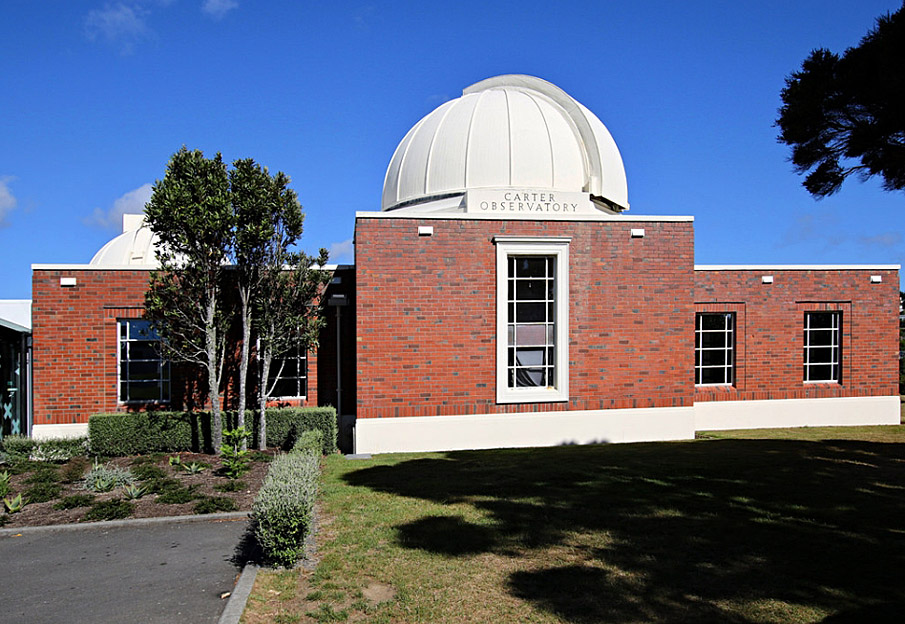
In 1938, as a result of lobbying by the New Zealand Institute, Wellington City Council and others, the Carter Observatory Act was passed. This observatory assumed responsibility for astronomical observations. It owes its existence to a bequest by Charles Carter, a prominent pioneer in the history of early Wellington and the Wairarapa.

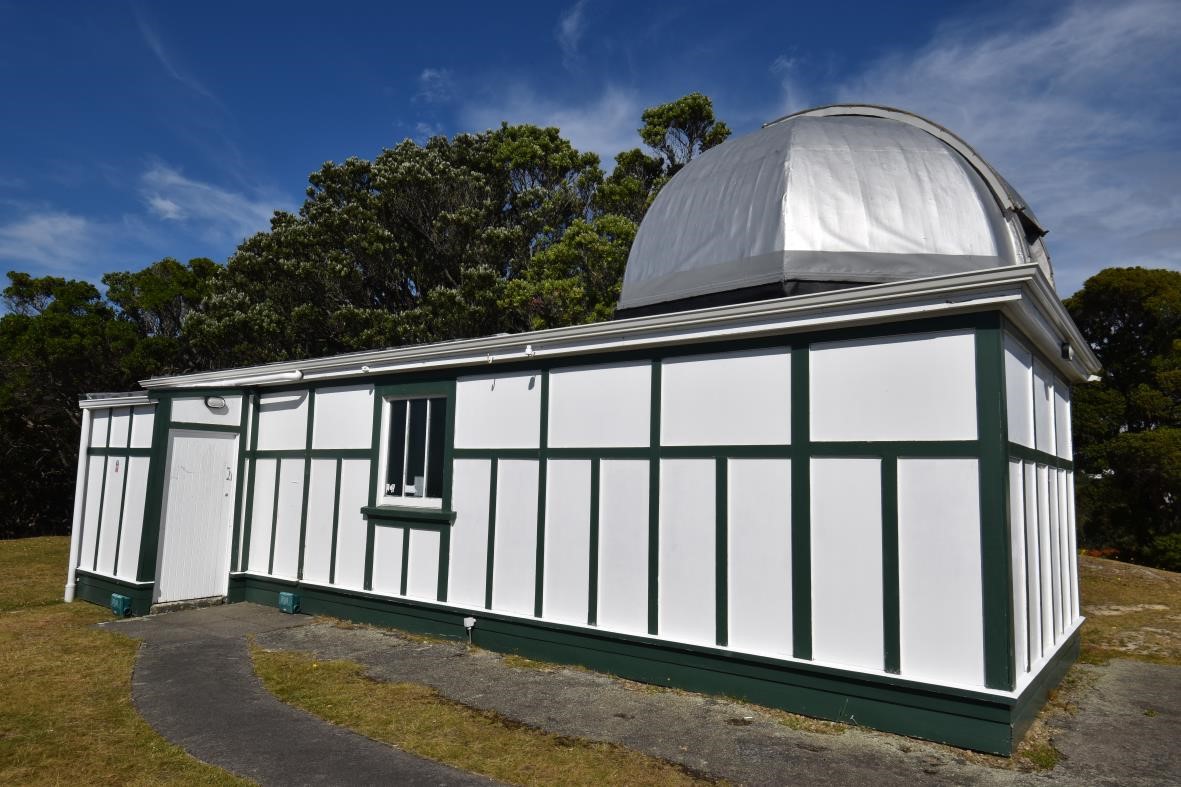
The third observatory is the Thomas King Observatory. It is named in honour of an early astronomer active in maintaining the Time Service during the nineteenth century.

Below the Seismological Observatory building lie the remains of an old defence fortification known as the Gardens Battery. The Battery is one of a number constructed throughout Wellington at the time of the Russian scare of 1884-86. The fortifications were demolished at about the turn of the century and all that remains is the old powder magazine lying underground, now housing seismological and time-keeping equipment.
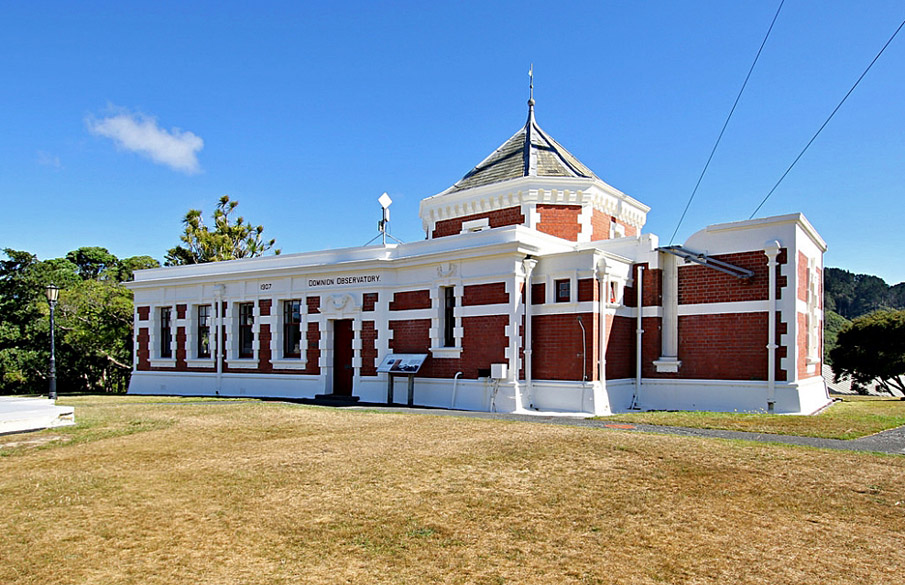
Dominion Observatory Historic Area, Wellington. The Dominion Observatory. Image courtesy of www.flickr.com | Paul Le Roy – Minicooperd | 20/02/2016 | Paul Le Roy
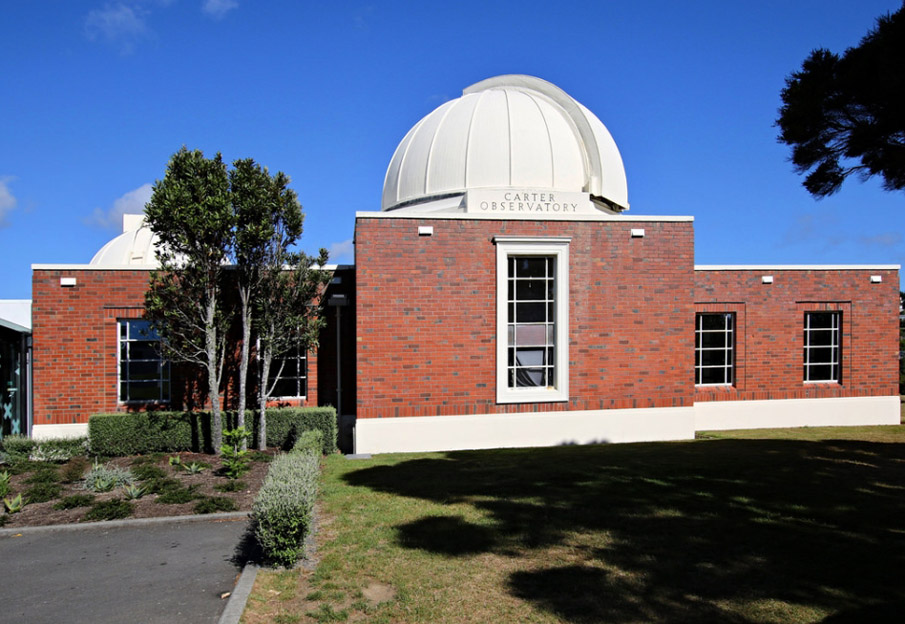
Dominion Observatory Historic Area, Wellington. The Carter Observatory. Image courtesy of www.flickr.com | Paul Le Roy – Minicooperd | 20/02/2016 | Paul Le Roy
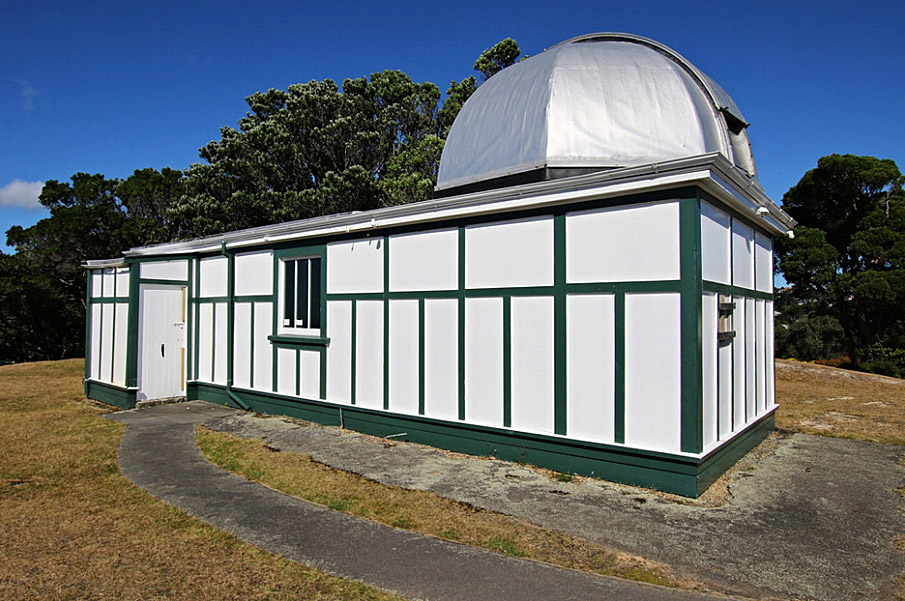
Dominion Observatory Historic Area, Wellington. The Thomas King Observatory. Image courtesy of www.flickr.com | Paul Le Roy – Minicooperd | 20/02/2016 | Paul Le Roy
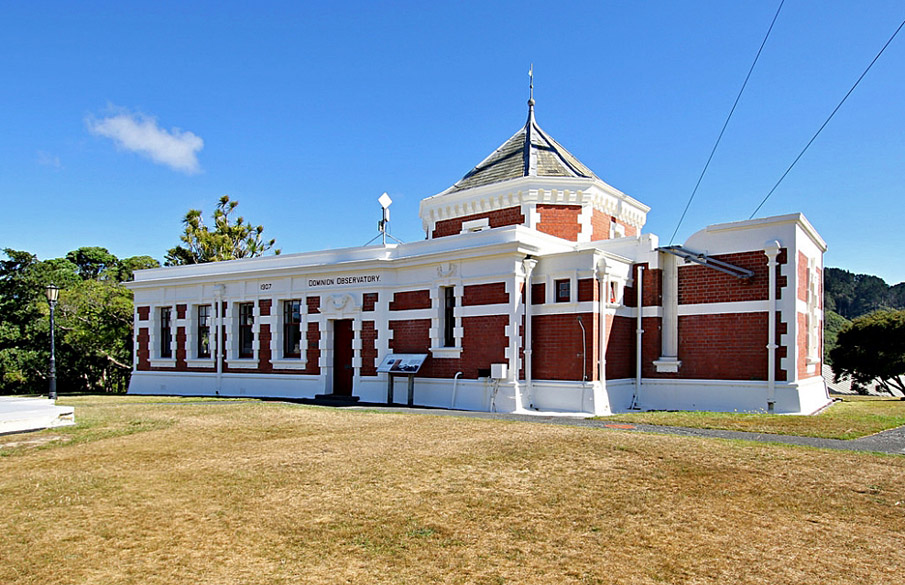
Dominion Observatory Historic Area, Wellington. The Dominion Observatory. Image courtesy of www.flickr.com | Paul Le Roy – Minicooperd | 20/02/2016 | Paul Le Roy
Dominion Observatory Historic Area, Wellington. The Carter Observatory. Image courtesy of www.flickr.com | Paul Le Roy – Minicooperd | 20/02/2016 | Paul Le Roy
Dominion Observatory Historic Area, Wellington. The Thomas King Observatory. Image courtesy of www.flickr.com | Paul Le Roy – Minicooperd | 20/02/2016 | Paul Le Roy

List Entry Information

Overview

Status
Listed

List Entry Status
Historic Area

Access
Able to Visit

List Number
7033

Date Entered
27th October 1994

Date of Effect
27th October 1994

City/District Council
Wellington City

Region
Wellington Region

Extent of List Entry

Located in the botanical gardens. Includes Dominion Observatory (#4700) Carter Observatory (#3596) Thomas King Observatory (#9024) Gardens Battery Remains Scout Hall.

Legal description

Pt Lot 1 DP 8530 (RT WN48A/126), Sec 1231 Town of Wellington (NZ Gazette 1998, p.68), Sec 1233 Town of Wellington NZ Gazette 1998, p.68), Lot 2 DP 74620 (RT WN43A/732), Lot 1 DP 74620 (RT WN54C/649), Sec 1224 Town of Wellington (RT WNC2/1321), Lot 1 DP 81339 (RT WN48A/124), Lot 2 DP 81339 (RT WN48A/125), Wellington Land District

Detailed List Entry
Significance

Historic Significance

Historical Significance or Value The observatories represent the establishment of the Government Time Service and continuing research into seismological activity and astronomy. The association with James Hector is also significant. During his career he had been the Director for the Colonial Museum, Colonial Laboratory, Colonial Botanic Gardens and Geological Survey as well as the Colonial Observatory. The former Garden Battery and Scout hall provide an interesting link to early military history. The area has important historical associations with the development of government scientific organisations and Wellington's defence forces during the Russian scare (1884-86). The group of observatory buildings has visual quality, set in the Botanic Gardens.

Physical Significance

Architectural: The area forms a pleasing group of buildings but those of particular note are the Dominion Observatory designed by government architect, J.T. Campbell and the Carter Observatory designed by Wellington architect, William Gray Young. Technological: The area has considerable significance for its historical associations with the growth of government involvement in scientific activity since the late 1860's. Aesthetic: The area is adjacent to the Botanic Gardens, on reserve land, and is surrounded by attractive lawns and trees. The small low lying buildings blend in well with their setting and this setting enhances their appearance. In addition to its attractive surrounds, the area is also notable for its commanding position, offering superb views overlooking the central city and the harbour.

Physical Description

DESCRIPTION OF BOUNDARY: The south-eastern corner of the Wellington Botanic gardens. LIST OF ITEMS: Dominion (Seismological) Observatory, Carter Observatory, former Gardens Battery (all that remain are the storage rooms beneath the Seismological Observatory), Scout Hall, Thomas King Observatory. STRUCTURES: Dominion Observatory (Category I): Erected in 1907, the red brick building was designed by government Architect, J.T. Campbell. The building consisted of a transit room, octagonal clock room, and an office in the tower above it. In 1925 a new wing consisting of four offices was added to the western side of the building. Carter Observatory (Category II): The Carter Observatory owes its existence to a bequest by Charles Redding Carter (1822-1896), a prominent pioneer in the history of early Wellington and the Wairarapa. This red brick building was constructed in 1940 to the design of Wellington architect, William Gray Young. Additions were made in 1967, to house the Carter's extensive library. Thomas King Observatory: It is named in honour of an early astronomer active in maintaining the Time Service during the late nineteenth century, and who bequeathed his substantial private observatory to the Royal Society on his death. The building is small and plain in appearance and houses a five inch telescope. former Gardens Battery: Below the Seismological Observatory building lie the remains of the Gardens Battery. All that remains is the old powder magazine lying underground, now housing seismological and time-keeping equipment. Scout Hall: This is a small wooden structure has been used by the Kelburn Scouts since 1907. Before this its function is uncertain, but it may have been used as a barracks for gunners manning the Gardens Battery.

Reference

Completion Date

27th October 1994

Report Written By

NZHPT

Information Sources

McKenzie, 1984 (3)

James McKenzie, Dominion Observatory Precinct, Wellington, New Zealand Historic Places Trust, 1984.

Report Written By

This historic place was registered under the Historic Places Act 1993. This report includes text from the original Proposal for Registration considered by the NZHPT Board at the time of registration. Please note that entry on the New Zealand Heritage List/Rarangi Korero identifies only the heritage values of the property concerned, and should not be construed as advice on the state of the property, or as a comment of its soundness or safety, including in regard to earthquake risk, safety in the event of fire, or insanitary conditions.

Further Information

Current Usages

Uses: Research

Specific Usage: Observatory

Former Usages

General Usage:: Research

Specific Usage: Observatory

Themes

Web Links

Overview

Status

Listed

List Entry Status

Historic Area

Access

Able to Visit

List Number

7033

Date Entered

27th October 1994

Date of Effect

27th October 1994

City/District Council

Wellington City

Region

Wellington Region

Extent of List Entry

Located in the botanical gardens. Includes Dominion Observatory (#4700) Carter Observatory (#3596) Thomas King Observatory (#9024) Gardens Battery Remains Scout Hall.

Legal description

Pt Lot 1 DP 8530 (RT WN48A/126), Sec 1231 Town of Wellington (NZ Gazette 1998, p.68), Sec 1233 Town of Wellington NZ Gazette 1998, p.68), Lot 2 DP 74620 (RT WN43A/732), Lot 1 DP 74620 (RT WN54C/649), Sec 1224 Town of Wellington (RT WNC2/1321), Lot 1 DP 81339 (RT WN48A/124), Lot 2 DP 81339 (RT WN48A/125), Wellington Land District

Status

Listed

List Entry Status

Historic Area

Access

Able to Visit

List Number

7033

Date Entered

27th October 1994

Date of Effect

27th October 1994

City/District Council

Wellington City

Region

Wellington Region

Extent of List Entry

Located in the botanical gardens. Includes Dominion Observatory (#4700) Carter Observatory (#3596) Thomas King Observatory (#9024) Gardens Battery Remains Scout Hall.

Legal description

Pt Lot 1 DP 8530 (RT WN48A/126), Sec 1231 Town of Wellington (NZ Gazette 1998, p.68), Sec 1233 Town of Wellington NZ Gazette 1998, p.68), Lot 2 DP 74620 (RT WN43A/732), Lot 1 DP 74620 (RT WN54C/649), Sec 1224 Town of Wellington (RT WNC2/1321), Lot 1 DP 81339 (RT WN48A/124), Lot 2 DP 81339 (RT WN48A/125), Wellington Land District

Significance

Why is this place significant?

Historic Significance

Historical Significance or Value The observatories represent the establishment of the Government Time Service and continuing research into seismological activity and astronomy. The association with James Hector is also significant. During his career he had been the Director for the Colonial Museum, Colonial Laboratory, Colonial Botanic Gardens and Geological Survey as well as the Colonial Observatory. The former Garden Battery and Scout hall provide an interesting link to early military history. The area has important historical associations with the development of government scientific organisations and Wellington's defence forces during the Russian scare (1884-86). The group of observatory buildings has visual quality, set in the Botanic Gardens.

Physical Significance

Architectural: The area forms a pleasing group of buildings but those of particular note are the Dominion Observatory designed by government architect, J.T. Campbell and the Carter Observatory designed by Wellington architect, William Gray Young. Technological: The area has considerable significance for its historical associations with the growth of government involvement in scientific activity since the late 1860's. Aesthetic: The area is adjacent to the Botanic Gardens, on reserve land, and is surrounded by attractive lawns and trees. The small low lying buildings blend in well with their setting and this setting enhances their appearance. In addition to its attractive surrounds, the area is also notable for its commanding position, offering superb views overlooking the central city and the harbour.

Why is this place significant?

Historic Significance

Historical Significance or Value The observatories represent the establishment of the Government Time Service and continuing research into seismological activity and astronomy. The association with James Hector is also significant. During his career he had been the Director for the Colonial Museum, Colonial Laboratory, Colonial Botanic Gardens and Geological Survey as well as the Colonial Observatory. The former Garden Battery and Scout hall provide an interesting link to early military history. The area has important historical associations with the development of government scientific organisations and Wellington's defence forces during the Russian scare (1884-86). The group of observatory buildings has visual quality, set in the Botanic Gardens.

Physical Significance

Architectural: The area forms a pleasing group of buildings but those of particular note are the Dominion Observatory designed by government architect, J.T. Campbell and the Carter Observatory designed by Wellington architect, William Gray Young. Technological: The area has considerable significance for its historical associations with the growth of government involvement in scientific activity since the late 1860's. Aesthetic: The area is adjacent to the Botanic Gardens, on reserve land, and is surrounded by attractive lawns and trees. The small low lying buildings blend in well with their setting and this setting enhances their appearance. In addition to its attractive surrounds, the area is also notable for its commanding position, offering superb views overlooking the central city and the harbour.

Physical Description

DESCRIPTION OF BOUNDARY: The south-eastern corner of the Wellington Botanic gardens. LIST OF ITEMS: Dominion (Seismological) Observatory, Carter Observatory, former Gardens Battery (all that remain are the storage rooms beneath the Seismological Observatory), Scout Hall, Thomas King Observatory. STRUCTURES: Dominion Observatory (Category I): Erected in 1907, the red brick building was designed by government Architect, J.T. Campbell. The building consisted of a transit room, octagonal clock room, and an office in the tower above it. In 1925 a new wing consisting of four offices was added to the western side of the building. Carter Observatory (Category II): The Carter Observatory owes its existence to a bequest by Charles Redding Carter (1822-1896), a prominent pioneer in the history of early Wellington and the Wairarapa. This red brick building was constructed in 1940 to the design of Wellington architect, William Gray Young. Additions were made in 1967, to house the Carter's extensive library. Thomas King Observatory: It is named in honour of an early astronomer active in maintaining the Time Service during the late nineteenth century, and who bequeathed his substantial private observatory to the Royal Society on his death. The building is small and plain in appearance and houses a five inch telescope. former Gardens Battery: Below the Seismological Observatory building lie the remains of the Gardens Battery. All that remains is the old powder magazine lying underground, now housing seismological and time-keeping equipment. Scout Hall: This is a small wooden structure has been used by the Kelburn Scouts since 1907. Before this its function is uncertain, but it may have been used as a barracks for gunners manning the Gardens Battery.

DESCRIPTION OF BOUNDARY: The south-eastern corner of the Wellington Botanic gardens. LIST OF ITEMS: Dominion (Seismological) Observatory, Carter Observatory, former Gardens Battery (all that remain are the storage rooms beneath the Seismological Observatory), Scout Hall, Thomas King Observatory. STRUCTURES: Dominion Observatory (Category I): Erected in 1907, the red brick building was designed by government Architect, J.T. Campbell. The building consisted of a transit room, octagonal clock room, and an office in the tower above it. In 1925 a new wing consisting of four offices was added to the western side of the building. Carter Observatory (Category II): The Carter Observatory owes its existence to a bequest by Charles Redding Carter (1822-1896), a prominent pioneer in the history of early Wellington and the Wairarapa. This red brick building was constructed in 1940 to the design of Wellington architect, William Gray Young. Additions were made in 1967, to house the Carter's extensive library. Thomas King Observatory: It is named in honour of an early astronomer active in maintaining the Time Service during the late nineteenth century, and who bequeathed his substantial private observatory to the Royal Society on his death. The building is small and plain in appearance and houses a five inch telescope. former Gardens Battery: Below the Seismological Observatory building lie the remains of the Gardens Battery. All that remains is the old powder magazine lying underground, now housing seismological and time-keeping equipment. Scout Hall: This is a small wooden structure has been used by the Kelburn Scouts since 1907. Before this its function is uncertain, but it may have been used as a barracks for gunners manning the Gardens Battery.

Reference

Historical and Associated Iwi / Hapū / Whānau

Completion Date

27th October 1994

Report Written By

NZHPT

Information Sources

McKenzie, 1984 (3)

James McKenzie, Dominion Observatory Precinct, Wellington, New Zealand Historic Places Trust, 1984.

Other Information

This historic place was registered under the Historic Places Act 1993. This report includes text from the original Proposal for Registration considered by the NZHPT Board at the time of registration. Please note that entry on the New Zealand Heritage List/Rarangi Korero identifies only the heritage values of the property concerned, and should not be construed as advice on the state of the property, or as a comment of its soundness or safety, including in regard to earthquake risk, safety in the event of fire, or insanitary conditions.

Historical and Associated Iwi / Hapū / Whānau

Completion Date

27th October 1994

Report Written By

NZHPT

Information Sources

McKenzie, 1984 (3)

James McKenzie, Dominion Observatory Precinct, Wellington, New Zealand Historic Places Trust, 1984.

Other Information

This historic place was registered under the Historic Places Act 1993. This report includes text from the original Proposal for Registration considered by the NZHPT Board at the time of registration. Please note that entry on the New Zealand Heritage List/Rarangi Korero identifies only the heritage values of the property concerned, and should not be construed as advice on the state of the property, or as a comment of its soundness or safety, including in regard to earthquake risk, safety in the event of fire, or insanitary conditions.

Further Information

Current Usages

Uses: Research

Specific Usage: Observatory

Former Usages

General Usage: Research

Specific Usage: Observatory

Current Usages

Uses: Research

Specific Usage: Observatory

Former Usages

General Usage: Research

Specific Usage: Observatory

Location

Loading
Related listings
Dominion Observatory, Wellington. Image courtesy of www.flickr.com
Dominion Observatory
Carter Observatory, Wellington. Image courtesy of www.flickr.com
Carter Observatory
Thomas King Observatory, Wellington
Thomas King Observatory
Carter Observatory, Wellington. Image courtesy of www.flickr.com
Carter Observatory
Dominion Observatory, Wellington. Image courtesy of www.flickr.com
Dominion Observatory
Thomas King Observatory, Wellington
Thomas King Observatory
Stay up to date with Heritage this month