This greenhouse, opened in 1929, was designed by Oamaru architect Ivan Steenson, and provides a protected environment to display frost tender plants in Oamaru’s cool climate. A popular attraction in the Oamaru Public Gardens, the greenhouse has architectural and historical significance.
In 1876 the Oamaru Public Gardens opened on a 34 acre reserve set aside in the 1858 town survey. With their mix of native and exotic plantings, formal lawns and garden beds set alongside the meandering Oamaru Creek, the gardens were a popular gathering and walking place. With Oamaru’s cool climate, it was not possible to provide floral displays for frost tender plants, such as begonias without shelter – a greenhouse was required.
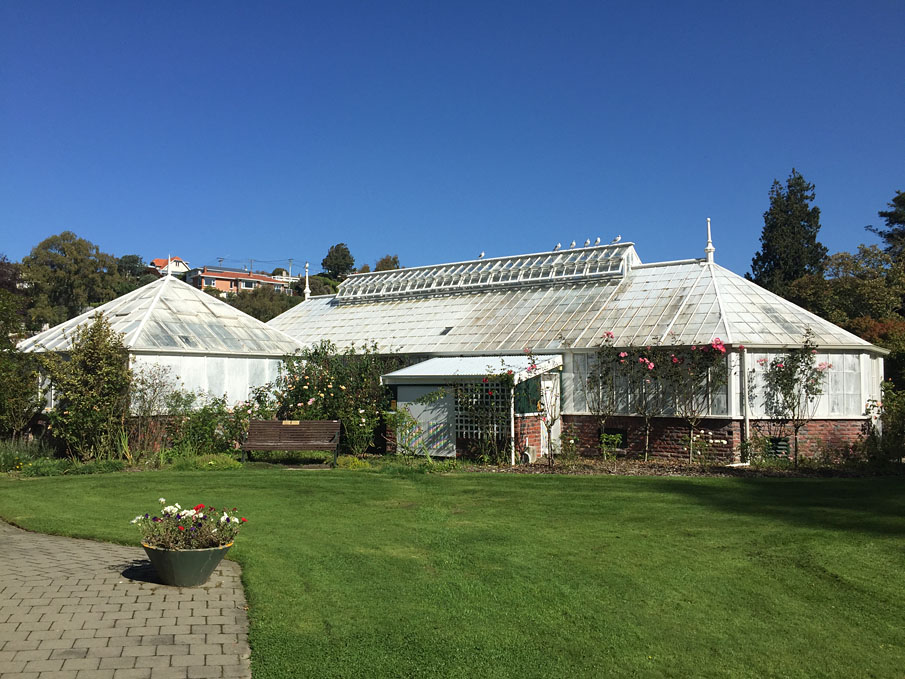
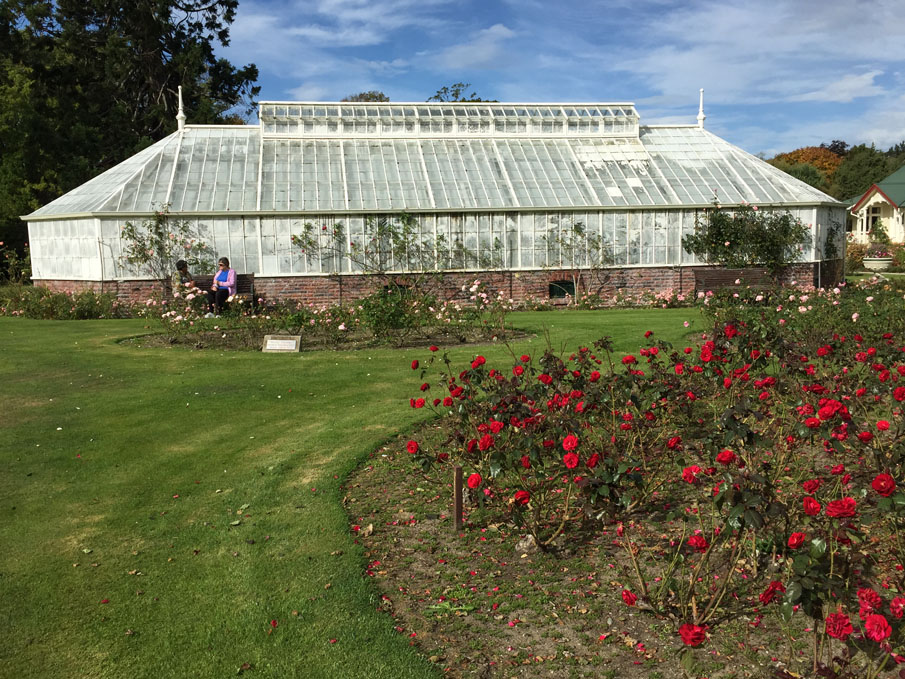
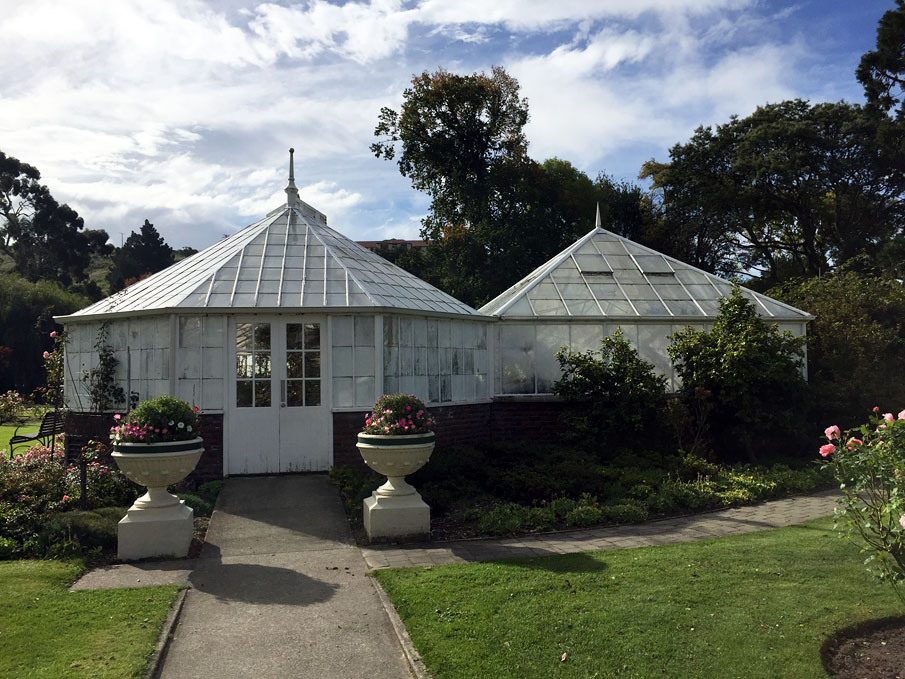
March 1928 saw a garden fete to raise funds for the Oamaru Public Gardens. Close to three thousand pounds were raised, providing funds for many improvements, including a paddling pool, a playing area and an azalea garden. The greenhouse was funded too – costing £1101 including the pots for the plants and a heating system. Architect Ivan Steenson prepared the plans and supervised the work free of charge. The contractors were Maynard and Armstrong. The greenhouse has a brick base and a timber frame supporting the glazing. It is utilitarian in design. An extension on the east side was added at a later stage. The faceted hipped gables of the main greenhouse are topped by finials, and there is a finial on the peak of the addition.
The purpose of the building was to display plants that could not otherwise be grown. The curator of the Oamaru Public Gardens, John Tait, noted that ‘the new house was not to be confused with a hot-house which is specially adapted for the cultivation of tropical plants. The greenhouse, besides being a place of enjoyment, will have an educational value, for it will provide the facilities for exhibiting plants which otherwise could not be cultivated in our climate . . .’ Tait believed it was the ‘largest and most up-to-date true greenhouse in the Dominion.’ Tait planned to have a changing year round display of specimen plants.
The greenhouse was one of the highlights of the Oamaru Public Gardens. A visitor in 1939 reported themselves ‘[g]ripped by the beauty that abounds on every hand, and the atmosphere of peacefulness that reigns, there is an inclination to linger on, but the visitor whose time is limited must hasten, for the climax still awaits in the greenhouse. Immediately the threshold is crossed the imagination is stirred by the beauty of texture and blend of colour provided by cyclamen, cinerarias, and primulas. Oamaru has become famed for the quality of its greenhouse displays, particularly begonias, but it is no idle prediction to say that if the tourist traffic were as great in September and October, when the cyclamen are flourishing, as it is in January and February, with the begonias at their best, then visitors would spread their appreciation of the beauty of the cyclamen displays.’
The greenhouse has remained a source of pleasure for visitors to the Oamaru Public Gardens throughout the twentieth century and in 2015, continues to house seasonal displays.
In 1876 the Oamaru Public Gardens opened on a 34 acre reserve set aside in the 1858 town survey. With their mix of native and exotic plantings, formal lawns and garden beds set alongside the meandering Oamaru Creek, the gardens were a popular gathering and walking place. With Oamaru’s cool climate, it was not possible to provide floral displays for frost tender plants, such as begonias without shelter – a greenhouse was required.
March 1928 saw a garden fete to raise funds for the Oamaru Public Gardens. Close to three thousand pounds were raised, providing funds for many improvements, including a paddling pool, a playing area and an azalea garden. The greenhouse was funded too – costing £1101 including the pots for the plants and a heating system. Architect Ivan Steenson prepared the plans and supervised the work free of charge. The contractors were Maynard and Armstrong. The greenhouse has a brick base and a timber frame supporting the glazing. It is utilitarian in design. An extension on the east side was added at a later stage. The faceted hipped gables of the main greenhouse are topped by finials, and there is a finial on the peak of the addition.
The purpose of the building was to display plants that could not otherwise be grown. The curator of the Oamaru Public Gardens, John Tait, noted that ‘the new house was not to be confused with a hot-house which is specially adapted for the cultivation of tropical plants. The greenhouse, besides being a place of enjoyment, will have an educational value, for it will provide the facilities for exhibiting plants which otherwise could not be cultivated in our climate . . .’ Tait believed it was the ‘largest and most up-to-date true greenhouse in the Dominion.’ Tait planned to have a changing year round display of specimen plants.
The greenhouse was one of the highlights of the Oamaru Public Gardens. A visitor in 1939 reported themselves ‘[g]ripped by the beauty that abounds on every hand, and the atmosphere of peacefulness that reigns, there is an inclination to linger on, but the visitor whose time is limited must hasten, for the climax still awaits in the greenhouse. Immediately the threshold is crossed the imagination is stirred by the beauty of texture and blend of colour provided by cyclamen, cinerarias, and primulas. Oamaru has become famed for the quality of its greenhouse displays, particularly begonias, but it is no idle prediction to say that if the tourist traffic were as great in September and October, when the cyclamen are flourishing, as it is in January and February, with the begonias at their best, then visitors would spread their appreciation of the beauty of the cyclamen displays.’
The greenhouse has remained a source of pleasure for visitors to the Oamaru Public Gardens throughout the twentieth century and in 2015, continues to house seasonal displays.