List Entry Information
Status
Listed
List Entry Status
Historic Place Category 1
Access
Private/No Public Access
List Number
7234
Date Entered
14th July 1995
Date of Effect
14th July 1995
City/District Council
Christchurch City
Region
Canterbury Region
Legal description
RS 41394 (Lyttelton Recreation Reserve, NZ Gazette 1984 p2768), Canterbury Land District
Status
Listed
List Entry Status
Historic Place Category 1
Access
Private/No Public Access
List Number
7234
Date Entered
14th July 1995
Date of Effect
14th July 1995
City/District Council
Christchurch City
Region
Canterbury Region
Legal description
RS 41394 (Lyttelton Recreation Reserve, NZ Gazette 1984 p2768), Canterbury Land District
Why is this place significant?
Cultural Significance
This historic place was registered under the Historic Places Act 1993. The following text is from the original Recommendation for Registration considered by the NZHPT Board at the time of registration. Cultural: The magazine illustrates the development of the province of Canterbury and its port, and from 1885 its significance as a military adjunct.
Historic Significance
Historical Significance or Value This historic place was registered under the Historic Places Act 1993. The following text is from the original Recommendation for Registration considered by the NZHPT Board at the time of registration. Historical: The magazine was built by the Provincial Government in 1874 for the storage of black powder, explosives and ammunition. From 1885-1945 it was used for storage by the military. It is one of the earliest known examples of European coastal defence installations and demonstrates aspects of external defence of New Zealand in the nineteenth century. Although never used for defence purposes, the magazine illustrates the importance of coastal defences to the country's early defence policies, through the investment of considerable public money.
Physical Significance
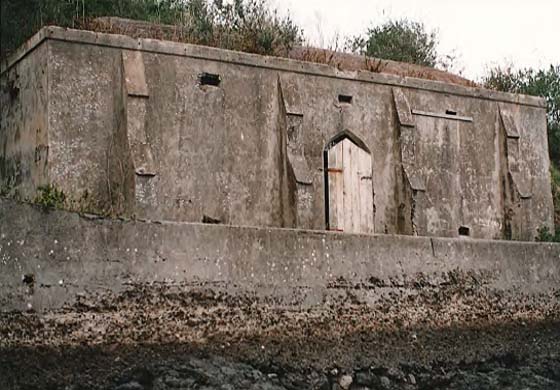
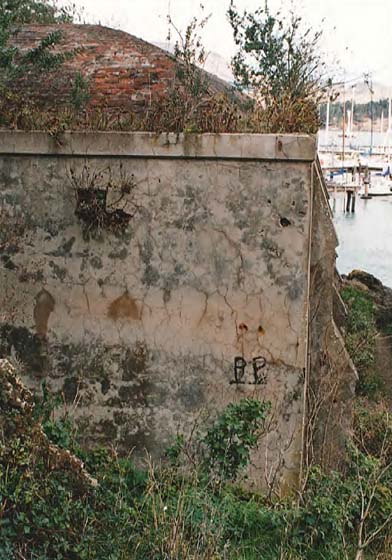
This historic place was registered under the Historic Places Act 1993. The following text is from the original Recommendation for Registration considered by the NZHPT Board at the time of registration. Aesthetic: The magazine is located on the foreshore of the small bay known as Magazine Bay. Through its location, and with its buttressed walls and pointed arch entrance, the magazine has aesthetic appeal. Architectural: The magazine is an example of civil architecture which follows military engineering traditions, and is a relatively early example of mass concrete construction. Archaeological: Built in 1874, both the magazine and the concrete sea wall pre-date 1900. Technological: Purpose built to store and protect black powder, explosives and ammunition. The magazine had to allow for humidity, security, blast protection and public safety, ventilation and constant temperature and direct access to ships and roads. The concrete sea wall provided protection against actions of the sea.
Why is this place Category 1 / Category 2?
Detail Of Assessed Criteria
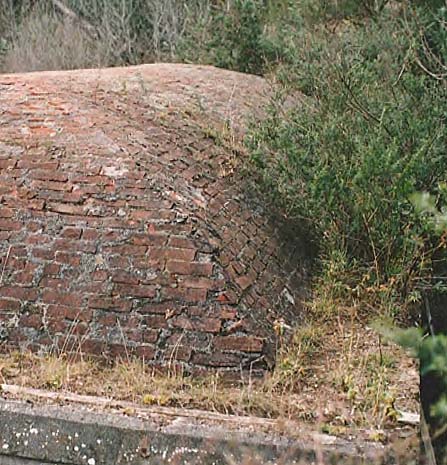
This historic place was registered under the Historic Places Act 1993. The following text is from the original Recommendation for Registration considered by the NZHPT Board at the time of registration. The following comments are made in relation to the criteria identified under S.23(2) of the Historic Places Act 1993. g) The technical accomplishment or value, or design of the place: The Lyttelton magazine demonstrates a relatively early use of mass concrete construction and incorporates volcanic rubble fill. Exterior walls are 655 & 67.5mm thick. The vaulted ceiling, formerly covered by a timber framed roof, is constructed of brick. It is an example of a civil building which can be seen to follow the recommendations of military engineer, Sebastien le Prestre de Vauban (1633 4707) as outlined in Elementary Principles of Fortification,, who was marshal of France and " the most celebrated of military engineers, " (Encyclopaedia of Britannica, 11th ed.) Evidence of this is apparent in the location and construction of the magazine. The Lyttelton magazine, whilst one of several in the country, is regarded as a "text-book" example of Vauban's design and recommendations. The aesthetic appeal of the entrance and buttresses reflect the (possible) influence of Canterbury's provincial architect, B W. Mountfort, New Zealand's pre-eminent Gothic Revival architect. The Lyttelton magazine is a complete essay in text book design and may have been taken by Mountfort directly from Hyde. j) The importance of identifying rare types of historic places: The Lyttelton magazine is not a unique surviving example of either a district or military magazine but it does have a certain rarity in having been used for both purposes. It is the most substantial known example of a district magazine. More importantly, Lyttelton is a textbook example of a Vauban magazine and almost duplicates exactly the design which appeared in Hyde's book in 1860 It has the same rectangular plan, brick arched roof, ventilation holes spaced at regular intervals along the top and bottom of the walls, thick walls and eight regularly spaced exterior buttresses. The mass concrete construction can be seen as a significant innovation since Vauban conceived of his design being built of masonry. Conclusion: The Magazine at Magazine Bay, Lyttelton, is recommended for registration as a Category I historic place as a place of special and outstanding historical and cultural heritage significance and value. This building is are early example of a European coastal defence installation. The mass concrete structure is a text book example of military magazine design which follows the recommendations of the French military engineer, Vauban.
Why is this place significant?
Cultural Significance
This historic place was registered under the Historic Places Act 1993. The following text is from the original Recommendation for Registration considered by the NZHPT Board at the time of registration. Cultural: The magazine illustrates the development of the province of Canterbury and its port, and from 1885 its significance as a military adjunct.
Historic Significance
Historical Significance or Value This historic place was registered under the Historic Places Act 1993. The following text is from the original Recommendation for Registration considered by the NZHPT Board at the time of registration. Historical: The magazine was built by the Provincial Government in 1874 for the storage of black powder, explosives and ammunition. From 1885-1945 it was used for storage by the military. It is one of the earliest known examples of European coastal defence installations and demonstrates aspects of external defence of New Zealand in the nineteenth century. Although never used for defence purposes, the magazine illustrates the importance of coastal defences to the country's early defence policies, through the investment of considerable public money.
Physical Significance
This historic place was registered under the Historic Places Act 1993. The following text is from the original Recommendation for Registration considered by the NZHPT Board at the time of registration. Aesthetic: The magazine is located on the foreshore of the small bay known as Magazine Bay. Through its location, and with its buttressed walls and pointed arch entrance, the magazine has aesthetic appeal. Architectural: The magazine is an example of civil architecture which follows military engineering traditions, and is a relatively early example of mass concrete construction. Archaeological: Built in 1874, both the magazine and the concrete sea wall pre-date 1900. Technological: Purpose built to store and protect black powder, explosives and ammunition. The magazine had to allow for humidity, security, blast protection and public safety, ventilation and constant temperature and direct access to ships and roads. The concrete sea wall provided protection against actions of the sea.
Why is this place Category 1 / Category 2?
Detail Of Assessed Criteria
This historic place was registered under the Historic Places Act 1993. The following text is from the original Recommendation for Registration considered by the NZHPT Board at the time of registration. The following comments are made in relation to the criteria identified under S.23(2) of the Historic Places Act 1993. g) The technical accomplishment or value, or design of the place: The Lyttelton magazine demonstrates a relatively early use of mass concrete construction and incorporates volcanic rubble fill. Exterior walls are 655 & 67.5mm thick. The vaulted ceiling, formerly covered by a timber framed roof, is constructed of brick. It is an example of a civil building which can be seen to follow the recommendations of military engineer, Sebastien le Prestre de Vauban (1633 4707) as outlined in Elementary Principles of Fortification,, who was marshal of France and " the most celebrated of military engineers, " (Encyclopaedia of Britannica, 11th ed.) Evidence of this is apparent in the location and construction of the magazine. The Lyttelton magazine, whilst one of several in the country, is regarded as a "text-book" example of Vauban's design and recommendations. The aesthetic appeal of the entrance and buttresses reflect the (possible) influence of Canterbury's provincial architect, B W. Mountfort, New Zealand's pre-eminent Gothic Revival architect. The Lyttelton magazine is a complete essay in text book design and may have been taken by Mountfort directly from Hyde. j) The importance of identifying rare types of historic places: The Lyttelton magazine is not a unique surviving example of either a district or military magazine but it does have a certain rarity in having been used for both purposes. It is the most substantial known example of a district magazine. More importantly, Lyttelton is a textbook example of a Vauban magazine and almost duplicates exactly the design which appeared in Hyde's book in 1860 It has the same rectangular plan, brick arched roof, ventilation holes spaced at regular intervals along the top and bottom of the walls, thick walls and eight regularly spaced exterior buttresses. The mass concrete construction can be seen as a significant innovation since Vauban conceived of his design being built of masonry. Conclusion: The Magazine at Magazine Bay, Lyttelton, is recommended for registration as a Category I historic place as a place of special and outstanding historical and cultural heritage significance and value. This building is are early example of a European coastal defence installation. The mass concrete structure is a text book example of military magazine design which follows the recommendations of the French military engineer, Vauban.
Construction Details
Start Year
1874
Type
Original Construction
Construction Details
Start Year
1874
Type
Original Construction
Historical and Associated Iwi / Hapū / Whānau
Information Sources
Archives New Zealand (Chch)
Archives New Zealand (Christchurch)
Scotter, 1968
W.H. Scotter, A History of Port Lyttelton, Lyttelton Harbour Board, Christchurch, 1968
Hogg, 1975 (2)
Ian Hogg. Fortress, A History of Military Defence. Macdonald & Fames, London 1975.
Hyde, 1860
F T Hyde. Elementary Principles of Fortification. WH Allen & Co. London, 1860.
McGibbon, 1991
I McGibbon. The Path to Gallipoli. GP Books, Wellington, 1991
Other Information
A copy of the original report is available from the NZHPT Southern region office Please note that entry on the New Zealand Heritage List/Rarangi Korero identifies only the heritage values of the property concerned, and should not be construed as advice on the state of the property, or as a comment of its soundness or safety, including in regard to earthquake risk, safety in the event of fire, or insanitary conditions.
Historical and Associated Iwi / Hapū / Whānau
Information Sources
Archives New Zealand (Chch)
Archives New Zealand (Christchurch)
Scotter, 1968
W.H. Scotter, A History of Port Lyttelton, Lyttelton Harbour Board, Christchurch, 1968
Hogg, 1975 (2)
Ian Hogg. Fortress, A History of Military Defence. Macdonald & Fames, London 1975.
Hyde, 1860
F T Hyde. Elementary Principles of Fortification. WH Allen & Co. London, 1860.
McGibbon, 1991
I McGibbon. The Path to Gallipoli. GP Books, Wellington, 1991
Other Information
A copy of the original report is available from the NZHPT Southern region office Please note that entry on the New Zealand Heritage List/Rarangi Korero identifies only the heritage values of the property concerned, and should not be construed as advice on the state of the property, or as a comment of its soundness or safety, including in regard to earthquake risk, safety in the event of fire, or insanitary conditions.