The settlement of Blacks (later known as Blacks No. 1 and Ophir) grew up around the goldfield on Charles and William Black’s pastoral run in the early 1860s. Gold was discovered there in April 1863 and by 1865, a substantial settlement had been established. John Pitches’ store was one of the town’s early businesses. John Pitches was a storekeeper. Archaeologist Peter Petchey writes that Pitches arrived in New Zealand from Victoria, Australia in 1862, setting up store in Alexandra, before moving on to Blacks. He and his brother Samuel were issued the Crown grant for this land in April 1873, although it is likely that they occupied this site before this date, and it is ‘highly likely’ that this was the site of their store from the early 1860s. Samuel Pitches died in 1873, leaving John to run the business alone.
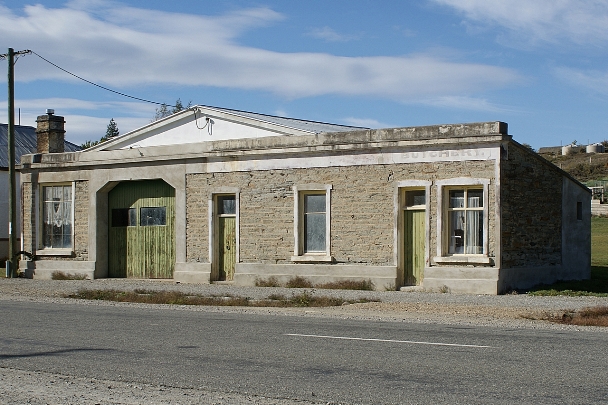
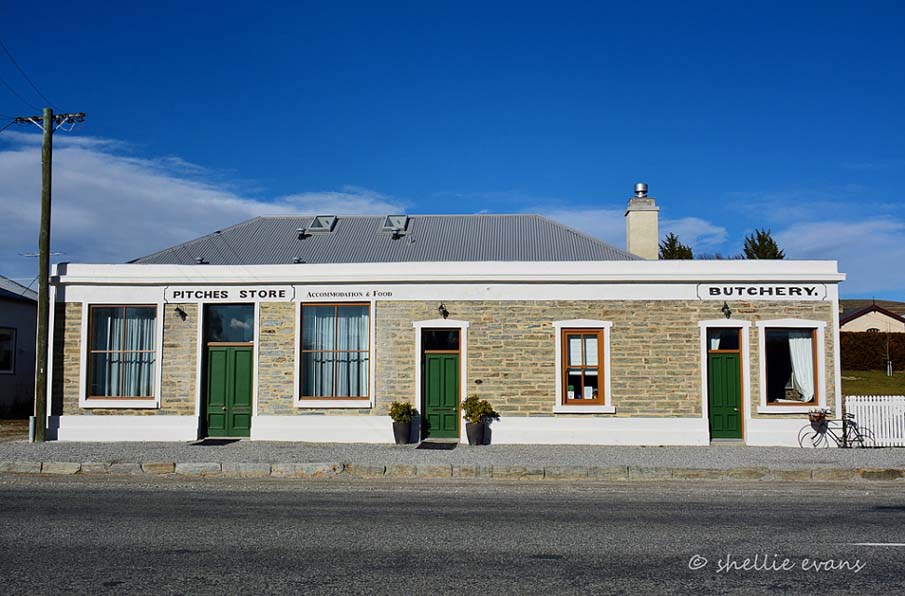
An 1871 town plan of Ophir shows a building annotated ‘Pitches’ on this section, although the building itself is on an angle to the street front, not in line as the existing building is. Petchey argues that it is likely that the first Pitches’ Store was replaced by the stone building after 1871. Photographs from around the 1880s show the stone Pitches’ Store with its hipped corrugated iron roof, large shop front windows flanking a central entrance way with a smaller two smaller entrances and windows on the façade. John Pitches left the property to son Andrew, while Andrew left the property to Elizabeth Sinnamon. Owner Ewan McPhail used the building as a wool and skin store. Russell Craig later used the store as a garage for his bus and in the 1950s cut large doors into the façade to allow the bus entry. Russell Hayes continued to use the building as a garage, and after his ownership, the building fell into disuse.
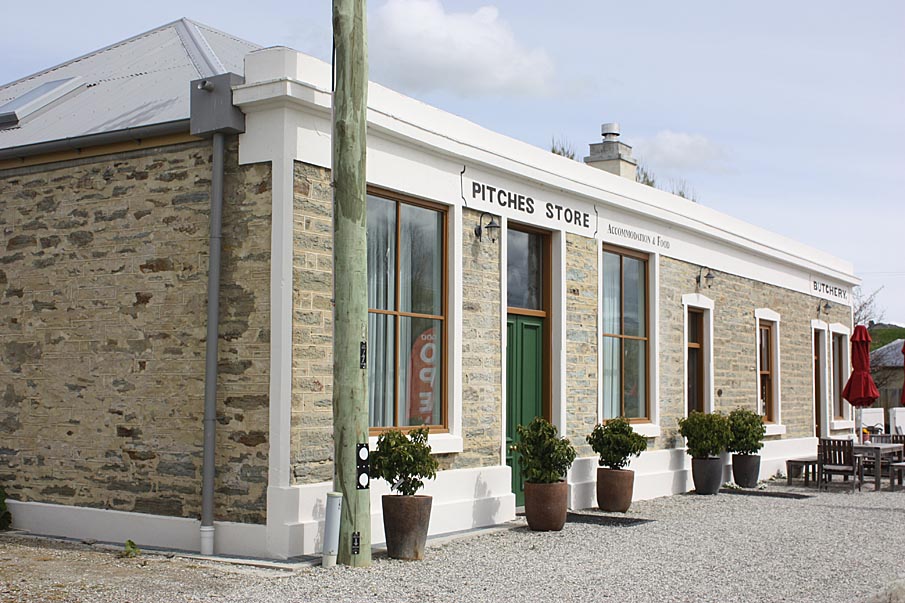
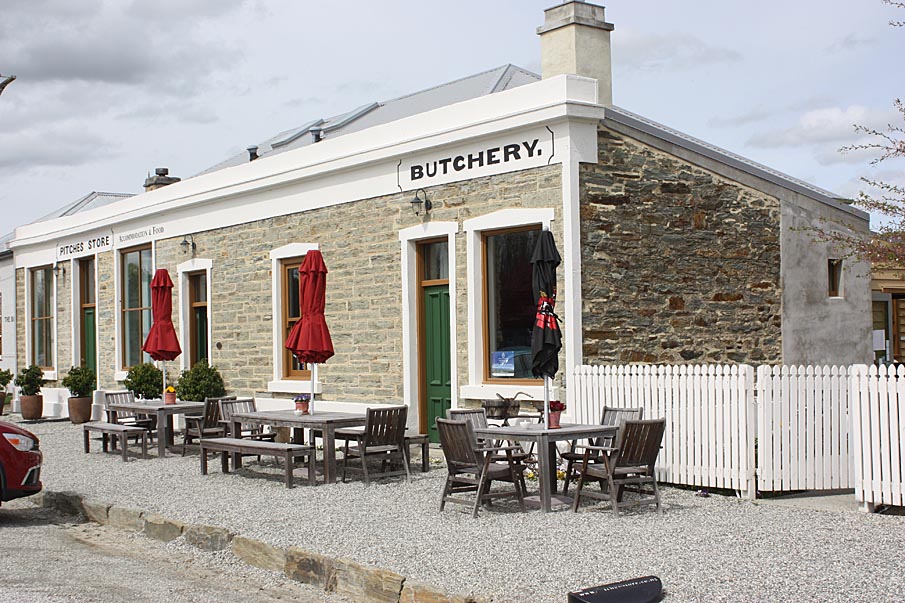
Pitches’ Store is a stone building situated at the east side of its section. The store measures 19.61 metres by 9.77 metres. It is rectangular in plan with a lean-to the rear. A butchers shop was located in the western end of the building. The entire roof structure has been replaced and the interior largely gutted. In 2012, after alterations and additions to the building, the store reopened as a restaurant/café and boutique accommodation.
In 2015, Pitches’ Store remains home to ‘Pitches’ Store’ a boutique café and accommodation destination, and remains one of the significant historic buildings in Ophir.


List Entry Information
Status
Listed
List Entry Status
Historic Place Category 2
Access
Private/No Public Access
List Number
7282
Date Entered
14th December 1995
Date of Effect
14th December 1995
City/District Council
Central Otago District
Region
Otago Region
Extent of List Entry
Extent includes part of the land described as Sec 5 Blk II Town of Ophir (RT 468855), Otago Land District, and the building known as Pitches' Store (Former), thereon. Refer to the extent map tabled at the Heritage New Zealand Board meeting on 30 April 2015
Legal description
Sec 5 Blk II Town of Ophir (RT 468855), Otago Land District
Status
Listed
List Entry Status
Historic Place Category 2
Access
Private/No Public Access
List Number
7282
Date Entered
14th December 1995
Date of Effect
14th December 1995
City/District Council
Central Otago District
Region
Otago Region
Extent of List Entry
Extent includes part of the land described as Sec 5 Blk II Town of Ophir (RT 468855), Otago Land District, and the building known as Pitches' Store (Former), thereon. Refer to the extent map tabled at the Heritage New Zealand Board meeting on 30 April 2015
Legal description
Sec 5 Blk II Town of Ophir (RT 468855), Otago Land District
Why is this place significant?
Cultural Significance
This historic place was registered under the Historic Places Act 1993. The following text is from the original Recommendation for Registration considered by the NZHPT Board at the time of registration. Social: This store is a reminder of Ophir's past status as a self-supporting town with buildings such as general stores, hotels, school, courthouse and post office.
Historic Significance
Historical Significance or Value This historic place was registered under the Historic Places Act 1993. The following text is from the original Recommendation for Registration considered by the NZHPT Board at the time of registration. Pitches Store is an example of a colonial gold rush era business which survived to serve a small rural servicing community.
Physical Significance
This historic place was registered under the Historic Places Act 1993. The following text is from the original Recommendation for Registration considered by the NZHPT Board at the time of registration. Aesthetic: Pitches Store possess aesthetic value in terms of its contribution to the special character of Ophir as a former gold town. Architectural: The former Store is an example of a vernacular type of single storey building constructed of local schist stone brought to square with mud mortar pointing. The essential design of the original building has remained on the exterior, in spite of some modifications over the years.
Why is this place Category 1 / Category 2?
Detail Of Assessed Criteria
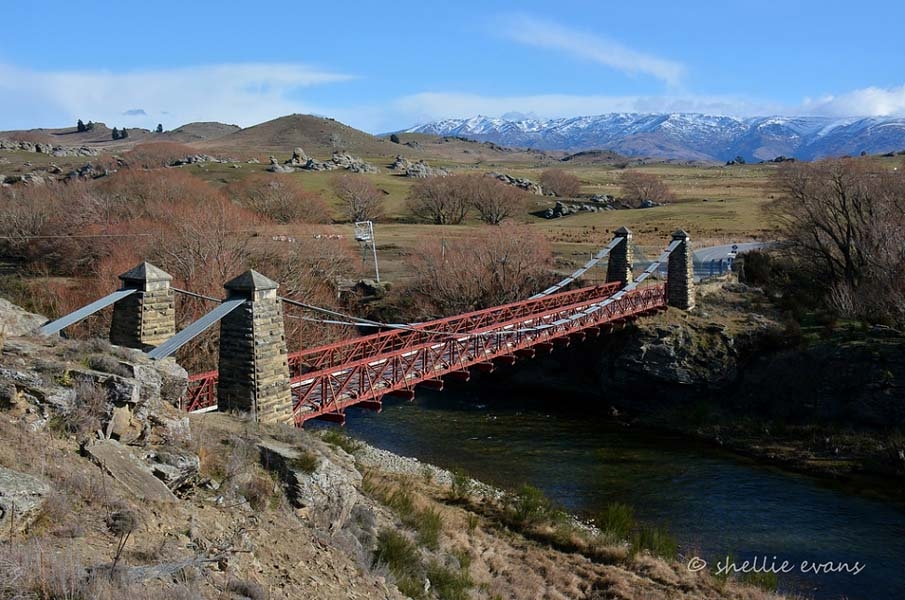
This historic place was registered under the Historic Places Act 1993. The following text is from the original Recommendation for Registration considered by the NZHPT Board at the time of registration. The following comments are made in relation to the criteria identified under S.23(2) of the Historic Places Act 1993. a) The extent to which the place reflects important or representative aspects of New Zealand history: Pitches Store is representative of the type of small business that grew out of the Central Otago gold rushes and which survived subsequently to serve as a small rural servicing community in a variety of roles. b) The association of the place with events, persons, or ideas of importance in New Zealand history: The original business was established by John and Sam Pitches, merchants and carters. Sam died circa 1876 leaving John as the sole proprietor. At the formation of the Vincent County Council in 1876, John represented the Manuherikia Riding until 1887. He later served a further term from 1905-08. John Pitches was a prominent figure in the town having campaigned in 1877 (unsuccessfully) to site the county offices in Ophir. He was more successful in his involvement of the building of the Ophir Bridge (Cat I) which opened in 1880. Pitches Store represents the type of operation run by the goldfield shopkeepers, often the ones who made the most money of any gold rush. c) The potential of the place to provide knowledge of New Zealand history: The Store is a reminder of the days when Blacks/Ophir was, like many other Central Otago gold rush towns, self-supporting with a full, albeit modest range of public buildings and business premises. g) The technical accomplishment or value, or design of the place: Pitches Store is an average example of a single storey Otago building constructed of local schist stone with mud mortar. This type is, or was, relatively common in Central and North Otago for domestic and commercial buildings. The building has been completely gutted however it still retains part of the butchery at one end with the sign still visible below the parapet. The 1940's modification to the roof is sufficiently old enough to be considered part of the history of the place, particularly as it is done sensitively with decorative patterns on the face of the pitched roof end and with the exposed horizontal rafters ends forming in effect a dentil line coming through above the vergeboards. The 1950's addition of a garage door and the use of concrete are far less sympathetic. k) The extent to which the place forms part of a wider historical and cultural complex or historical and cultural landscape: Pitches Store has been an important feature of the Blacks/Ophir streetscape for over one hundred years. It has a wider association with the other towns and sites of the Central Otago gold rushes. Conclusion: Pitches Store, Swindon St, Ophir, is recommended for registration as a Category II as a place of historical and cultural heritage significance and value. Pitches Store is representative of the type of small business that grew out of the Central Otago gold rushes and survived. The vernacular style building constructed of local schist stone is an important feature of the Ophir historic streetscape.
Why is this place significant?
Cultural Significance
This historic place was registered under the Historic Places Act 1993. The following text is from the original Recommendation for Registration considered by the NZHPT Board at the time of registration. Social: This store is a reminder of Ophir's past status as a self-supporting town with buildings such as general stores, hotels, school, courthouse and post office.
Historic Significance
Historical Significance or Value This historic place was registered under the Historic Places Act 1993. The following text is from the original Recommendation for Registration considered by the NZHPT Board at the time of registration. Pitches Store is an example of a colonial gold rush era business which survived to serve a small rural servicing community.
Physical Significance
This historic place was registered under the Historic Places Act 1993. The following text is from the original Recommendation for Registration considered by the NZHPT Board at the time of registration. Aesthetic: Pitches Store possess aesthetic value in terms of its contribution to the special character of Ophir as a former gold town. Architectural: The former Store is an example of a vernacular type of single storey building constructed of local schist stone brought to square with mud mortar pointing. The essential design of the original building has remained on the exterior, in spite of some modifications over the years.
Why is this place Category 1 / Category 2?
Detail Of Assessed Criteria
This historic place was registered under the Historic Places Act 1993. The following text is from the original Recommendation for Registration considered by the NZHPT Board at the time of registration. The following comments are made in relation to the criteria identified under S.23(2) of the Historic Places Act 1993. a) The extent to which the place reflects important or representative aspects of New Zealand history: Pitches Store is representative of the type of small business that grew out of the Central Otago gold rushes and which survived subsequently to serve as a small rural servicing community in a variety of roles. b) The association of the place with events, persons, or ideas of importance in New Zealand history: The original business was established by John and Sam Pitches, merchants and carters. Sam died circa 1876 leaving John as the sole proprietor. At the formation of the Vincent County Council in 1876, John represented the Manuherikia Riding until 1887. He later served a further term from 1905-08. John Pitches was a prominent figure in the town having campaigned in 1877 (unsuccessfully) to site the county offices in Ophir. He was more successful in his involvement of the building of the Ophir Bridge (Cat I) which opened in 1880. Pitches Store represents the type of operation run by the goldfield shopkeepers, often the ones who made the most money of any gold rush. c) The potential of the place to provide knowledge of New Zealand history: The Store is a reminder of the days when Blacks/Ophir was, like many other Central Otago gold rush towns, self-supporting with a full, albeit modest range of public buildings and business premises. g) The technical accomplishment or value, or design of the place: Pitches Store is an average example of a single storey Otago building constructed of local schist stone with mud mortar. This type is, or was, relatively common in Central and North Otago for domestic and commercial buildings. The building has been completely gutted however it still retains part of the butchery at one end with the sign still visible below the parapet. The 1940's modification to the roof is sufficiently old enough to be considered part of the history of the place, particularly as it is done sensitively with decorative patterns on the face of the pitched roof end and with the exposed horizontal rafters ends forming in effect a dentil line coming through above the vergeboards. The 1950's addition of a garage door and the use of concrete are far less sympathetic. k) The extent to which the place forms part of a wider historical and cultural complex or historical and cultural landscape: Pitches Store has been an important feature of the Blacks/Ophir streetscape for over one hundred years. It has a wider association with the other towns and sites of the Central Otago gold rushes. Conclusion: Pitches Store, Swindon St, Ophir, is recommended for registration as a Category II as a place of historical and cultural heritage significance and value. Pitches Store is representative of the type of small business that grew out of the Central Otago gold rushes and survived. The vernacular style building constructed of local schist stone is an important feature of the Ophir historic streetscape.
Construction Details
Type
Damaged
Description
Garage door added to front façade, removing part of original shop front
Period
1950s
Start Year
1870
startYearCirca
Type
Original Construction
Construction Details
Type
Damaged
Description
Garage door added to front façade, removing part of original shop front
Period
1950s
Start Year
1870
startYearCirca
Type
Original Construction
Historical and Associated Iwi / Hapū / Whānau
Completion Date
1st April 2015
Report Written By
Heather Bauchop
Information Sources
New Zealand Historic Places Trust (NZHPT)
New Zealand Historic Places Trust
Peter Petchey, 2008
Peter Petchey, ‘Pitches’ Store Ophir Archaeological Site G41/614 Archaeological Assessment’, Southern Archaeology 2008
Other Information
Received an award in the New Zealand Institute of Architect's 2013 Southern Architecture Awards A copy of the original report is available from the NZHPT Southern region office Please note that entry on the New Zealand Heritage List/Rarangi Korero identifies only the heritage values of the property concerned, and should not be construed as advice on the state of the property, or as a comment of its soundness or safety, including in regard to earthquake risk, safety in the event of fire, or insanitary conditions. A fully referenced upgrade report is available on request from the Otago/Southland Office of Heritage New Zealand
Historical and Associated Iwi / Hapū / Whānau
Completion Date
1st April 2015
Report Written By
Heather Bauchop
Information Sources
New Zealand Historic Places Trust (NZHPT)
New Zealand Historic Places Trust
Peter Petchey, 2008
Peter Petchey, ‘Pitches’ Store Ophir Archaeological Site G41/614 Archaeological Assessment’, Southern Archaeology 2008
Other Information
Received an award in the New Zealand Institute of Architect's 2013 Southern Architecture Awards A copy of the original report is available from the NZHPT Southern region office Please note that entry on the New Zealand Heritage List/Rarangi Korero identifies only the heritage values of the property concerned, and should not be construed as advice on the state of the property, or as a comment of its soundness or safety, including in regard to earthquake risk, safety in the event of fire, or insanitary conditions. A fully referenced upgrade report is available on request from the Otago/Southland Office of Heritage New Zealand
Current Usages
Uses: Accommodation
Specific Usage: Boarding/ Guest House
Uses: Trade
Specific Usage: Restaurant/cafe/tearoom
Former Usages
General Usage: Trade
Specific Usage: Shop
Current Usages
Uses: Accommodation
Specific Usage: Boarding/ Guest House
Uses: Trade
Specific Usage: Restaurant/cafe/tearoom
Former Usages
General Usage: Trade
Specific Usage: Shop
Sign up to hear more
Get the latest heritage news, features and events delivered
straight to your inbox.