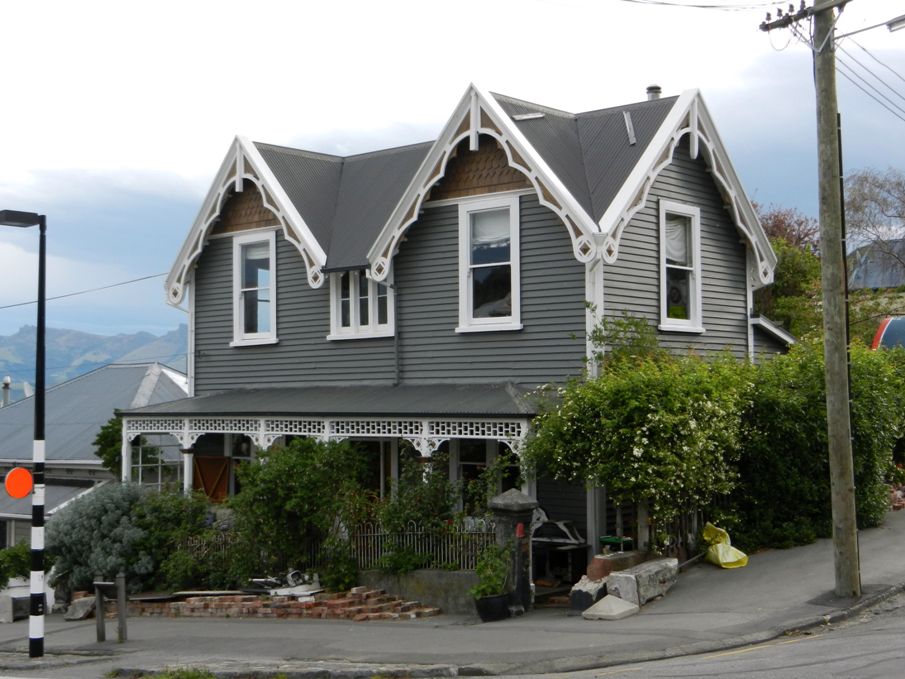
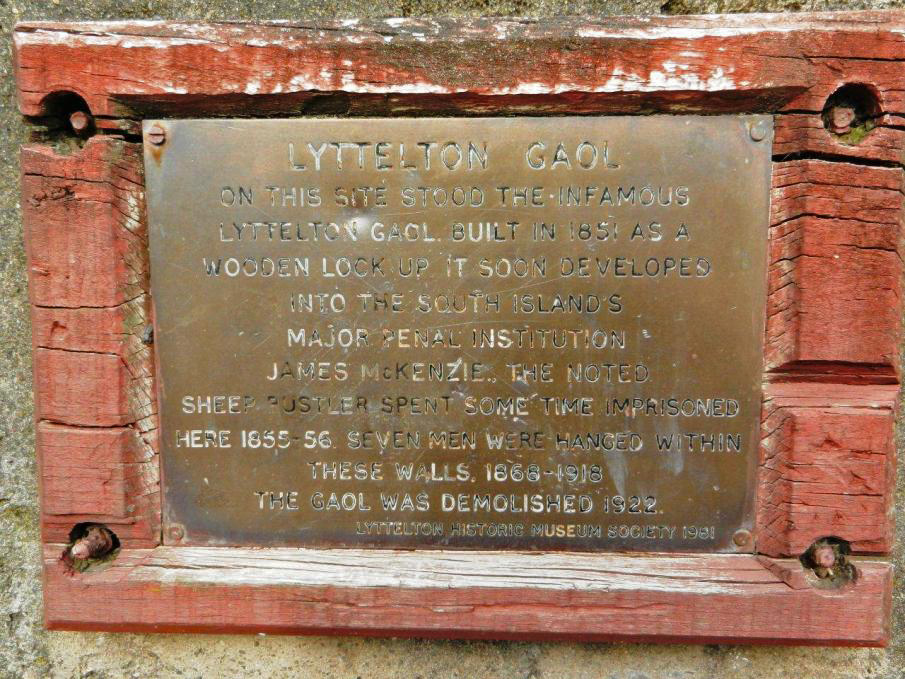
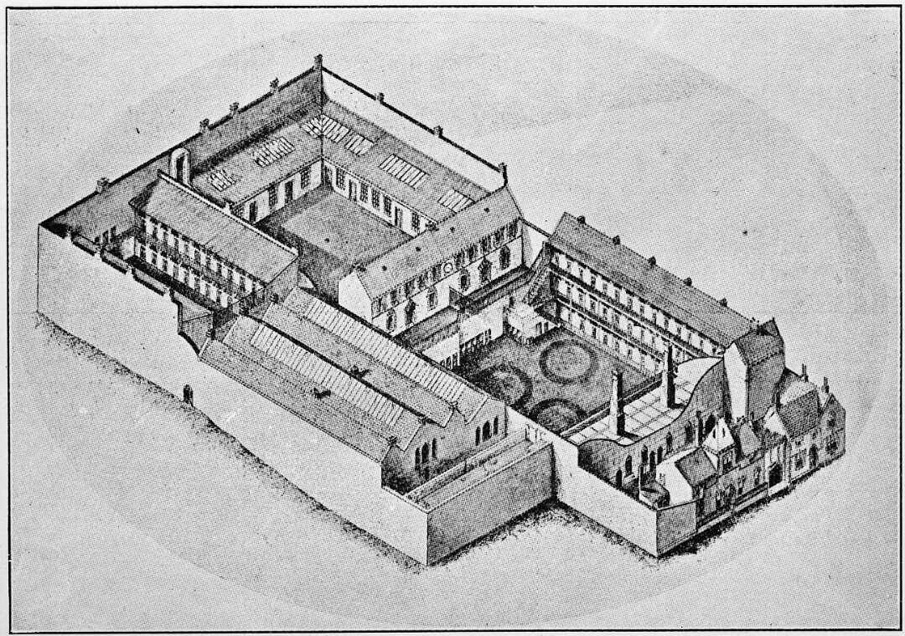
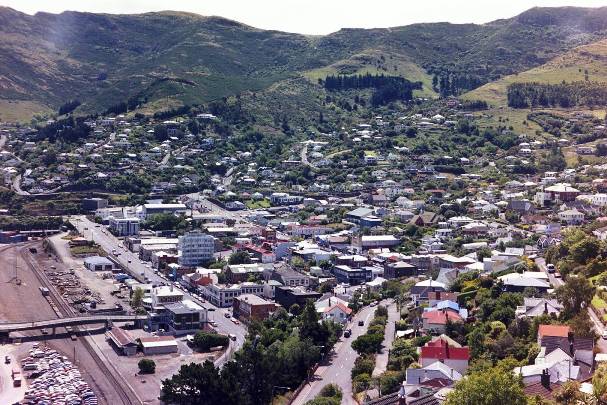
The Lyttelton Gaol was the first in the Canterbury colony and is associated with early development of the New Zealand penal system. It was built on this site in an ad hoc manner over several decades, beginning in 1857, by first the Canterbury Provincial Government and then central government. Although the early Canterbury Association settlers wanted to build an ideal society, they quickly discovered that the 'Old World Evils' had followed them to New Zealand. The gaol catered for the mentally ill and debtors as well as criminals. As it was extended over the second half of the 19th century, notably to the designs of architect B W Mountfort from 1871, it became one of the largest prisons in the country and achieved proportions that were huge by the standards of a small town. It is reported that approximately 90% of the inmates of the gaol, at any one time, were British Seamen. The gaol was the site of several events of importance, including seven hangings. It was also a small industrial centre, being the place of manufacture by prisoners of clothing and boots required by both prison staff and prisoners throughout country.
In common with other New Zealand prisons of the day, the Lyttelton prisoners undertook public works as part of their hard labour and contributed to the construction of a considerable amount of Lyttelton's infrastructure (much of the red volcanic stone walls around the town, including extensive stone walling on Oxford Street itself, is attributable to them). The survival of public work gangs until 1915, long after they had been abolished in England, ensured that prisons such as Lyttelton retained a highly visible public presence in their communities. The gaol closed in 1920 after a new prison was built at Paparua, west of Christchurch, and Lyttelton's main gaol buildings were demolished in 1922-24. The site was leased to the adjacent school as a playground.
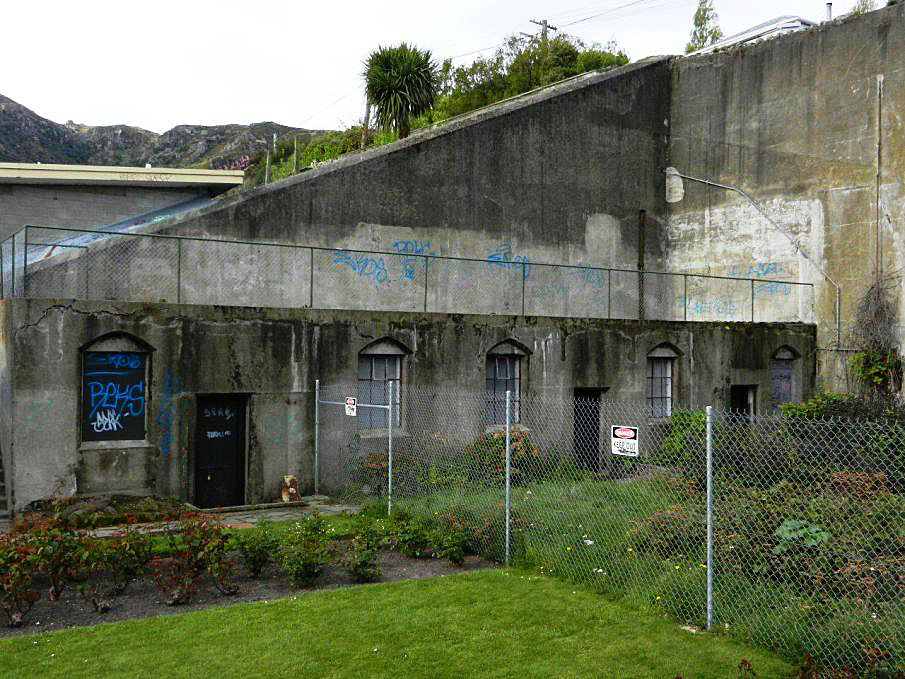
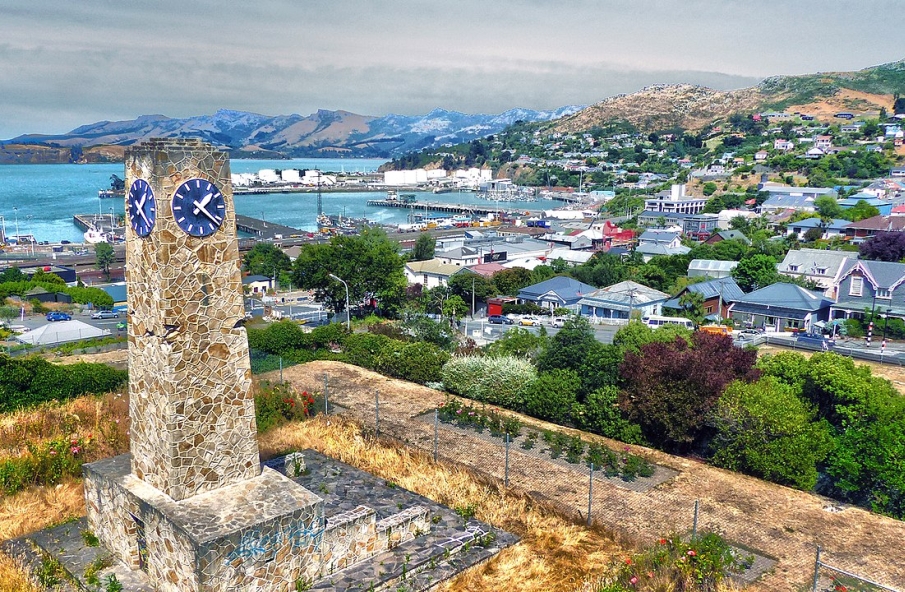
A key feature of Oxford Street is now the open area that was formerly part of the site of the large Gothic style Lyttelton Gaol complex. Now containing a playground, rose gardens and the 1950s Upham Memorial Clock, remnants of the gaol can be seen in concrete retaining walls and a small block of cells built into the upper slope, historic pedestrian pathways and concrete steps. The concrete is noteworthy for being a relatively rare example of early use of concrete in New Zealand. The Upham Memorial Clock is the townsfolk's memorial to Dr Charles Hazlitt Upham, who came to Lyttelton as a young naval surgeon in 1898 and became a much loved general practitioner who served the community for half a century.
The Lyttelton Gaol site is a significant archaeological site that retains architectural and structural evidence of early concrete use and which reflects an aspect of New Zealand's penal history.
List Entry Information
Status
Listed
List Entry Status
Historic Place Category 1
Access
Able to Visit
List Number
7353
Date Entered
13th December 1996
Date of Effect
13th December 1996
City/District Council
Christchurch City
Region
Canterbury Region
Extent of List Entry
Extent includes the land described as RS 4110, RS 4150 (RT CB466/170 and CB1D/236), Canterbury Land District and the structures known as the walls, steps, remains of the cell block, paths and the Upham Memorial Clock. (Refer to map in Appendix 1 of the Information Upgrade Report for further information).
Legal description
RS 4110, RS 4150 (RT CB466/170 and CB1D/236), Canterbury Land District
Location Description
The site is located immediately to the north of Lyttelton Main School, 34 Oxford Street, and includes the 'Gaol Steps' which run between Oxford Street and St Davids Street.
Status
Listed
List Entry Status
Historic Place Category 1
Access
Able to Visit
List Number
7353
Date Entered
13th December 1996
Date of Effect
13th December 1996
City/District Council
Christchurch City
Region
Canterbury Region
Extent of List Entry
Extent includes the land described as RS 4110, RS 4150 (RT CB466/170 and CB1D/236), Canterbury Land District and the structures known as the walls, steps, remains of the cell block, paths and the Upham Memorial Clock. (Refer to map in Appendix 1 of the Information Upgrade Report for further information).
Legal description
RS 4110, RS 4150 (RT CB466/170 and CB1D/236), Canterbury Land District
Location Description
The site is located immediately to the north of Lyttelton Main School, 34 Oxford Street, and includes the 'Gaol Steps' which run between Oxford Street and St Davids Street.
Construction Professional
Name
Mountfort, Benjamin Woolfield
Type
Architect
Biography
Benjamin Woolfield Mountfort (1825-98) trained as an architect in England, in the office of Richard Cromwell Carpenter, a member of the Cambridge Camden Society (later the Ecclesiological Society). He arrived in Canterbury in 1850. Mountfort was New Zealand's pre-eminent Gothic Revival architect and, according to architectural historian Ian Lochhead, 'did most to shape the architectural character of nineteenth-century Christchurch.' The buildings he designed were almost exclusively in the Gothic Revival style. During his career he designed many churches and additions to churches; those still standing include the Trinity Congregational Church in Christchurch (1874), St Mary's Church in Parnell, Auckland and the Church of the Good Shepherd in Phillipstown, Christchurch (1884). In 1857 he became the first architect to the province of Canterbury. He designed the Canterbury Provincial Council Buildings in three stages from 1858 to 1865. The stone chamber of this building can be considered the greatest accomplishment of his career. He was involved in many important commissions from the 1870s, including the Canterbury Museum (1869-82) and the Clock-tower Block on the Canterbury College campus (1876-77). He was also involved in the construction of Christchurch's Cathedral and made several major modifications to the original design. Mountfort introduced a number of High Victorian elements to New Zealand architecture, such as the use of constructional polychromy, probably first used in New Zealand in the stone tower of the Canterbury Provincial Government Buildings (1859). Overall, his oeuvre reveals a consistent and virtually unerring application of Puginian principles including a commitment to the Gothic style, honest use of materials and picturesque utility. The result was the construction of inventive and impressive buildings of outstanding quality. He died in Christchurch in 1898. A belfry at the Church of the Good Shepherd in Phillipstown, the church he attended for the last ten years of his life, was erected in his honour.
Construction Details
Start Year
1857
Type
Original Construction
Description
Construction of first phase
Start Year
1871
Type
Original Construction
Description
Commence construction of second major phase
Start Year
1922
Finish Year
1924
Type
Demolished - Other
Description
Demolition of most of the gaol buildings
Construction Professional
Name
Mountfort, Benjamin Woolfield
Type
Architect
Biography
Benjamin Woolfield Mountfort (1825-98) trained as an architect in England, in the office of Richard Cromwell Carpenter, a member of the Cambridge Camden Society (later the Ecclesiological Society). He arrived in Canterbury in 1850. Mountfort was New Zealand's pre-eminent Gothic Revival architect and, according to architectural historian Ian Lochhead, 'did most to shape the architectural character of nineteenth-century Christchurch.' The buildings he designed were almost exclusively in the Gothic Revival style. During his career he designed many churches and additions to churches; those still standing include the Trinity Congregational Church in Christchurch (1874), St Mary's Church in Parnell, Auckland and the Church of the Good Shepherd in Phillipstown, Christchurch (1884). In 1857 he became the first architect to the province of Canterbury. He designed the Canterbury Provincial Council Buildings in three stages from 1858 to 1865. The stone chamber of this building can be considered the greatest accomplishment of his career. He was involved in many important commissions from the 1870s, including the Canterbury Museum (1869-82) and the Clock-tower Block on the Canterbury College campus (1876-77). He was also involved in the construction of Christchurch's Cathedral and made several major modifications to the original design. Mountfort introduced a number of High Victorian elements to New Zealand architecture, such as the use of constructional polychromy, probably first used in New Zealand in the stone tower of the Canterbury Provincial Government Buildings (1859). Overall, his oeuvre reveals a consistent and virtually unerring application of Puginian principles including a commitment to the Gothic style, honest use of materials and picturesque utility. The result was the construction of inventive and impressive buildings of outstanding quality. He died in Christchurch in 1898. A belfry at the Church of the Good Shepherd in Phillipstown, the church he attended for the last ten years of his life, was erected in his honour.
Construction Details
Start Year
1857
Type
Original Construction
Description
Construction of first phase
Start Year
1871
Type
Original Construction
Description
Commence construction of second major phase
Start Year
1922
Finish Year
1924
Type
Demolished - Other
Description
Demolition of most of the gaol buildings
Historical and Associated Iwi / Hapū / Whānau
Completion Date
13th March 2009
Report Written By
Robyn Burgess
Information Sources
Byles, 1992
Terry Byles, 'Reston's Hotel, The History of the Lyttelton Gaol', Christchurch, 1992
Cyclopedia of New Zealand, 1903
Cyclopedia Company, Industrial, descriptive, historical, biographical facts, figures, illustrations, Wellington, N.Z, 1897-1908, Vol. 3, Canterbury Provincial District, Christchurch, 1903
Gee, 1975
David Gee, The Devil's Own Brigade, A History of the Lyttelton Gaol, 1890-20, Wellington, 1975
Lochhead, 1999
Ian Lochhead, A Dream of Spires: Benjamin Mountfort and the Gothic Revival, Christchurch, 1999
Rice, 2004
Geoffrey W Rice, Lyttelton: Port and Town, an illustrated history, Canterbury University Press, Christchurch, 2004.
Wilson, 2007
John Wilson, City and Peninsula: the Historic Places of Christchurch and Banks Peninsula, Christchurch, 2007.
Other Information
This place was identified as significant under previous legislation with different information requirements. It remains significant under the current legislation. There is opportunity under our legislation and policies to add to this information. Further information about this place may be available from the Southern Regional Office of Heritage New Zealand Pouhere Taonga. A fully referenced version of this report is available from the NZHPT Southern Region office Please note that entry on the New Zealand Heritage List/Rarangi Korero identifies only the heritage values of the property concerned, and should not be construed as advice on the state of the property, or as a comment of its soundness or safety, including in regard to earthquake risk, safety in the event of fire, or insanitary conditions.
Historical and Associated Iwi / Hapū / Whānau
Completion Date
13th March 2009
Report Written By
Robyn Burgess
Information Sources
Byles, 1992
Terry Byles, 'Reston's Hotel, The History of the Lyttelton Gaol', Christchurch, 1992
Cyclopedia of New Zealand, 1903
Cyclopedia Company, Industrial, descriptive, historical, biographical facts, figures, illustrations, Wellington, N.Z, 1897-1908, Vol. 3, Canterbury Provincial District, Christchurch, 1903
Gee, 1975
David Gee, The Devil's Own Brigade, A History of the Lyttelton Gaol, 1890-20, Wellington, 1975
Lochhead, 1999
Ian Lochhead, A Dream of Spires: Benjamin Mountfort and the Gothic Revival, Christchurch, 1999
Rice, 2004
Geoffrey W Rice, Lyttelton: Port and Town, an illustrated history, Canterbury University Press, Christchurch, 2004.
Wilson, 2007
John Wilson, City and Peninsula: the Historic Places of Christchurch and Banks Peninsula, Christchurch, 2007.
Other Information
This place was identified as significant under previous legislation with different information requirements. It remains significant under the current legislation. There is opportunity under our legislation and policies to add to this information. Further information about this place may be available from the Southern Regional Office of Heritage New Zealand Pouhere Taonga. A fully referenced version of this report is available from the NZHPT Southern Region office Please note that entry on the New Zealand Heritage List/Rarangi Korero identifies only the heritage values of the property concerned, and should not be construed as advice on the state of the property, or as a comment of its soundness or safety, including in regard to earthquake risk, safety in the event of fire, or insanitary conditions.
Current Usages
Uses: Civic Facilities
Specific Usage: Children’s play ground
Uses: Civic Facilities
Specific Usage: Clocktower/ clock
Uses: Civic Facilities
Specific Usage: Garden - public
Uses: Civic Facilities
Specific Usage: Swimming pool
Uses: Civic Facilities
Specific Usage: Wall/Fence
Uses: Commemoration
Specific Usage: Memorial marker/ plaque
Former Usages
General Usage: Civic Facilities
Specific Usage: Wall/Fence
General Usage: Law Enforcement
Specific Usage: Gaol/Lock-up
Current Usages
Uses: Civic Facilities
Specific Usage: Children’s play ground
Uses: Civic Facilities
Specific Usage: Clocktower/ clock
Uses: Civic Facilities
Specific Usage: Garden - public
Uses: Civic Facilities
Specific Usage: Swimming pool
Uses: Civic Facilities
Specific Usage: Wall/Fence
Uses: Commemoration
Specific Usage: Memorial marker/ plaque
Former Usages
General Usage: Civic Facilities
Specific Usage: Wall/Fence
General Usage: Law Enforcement
Specific Usage: Gaol/Lock-up
Location
Related listings
Stay up to date with Heritage this month