List Entry Information
Status
Listed
List Entry Status
Historic Place Category 2
Access
Private/No Public Access
List Number
7355
Date Entered
13th December 1996
Date of Effect
13th December 1996
City/District Council
Christchurch City
Region
Canterbury Region
Extent of List Entry
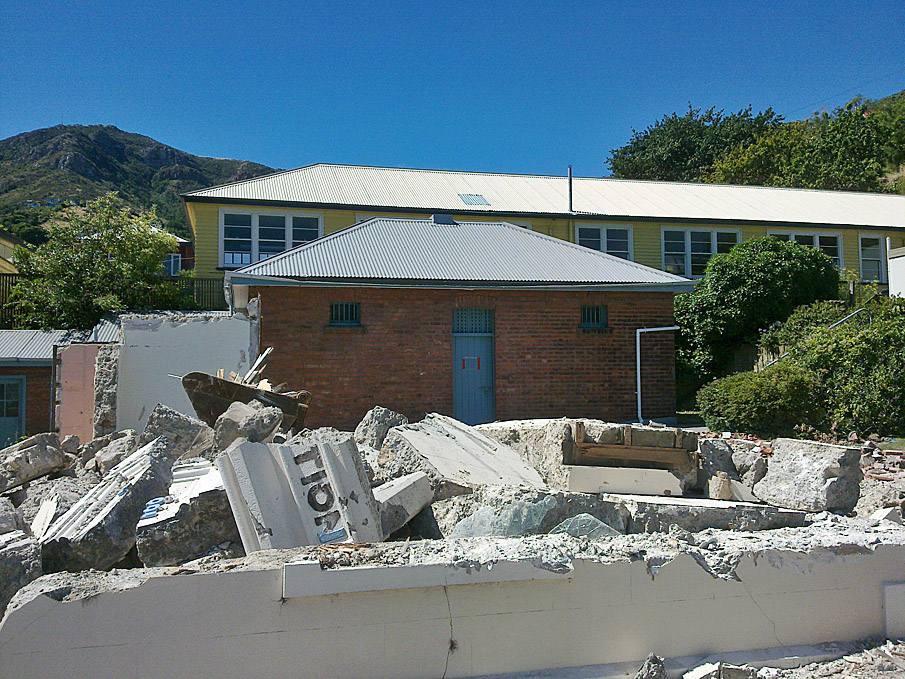
Note that the Police Station was demolished in 2014 after sustaining damage in the Canterbury Earthquakes; the lock-up remains.
Legal description
Pt Sec 356 Town of Lyttelton, Canterbury Land District
Status
Listed
List Entry Status
Historic Place Category 2
Access
Private/No Public Access
List Number
7355
Date Entered
13th December 1996
Date of Effect
13th December 1996
City/District Council
Christchurch City
Region
Canterbury Region
Extent of List Entry
Note that the Police Station was demolished in 2014 after sustaining damage in the Canterbury Earthquakes; the lock-up remains.
Legal description
Pt Sec 356 Town of Lyttelton, Canterbury Land District
Why is this place significant?
Historic Significance
Historical Significance or Value This historic place was registered under the Historic Places Act 1993. The following text is from the original Historic Place Assessment Under Section 23 Criteria report considered by the NZHPT Board at the time of registration. Historical: The Lyttelton Police Station was completed in 1882 to replace an earlier structure. It was constructed with the help of labour from the nearby gaol and was complemented by a senior officer' dwelling, which was demolished about a decade ago. The building provided accommodation for single men until the 1920s. It is claimed to be one of the oldest police stations in continuous use in the country.
Physical Significance
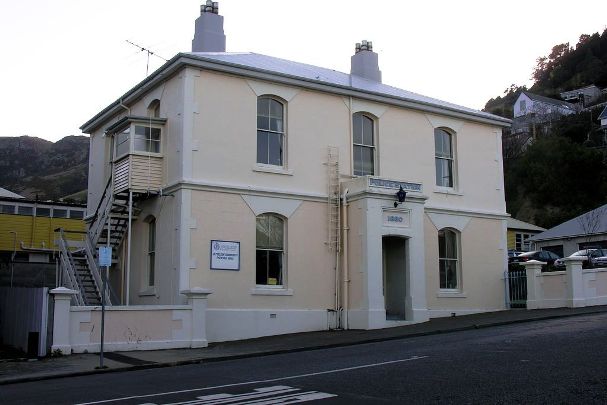
This historic place was registered under the Historic Places Act 1993. The following text is from the original Historic Place Assessment Under Section 23 Criteria report considered by the NZHPT Board at the time of registration. Architectural: The Lyttelton police Station was designed in the Victorian Italianate style of the period 1837-1901. As a police station this particular example of the style is austere, and it therefore lacks the usual architectural details which otherwise distinguish Italianate as a picturesque style. One of the style's most prominent characteristics is present however, and indeed it is this characteristic which identifies the building as Italianate. Style indicators are: Chief Characteristic: - Stilted segmental or round window arch Secondary Characteristics: - Exaggerated keystones above window arches - Corner quoin blocks - Low to medium pitched hipped roof - Solid load bearing wall construction of stone - Articulated or prominent Classical string course between ground and first floor.
Why is this place Category 1 / Category 2?
Detail Of Assessed Criteria
This historic place was registered under the Historic Places Act 1993. The following text is from the original Historic Place Assessment Under Section 23 Criteria report considered by the NZHPT Board at the time of registration. (a) The extent to which the place reflects important or representative aspects of New Zealand history: The Lyttelton Police Station has served the needs of this port town for more than 110 years and is claimed to be one of the country's oldest police stations in continuous use. It has been associated with the policing not only of the seaport town, but with that of neighbouring localities such as Akaroa. The Lyttelton police played an active role in all three of the nation's key industrial disputes, 1890, 1913 and 1950. (g) The technical accomplishment or value, or design of the place: DATE: 1880-82 ARCHITECT: Colonial Architect (office of P.F.M. Burrows) STYLE CODE: 11 Victorian Italianate, 1837-1901. DESIGN: The Italianate style of the Lyttelton Police Station is very simple and severe, and this was no doubt deliberate given the function of the place. Italianate is normally a picturesque style. However some of its chief elements, i.e., the faceted bay and the tower, are missing from this building, This relative austerity of design nevertheless has a direct reference to the plain stone villas located in the countryside of Tuscany. Such villas form part of the vocabulary of the Italianate style of architecture. As part of the design of the place, the adjoining lock-up (or cell block) at the rear of the station should be included in the registration proposal. A separate free standing building, the cell block is rectangular in plan, constructed of brick, has a hipped roof, and possibly has more cells than the one illustrated located in it. This building is functionally related to the police station and has the added interest of being brick, whereas the vast majority of lock-ups erected in New Zealand at this time were built of timber. As far as one can tell, it compares favourably with the brick cell block of the Mount Cook Police Station, Wellington, 1894, Category I. Standard features common to both structures are the pierced metal ventilation grille above the door and the wooden, double skinned, diagonal board cell door with round peep hole. INTERIOR: The interior of the Lyttelton Police Station has been extensively modernized with the removal of fireplaces, walls painted over, and finishings removed. However, the wooden staircase with its turned balusters, newel post and moulded hand rails, remains as a good example of how the interior was originally designed. This particular feature is enhanced by the retention of the hallway arch opposite, with its sidelights, brackets and Georgian style fanlight.
Why is this place significant?
Historic Significance
Historical Significance or Value This historic place was registered under the Historic Places Act 1993. The following text is from the original Historic Place Assessment Under Section 23 Criteria report considered by the NZHPT Board at the time of registration. Historical: The Lyttelton Police Station was completed in 1882 to replace an earlier structure. It was constructed with the help of labour from the nearby gaol and was complemented by a senior officer' dwelling, which was demolished about a decade ago. The building provided accommodation for single men until the 1920s. It is claimed to be one of the oldest police stations in continuous use in the country.
Physical Significance
This historic place was registered under the Historic Places Act 1993. The following text is from the original Historic Place Assessment Under Section 23 Criteria report considered by the NZHPT Board at the time of registration. Architectural: The Lyttelton police Station was designed in the Victorian Italianate style of the period 1837-1901. As a police station this particular example of the style is austere, and it therefore lacks the usual architectural details which otherwise distinguish Italianate as a picturesque style. One of the style's most prominent characteristics is present however, and indeed it is this characteristic which identifies the building as Italianate. Style indicators are: Chief Characteristic: - Stilted segmental or round window arch Secondary Characteristics: - Exaggerated keystones above window arches - Corner quoin blocks - Low to medium pitched hipped roof - Solid load bearing wall construction of stone - Articulated or prominent Classical string course between ground and first floor.
Why is this place Category 1 / Category 2?
Detail Of Assessed Criteria
This historic place was registered under the Historic Places Act 1993. The following text is from the original Historic Place Assessment Under Section 23 Criteria report considered by the NZHPT Board at the time of registration. (a) The extent to which the place reflects important or representative aspects of New Zealand history: The Lyttelton Police Station has served the needs of this port town for more than 110 years and is claimed to be one of the country's oldest police stations in continuous use. It has been associated with the policing not only of the seaport town, but with that of neighbouring localities such as Akaroa. The Lyttelton police played an active role in all three of the nation's key industrial disputes, 1890, 1913 and 1950. (g) The technical accomplishment or value, or design of the place: DATE: 1880-82 ARCHITECT: Colonial Architect (office of P.F.M. Burrows) STYLE CODE: 11 Victorian Italianate, 1837-1901. DESIGN: The Italianate style of the Lyttelton Police Station is very simple and severe, and this was no doubt deliberate given the function of the place. Italianate is normally a picturesque style. However some of its chief elements, i.e., the faceted bay and the tower, are missing from this building, This relative austerity of design nevertheless has a direct reference to the plain stone villas located in the countryside of Tuscany. Such villas form part of the vocabulary of the Italianate style of architecture. As part of the design of the place, the adjoining lock-up (or cell block) at the rear of the station should be included in the registration proposal. A separate free standing building, the cell block is rectangular in plan, constructed of brick, has a hipped roof, and possibly has more cells than the one illustrated located in it. This building is functionally related to the police station and has the added interest of being brick, whereas the vast majority of lock-ups erected in New Zealand at this time were built of timber. As far as one can tell, it compares favourably with the brick cell block of the Mount Cook Police Station, Wellington, 1894, Category I. Standard features common to both structures are the pierced metal ventilation grille above the door and the wooden, double skinned, diagonal board cell door with round peep hole. INTERIOR: The interior of the Lyttelton Police Station has been extensively modernized with the removal of fireplaces, walls painted over, and finishings removed. However, the wooden staircase with its turned balusters, newel post and moulded hand rails, remains as a good example of how the interior was originally designed. This particular feature is enhanced by the retention of the hallway arch opposite, with its sidelights, brackets and Georgian style fanlight.
Construction Professional
Name
Burrows, Pierre Finch Martineau
Type
Architect
Biography
Burrows was born in Norwich, England, and arrived in New Zealand about 1863. He began working under W H Clayton in the Colonial Architect's Office in 1874 and became Chief Draughtsman in 1875. When Clayton died, Burrows took over his duties, but he did not receive a designation of Colonial Architect. Burrow's most important buildings include the Post Office at Christchurch (1877), the Supreme Court House, Wellington (1879), and the Mount Eden Prison (begun 1883). He was also responsible for a number of smaller post offices and courthouses. His brother Arthur Washington Burrows was also an architect, practising in Auckland and Tauranga.
Construction Details
Start Year
1880
Finish Year
1882
Type
Original Construction
Description
Victorian Italianate
Start Year
2014
Finish Year
2014
Type
Demolished - Earthquake
Description
Demolition of Police Station;lock up retained Jan 2014
Construction Professional
Name
Burrows, Pierre Finch Martineau
Type
Architect
Biography
Burrows was born in Norwich, England, and arrived in New Zealand about 1863. He began working under W H Clayton in the Colonial Architect's Office in 1874 and became Chief Draughtsman in 1875. When Clayton died, Burrows took over his duties, but he did not receive a designation of Colonial Architect. Burrow's most important buildings include the Post Office at Christchurch (1877), the Supreme Court House, Wellington (1879), and the Mount Eden Prison (begun 1883). He was also responsible for a number of smaller post offices and courthouses. His brother Arthur Washington Burrows was also an architect, practising in Auckland and Tauranga.
Construction Details
Start Year
1880
Finish Year
1882
Type
Original Construction
Description
Victorian Italianate
Start Year
2014
Finish Year
2014
Type
Demolished - Earthquake
Description
Demolition of Police Station;lock up retained Jan 2014
Historical and Associated Iwi / Hapū / Whānau
Other Information
A copy of the original report is available from the NZHPT Southern region office. Please note that entry on the New Zealand Heritage List/Rarangi Korero identifies only the heritage values of the property concerned, and should not be construed as advice on the state of the property, or as a comment of its soundness or safety, including in regard to earthquake risk, safety in the event of fire, or insanitary conditions.
Historical and Associated Iwi / Hapū / Whānau
Other Information
A copy of the original report is available from the NZHPT Southern region office. Please note that entry on the New Zealand Heritage List/Rarangi Korero identifies only the heritage values of the property concerned, and should not be construed as advice on the state of the property, or as a comment of its soundness or safety, including in regard to earthquake risk, safety in the event of fire, or insanitary conditions.
Former Usages
General Usage: Law Enforcement
Specific Usage: Police station
Former Usages
General Usage: Law Enforcement
Specific Usage: Police station