Quick links


Quick links
Quick links
Quick links
Quick links
Quick links
Scottish Kirk
5 Akatarawa Road, Reikorangi, WAIKANAE
Private
Historic Place Category 1
List No. 7422
Quick links:
List GalleryLocationDetails
5 Akatarawa Road, Reikorangi, WAIKANAE
Private
Historic Place Category 1
List No. 7422
List Entry Information
Status
Listed
List Entry Status
Historic Place Category 1
Access
Private/No Public Access
List Number
7422
Date Entered
22nd April 1998
Date of Effect
22nd April 1998
City/District Council
Kāpiti Coast District
Region
Wellington Region
Extent of List Entry
The registration includes the building, its fixtures and fittings and chattels (wooden pulpit, organ and three wooden pews). The land on which it rests, and all other buildings on this site, are not included in this registration.
Legal description
Sec 4A Blk X Kaitawa SD, SO 13529, (RT WN223/145), Wellington Land District
Status
Listed
List Entry Status
Historic Place Category 1
Access
Private/No Public Access
List Number
7422
Date Entered
22nd April 1998
Date of Effect
22nd April 1998
City/District Council
Kāpiti Coast District
Region
Wellington Region
Extent of List Entry
The registration includes the building, its fixtures and fittings and chattels (wooden pulpit, organ and three wooden pews). The land on which it rests, and all other buildings on this site, are not included in this registration.
Legal description
Sec 4A Blk X Kaitawa SD, SO 13529, (RT WN223/145), Wellington Land District
Why is this place significant?
Cultural Significance
Constructed to protect Pakeha from inter-iwi warfare over rental agreements, the Kirk provides insight into the informal (and illegal) settlement practices adopted by Maori and Pakeha both in the Rangitikei region and throughout New Zealand. It highlights the tensions differing ideas regarding the use of land created both among iwi, and between the government and iwi, in the late-nineteenth century.
Historic Significance
Historical Significance or Value The Kirk is historically important as the last remaining of ten blockhouses used in Rangitikei by settlers in preparation for Titokowaru's nationally significant but unconsummated military advance towards Foxton. The church has local significance in the Parewanui district as a connection with the first Pakeha to settle in the area, although this was diminished by the relocation of the building to Waikanae. The church's history of removal and re-siting to areas that require church premises illustrates the changing requirements of religious communities, and the building continues to be highly valued in each of the areas it has served. The structure has intrinsic merit that remains unaffected by its many relocations and it remains an important part of New Zealand's history.
Physical Significance
The Scottish Kirk is both rare and unusual for its construction and use as a blockhouse. It is architecturally important for the insight it gives into the defensive strategies adopted by Pakeha settlers during the 1860s.
Why is this place Category 1 / Category 2?
Detail Of Assessed Criteria
(b) The association of the place with events, persons, or ideas of importance in New Zealand history: Events: The building is intimately associated with war between Ngati Apa and Raukawa over the distribution of money made from illegal rental arrangements with settlers in the 1860s. The building was constructed to protect settlers from being caught in the crossfire during the war between Ngati Apa and Raukawa. There are very few buildings that are linked with the practice of leasing or renting Maori land to Pakeha in the early years of settlement. The Kirk's construction reflects the existence of this practice in the Rangitikei region, and demonstrates the impact of the tensions it created in the late nineteenth century between iwi, and later, between the Government and iwi groups. The building is also important as the last remaining of ten blockhouses used in Rangitikei by settlers in preparation for Riwha Titokowaru's military advance towards Foxton in 1868. Named 'Ross''s Redoubt', the structure formed part of a chain of 10 defensive positions designed to protect settlers from his warriors. It dual role as a kirk saved it from demolition in 1869, when the other redoubt were dismantled. Ideas: The Kirk stands as an example of the actions taken by settlers to protect themselves from perceived physical threats during conflicts in the 1860s. It is evidence of 'European fear of racial tension during the 1860s' (g) The technical accomplishment or value, or design of the place: The building appears to be a typical example of the timber churches constructed in rural locations throughout New Zealand in the nineteenth-century. It has distinguishing features belonging to the Victorian Carpenter Gothic style. However, the building is unusual in that its design included the two small rectangular gun hatches located on either side of the nave. The hatches reveal that the wall was built as a double skinned wall, which means that it has both an inner and an outer wall, with sufficient space for approximately six inches (15.24 centimetres) of clay infill. This feature suggests that the building was intended to serve its dual purpose as a religious building and a defensive structure from the time it was constructed. (i) The importance of the identifying historic places known to date from early periods of New Zealand settlement: The building was constructed in 1862 and was the first Presbyterian church in the Rangitikei region. It was the first public building constructed by the Highland Scots in the Parewanui area and reflects the focus of these settlers during the settlement of the region. (j) The importance of identifying rare types of historic places: The building is rare and unusual. A number of blockhouses with double-skinned walls and gun portals constructed in the nineteenth-century. However, these structures were purpose-built and only served the one function. Similarly, there are a number of churches of a similar age and style still extant, yet these were constructed purely as religious structures. The thick walls and the presence of the two gun hatches indicate that the building was intended to fulfil the dual functions. It was both a place of worship and a defensive garrison for local settlers. This makes the church special, outstanding and rare. The Kirk is also the last of the ten original blockhouses used in Rangitikei by settlers in preparation for Titokowaru's unconsummated military advance towards Foxton. Research has confirmed that the other 9 blockhouses, and the majority of sites associated with them, have been destroyed.
Why is this place significant?
Cultural Significance
Constructed to protect Pakeha from inter-iwi warfare over rental agreements, the Kirk provides insight into the informal (and illegal) settlement practices adopted by Maori and Pakeha both in the Rangitikei region and throughout New Zealand. It highlights the tensions differing ideas regarding the use of land created both among iwi, and between the government and iwi, in the late-nineteenth century.
Historic Significance
Historical Significance or Value The Kirk is historically important as the last remaining of ten blockhouses used in Rangitikei by settlers in preparation for Titokowaru's nationally significant but unconsummated military advance towards Foxton. The church has local significance in the Parewanui district as a connection with the first Pakeha to settle in the area, although this was diminished by the relocation of the building to Waikanae. The church's history of removal and re-siting to areas that require church premises illustrates the changing requirements of religious communities, and the building continues to be highly valued in each of the areas it has served. The structure has intrinsic merit that remains unaffected by its many relocations and it remains an important part of New Zealand's history.
Physical Significance
The Scottish Kirk is both rare and unusual for its construction and use as a blockhouse. It is architecturally important for the insight it gives into the defensive strategies adopted by Pakeha settlers during the 1860s.
Why is this place Category 1 / Category 2?
Detail Of Assessed Criteria
(b) The association of the place with events, persons, or ideas of importance in New Zealand history: Events: The building is intimately associated with war between Ngati Apa and Raukawa over the distribution of money made from illegal rental arrangements with settlers in the 1860s. The building was constructed to protect settlers from being caught in the crossfire during the war between Ngati Apa and Raukawa. There are very few buildings that are linked with the practice of leasing or renting Maori land to Pakeha in the early years of settlement. The Kirk's construction reflects the existence of this practice in the Rangitikei region, and demonstrates the impact of the tensions it created in the late nineteenth century between iwi, and later, between the Government and iwi groups. The building is also important as the last remaining of ten blockhouses used in Rangitikei by settlers in preparation for Riwha Titokowaru's military advance towards Foxton in 1868. Named 'Ross''s Redoubt', the structure formed part of a chain of 10 defensive positions designed to protect settlers from his warriors. It dual role as a kirk saved it from demolition in 1869, when the other redoubt were dismantled. Ideas: The Kirk stands as an example of the actions taken by settlers to protect themselves from perceived physical threats during conflicts in the 1860s. It is evidence of 'European fear of racial tension during the 1860s' (g) The technical accomplishment or value, or design of the place: The building appears to be a typical example of the timber churches constructed in rural locations throughout New Zealand in the nineteenth-century. It has distinguishing features belonging to the Victorian Carpenter Gothic style. However, the building is unusual in that its design included the two small rectangular gun hatches located on either side of the nave. The hatches reveal that the wall was built as a double skinned wall, which means that it has both an inner and an outer wall, with sufficient space for approximately six inches (15.24 centimetres) of clay infill. This feature suggests that the building was intended to serve its dual purpose as a religious building and a defensive structure from the time it was constructed. (i) The importance of the identifying historic places known to date from early periods of New Zealand settlement: The building was constructed in 1862 and was the first Presbyterian church in the Rangitikei region. It was the first public building constructed by the Highland Scots in the Parewanui area and reflects the focus of these settlers during the settlement of the region. (j) The importance of identifying rare types of historic places: The building is rare and unusual. A number of blockhouses with double-skinned walls and gun portals constructed in the nineteenth-century. However, these structures were purpose-built and only served the one function. Similarly, there are a number of churches of a similar age and style still extant, yet these were constructed purely as religious structures. The thick walls and the presence of the two gun hatches indicate that the building was intended to fulfil the dual functions. It was both a place of worship and a defensive garrison for local settlers. This makes the church special, outstanding and rare. The Kirk is also the last of the ten original blockhouses used in Rangitikei by settlers in preparation for Titokowaru's unconsummated military advance towards Foxton. Research has confirmed that the other 9 blockhouses, and the majority of sites associated with them, have been destroyed.
Construction Details
Start Year
1862
Type
Original Construction
Start Year
1863
Type
Relocation
Description
Relocated to create Ross's Redoubt
Start Year
1869
Type
Modification
Description
Drawbridge installed
Start Year
1869
Type
Relocation
Description
Relocated to Parewanui Reserve
Start Year
1962
Type
Relocation
Description
Relocated to Tangimoana
Start Year
2000
Type
Relocation
Description
Relocated to Waikanae
Type
Addition
Description
Lean-to added to the rear of the building
Start Year
2000
Type
Addition
Description
Kitchen added to rear of the building
Construction Materials
The building is constructed of timber and has a corrugated iron roof.
Notable Features
Gun portals in the side of the building. Chattels: wooden pulpit, organ and three wooden pews.
Construction Details
Start Year
1862
Type
Original Construction
Start Year
1863
Type
Relocation
Description
Relocated to create Ross's Redoubt
Start Year
1869
Type
Modification
Description
Drawbridge installed
Start Year
1869
Type
Relocation
Description
Relocated to Parewanui Reserve
Start Year
1962
Type
Relocation
Description
Relocated to Tangimoana
Start Year
2000
Type
Relocation
Description
Relocated to Waikanae
Type
Addition
Description
Lean-to added to the rear of the building
Start Year
2000
Type
Addition
Description
Kitchen added to rear of the building
Construction Materials
The building is constructed of timber and has a corrugated iron roof.
Notable Features
Gun portals in the side of the building. Chattels: wooden pulpit, organ and three wooden pews.
Constructed in Parewanui in 1862, this unusual Presbyterian Church has gun flaps in two of its walls and doubled as a blockhouse until the early 1870s. The land at Parewanui had been sold to the Crown in 1849 by tangata whenua Ngati Apa. Their right to do so had been strongly disputed by Ngati Raukawa, allies of Te Rauparaha, who claimed control over the area through conquest. Ngati Apa retained a reserve of 647.5 hectares [1600 acres] in Parewanui. By the mid 1850s a number of Wellington farmers, many of whom were Highland Scots of the Presbyterian faith, had settled in the area. The first Presbyterian service was held in the district in 1852 by Reverend James Duncan [1813-1907], a missionary who had formerly worked among Maori in Turakina. Five years later, land for a Scottish kirk was donated by Adam Keir, a settler from Edinburgh whose property bordered on the Parewanui reserve. The church was erected in 1862, a year in which tensions escalated between Ngati Apa and Ngati Raukawa over the distribution of money made from illegal rental arrangements with settlers. The 'neat and suitable church' at Parewanui is a simple, rectangular building with a steeply pitched roof. Clear lancet windows in the small entrance porch and along the sides of the church allow light into the building interior. Built entirely of native timbers, two walls of the church include gun flaps similar to those found in early redoubts. The space between the walls is unusually thick, suggesting that the double-skinned walls of the church may have been filled with bullet-proof clay or pebbles. These features indicate that this small Scottish kirk was intended to double as a protection for the settlers in the event of war between Ngati Apa and Ngati Raukawa. Nepia Taratoa [1793?-1863], the Ngati Raukawa leader responsible for the illegal rental arrangements, died in 1863, shortly after the completion of the church. After Taratoa's death the fierce dispute over the rents intensified and each iwi began preparing for war. Fearing that they would become involved in the conflict, the settlers dragged the fortified church up to Adam Keir's house and surrounded both buildings with an embankment. The complex was named 'Ross's Redoubt'. During the three years in which armed confrontation between the two iwi seemed imminent the settlers developed defensive strategies and strengthened their militia. In late 1866 the Superintendent of the Wellington Province, Dr Isaac Featherston, helped negotiate a peaceful settlement by persuading the parties to sell the disputed land to the Crown. Just two years later the settlers were again under threat. Ngati Ruanui military leader Riwha Titokowaru [? - 1888] began his advance from Wanganui to Foxton. Under the leadership of Major John Marshall, the settler militia at Parewanui mobilised. Ross's Redoubt formed part of a chain of 10 defensive positions designed to protect settlers from Titokowaru's advance. Described by Marshall as an 'excellent place of refuge', in 1869 the redoubt was upgraded for £10 and a drawbridge was installed at the entrance of the church. When Titokowaru's campaign came to an abrupt and mysterious halt in 1869, the government ordered that all timber and iron used on the construction of blockhouses should be sold. Eight of the ten Rangitikei redoubts were immediately dismantled. The ninth was demolished a year later but the church, which had served as the blockhouse at Ross's Redoubt, was re-sited on land in Ngati Apa's Parewanui reserve and used by the Presbyterian parish of Bulls. In 1962, 100 years after the church was first erected, the underutilised church was moved from the Parewanui reserve to Tangimoana, a settlement across the Rangitikei River. In Tangimoana the church continued to serve the local Presbyterian congregation but from 1977 it was also used for Methodist services. In 1998 financial hardship and dwindling congregations made it necessary to sell the church building. In 2000 it was relocated to Saint Andrew's, an Anglican church in Reikorangi, Waikanae. Although the historic plaques and communion table were donated to the Presbyterian parish in Rongotea, the church retained its pulpit, pews and organ during the transfer. The former Presbyterian Church, which is a similar architectural style to Saint Andrews, is now used as a Sunday School and parish hall. The Presbyterian Church is both rare and unusual for its construction and use as a blockhouse. It is architecturally important for the insight it gives into the defensive strategies adopted by Pakeha settlers during the 1860s. As the last of the ten blockhouses erected in Rangitekei by settlers in preparation for Titokowaru's unconsummated military advance towards Foxton, the church is an important link to a nationally significant event. The church also has local significance in the Parewanui district as a connection with the first Pakeha to settle in the area. The church's history of removal and re-siting to areas that require church premises illustrates the changing requirements of religious communities, and the building continues to be highly valued in each of the areas it has served.
Constructed in Parewanui in 1862, this unusual Presbyterian Church has gun flaps in two of its walls and doubled as a blockhouse until the early 1870s. The land at Parewanui had been sold to the Crown in 1849 by tangata whenua Ngati Apa. Their right to do so had been strongly disputed by Ngati Raukawa, allies of Te Rauparaha, who claimed control over the area through conquest. Ngati Apa retained a reserve of 647.5 hectares [1600 acres] in Parewanui. By the mid 1850s a number of Wellington farmers, many of whom were Highland Scots of the Presbyterian faith, had settled in the area. The first Presbyterian service was held in the district in 1852 by Reverend James Duncan [1813-1907], a missionary who had formerly worked among Maori in Turakina. Five years later, land for a Scottish kirk was donated by Adam Keir, a settler from Edinburgh whose property bordered on the Parewanui reserve. The church was erected in 1862, a year in which tensions escalated between Ngati Apa and Ngati Raukawa over the distribution of money made from illegal rental arrangements with settlers. The 'neat and suitable church' at Parewanui is a simple, rectangular building with a steeply pitched roof. Clear lancet windows in the small entrance porch and along the sides of the church allow light into the building interior. Built entirely of native timbers, two walls of the church include gun flaps similar to those found in early redoubts. The space between the walls is unusually thick, suggesting that the double-skinned walls of the church may have been filled with bullet-proof clay or pebbles. These features indicate that this small Scottish kirk was intended to double as a protection for the settlers in the event of war between Ngati Apa and Ngati Raukawa. Nepia Taratoa [1793?-1863], the Ngati Raukawa leader responsible for the illegal rental arrangements, died in 1863, shortly after the completion of the church. After Taratoa's death the fierce dispute over the rents intensified and each iwi began preparing for war. Fearing that they would become involved in the conflict, the settlers dragged the fortified church up to Adam Keir's house and surrounded both buildings with an embankment. The complex was named 'Ross's Redoubt'. During the three years in which armed confrontation between the two iwi seemed imminent the settlers developed defensive strategies and strengthened their militia. In late 1866 the Superintendent of the Wellington Province, Dr Isaac Featherston, helped negotiate a peaceful settlement by persuading the parties to sell the disputed land to the Crown. Just two years later the settlers were again under threat. Ngati Ruanui military leader Riwha Titokowaru [? - 1888] began his advance from Wanganui to Foxton. Under the leadership of Major John Marshall, the settler militia at Parewanui mobilised. Ross's Redoubt formed part of a chain of 10 defensive positions designed to protect settlers from Titokowaru's advance. Described by Marshall as an 'excellent place of refuge', in 1869 the redoubt was upgraded for £10 and a drawbridge was installed at the entrance of the church. When Titokowaru's campaign came to an abrupt and mysterious halt in 1869, the government ordered that all timber and iron used on the construction of blockhouses should be sold. Eight of the ten Rangitikei redoubts were immediately dismantled. The ninth was demolished a year later but the church, which had served as the blockhouse at Ross's Redoubt, was re-sited on land in Ngati Apa's Parewanui reserve and used by the Presbyterian parish of Bulls. In 1962, 100 years after the church was first erected, the underutilised church was moved from the Parewanui reserve to Tangimoana, a settlement across the Rangitikei River. In Tangimoana the church continued to serve the local Presbyterian congregation but from 1977 it was also used for Methodist services. In 1998 financial hardship and dwindling congregations made it necessary to sell the church building. In 2000 it was relocated to Saint Andrew's, an Anglican church in Reikorangi, Waikanae. Although the historic plaques and communion table were donated to the Presbyterian parish in Rongotea, the church retained its pulpit, pews and organ during the transfer. The former Presbyterian Church, which is a similar architectural style to Saint Andrews, is now used as a Sunday School and parish hall. The Presbyterian Church is both rare and unusual for its construction and use as a blockhouse. It is architecturally important for the insight it gives into the defensive strategies adopted by Pakeha settlers during the 1860s. As the last of the ten blockhouses erected in Rangitekei by settlers in preparation for Titokowaru's unconsummated military advance towards Foxton, the church is an important link to a nationally significant event. The church also has local significance in the Parewanui district as a connection with the first Pakeha to settle in the area. The church's history of removal and re-siting to areas that require church premises illustrates the changing requirements of religious communities, and the building continues to be highly valued in each of the areas it has served.
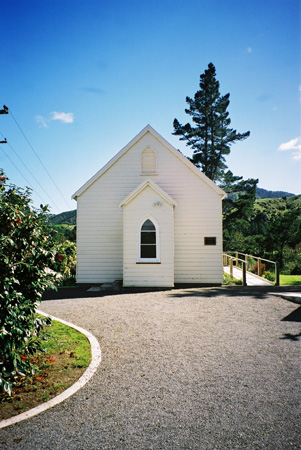
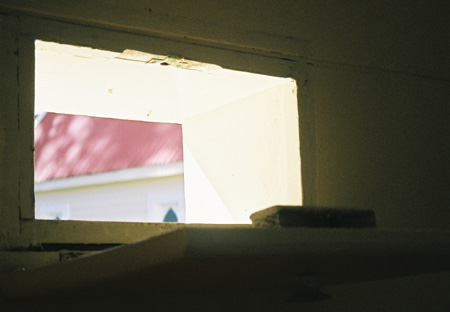
The Scottish Kirk is designed in the Victorian Country, Early English Gothic Revival Style of the period 1837-1901. It is a small, simple building based on a rectangular plan. It has an entrance porch located in the centre of one end with a roof at a 60-degree angle made from corrugated iron, and lean-to vestry at the other. A kitchen extension has also been added to this end. The exterior features plain bargeboards and shiplap weatherboard cladding. The main building has a steeply pitched, gable roof of corrugated iron. There is a ventilator louvre at one end and finials decorate the two gable ends. On either side of the nave are two small, rectangular gun hatches. These hatches suggest that the church walls were constructed as a double skinned wall - that is, a wall with both an inner and an outer wall wide enough to accommodate sic inches of clay infill, similar to that found in the Cameron Blockhouse at Marangai in Wanganui. The church is lit by a series of plain, lancet Gothic windows set in timber frames along two sides of the building and in the main door of the porch.
The Scottish Kirk is designed in the Victorian Country, Early English Gothic Revival Style of the period 1837-1901. It is a small, simple building based on a rectangular plan. It has an entrance porch located in the centre of one end with a roof at a 60-degree angle made from corrugated iron, and lean-to vestry at the other. A kitchen extension has also been added to this end. The exterior features plain bargeboards and shiplap weatherboard cladding. The main building has a steeply pitched, gable roof of corrugated iron. There is a ventilator louvre at one end and finials decorate the two gable ends. On either side of the nave are two small, rectangular gun hatches. These hatches suggest that the church walls were constructed as a double skinned wall - that is, a wall with both an inner and an outer wall wide enough to accommodate sic inches of clay infill, similar to that found in the Cameron Blockhouse at Marangai in Wanganui. The church is lit by a series of plain, lancet Gothic windows set in timber frames along two sides of the building and in the main door of the porch.
Historical and Associated Iwi / Hapū / Whānau
Iwi: Ngāti Apa
Completion Date
5th December 2002
Report Written By
Rebecca O'Brien
Information Sources
Arapere, 1999
B. Arapere, 'Maku ano hei hanga I toku nei whare; Hapu Dynamics in the Rangitikei Area, 1830-1872', A thesis submitted in partial fulfilment for the requirements for the degree of Master of the Arts in History, The University of Auckland, February, 1999
Dreaver, 2000
A. Dreaver, 'A Gypsy Church, Otaki Historical Society Historical Journal, vol.23, 2000, pp.2-16
Other Information
A fully referenced version of this report is available from the NZHPT Central Region office Please note that entry on the New Zealand Heritage List/Rarangi Korero identifies only the heritage values of the property concerned, and should not be construed as advice on the state of the property, or as a comment of its soundness or safety, including in regard to earthquake risk, safety in the event of fire, or insanitary conditions.
Historical and Associated Iwi / Hapū / Whānau
Iwi: Ngāti Apa
Completion Date
5th December 2002
Report Written By
Rebecca O'Brien
Information Sources
Arapere, 1999
B. Arapere, 'Maku ano hei hanga I toku nei whare; Hapu Dynamics in the Rangitikei Area, 1830-1872', A thesis submitted in partial fulfilment for the requirements for the degree of Master of the Arts in History, The University of Auckland, February, 1999
Dreaver, 2000
A. Dreaver, 'A Gypsy Church, Otaki Historical Society Historical Journal, vol.23, 2000, pp.2-16
Other Information
A fully referenced version of this report is available from the NZHPT Central Region office Please note that entry on the New Zealand Heritage List/Rarangi Korero identifies only the heritage values of the property concerned, and should not be construed as advice on the state of the property, or as a comment of its soundness or safety, including in regard to earthquake risk, safety in the event of fire, or insanitary conditions.
Current Usages
Uses: Religion
Specific Usage: Church Hall/Sunday School
Former Usages
General Usage: Religion
Specific Usage: Church
Current Usages
Uses: Religion
Specific Usage: Church Hall/Sunday School
Former Usages
General Usage: Religion
Specific Usage: Church
Location
Get the latest heritage news, features and events delivered
straight to your inbox.