Quick links


Quick links
Quick links
Quick links
Quick links
Quick links
Near Mangakukeke Road and Upper Kawhatau Road, UPPER KAWHATAU
Private
Historic Place Category 2
List No. 7609
List Entry Information
Status
Listed
List Entry Status
Historic Place Category 2
Access
Private/No Public Access
List Number
7609
Date Entered
24th June 2005
Date of Effect
24th June 2005
City/District Council
Rangitīkei District
Region
Horizons (Manawatū-Whanganui) Region
Extent of List Entry
The registration includes the archaeological site of Te Aupata pa, defined as the entire flat at the end of the ridge (see Appendix 5 of Registration Report for sketch plan of site) located on Section 14, Block IX, Ruahine Survey District.
Legal description
Sec 14, Blk IX Ruahine SD (RT WN21D/616), Wellington Land District
Location Description
Te Aputa pa (T22/2) is located on a narrow ridge high above the junction of the Mangakukeke Stream and Pourangaki River (see Appendix 3 of Registration Report). It can only be accessed through the property of Cathy and Campbell Phyn, which is siutated on Mangakukeke Road (off Upper Kawhatu Road). Travel along the farm road by vehicle or on foot and then proceed across the farm paddocks in a westerly direction to the bottom of the ridge. The ascent to the pa involves a 15-20 minute climb through dense vegetation.
Status
Listed
List Entry Status
Historic Place Category 2
Access
Private/No Public Access
List Number
7609
Date Entered
24th June 2005
Date of Effect
24th June 2005
City/District Council
Rangitīkei District
Region
Horizons (Manawatū-Whanganui) Region
Extent of List Entry
The registration includes the archaeological site of Te Aupata pa, defined as the entire flat at the end of the ridge (see Appendix 5 of Registration Report for sketch plan of site) located on Section 14, Block IX, Ruahine Survey District.
Legal description
Sec 14, Blk IX Ruahine SD (RT WN21D/616), Wellington Land District
Location Description
Te Aputa pa (T22/2) is located on a narrow ridge high above the junction of the Mangakukeke Stream and Pourangaki River (see Appendix 3 of Registration Report). It can only be accessed through the property of Cathy and Campbell Phyn, which is siutated on Mangakukeke Road (off Upper Kawhatu Road). Travel along the farm road by vehicle or on foot and then proceed across the farm paddocks in a westerly direction to the bottom of the ridge. The ascent to the pa involves a 15-20 minute climb through dense vegetation.
Why is this place significant?
Cultural Significance
Te Aputa Pa was an important place of Ngati Hauiti occupation during the late prehistoric / early historic period. It was nominated by Te Runanga o Ngati Hauiti as a site of cultural significance during consultation with the NZHPT for the Central Region Pilot Project. For Te Runanga o Ngati Hauiti, Te Aputa Pa is a physical reminder of their ancestral past and site visits provide a way of connecting with their tupuna on a spiritual level also. Whilst Te Aputa Pa is of considerable cultural and traditional importance to Te Runanga o Ngati Hauiti, it is also a place of special significance to the family who own the land on which it is located. This family have been associated with Te Aputa Pa since the late nineteenth century, and knowledge about the pa has been passed down through the successive generations. The family have a strong appreciation for the significance of Te Aputa Pa and are committed to the preservation of this site for future generations.
Historic Significance
Historical Significance or Value Te Aputa Pa has historical value as it was a place of significant Ngati Hauiti and Ngati Haukaha occupation during a time of intertribal conflict towards the latter part of prehistory (mid to late 18th century) and possibly also into the early historic period (early 19th century).
Physical Significance
Te Aputa Pa is an extremely well preserved example of a fortified ridge top pa, and has the potential to contribute important archaeological information about late prehistoric Maori occupation in the upper Rangitikei region.
Why is this place Category 1 / Category 2?
Detail Of Assessed Criteria
(c) The potential of the place to provide knowledge of New Zealand history. An archaeological investigation of Te Aputa Pa has the potential to contribute important information about Maori occupation of the Upper Rangitikei during the late prehistoric / early historic period. Archaeological excavation should not be supported because of its destructive nature but non-invasive means of archaeological inquiry could include more detailed surveying and mapping of the visible archaeological features. (d) The importance of the place to the tangata whenua. Te Aputa Pa is a culturally important site to Te Runanga o Ngati Hauiti as it was occupied by their tupuna during the late prehistoric / early historic period. Wi Wheko and Utiku Potaka referred to Te Aputa during the 1886 hearing of the Awarua Block as evidence of ancestral occupation, which was integral to any Maori Land Court claim. (i) The importance of identifying historic places known to date from early periods of New Zealand settlement. Maori Land Court evidence indicates that Te Aputa Pa dates to the eighteenth century, and was possibly occupied into the early nineteenth century.
Why is this place significant?
Cultural Significance
Te Aputa Pa was an important place of Ngati Hauiti occupation during the late prehistoric / early historic period. It was nominated by Te Runanga o Ngati Hauiti as a site of cultural significance during consultation with the NZHPT for the Central Region Pilot Project. For Te Runanga o Ngati Hauiti, Te Aputa Pa is a physical reminder of their ancestral past and site visits provide a way of connecting with their tupuna on a spiritual level also. Whilst Te Aputa Pa is of considerable cultural and traditional importance to Te Runanga o Ngati Hauiti, it is also a place of special significance to the family who own the land on which it is located. This family have been associated with Te Aputa Pa since the late nineteenth century, and knowledge about the pa has been passed down through the successive generations. The family have a strong appreciation for the significance of Te Aputa Pa and are committed to the preservation of this site for future generations.
Historic Significance
Historical Significance or Value Te Aputa Pa has historical value as it was a place of significant Ngati Hauiti and Ngati Haukaha occupation during a time of intertribal conflict towards the latter part of prehistory (mid to late 18th century) and possibly also into the early historic period (early 19th century).
Physical Significance
Te Aputa Pa is an extremely well preserved example of a fortified ridge top pa, and has the potential to contribute important archaeological information about late prehistoric Maori occupation in the upper Rangitikei region.
Why is this place Category 1 / Category 2?
Detail Of Assessed Criteria
(c) The potential of the place to provide knowledge of New Zealand history. An archaeological investigation of Te Aputa Pa has the potential to contribute important information about Maori occupation of the Upper Rangitikei during the late prehistoric / early historic period. Archaeological excavation should not be supported because of its destructive nature but non-invasive means of archaeological inquiry could include more detailed surveying and mapping of the visible archaeological features. (d) The importance of the place to the tangata whenua. Te Aputa Pa is a culturally important site to Te Runanga o Ngati Hauiti as it was occupied by their tupuna during the late prehistoric / early historic period. Wi Wheko and Utiku Potaka referred to Te Aputa during the 1886 hearing of the Awarua Block as evidence of ancestral occupation, which was integral to any Maori Land Court claim. (i) The importance of identifying historic places known to date from early periods of New Zealand settlement. Maori Land Court evidence indicates that Te Aputa Pa dates to the eighteenth century, and was possibly occupied into the early nineteenth century.
Construction Details
Start Year
1700
startYearCirca
Finish Year
1800
finishYearCirca
Type
Original Construction
Construction Materials
Archaeological site - ditch and bank defences, pits and two carved palisades remain
Notable Features
Ditch and bank defences Pits Carved palisades
Construction Details
Start Year
1700
startYearCirca
Finish Year
1800
finishYearCirca
Type
Original Construction
Construction Materials
Archaeological site - ditch and bank defences, pits and two carved palisades remain
Notable Features
Ditch and bank defences Pits Carved palisades
Traditional History Evidence presented during the hearing of the Awarua Block at Wanganui in 1886 indicates that Te Aputa Pa was originally inhabited by descendents of Ngati Haukaha. Claimant Wi Wheko informed the Court that Te Aputa Pa was first occupied by the ancestors of "Tukokoki i.e. Hirahira and his children and Moeroa and his brother and the descendents of Haukaha. Also by Tami, Te Kata, Whakapiko, Te Rahui. These belonged to Ngati Hauiti". Wi Wheko also stated that Te Aputa Pa was attacked, but not taken. It appears that Te Aputa Pa was built and occupied quite late in prehistory as Wi Wheko and fellow claimant Utiku Potaka spoke of their parents and grandparents living at the pa. Utiku Potaka was born in the late 1830s, which would suggest that his parents and grandparents lived at Te Aputa during the late eighteenth / early nineteenth centuries. European history The farm on which Te Aputa Pa is located has been owned by successive generations of the one family since the late 19th century. The original landowner C.G. Phyn recalled observing the ruins of five whare on Te Aputa Pa around 1896 and in 1965 G.N. Phyn (son of C.G. Phyn) and his two sons accompanied members of the Otaihape Field Group on a site visit to Te Aputa Pa. Photographs and measurements were taken of the key archaeological features and a site record form was submitted to the New Zealand Archaeological Association's Site Recording Scheme in 1967. The family's close association with Te Aputa Pa has continued to this day.
Traditional History Evidence presented during the hearing of the Awarua Block at Wanganui in 1886 indicates that Te Aputa Pa was originally inhabited by descendents of Ngati Haukaha. Claimant Wi Wheko informed the Court that Te Aputa Pa was first occupied by the ancestors of "Tukokoki i.e. Hirahira and his children and Moeroa and his brother and the descendents of Haukaha. Also by Tami, Te Kata, Whakapiko, Te Rahui. These belonged to Ngati Hauiti". Wi Wheko also stated that Te Aputa Pa was attacked, but not taken. It appears that Te Aputa Pa was built and occupied quite late in prehistory as Wi Wheko and fellow claimant Utiku Potaka spoke of their parents and grandparents living at the pa. Utiku Potaka was born in the late 1830s, which would suggest that his parents and grandparents lived at Te Aputa during the late eighteenth / early nineteenth centuries. European history The farm on which Te Aputa Pa is located has been owned by successive generations of the one family since the late 19th century. The original landowner C.G. Phyn recalled observing the ruins of five whare on Te Aputa Pa around 1896 and in 1965 G.N. Phyn (son of C.G. Phyn) and his two sons accompanied members of the Otaihape Field Group on a site visit to Te Aputa Pa. Photographs and measurements were taken of the key archaeological features and a site record form was submitted to the New Zealand Archaeological Association's Site Recording Scheme in 1967. The family's close association with Te Aputa Pa has continued to this day.
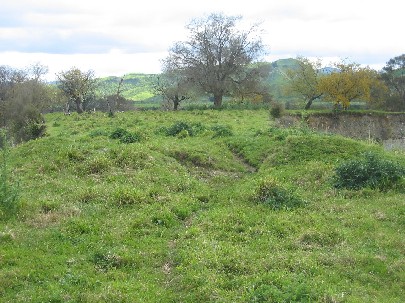
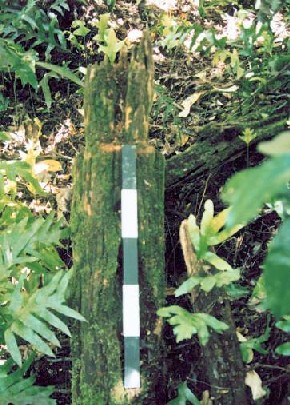
Te Aputa Pa is a fortified pa situated approximately 511metres above sea level at the end of a narrow ridge overlooking the junction of the Mangakukeke Stream and Pourangaki River. The Otaihape Field Group recorded defences at each of the three vertices during a site visit in 1965 and the remains of a ditch (approximately 12 metres wide) and bank are clearly visible today as you approach the pa from along the ridge. The Otaihape Field Group also identified a rectangular pit and possible rua and three carved posts were recorded. Two of the posts had narrowed necks and one was notched. The ruins of five whare were also observed on the pa around 1896 by the landowner, C.G. Phyn. The dense vegetation coverage prevented a comprehensive survey of Te Aputa Pa during a recent site visit but the two carved posts and a kumara pit was located. Several other pit features were also noted and the owner pointed out the former location of the whare ruins. Te Aputa Pa is well-preserved and is currently covered in dense, regenerating native bush. It is not accessible by stock and potential visitor threats are controlled by the remote location, difficulty of access, and through careful management by the owners. The two remaining carved posts are in good condition. One has been placed in a pit to aid preservation.
Te Aputa Pa is a fortified pa situated approximately 511metres above sea level at the end of a narrow ridge overlooking the junction of the Mangakukeke Stream and Pourangaki River. The Otaihape Field Group recorded defences at each of the three vertices during a site visit in 1965 and the remains of a ditch (approximately 12 metres wide) and bank are clearly visible today as you approach the pa from along the ridge. The Otaihape Field Group also identified a rectangular pit and possible rua and three carved posts were recorded. Two of the posts had narrowed necks and one was notched. The ruins of five whare were also observed on the pa around 1896 by the landowner, C.G. Phyn. The dense vegetation coverage prevented a comprehensive survey of Te Aputa Pa during a recent site visit but the two carved posts and a kumara pit was located. Several other pit features were also noted and the owner pointed out the former location of the whare ruins. Te Aputa Pa is well-preserved and is currently covered in dense, regenerating native bush. It is not accessible by stock and potential visitor threats are controlled by the remote location, difficulty of access, and through careful management by the owners. The two remaining carved posts are in good condition. One has been placed in a pit to aid preservation.
Historical and Associated Iwi / Hapū / Whānau
Public NZAA Number
T22/2
Report Written By
Jo Wylie
Information Sources
Archives New Zealand (Wgtn)
Archives New Zealand (Wellington)
Downes, 1909
T. W. Downes, 'Early history of Rangitikei, and notes on the Ngati Apa tribe'. Transactions of the New Zealand Institute, Vol. XLII, 1909
Haywood, 2003
M Haywood, Rata: In the Heart of the Rangitikei. Hamilton: M Haywood, 2003
Potaka, nd
U Potaka, 'Site Profile: Te Aputa'. Document submitted to the NZHPT in May 2004.
Other Information
Iwi - Ngati Hauiti Please note that entry on the New Zealand Heritage List/Rarangi Korero identifies only the heritage values of the property concerned, and should not be construed as advice on the state of the property, or as a comment of its soundness or safety, including in regard to earthquake risk, safety in the event of fire, or insanitary conditions.
Historical and Associated Iwi / Hapū / Whānau
Public NZAA Number
T22/2
Report Written By
Jo Wylie
Information Sources
Archives New Zealand (Wgtn)
Archives New Zealand (Wellington)
Downes, 1909
T. W. Downes, 'Early history of Rangitikei, and notes on the Ngati Apa tribe'. Transactions of the New Zealand Institute, Vol. XLII, 1909
Haywood, 2003
M Haywood, Rata: In the Heart of the Rangitikei. Hamilton: M Haywood, 2003
Potaka, nd
U Potaka, 'Site Profile: Te Aputa'. Document submitted to the NZHPT in May 2004.
Other Information
Iwi - Ngati Hauiti Please note that entry on the New Zealand Heritage List/Rarangi Korero identifies only the heritage values of the property concerned, and should not be construed as advice on the state of the property, or as a comment of its soundness or safety, including in regard to earthquake risk, safety in the event of fire, or insanitary conditions.
Current Usages
Uses: Agriculture
Specific Usage: Farm
Former Usages
General Usage: Maori
Specific Usage: Pā
Themes
Of Significance to Maori
Current Usages
Uses: Agriculture
Specific Usage: Farm
Former Usages
General Usage: Maori
Specific Usage: Pā
Themes
Of Significance to Maori
Location
Get the latest heritage news, features and events delivered
straight to your inbox.