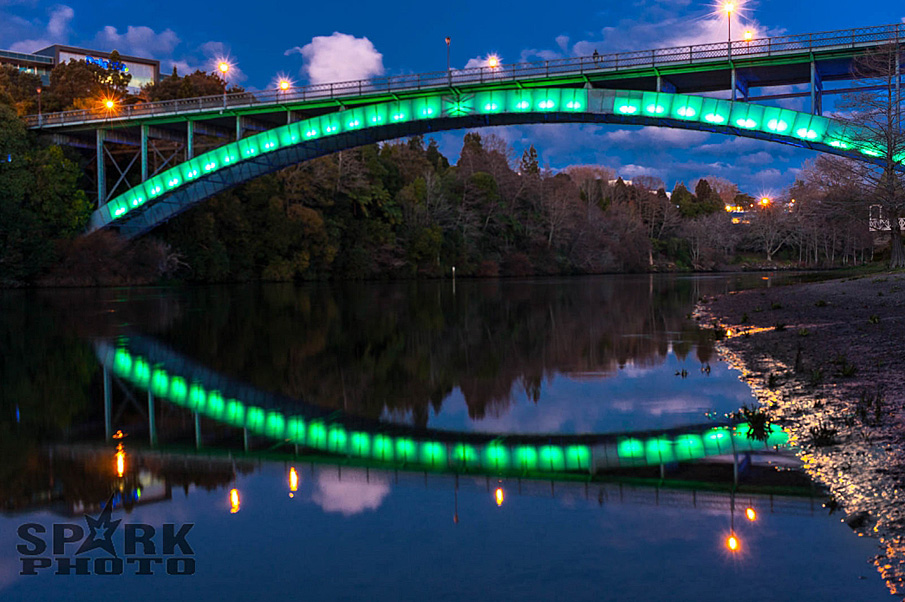
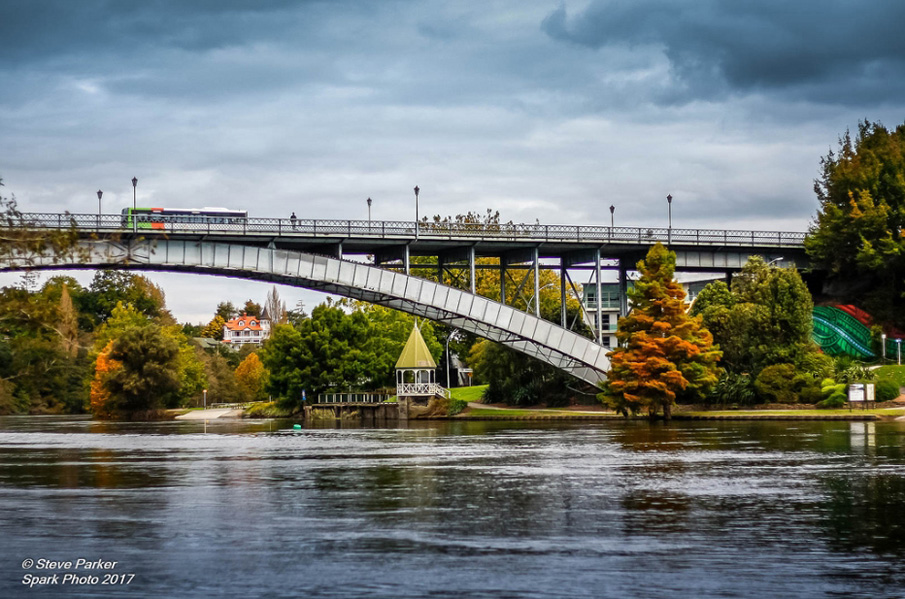
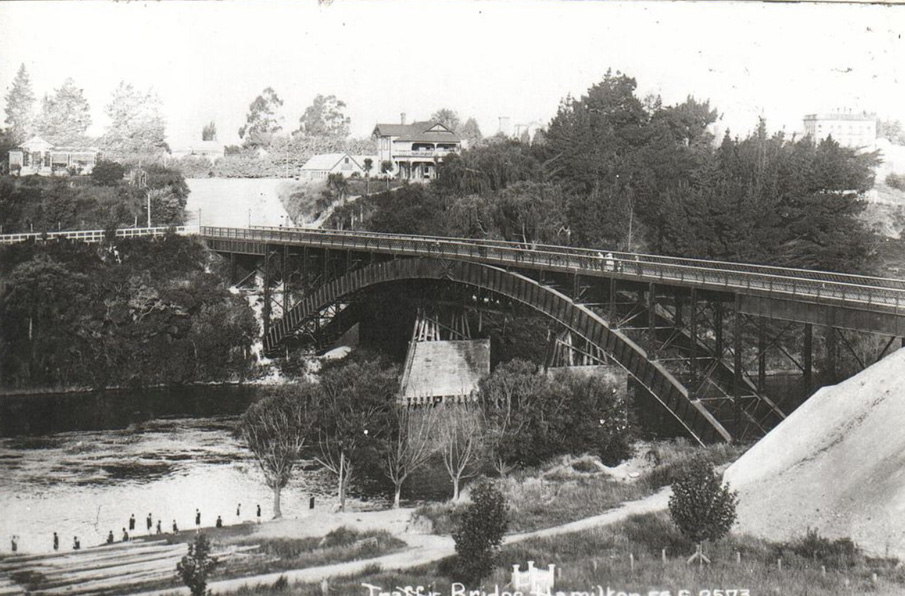
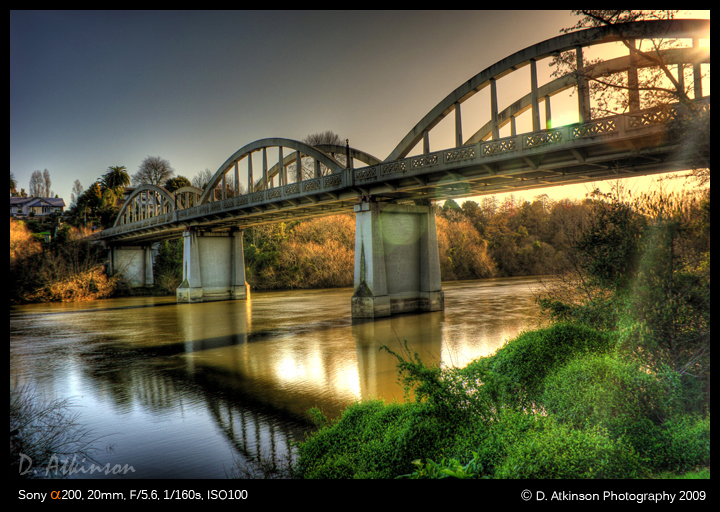
Victoria Bridge is an elegant road bridge, spanning the Waikato River in Hamilton. Its construction represented a considerable civic and engineering achievement when it was opened for traffic in 1910. A steel-arched structure 152 m long, the bridge formed the main link between separate parts of the town, Hamilton East and West. These had grown up around two military redoubts, built during the third New Zealand - or Waikato - War (1863-1864). The bridge was erected on the site of the earliest ferry crossing in the colonial settlement, and replaced an 1870s timber structure symbolically known as 'Union Bridge'. It also had a broader importance, lying on the main road between Auckland and Rotorua. The new bridge was both functional and emblematic of progress, being built by the Hamilton Borough Council after a popular vote and at considerable expense. It was constructed at a time when local authorities took on a more prominent profile in government and when Hamilton was expanding rapidly as a town.
The bridge is of open spandrel construction, with a three-pinned central arch of 104 m and two approach spans. Its design was unusual in New Zealand for the combined length and low height of its main span. The structure is believed to have been partly conceived by Waddell and Harrington of Kansas City, who had created the first vertical lift-bridge in the world, while the prominent New Zealand engineer James Fulton supervised its construction for the borough. The international nature of the project was reinforced by the steelwork being prefabricated in Britain by the Cleveland Bridge Company, and shipped over for erection on site. The reinforced concrete deck of the original structure was designed to carry trams, and accommodated two traffic lanes with a separate pavement for pedestrians. Later subsidence of the foundations led to a lighter, steel-framed deck being installed in the 1930s, which was claimed as the earliest of its type outside Canada. This was removed during a widening of the carriageway for safety reasons in 1992.
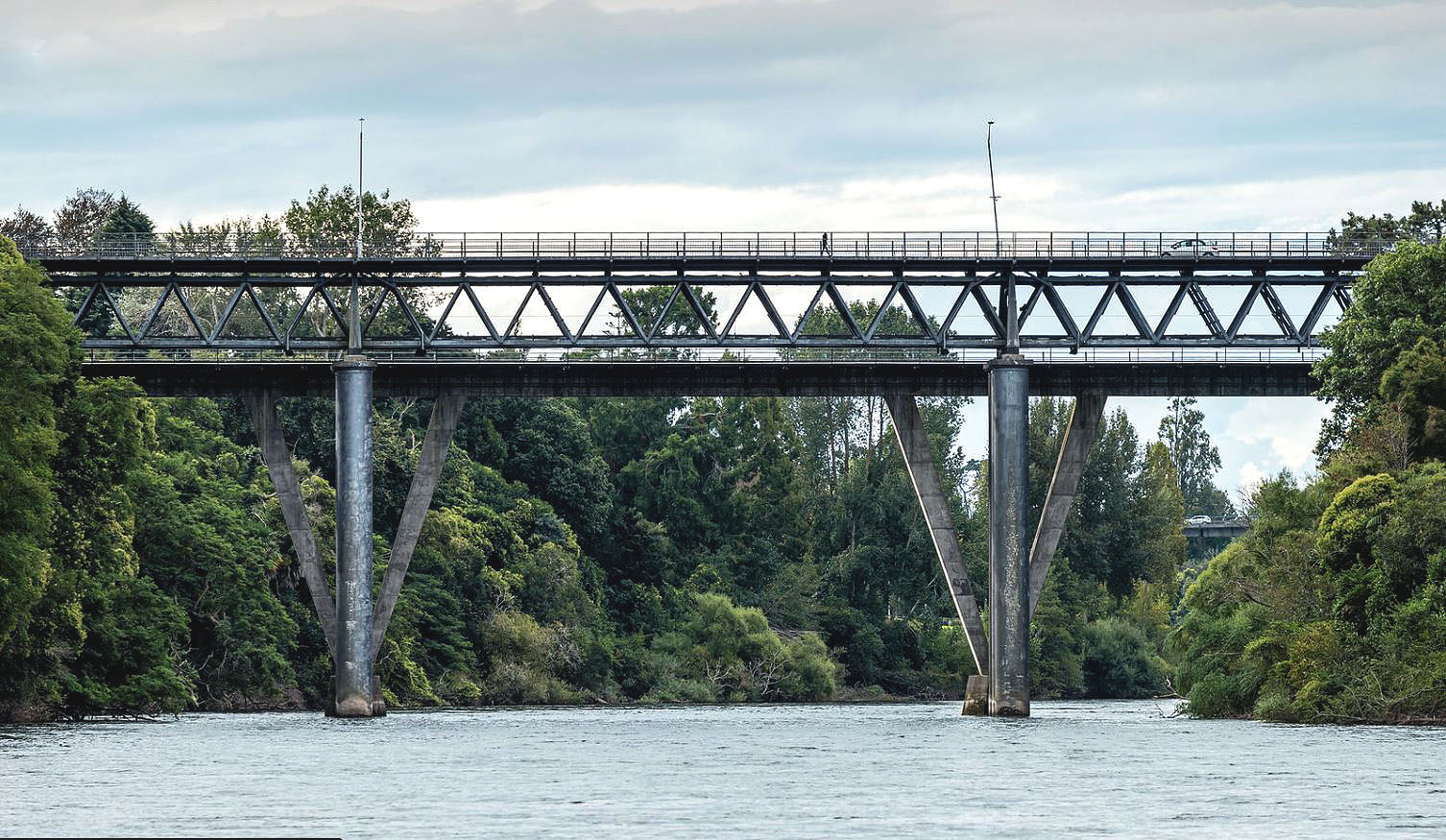
Victoria Bridge is nationally significant as one of the most accomplished steel-arch road bridges in New Zealand erected by a local authority. It was an ambitious project, designed and supervised by engineers of national and international renown. It increases our understanding of this country's engineering and trading links with North America and Britain, and makes a valuable contribution to the history of transport and technology in New Zealand, including the rise of motorised traffic in provincial towns. The structure has considerable historical value for demonstrating the leadership and ambition of local authorities, including borough councils, in the years after New Zealand became a Dominion in 1907. It reflects Hamilton's growth and prosperity in the early 1900s and its position as the major settlement in the Waikato. The bridge is important for marking the earliest crossing of the Waikato in colonial Hamilton and is a significant local landmark. It enjoys public esteem as an elegant addition to the urban landscape, and has additional value for its association with other historic bridges over the Waikato River.