Early history of the site:
The northern shores of the Waitemata Harbour are of significance to several iwi, having been explored or occupied since early human arrival in New Zealand. According to oral tradition, the Arawa canoe under Tama Te Kapua investigated the Waitemata after first arriving at Maketu. The canoe deposited a rock brought from Hawaiki on Te Mata (Boat Rock), an island to the west of Chelsea Bay. Such was the importance of this site that the Waitemata is believed to have been named after it. The Tainui canoe also landed a few miles to the east at Te Hau Kapua (Torpedo Bay) in present-day Devonport before travelling to its eventual heartland in the Waikato.
By the eighteenth century, land in the vicinity of present-day Birkenhead was occupied by Kawerau, a smaller iwi who held settlements along the Waitemata shoreline noted for their access to shark fisheries. Evidently known as Wawaroa, the peninsula and inlet that forms the core of the current Chelsea Estate is believed likely to have contained settlement, which may have been seasonal or otherwise. Maori occupation has been recorded at most bays and headlands immediately to the east and west of the site, including at Uruamo, Onewa (Kauri Point), Onetaunga (Quarryman's Bay).
In the 1740s, the Chelsea Bay shoreline between Hinemoa Street and Colonial Road - part of which lies within the Chelsea Estate - is regarded as having been occupied by a visiting Ngati Whatua taua (war party) of some 70 men, who used it as a base to launch an attack on Te Waiohua strongholds on the southern side of the Waitemata at Te To (Freemans Bay), Tokapurewa (Orakei) and Taurarua (Judge's Bay). The overwhelming success of the taua marked the last stage in the transfer of the Tamaki (Auckland) area from Te Waihoua to Ngati Whatua. The latter subsequently occupied pa sites on the North Shore, although Kawerau, who owed homage to Ngati Whatua, appear to have retained at least one coastal stronghold.
Following Ngapuhi incursions in the 1820s, much of the north shore of the Waitemata was depopulated, assisting its purchase by the British Crown after formal colonisation in 1840.
Early colonial land division and use:
The land occupied by the current Chelsea Estate formed part of a large block between Mahurangi and the Waitemata that was obtained by the Crown in 1841. Located only a short distance away from the new colonial capital at Auckland, early subdivisions near Birkenhead were particularly sought after by local investors and speculators. From 1843 onwards, Crown Grants were issued for land that became part of the current Estate. Their survey and sale marked a radical reconceptualising of the landscape to include straight property boundaries and a network of projected roads for landward access, some of which remain in use to the present day (2009).
Initial purchasers included the important early mercantile firm of Brown and Campbell and an Auckland-based chemist and grocer, William Gundry, who had married Makarita Rautangi, a daughter of the Ngāi Tūpoto leader, Te Reti Whatiia, a signatory of the Treaty of Waitangi at Mangungu (1840). The earliest owner of another property was evidently a local land agent, Richard Ridings, although the New Zealand Company - which had founded settlements at Wellington, New Plymouth and elsewhere - may have previously held an interest.
Formal settlement was probably underway by the late 1840s with both horticultural and industrial enterprises potentially in existence beside the Wawaroa inlet, now renamed Duck Creek. Perhaps following Maori precedents in supplying the Auckland market, grocer William Gundry planted an orchard of apple, pear, cherry, plum and other trees on the promontory between Duck Creek and the main waterfront sometime after 1845. Described as his 'favourite retreat', buildings were in place by 1854 including a weatherboard house. This enterprise foreshadowed the creation of a fruit industry in Birkenhead, which was to form a mainstay of the area's economy into the twentieth century.
Industrial enterprise may have occurred on land to the north of Duck Creek, which was purchased in 1846 by land agent and brickmaker Phillip Callan. Advertisements promoting Callan's 'Mill-manufactured bricks' for sale on the Auckland waterfront in December 1850, references to 'buildings and improvements' on Callan's land by March 1851, and the naming of the Duck Creek shoreline as Callan's Bay by later in the same year all indicate potential activity during this period. Brickmaking was a significant early colonial industry on the North Shore on account of the area's clay soils and easy waterborne access to the Auckland market. It was also to play an important role in the subsequent construction of the Chelsea Sugar Refinery.
From the late 1850s agricultural use in the Duck Creek area may have intensified, with at least three farmsteads being occupied. In 1856 Gundry's property on the Wawaroa peninsula was purchased by Charles d'Auvergne and his brother-in-law Major Collings de Jersey Grut. Hailing from the Channel Islands, d'Auvergne and Grut were immediate relatives of the Duc de Bouillon, who owned extensive lands in Brittany. Arriving with a retinue of servants, livestock and domestic possessions, the two men and their families organised the construction of tea-tree whares until at least one additional house could be erected. Although equipped with the latest farm machinery brought from London, the families were unable to retain their servants in a new colonial environment. The Gruts remained until the mid 1860s, retaining close links with Auckland high society including the Attorney General, William Swainson, who was frequently rowed across the Waitemata Harbour by his Maori valet for visits. In 1873, their ‘Wawaroa Valley' farm was bought by an ironmonger, Edward Matthews, who renamed the property ‘Woodside'. Photographs show the main house sitting in a rural landscape with fields, tracks, planted trees and possibly outbuildings on the southern side of the property, extending to the west of the current refinery site.
A second farm was located on land previously owned by Phillip Callan, purchased in 1860 by Dr Thomas Aickin, who became medical superintendent of the lunatic asylum at Oakley in 1869. Aickin's main residence was in Avondale, but a house erected on the site prior to 1868 (possibly remaining from Callan's brickmaking enterprise) may have been a small farmstead or country retreat surrounded by enclosures. It was later leased by John Howard who was required to establish extensive pasture, plant 100 trees, and to maintain the existing house and buildings, bridges, fencing, dykes, drains and ditches.
The third residence was on a smaller property owned between 1856 and 1882 by farmer Hugh McCrum, who is said to have lived in a mud hut on his land. His dwelling may have been located beside a track leading to the Wawaroa creek, close to an adjoining property belonging to an absentee landlord - New Zealand's first chief justice William Martin (1807?-1880).
In 1881-3, these properties were part of a 75.7 hectare (187 acre) holding purchased by a business led by the Australian-owned Colonial Sugar Refining Company (C.S.R.) for the construction of New Zealand's only sugar refinery.
The C.S.R. and construction of the Chelsea Sugar Refinery:
Sugar is a widespread food commodity with an important role in international trading history. Raw cane sugar may have first been cultivated in the Pacific Islands before spreading to India and China, and subsequently via the Persian Empire and Arab traders to the Mediterranean. In the fifteenth century, Venetian traders transported crude raw sugar from warmer regions and refined it in factories next to their main markets. Sugar subsequently became an important item associated with the growth of global commerce during the early modern and later eras. From the fifteenth to the twentieth centuries, it had particularly close links with European expansion into the New World (where plantations for the production of sugar were created), the mass movement of labour around the globe (including as slaves from Africa and indentured workers from India and elsewhere), and the development of specialised large-scale food manufacture (converting what was initially a luxury item into a product for widespread consumption). Connected with the ongoing internationalisation of human diet, sugar is a component of an increasingly large number of edible and other products.
During the nineteenth century, European colonies in the Southern Hemisphere provided a growing market for sugar consumption. As their economies became industrialised, refineries were established to cater for expanding local demand. The first sugar refinery in Australasia was erected in 1841 at Canterbury near Sydney, and started production the following year. In 1855 the C.S.R. was founded in Sydney and soon dominated sugar manufacture in New South Wales. The C.S.R. subsequently became involved in sugar cane production in the 1870s and 1880s, firstly in northern New South Wales and then in Queensland and Fiji. During this period it also embarked on an expansion of its refining capacity, opening a purpose-built complex at Pyrmont, Sydney (1875-8), and planning another in Auckland. The New Zealand refinery was closely linked with the C.S.R.'s creation of company-owned sugar plantations in Fiji from 1880 onwards, worked by a newly-introduced system of indentured Indian labour. Lying between Fiji and Australia, the Auckland factory's intended purpose was to refine raw cane sugar grown mostly in Fiji for distribution and consumption in the New Zealand market.
The founding of a new refinery occurred after a bounty for its establishment had been set by the New Zealand government. The C.S.R. joined forces with its sister company in Melbourne, the Victoria Sugar Company (founded 1857), and a group of local investors known as the New Zealand Sugar Company to raise the large amount of capital required for the new venture. Members of the New Zealand company included prominent Auckland businessmen Thomas Russell, James Williamson and Frederick Whitaker (who was also Premier in 1883). After exploring sites throughout New Zealand, land at Duck Creek was chosen due to its access to a deep anchorage and plentiful fresh water supply. It was probably also selected for its proximity to the large Auckland market, both for the consumption of the refined product and as a source of labour. When operational the refinery was to be a large private employer, engaging some 100 individuals.
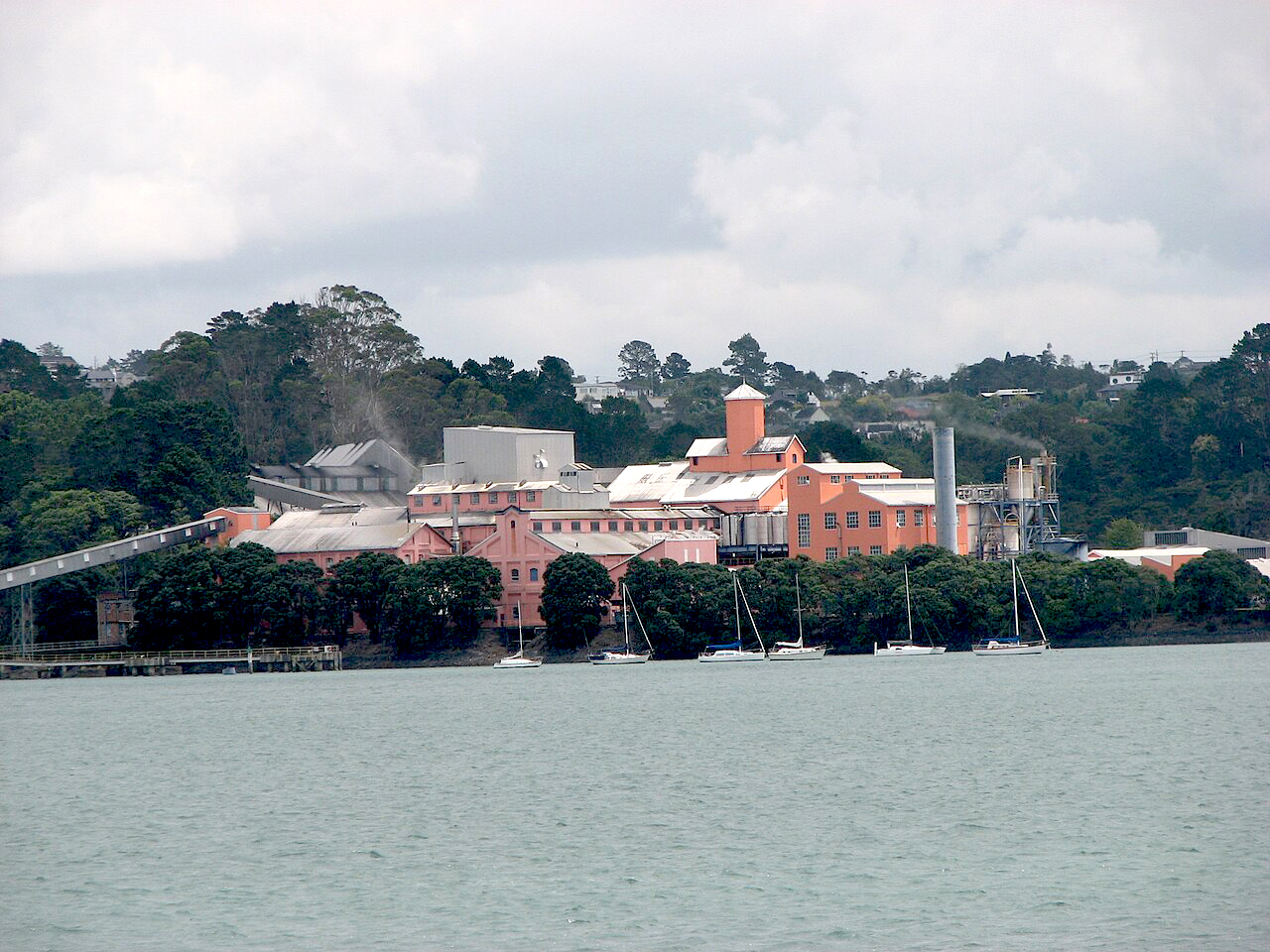
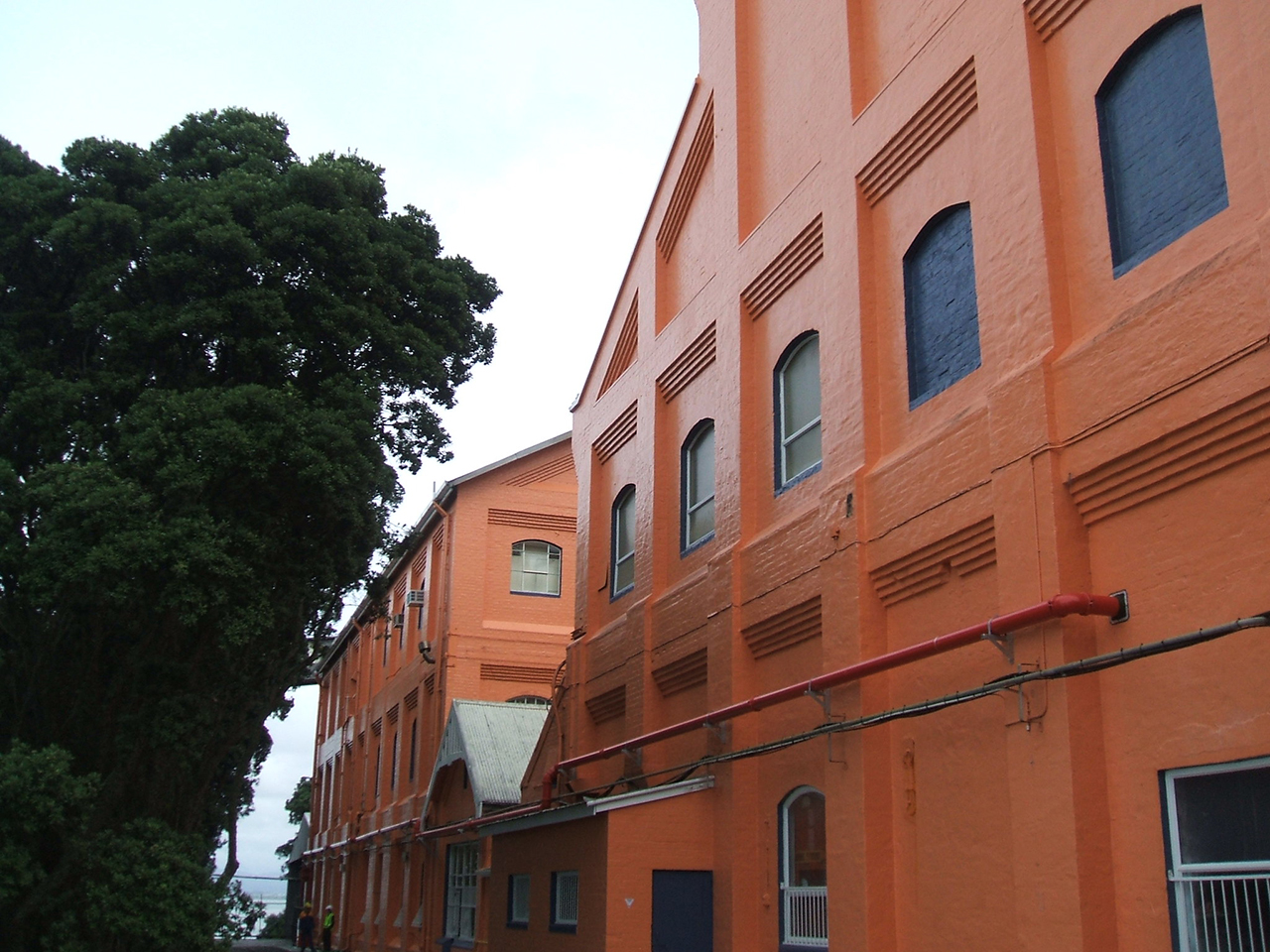
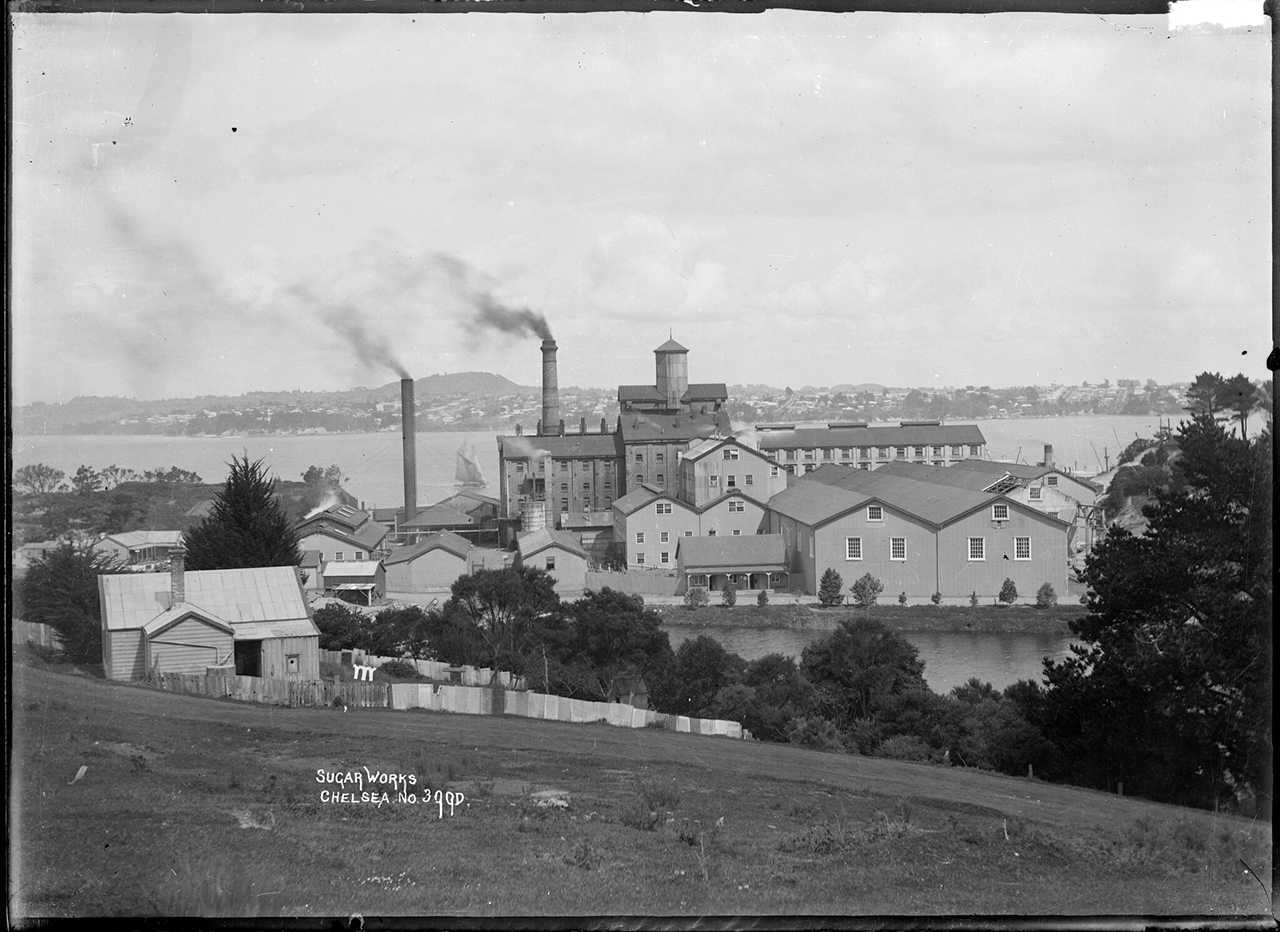
Construction work was started in January 1883 and initially involved large-scale earthmoving, displacing a large part of the Wawaroa peninsula and depositing the spoil along the foreshore and in part of Duck Creek. This potentially preserved archaeological material linked with pre-existing human activity and environmental conditions along both waterfronts. A flat platform of some 3.2 hectares (8 acres) was thereby created for the erection of the refinery itself. The general works were designed by the Auckland-based engineers Boylan and Lundon, and supervised by Robert Lundon. The refinery was completed to an operational stage by September 1884, with a sizeable force of construction workers housed in a tent village on the refinery estate for part of the intervening period. Demonstrating a self-sufficiency that became a prominent feature of subsequent activity at the refinery, one and half million bricks were produced on the site using two pugmills and local clay. These were used to erect the main refinery buildings and its ancillary elements. The contract for brick production was obtained by William North.
The main refinery complex was of specialised function and was probably designed by the overseer of its construction, James Muir, a C.S.R. employee. Muir was a Scottish engineer who had previously ‘reconstructed the most important refineries in Great Britain and Ireland, and ... put in working the whole of the sugar refineries at present established in the Southern hemisphere'. His previous projects had included erecting refineries at Yarraville (1874) and Pyrmont (1875-8), and the C.S.R.'s mill at Broadwater (1881), at that time the largest sugar mill in Australia. He also went on to design the C.S.R. refinery at New Farm near Brisbane in 1892.
The western part of the refinery complex incorporated large raw sugar stores constructed of timber and corrugated iron. These were of unusual and possibly innovative design, being attached to the other refinery buildings as part of a conjoining complex, unlike earlier refineries which are said to have had detached stores. This development was to save labour in handling the raw product. Soon after opening, the stores were capable of holding 10,000 tons of raw sugar, stacked from floor to ceiling using hydraulic jiggers. In the centre of the complex, a 27.4 metre (90 feet) tall cistern house was one of the most distinctive buildings in Auckland when erected. This contained large cast iron cisterns holding char made of calcined animal bone, through which liquid sugar was passed after being melted to remove impurities - a vital stage in the refinement process. It was also crowned by a pagoda of distinctive design, which received char that was fan-blasted via a pipe from the building base for distribution into the top of each cistern.
To the east, an adjoining four-storey brick char house was reported to have been the largest of those in the C.S.R.'s refineries. This contained kilns and other equipment that enabled impurities to be removed from used char, allowing its re-use in the refining process. Also in the eastern part of the complex were a small bone house, retorts, a gasometer, and a 38.4 metre (126 feet) high chimney with a boiler-house fuelled by coal. Other elements to the south included a brick refined sugar store for distribution and packing, a small timber building housing offices for the manager and a customs officer, a weighbridge, a workshop, tramways and separate timber wharves for sugar and coal. The latter was 137 metre (450 feet) long.
Machinery housed within the complex was imported from several industrial centres in England and Scotland, reflecting the reach and impact of British imperial technology. The cisterns and char kilns were imported from Glasgow and Greenock in Scotland, a major centre for the British sugar industry. Boilers and other equipment came from Preston, Birmingham and elsewhere in England. The complex was carefully designed to include a ‘clean' area to the west for raw and refined sugar storage, and a ‘dirty' area to the east for coal, char, gas and power production. The factory was surrounded by a solid fence, with a gate near the western end of its northern side.
Creation and use of the surrounding estate:
The working refinery was the epicentre of a large supporting estate. The use and scale of the latter embodied the self-sufficiency of the enterprise and reflected its well-capitalised nature. It may have paralleled the C.S.R.'s involvement in Fiji and Queensland, where estates for producing raw sugar had been founded.
Two dams were initially constructed in the base of Wawaroa Valley, the upper one to supply fresh water for the refining process, and the lower dam to feed the boilers. The lake behind the larger lower dam occupied approximately 0.8 hectares (2 acres). Pipes led from both to the refinery. Each dam was faced with bricks produced on the site.
The estate was also residential, with at least 100 workers housed on company land. The type and location of residences reflected the social status and occupations of their inhabitants. The refinery manager (initially James Muir) lived in a detached house overlooking the factory gates to the west of the refinery, on the remains of the Wawaroa peninsula. The customs officer (Mr Judd) occupied a dwelling nearby, which was relocated from Matthews' earlier enterprise on the site. The area around these houses may have been planted with trees, supplementing fruit orchards that survived from the earlier farming venture. Large fields further west may also have retained pre-existing farm boundaries and were evidently used to graze horses employed for transportation in the refinery complex.
Workers were housed in a company town on the opposite side of Duck Creek. This incorporated 35 houses of varying sizes arranged in an orderly fashion on either side of a broad road or track. Perhaps aspiring to be a model village of a type associated with industrial communities in Britain and elsewhere, the settlement contained a day school and an Anglican church for both intellectual and moral education. It also had an independent store not reliant on any ‘truck' system operated by employers. Houses were intended to be provided with large gardens to encourage self-sufficiency. Although embodying philanthropic ideas, the village also enabled the company to have greater control over its workforce as the dwellings remained in its ownership. The engineer and two ‘sugar boilers' occupied the largest residences, one of which may have been on or close to Aickin's earlier residential site. Timber bridges and walking tracks connected the community with their place of work across the creek and with nearby Birkenhead.
Late nineteenth and early twentieth-century changes:
The economic and social impact of the refinery on Birkenhead and its broader area was immediate. Construction of the works injected £30,000 into the local economy in wages, and by the time that the refinery was operative property values in the district are reported to have doubled. The population of Birkenhead expanded, partly to service the factory and its workforce. Well-to-do families increasingly moved into the district. Perhaps symptomatic of such changes, the name of the estate had altered from Duck Creek to Chelsea by the late 1880s, evidently influenced by the Customs Officer, Mr Judd, who hailed from that part of London. The C.S.R. contributed to the social lives of Birkenhead's growing population, instituting an annual picnic in circa 1888 that survived until after the Second World War (1939-1945). Held on a work day and attended by managers, workers and their families, the outing sometimes involved a ferry excursion to venues such as Brown's Island or Pine Island. In an age when transport and holidays were rare, the event was considered to have been a highlight of the Birkenhead social calendar.
In spite of the local stimulus, a general economic depression during the later 1880s caused the demise of both the New Zealand Sugar Company and the Victoria Sugar Company. The refinery passed solely to the C.S.R., which weathered the slump through having capital reserves, advanced technology and larger mills than its competitors. These benefits allowed expansion at Chelsea and other refineries from the late 1880s, and the construction of new refineries in South Australia (Glanville, 1891) and Queensland (New Farm, 1893). After buying out three competing refineries in Melbourne and Sydney in 1894 and 1907, only one independent refinery in Australasia remained: the Millaquin Refinery in Bundaberg. By this time the C.S.R. had a virtual monopoly in sugar production and was the largest industrial organisation in Australia.
Initial alterations at Chelsea included replacement of the pagoda on the cistern house to create its current larger form (1887). Main buildings such as the raw sugar stores and char house were enlarged. New structures included a bag-making shop and printing house, a cooper's shed, bale shed, sack shed and a sack maker's house. These enhanced self-sufficiency by facilitating the production of containers for products such as refined sugar, syrup, treacle and molasses. A slipway may also reflect the repair of the C.S.R.'s fleet of lighters that transported goods to Auckland, which from 1905 developed into fully-fledged boatbuilding. Prior to 1900, the roadway servicing the company town was extended past the refinery complex to a new passenger wharf beside the slipway.
A considerable increase in capacity was signalled by a major phase of expansion at the turn of the century when a new dam next to the refinery was built (No.3 Dam), a new melting house was created and the raw sugar store more than doubled in size. Improved facilities were also erected for the engineer and related staff, who were engaged in these works. By 1902, the refinery was producing nearly twice as much sugar as when it was first established. By 1908 almost 250 individuals were employed. This was in spite of increasing mechanisation, exemplified by the construction of a sack conveyor from the refined sugar store to the wharf.
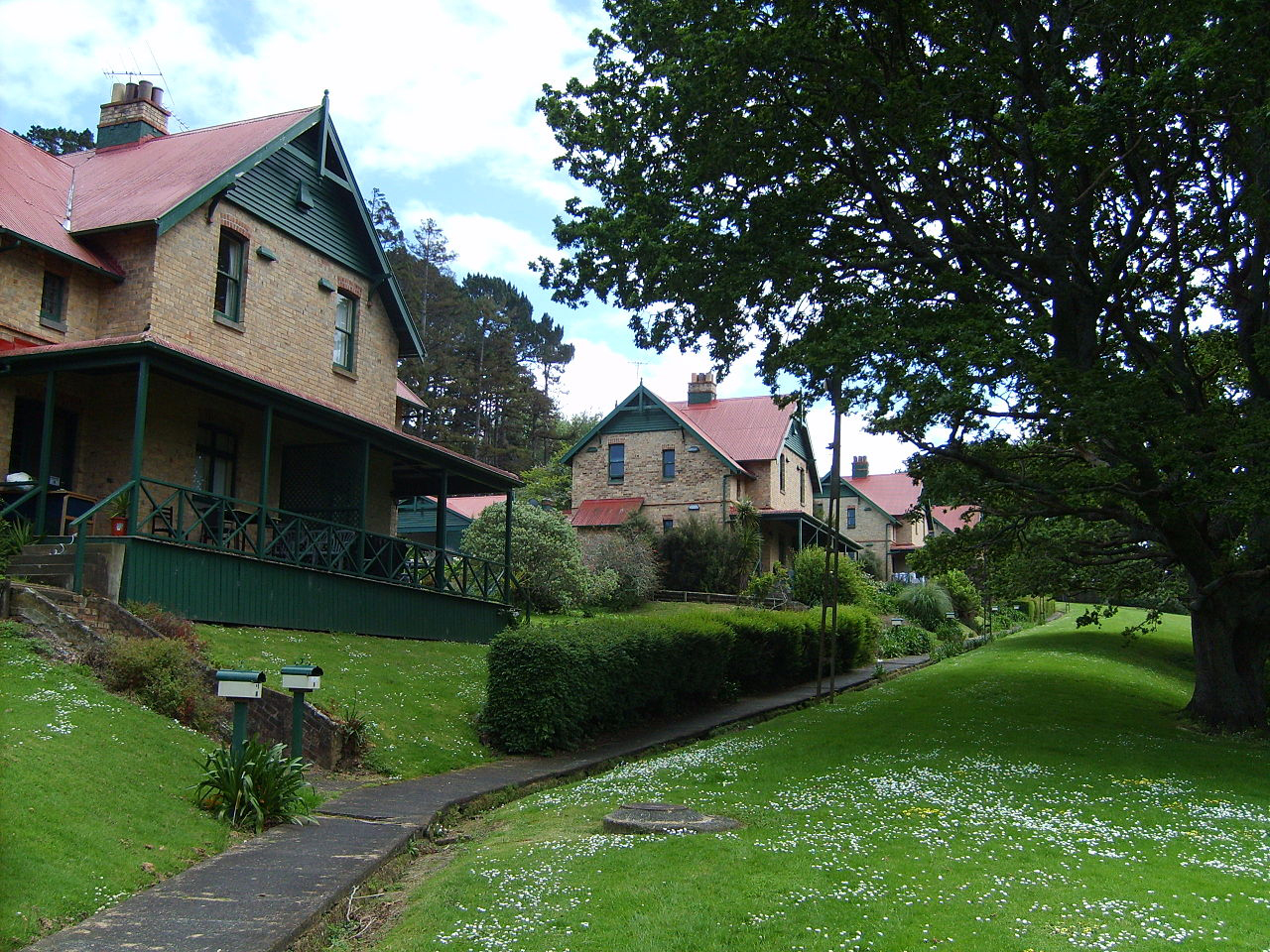
Changes to the broader estate also occurred following condemnation of the company town by health authorities in 1905. Its houses were gradually sold and moved off the site. The church was also relocated. In their place, four large brick buildings of an Australian-influenced Arts and Crafts style were erected, each incorporating two semi-detached or duplex dwellings. These housed vital workers such as chemists who might be called to the refinery at short notice. The manager also moved to a more solitary position away from the refinery, occupying a new large purpose-built brick residence, also designed in Sydney. This was set in a clearing in the western part of the estate. His previous residence was occupied by the chief engineer. Such changes demonstrate the greater physical separation of residential buildings from the workplace that also occurred elsewhere in New Zealand at the time. They may also reflect reduced contact between the manager and his workforce during a period of strained industrial relations.
In 1901, the Sugar Workers' Union had been formed at Chelsea due to discontent about long hours and low wages. Of particular concern were conditions for young boys, who could be taken on from the age of twelve. Although the company did not accede to demands, the union lapsed in 1911 following the C.S.R.'s introduction of a scheme to provide low interest loans to workers who wanted to build or buy homes close to the refinery. Amounts could also be borrowed for other purposes, a scheme unique in New Zealand's industry at this time. The loans kept a steady, long-serving workforce intact and saw streets close to the refinery develop largely as a community of sugar workers and their families. Over 130 houses were financed, being over a third of all new houses built in Birkenhead between 1910 and 1926.
With the departure of the company town and possibly greater public use of the estate, the estate grounds were increasingly planted and beautified. Trees appear to have been both native and exotic but included eucalyptus and oak, potentially reflecting the Australian and British colonial connections of the refining enterprise. Further structures, including stabling and a large water tank, may have been erected in fields to the west of the refinery. The final dam (No.4 Dam) was erected in 1917, enclosing most of what had previously been Duck Creek.
Prior to the 1920s gum digging took place on parts of the estate by individuals seeking to gain extra revenue.
Mid to late twentieth-century development:
Through the course of the twentieth century work practices at the refinery changed considerably, with improved amenities for the workforce and increasing mechanisation. Chelsea was linked to broader events. A dispute in the 1920s included an extended strike that affected related manufacturing businesses across New Zealand. After the end of indentured labour in Fiji, raw sugar was refined from a greater variety of sources internationally: Java, Cuba, San Domingo and Peru. With the outbreak of the Second World War (1939-45), women took jobs in the treacle room and offices that had previously only been carried out by men. Construction of the Auckland Harbour Bridge in 1959 also hastened change, as road transport took over from waterborne distribution to central Auckland.
The introduction of mechanisation at the works was swift from the late 1950s, with manual jobs on the wharves replaced by conveyor systems. Hesser machines were also installed in 1961 to make and fill smaller paper bags for new self-service supermarkets with little supervision. Consumer loyalty was encouraged with the adoption of the Chelsea brand name. With its logo incorporating an image of the Cistern House and its pagoda, Chelsea sugar has become one of New Zealand's iconic household products. During this period, the poet James K. Baxter worked briefly at the refinery, producing a poem in 1963, ‘Ballad of the Stonegut Sugar Works'.
Within the broader estate, more land was initially purchased but was disposed of in 1966 as part of the Chatswood subdivision. Gullies and other land to the north of Duck Creek and the Wawaroa Valley were infilled with waste from the refining process until the 1970s or later. By the 1980s few staff lived on the estate as houses to the west of the refinery had been demolished and others, such as the Manager's House were leased out. In 2008, much of the remainder of the estate was transferred to North Shore City Council to become a public park. This occurred after a local campaign, with purchase assisted by local and central authorities and the ASB Community Trust. The park's opening was attended by an estimated 15,000 people.
The refinery is still a major workplace in use for sugar production, having been in continuous operation for 125 years. The broader park is now managed by North Shore City Council as a public amenity, with surviving C.S.R. residences such as the former Manager's House and Workers' Housing currently rented out.