

With the light no longer in use it was ready for removal but, again, conflict between Maori and the government intervened. The dispute surrounding the opening up of the confiscated Waimate plain, inland from Cape Egmont in Taranaki, which culminated in the invasion of Parihaka in 1881, led to the stationing of the Armed Constabulary in the region. This allowed work in the lighthouse to proceed and the light at Mana was dismantled and sections transported by the government steamer Hinemoa to Cape Egmont.
Despite its site on low-lying land, Cape Egmont had its fair share of construction issues. Existing bridges had to be strengthened to carry the large loads, and large boulders were removed from some of the streams. The road was so soft that bullock teams could only drag three tons at a time.
The presence of the Armed Constabulary created its own issues. Some troops slept on a floor of the lighthouse as it was being erected, much to the irritation of the keepers, who had to knock to enter their own building. The Armed Constabulary insisted that special protective measures for the building were necessary. The lighthouse was given a wrought-iron door and shutters (now gone), flax had to be cleared from the reserve and the boundary fenced by a ditch, and a bank planted with gorse. The troops stayed on after the building's completion and finally left in mid-February 1882.
Cape Egmont lighthouse was built for a cost of £3,353.17.11 and lit for the first time on 1 August 1881. It was initially, and for some time thereafter, staffed by two keepers. Outbuildings, including houses, were constructed at the same time as the lighthouse itself. After the invasion of Parihaka, Maori resistance ended and Pakeha farmers took over the surrounding land for farming. As roads improved and the local population grew Cape Egmont turned into one of the most accessible lighthouses in New Zealand. It was a popular posting from that point of view. In 1898 the station was linked to the telegraph system and in 1906 or 1907 a telephone linked to New Plymouth was placed in the tower, although it only ran after 5pm.
The station was reduced to one keeper in 1929 when a new automatic, revolving lens with a fixed incandescent acetylene burner and sun-valve was installed. It was the most up-to-date light in the country. In 1951 the light was automated by diesel generator (connected to mains power the following year ) and the keeper removed. It had been intended that a keeper would maintain the station and provide weather reports, but staff shortages resulted in his transfer to another station. Five years later, on 14 July 1956, the vessel Calm grounded on rocks near Cape Egmont during a storm. The government established a commission of inquiry into the grounding and, as a result, a permanent keeping position was reinstated.
As the 20th century wore on, tourists became a more common site at accessible lights and from the 1960s onwards numbers of tourists began to be kept at popular lighthouses. Cape Egmont was no exception and records kept between 1978 and 1984 reveal that 5341 people visited the light. In 1982, the lighthouse was listed on the South Taranaki District Council's district scheme.
In 1986 the light was fully automated. The last lighthouse keeper, Bryan Richards, together with his wife Janet, bought the remaining keeper's house and retired there. The New Zealand Historic Places Trust had discussed negotiating an honorarium for Mr. Richards, who wanted to oversee the tower and show visitors over. To what extent this ever formally happened is not certain. As a listed historic building, Cape Egmont's security was given considerable attention before the doors were shut. It remains a well known and popular lighthouse.
List Entry Information
Status
Listed
List Entry Status
Historic Place Category 2
Access
Private/No Public Access
List Number
820
Date Entered
11th December 2003
Date of Effect
11th December 2003
City/District Council
South Taranaki District
Region
Taranaki Region
Legal description
Pt. Sec 1 SO 12626 Blk XII Cape SD Lighthouse Reserve, NZ Gazette 1898, p. 1948
Location Description
Cape Orad, Pungarehu, Taranaki
Status
Listed
List Entry Status
Historic Place Category 2
Access
Private/No Public Access
List Number
820
Date Entered
11th December 2003
Date of Effect
11th December 2003
City/District Council
South Taranaki District
Region
Taranaki Region
Legal description
Pt. Sec 1 SO 12626 Blk XII Cape SD Lighthouse Reserve, NZ Gazette 1898, p. 1948
Location Description
Cape Orad, Pungarehu, Taranaki
Why is this place significant?
Historic Significance
Historical Significance or Value The Cape Egmont Lighthouse has historical significance for its lengthy period of use as a lighthouse, both on this site (since 1881) and for a previous period on Mana Island (from 1865). This lighthouse was among the very first constructed in New Zealand and its move from its original location adds considerably to its interest and imparts an unusual significance. As the 'sister' light to Tiri Tiri Matangi, this is one of only two lighthouses of this early design. It is also of considerable regional significance, being a highly recognisable landmark to locals, and also to shipping traffic. The building had a particularly important early history through its association with events at Parihaka. This gives it added national significance.
Physical Significance
There is considerable technical interest in the building as an example of imported cast iron construction and as an effective prefabricated structure. The specialised nature of cast iron technology required for a lighthouse was demonstrably beyond early New Zealand foundries and the Lighthouse at Cape Egmont, among others, reveals the important part that off-shore industry played in the country's early development.
Why is this place Category 1 / Category 2?
Detail Of Assessed Criteria
Cape Egmont Lighthouse should be assigned Category II status for its historical and cultural heritage significance, summarised as follows: This lighthouse reflects important and representative aspects of New Zealand's history through its continual use, since 1881, as an important maritime safety device and navigational aid, and for its previous period of use as the Mana Island light. It has been associated with an event of very great significance. The lighthouse was very much part of, and witness to, events during the latter stages of the dispute at Parihaka, which featured the passive resistance of Te Whiti and his followers and the subsequent invasion of Parihaka by Armed Constabulary. This was a significant period in New Zealand history and this is probably the only standing structure directly associated with those events. There is high public appreciation for this structure, as there is for most accessible, surviving lighthouses. Visitor numbers from the early 1980s show it was a popular destination even then and interest is almost certainly much greater now, both for New Zealanders and overseas tourists. The place displays potential for public education through the surviving aspects of the lighthouse operation, and as a physical remnant of the landscape at the time that events at Parihaka took place. The lighthouse tower displays technical accomplishment both in its cast iron construction and in the light itself, particularly the remarkably fine and intricate lens. This building is part of a wider historical and cultural landscape, through its role in events at Parihaka, and as part of a surviving lighthouse complex, including a keeper's house, other outbuildings and tracks and roads.
Why is this place significant?
Historic Significance
Historical Significance or Value The Cape Egmont Lighthouse has historical significance for its lengthy period of use as a lighthouse, both on this site (since 1881) and for a previous period on Mana Island (from 1865). This lighthouse was among the very first constructed in New Zealand and its move from its original location adds considerably to its interest and imparts an unusual significance. As the 'sister' light to Tiri Tiri Matangi, this is one of only two lighthouses of this early design. It is also of considerable regional significance, being a highly recognisable landmark to locals, and also to shipping traffic. The building had a particularly important early history through its association with events at Parihaka. This gives it added national significance.
Physical Significance
There is considerable technical interest in the building as an example of imported cast iron construction and as an effective prefabricated structure. The specialised nature of cast iron technology required for a lighthouse was demonstrably beyond early New Zealand foundries and the Lighthouse at Cape Egmont, among others, reveals the important part that off-shore industry played in the country's early development.
Why is this place Category 1 / Category 2?
Detail Of Assessed Criteria
Cape Egmont Lighthouse should be assigned Category II status for its historical and cultural heritage significance, summarised as follows: This lighthouse reflects important and representative aspects of New Zealand's history through its continual use, since 1881, as an important maritime safety device and navigational aid, and for its previous period of use as the Mana Island light. It has been associated with an event of very great significance. The lighthouse was very much part of, and witness to, events during the latter stages of the dispute at Parihaka, which featured the passive resistance of Te Whiti and his followers and the subsequent invasion of Parihaka by Armed Constabulary. This was a significant period in New Zealand history and this is probably the only standing structure directly associated with those events. There is high public appreciation for this structure, as there is for most accessible, surviving lighthouses. Visitor numbers from the early 1980s show it was a popular destination even then and interest is almost certainly much greater now, both for New Zealanders and overseas tourists. The place displays potential for public education through the surviving aspects of the lighthouse operation, and as a physical remnant of the landscape at the time that events at Parihaka took place. The lighthouse tower displays technical accomplishment both in its cast iron construction and in the light itself, particularly the remarkably fine and intricate lens. This building is part of a wider historical and cultural landscape, through its role in events at Parihaka, and as part of a surviving lighthouse complex, including a keeper's house, other outbuildings and tracks and roads.
Construction Professional
Name
McLean and Simon (London)
Type
Architectural Partnership
Biography
No biography is currently available for this construction professional
Name
McLean and Stilman
Type
Engineer
Biography
No biography is currently available for this construction professional
Construction Details
Start Year
1864
Finish Year
1865
Type
Other
Description
Mana lighthouse constructed
Start Year
1874
Type
Other
Description
Decision made to move Mana light to Cape Egmont
Start Year
1877
Type
Other
Description
Mana light extinguished
Start Year
1881
Type
Original Construction
Description
Cape Egmont light and station erected. (Parihaka resistance ended by Armed Constabulary)
Start Year
1920
startYearCirca
Type
Other
Description
Station reduced to one keeper
Start Year
1951
Type
Other
Description
Light automated with diesel-powered generator; keeper removed
Start Year
1952
Type
Other
Description
Light connected to mains power
Start Year
1956
Type
Other
Description
Grounding of the 'Calm' leads to the reinstatement of the keeper
Start Year
1986
Type
Other
Description
Light fully automated and keeper withdrawn
Construction Materials
Constructed from cast iron.
Construction Professional
Name
McLean and Simon (London)
Type
Architectural Partnership
Biography
No biography is currently available for this construction professional
Name
McLean and Stilman
Type
Engineer
Biography
No biography is currently available for this construction professional
Construction Details
Start Year
1864
Finish Year
1865
Type
Other
Description
Mana lighthouse constructed
Start Year
1874
Type
Other
Description
Decision made to move Mana light to Cape Egmont
Start Year
1877
Type
Other
Description
Mana light extinguished
Start Year
1881
Type
Original Construction
Description
Cape Egmont light and station erected. (Parihaka resistance ended by Armed Constabulary)
Start Year
1920
startYearCirca
Type
Other
Description
Station reduced to one keeper
Start Year
1951
Type
Other
Description
Light automated with diesel-powered generator; keeper removed
Start Year
1952
Type
Other
Description
Light connected to mains power
Start Year
1956
Type
Other
Description
Grounding of the 'Calm' leads to the reinstatement of the keeper
Start Year
1986
Type
Other
Description
Light fully automated and keeper withdrawn
Construction Materials
Constructed from cast iron.
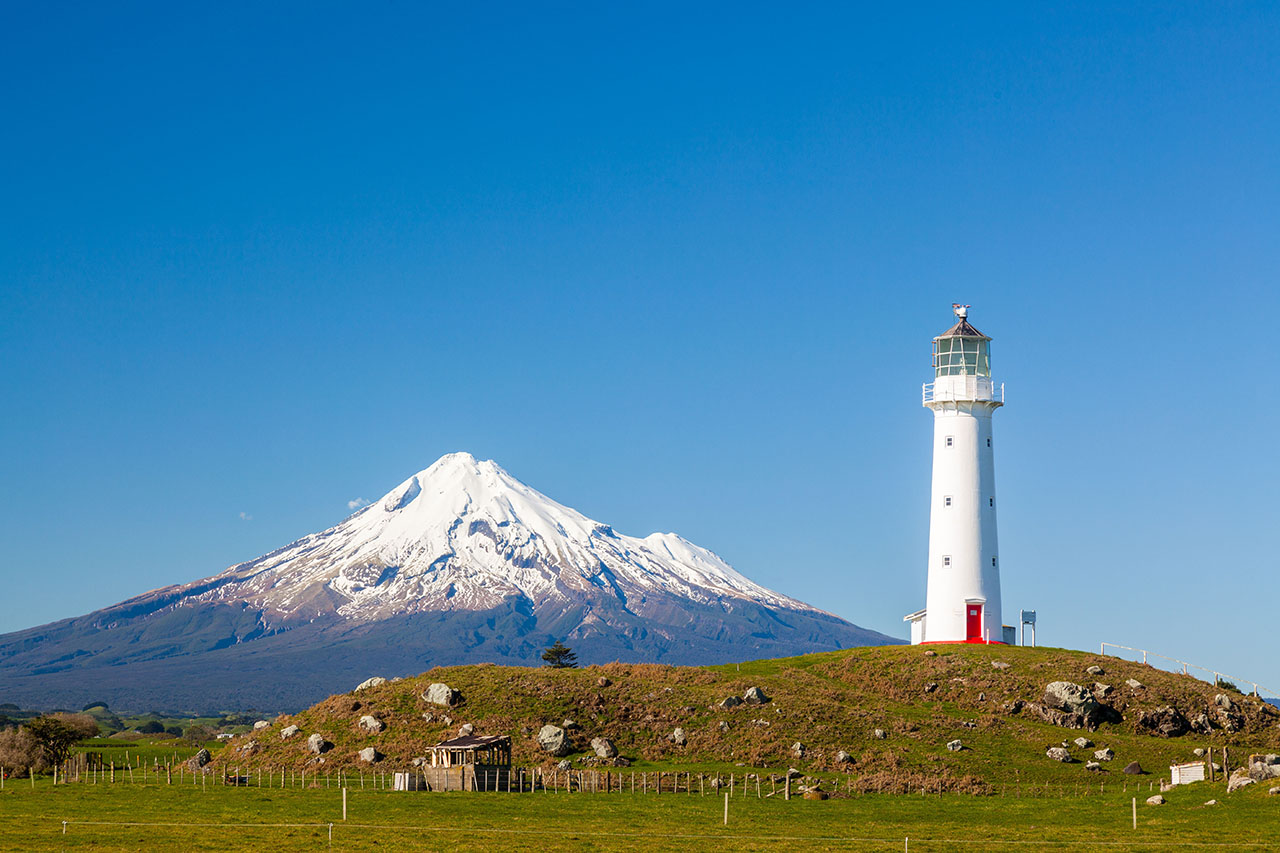
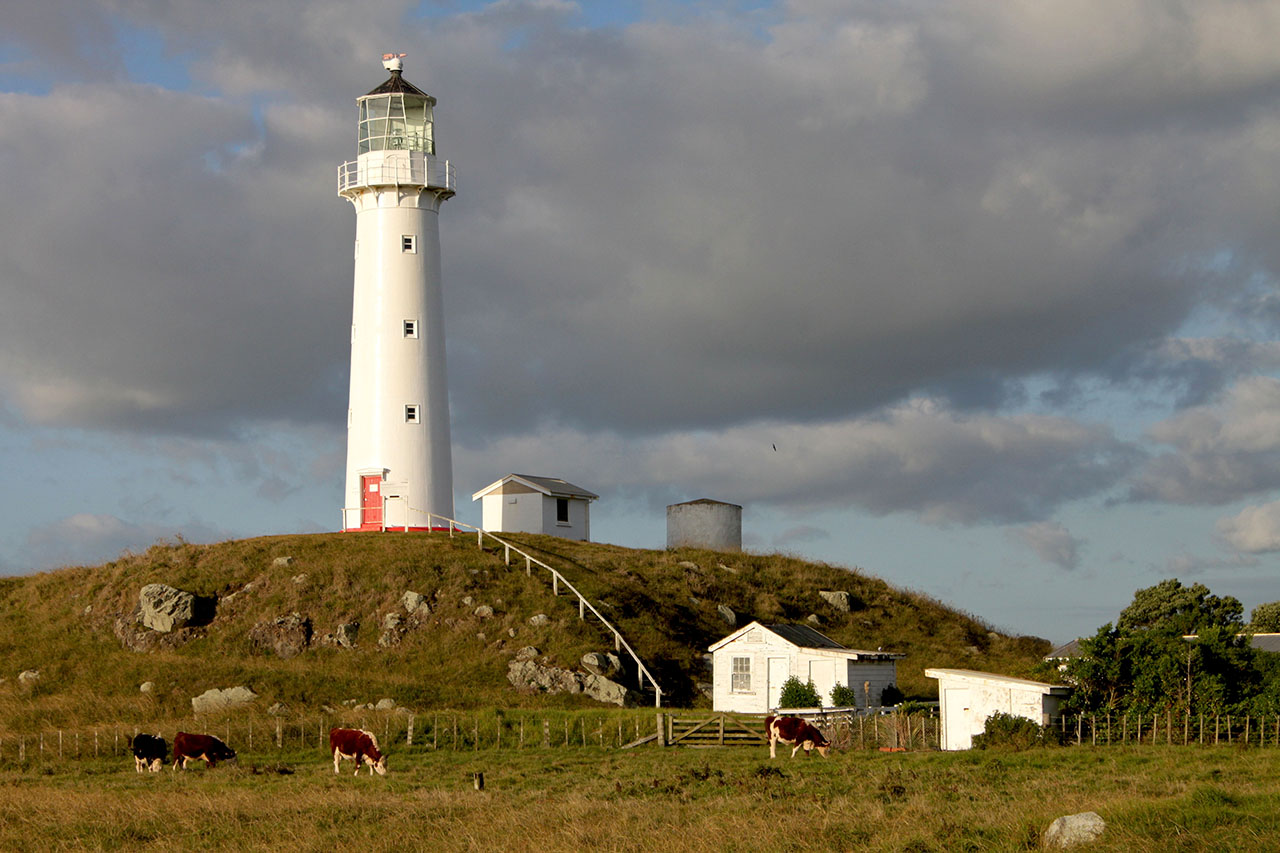
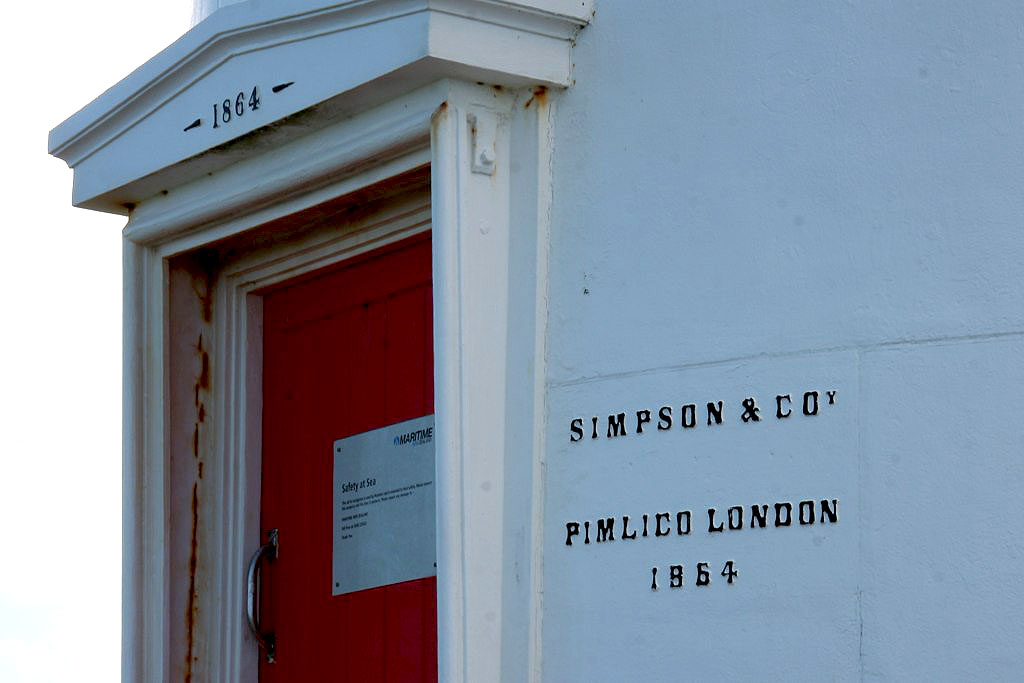
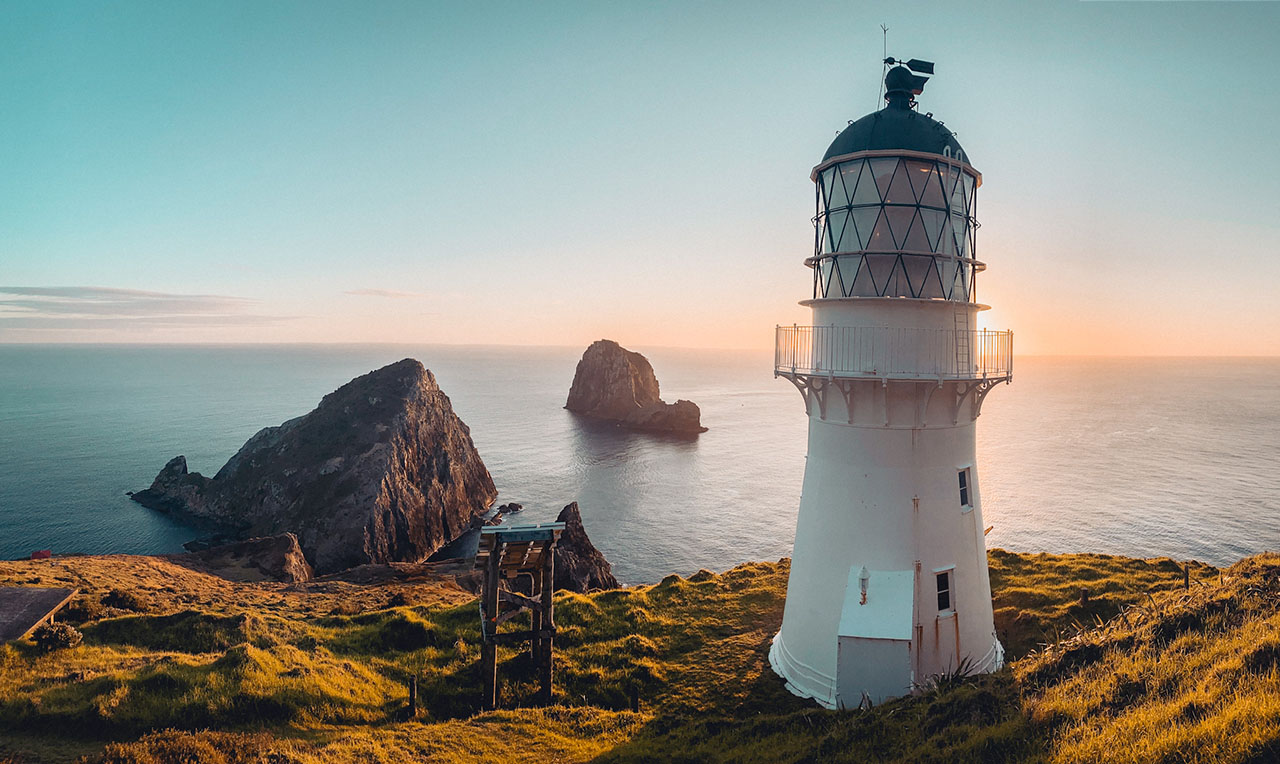
This cylindrical structure consists of a base, tapering tower, lantern and dome. It is 20 metres tall and sits on a small rise, presumably a sand dune, just 33 metres above sea level. The tower is made of cast iron, constructed on a base (material unknown, but possibly concrete), the lantern is made up of mullions and transoms and glazing. The light is within the lantern, which is topped by an hexagonal pitched dome and a weathervane. Entry to the light is via a ground floor door with a flat triangular pediment over the lintel. A series of three, small two-pane windows are symmetrically arranged above the door. There are more windows on the other side of the tower. Just below the lantern is a balustraded platform supported from beneath by elegant cast iron brackets. The platform is used for exterior maintenance and cleaning of the lantern glass. Just below the platform and directly above the door is what appears to be a lifting beam. At present, the lighthouse's while light flashes every 8 seconds and can be seen for 35 kilometres.
This cylindrical structure consists of a base, tapering tower, lantern and dome. It is 20 metres tall and sits on a small rise, presumably a sand dune, just 33 metres above sea level. The tower is made of cast iron, constructed on a base (material unknown, but possibly concrete), the lantern is made up of mullions and transoms and glazing. The light is within the lantern, which is topped by an hexagonal pitched dome and a weathervane. Entry to the light is via a ground floor door with a flat triangular pediment over the lintel. A series of three, small two-pane windows are symmetrically arranged above the door. There are more windows on the other side of the tower. Just below the lantern is a balustraded platform supported from beneath by elegant cast iron brackets. The platform is used for exterior maintenance and cleaning of the lantern glass. Just below the platform and directly above the door is what appears to be a lifting beam. At present, the lighthouse's while light flashes every 8 seconds and can be seen for 35 kilometres.
Historical and Associated Iwi / Hapū / Whānau
Completion Date
11th December 2003
Report Written By
Michael Kelly
Information Sources
Churchman, 1989
G. Churchman, New Zealand Lighthouses, Wellington, 1989
Martin, 1966
E. R. Martin, Marine Department Centennial History 1866-1966, Wellington, 1966
New Zealand Memories
New Zealand Memories
Other Information
A fully referenced version of this report is available from the Central Region of the NZHPT Please note that entry on the New Zealand Heritage List/Rarangi Korero identifies only the heritage values of the property concerned, and should not be construed as advice on the state of the property, or as a comment of its soundness or safety, including in regard to earthquake risk, safety in the event of fire, or insanitary conditions.
Historical and Associated Iwi / Hapū / Whānau
Completion Date
11th December 2003
Report Written By
Michael Kelly
Information Sources
Churchman, 1989
G. Churchman, New Zealand Lighthouses, Wellington, 1989
Martin, 1966
E. R. Martin, Marine Department Centennial History 1866-1966, Wellington, 1966
New Zealand Memories
New Zealand Memories
Other Information
A fully referenced version of this report is available from the Central Region of the NZHPT Please note that entry on the New Zealand Heritage List/Rarangi Korero identifies only the heritage values of the property concerned, and should not be construed as advice on the state of the property, or as a comment of its soundness or safety, including in regard to earthquake risk, safety in the event of fire, or insanitary conditions.
Current Usages
Uses: Transport
Specific Usage: Lighthouse
Former Usages
General Usage: Transport
Specific Usage: Lighthouse
Current Usages
Uses: Transport
Specific Usage: Lighthouse
Former Usages
General Usage: Transport
Specific Usage: Lighthouse
Sign up to hear more
Get the latest heritage news, features and events delivered
straight to your inbox.
