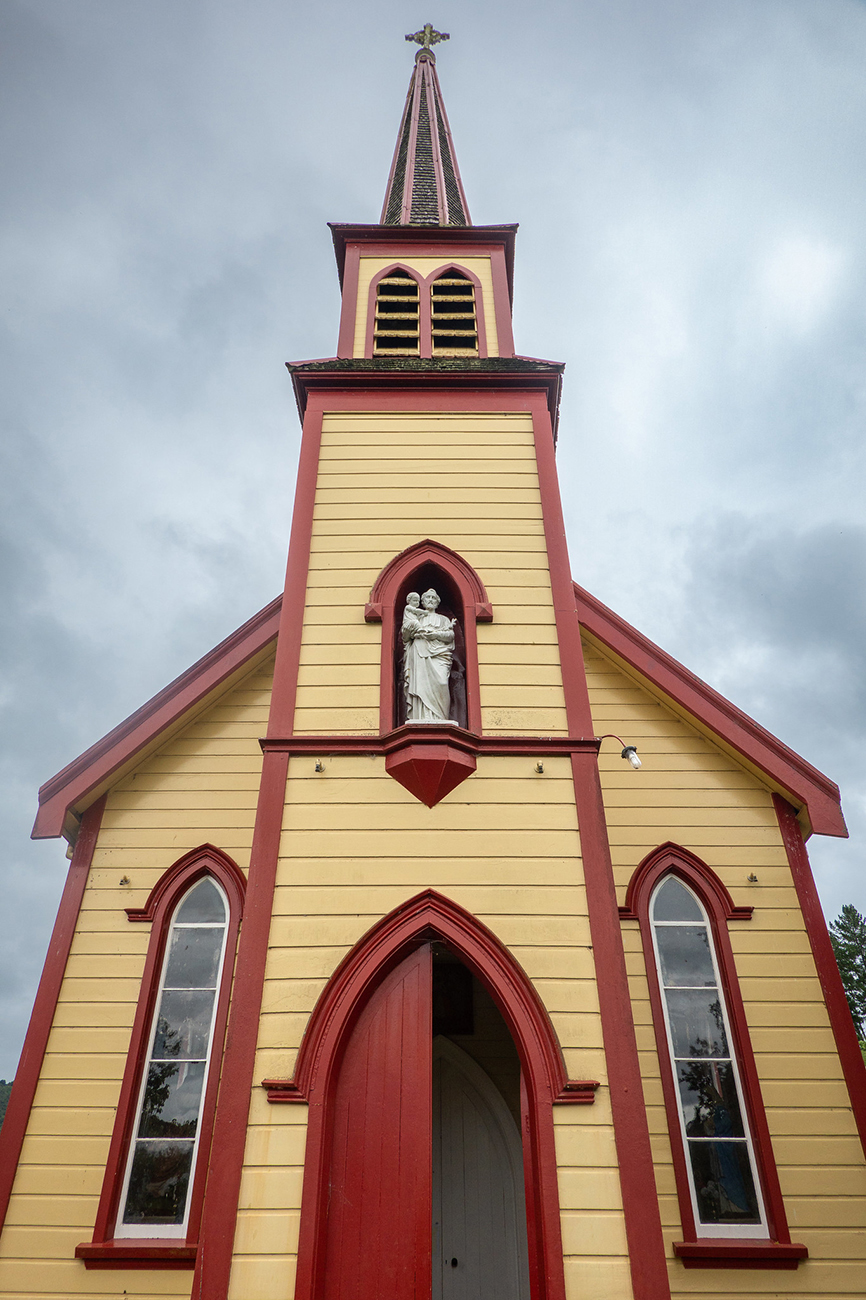
Uniquely in the annals of Maori settlement, the Whanganui River - the country’s longest navigable river - is home to just one iwi, the Atihaunui-a-Paparangi. Three parts of the river are customarily associated with three sibling ancestors: the upper part with Hinengakau, the middle with Tama Upoko, and the lower with Tupoho. The nine board members of the Whanganui River Maori Trust Board represent the three areas. However, these divisions should not be overly emphasised as there has been considerable movement of people between them.
Patiarero is the original name of Jerusalem (Hiruharama being a transliteration of Jerusalem). The hapu associated with Hiruharama is Ngati Hau. Hiruharama before and after European contact was a natural meeting place for hapu from up and down the river to come together. The hapu Ngati Ruaka at Ranana, five kilometres downstream, also has close links with Jerusalem.
The first European missionaries in the wider area were the Anglican Church Missionary Society (CMS) from 1840 and the Methodists from 1848. In the early 1840s, the Anglican Reverend Richard Taylor (1805-1873) was asked by many rangatira on the river for Maori forms of Biblical or European names for their kainga. Those surviving names include Atene (Athens), Koriniti (Corinth), Ranana (London) and Hiruharama (Jerusalem). The first Roman Catholic mission was established first in the lower Whanganui River. In 1854, under Father Lampila, they pushed upriver to near Jerusalem, but across the river at Kauaeroa. But after the Battle of Moutua in 1864 the mission was abandoned. Father Lampila survived the battle, but five Catholic catechists and a lay brother Euloge Reignier were killed - their graves are across the river from Jerusalem.
In the early 1880s, partly due to the request of the local Ngati Hau to have their own priest, the site of Jerusalem (Hiruharama) was chosen by the Catholic Church as the spearhead of a rejuvenated Maori mission. The new mission began in July 1883, and was led by the Marist missionary Father Christophe Soulas. Assisting him was Sister Aubert (1835-1926), and, for the first year, two Sisters of St Joseph of Nazareth.
Marie Henriette Suzanne Aubert and the Catholic mission:
In January 1838 this country’s first bishop of any denomination, the Roman Catholic Jean-Baptiste Francoise Pompallier (1801-1871) arrived in New Zealand. Eventually six Pompallier-led missionary groups came to New Zealand. Marie Henriette Suzanne Aubert (1835-1926) was in the last group of these, arriving in Auckland in December 1860.
Aubert was from a well-to-do French family and many have cited an accident at the age of two as a key reason for her adult work amongst marginalised people and her empathy for them. Aubert’s accident motivated her family to move to a house in Lyon which happened to be opposite a property used by the newly-formed Society of Mary. This early exposure to the Marists’ spiritual influence was formative and Aubert continued to have a close connection to the order for the rest of her life, with several of her ventures in New Zealand established in association with, or in close proximity to, Marist ones. It was also in Lyon that she was exposed to a variety of women’s missionary organisations, as well as numerous medical facilities and hospices that were run by female religious groups.
By the time she began her missionary life in New Zealand at the age of 25, Aubert was said to have been among France’s most educated women. After arriving in Auckland, Aubert, then called Sister Mary Joseph (or Meri Hohepa), spent the first decade teaching Maori girls at the Nazareth Institution. She spent the 1870s in Hawke’s Bay, mostly nursing, where she began developing and using herbal medicines. Although still known as Sister Mary Joseph, she was not formally a religious sister at this time. While there she also updated and printed the Catholic Maori Prayer Book, prepared a Maori–French phrasebook and later published its Maori-English equivalent.
Mother Aubert at Jerusalem:
In 1883 Father Christophe Soulas, two Sisters of St Joseph of Nazareth and Sister Aubert went to Jerusalem to help revive the Catholic mission. Aubert was there to help the two Sisters learn Maori, which was probably the catalyst for publishing her Maori-English New and Complete Manual of Maori Conversation in 1885. After a year the two young Sisters returned to Wanganui, but Sister Aubert remained. She was joined by three young women to establish the New Zealand branch of the new Marist women’s missionary congregation, the Third Order Regular of Mary. They worked alongside the Marist mission, helping to establish schools and a place to care for foundlings (abandoned or orphaned, often ex-nuptial, children) and ‘incurable’ adults (destitute and chronically or mentally ill, and disabled people).
To help fund these activities she continued to produce a range of herbal medicines. In 1887 she decided to market her herbal remedies, and in 1888, using her own money, she purchased 300 acres at Jerusalem, which was where the medicines were made. These were initially marketed by Kempthorne and Prosser, but after it was discovered they were diluting her medicines, in 1894 she successfully sued them and changed her distributors to Sharland and Company. The products had Maori names.
It was while St Joseph’s Convent was being built in 1892 that Aubert founded her own religious order. Initially, she intended that the order would be closely associated with the Society of Mary. However, the two had slightly different focuses and in September 1892 Bishop Francis Redwood (1839–1935) re-christened Aubert’s order the Daughters of Our Lady of Compassion, who became more commonly known as the Sisters of Compassion. They were instituted, as their constitution said, ‘solely for the Maori and the poor’.
A primary school had opened at Jerusalem in 1873 with at first secular teachers. When Aubert and the Sisters arrived in 1883 they became the teachers. The school house was in a building on the site of what is now a paddock (the Sisters slept in the attic). It served as school and convent for eight years and was also used as a church over part of this time.
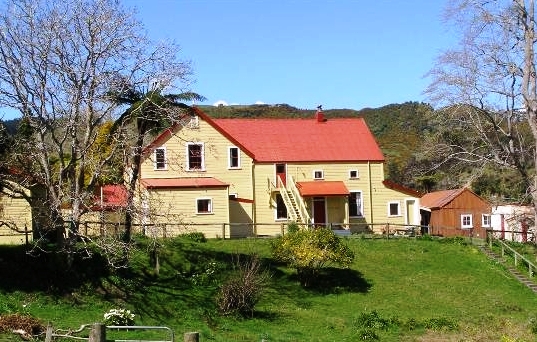
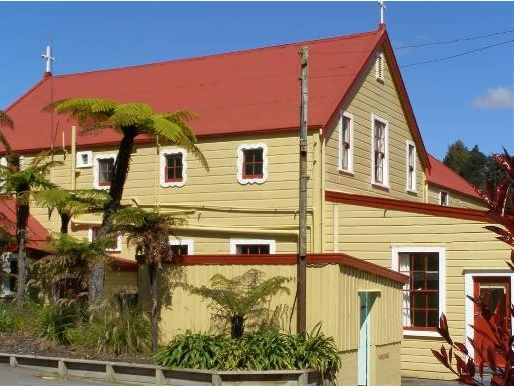
St Joseph’s Convent was constructed in mid 1892 to house the Sisters and serve as a base for many of their missionary activities. It is not known exactly who designed the building, but conservation architect Chris Cochran believes it is likely an architect would have prepared plans for the convent given its scale. As Thomas Turnbull designed the associated churches, Cochran believes it is probable he may have done the convent plans as well, but this is not confirmed. The Sisters moved into the current convent building in November 1892 and with them came seven ‘orphan’ children. Also from the time it was built the new convent housed the local school. Although both the Hiruharama and Ranana schools were run as convent schools, they were nevertheless connected to the inspection and support system of the government Native Schools System, which operated from 1867 to 1969.
The first Catholic Church at Jerusalem (attributed to architect Thomas Turnbull), St Joseph's (Hato Hohepa), was built on the site by local Maori in 1885, but was burnt down in 1888 by an irate Pakeha. The present church building was begun in 1892, with construction completed by April 1893. This second St Joseph's church (built in a simple Gothic revival style) was largely funded by the efforts of Soulas and Aubert. Aubert and some of her fellow Sisters undertook a year-long journey around the country, often walking long distances, asking for donations to support the Jerusalem mission and raise money for the construction of the church. In the early years, mass was said in Latin, but a Maori catechist (katekita in Maori) would say it in Maori as well - for many years Te Manihera Keremeneta, who was aged 19 in 1883, performed this role.
The church was served by French Marist (Society of Mary) priests until 1920. One, Jean-Marie Vibaud, from 1906 to 1914 explored the possibility of blending Maori and Catholic beliefs, receiving instruction in the whare wananga on Peterehema marae at Jerusalem. Neither the priests nor Sisters received much money - the Sisters grew vegetables and gave milk and eggs to the priests, while the nearby Morikaunui farm helped with a regular supply of meat. However, they did receive some funding from the French-founded international Catholic association, the Society for the Propagation of the Faith.
The church was part of the diocese of Wellington, which became the archdiocese in 1887, and came into the diocese of Palmerston North when this was established in 1980. St Joseph’s is now the outermost church in the diocesan parish of St Mary’s Wanganui. In 1968, Father Wiremu Te Awhitu, who had been the first Maori Catholic priest ordained in New Zealand, arrived at Jerusalem. Since he left in 1988 priests have no longer lived at Jerusalem.
In Mother Aubert’s time at Jerusalem, access to these remote settlements was mostly from boats that operated along the Whanganui River. The Sisters had a landing by the river, from which a path led up the slope through the orchard and into the garden. Tourists began taking river steamer cruises in the 1890s and Jerusalem was a popular stop - Mother Aubert’s name being known through her medicines. Cook’s Australasian Travellers Gazette advertised a new four-day tourist route between Taupo and Wellington in 1891 that included a half-day trip from Pipiriki to Wanganui on the river.
A Wellington builder who visited saw that the convent was much too small and raised the money needed to add an extension in 1897, which became known as the children’s wing. This almost doubled the size of the building. The extension also included a chapel that the Sisters would use several times a day for prayers and meditation. By 1898 the ‘orphan’ children numbered 47, including 32 under four years of age and 16 not yet walking. These predominantly Pakeha children played with the local Maori children and were integrated into the day-to-day life of the marae as much as the convent.
In July 1899, at an inquest held into the death of one of the orphanage children at the convent, Mother Aubert said ‘the home was her own and maintained almost entirely at her own expense. She occasionally got some gifts from tourists.’ Most of the children were aged under four, but she would not take children under 12 months anymore after some had died. Many of the children were in bad health when they arrived. Presumably because of lack of space or their ages she ‘had refused 45 applications for illegitimate children since last November from all parts of the colony.’
St Joseph’s Convent after Mother Aubert left:
Mother Aubert left Jerusalem for Wellington in 1899, but the main Maori mission remained. In 1898, there were 22 children on the school roll, joined sometimes by others who were temporarily resident in Jerusalem. In 1916 there were 26 on the roll, while in 1919 the school was closed while the Sisters looked after victims of the influenza pandemic. The school roll peaked at 42 in 1937. In the 1930s there were about eight Sisters in the community, joined at weekends by three from Ranana. The school closed at the end of 1969 due to falling rolls and the Native Schools System ending the same year. Generations of local Maori children went through the school; one student was Iriaka Te Rio, who as Mrs Ratana headed the Ratana movement for some years and was a Member of Parliament for 20 years. The closure of the school meant that for the first time since the order’s inception in 1892, the Sisters would no longer be teachers. This required a ‘conceptual readjustment’ about what their role was.
From very early in the 1900s, the Sisters held the agency for postal services at Jerusalem and Ranana, for which they received an annual fee from the Post Office. Until 1955, the Sisters also kept the local Births, Deaths and Marriages register. Their nursing skills were also called on - before the road went through in 1934 they were the principal Pakeha medical personnel on the river. Electricity only arrived in 1932 and then for part of the day, provided by a generator until 1965 when it was wired in.
After the children’s wing was added in 1897 the convent building did not change much - a sanctuary was added to the chapel in the 1920s, bathroom and toilet facilities upstairs for the boarders in the 1950s, fire escapes and an infant schoolroom were also added. After the orphanage children were moved to Wellington in 1907, that part of the building was largely used for storage.
In the 1950s the convent housed about 12 school boarders. The Angelus bell rang at 6am and the Sisters and boarders went to mass each day before breakfast. However, the Sisters would have got up earlier to milk cows, and feed poultry and pigs. Many of the local schoolchildren would have started their day similarly. The schoolchildren also practised singing in the church and helped to clean it for Sunday services. The priests came to the school to teach catechism. School sports were often held at the marae where there was more space.
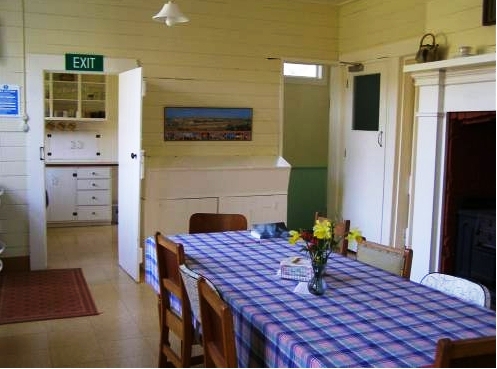
In the 1970s the convent was adapted to accommodate large groups coming for retreats or weekend visits. Floor coverings were laid in the school rooms, showers installed upstairs, and a septic tank. Tanks, water pipes and guttering were replaced - all this was carried out in working bees, largely by local Maori. A sturdier fire escape was also added from the Sisters’ dormitory on the west wall. Major work was carried out on the church in 2005, including re-piling, sprinkler installation, structural repairs, painting, plumbing and wiring. The convent was then also upgraded following a conservation plan by conservation architect Chris Cochran. Work on the convent included re-piling, painting, installing sprinklers and a ramp was added for wheelchair accessibility. A shed was converted into an accessible toilet and other changes were made to a toilet block. These were discreet and low-key changes that rendered the building more fit for purpose and in accord with current Building Act requirements.
In the 1980s the Hato Hohepa Management Committee was established to take some of the administrative load off the Sisters. Two Sisters continue to live there, but in a modern house behind the convent. The Sisters are regarded as tangata whenua on local marae. The convent offers dormitory accommodation for people seeking rest or a spiritual retreat - estimated at around 18,000 visitors annually.
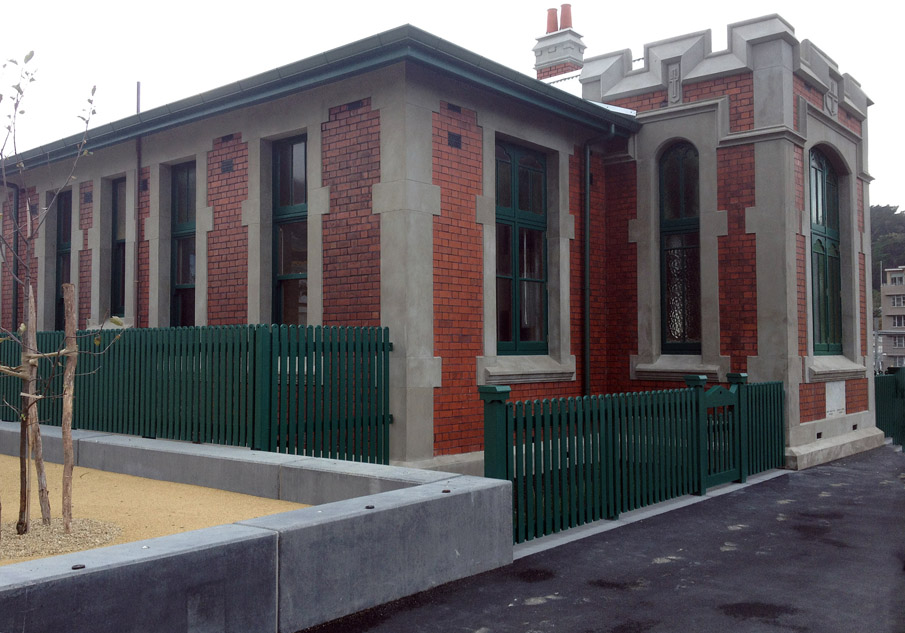
St Joseph’s is one of the oldest convent buildings currently on the NZHPT Register, and possibly the oldest surviving purpose-built convent. It is one of only a few wooden convents (or former convents) on the Register. ‘The Pah’ (Register no. 89, Category I) in Auckland was built in 1880 as a residence for the then Chairman of the Bank of New Zealand and was used as a convent from 1913. Another wooden former convent, St Mary’s Church Convent in Blenheim (1901, Register no. 1531, Category II) has been relocated and is now a hotel/wedding venue. The Convent of St John the Baptist (Catholic) in Parnell, Auckland dates from 1903 (Register no. 562). Its front façade is symmetrically arranged with an impressive double veranda. The nuns there had cells on the first floor rather than the dormitory accommodation at Jerusalem. In comparison with these convents, St Joseph’s is plainer both externally and internally, reflecting the shortage of available funds and the philosophy of the Sisters.
Mother Aubert’s later years and her legacy:
Catholics in Wellington had long urged Aubert and her Sisters to come to Wellington and work among the urban poor, which they did in 1899. It was here that the foundations for the continuance of the Sisters of Compassion were firmly established.
In 1907 the Sisters further expanded their services, and property, with the building of Our Lady’s Home of Compassion in Island Bay, which enabled them to accept foundlings. The incurable children previously at Buckle Street were also transferred there along with the ‘orphanage’ children from Jerusalem. A few years later in 1910 the Sisters of Compassion expanded their work further by purchasing a building in Auckland to house foundlings, which they called St Vincent’s Home of Compassion.
On 1 October 1926, it was announced that one of New Zealand’s greatest women had passed away. Aubert died at the age of 91 at Our Lady’s Home of Compassion. Her funeral, which was attended by clergy of many denominations as well as top politicians, was described as ‘the greatest funeral New Zealand had ever accorded a woman.’ The route of the mile-long funeral cortege was crowded with people.
Upon reflecting on the achievements and legacy of Aubert, historian Michael King stated: ‘Mother Aubert’s vision and example - her insistence on seeing Christ in every person who needed help, her refusal while doing so to distinguish between Catholic and non-Catholic, Maori and Pakeha - were among the most pervasive and enduring forces to emerge from the Catholic Church in New Zealand.’ In 1990 the Sisters of Compassion began the process of seeking official Vatican recognition of the saintliness that people attributed to Aubert in life through beatification and canonisation, which are rigorous and lengthy processes. However, this is now well underway and if progressed successfully Aubert will become the first person associated with the Catholic Church in New Zealand to become a saint.
The work of the Sisters of Compassion continued after Aubert’s passing, drawing inspiration from her life and example. From the 1920s the Sisters of Compassion began transferring their work with adults to Island Bay, as well as to the new Silverstream Home of Compassion in 1933. The Sisters of Compassion also set up other institutions around New Zealand and overseas.
James K. Baxter at Jerusalem:
Many people will also know of Jerusalem from its association with the poet and social activist James K. Baxter, who arrived in May 1969. Drawn by the blend of Maoritanga and Catholicism, he eventually established an alternative community at Jerusalem. In his first year he lived in a three-roomed cottage loaned by the Sisters (known by them as the ‘farm worker’s cottage’, but to Baxter as the nuns’ cottage). He was mainly on his own at this time and the Sisters sometimes invited him to their parlour in the evening to talk - an experience one described as exhausting.
Canterbury University lecturer and poet, John Newton, was a writer in residence at the convent in 2005, researching bicultural relationships at Jerusalem in the 1960s and 1970s. Newton believes that Baxter was indebted to the Sisters and in particular to Father Te Awhitu for smoothing his relations with local Maori:
From the outset it was the church that gave Baxter the beginnings of a foothold among the local people… But where Baxter was perhaps even more significantly indebted was in relation to Meri Hohepa’s own mana. If Pakeha New Zealand had largely forgotten her, Ngati Hau certainly hadn’t. The Sisters were a long-established part of community life, and the work that Aubert and her successors had done left a space in which Baxter’s own charitable ideals could be recognised and ultimately embraced.
After his first year, he moved into a house called the Top House where he was joined by many followers. Sister Aquinas, who served as the local community nurse and ran a dispensary from the convent, had most to do with the commune at this time. Women from the commune, as well as local Maori women, were invited to retreats at the convent that the Sisters periodically held. Commune members also painted St Joseph’s Church and Convent. However, the numbers of people attracted there and their conditions of living caused concern to both the Sisters and local Maori. The commune became the focus of adverse publicity and Baxter left in September 1971.
Baxter returned to Jerusalem for a short time in 1972, but left for Auckland in August. He died in October 1972, and was buried, at his request, near the Top House at Jerusalem with a full Maori tangi - a rare honour for a pakeha. One of his well-known poems (‘Haere ra’, 1969) was written for one of the Sisters as she was leaving Jerusalem following the school’s closure - ‘Farewell to Hiruharama - the green hills and the river fog / cradling the convent and the Maori houses / The peach tree at my door is broken, Sister...’