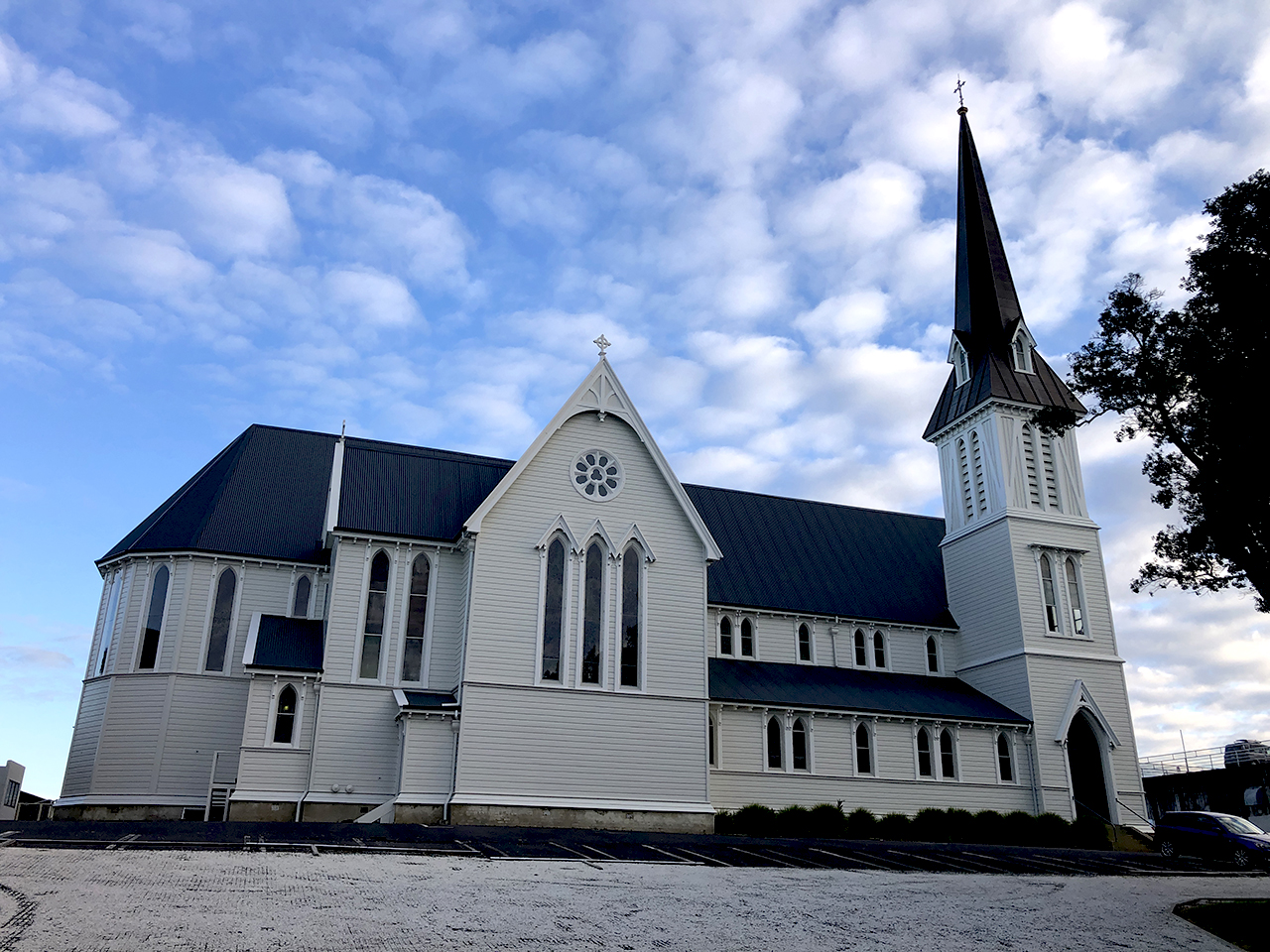
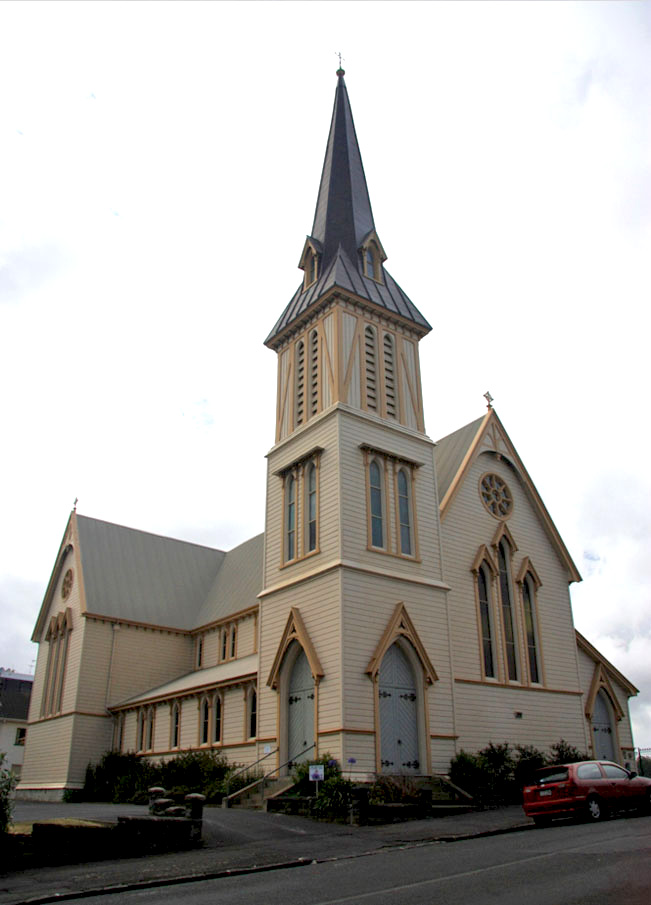
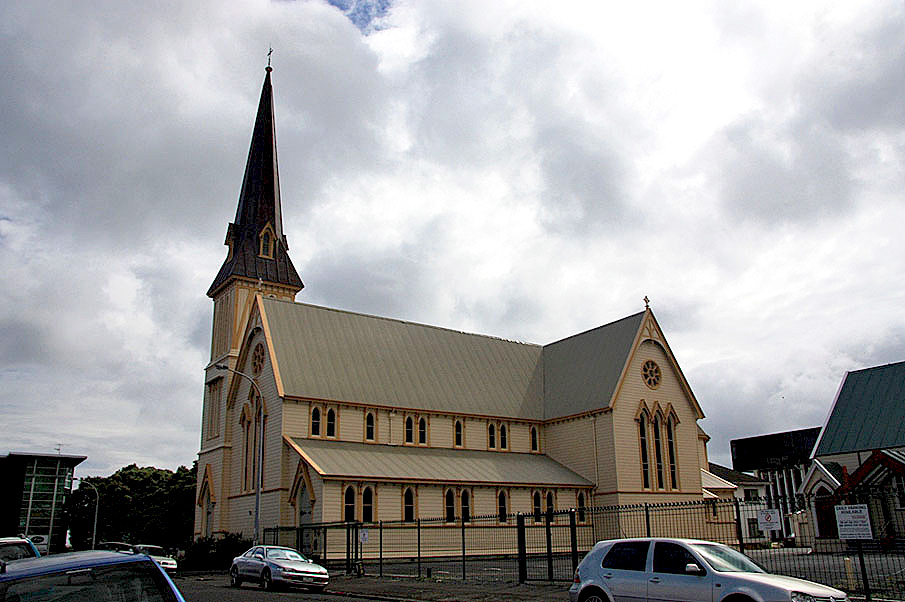
A prominent landmark on the skyline of inner-city Auckland, the Church of the Holy Sepulchre and its associated hall were erected in the late nineteenth century to serve an extensive Anglican parish. The parish had been established in 1870 to serve the western part of Auckland, incorporating land as far north as Helensville. The Church of the Holy Sepulchre was built in 1880-1881, replacing an earlier building of the same name which had been erected as a mortuary chapel in the Anglican section of the nearby Symonds Street Cemetery in 1865. This earlier building was initially used as the parish church, but as the population on the fringes of colonial Auckland increased, demand for a larger, purpose-built structure developed. The Anglican authorities purchased the site for the new church in 1879 in the emerging suburb of Grafton, close to major commercial buildings at the junction of Upper Symonds Street and Khyber Pass Road, and in an area of large opulent residences. The site was located on the top of a large ridge to the south of Auckland, with extensive views over its parish and beyond.
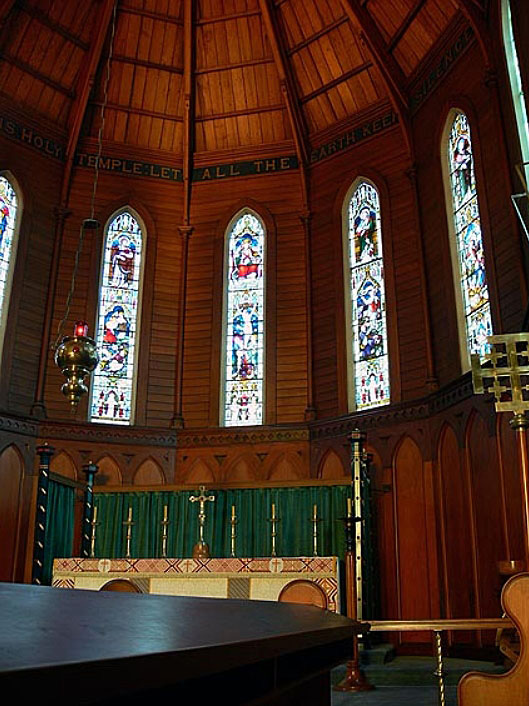
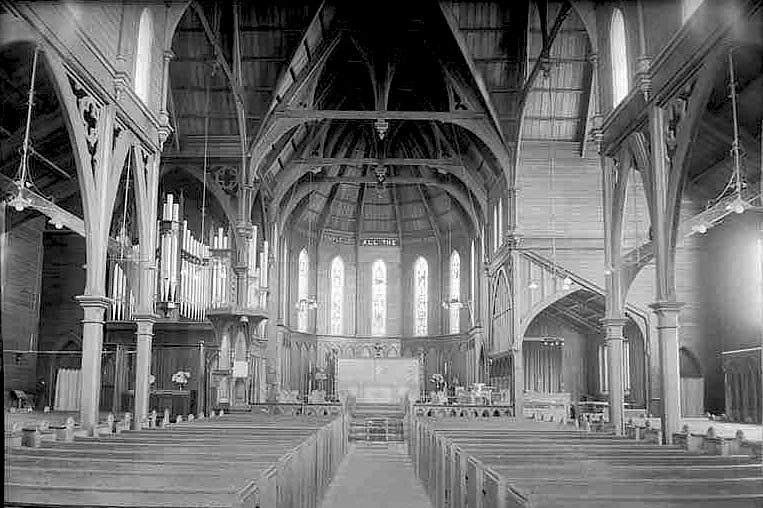
A foundation stone for the new timber church was laid in November 1880 by Bishop William Cowie (1831-1902) - the first Bishop of Auckland - who was responsible for a considerable wave of church building in the late nineteenth century. The structure was designed to make the most of its prominent location, incorporating a steeple that was considered to be the tallest in Auckland. Of Gothic Revival appearance, the building was designed by the firm of Edward Mahoney and Son, which was responsible for numerous significant religious structures in the Auckland region, erected primarily - although not exclusively - for the Catholic authorities. It was built by John James, who had previously built St Stephen's Presbyterian Church, Ponsonby, also to the design of Edward Mahoney and Son. Costing over £3000, the new church incorporated a well-appointed timbered interior with room for 680 adults, as well as including elements from the earlier mortuary chapel such as seating, a bell and stained glass windows. The building formally opened for worship on 29 June 1881, with the Reverend Benjamin Dudley as its first incumbent. Dudley had previously been secretary and treasurer to the Melanesian Mission, and secretary to George Augustus Selwyn, New Zealand's first Anglican Bishop. He was made an Archdeacon in 1883.
A hall in which to conduct Sunday School and church social events was brought to the site in 1898. The gabled timber structure had previously been erected in Eden Crescent in 1885 as a temporary place of worship and school, replacing St Paul's - Auckland's main and oldest Anglican church - after the latter's demolition. The hall was erected to the south of the church, where modifications included extending its transepts for use as classrooms and adding a small lean-to kitchen and bathroom. The building was also opened by Bishop Cowie, soon accommodating a Sunday School with a membership of 325 children. It was relocated a very short distance to its current position in 1919, allowing a vicarage to be erected further to the south. Alterations to the main church in the 1930s included the creation of a Lady Chapel, designed by the architect Charles Towle. After the complex ceased to function as a standard parish centre, it was taken over by the Auckland City Mission in 1963, and in 1969 became the Auckland Anglican Maori Mission, overseen by the Reverend (later Sir) Kingi Ihaka (1921-1993). This reflected a major movement of Maori from rural to urban centres during the 1950s and 1960s. The church hall subsequently became Tatai Hono Marae (this place where all meet as one). The church and hall have remained in use for significant cultural and social events, including the filming of parts of New Zealand's first Maori language full-length feature film 'Maori Merchant of Venice' in 2001, with the church continuing to function as a major place of worship.
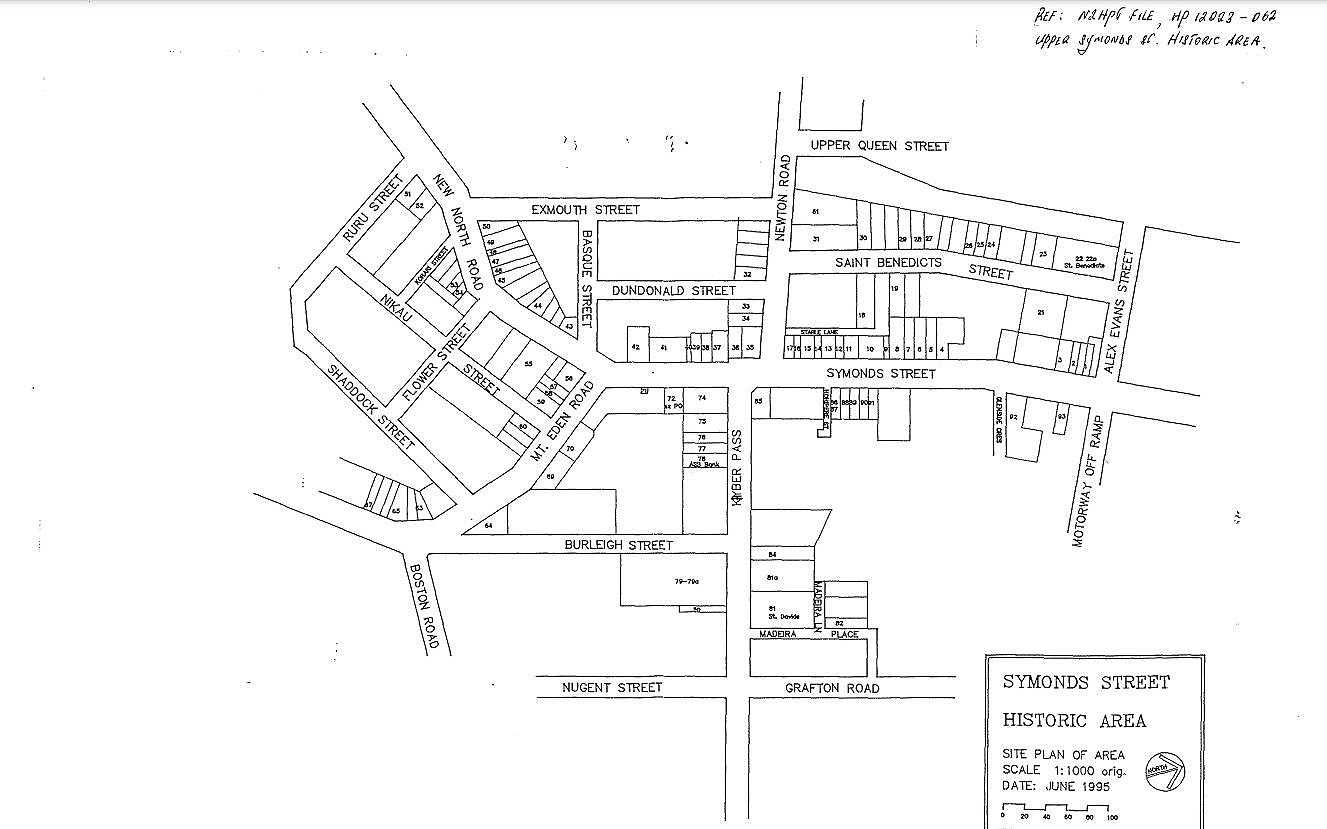
The church and its hall are considered significant for aesthetic, architectural, cultural, historical, social and spiritual reasons, and form an important part of the extensive Upper Symonds Street Historic Area (NZHPT Registration # 7367).
A foundation stone for the new timber church was laid in November 1880 by Bishop William Cowie (1831-1902) - the first Bishop of Auckland - who was responsible for a considerable wave of church building in the late nineteenth century. The structure was designed to make the most of its prominent location, incorporating a steeple that was considered to be the tallest in Auckland. Of Gothic Revival appearance, the building was designed by the firm of Edward Mahoney and Son, which was responsible for numerous significant religious structures in the Auckland region, erected primarily - although not exclusively - for the Catholic authorities. It was built by John James, who had previously built St Stephen's Presbyterian Church, Ponsonby, also to the design of Edward Mahoney and Son. Costing over £3000, the new church incorporated a well-appointed timbered interior with room for 680 adults, as well as including elements from the earlier mortuary chapel such as seating, a bell and stained glass windows. The building formally opened for worship on 29 June 1881, with the Reverend Benjamin Dudley as its first incumbent. Dudley had previously been secretary and treasurer to the Melanesian Mission, and secretary to George Augustus Selwyn, New Zealand's first Anglican Bishop. He was made an Archdeacon in 1883.
A hall in which to conduct Sunday School and church social events was brought to the site in 1898. The gabled timber structure had previously been erected in Eden Crescent in 1885 as a temporary place of worship and school, replacing St Paul's - Auckland's main and oldest Anglican church - after the latter's demolition. The hall was erected to the south of the church, where modifications included extending its transepts for use as classrooms and adding a small lean-to kitchen and bathroom. The building was also opened by Bishop Cowie, soon accommodating a Sunday School with a membership of 325 children. It was relocated a very short distance to its current position in 1919, allowing a vicarage to be erected further to the south. Alterations to the main church in the 1930s included the creation of a Lady Chapel, designed by the architect Charles Towle. After the complex ceased to function as a standard parish centre, it was taken over by the Auckland City Mission in 1963, and in 1969 became the Auckland Anglican Maori Mission, overseen by the Reverend (later Sir) Kingi Ihaka (1921-1993). This reflected a major movement of Maori from rural to urban centres during the 1950s and 1960s. The church hall subsequently became Tatai Hono Marae (this place where all meet as one). The church and hall have remained in use for significant cultural and social events, including the filming of parts of New Zealand's first Maori language full-length feature film 'Maori Merchant of Venice' in 2001, with the church continuing to function as a major place of worship.
The church and its hall are considered significant for aesthetic, architectural, cultural, historical, social and spiritual reasons, and form an important part of the extensive Upper Symonds Street Historic Area (NZHPT Registration # 7367).