Sunday Schools: Robert Raikes (1735-1811) is traditionally credited as pioneering Sunday Schools in England in the 1780s, though teaching Bible reading and basic skills on a Sunday was an established activity in a number of eighteenth century Puritan and evangelical congregations. In 1780, Raikes, a Gloucester newspaper publisher, took thirty children off the street and began to teach them how to read. He gave them clean clothes and taught them that vice is preventable and that a good example can draw others. Other children were indeed drawn so that the one school grew to seven schools; and after three years, he published to the world the effects of his experiment. He called it 'botanizing in human nature.' In a letter to a friend, he explained that his vision was to 'create a new race out of what others called waste.' By the time Robert Raikes died in 1811, over four hundred thousand children were enrolled in Sunday Schools in the United Kingdom.
Through the evangelical movement, interest in Sunday Schools travelled to Australia and New Zealand in the early nineteenth century.
Believing, as he did, that the one hope for the regeneration of the Colony lay in the religious education of the young, Marsden had always taken it that the training of youth was an essential part of his clerical duties. He was thus attracted to the Sunday School movement inaugurated at the end of the eighteenth century by Robert Raikes of Gloucester, and in 1815, upon his return from his first New Zealand voyage, opened a Sunday School at Parramatta, the first Sunday School in Australia...Marsden's enthusiasm for this work among the young remained constant throughout his life. 'The Church Sunday School,' wrote the Rev. William Woolls in 1844, ‘was, for many years, a most useful and flourishing institution in Parramatta, and at one period it numbered no less than 150 children on its books.'
It is much less clear that Marsden and his Church Missionary Society (CMS) missionaries in New Zealand established Sunday Schools as such. They certainly created schools for both adults and children among their Maori prospective converts, as well as schools for the education of their own children and other Pakeha children. The first school was established by Thomas Kendall at Oihi, having been sent out by the CMS as the schoolmaster. The first schoolhouse was opened there on 12 August 1816. New Zealand's first cricket match was played by the boys at the Paihia Mission as recreation after the rigours of one cycle of examination of the children, both Maori and Missionary. The building of schools was a significant element in the establishment of the early CMS mission stations (for example at Paihia school building activity took place in 1827, 1831, and 1832 ). In 1834, the English Boys' school was relocated to Waimate , and continued there in several different buildings and under several different teachers. After the disruption caused by the Northern War of 1845-6, the missionaries at Waimate North managed with some difficulty to re-establish the schools with 146 pupils, though from then on a series of difficulties meant the rolls declined, 22 in 1854, 17 in 1861, with the fire of 1861 bringing this period to a close. These schools were not Sunday Schools, but ‘everyday' schools, they were the principal medium of education for their pupils, even if religious education was part of the curriculum.
Once colonisation began in New Zealand, Sunday Schools were some of the first institutions created. In Wellington, Wesleyan minister Rev John Aldred commenced a Sunday school in 1841, initially holding it in the first church, in a hall, in another church and eventually in purpose built schoolrooms in Manners Street. This pattern was widely followed elsewhere, with Sunday School often being held initially in the church, then in a hall, and finally, sometimes, in a purpose built building.
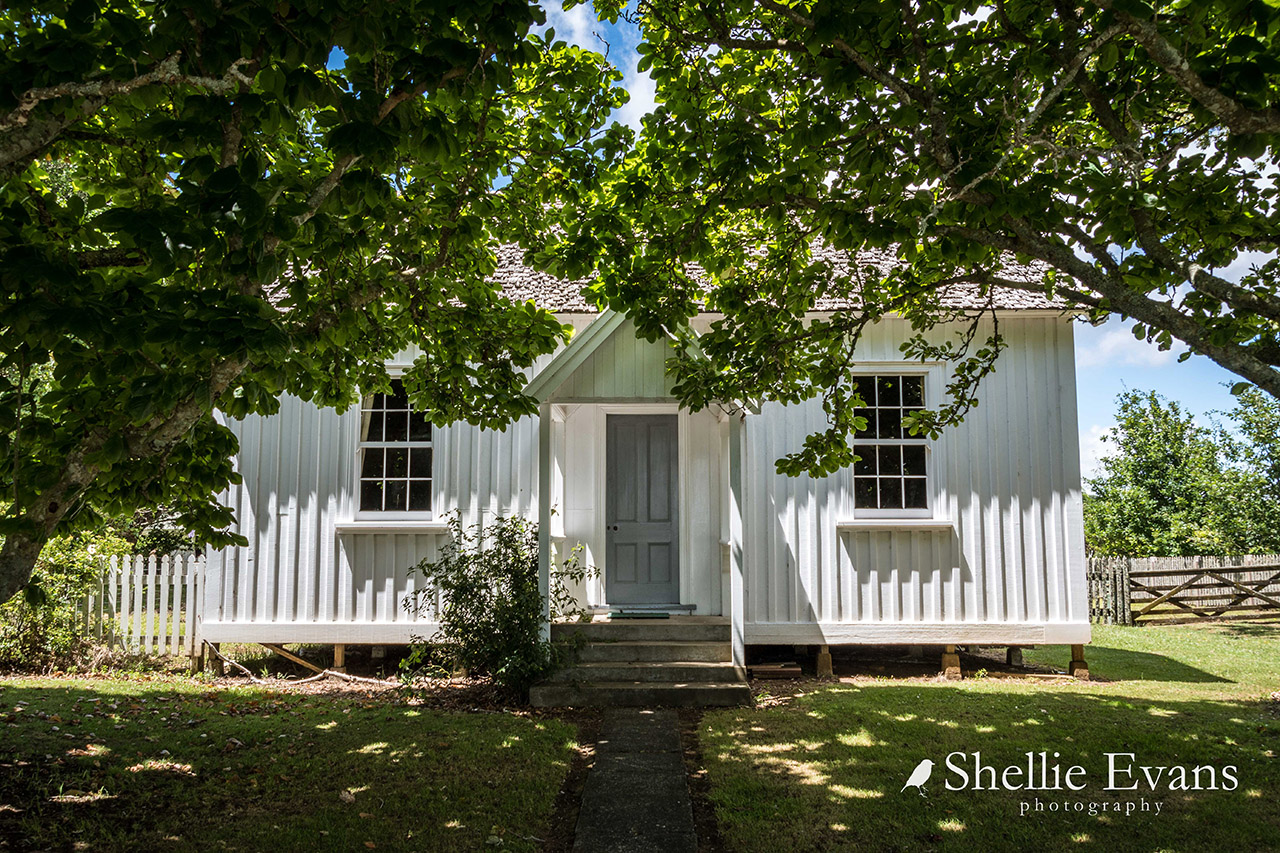
The Church of St John the Baptist Sunday School (Anglican) is a rare and early surviving example of a rural New Zealand Sunday School. The Sunday School movement was significant worldwide in the late eighteenth, nineteenth and twentieth centuries in many parts of the Christian world. Samuel Marsden's building of the first Sunday School in Australia at Parramatta in 1815 and the creation of Sunday Schools in New Zealand from the beginnings of organised Pakeha settlement indicate how significant an institution they were seen to be in colonial society. For generations, very many New Zealand children attended Sunday School, even when their parents were not practising members of a church congregation. Attendance at Sunday School, often under duress, or teaching Sunday School, formed part of the experience of many New Zealanders and is a subject addressed in both fictional and biographical accounts of growing up in New Zealand.
As a small rural Sunday School, Waimate North cannot be said to have played a prominent part in the Sunday School movement on a national scale. However, as patterns of religious observance have changed, patterns of Sunday School attendance have also changed, and there are many fewer Sunday Schools in existence. There are only ten Sunday School buildings on the Register of New Zealand Historic Places Trust, and none of them is a purpose built building in a rural setting.
At the Thames School of Mines (NZHPT Record no. 132, Category I), a Wesleyan Church and Sunday School was built in 1869 to serve the developing mining town of Grahamstown, and were subsequently incorporated into the School of Mines that was established in 1886.
The former Christian Science Sunday School on The Terrace in Wellington was built as a city doctor's residence, and used for a period in the twentieth century as the Christian Science Sunday School (NZHPT Record no. 220 Category I).
The Auckland Sunday School Union Building (NZHPT Record no. 2613, Category II) is a five storey central city brick building, built in 1925 to provide a concert hall seating 400 and rental office suites for the Auckland Sunday School Union.
St Mark's Anglican Church Sunday School in the South Taranaki town of Kaponga (NZHPT Record no. 2722, Category II) was built in 1911 as a substantial Parish Hall, though used for Sunday School purposes from that time.
The Methodist Sunday School in the rural town of Tuamarina was built as a church, and only later adapted to Sunday School use (NZHPT Record no. 2934, Category II).
The former Dundas St Methodist Sunday School Hall (now the Academy Cinema) was added to the church on the same urban site in 1905 (NZHPT Record no. 3367, Category II).
The Hanover St Baptist Sunday School building built in 1880 also has an inner city Dunedin location. (NZHPT Record no. 4719, Category II).
St Peter's Anglican Church, the main Anglican church in the Hawkes Bay town of Waipawa, has a Sunday School Hall (NZHPT Record no. 4873, Category II). The Church was built in 1877 and then substantially enlarged after the 1931 earthquake. The Sunday School Hall would appear to have been built about 1900.
The Sunday School of St John's Methodist Church, Nelson City (NZHPT Record no. 5162, Category II), was built in 1911.
The Presbyterian Church and Sunday School are part of the Winton Historic Area, the commercial centre of Winton in Southland (NZHPT Record no. 7527),
All of these Sunday Schools in the NZHPT Register were built in an urban setting to serve an urban population. Most of them are later in date than the Waimate North Sunday School.
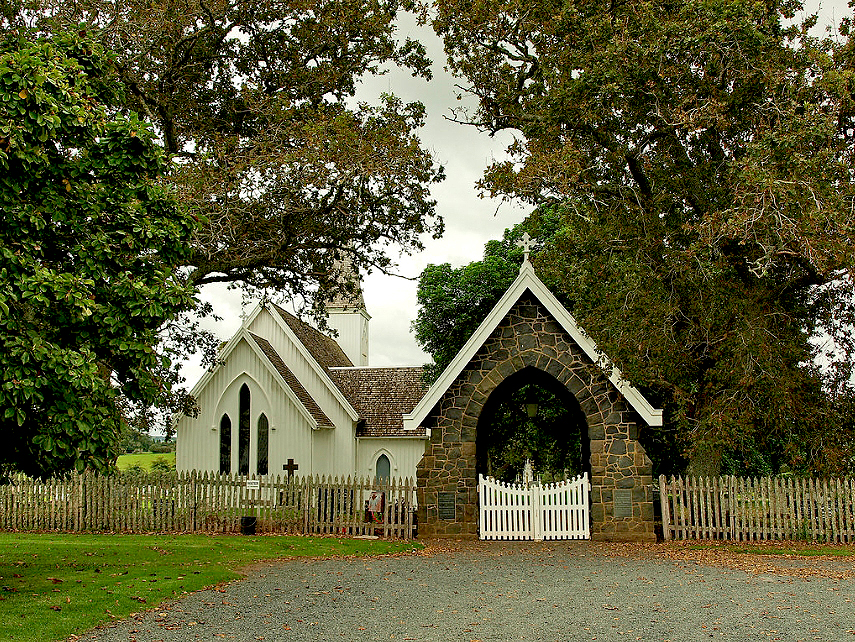
Waimate North: As a result of the decline of the Mission, the establishment at Waimate was transferred to the administration of a local Trust in 1850. One of the activities of this Trust was the replacement of the dilapidated 1839 chapel, but on a smaller scale. In its place they built, in 1870 -1871, the present Church of St John The Baptist (NZHPT Record no. 64, Category I). Unlike the previous structures, it was created for a largely Pakeha congregation, who had increasingly settled in the region, though there were Maori worshippers as well. Although administered by the London-based CMS, the Church building was erected at the same time as the mission district was formed into an Anglican parish. The third church on this site, it was opened in April 1871 by William Cowie (1831-1902), the first Bishop of Auckland, who was responsible for a period of Anglican expansion in the Auckland Diocese. Bishop Cowie also presided over a public meeting held in the Court House at Waimate North the same evening. The Parish Minute Book records that the following report was read by the Archdeacon:
Report of the Waimate Church Building Committee. Your Committee congratulate the Congregation at the Waimate on the successful completion of the Church, which was opened for Divine Service by the Lord Bishop yesterday [sic].
..the total cost of the building, including the Reading Desk, Communion Rails and seats amounts to £374/8/2 leaving a debt of £59/5/11½. The congregation are indebted to Mrs Wood for the Communion cloth, cushions, chancel carpet, Chairs and kneeling stools.
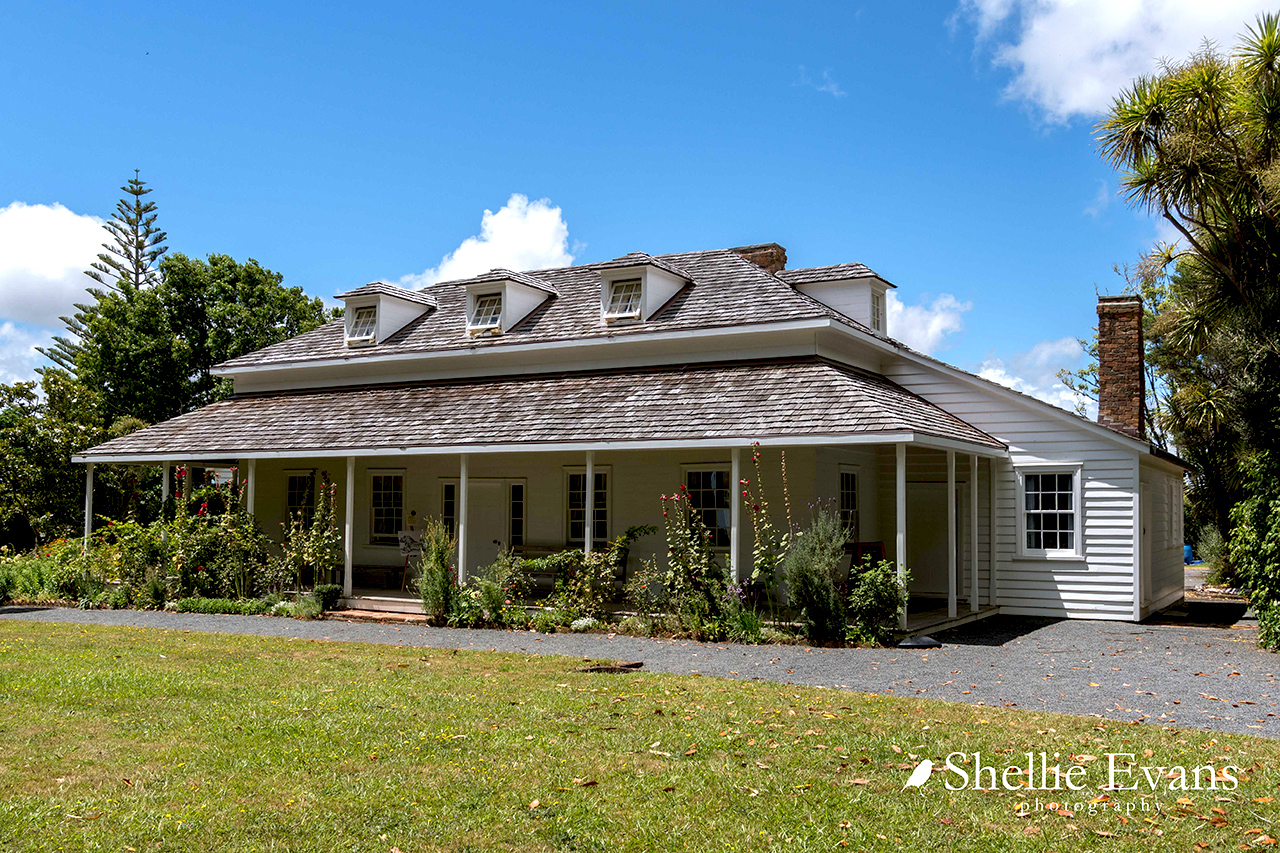
At a public meeting held in ‘the Library' (possibly the front room of the current Mission House) on December 31 1871, the Report for the year ended December 31 1871 stated:
...We strongly urge the necessity of continuing the weekly offering as more is still required to complete the comfort of our church; such as folding door at the entrance, Book rests before the front seats, kneeling stools, tuning the organ etc. The fence round the Churchyard will require to be entirely renewed - A School House to stand within the Church fence is also greatly needed as the present building used for Sunday School purposes is beyond repairing.
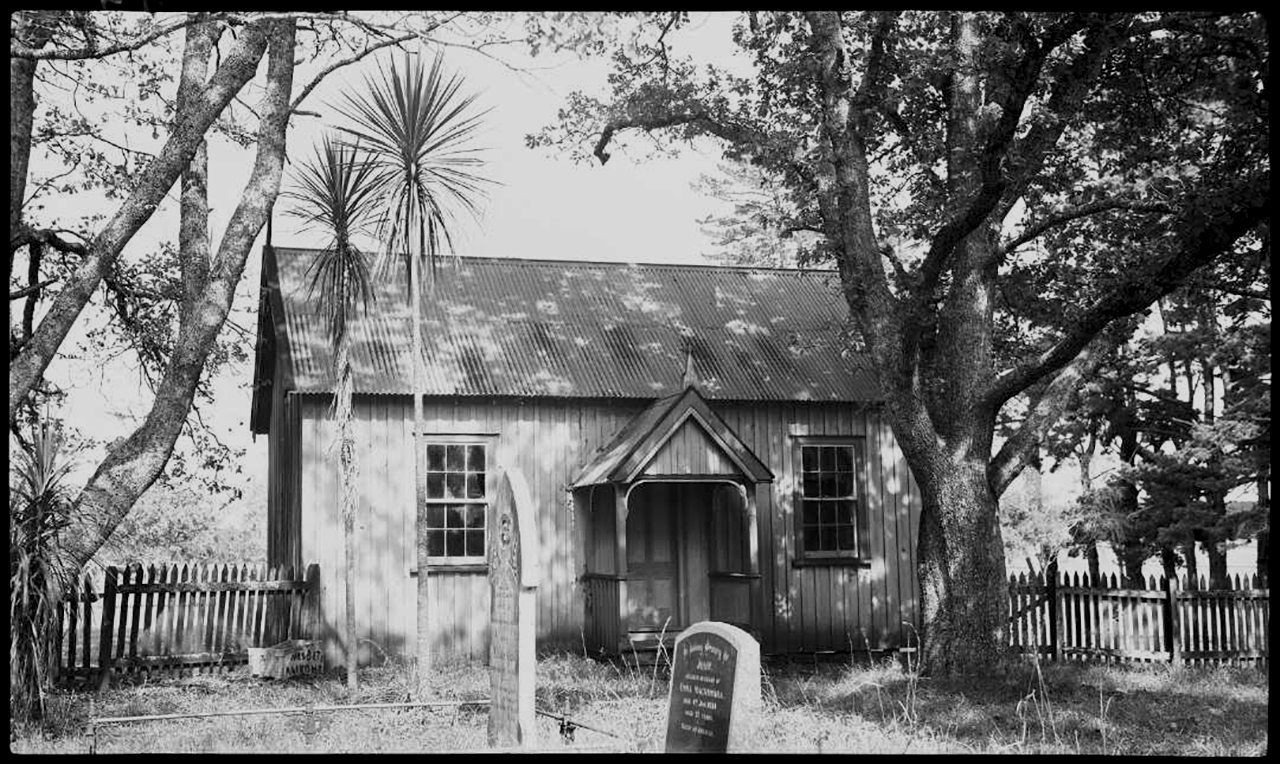
There is no other surviving information on the need for a Sunday School at Waimate North, nor any information about the operation of the Sunday School at that time. What this minute does reveal is that the operation of a Sunday School was from the beginning an integral part of the operation of the church, and that a specific building for it was seen as essential. It was also, from the beginning, designed to be placed ‘within the church fence' i.e. within the churchyard cemetery.
The Church Minute Book contains the records of subsequent Annual Meetings of the congregation in the 1870s. The Meetings in 1873, 19 January 1874, 27 January 1875 and 1 February 1876 are recorded as being held in the Native School House, which seems likely to have been the ‘present building used for Sunday School purposes [that] is beyond repairing' referred to in 1871. The Annual Meeting on 1 February 1877 was held in the Church. There is no reference in the Minute Book to the building of the Sunday School, but the Annual Meeting held on 11 January 1878 was held in the ‘Sunday School House' . It seems most likely therefore that the Sunday School was built between February 1877 and January 1878. There is however no reference in the record of the January 1878 meeting to the erection or opening of the Sunday School, or to its cost. The accounts were approved, but no detail of them was recorded. However, at a meeting of the Vestry held in September that year, payment was approved of ‘£7 for paying off the debt on the School house'.
Over the next twenty years, the Minutes of General Meetings report, usually favourably, on the operation of the Sunday School classes. In January 1888 it is recorded that ‘the Report of the Sunday School which was presented by Mr W Bedggood Superintendent shewed a Roll of 22 boys and 17 girls, total 37. The average attendance during the year had been 18.6, being an increase on the year before of 6. The increase being especially marked in the younger class.' The following year it was agreed that ‘2 dozen cups and saucers and 3 dozen mugs be purchased for the use of the Sunday School, and that a subscription list be now opened to defray the expenses of the same'.
It seems quite likely that this purchase in 1889 documents the beginning of the use of the Sunday School building for a wider range of parish functions than simply the holding of Sunday School classes themselves - mugs and cups and saucers not normally being part of a Sunday School programme. Probably since that time, and certainly to the present, the Sunday School building functions as a small church hall, with refreshments being served there to the congregation after services, for the holding of Parish and other community meetings, and for serving refreshments associated with life-cycle events held in the church such as funerals and weddings.
In 1890, the General Meeting considered the cost of maintaining the churchyard, and the suggestion was made that ‘occasional grazing with sheep would avoid much needless labour'. However, another parishioner made reference to ‘the strong scruples of the Maoris as to allowing livestock to feed in a place consecrated to the dead'. It was resolved to consult the Maori congregation (no outcome of that discussion is recorded). It is apposite that this discussion took place in the Sunday School building which was itself erected within the boundary fence of the church cemetery - see discussion below.
In 1893 the Parish undertook the painting and repair of the Sunday School , and in 1908 it was resolved ‘that a subscription list be opened for the covering of the Sunday School roof with Iron'. This reference suggests that until that time the roof had not been iron but was shingled, though there is no independent confirmation of that. In 1910 it was agreed that ‘the deficiency in funds for repairs to the Sunday School to be made up from cemetery fees in hand', and again in 1930 when Mr Cook undertook repairs, it was agreed that his ‘account for £1/10/- for repairs to Sunday School Room be paid from cemetery account'.
At a date that has not been able to determined precisely, the Sunday School was removed from its position within the churchyard cemetery to its current location in Church Lane, adjacent to the churchyard but outside it. Displayed in the Sunday School are three colour photographic prints of the relocation being undertaken. The fact that these are colour prints and the model of the bulldozer being used to haul the building suggest that this work was undertaken after the Second World War. Unfortunately, there appears to be no other documentation of this move, nor is there any specific recollection of members of the congregation or community at Waimate North that would enable this to be dated more precisely. A general response to questioning has been that those who would have known are now deceased. A date of 1950 has been agreed as being a reasonable estimation. That same oral history indicates that the purpose of relocating the Sunday School was to remove it from the cemetery.
The Sunday School has served many functions for the congregation of St John the Baptist's and the community of Waimate North. For over a century it provided for the religious educational needs of the congregation of St John the Baptist and the Waimate North community. Members of the congregation spoken to in the course of preparing this report referred to their childhood memories of attending Sunday School in the building. As the congregation of St John's has aged and diminished in numbers, there is no longer an active Sunday School as part of the worship at St John the Baptist church. But the Sunday School building serves as a small church hall (in the absence of any other hall at St John's) for functions and events, for catering associated with funerals, weddings and other church occasions, as well as serving the wider community as a meeting room and a polling booth in General Elections.