St Alban's Church (Anglican)

4 Paekākāriki Hill Road, PĀUATAHANUI

Historic Place Category 2

List No. 1320

Quick links:
St Alban's is the third church to be built in Pāuatahanui. It is located on the site of Mātaitaua Pā, built in 1846 by the Ngāti Toa leader, Te Rangihaeata, nephew of Te Rauparaha. The pā buildings included a whare karakia (church). Te Rangihaeata and his people left Mātaitaua after it was attacked by Imperial troops in 1846 and the pā became a military stockade. In 1857 W. Blackie built a small interdenominational chapel on land donated by a local settler, Thomas Hollis Stace, for the purpose. By 1890 the chapel, which was also used for a schoolroom, was too small. The parish undertook to raise the money for a new church, and eventually the architectural practice of Clere, Fitzgerald and Richmond was commissioned to draw up the plans. The foundation stone was laid in August 1895 and the church was opened in June 1896. It was consecrated by Bishop Wallis on St Alban the Martyrs Day (17 June) in 1898. The original chapel remained standing until 1908 when it was demolished.

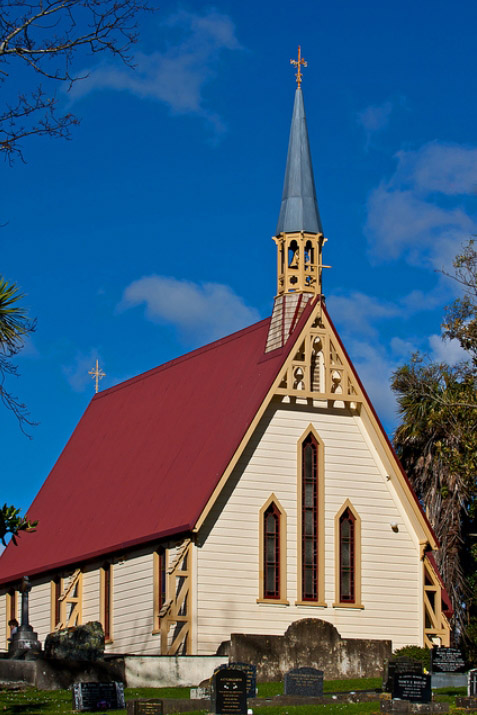
A simple Gothic Revival church, the building has lancet windows, external timber-framed buttresses and, in the interior, scissor trusses with knee braces. The apse is semi-circular in plan. In general the building is timber-framed, with rusticated weatherboards on the exterior and tongue and groove lining in the interior. It has a steeply pitch corrugated iron roof.

St Alban's church has served the Pāuatahanui community for over 100 years. It has strong links to the early farming community of Pāuatahanui, which raised the money for its construction. St Alban's has architectural significance as a well-resolved timber, Gothic church designed by Clere, Fitzgerald and Richmond, one of the most prominent architectural practices in Wellington. Frederick de Jersey Clere (1856-1952) was a noted architect in Wellington and, from 1883, was Diocesan Architect of the Anglican Church.
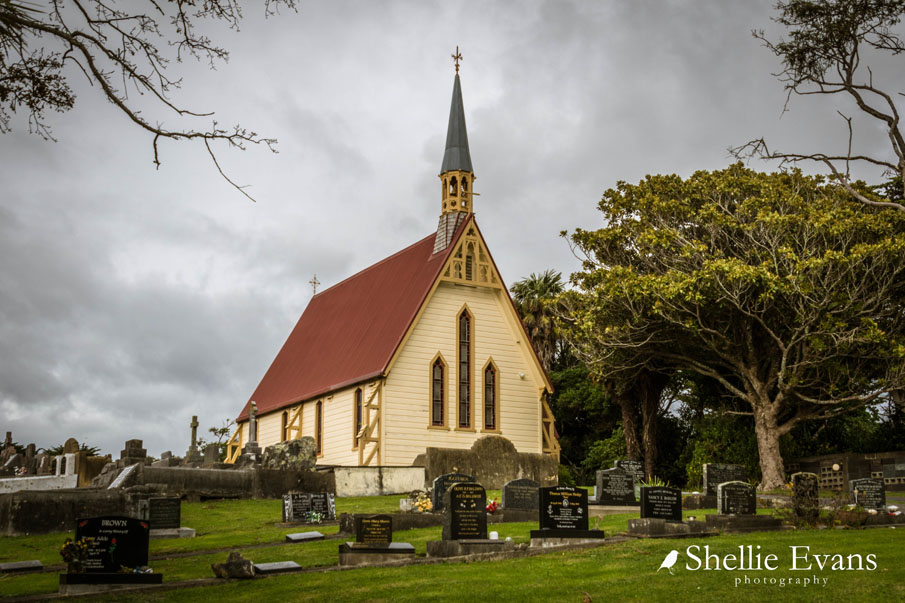
St Alban's Church (Anglican), Pauatahanui. Image courtesy of www.flickr.com CC BY-NC-ND 2.0 | Shellie Evans – flyingkiwigirl | 01/06/2019 | Shellie Evans
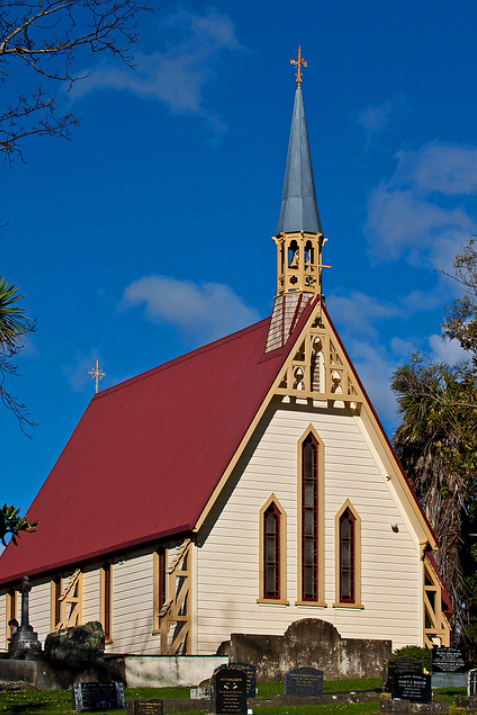
St Alban's Church (Anglican), Pauatahanui. Image courtesy of www.flickr.com | Paul Le Roy – Minicooperd | 24/08/2013 | Paul Le Roy
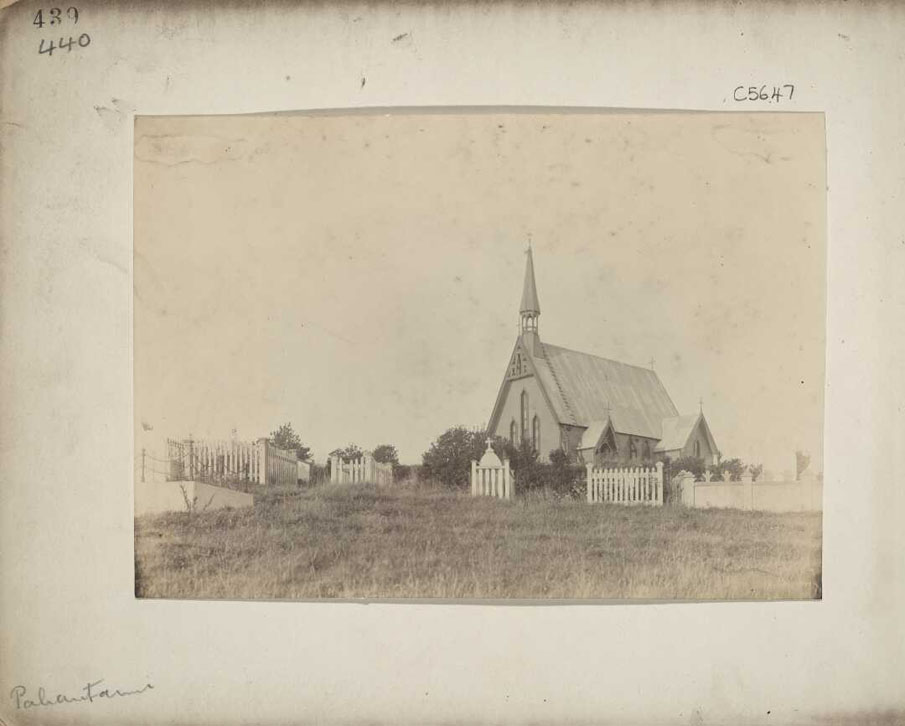
St Alban's Church (Anglican), Pauatahanui. c.1898. Permission of the Alexander Turnbull Library, Wellington, New Zealand, /records/23181490 must be obtained before any re-use of this image | Probably photographed by George William Barltrop | Alexander Turnbull Library, Wellington
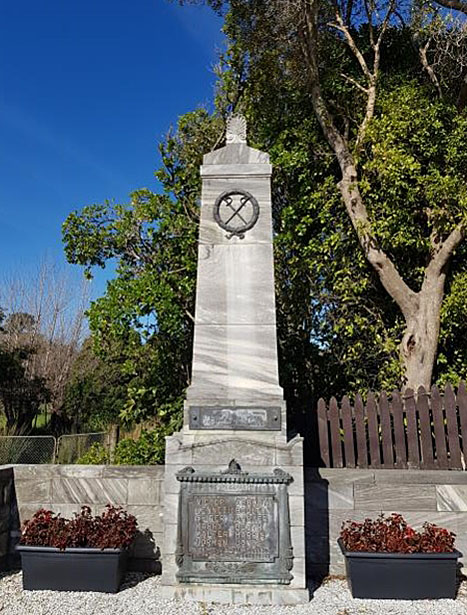
List Entry Information

Overview

Status

Listed

List Entry Status

Historic Place Category 2

Access

Private/No Public Access

List Number

1320

Date Entered

23rd June 1983

Date of Effect

23rd June 1983

City/District Council

Porirua City

Region

Wellington Region

Extent of List Entry

Extent of registration is the land described as Lot 2 DP 311366 (RT 44868), Wellington Land District and the building known as St Alban's Church (Anglican) thereon, and its fittings and fixtures.

Legal description

Lot 2 DP 311366 (RT 44868), Wellington Land District

Status

Listed

List Entry Status

Historic Place Category 2

Access

Private/No Public Access

List Number

1320

Date Entered

23rd June 1983

Date of Effect

23rd June 1983

City/District Council

Porirua City

Region

Wellington Region

Extent of List Entry

Extent of registration is the land described as Lot 2 DP 311366 (RT 44868), Wellington Land District and the building known as St Alban's Church (Anglican) thereon, and its fittings and fixtures.

Legal description

Lot 2 DP 311366 (RT 44868), Wellington Land District

Construction Information

Construction Professional

Name

Clere, Frederick De Jersey

Type

Architect

Biography

Clere (1856-1952) was born in Lancashire, the son of an Anglican clergyman, and was articled to Edmund Scott, an ecclesiastical architect of Brighton. He then became chief assistant to R J Withers, a London architect. Clere came to New Zealand in 1877, practising first in Feilding and then in Wanganui. He later came to Wellington and practised there for 58 years. He was elected a Fellow of the Royal Institute of British Architects in 1886 and held office for 50 years as one of four honorary secretaries in the Empire. In 1883 he was appointed Diocesan Architect of the Anglican Church; he designed more than 100 churches while he held this position. Clere was a pioneer in reinforced concrete construction; the outstanding example of his work with this material is the Church of St Mary of the Angels (1922), Wellington. As well as being pre-eminent in church design, Clere was responsible for many domestic and commercial buildings including Wellington's Harbour Board Offices and Bond Store (1891) and Overton in Marton. Clere was also involved in the design of large woolsheds in Hawkes Bay and Wairarapa. He was active in the formation of the New Zealand Institute of Architects and served on their council for many years. He was a member of the Wellington City Council until 1895, and from 1900 a member of the Wellington Diocesan Synod and the General Synod. He was also a member of the New Zealand Academy of Fine Arts.

Construction Details

Start Year

1895

Finish Year

1898

Type

Original Construction

Description

Foundation stone laid August 1895. Consecrated 17 June 1898

Start Year

1960

Type

Addition

Description

Pulpit added (a gift from St Paul's Church, Waiwhetu, the pulpit originated from St John's, Featherston)

Construction Professional

Name

Clere, Frederick De Jersey

Type

Architect

Biography

Clere (1856-1952) was born in Lancashire, the son of an Anglican clergyman, and was articled to Edmund Scott, an ecclesiastical architect of Brighton. He then became chief assistant to R J Withers, a London architect. Clere came to New Zealand in 1877, practising first in Feilding and then in Wanganui. He later came to Wellington and practised there for 58 years. He was elected a Fellow of the Royal Institute of British Architects in 1886 and held office for 50 years as one of four honorary secretaries in the Empire. In 1883 he was appointed Diocesan Architect of the Anglican Church; he designed more than 100 churches while he held this position. Clere was a pioneer in reinforced concrete construction; the outstanding example of his work with this material is the Church of St Mary of the Angels (1922), Wellington. As well as being pre-eminent in church design, Clere was responsible for many domestic and commercial buildings including Wellington's Harbour Board Offices and Bond Store (1891) and Overton in Marton. Clere was also involved in the design of large woolsheds in Hawkes Bay and Wairarapa. He was active in the formation of the New Zealand Institute of Architects and served on their council for many years. He was a member of the Wellington City Council until 1895, and from 1900 a member of the Wellington Diocesan Synod and the General Synod. He was also a member of the New Zealand Academy of Fine Arts.

Construction Details

Start Year

1895

Finish Year

1898

Type

Original Construction

Description

Foundation stone laid August 1895. Consecrated 17 June 1898

Start Year

1960

Type

Addition

Description

Pulpit added (a gift from St Paul's Church, Waiwhetu, the pulpit originated from St John's, Featherston)

Reference

Historical and Associated Iwi / Hapū / Whānau

Public NZAA Number

R27/321

Completion Date

22nd November 2001

Report Written By

Helen McCracken

Information Sources

Bowman, 1998

Ian Bowman, 'St Alban's, Pauatahanui; A cyclical preventative maintenance plan', November 1998, copy held by NZHPT, Wellington

Bowman, 1998 (3)

Ian Bowman, St Alban's, Pauatahanui; A condition Survey and remedial action plan, November 1998 copy held by NZHPT, Wellington

Fearnley, 1977

Charles Fearnley, Early Wellington Churches, Wellington, 1977

Other Information

This place was identified as significant under previous legislation with different information requirements. It remains significant under the current legislation. There is opportunity under our legislation and policies to add to this information. Further information about this place may be available from the Central Regional Office of Heritage New Zealand Pouhere Taonga. Please note that entry on the New Zealand Heritage List/Rarangi Korero identifies only the heritage values of the property concerned, and should not be construed as advice on the state of the property, or as a comment of its soundness or safety, including in regard to earthquake risk, safety in the event of fire, or insanitary conditions.

Historical and Associated Iwi / Hapū / Whānau

Public NZAA Number

R27/321

Completion Date

22nd November 2001

Report Written By

Helen McCracken

Information Sources

Bowman, 1998

Ian Bowman, 'St Alban's, Pauatahanui; A cyclical preventative maintenance plan', November 1998, copy held by NZHPT, Wellington

Bowman, 1998 (3)

Ian Bowman, St Alban's, Pauatahanui; A condition Survey and remedial action plan, November 1998 copy held by NZHPT, Wellington

Fearnley, 1977

Charles Fearnley, Early Wellington Churches, Wellington, 1977

Other Information

This place was identified as significant under previous legislation with different information requirements. It remains significant under the current legislation. There is opportunity under our legislation and policies to add to this information. Further information about this place may be available from the Central Regional Office of Heritage New Zealand Pouhere Taonga. Please note that entry on the New Zealand Heritage List/Rarangi Korero identifies only the heritage values of the property concerned, and should not be construed as advice on the state of the property, or as a comment of its soundness or safety, including in regard to earthquake risk, safety in the event of fire, or insanitary conditions.

Further Information

Current Usages

Uses: Religion

Specific Usage: Church

Former Usages

General Usage: Religion

Specific Usage: Church

Themes

Of Significance to Maori

Current Usages

Uses: Religion

Specific Usage: Church

Former Usages

General Usage: Religion

Specific Usage: Church

Themes

Of Significance to Maori

Sign up to hear more

Get the latest heritage news, features and events delivered
straight to your inbox.