

Both iwi history and archaeological evidence show Māori occupation in the Ōtākou / Otago region since the 12th century. Today, Kāi Tahu mana whenua is recognised over a large part of Te Wai Pounamu. Kāti Māmoe and Waitaha shared occupation are always acknowledged. The hapū Kai Te Pahi, Kāti Moki, and Kāti Taoka still maintain their presence and responsibility as kaitiaki in this region. Traditional Māori place names include Ōwheo (the Water of Leith), a river that runs in North Dunedin nearby to the property, would have facilitated travel by waka from the coast to places further inland and the mouth of Ōwheo, known as Te Tutai o Te Matauira, was likely a valuable settlement area for accessing kaimoana and other resources.
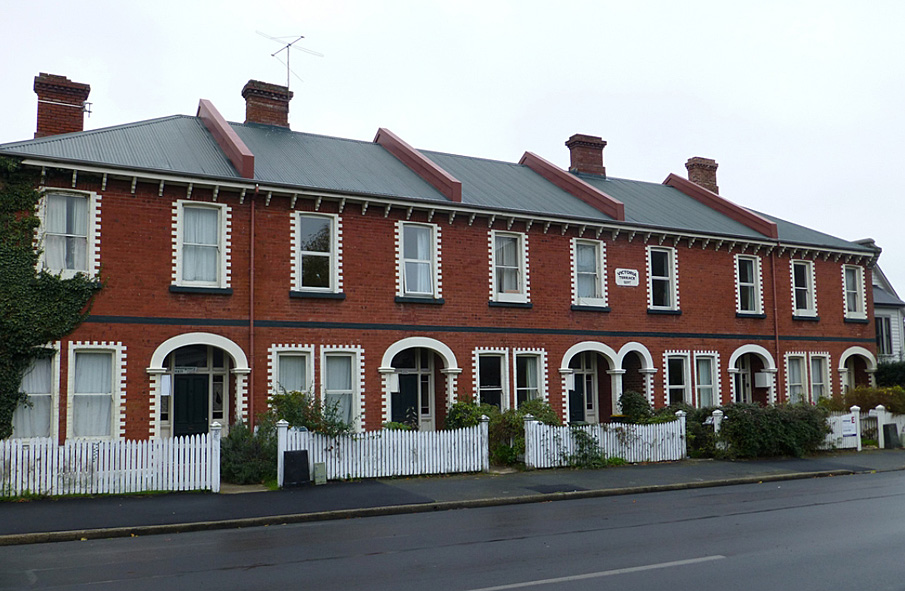
By the 1870s Pākehā settlement at this end of George Street saw breweries and flour mills established with the access to the fresh water source. George Duncan owned the sections originally with a flour mill from 1858-1873 when he sold all his property. Well Park Brewery was also established by Duncan in Block 34 in 1862 and later operated by James Wilson until 1894. William Royse owned section 15, and part sections 16, 17 and 24 with the flour mills from 1875-1892, with James Wilson owning section 17 and 18 with the brewery until he went bankrupt in 1894. Alan Steven, miller, purchased the sections of 15, 16, and 17 in 1892 before selling section 16 and 17 to Peter Shea, stevedore, Port Chalmers in 1897. Victoria Terrace was built in 1897 by builder William King. Shea let the houses out from 1898.
King was selling land and new brick buildings in the 1890s and he operated initially from the corner of Duke and George Street. He first entered into partnership with Richard Pope and George Albery. After their deaths King continued, operating on a large scale in buying and subdividing blocks of land and building on some, particularly from 1894-1898.
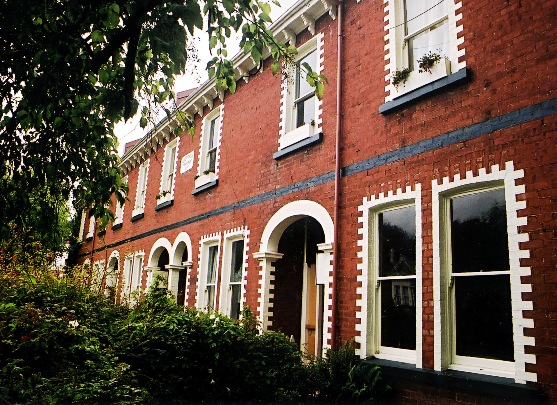
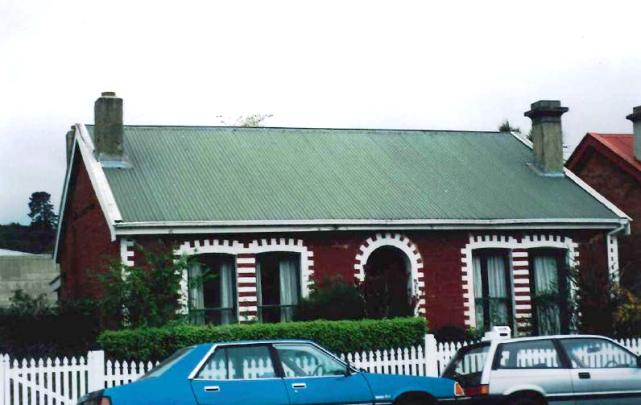
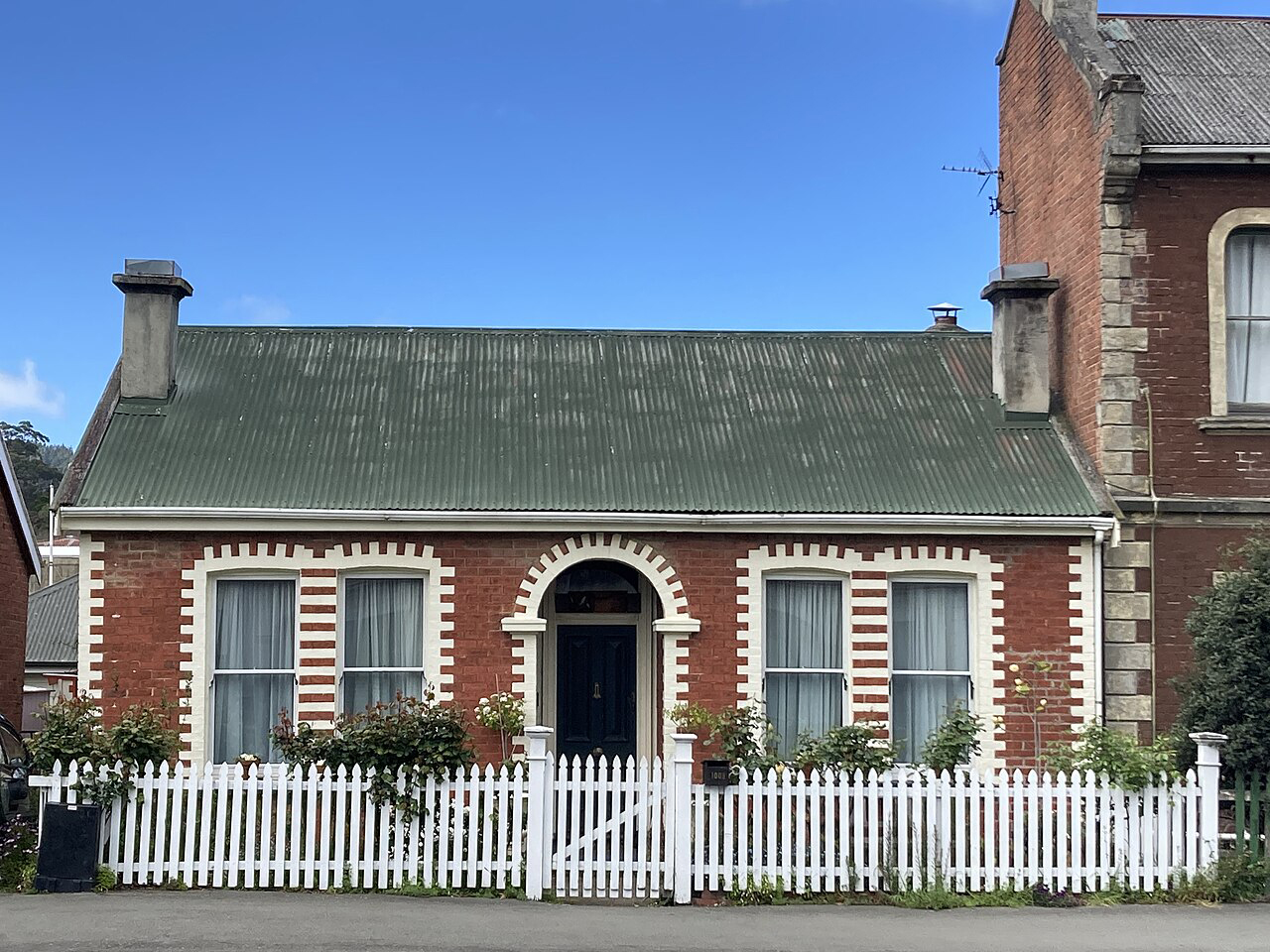
King applied for a permit to build “a terrace of 5 brick houses” with arched porches and recessed front doors. The distinctive façade of tuck-pointed red brick, highlighted with openings painted white to imitate quoin work, is covered by an iron roof. Despite considerable internal modernising which was been carried out over the years, the general Victorian character of the houses remains. The cornice is corbelled and there is a separating brick wall between each unit. The similarities of this terrace block to nearby cottages of 1008 (List no. 4731) and 1014 George Street (List no. 4732) are apparent.
Shea only had the property briefly as Miss Isabella Gow purchased the Terrace in 1902 and owned them until her death in 1924. From local directories and newspapers there are a mix of people living in these houses. The land was subdivided after Gow’s death in 1924. The Victoria Terrace was bought by Charles Wilson (James Wilson’s eldest son), owner of the Wilson’s Malt Extract Company which was situated directly behind the Terrace. It is said that four of the houses were used as accommodation for workers employed there from this time. The northern most house was sold separately in 1925 to James Burrows. Three of the houses were converted into flats with one house remaining unchanged (1054 George Street).
In 1993 both 1046 and 1052 George Street were converted back into one house from flats created in 1958. 1050 George Steet had an addition of a parapet in 1924 and then was converted into flats in 1960, before being altered again in 1995. 1056 George Street had a washhouse added in 1925. The flats today are used as accommodation some as rentals for student accommodation.
List Entry Information
Status
Listed
List Entry Status
Historic Place Category 2
Access
Private/No Public Access
List Number
2232
Date Entered
2nd July 1982
Date of Effect
2nd July 1982
City/District Council
Dunedin City
Region
Otago Region
Extent of List Entry
Extent includes the land described as Pt Sec 16, 17, 18, Blk 34, Lot 1- 5 DP 3400 Town of Dunedin (RTs OT390/76, OTA1/410, OT401/35, OT356/77, OT213/57) Otago Land District, and the building known as Victoria Terrace thereon.
Legal description
Pt Sec 16, 17, 18, Blk 34, Lot 1- 5 DP 3400 Town of Dunedin (RTs OT390/76, OTA1/410, OT401/35, OT356/77, OT213/57) Otago Land District
Status
Listed
List Entry Status
Historic Place Category 2
Access
Private/No Public Access
List Number
2232
Date Entered
2nd July 1982
Date of Effect
2nd July 1982
City/District Council
Dunedin City
Region
Otago Region
Extent of List Entry
Extent includes the land described as Pt Sec 16, 17, 18, Blk 34, Lot 1- 5 DP 3400 Town of Dunedin (RTs OT390/76, OTA1/410, OT401/35, OT356/77, OT213/57) Otago Land District, and the building known as Victoria Terrace thereon.
Legal description
Pt Sec 16, 17, 18, Blk 34, Lot 1- 5 DP 3400 Town of Dunedin (RTs OT390/76, OTA1/410, OT401/35, OT356/77, OT213/57) Otago Land District
Construction Professional
Name
William King
Type
Builder
Biography
William King (c.1847-1935) was a Dunedin building contractor operating in the nineteenth and early twentieth centuries. Born in Reading, England, he trained as a bricklayer. He came to New Zealand aboard the Waimate. He went into partnership with Richard Pope and George Albery erecting some significant buildings including the Terminus Hotel on Rattray Street, the original portion of Selwyn College, and Guthrie and Larnach’s building on Princes Street. After the dissolution of the partnership he carried on on his own account. He retired from the building trade around 1927.
Construction Details
Start Year
1924
Type
Addition
Description
Parapet (1050 George St)
Start Year
1925
Type
Addition
Description
Erect Washhouse (1056 George St)
Start Year
1955
Type
Modification
Description
Convert Dwelling Into Two Flats (1046 George Street)
Start Year
1958
Type
Modification
Description
Convert Dwelling Into Two Flats (1052 George Street)
Start Year
1960
Type
Modification
Description
Convert Dwelling Into Two Flats (1050 George Street)
Start Year
1968
Type
Modification
Description
Addition/Carport (1050 George Street)
Start Year
1992
Type
Modification
Description
Modification/Convert Back To Single Dwelling (1046 George Street)
Start Year
1993
Type
Modification
Description
Convert Flats Back To Five Bedrooms (1052 George Street)
Start Year
1994
Type
Modification
Description
Alter Dwelling/Shift Shower (1056 George Street)
Start Year
1995
Type
Modification
Description
Alter Dwelling (1050 George Street)
Start Year
2015
Type
Addition
Description
Add Bathroom To Lower Level And Alter Laundry, Create Shower Room On Upper Level (1052 George Street)
Start Year
1897
Type
Original Construction
Construction Professional
Name
William King
Type
Builder
Biography
William King (c.1847-1935) was a Dunedin building contractor operating in the nineteenth and early twentieth centuries. Born in Reading, England, he trained as a bricklayer. He came to New Zealand aboard the Waimate. He went into partnership with Richard Pope and George Albery erecting some significant buildings including the Terminus Hotel on Rattray Street, the original portion of Selwyn College, and Guthrie and Larnach’s building on Princes Street. After the dissolution of the partnership he carried on on his own account. He retired from the building trade around 1927.
Construction Details
Start Year
1924
Type
Addition
Description
Parapet (1050 George St)
Start Year
1925
Type
Addition
Description
Erect Washhouse (1056 George St)
Start Year
1955
Type
Modification
Description
Convert Dwelling Into Two Flats (1046 George Street)
Start Year
1958
Type
Modification
Description
Convert Dwelling Into Two Flats (1052 George Street)
Start Year
1960
Type
Modification
Description
Convert Dwelling Into Two Flats (1050 George Street)
Start Year
1968
Type
Modification
Description
Addition/Carport (1050 George Street)
Start Year
1992
Type
Modification
Description
Modification/Convert Back To Single Dwelling (1046 George Street)
Start Year
1993
Type
Modification
Description
Convert Flats Back To Five Bedrooms (1052 George Street)
Start Year
1994
Type
Modification
Description
Alter Dwelling/Shift Shower (1056 George Street)
Start Year
1995
Type
Modification
Description
Alter Dwelling (1050 George Street)
Start Year
2015
Type
Addition
Description
Add Bathroom To Lower Level And Alter Laundry, Create Shower Room On Upper Level (1052 George Street)
Start Year
1897
Type
Original Construction
Historical and Associated Iwi / Hapū / Whānau
Completion Date
2nd August 2024
Report Written By
Alison Breese
Information Sources
Tod, 1984
Frank Tod, Pubs Galore: History of Dunedin Hotels 1848-1984, Historical Publications, Dunedin, 1984
Rillstone, 2002
Rillstone, Thomas, ‘A Piss-tory of Dunedin Breweries’, The Critic Te Ārohi, Issue 8, 2002, https://www.critic.co.nz/features/article/10059/a-piss-tory-of-dunedin-breweries accessed 15 July 2024
History of Maltexo
History of Maltexo, https://maltexo.co.nz/about-us/history accessed 15 July 2024
Heritage New Zealand Pouhere Taonga Property File
12013-916
Heritage New Zealand Pouhere Taonga
Heritage New Zealand Pouhere Taonga, Willowbank Historic Area, Willowbank, 12023-253
Other Information
This place was identified as significant under previous legislation with different information requirements. It remains significant under the current legislation. There is opportunity under our legislation and policies to add to this information. Further information about this place may be available from the Otago/Southland Office of Heritage New Zealand Pouhere Taonga. A fully referenced copy of the Upgrade Report is available upon request from the Northern Regional Office of Heritage New Zealand Pouhere Taonga Disclaimer Please note that entry on the New Zealand Heritage List/Rarangi Korero identifies only the heritage values of the property concerned, and should not be construed as advice on the state of the property, or as a comment of its soundness or safety, including in regard to earthquake risk, safety in the event of fire, or insanitary conditions. Archaeological sites are protected by the Heritage New Zealand Pouhere Taonga Act 2014, regardless of whether they are entered on the New Zealand Heritage List/Rarangi Korero or not. Archaeological sites include ‘places associated with pre-1900 human activity, where there may be evidence relating to the history of New Zealand’. This List entry report should not be read as a statement on whether or not the archaeological provisions of the Act apply to the property (s) concerned. Please contact your local Heritage New Zealand office for archaeological advice
Historical and Associated Iwi / Hapū / Whānau
Completion Date
2nd August 2024
Report Written By
Alison Breese
Information Sources
Tod, 1984
Frank Tod, Pubs Galore: History of Dunedin Hotels 1848-1984, Historical Publications, Dunedin, 1984
Rillstone, 2002
Rillstone, Thomas, ‘A Piss-tory of Dunedin Breweries’, The Critic Te Ārohi, Issue 8, 2002, https://www.critic.co.nz/features/article/10059/a-piss-tory-of-dunedin-breweries accessed 15 July 2024
History of Maltexo
History of Maltexo, https://maltexo.co.nz/about-us/history accessed 15 July 2024
Heritage New Zealand Pouhere Taonga Property File
12013-916
Heritage New Zealand Pouhere Taonga
Heritage New Zealand Pouhere Taonga, Willowbank Historic Area, Willowbank, 12023-253
Other Information
This place was identified as significant under previous legislation with different information requirements. It remains significant under the current legislation. There is opportunity under our legislation and policies to add to this information. Further information about this place may be available from the Otago/Southland Office of Heritage New Zealand Pouhere Taonga. A fully referenced copy of the Upgrade Report is available upon request from the Northern Regional Office of Heritage New Zealand Pouhere Taonga Disclaimer Please note that entry on the New Zealand Heritage List/Rarangi Korero identifies only the heritage values of the property concerned, and should not be construed as advice on the state of the property, or as a comment of its soundness or safety, including in regard to earthquake risk, safety in the event of fire, or insanitary conditions. Archaeological sites are protected by the Heritage New Zealand Pouhere Taonga Act 2014, regardless of whether they are entered on the New Zealand Heritage List/Rarangi Korero or not. Archaeological sites include ‘places associated with pre-1900 human activity, where there may be evidence relating to the history of New Zealand’. This List entry report should not be read as a statement on whether or not the archaeological provisions of the Act apply to the property (s) concerned. Please contact your local Heritage New Zealand office for archaeological advice
Current Usages
Uses: Accommodation
Specific Usage: Terrace/ cojoined houses
Former Usages
General Usage: Accommodation
Specific Usage: Terrace/ cojoined houses
Current Usages
Uses: Accommodation
Specific Usage: Terrace/ cojoined houses
Former Usages
General Usage: Accommodation
Specific Usage: Terrace/ cojoined houses
Location
Related listings
Sign up to hear more
Get the latest heritage news, features and events delivered
straight to your inbox.
