List Entry Information
Status
Listed
List Entry Status
Historic Place Category 1
Access
Private/No Public Access
List Number
4376
Date Entered
26th November 1987
Date of Effect
26th November 1987
City/District Council
South Waikato District
Region
Waikato Region
Legal description
Arapuni Hydro Dam
Status
Listed
List Entry Status
Historic Place Category 1
Access
Private/No Public Access
List Number
4376
Date Entered
26th November 1987
Date of Effect
26th November 1987
City/District Council
South Waikato District
Region
Waikato Region
Legal description
Arapuni Hydro Dam
Why is this place significant?
Historic Significance
Historical Significance or Value The Arapuni Dam project was first conceived in 1921 when a definite need for an increased power source for Auckland was recognized. The Minister of Public Works at the time, however, believed that there were insufficient funds for the project and the idea was shelved for two years. After a public outcry tenders were finally called for in 1923, and construction began in 1924. Thus, from the outset Arapuni was seen to be a very big project, surrounded by controversy, but nevertheless one which, for the first time, recognized the Waikato river as a major source of power generation. It has to be said that in 1924 the science of hydro-electric power generation was still in its infancy, and therefore the practical engineering problems that had to be faced and overcome were largely of an experimental nature. The British contractors, Armstrong Whitworth & Co Ltd, clearly had difficulties in constructing adequate foundations for the Powerhouse and this necessitated their retirement from the contract in 1927. From this point on, the work was taken over by the Public Works Department until competition in 1929. It was the first such project taken on by the Public Works and the efficiency with which it was completed was due in no small measure to the fact that Public Works engineers tackled the problem in a systematic manner. The Powerhouse foundations, for instance, were constructed only after the engineers had solved the problem of diverting the river from its course through the construction of diversion tunnels. The credit for this systematic approach was in no small measure due to the expertise of the Engineer-in-Chief, Mr F W Furket; his judgement had ultimately been decisive in saving the project in 1927. The innovation creating diversion tunnels and pumping plants enabled work to continue by properly draining the site. This method worked so successfully that the contract was completed on time with the first generator turning on 4 June 1929. This date therefore marks the first time in which a state-built hydro-electric dam came into service supplying power to the national grid. The science of hydro-electric power generation has, since this time, taken Arapuni as a model, the project being, so to speak, the first in the country to employ eight generators and modern constructional techniques.
Physical Significance
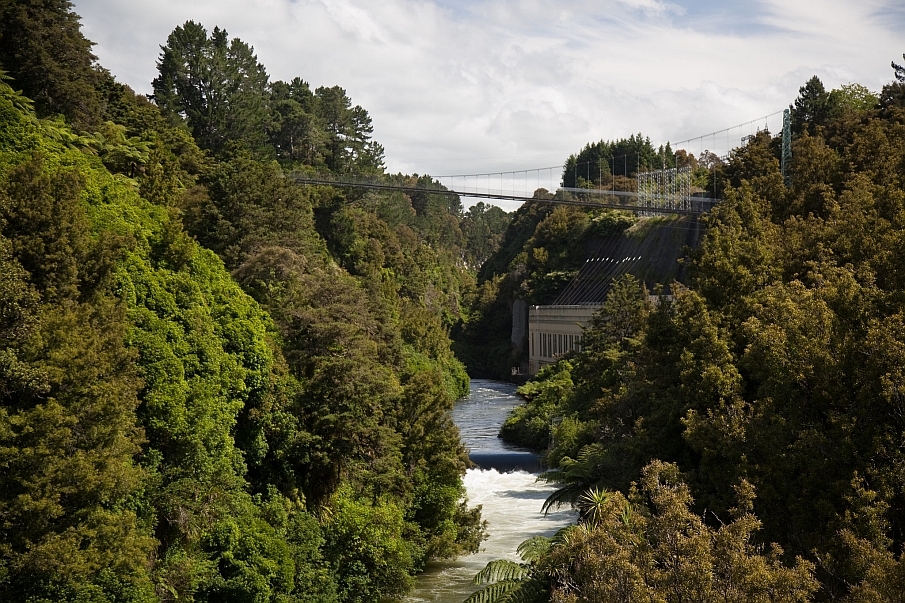
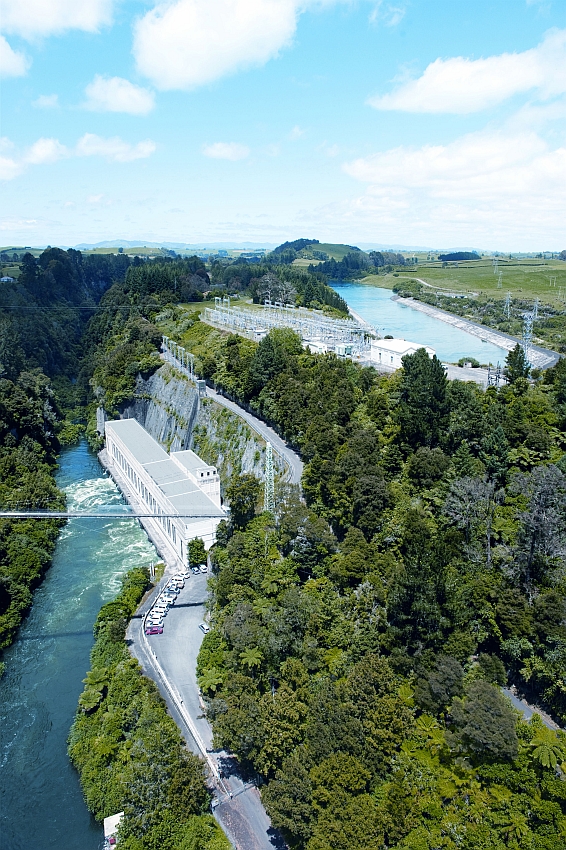
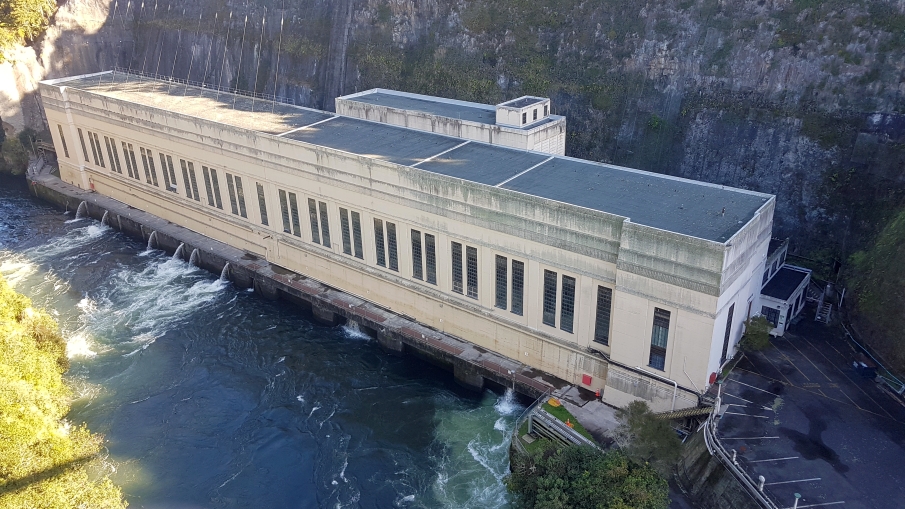
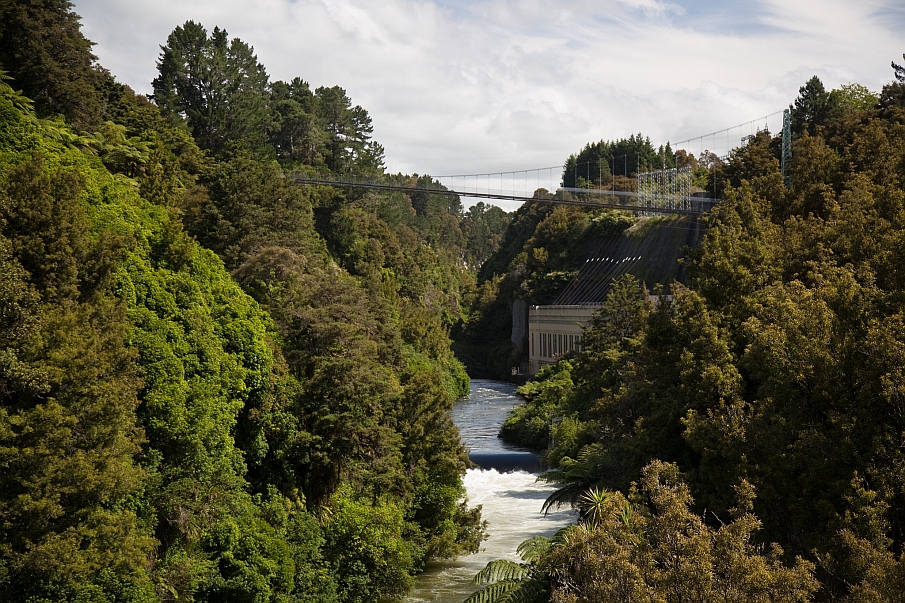
ARCHITECTURAL SIGNIFICANCE: i) In terms of the materials in the construction of the building and its advance functional style, the building is a landmark in the construction of hydro-electric dams and in the industrial use of reinforced concrete. Ii) The actual design was the work of the NZ Public Works Department and in this sense the building , and particularly the engineering solutions arrived at within it, such as the placement of the generators to minimise breakdown failures, is credit to the engineers of 50 years ago. SIGNIFICANCE OF ENGINEERS: Arapuni was the first major hydro-electric power project taken on by the NZ Public Works Department. The previous contractors had not completed their contract to the satisfaction of the Engineer-in-Chief. The apparent lack of organization that had characterised the site up until 1927 was changed dramatically by the efficiency of the Public Works, who earned high public praise for solving major engineering problems without giving up as the British contractors had. LANDMARK SIGNIFICANCE: From occupying what was once a lonely and isolated spot on the Waikato river Arapuni Powerhouse and dam with ancillary works, has become a well-known landmark in the Putaruru district. Apart from the community that has grown up around the dam it is affectionately known by engineers as 'The Old Workhorse of the Waikato', which illustrates its place in the minds of the engineering profession as much as it's physical presence.
Why is this place significant?
Historic Significance
Historical Significance or Value The Arapuni Dam project was first conceived in 1921 when a definite need for an increased power source for Auckland was recognized. The Minister of Public Works at the time, however, believed that there were insufficient funds for the project and the idea was shelved for two years. After a public outcry tenders were finally called for in 1923, and construction began in 1924. Thus, from the outset Arapuni was seen to be a very big project, surrounded by controversy, but nevertheless one which, for the first time, recognized the Waikato river as a major source of power generation. It has to be said that in 1924 the science of hydro-electric power generation was still in its infancy, and therefore the practical engineering problems that had to be faced and overcome were largely of an experimental nature. The British contractors, Armstrong Whitworth & Co Ltd, clearly had difficulties in constructing adequate foundations for the Powerhouse and this necessitated their retirement from the contract in 1927. From this point on, the work was taken over by the Public Works Department until competition in 1929. It was the first such project taken on by the Public Works and the efficiency with which it was completed was due in no small measure to the fact that Public Works engineers tackled the problem in a systematic manner. The Powerhouse foundations, for instance, were constructed only after the engineers had solved the problem of diverting the river from its course through the construction of diversion tunnels. The credit for this systematic approach was in no small measure due to the expertise of the Engineer-in-Chief, Mr F W Furket; his judgement had ultimately been decisive in saving the project in 1927. The innovation creating diversion tunnels and pumping plants enabled work to continue by properly draining the site. This method worked so successfully that the contract was completed on time with the first generator turning on 4 June 1929. This date therefore marks the first time in which a state-built hydro-electric dam came into service supplying power to the national grid. The science of hydro-electric power generation has, since this time, taken Arapuni as a model, the project being, so to speak, the first in the country to employ eight generators and modern constructional techniques.
Physical Significance
ARCHITECTURAL SIGNIFICANCE: i) In terms of the materials in the construction of the building and its advance functional style, the building is a landmark in the construction of hydro-electric dams and in the industrial use of reinforced concrete. Ii) The actual design was the work of the NZ Public Works Department and in this sense the building , and particularly the engineering solutions arrived at within it, such as the placement of the generators to minimise breakdown failures, is credit to the engineers of 50 years ago. SIGNIFICANCE OF ENGINEERS: Arapuni was the first major hydro-electric power project taken on by the NZ Public Works Department. The previous contractors had not completed their contract to the satisfaction of the Engineer-in-Chief. The apparent lack of organization that had characterised the site up until 1927 was changed dramatically by the efficiency of the Public Works, who earned high public praise for solving major engineering problems without giving up as the British contractors had. LANDMARK SIGNIFICANCE: From occupying what was once a lonely and isolated spot on the Waikato river Arapuni Powerhouse and dam with ancillary works, has become a well-known landmark in the Putaruru district. Apart from the community that has grown up around the dam it is affectionately known by engineers as 'The Old Workhorse of the Waikato', which illustrates its place in the minds of the engineering profession as much as it's physical presence.
Construction Professional
Name
Public Works Department
Type
Builder
Biography
No biography is currently available for this construction professional
Name
Sir Wiliam G Armstrong
Type
Designer
Biography
Whitworth and Co Ltd of Newcastle-on-Tyne, 1924-Dec 1927.
Name
Public Works Department
Type
Builder
Biography
No biography is currently available for this construction professional
Name
Furkert, Frederick William.
Type
Engineer
Biography
http://www.dnzb.govt.nz/dnzb/ - search for Furkert.
Construction Details
Start Year
1929
Type
Original Construction
Description
First section completed.
Construction Materials
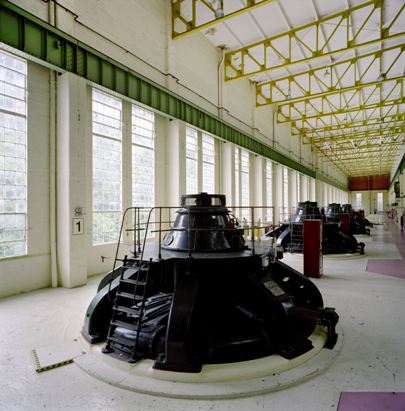
Steel framed reinforced concrete walls. Galvanized steel frame windows, glazed with glass of at least 21oz per square foot. Flat concrete slab construction roof, caring load of 100lbs per square foot. Floors of reinforced concrete.
Notable Features
Perhaps the most outstanding feature of the Powerhouse is the length of its construction which is, including later extensions, 447 feet. The interior of this space allows for the operation of a remarkable 100 ton overhead crane which runs the length of the generator room. The eight generators themselves are interesting for the constructional methods that were used to install and align them in the Powerhouse.
Construction Professional
Name
Public Works Department
Type
Builder
Biography
No biography is currently available for this construction professional
Name
Sir Wiliam G Armstrong
Type
Designer
Biography
Whitworth and Co Ltd of Newcastle-on-Tyne, 1924-Dec 1927.
Name
Public Works Department
Type
Builder
Biography
No biography is currently available for this construction professional
Name
Furkert, Frederick William.
Type
Engineer
Biography
http://www.dnzb.govt.nz/dnzb/ - search for Furkert.
Construction Details
Start Year
1929
Type
Original Construction
Description
First section completed.
Construction Materials
Steel framed reinforced concrete walls. Galvanized steel frame windows, glazed with glass of at least 21oz per square foot. Flat concrete slab construction roof, caring load of 100lbs per square foot. Floors of reinforced concrete.
Notable Features
Perhaps the most outstanding feature of the Powerhouse is the length of its construction which is, including later extensions, 447 feet. The interior of this space allows for the operation of a remarkable 100 ton overhead crane which runs the length of the generator room. The eight generators themselves are interesting for the constructional methods that were used to install and align them in the Powerhouse.
ARCHITECTRAL DESCRIPTION (Style): Although a building built for an industrial purpose, the Arapuni Powerhouse can be described as conforming to the International Style of the early 1930s. This is evident in the rectangular block form which suggests the functional arrangement of spaces favoured by e.g. The Bauhaus, in its response to the machine age. MODIFICATIONS: Extensions to the Powerhouse were made during 1934-36, and continued through to 1938. This work saw the installation of two additional generator units. A further extension to accommodate another two units was begun during 1937-39 and the units were installed in their extension in 1945. Other work done during 1938 consisted of a new superintendent's office in reinforced concrete added to the Powerhouse annex, the lining of the rooms with sound-proofing material and waterproofing of the whole roof of the Powerhouse with asphalt.
ARCHITECTRAL DESCRIPTION (Style): Although a building built for an industrial purpose, the Arapuni Powerhouse can be described as conforming to the International Style of the early 1930s. This is evident in the rectangular block form which suggests the functional arrangement of spaces favoured by e.g. The Bauhaus, in its response to the machine age. MODIFICATIONS: Extensions to the Powerhouse were made during 1934-36, and continued through to 1938. This work saw the installation of two additional generator units. A further extension to accommodate another two units was begun during 1937-39 and the units were installed in their extension in 1945. Other work done during 1938 consisted of a new superintendent's office in reinforced concrete added to the Powerhouse annex, the lining of the rooms with sound-proofing material and waterproofing of the whole roof of the Powerhouse with asphalt.
Historical and Associated Iwi / Hapū / Whānau
Information Sources
Curtis, 1982
Curtis, W J R. Modern Architecture Since 1900. Phaidon, Oxford 1982.
Southwood, 1979
I J Southwood, The History of Arapuni, Wellington, 1979
Other Information
This historic place was registered under the Historic Places Act 1980. This report includes the text from the original Building Classification Committee report considered by the NZHPT Board at the time of registration. Please note that entry on the New Zealand Heritage List/Rarangi Korero identifies only the heritage values of the property concerned, and should not be construed as advice on the state of the property, or as a comment of its soundness or safety, including in regard to earthquake risk, safety in the event of fire, or insanitary conditions.
Historical and Associated Iwi / Hapū / Whānau
Information Sources
Curtis, 1982
Curtis, W J R. Modern Architecture Since 1900. Phaidon, Oxford 1982.
Southwood, 1979
I J Southwood, The History of Arapuni, Wellington, 1979
Other Information
This historic place was registered under the Historic Places Act 1980. This report includes the text from the original Building Classification Committee report considered by the NZHPT Board at the time of registration. Please note that entry on the New Zealand Heritage List/Rarangi Korero identifies only the heritage values of the property concerned, and should not be construed as advice on the state of the property, or as a comment of its soundness or safety, including in regard to earthquake risk, safety in the event of fire, or insanitary conditions.
Former Usages
General Usage: Utilities
Specific Usage: Electricity Power Station
Former Usages
General Usage: Utilities
Specific Usage: Electricity Power Station