

While the building is associated with the notable people who founded and ran the Institute and Foundation, its deep historical and social significance also derives from the men, from throughout the country, for whom this building was home. Pearson House forms part of a larger complex, the remaining buildings of which reflect change throughout the twentieth century in the lives of the blind, and their move from ‘inmates’ to agents of their own lives. These aspects, as well as the massive fundraising efforts to pay for it, give the building high national historical and social significance. The name commemorates publisher Sir Arthur Pearson, the founder of St Dunstans in the United Kingdom - a facility for the rehabilitation of serviceman blinded in the First World War (1914-18).
The Institute first acquired land in this area in 1892, and built its first permanent building in 1909. In the 1920s the Institute, which then housed around 100 men, women and children, was run by Sir Clutha Mackenzie (1895-1966) who had been blinded at Gallipoli and became a pivotal figure in the development of a universal Braille system. Mackenzie spearheaded a major fundraising drive, relying on public sympathy for the plight of soldiers blinded during the war, which resulted in two buildings, both designed by Gummer and Ford (the new men’s hostel, to replace the small cottages that men had been living in the site; and a large industrial workshop where they worked). Known for technically advanced work and some of New Zealand’s largest and most complex projects of the era, the architectural practice was awarded Gold Medals from the New Zealand Institute of Architects for the Remuera Public Library (constructed in 1926) and the Auckland Railway Station designed the same year, contemporaries of Pearson House.
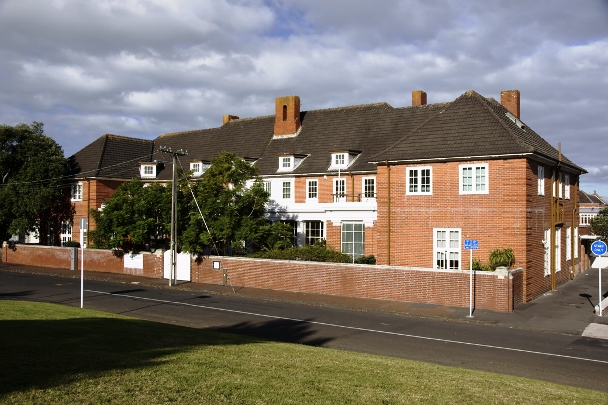
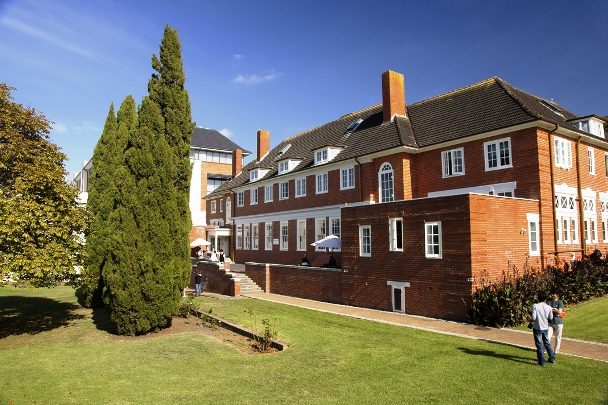
The neo-Georgian building facing the Auckland Domain consists of a main block with two short wings, joined by an impressive front colonnade. The 50 men who lived there were housed in large dormitories and single rooms on the first floor. On the ground floor were dining and sitting rooms, one of which was often used for fundraising concerts. Easy access for the blind was an important consideration. The simple plan features one corridor at each main level with rooms adjoining. While some men lived there while receiving trade training, others were permanent residents. The building was renamed in 1933 as a memorial to Sir Arthur Pearson, and until 1998 remained much the same as when first built - with the exception of the enclosure of the colonnade. As a result of changes in approach that emphasized the growing agency of blind people, living within the community, the last resident left Pearson House in 1982. In 1998, the building was converted into a school, its current (2015) use.
List Entry Information
Status
Listed
List Entry Status
Historic Place Category 1
Access
Private/No Public Access
List Number
4580
Date Entered
15th February 1990
Date of Effect
15th February 1990
City/District Council
Auckland Council
Region
Auckland Council
Extent of List Entry
Extent includes the land described as Lot 7 DP 362696 (RT 255820), North Auckland Land District, and the building known as Pearson House thereon.
Legal description
Lot 7 DP 362696 (RT 255820), North Auckland Land District
Status
Listed
List Entry Status
Historic Place Category 1
Access
Private/No Public Access
List Number
4580
Date Entered
15th February 1990
Date of Effect
15th February 1990
City/District Council
Auckland Council
Region
Auckland Council
Extent of List Entry
Extent includes the land described as Lot 7 DP 362696 (RT 255820), North Auckland Land District, and the building known as Pearson House thereon.
Legal description
Lot 7 DP 362696 (RT 255820), North Auckland Land District
Why is this place significant?
Historic Significance
Historical Significance or Value The Royal New Zealand Foundation for the Blind has played a most important role in the care and rehabilitation of the Blind. Pearson House has been an integral part of the Foundation's Auckland complex for over sixty years. Its origins in an appeal fund well supported by a large number of Aucklanders has given Pearson House added public significance.
Physical Significance
ARCHITECTURAL QUALITY: Pearson House is one of a number of neo-Georgian buildings designed by Gummer and Ford. An architectural style much favoured in New Zealand in the 1920s and 1930s the Georgian style lent a domestic feeling to public buildings. Pearson House was designed to provide a suitable residential environment for the 50 blind people it was to house and this large but non-institutional building admirably suited that purpose. Despite the filling in of the impressive front colonnade Pearson House remains a fine example of Georgian Revival architecture and a testimony to both Gummer and Ford's skill in design and their familiarity with overseas trends in public and domestic architecture. TOWNSCAPE/LANDMARK VALUE: Pearson House is an important part of the Blind Institute complex. It is also one of a number of important buildings, both historically and architecturally, which contribute to the character of Parnell.
Why is this place significant?
Historic Significance
Historical Significance or Value The Royal New Zealand Foundation for the Blind has played a most important role in the care and rehabilitation of the Blind. Pearson House has been an integral part of the Foundation's Auckland complex for over sixty years. Its origins in an appeal fund well supported by a large number of Aucklanders has given Pearson House added public significance.
Physical Significance
ARCHITECTURAL QUALITY: Pearson House is one of a number of neo-Georgian buildings designed by Gummer and Ford. An architectural style much favoured in New Zealand in the 1920s and 1930s the Georgian style lent a domestic feeling to public buildings. Pearson House was designed to provide a suitable residential environment for the 50 blind people it was to house and this large but non-institutional building admirably suited that purpose. Despite the filling in of the impressive front colonnade Pearson House remains a fine example of Georgian Revival architecture and a testimony to both Gummer and Ford's skill in design and their familiarity with overseas trends in public and domestic architecture. TOWNSCAPE/LANDMARK VALUE: Pearson House is an important part of the Blind Institute complex. It is also one of a number of important buildings, both historically and architecturally, which contribute to the character of Parnell.
Construction Professional
Name
W.H. Whitaker
Type
Builder
Biography
No biography is currently available for this construction professional
Name
Gummer & Ford
Type
Architectural Partnership
Biography
The architectural partnership of Gummer and Ford was established in 1923, and became one of national importance. William Henry Gummer (1884-1966) was articled to W.A. Holman, an Auckland architect, and was elected as an Associate of the Royal Institute of British Architects in 1910. In the period 1908-1913 he travelled in the United Kingdom, Europe and the United States. During this time he worked for Sir Edwin Lutyens, leading English architect of the time, and for Daniel Burnham in Chicago. Burnham was a major American architect and one of the founders of the influential Chicago School of Architecture. Gummer joined the firm of Hoggard and Prouse of Auckland and Wellington in 1913. In 1914 he was elected a Fellow of the New Zealand Institute of Architects, was president of the Institute from 1933-34 and was later elected a life member. Charles Reginald Ford (1880- 1972) was born in England and served in the Royal Navy. He was later with Captain Scott's 1901-1904 expedition to Antarctica. He trained as an architect working in Wanganui as an engineer. In 1926 he wrote the first treatise on earthquake and building construction in the English language. Ford was president of the New Zealand Institute of Architects from 1921-22. Buildings designed by the partnership include the State Insurance Building Wellington, (1940) the Dilworth Building (1926), the Guardian Trust Building and the Domain Wintergardens (1921 and 1928), all in Auckland, and the Dominion Museum (1936) in Wellington. Gummer and Ford were awarded Gold Medals from the New Zealand Institute of Architects for the designs of Auckland Railway Station and Remuera Library. Gummer was one of the most outstanding architects working in New Zealand in the first half of this century and was responsible for the stylistically and structurally advanced Tauroa (1916), Craggy Range (1919), Arden (1926), and Te Mata (1935) homesteads at Havelock North.
Construction Details
Start Year
1926
Type
Original Construction
Type
Modification
Description
Colonnade enclosed
Period
1920s
Start Year
1998
Type
Refurbishment/renovation
Description
Renovation to convert the building into a school
Start Year
2014
Type
Modification
Description
Reroofed
Construction Materials
Brick and reinforced concrete. Tile roof
Notable Features
The Doric colonnade.
Construction Professional
Name
W.H. Whitaker
Type
Builder
Biography
No biography is currently available for this construction professional
Name
Gummer & Ford
Type
Architectural Partnership
Biography
The architectural partnership of Gummer and Ford was established in 1923, and became one of national importance. William Henry Gummer (1884-1966) was articled to W.A. Holman, an Auckland architect, and was elected as an Associate of the Royal Institute of British Architects in 1910. In the period 1908-1913 he travelled in the United Kingdom, Europe and the United States. During this time he worked for Sir Edwin Lutyens, leading English architect of the time, and for Daniel Burnham in Chicago. Burnham was a major American architect and one of the founders of the influential Chicago School of Architecture. Gummer joined the firm of Hoggard and Prouse of Auckland and Wellington in 1913. In 1914 he was elected a Fellow of the New Zealand Institute of Architects, was president of the Institute from 1933-34 and was later elected a life member. Charles Reginald Ford (1880- 1972) was born in England and served in the Royal Navy. He was later with Captain Scott's 1901-1904 expedition to Antarctica. He trained as an architect working in Wanganui as an engineer. In 1926 he wrote the first treatise on earthquake and building construction in the English language. Ford was president of the New Zealand Institute of Architects from 1921-22. Buildings designed by the partnership include the State Insurance Building Wellington, (1940) the Dilworth Building (1926), the Guardian Trust Building and the Domain Wintergardens (1921 and 1928), all in Auckland, and the Dominion Museum (1936) in Wellington. Gummer and Ford were awarded Gold Medals from the New Zealand Institute of Architects for the designs of Auckland Railway Station and Remuera Library. Gummer was one of the most outstanding architects working in New Zealand in the first half of this century and was responsible for the stylistically and structurally advanced Tauroa (1916), Craggy Range (1919), Arden (1926), and Te Mata (1935) homesteads at Havelock North.
Construction Details
Start Year
1926
Type
Original Construction
Type
Modification
Description
Colonnade enclosed
Period
1920s
Start Year
1998
Type
Refurbishment/renovation
Description
Renovation to convert the building into a school
Start Year
2014
Type
Modification
Description
Reroofed
Construction Materials
Brick and reinforced concrete. Tile roof
Notable Features
The Doric colonnade.
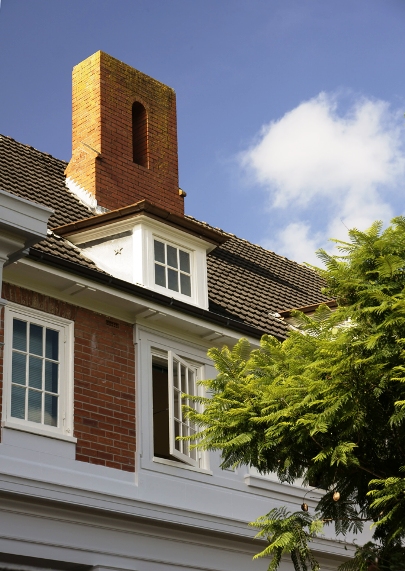
ARCHITECTURAL DESCRIPTION: Pearson House is a neo-Georgian style building consisting of a main block with a short wing at either end. The front court faces Titoki Street and the Domain. There is a Doric colonnade between the two wings (now filled in with glass). The first floor of the building has a series of small paned casement windows. The hipped roof has dormer windows also with small panes. Easy access for the blind was an important consideration in the design of the interior, which is simply planned and features one main corridor at each level with rooms adjoining. MODIFICATIONS: The ground floor colonnade has been glazed. A small balcony has been constructed at the southern end of the first floor of the main facade.
ARCHITECTURAL DESCRIPTION: Pearson House is a neo-Georgian style building consisting of a main block with a short wing at either end. The front court faces Titoki Street and the Domain. There is a Doric colonnade between the two wings (now filled in with glass). The first floor of the building has a series of small paned casement windows. The hipped roof has dormer windows also with small panes. Easy access for the blind was an important consideration in the design of the interior, which is simply planned and features one main corridor at each level with rooms adjoining. MODIFICATIONS: The ground floor colonnade has been glazed. A small balcony has been constructed at the southern end of the first floor of the main facade.
Historical and Associated Iwi / Hapū / Whānau
Completion Date
8th June 2015
Report Written By
Elizabeth Cox
Information Sources
Auckland Public Libraries
Auckland Public Libraries
New Zealand Herald
New Zealand Herald, 12 July 1932, p. 6; 28 September 1933, p. 6.
Star Midweek
Star Midweek
University of Auckland
University of Auckland
Fletcher, 1948
B. Fletcher, A History of Architecture on the Comparative Method, London 1948
Pictorial News
The Pictorial News
Catran & Hansen, 1992
Catran, Ken and Penny Hansen, Pioneering a Vision: A History of the Royal New Zealand Foundation for the Blind 1890-1990, Auckland, 1992.
Hansen, 2013
Hansen, Penelope, 'Mackenzie, Clutha Nantes', from the Dictionary of New Zealand Biography. Te Ara - the Encyclopedia of New Zealand, updated 12-Nov-2013 URL: http://www.TeAra.govt.nz/en/biographies/4m17/mackenzie-clutha-nantes
Newbold, 2008
Newbold, Greg, Quest For Equity, A History of Blindness Advocacy in New Zealand, Palmerton North, 2008
Lochead, 2013
Lochhead, Ian J., 'Gummer, William Henry', from the Dictionary of New Zealand Biography. Te Ara - the Encyclopedia of New Zealand, updated 2-Oct-2013
Lowe, 2013
Lowe, Peter, 'Ford, Charles Reginald', from the Dictionary of New Zealand Biography. Te Ara - the Encyclopedia of New Zealand, updated 24-Sep-2013
Oldham, 1997
Oldham, Denys, Pearson House, 10 Titoki Street, Parnell, Auckland: Conservation Report, Kingston Morrison (architects), 1997 revised edition.
Other Information
Please note that entry on the New Zealand Heritage List/Rarangi Korero identifies only the heritage values of the property concerned, and should not be construed as advice on the state of the property, or as a comment of its soundness or safety, including in regard to earthquake risk, safety in the event of fire, or insanitary conditions. A fully referenced upgrade report is available on request from the Northern Region Office of Heritage New Zealand
Historical and Associated Iwi / Hapū / Whānau
Completion Date
8th June 2015
Report Written By
Elizabeth Cox
Information Sources
Auckland Public Libraries
Auckland Public Libraries
New Zealand Herald
New Zealand Herald, 12 July 1932, p. 6; 28 September 1933, p. 6.
Star Midweek
Star Midweek
University of Auckland
University of Auckland
Fletcher, 1948
B. Fletcher, A History of Architecture on the Comparative Method, London 1948
Pictorial News
The Pictorial News
Catran & Hansen, 1992
Catran, Ken and Penny Hansen, Pioneering a Vision: A History of the Royal New Zealand Foundation for the Blind 1890-1990, Auckland, 1992.
Hansen, 2013
Hansen, Penelope, 'Mackenzie, Clutha Nantes', from the Dictionary of New Zealand Biography. Te Ara - the Encyclopedia of New Zealand, updated 12-Nov-2013 URL: http://www.TeAra.govt.nz/en/biographies/4m17/mackenzie-clutha-nantes
Newbold, 2008
Newbold, Greg, Quest For Equity, A History of Blindness Advocacy in New Zealand, Palmerton North, 2008
Lochead, 2013
Lochhead, Ian J., 'Gummer, William Henry', from the Dictionary of New Zealand Biography. Te Ara - the Encyclopedia of New Zealand, updated 2-Oct-2013
Lowe, 2013
Lowe, Peter, 'Ford, Charles Reginald', from the Dictionary of New Zealand Biography. Te Ara - the Encyclopedia of New Zealand, updated 24-Sep-2013
Oldham, 1997
Oldham, Denys, Pearson House, 10 Titoki Street, Parnell, Auckland: Conservation Report, Kingston Morrison (architects), 1997 revised edition.
Other Information
Please note that entry on the New Zealand Heritage List/Rarangi Korero identifies only the heritage values of the property concerned, and should not be construed as advice on the state of the property, or as a comment of its soundness or safety, including in regard to earthquake risk, safety in the event of fire, or insanitary conditions. A fully referenced upgrade report is available on request from the Northern Region Office of Heritage New Zealand
Current Usages
Uses: Education
Specific Usage: School
Former Usages
General Usage: Commemoration
Specific Usage: Accommodation House
Current Usages
Uses: Education
Specific Usage: School
Former Usages
General Usage: Commemoration
Specific Usage: Accommodation House
Location
Related listings
Sign up to hear more
Get the latest heritage news, features and events delivered
straight to your inbox.
