List Entry Information
Status
Listed
List Entry Status
Historic Place Category 1
Access
Able to Visit
List Number
4682
Date Entered
15th February 1990
Date of Effect
15th February 1990
City/District Council
Thames-Coromandel District
Region
Waikato Region
Legal description
Lot 1 DPS 26040 (SA24B/1081), South Auckland Land District
Status
Listed
List Entry Status
Historic Place Category 1
Access
Able to Visit
List Number
4682
Date Entered
15th February 1990
Date of Effect
15th February 1990
City/District Council
Thames-Coromandel District
Region
Waikato Region
Legal description
Lot 1 DPS 26040 (SA24B/1081), South Auckland Land District
Why is this place significant?
Historic Significance
Historical Significance or Value This historic place was registered under the Historic Places Act 1980. This report includes the text from the original Building Classification Committee report considered by the NZHPT Board at the time of registration. The quadrant together with the adjacent boiler and engine room, are the only surviving evidence of the huge pumps which were employed to dewater the Grahamstown area of the Thames goldfield, making possible the mining of the rich quartz veins which underlay the flat on which Thames now stands.
Physical Significance
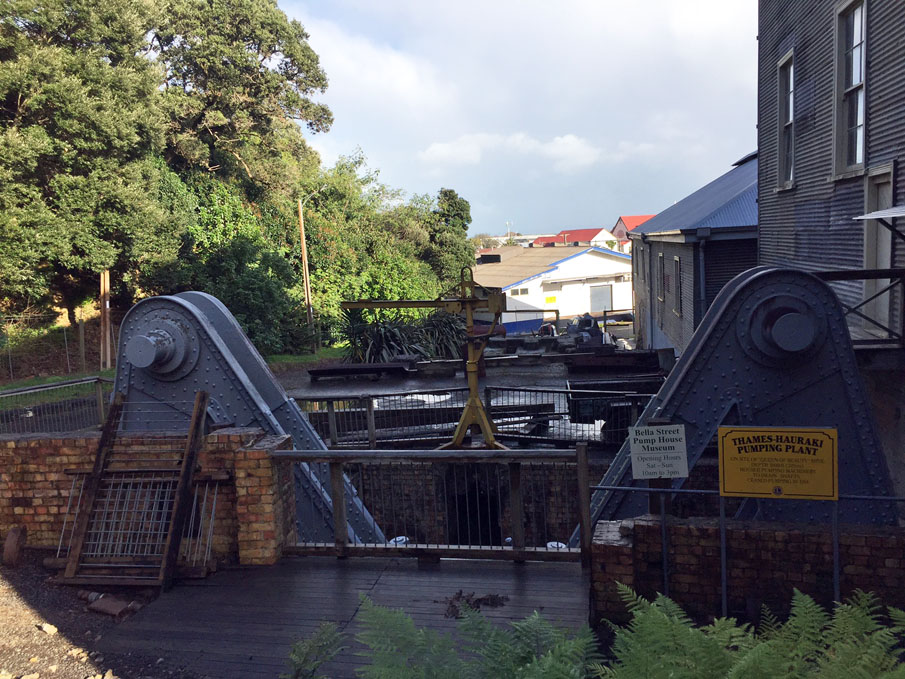
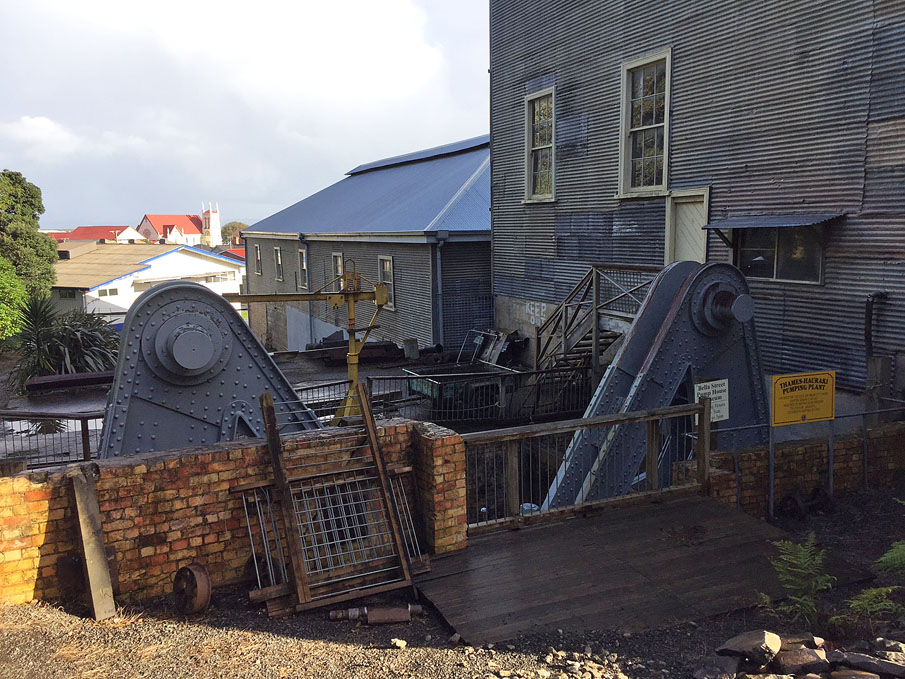
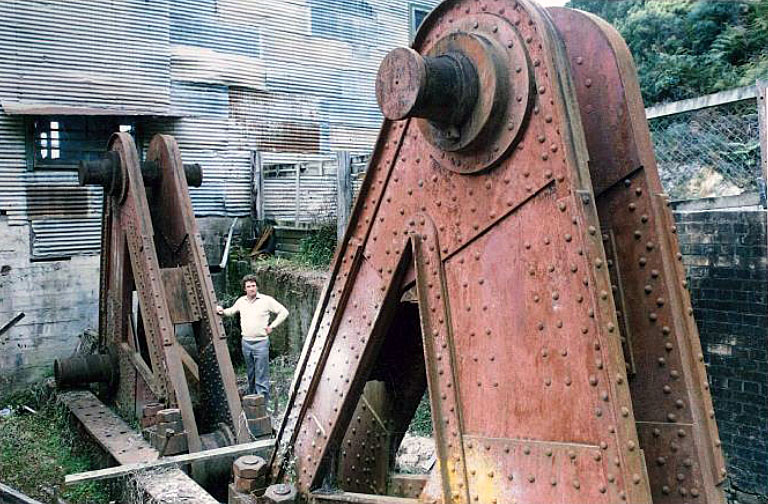
This historic place was registered under the Historic Places Act 1980. This report includes the text from the original Building Classification Committee report considered by the NZHPT Board at the time of registration. ARCHITECTURAL QUALITY: The quadrants of the new Big Pump at the Queen of Beauty mine are a spectacular reminder of the scale of the machinery used to power the pumps used to facilitate the working of the deep quartz goldmining at the turn of the century. The pump had a capacity to 11ft 3000 gallons a minute from a depth of 610 metres (2000 feet). It was claimed to have been the largest pump in the Southern Hemisphere at that time.
Why is this place significant?
Historic Significance
Historical Significance or Value This historic place was registered under the Historic Places Act 1980. This report includes the text from the original Building Classification Committee report considered by the NZHPT Board at the time of registration. The quadrant together with the adjacent boiler and engine room, are the only surviving evidence of the huge pumps which were employed to dewater the Grahamstown area of the Thames goldfield, making possible the mining of the rich quartz veins which underlay the flat on which Thames now stands.
Physical Significance
This historic place was registered under the Historic Places Act 1980. This report includes the text from the original Building Classification Committee report considered by the NZHPT Board at the time of registration. ARCHITECTURAL QUALITY: The quadrants of the new Big Pump at the Queen of Beauty mine are a spectacular reminder of the scale of the machinery used to power the pumps used to facilitate the working of the deep quartz goldmining at the turn of the century. The pump had a capacity to 11ft 3000 gallons a minute from a depth of 610 metres (2000 feet). It was claimed to have been the largest pump in the Southern Hemisphere at that time.
Construction Details
Start Year
1898
Type
Original Construction
Construction Materials
Steel or iron members riveted together; concrete foundations.
Notable Features
The massive size of the quadrants
Construction Details
Start Year
1898
Type
Original Construction
Construction Materials
Steel or iron members riveted together; concrete foundations.
Notable Features
The massive size of the quadrants
This historic place was registered under the Historic Places Act 1980. This report includes the text from the original Building Classification Committee report considered by the NZHPT Board at the time of registration. ARCHITECTURAL DESCRIPTION: The two quadrants, still standing in their vertical position on the concrete mountings are 3.7 metres (12 feet) in height. Each quadrant consists of a number of steel or iron elements, riveted together. They were driven by an engine powered by 10 steam boilers. The horizontal thrust of the engine was converted by the quadrants into a vertical force on to the pump rods which ran down the shaft to the pump 305 metres (1000 feet) underground. The quadrants have a large crank pin at each of their three angles. The lower outer pivot provided the point about which the quadrants moved, the lower inner pivot provided the linkage to the pump rods, while the upper pivots provided the linkage which, through connecting rods, transferred the power of the engine to both quadrants, and synchronised their movement. The quadrants moved through an angle of 36 degrees. MODIFICATIONS:The quadrants have been stripped of all associated machinery, linkages and power source.
This historic place was registered under the Historic Places Act 1980. This report includes the text from the original Building Classification Committee report considered by the NZHPT Board at the time of registration. ARCHITECTURAL DESCRIPTION: The two quadrants, still standing in their vertical position on the concrete mountings are 3.7 metres (12 feet) in height. Each quadrant consists of a number of steel or iron elements, riveted together. They were driven by an engine powered by 10 steam boilers. The horizontal thrust of the engine was converted by the quadrants into a vertical force on to the pump rods which ran down the shaft to the pump 305 metres (1000 feet) underground. The quadrants have a large crank pin at each of their three angles. The lower outer pivot provided the point about which the quadrants moved, the lower inner pivot provided the linkage to the pump rods, while the upper pivots provided the linkage which, through connecting rods, transferred the power of the engine to both quadrants, and synchronised their movement. The quadrants moved through an angle of 36 degrees. MODIFICATIONS:The quadrants have been stripped of all associated machinery, linkages and power source.
Historical and Associated Iwi / Hapū / Whānau
Completion Date
17th October 1989
Information Sources
Appendices to the Journals of the House of Representatives (AJHR)
Appendices to the Journals of the House of Representatives
Thornton, 1982
Geoffrey G. Thornton, New Zealand's Industrial Heritage, A.H. & A.W. Reed, Wellington, 1982
Stott, 1983
R Stott, Prices of Thames, Wellington, 1983
Vennell, 1968
C W Vennell, Men of Metal: The Story of A. & G. Price Ltd, Auckland & Thames, Auckland, 1968
Kelly, 1968
W A Kelly. Thames: The First Hundred Years, Thames, 1968
Isdale, 1967
A Isdale, History of the River Thames, New Zealand, Thames Borough Council, 1967
Other Information
A copy of this report is available from the NZHPT Northern Region office Please note that entry on the New Zealand Heritage List/Rarangi Korero identifies only the heritage values of the property concerned, and should not be construed as advice on the state of the property, or as a comment of its soundness or safety, including in regard to earthquake risk, safety in the event of fire, or insanitary conditions. This historic place was registered under the Historic Places Act 1980. This report includes the text from the original Building Classification Committee report considered by the NZHPT Board at the time of registration.
Historical and Associated Iwi / Hapū / Whānau
Completion Date
17th October 1989
Information Sources
Appendices to the Journals of the House of Representatives (AJHR)
Appendices to the Journals of the House of Representatives
Thornton, 1982
Geoffrey G. Thornton, New Zealand's Industrial Heritage, A.H. & A.W. Reed, Wellington, 1982
Stott, 1983
R Stott, Prices of Thames, Wellington, 1983
Vennell, 1968
C W Vennell, Men of Metal: The Story of A. & G. Price Ltd, Auckland & Thames, Auckland, 1968
Kelly, 1968
W A Kelly. Thames: The First Hundred Years, Thames, 1968
Isdale, 1967
A Isdale, History of the River Thames, New Zealand, Thames Borough Council, 1967
Other Information
A copy of this report is available from the NZHPT Northern Region office Please note that entry on the New Zealand Heritage List/Rarangi Korero identifies only the heritage values of the property concerned, and should not be construed as advice on the state of the property, or as a comment of its soundness or safety, including in regard to earthquake risk, safety in the event of fire, or insanitary conditions. This historic place was registered under the Historic Places Act 1980. This report includes the text from the original Building Classification Committee report considered by the NZHPT Board at the time of registration.