School of Mines Buildings

101 Cochrane Street, Brown Street and Davey Street, THAMES

Historic Place Category 1

List No. 132

Quick links:
The Thames School of Mines is important as a wahi tapu, a place of religious instruction and, later, as the largest mining school in the country. Initially part of an urupa (burial ground) associated with Tarakonaiti pa, Pukehimana pa and Pukehinau pa, the land was gifted to the Wesleyan Church by Ngati Maru chiefs in 1868 for the construction of a place of worship in the newly-founded settlement of Grahamstown (later known as Thames). A church and a Sunday School building were soon erected, which were subsequently employed for several years. In 1885 the Wesleyans transferred the site for use as a School of Mines, expressly against the wishes of Ngati Maru, who had unsuccessfully petitioned Parliament opposing the change. In their 1877 petition, Hohepa Paraone and Hone Huiraukura stated that 'we do not desire the land to be given back but...we will never consent that the land so given shall be used for any other purpose than that for which it was given. Namely for the worship of God'.

Nevertheless opened in 1886, the new educational complex was one of about 30 schools founded nationally to stimulate growth in the goldfields with the active encouragement of William Larnach (1833-1898), Minister of Mines in the Stout-Vogel administration. Gold extraction was an important part of the economy in nineteenth-century New Zealand, providing revenue for the government as well as being a source of employment and private profit. Thames was suitable for a school of this type as the main mining centre for the Coromandel quartzfields, whose gold required extraction using advanced techniques. The institution offered practical instruction in geology, mine management, engineering and other skills to a range of high school and adult students. Women first attended in 1887, shortly after public school students were admitted to Sunday morning classes.

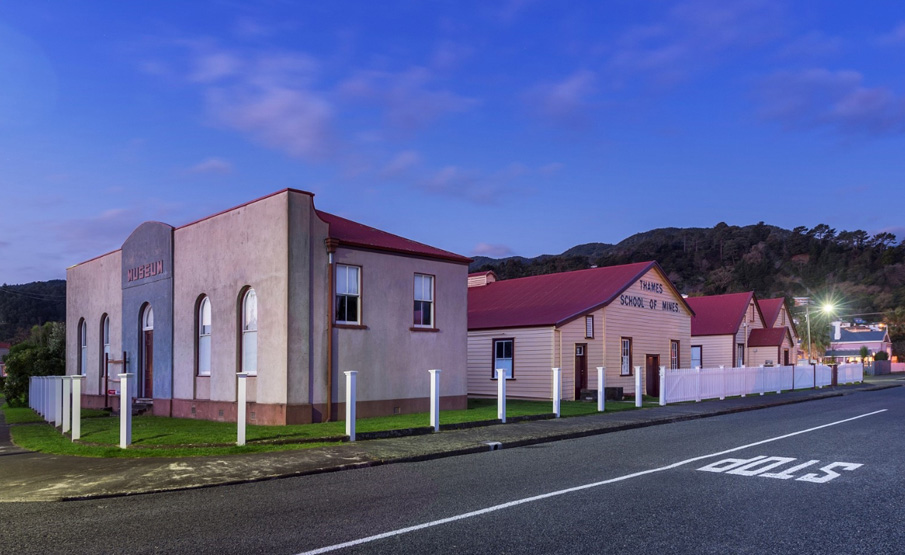
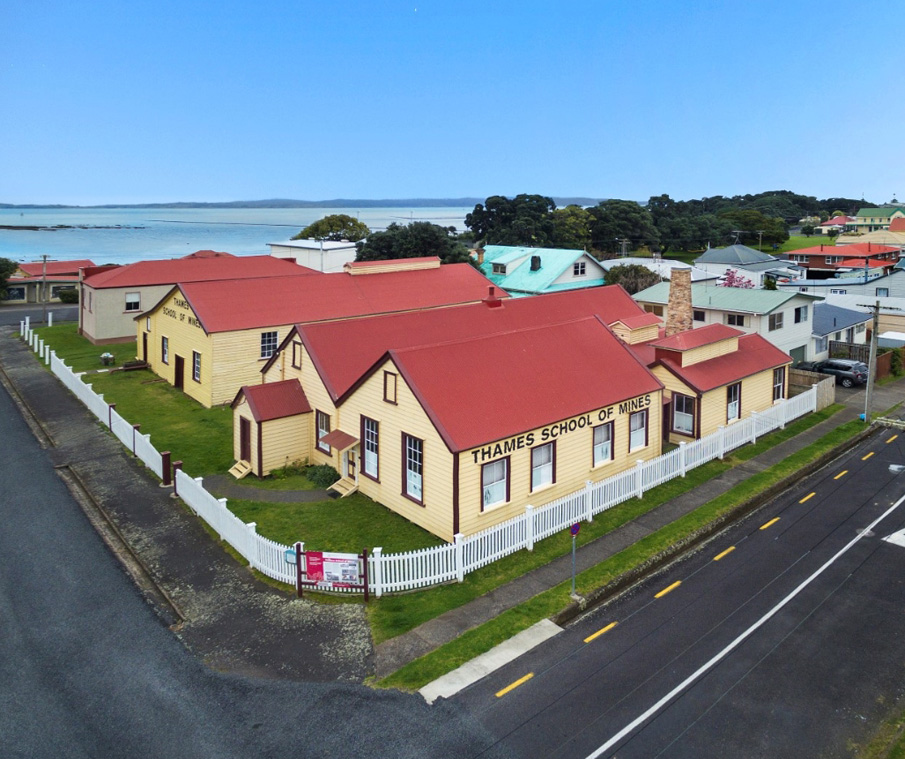
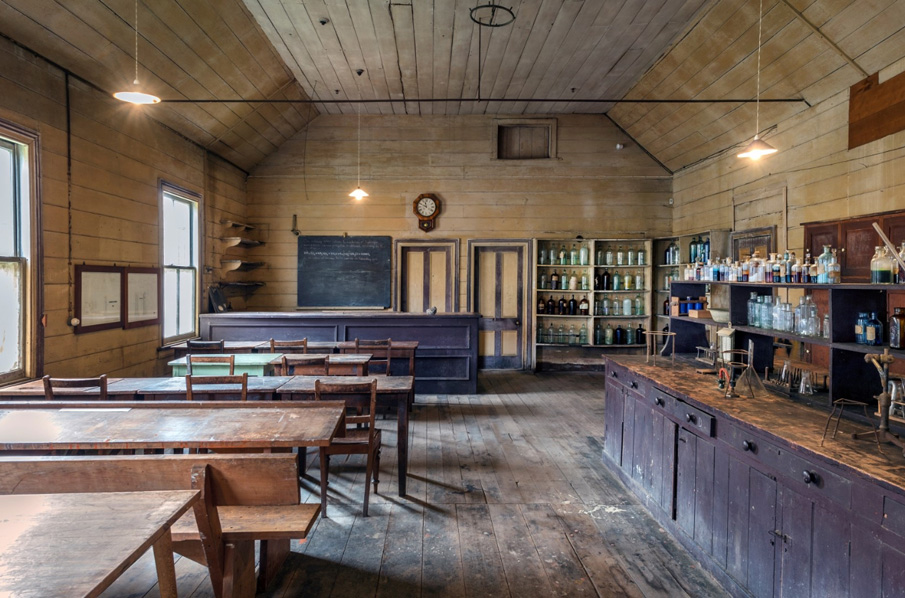
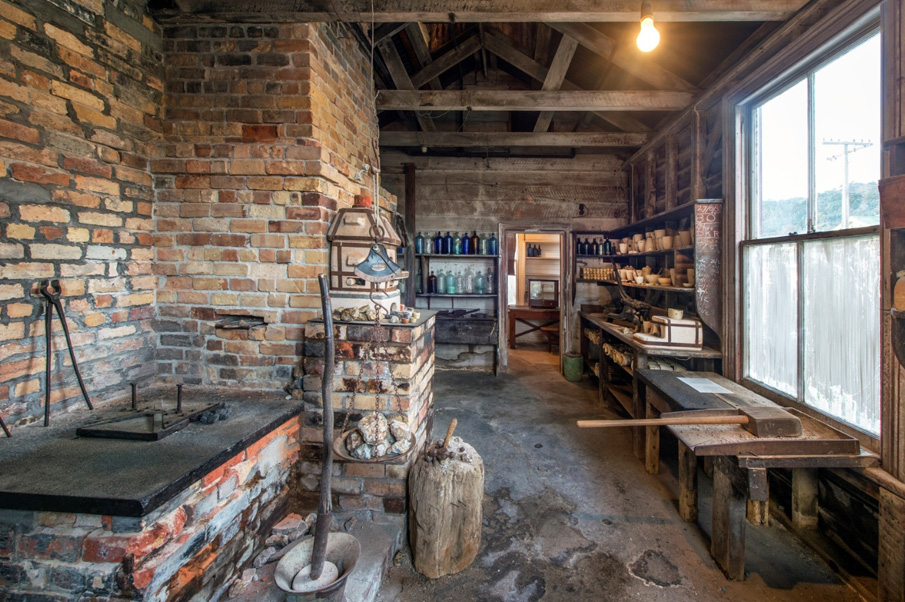
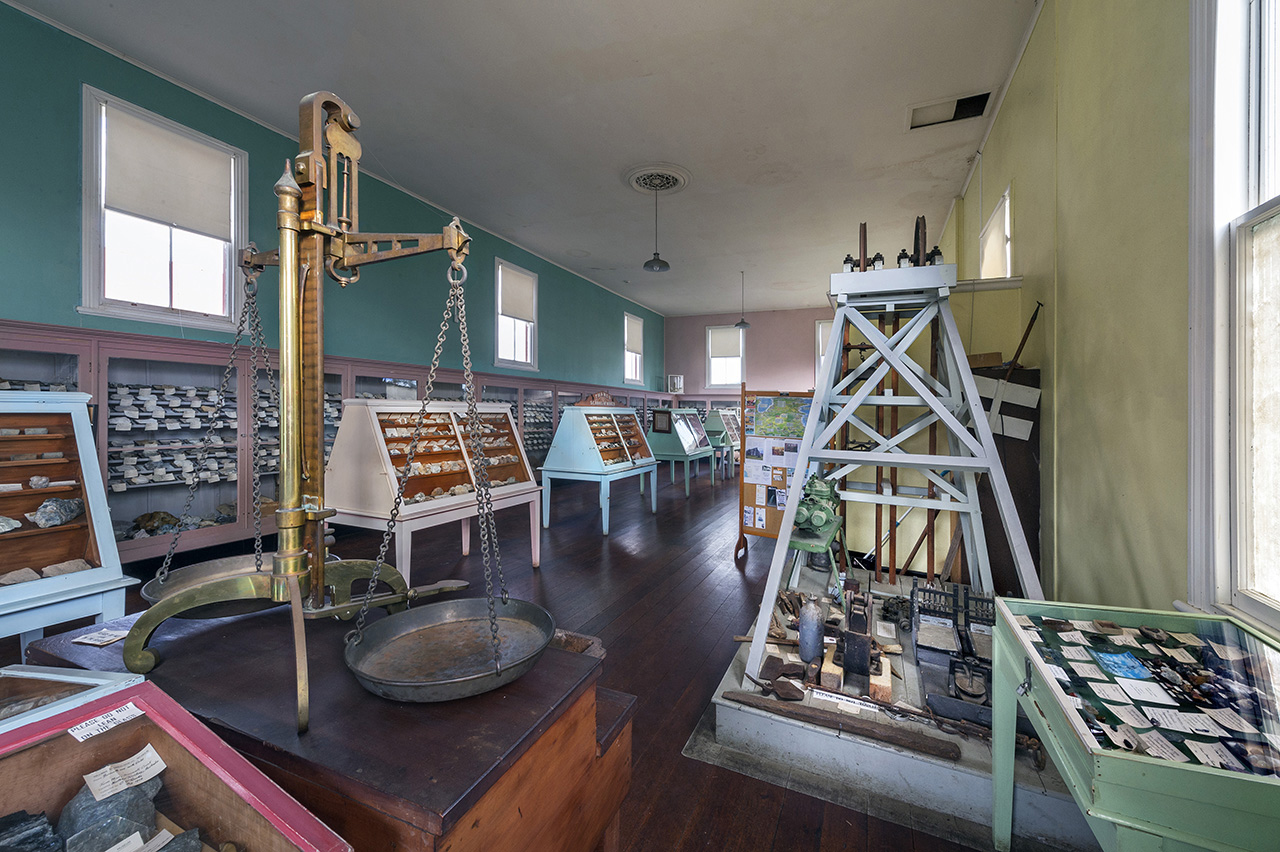
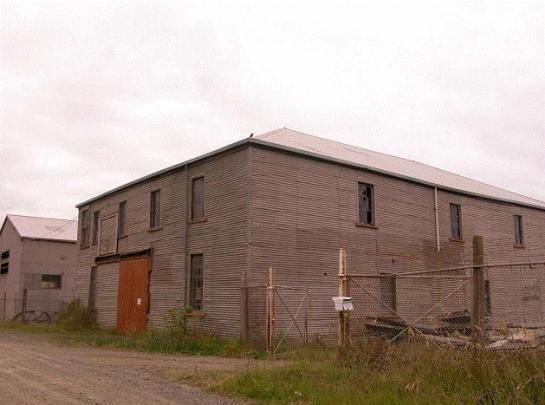
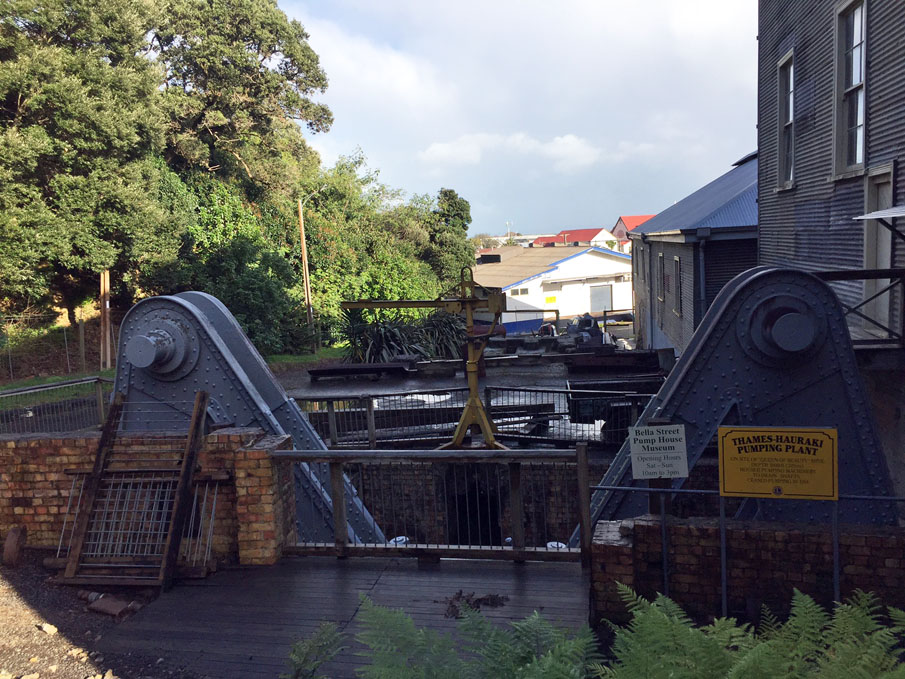
The School of Mines contains a number of educational and industrial structures, mostly utilitarian timber buildings erected during the late nineteenth and early twentieth centuries. Their diversity reflects different functions and the enlargement of the complex over several decades. The earliest instruction took place in the 1869 Sunday School building erected by the Wesleyan Church, which was retained on the site and converted for use as a lecture hall. A purpose-built addition in 1886 comprised an Experimental Metallurgical Works housing a two-stamp battery, roasting furnace, water wheel and tailing-pits, as well as other equipment. The battery reflected the joint 'public-private' nature of the educational venture, being employed for both teaching purposes and for crushing miners' ore as a means of gaining revenue.

Further additions to the school were carried out during the economic boom at the turn of the century, including a large mineralogical museum, opened to the public in 1901. After a period of decline, the school revived briefly when the Unemployment Board opened up disused mines for prospecting by the unemployed. The last major structures were a ball mill from the USA and a three-head stamper from the old Mahakirau battery, introduced in 1936-1937. The school closed in the 1950s, when only five Schools of Mines remained in existence, and the buildings were eventually transferred to the Thames Borough Council. The New Zealand Historic Places Trust/Pouhere Taonga purchased the buildings in 1979, and continues to maintain them and their contents as a historic property. That part of the earlier burial ground occupied by the School of Mines was registered in 2004 as Te Apuranginui wahi tapu (NZHPR Registration # 7556).

The Thames School of Mines site has great spiritual, cultural and archaeological significance as the location of an urupa and a later Wesleyan church. It is particularly important to Ngati Maru. The school complex is nationally significant as a rare and well-preserved example of its type. Only a few Schools of Mines are known to survive in New Zealand and, of these, the Thames complex was one of the most important and longest-lived. The buildings reflect important aspects of educational history, including the growing importance of technical subjects and adult education in the late nineteenth century. They are also of value for demonstrating the combination of public and private funding used for technical education before the emergence of a full state system. The buildings shed light on social and economic life in the later nineteenth and twentieth centuries, from class and gender issues to the importance of gold mining in New Zealand's economy. The complex is particularly significant for its links with science and technology, still containing a large amount of equipment related to the development of mining and extraction techniques. Its well-preserved interiors graphically demonstrate the use and appearance of educational structures prior to the twentieth century. The main lecture room is significant as a remnant of an earlier educational and religious structure. The complex is closely identified with an important part of the history of Thames, which was founded as a mining town, and enjoys public esteem as a much-visited complex of great educational value. Its importance is enhanced by being part of a well-preserved nineteenth-century urban landscape, and is associated with other nearby historic buildings, such as A. & G. Price's Foundry.
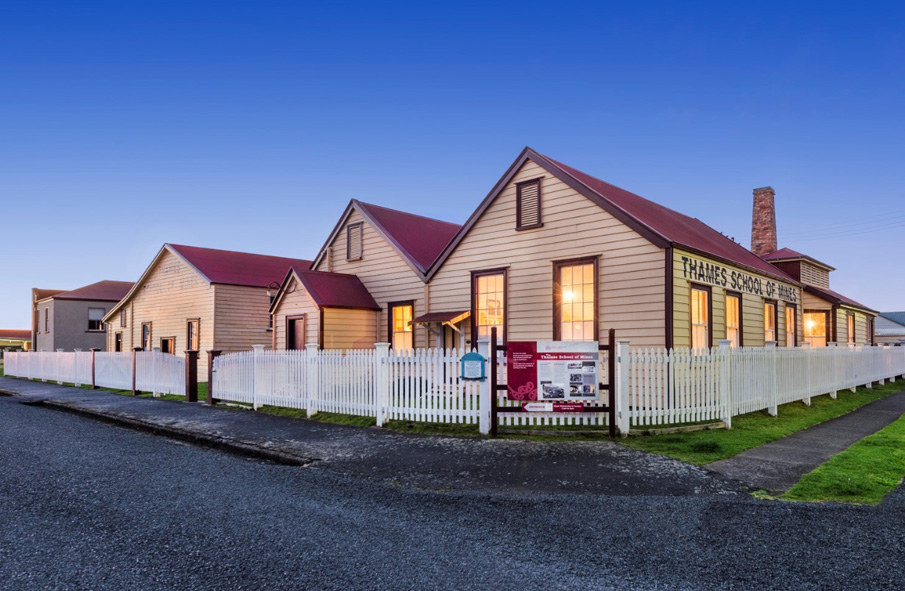
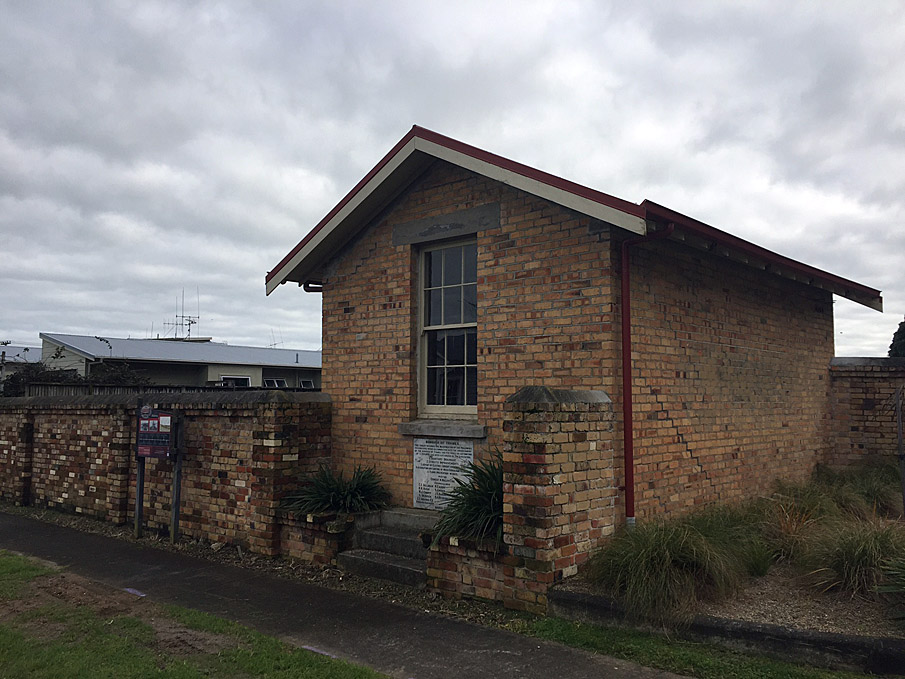
School of Mines Buildings, Thames. CC BY 3.0 Image courtesy of commons.wikimedia.org | Ulrich Lange | 23/01/2017 | Ulrich Lange, Bochum, Germany - Wikimedia Commons
School of Mines Buildings, Thames | Grant Sheehan | 12/09/2016 | Heritage New Zealand
School of Mines Buildings, Thames. Shot from drone | Grant Sheehan | 13/09/2016 | Heritage New Zealand
School of Mines Buildings, Thames. Classroom | Grant Sheehan | 12/09/2016 | Heritage New zealand
School of Mines Buildings, Thames. Interior | Grant Sheehan | 12/09/2016 | Heritage New Zealand
School of Mines Buildings, Thames. Interior | Grant Sheehan | 12/09/2016 | Heritage New Zealand Pouhere Taonga

List Entry Information

Overview

Status

Listed

List Entry Status

Historic Place Category 1

Access

Able to Visit

List Number

132

Date Entered

22nd November 1984

Date of Effect

22nd November 1984

City/District Council

Thames-Coromandel District

Region

Waikato Region

Legal description

Lot 1 DP 32748 (RT SA1009/242), South Auckland Land District

Status

Listed

List Entry Status

Historic Place Category 1

Access

Able to Visit

List Number

132

Date Entered

22nd November 1984

Date of Effect

22nd November 1984

City/District Council

Thames-Coromandel District

Region

Waikato Region

Legal description

Lot 1 DP 32748 (RT SA1009/242), South Auckland Land District

Construction Information

Construction Professional

Name

McAndrew, J.

Type

Builder

Biography

No biography is currently available for this construction professional

Name

Mahony, D.

Type

Architect

Biography

No biography is currently available for this construction professional

Name

Twentyman, Robert

Type

Builder

Biography

No biography is currently available for this construction professional

Name

Lovatt & Lovatt

Type

Builder

Biography

No biography is currently available for this construction professional

Name

Ginn, G.L.

Type

Builder

Biography

No biography is currently available for this construction professional

Name

Price, Alfred & George

Type

Engineer

Biography

Brothers Alfred (1835-1907) and George (1843-1917) Price were born in Stroud, England, and served apprenticeships as patternmakers at the Dudbridge Works in Rodborough. Alfred emigrated to Auckland in 1863, and George in 1867. Early in 1868 they set up business as engineers at Onehunga. Their first well-known design was for a machine to strip fibre from flax leaves. This machine was employed in most parts of the country. Increased demand for the Prices' products resulted in the establishment of a large new foundry, erected under their personal direction by their own carpenters, on an acre of land near the wharf at the port of Queen Street, Onehunga, in 1870. In 1872 they secured a contract from the Public Works Department to build rolling stock for the North Island Railway. In later years the company became well-known as the producers of locomotive engines for New Zealand Railways and other industries. Realising the potential of the Thames goldfield where crushers, boilers and other machinery were in demand, the firm moved to Grahamstown (Thames) in 1871. It is likely that the Thames foundry was erected once again by the firm's carpenters under the personal direction of the Price brothers. In Thames the firm was also well placed to serve the local sawmilling industry. Prices' achievements as engineers were diverse. In 1884 they acquired the New Zealand manufacturing rights to the Pelton wheel, and built the first triple expansion engine in New Zealand from their own design and specifications. They also built engines and boilers for several coastal steamers and even ventured into shipbuilding themselves. In 1883 A. & G. Price bought the Prince Imperial Mine. However, the company's biggest contribution to gold mining was the building of stamper batteries, pumps and mining machinery for various goldmining companies. The 100 head battery erected for the Waihi Goldmining Company at Waikino in 1896 was probably the largest. Prices also manufactured 10 Lancashire boilers for the Big Pump at the Queen of Beauty Shaft (Thames-Hauraki Goldfields Company) in 1897, considered at that time to be the largest pump in the southern hemisphere. Both Alfred and George Price were active in local body and community affairs, being members of the Harbour Board and the Thames Scottish Volunteers. Both men served as Thames Borough Councillors and were respectively, fire inspector and superintendent of the Thames Fire Brigade.

Construction Details

Type

Other

Description

Site of urupa

Period

pre-1868

Start Year

1869

Type

Original Construction

Description

Construction of Wesleyan buildings, including Church and Sunday School

Start Year

1870

Type

Relocation

Description

Sunday School relocated to current position on site and lengthened

Start Year

1885

Type

Relocation

Description

Removal of Wesleyan Church from site

Start Year

1886

Type

Addition

Description

Construction of brick smelting house (builder: G.L. Ginn) and modification of Wesleyan schoolroom for use as School of Mines lecture room

Start Year

1888

Type

Addition

Description

Experimental Metallurgical Works building (builder: J. McAndrew; engineer: A. & G. Price)

Start Year

1890

Type

Modification

Description

Repair of lecture room after extensive fire

Start Year

1894

Type

Modification

Description

Cyanide treatment plant added to Experimental Works building (engineer: A. & G. Price)

Start Year

1895

Type

Addition

Description

Classroom and library added (builder: R. & W. Twentyman)

Start Year

1898

Type

Addition

Description

Assay house built (architect: D. Mahony; builder: R. Twentyman)

Start Year

1899

Type

Addition

Description

Mineralogical museum (builder: Lovatt & Lovatt), office and chemical store

Start Year

1901

Type

Addition

Description

Electrical power house and workshop (builder: R. Twentyman)

Start Year

1916

Type

Addition

Description

Electrical laboratory

Start Year

1936

Finish Year

1937

Type

Addition

Description

Ball mill and three-head stamper

Start Year

1955

Finish Year

1956

Type

Modification

Description

Judd mills replace 3 stampers

Notable Features

Registration covers all structures within the title boundary, their fixtures and finishes. It also includes recent modifications. The structures are associated with buried nineteenth century and earlier deposits, including a Maori urupa.

Construction Professional

Name

McAndrew, J.

Type

Builder

Biography

No biography is currently available for this construction professional

Name

Mahony, D.

Type

Architect

Biography

No biography is currently available for this construction professional

Name

Twentyman, Robert

Type

Builder

Biography

No biography is currently available for this construction professional

Name

Lovatt & Lovatt

Type

Builder

Biography

No biography is currently available for this construction professional

Name

Ginn, G.L.

Type

Builder

Biography

No biography is currently available for this construction professional

Name

Price, Alfred & George

Type

Engineer

Biography

Brothers Alfred (1835-1907) and George (1843-1917) Price were born in Stroud, England, and served apprenticeships as patternmakers at the Dudbridge Works in Rodborough. Alfred emigrated to Auckland in 1863, and George in 1867. Early in 1868 they set up business as engineers at Onehunga. Their first well-known design was for a machine to strip fibre from flax leaves. This machine was employed in most parts of the country. Increased demand for the Prices' products resulted in the establishment of a large new foundry, erected under their personal direction by their own carpenters, on an acre of land near the wharf at the port of Queen Street, Onehunga, in 1870. In 1872 they secured a contract from the Public Works Department to build rolling stock for the North Island Railway. In later years the company became well-known as the producers of locomotive engines for New Zealand Railways and other industries. Realising the potential of the Thames goldfield where crushers, boilers and other machinery were in demand, the firm moved to Grahamstown (Thames) in 1871. It is likely that the Thames foundry was erected once again by the firm's carpenters under the personal direction of the Price brothers. In Thames the firm was also well placed to serve the local sawmilling industry. Prices' achievements as engineers were diverse. In 1884 they acquired the New Zealand manufacturing rights to the Pelton wheel, and built the first triple expansion engine in New Zealand from their own design and specifications. They also built engines and boilers for several coastal steamers and even ventured into shipbuilding themselves. In 1883 A. & G. Price bought the Prince Imperial Mine. However, the company's biggest contribution to gold mining was the building of stamper batteries, pumps and mining machinery for various goldmining companies. The 100 head battery erected for the Waihi Goldmining Company at Waikino in 1896 was probably the largest. Prices also manufactured 10 Lancashire boilers for the Big Pump at the Queen of Beauty Shaft (Thames-Hauraki Goldfields Company) in 1897, considered at that time to be the largest pump in the southern hemisphere. Both Alfred and George Price were active in local body and community affairs, being members of the Harbour Board and the Thames Scottish Volunteers. Both men served as Thames Borough Councillors and were respectively, fire inspector and superintendent of the Thames Fire Brigade.

Construction Details

Type

Other

Description

Site of urupa

Period

pre-1868

Start Year

1869

Type

Original Construction

Description

Construction of Wesleyan buildings, including Church and Sunday School

Start Year

1870

Type

Relocation

Description

Sunday School relocated to current position on site and lengthened

Start Year

1885

Type

Relocation

Description

Removal of Wesleyan Church from site

Start Year

1886

Type

Addition

Description

Construction of brick smelting house (builder: G.L. Ginn) and modification of Wesleyan schoolroom for use as School of Mines lecture room

Start Year

1888

Type

Addition

Description

Experimental Metallurgical Works building (builder: J. McAndrew; engineer: A. & G. Price)

Start Year

1890

Type

Modification

Description

Repair of lecture room after extensive fire

Start Year

1894

Type

Modification

Description

Cyanide treatment plant added to Experimental Works building (engineer: A. & G. Price)

Start Year

1895

Type

Addition

Description

Classroom and library added (builder: R. & W. Twentyman)

Start Year

1898

Type

Addition

Description

Assay house built (architect: D. Mahony; builder: R. Twentyman)

Start Year

1899

Type

Addition

Description

Mineralogical museum (builder: Lovatt & Lovatt), office and chemical store

Start Year

1901

Type

Addition

Description

Electrical power house and workshop (builder: R. Twentyman)

Start Year

1916

Type

Addition

Description

Electrical laboratory

Start Year

1936

Finish Year

1937

Type

Addition

Description

Ball mill and three-head stamper

Start Year

1955

Finish Year

1956

Type

Modification

Description

Judd mills replace 3 stampers

Notable Features

Registration covers all structures within the title boundary, their fixtures and finishes. It also includes recent modifications. The structures are associated with buried nineteenth century and earlier deposits, including a Maori urupa.

Reference

Historical and Associated Iwi / Hapū / Whānau

Iwi: Ngāti Maru (Hauraki)

Hapu: Ngāti Pū

Completion Date

27th June 2007

Report Written By

Martin Jones

Information Sources

Mace, 2002

Tania Mace, 'Thames School of Mines and Mineralogical Museum, Historical Research Report: Part II', Auckland, 2002 (held by NZHPT, Tauranga)

McEnteer, 1993

John McEnteer and Taimoana Turoa, 'Nga Taonga o Te Kauaeranga/Maori Heritage of Thames', Thames, 1993 (held by NZHPT, Auckland)

Thames School of Mines, 1901

Thames School of Mines, 'Thames School of Mines: Syllabus of Lectures and Instruction', Wellington, 1901

Thornton, 1982

Geoffrey G. Thornton, New Zealand's Industrial Heritage, A.H. & A.W. Reed, Wellington, 1982

Other Information

This place was identified as significant under previous legislation with different information requirements. It remains significant under the current legislation. There is opportunity under our legislation and policies to add to this information. Further information about this place may be available from the Northern Regional Office of Heritage New Zealand Pouhere Taonga. Please note that entry on the New Zealand Heritage List/Rarangi Korero identifies only the heritage values of the property concerned, and should not be construed as advice on the state of the property, or as a comment of its soundness or safety, including in regard to earthquake risk, safety in the event of fire, or insanitary conditions.

Historical and Associated Iwi / Hapū / Whānau

Iwi: Ngāti Maru (Hauraki)

Hapu: Ngāti Pū

Completion Date

27th June 2007

Report Written By

Martin Jones

Information Sources

Mace, 2002

Tania Mace, 'Thames School of Mines and Mineralogical Museum, Historical Research Report: Part II', Auckland, 2002 (held by NZHPT, Tauranga)

McEnteer, 1993

John McEnteer and Taimoana Turoa, 'Nga Taonga o Te Kauaeranga/Maori Heritage of Thames', Thames, 1993 (held by NZHPT, Auckland)

Thames School of Mines, 1901

Thames School of Mines, 'Thames School of Mines: Syllabus of Lectures and Instruction', Wellington, 1901

Thornton, 1982

Geoffrey G. Thornton, New Zealand's Industrial Heritage, A.H. & A.W. Reed, Wellington, 1982

Other Information

This place was identified as significant under previous legislation with different information requirements. It remains significant under the current legislation. There is opportunity under our legislation and policies to add to this information. Further information about this place may be available from the Northern Regional Office of Heritage New Zealand Pouhere Taonga. Please note that entry on the New Zealand Heritage List/Rarangi Korero identifies only the heritage values of the property concerned, and should not be construed as advice on the state of the property, or as a comment of its soundness or safety, including in regard to earthquake risk, safety in the event of fire, or insanitary conditions.

Further Information

Current Usages

Uses: Civic Facilities

Specific Usage: Historic Property

Former Usages

General Usage: Funerary Sites

Specific Usage: Cemetery/Graveyard/Burial Ground

General Usage: Maori

Specific Usage: Taonga burial site

General Usage: Maori

Specific Usage: Urupā

General Usage: Religion

Specific Usage: Church Hall/Sunday School

Current Usages

Uses: Civic Facilities

Specific Usage: Historic Property

Former Usages

General Usage: Funerary Sites

Specific Usage: Cemetery/Graveyard/Burial Ground

General Usage: Maori

Specific Usage: Taonga burial site

General Usage: Maori

Specific Usage: Urupā

General Usage: Religion

Specific Usage: Church Hall/Sunday School

Stay up to date with Heritage this month