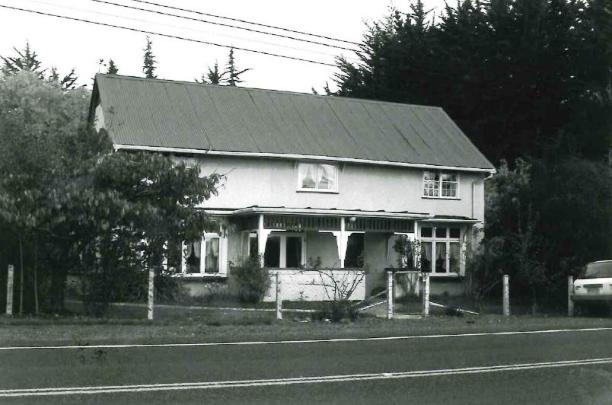
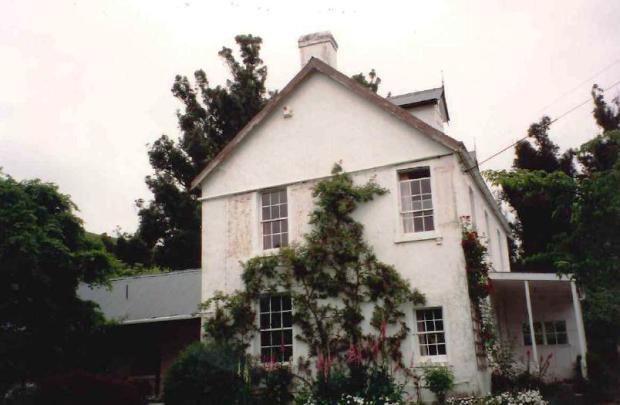
The Taieri Plain is noted for its early European domestic dwellings associated with the establishment of the small settlements. Springbank (as well as Springbank View List No. 5234) is an early example of one of the settlements by the Callander family which forms part of the wider historical landscape of the Taieri Plain. It is a historically significant building tied to the early European settlement and the development of accommodation during the goldrush era and one of the early families of the East Taieri.
From its source, the Taiari [Taieri] River flows almost entirely around Pātearoa (the Rock & Pillar Range) before discharging into Te Tai-o-Āraiteuru (the Otago coastline). Tradition tells us the Taiari and its various waterways was created by the taniwha Makaka who is immortalised as Pukemakamaka / Saddle Hill. Kāi Tahu ki Otago used all areas of the Taiari / Taieri Plain as evidenced by the hundreds of mahika kai sites associated with the numerous waterways, lakes and wetlands in the area, which was one of the most significant food baskets of the Otago region. The Ōwhiro Stream flows across the Taiari Plain into the Taiari River near the Allanton township, west of Mosgiel. The name Ōwhiro was used to denote the eastern part of the Taiari plain.
Rev Thomas Burns arrived in Dunedin on the ship Philip Laing on 15 April 1848. Burns first visited the Taieri Plain in 1849 describing it as “a truly magnificent plain”. Before arriving in New Zealand, Burns purchased rural sections on behalf of the Free Church Trustees and supporters of the Free Church scheme and he chose a large majority from the plain. The first road from Dunedin to the Taieri Plains was constructed in 1849, and with this farms and houses began to be constructed along this road.
Springbank is located on the Main South Road, (formerly Main District Road), opposite Gladfield Road. Built in the 1860s, it began its life as accommodation and a hotel which became an important stopping place during the goldrush era. After losing its liquor licence in 1888, it became an accommodation house for a few years before becoming a private residence.
Husband and wife Alexander Adam and Agnes Jack Callander arrived on the Robert Henderson in 1858 with children James Adam (1838-1910), John Adam (1840-1927) and Elizabeth (1843-1889). Alexander had been a Rag and Waste merchant and Agnes was midwife. Nearby the family built the house known as Springbank View (List No. 5234). An 1860 advertisement for Spring Bank Hotel states, “Mr A Callander now has his house ready for the accommodation of travellers”.
It was not without controversy that Alexander Callander was first issued a liquor licence in 1861 – a letter to the Otago Witness stated:
“The party who has got the license is about the last man in the district who should have got it. The house has for some time back been used as an illicit grog shop, and, from Callander's own admission, without his knowledge. He likes the stuff he deals in too well to be entrusted with its dispensation to others.”
Alexander was granted a licence which he held until 1868 when John Jenkins took over the license. Jenkins advertised he had completed “extensive improvements upon the internal arrangements and decorations” of the Hotel.
In its heyday Springbank was one of the many roadside inns offering accommodation and refreshments to travellers making their way to the Otago Goldfields. Long after the gold rush was over waggons would leave Dunedin twice a week in the afternoon, spend the night at Springbank and leave again at 5am.
Some early mining reminiscences of the hotel’s heyday mention that the wooden building that stands today was not the first house there.
“We started from the Taieri, and one of the first stopping places was Springbank, at an old house that was pulled down years ago to make way for a newer building which is a monument of enterprise of the late Alexander Callander. This was at one time the busiest place at East Taieri.”
“One of the houses on the road at that time was known as Springbank. It was a clay house with a thatched roof, as most of the houses were then; but a commodious wooden house was built afterwards, which stands to the present day.”
Springbank was originally a wooden building with seven slash windows upstairs for seven small bedrooms. Downstairs there were four doors and three windows. At a later unknown date many of the sash windows along the front of the second storey were boarded up and three new sets of windows added. The exterior was later roughcast. The original windows on the ground floor have also been altered to casement bay windows, and there are no longer four doors along the front. The interior has been heavily altered and for many years the second storey, which has had its partitions removed, remained empty. The 10 cm wide Baltic pine floorboards and 12 cm long hand forge nails are evidence that this hotel is dated from the 1860s, though this was the second hotel built after 1860.
Alexander advertised his farm and stock for sale in December 1872 as he was “giving up farming and dairying”. He died at the Springbank View in July 1873 aged 65. From 1875, his sons J and JA Callander are listed as owners.
In 1887 Daniel Fisher held the license for the hotel and alleged he was ejected from the hotel by the Callanders. The property was advertised for lease and Fisher sold the chattels, furniture and livestock associated with Springbank. The Callanders then went to court to transfer the licence (and the lease) to Elizabeth Mercer. The Springbank Hotel had been closed as a public house for six months since Fisher had vacated however the husband of Mrs Mercer had been convicted for selling liquor there without a licence. The Springbank Hotel became unlicensed from this time in 1888 where the transfer of license was declined.
In 1902 the property came up for let for a 12-year period, which included “the Springbank Accommodation House, so long and favourably known as a waggoners and drovers camp”. At this time the Milton and Lawrence Waggoners still used the place to camp. James died in 1910 aged 70 and his brother John died in 1927. There were various owners of the property from this time but there are no building permits until the late 1930s for the area. Mr RD Reid brought the property in 1965 and planted the then holding paddock for horses with blackcurrant trees. He employed 50 staff during fruit picking season. In 1978 John and Julie Eaton purchased the property and started renovations.
In 1981 WJ (Bill) Ramsay became the new owner and he discovered some old newspapers that had been put in the walls for insulation dated 1933. Disaster struck when the house caught on fire on 26 May 1983 and quick actions from a passing motorist meant the building was saved. A 1950s addition was removed in 2004 and the building was painted from pink to white c2010-12. It remains a private dwelling.
From its source, the Taiari [Taieri] River flows almost entirely around Pātearoa (the Rock & Pillar Range) before discharging into Te Tai-o-Āraiteuru (the Otago coastline). Tradition tells us the Taiari and its various waterways was created by the taniwha Makaka who is immortalised as Pukemakamaka / Saddle Hill. Kāi Tahu ki Otago used all areas of the Taiari / Taieri Plain as evidenced by the hundreds of mahika kai sites associated with the numerous waterways, lakes and wetlands in the area, which was one of the most significant food baskets of the Otago region. The Ōwhiro Stream flows across the Taiari Plain into the Taiari River near the Allanton township, west of Mosgiel. The name Ōwhiro was used to denote the eastern part of the Taiari plain.
Rev Thomas Burns arrived in Dunedin on the ship Philip Laing on 15 April 1848. Burns first visited the Taieri Plain in 1849 describing it as “a truly magnificent plain”. Before arriving in New Zealand, Burns purchased rural sections on behalf of the Free Church Trustees and supporters of the Free Church scheme and he chose a large majority from the plain. The first road from Dunedin to the Taieri Plains was constructed in 1849, and with this farms and houses began to be constructed along this road.
Springbank is located on the Main South Road, (formerly Main District Road), opposite Gladfield Road. Built in the 1860s, it began its life as accommodation and a hotel which became an important stopping place during the goldrush era. After losing its liquor licence in 1888, it became an accommodation house for a few years before becoming a private residence.
Husband and wife Alexander Adam and Agnes Jack Callander arrived on the Robert Henderson in 1858 with children James Adam (1838-1910), John Adam (1840-1927) and Elizabeth (1843-1889). Alexander had been a Rag and Waste merchant and Agnes was midwife. Nearby the family built the house known as Springbank View (List No. 5234). An 1860 advertisement for Spring Bank Hotel states, “Mr A Callander now has his house ready for the accommodation of travellers”.
It was not without controversy that Alexander Callander was first issued a liquor licence in 1861 – a letter to the Otago Witness stated:
“The party who has got the license is about the last man in the district who should have got it. The house has for some time back been used as an illicit grog shop, and, from Callander's own admission, without his knowledge. He likes the stuff he deals in too well to be entrusted with its dispensation to others.”
Alexander was granted a licence which he held until 1868 when John Jenkins took over the license. Jenkins advertised he had completed “extensive improvements upon the internal arrangements and decorations” of the Hotel.
In its heyday Springbank was one of the many roadside inns offering accommodation and refreshments to travellers making their way to the Otago Goldfields. Long after the gold rush was over waggons would leave Dunedin twice a week in the afternoon, spend the night at Springbank and leave again at 5am.
Some early mining reminiscences of the hotel’s heyday mention that the wooden building that stands today was not the first house there.
“We started from the Taieri, and one of the first stopping places was Springbank, at an old house that was pulled down years ago to make way for a newer building which is a monument of enterprise of the late Alexander Callander. This was at one time the busiest place at East Taieri.”
“One of the houses on the road at that time was known as Springbank. It was a clay house with a thatched roof, as most of the houses were then; but a commodious wooden house was built afterwards, which stands to the present day.”
Springbank was originally a wooden building with seven slash windows upstairs for seven small bedrooms. Downstairs there were four doors and three windows. At a later unknown date many of the sash windows along the front of the second storey were boarded up and three new sets of windows added. The exterior was later roughcast. The original windows on the ground floor have also been altered to casement bay windows, and there are no longer four doors along the front. The interior has been heavily altered and for many years the second storey, which has had its partitions removed, remained empty. The 10 cm wide Baltic pine floorboards and 12 cm long hand forge nails are evidence that this hotel is dated from the 1860s, though this was the second hotel built after 1860.
Alexander advertised his farm and stock for sale in December 1872 as he was “giving up farming and dairying”. He died at the Springbank View in July 1873 aged 65. From 1875, his sons J and JA Callander are listed as owners.
In 1887 Daniel Fisher held the license for the hotel and alleged he was ejected from the hotel by the Callanders. The property was advertised for lease and Fisher sold the chattels, furniture and livestock associated with Springbank. The Callanders then went to court to transfer the licence (and the lease) to Elizabeth Mercer. The Springbank Hotel had been closed as a public house for six months since Fisher had vacated however the husband of Mrs Mercer had been convicted for selling liquor there without a licence. The Springbank Hotel became unlicensed from this time in 1888 where the transfer of license was declined.
In 1902 the property came up for let for a 12-year period, which included “the Springbank Accommodation House, so long and favourably known as a waggoners and drovers camp”. At this time the Milton and Lawrence Waggoners still used the place to camp. James died in 1910 aged 70 and his brother John died in 1927. There were various owners of the property from this time but there are no building permits until the late 1930s for the area. Mr RD Reid brought the property in 1965 and planted the then holding paddock for horses with blackcurrant trees. He employed 50 staff during fruit picking season. In 1978 John and Julie Eaton purchased the property and started renovations.
In 1981 WJ (Bill) Ramsay became the new owner and he discovered some old newspapers that had been put in the walls for insulation dated 1933. Disaster struck when the house caught on fire on 26 May 1983 and quick actions from a passing motorist meant the building was saved. A 1950s addition was removed in 2004 and the building was painted from pink to white c2010-12. It remains a private dwelling.