The building was the second bank building to be constructed in the town. The Bank of New Zealand was persuaded to open its first bank in the county following the inaugural meeting of the Waimarino County Council in 1903. The newly appointed members of council resolved to instruct the Clerk to write to the directors of the Bank of New Zealand about 'establishing a branch of the Bank in Raetihi'. Later that year a committee was appointed to gather information on Raetihi that could be presented to the Bank's Board of Directors, in order to support their case for a bank at Raetihi. Two years later, the first bank in the County was opened at Raetihi under the management of Mr. A. L. Hempton. It was a small, plain, single-storey structure, clad in sawn timber weatherboards, and sheltered by a corrugated iron roof. As the town expanded following the opening of the Main Trunk Line in 1908, it became clear that more substantial premises were required.
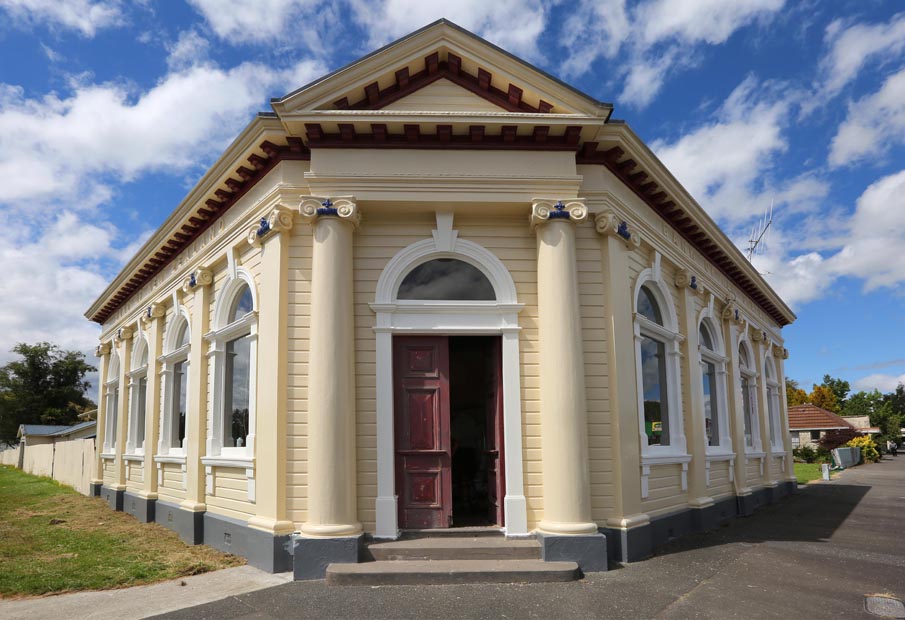
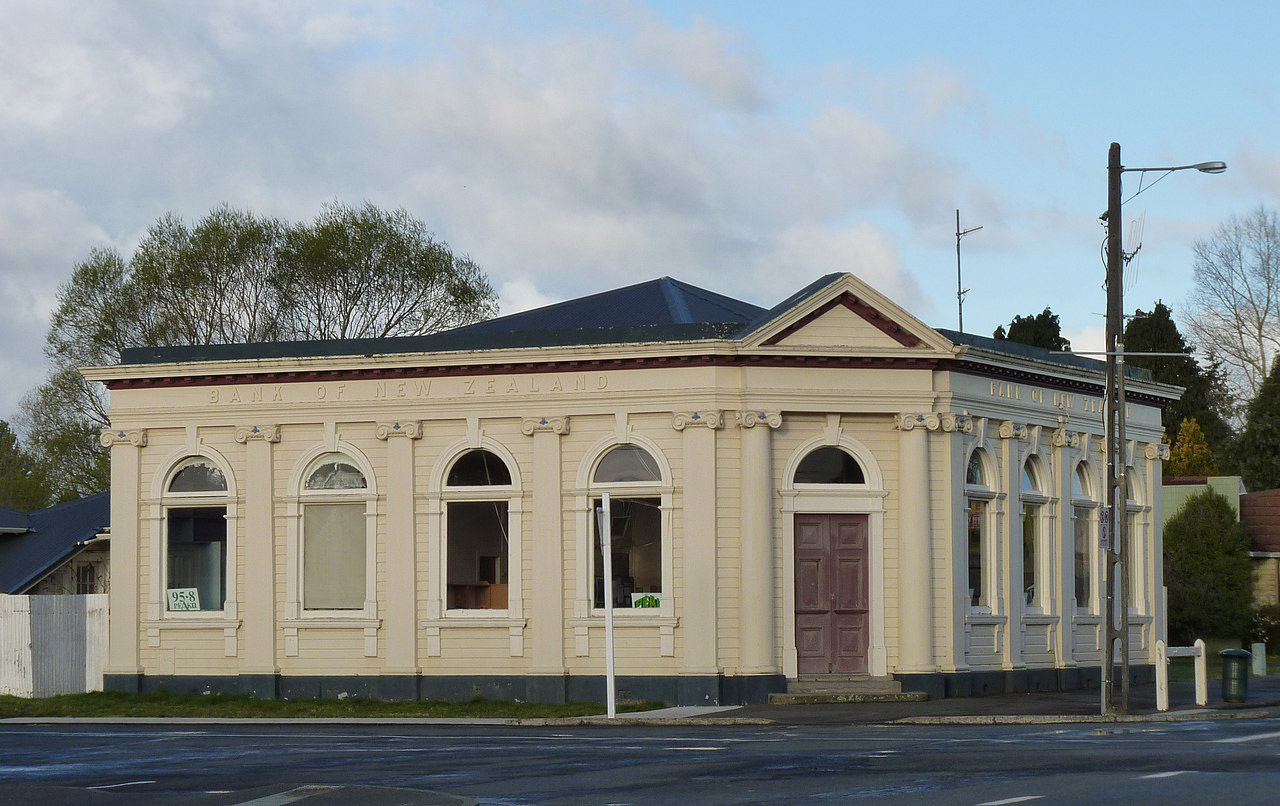
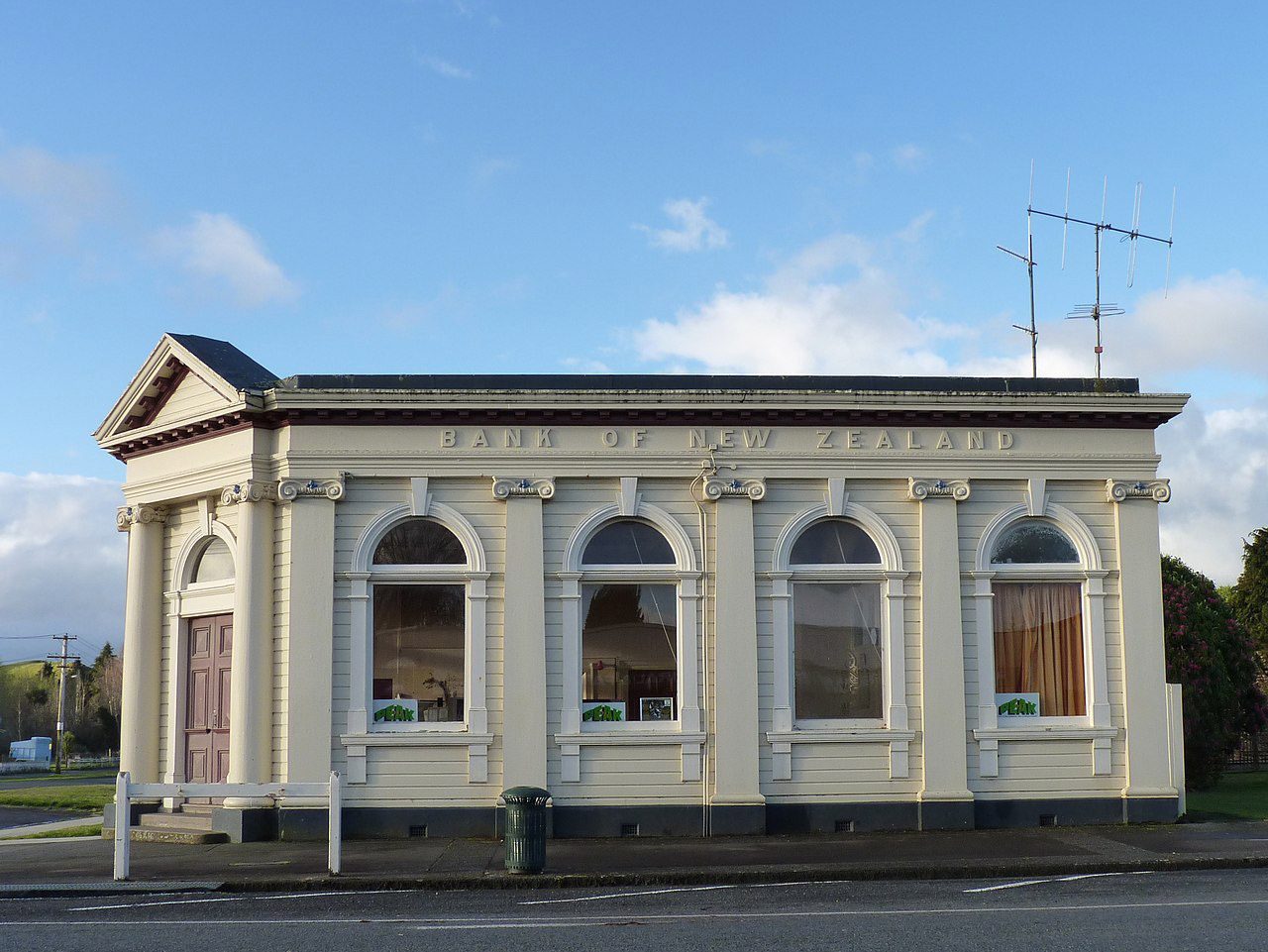
In 1910 the eminent architect Joshua Charlesworth (1861-1925) was commissioned to design a bank building for Raetihi. Charlesworth, who is best known for his design of the Wellington Town Hall, was responsible for designing 17 branches of the Bank of New Zealand between 1907 and 1917. The building was situated on a corner site purchased from Karioi Station Manager Edward McDonnell by the Bank in 1899. To take full advantage of the site, Charlesworth designed the building with a double frontage. Described in the local papers when completed as a 'Colonial Composite of Tuscan-Roman-Ionic design', the building featured Tuscan style three-quarter plaster columns over the main entrance. The entrance was further distinguished by a 'glory' pedestal, which had ornamentally carved brackets. The nine windows had plate glass embossed with the bank's logo. The interior included a grand banking chamber, a manager's room and a stationary room, a large strong room, two bedrooms and a bathroom. At the rear, Charlesworth provided a combined stables and feedhouse. Described as the first building of its class in Waimarino, the bank was constructed by a Mr. Upton at the cost of £2000 and was officially opened to the public on St Patrick's Day, 17 March 1911.
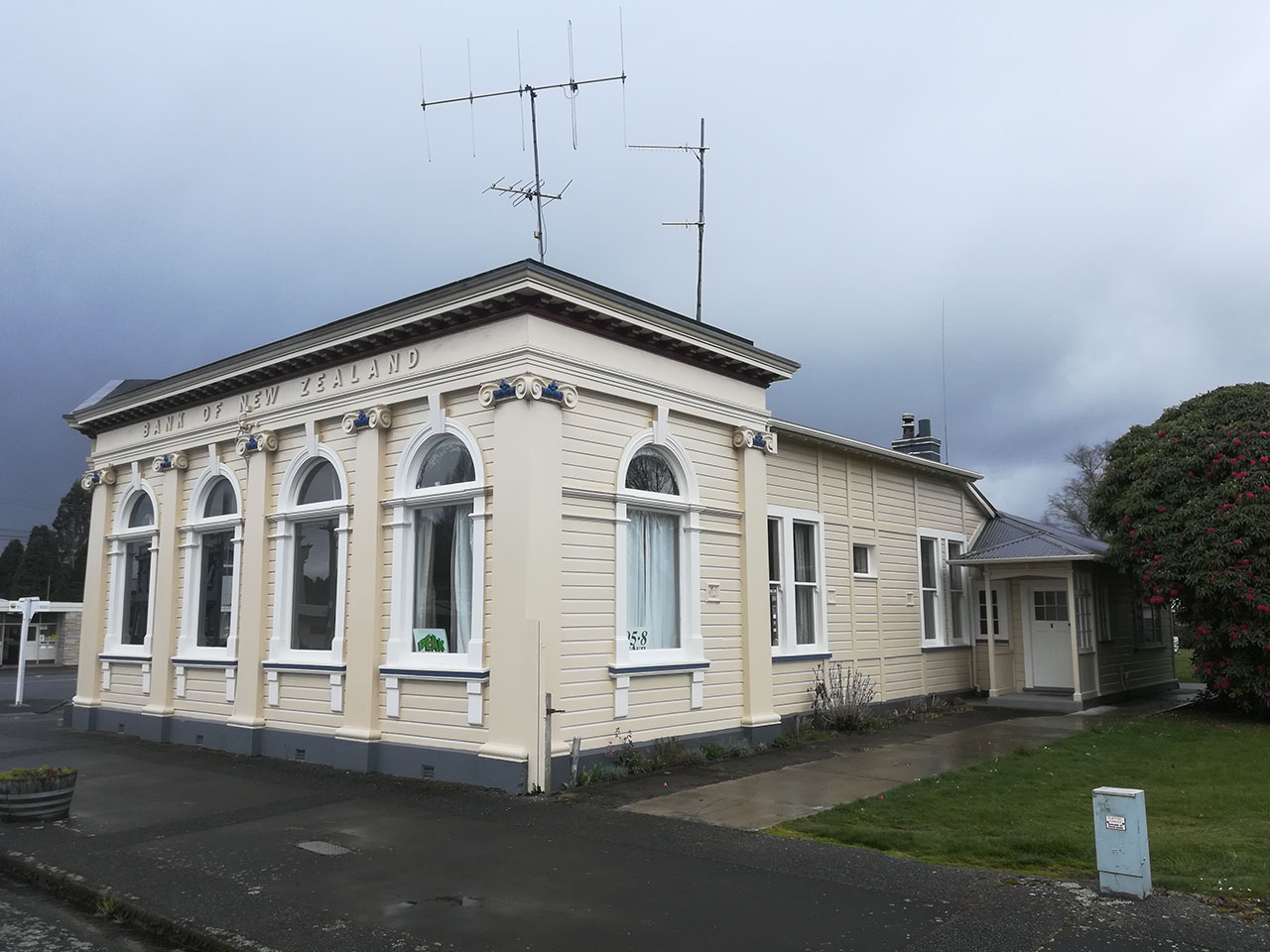
As was traditional, the BNZ provided accommodation for its managers and senior staff and the first manager of new bank at Raetihi, T. M. Butts, resided on the Bank premises. By the 1930s, however, when F. L. Smith was manager, the BNZ funded the construction of a new, more spacious, residence at the rear of the building. The Wellington-based architectural firm Thomas Turnbull & Son was commissioned to design the structure and carry out minor repairs to the bank interior. At the cost of just over £1914 the firm added a bungalow style extension, which incorporated a dining room, drawing room, sunroom, small kitchenette and a porch. The stables and feedhouse were converted into a workshop and garage.
The Bank, the first in the Waimarino County and a survivor of the great 1918 fire, was for many years the main bank in the area. It had an average of 8 staff and in the 1950s allegedly managed over 700 accounts. Over time, as other towns in the area grew in size, the importance of the Bank declined. Bank staff last used the accommodation at the rear of the structure in 1986. Ten years later in 1996, the Bank building was closed and was sold into private hands. The residence at the rear is leased to tenants, while the Bank building is currently used as the base for a local radio station.
List Entry Information
Status
Listed
List Entry Status
Historic Place Category 2
Access
Private/No Public Access
List Number
963
Date Entered
11th December 2003
Date of Effect
11th December 2003
City/District Council
Ruapehu District
Region
Horizons (Manawatū-Whanganui) Region
Extent of List Entry
Registration includes building, residence (attached) and stables to the rear of the structure.
Legal description
Sec 52 Blk IV, Township of Raetihi (RT 96/252), Wellington Land District
Location Description
Located on the corner of Seddon and Duncan Streets, Raetihi
Status
Listed
List Entry Status
Historic Place Category 2
Access
Private/No Public Access
List Number
963
Date Entered
11th December 2003
Date of Effect
11th December 2003
City/District Council
Ruapehu District
Region
Horizons (Manawatū-Whanganui) Region
Extent of List Entry
Registration includes building, residence (attached) and stables to the rear of the structure.
Legal description
Sec 52 Blk IV, Township of Raetihi (RT 96/252), Wellington Land District
Location Description
Located on the corner of Seddon and Duncan Streets, Raetihi
Why is this place significant?
Historic Significance
Historical Significance or Value The Bank of New Zealand at Raetihi is significant as the first substantial commercial building in the Waimarino County and as the oldest commercial structures remaining standing in Raetihi. Its construction demonstrates the growing confidence in the town as an economic centre after the opening of the Main Trunk Line in 1908. It has historical significance as the region's earliest surviving bank, and reflects the development and spread of the BNZ, one of New Zealand's major financial institutions. The elegant, solid design of the structure, with elements of Classical architecture, reflects the BNZ's desire to project an impression of stability, permanence and dignity. Designed by notable Wellington architect Joshua Charlesworth, the building has considerable aesthetic appeal and makes an important contribution to Raetihi's streetscape. The former stables, and the residence at the rear of the structure, demonstrate the relationship between public and private life in the early twentieth century. Highly valued by the local community, the Bank at Raetihi is an integral part of the heritage of Waimarino County.
Why is this place Category 1 / Category 2?
Detail Of Assessed Criteria
(a) The extent to which the place reflects important or representative aspects of New Zealand history: The Bank is representative of the growth and development of the Bank of New Zealand, one of the country's major financial institutions. Its design is typical of the style used for banking chambers in small towns and suburban areas in the early twentieth century. The inclusion of a residence, and transport facilities demonstrate the relationship between public and private life in the early twentieth century. (b) The association of the place with events, persons, or ideas of importance in New Zealand history: The bank was designed by notable architect Joshua Charlesworth. (c) The potential of the place to provide knowledge of New Zealand history: The Bank is significant as the first substantial commercial building in the Waimarino County and as the oldest commercial structures remaining standing in Raetihi. Its construction demonstrates the growing confidence in the town as an economic centre after the opening of the Main Trunk Line in 1908. (e) The community association with, or public esteem for, the place: The local community hold the bank in high esteem. It is an important landmark on the main street of Raetihi and is the region's earliest surviving bank. (g) The technical accomplishment or value, or design of the place: The bank is a well preserved example of the design skills of architects Joshua Charlesworth and the firm Thomas Turnbull & Sons. A 'Colonial Composite of Tuscan-Roman-Ionic design', the building reflects a sense of permanence, elegance and affluence.
Why is this place significant?
Historic Significance
Historical Significance or Value The Bank of New Zealand at Raetihi is significant as the first substantial commercial building in the Waimarino County and as the oldest commercial structures remaining standing in Raetihi. Its construction demonstrates the growing confidence in the town as an economic centre after the opening of the Main Trunk Line in 1908. It has historical significance as the region's earliest surviving bank, and reflects the development and spread of the BNZ, one of New Zealand's major financial institutions. The elegant, solid design of the structure, with elements of Classical architecture, reflects the BNZ's desire to project an impression of stability, permanence and dignity. Designed by notable Wellington architect Joshua Charlesworth, the building has considerable aesthetic appeal and makes an important contribution to Raetihi's streetscape. The former stables, and the residence at the rear of the structure, demonstrate the relationship between public and private life in the early twentieth century. Highly valued by the local community, the Bank at Raetihi is an integral part of the heritage of Waimarino County.
Why is this place Category 1 / Category 2?
Detail Of Assessed Criteria
(a) The extent to which the place reflects important or representative aspects of New Zealand history: The Bank is representative of the growth and development of the Bank of New Zealand, one of the country's major financial institutions. Its design is typical of the style used for banking chambers in small towns and suburban areas in the early twentieth century. The inclusion of a residence, and transport facilities demonstrate the relationship between public and private life in the early twentieth century. (b) The association of the place with events, persons, or ideas of importance in New Zealand history: The bank was designed by notable architect Joshua Charlesworth. (c) The potential of the place to provide knowledge of New Zealand history: The Bank is significant as the first substantial commercial building in the Waimarino County and as the oldest commercial structures remaining standing in Raetihi. Its construction demonstrates the growing confidence in the town as an economic centre after the opening of the Main Trunk Line in 1908. (e) The community association with, or public esteem for, the place: The local community hold the bank in high esteem. It is an important landmark on the main street of Raetihi and is the region's earliest surviving bank. (g) The technical accomplishment or value, or design of the place: The bank is a well preserved example of the design skills of architects Joshua Charlesworth and the firm Thomas Turnbull & Sons. A 'Colonial Composite of Tuscan-Roman-Ionic design', the building reflects a sense of permanence, elegance and affluence.
Construction Professional
Name
Turnbull, Thomas
Type
Architect
Biography
Thomas Turnbull (1824-1907) was born and educated in Scotland and trained under David Bryce, Her Majesty's Architect. He travelled to Melbourne in 1851 and after nine years there moved to San Francisco. He arrived in New Zealand in 1871 and soon established a thriving business. His son William, a distinguished architect in his own right, became a partner in the firm in 1891. Turnbull was a member of the Royal Institute of British Architects. He was a pioneer in the design of buildings to withstand earthquakes and he was responsible for breaking down prejudice against the use of permanent materials for building construction. He specialised in masonry construction for commercial purposes but was also responsible for some fine houses. Among his most important buildings were the Willis Street churches of St Peter (1879) and St John (1885), the former National Mutual Building (1883-84), the General Assembly Library (1899) and the former Bank of New Zealand Head Office (1901), all in Wellington.
Name
Mr. Upton
Type
Builder
Biography
No biography is currently available for this construction professional
Name
Charlesworth, Joshua
Type
Architect
Biography
Charlesworth (1861-1925) was born in Yorkshire and the first record of his practice in Wellington was in the New Zealand Post Office Directory of 1885-87. He won a competition for the design of the Home for the Aged and Needy in June, 1887, and in the same year won another for the design of the Nelson Town Hall. Charlesworth set up practice in Wellington in his early twenties, designing many institutional buildings and showing command of the revival styles of architecture. His work includes the Wellington Town Hall (1901), Brancepeth Station Homestead addition, Wairarapa (1905), Te Aro Post Office (1908), St Hilda's Church, Upper Hutt (1909), and seventeen branch banks for the Bank of New Zealand, situated throughout the country (1907-17). Charlesworth was elected a Fellow of the New Zealand Institute of Architects in 1905, and became a life member of the Institute. He was its vice-president in 1909-10, and was the first chairman of a society of architects which was formed in 1912. Charlesworth also belonged to the Yorkshire Society in Wellington and was its president for many years.
Construction Details
Start Year
1899
Type
Other
Description
Land purchased by BNZ from Edward Daniell
Start Year
1905
Type
Other
Description
First BNZ opened in Raetihi
Start Year
1910
Type
Designed
Description
Building designed (Joshua Charlesworth)
Start Year
1910
Type
Original Construction
Description
Construction commences (Mr. Upton)
Start Year
1911
Type
Original Construction
Description
Construction completed (bank opened)
Start Year
1938
Type
Other
Description
Extensions to the rear of BNZ designed (Thomas Turnbull & Son)
Start Year
1938
Type
Addition
Description
Extensions completed (builder's name unclear)
Start Year
1960
Type
Other
Description
Slight damage to west wall following accidental fire
Start Year
1996
Type
Other
Description
Bank closed and sold into private ownership
Construction Materials
The Bank of New Zealand (former) at Raetihi rests on concrete foundations and is constructed around a wooden frame. Study of similar banks suggests that the columns have a core of brick, and are covered over with plaster to give them the appearance of stone.
Notable Features
Registration includes the building, residence (attached), and the stables (former) to the rear.
Construction Professional
Name
Turnbull, Thomas
Type
Architect
Biography
Thomas Turnbull (1824-1907) was born and educated in Scotland and trained under David Bryce, Her Majesty's Architect. He travelled to Melbourne in 1851 and after nine years there moved to San Francisco. He arrived in New Zealand in 1871 and soon established a thriving business. His son William, a distinguished architect in his own right, became a partner in the firm in 1891. Turnbull was a member of the Royal Institute of British Architects. He was a pioneer in the design of buildings to withstand earthquakes and he was responsible for breaking down prejudice against the use of permanent materials for building construction. He specialised in masonry construction for commercial purposes but was also responsible for some fine houses. Among his most important buildings were the Willis Street churches of St Peter (1879) and St John (1885), the former National Mutual Building (1883-84), the General Assembly Library (1899) and the former Bank of New Zealand Head Office (1901), all in Wellington.
Name
Mr. Upton
Type
Builder
Biography
No biography is currently available for this construction professional
Name
Charlesworth, Joshua
Type
Architect
Biography
Charlesworth (1861-1925) was born in Yorkshire and the first record of his practice in Wellington was in the New Zealand Post Office Directory of 1885-87. He won a competition for the design of the Home for the Aged and Needy in June, 1887, and in the same year won another for the design of the Nelson Town Hall. Charlesworth set up practice in Wellington in his early twenties, designing many institutional buildings and showing command of the revival styles of architecture. His work includes the Wellington Town Hall (1901), Brancepeth Station Homestead addition, Wairarapa (1905), Te Aro Post Office (1908), St Hilda's Church, Upper Hutt (1909), and seventeen branch banks for the Bank of New Zealand, situated throughout the country (1907-17). Charlesworth was elected a Fellow of the New Zealand Institute of Architects in 1905, and became a life member of the Institute. He was its vice-president in 1909-10, and was the first chairman of a society of architects which was formed in 1912. Charlesworth also belonged to the Yorkshire Society in Wellington and was its president for many years.
Construction Details
Start Year
1899
Type
Other
Description
Land purchased by BNZ from Edward Daniell
Start Year
1905
Type
Other
Description
First BNZ opened in Raetihi
Start Year
1910
Type
Designed
Description
Building designed (Joshua Charlesworth)
Start Year
1910
Type
Original Construction
Description
Construction commences (Mr. Upton)
Start Year
1911
Type
Original Construction
Description
Construction completed (bank opened)
Start Year
1938
Type
Other
Description
Extensions to the rear of BNZ designed (Thomas Turnbull & Son)
Start Year
1938
Type
Addition
Description
Extensions completed (builder's name unclear)
Start Year
1960
Type
Other
Description
Slight damage to west wall following accidental fire
Start Year
1996
Type
Other
Description
Bank closed and sold into private ownership
Construction Materials
The Bank of New Zealand (former) at Raetihi rests on concrete foundations and is constructed around a wooden frame. Study of similar banks suggests that the columns have a core of brick, and are covered over with plaster to give them the appearance of stone.
Notable Features
Registration includes the building, residence (attached), and the stables (former) to the rear.
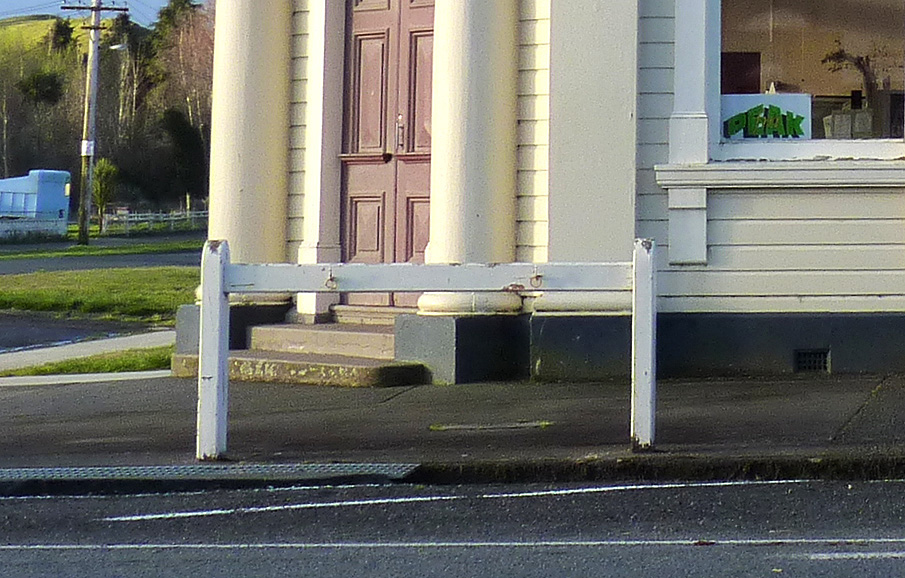
The building is a single storey structure situated on the intersection of Seddon and Duncan Streets in Raetihi. The main entrance of the building is located at the corner, and the elaborate facade extends along the walls facing the two streets. It is constructed from wood, with columns made from brick covered with plaster to give appearance of stone. It is a 'Colonial Composite of Tuscan-Roman-Ionic design' and features Tuscan style three-quarter plaster columns with ionic entablatures flanking the main entrance. A 'glory' pedestal, with ornamentally carved brackets surmounts the entrance. The nine windows along the main facade were originally embossed plate glass. Only one of these now remains, the rest being replaced with plain glass. The entrance leads into the grand banking chamber, which features a polished wood door surround and an ornate ceiling. The original wooden wall panels survive underneath a modern covering. The managers' room, currently leased by a local radio station, remains in tact, as does the original strongroom, and strong room door. At the rear of the structure is the former manager's residence, which was added to the building in 1938. This bungalow style addition features polished wooden doors, and remains close to its original condition. At the rear of the section, on the Duncan Street side of the property, is the original stables and feedroom, converted into a garage and workshop in 1938. This single storey, rectangular structure is made from timber, with concrete floors, and a corrugated iron roof.
Historical and Associated Iwi / Hapū / Whānau
Completion Date
11th December 2003
Report Written By
Rebecca O'Brien
Information Sources
Ruapehu Bulletin
Ruapehu Bulletin
Waimarino Bulletin
Waimarino Bulletin
BNZ Archives
Bank of New Zealand (BNZ) Archives
Other Information
The restoration of the Bank of New Zealand (Former) was awarded the Award Plaque and Rangitikei and Rural award in the Whanganui Regional Heritage Awards 2020. A fully referenced version of this report is available from the Central Region of the NZHPT. Please note that entry on the New Zealand Heritage List/Rarangi Korero identifies only the heritage values of the property concerned, and should not be construed as advice on the state of the property, or as a comment of its soundness or safety, including in regard to earthquake risk, safety in the event of fire, or insanitary conditions.
Historical and Associated Iwi / Hapū / Whānau
Completion Date
11th December 2003
Report Written By
Rebecca O'Brien
Information Sources
Ruapehu Bulletin
Ruapehu Bulletin
Waimarino Bulletin
Waimarino Bulletin
BNZ Archives
Bank of New Zealand (BNZ) Archives
Other Information
The restoration of the Bank of New Zealand (Former) was awarded the Award Plaque and Rangitikei and Rural award in the Whanganui Regional Heritage Awards 2020. A fully referenced version of this report is available from the Central Region of the NZHPT. Please note that entry on the New Zealand Heritage List/Rarangi Korero identifies only the heritage values of the property concerned, and should not be construed as advice on the state of the property, or as a comment of its soundness or safety, including in regard to earthquake risk, safety in the event of fire, or insanitary conditions.
Current Usages
Uses: Trade
Specific Usage: Office building/Offices
Former Usages
General Usage: Finance
Specific Usage: Bank
Current Usages
Uses: Trade
Specific Usage: Office building/Offices
Former Usages
General Usage: Finance
Specific Usage: Bank
Sign up to hear more
Get the latest heritage news, features and events delivered
straight to your inbox.


