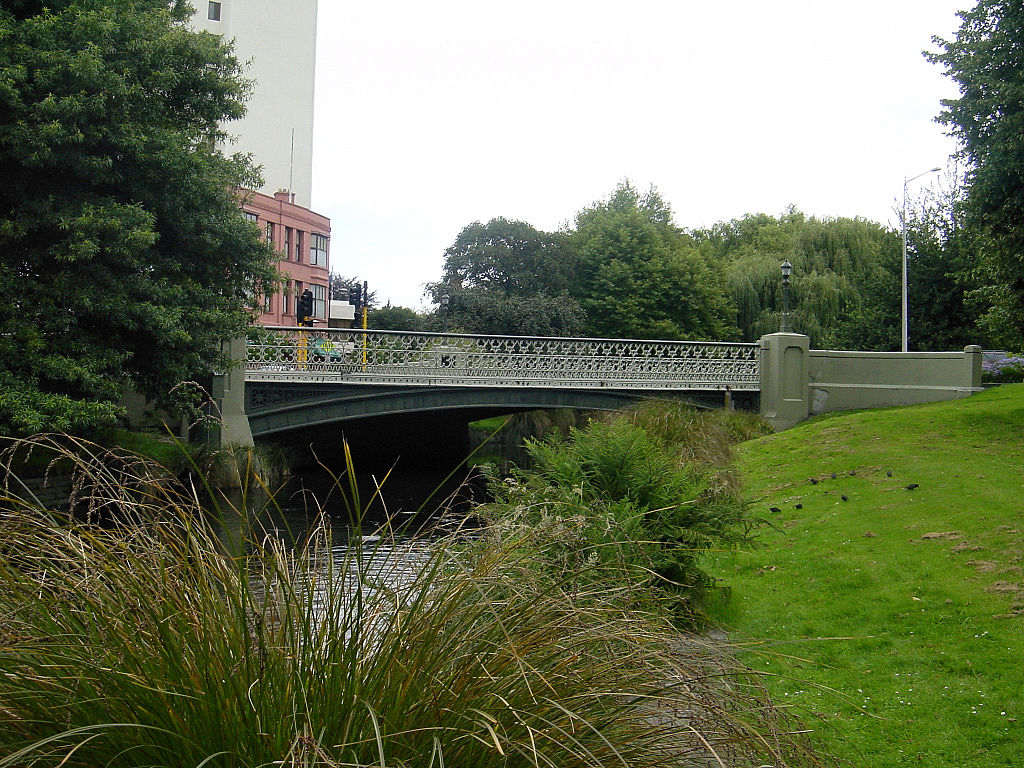
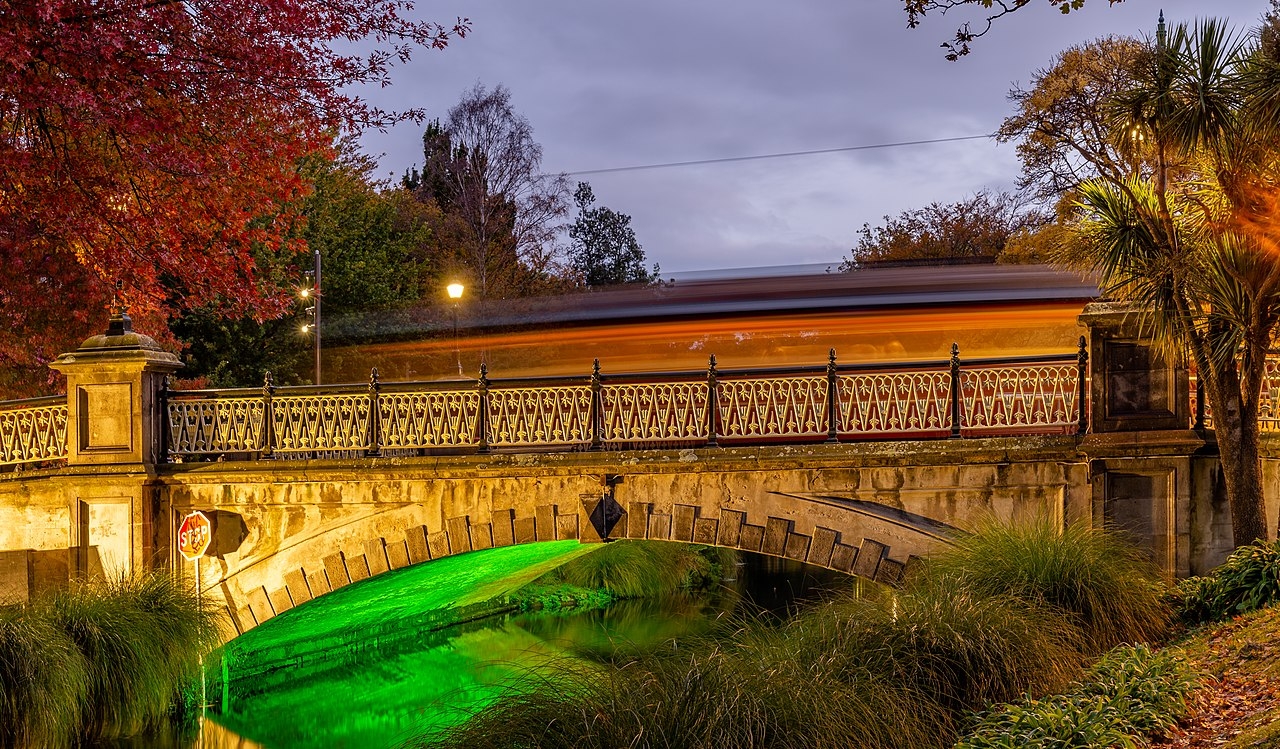
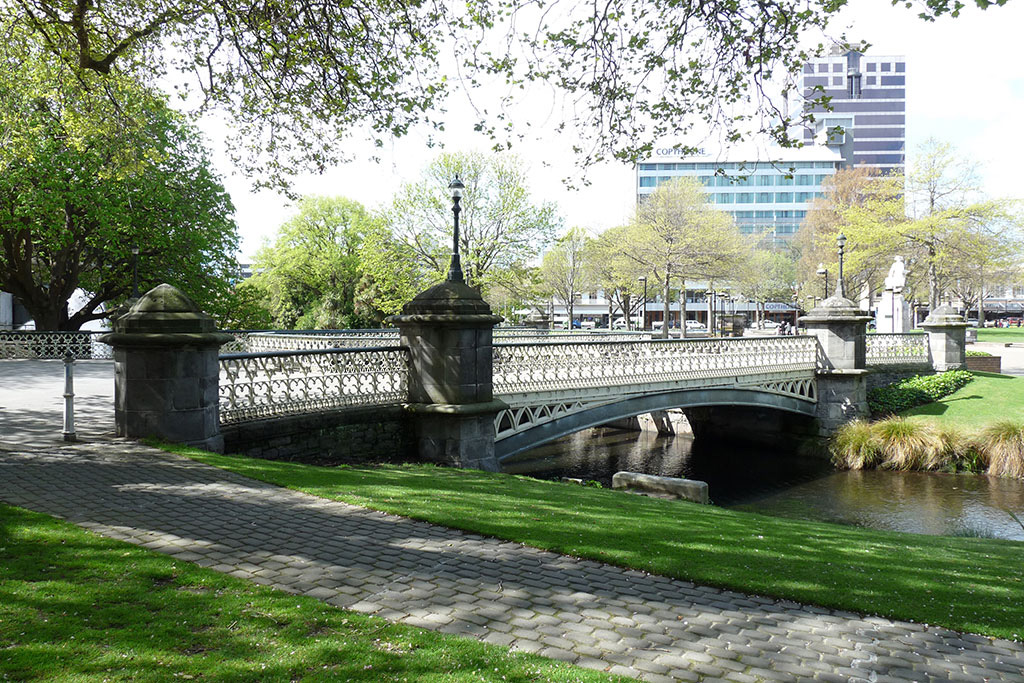
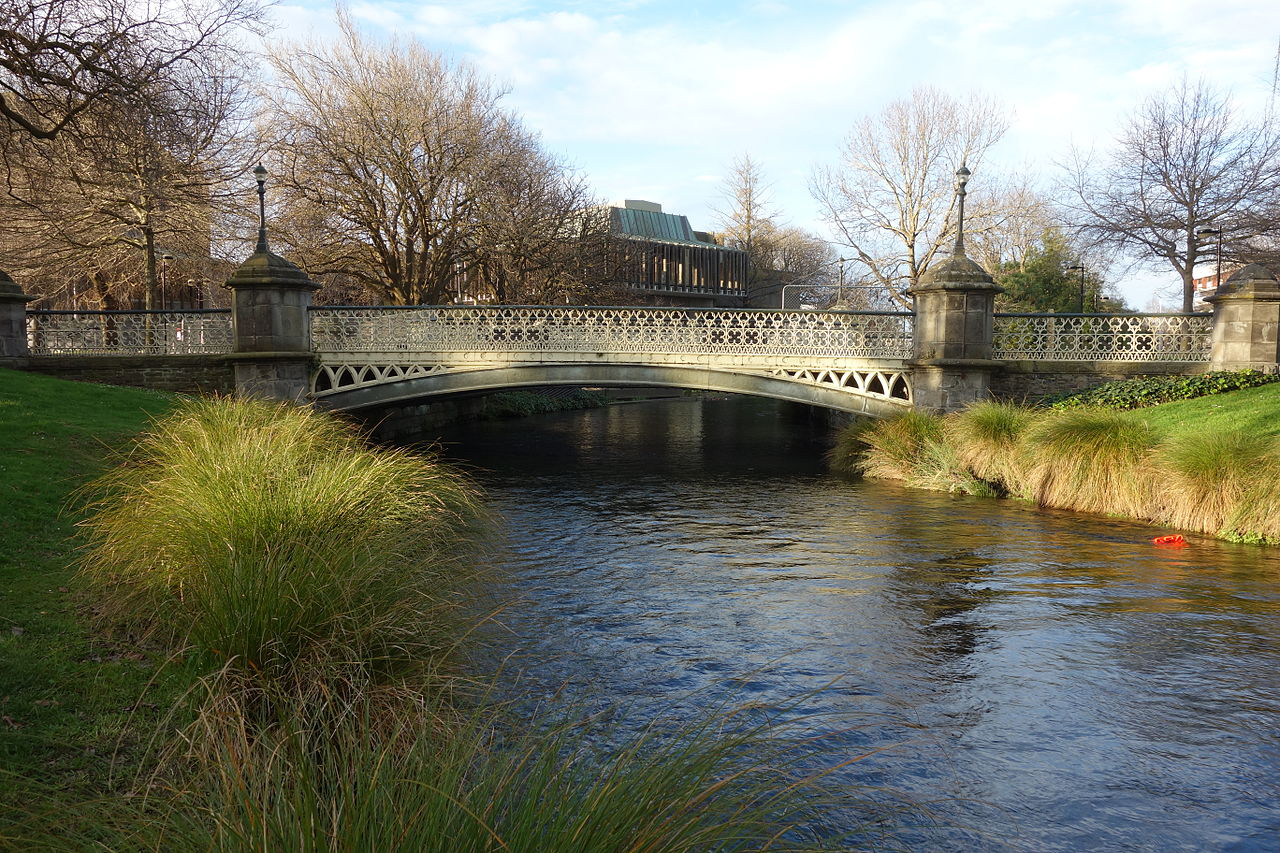
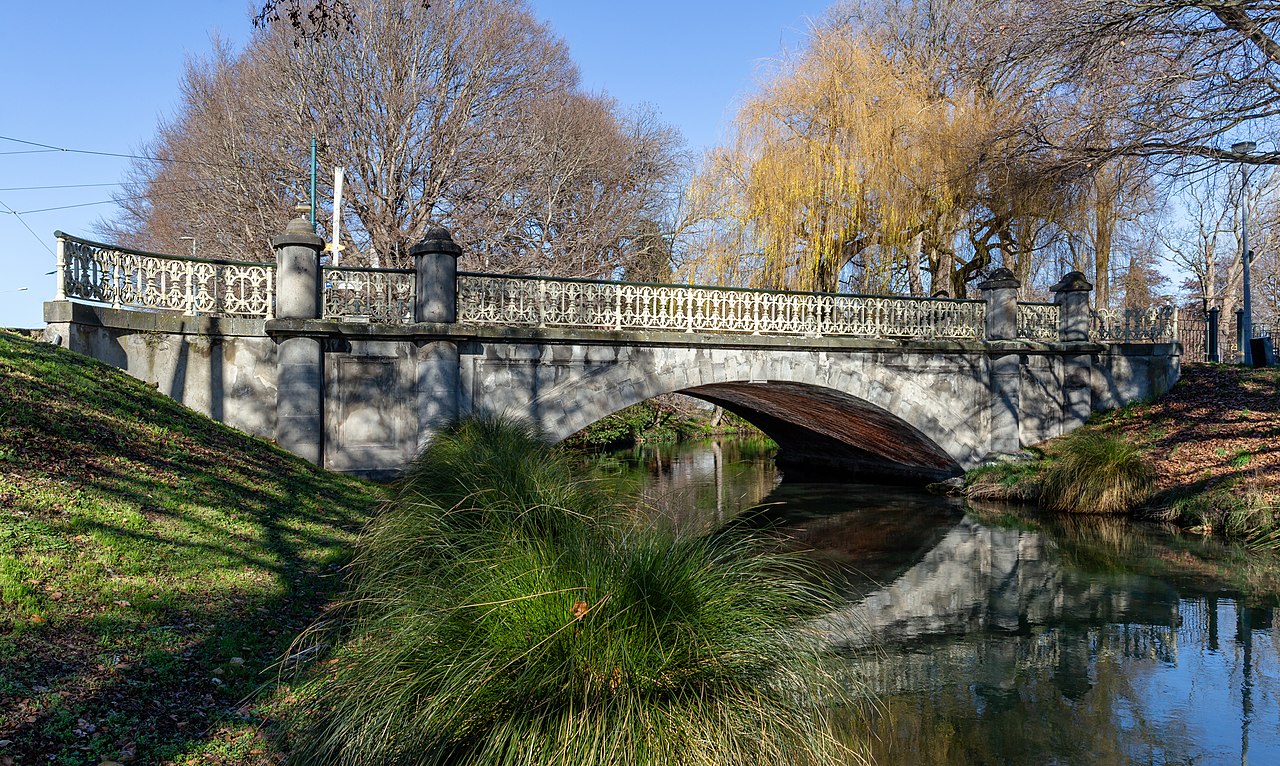
The Canterbury Association survey of Christchurch in 1850 laid out the nascent town in a grid, bisected only by diagonals providing access to the port of Lyttelton and the northern hinterland. Disrupting the regularity of this street pattern however were the sinuous curves of the Avon River. These proved a serious impediment to travel within the city, and necessitated the prompt construction of a series of bridges. Initially simple structures, by the 1880s the majority of these inner city bridges had been replaced in permanent materials. With their fine cast iron railings, they contribute much to the townscape and character of Christchurch.
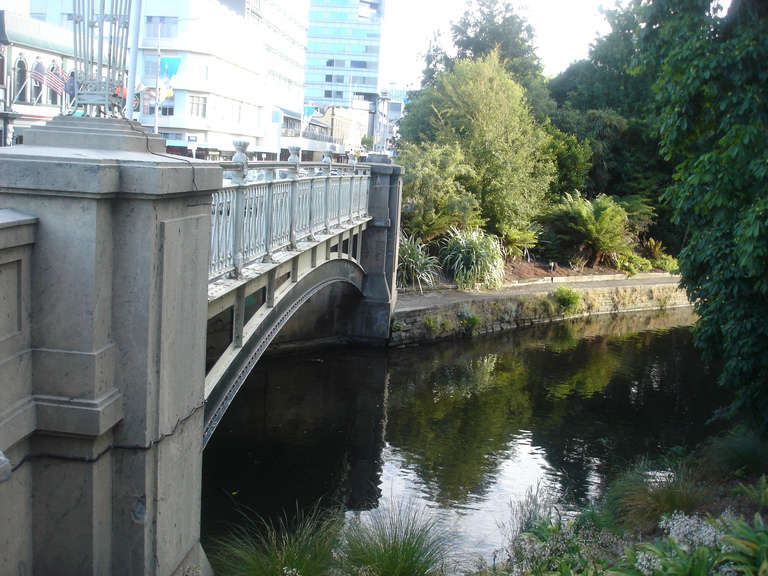
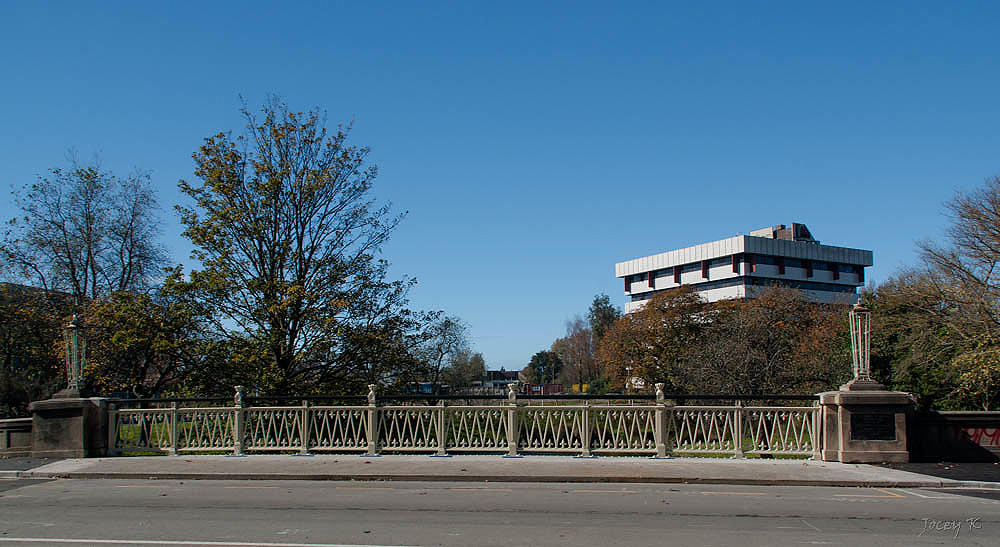
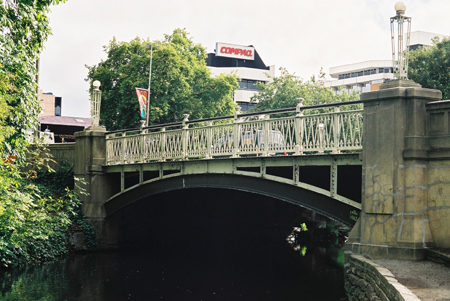
The first bridge across the Avon on Colombo St was erected in 1858 for £329. It was 9 ft wide, and consisted of timber beams in three spans. This bridge was damaged in the Great Flood of 1868 when the north end was swept away, but was repaired. However in 1875 it was replaced with a larger timber bridge at a cost of £328. This survived until 1902, when it in turn was replaced - this time with a 44ft. 9 in. wide steel and concrete structure. This was probably designed by City Surveyor Arthur Dudley Dobson, and built by Langlands and Co. Trams began running across the bridge in 1906, and in 1930 to facilitate their passage, the bridge was widened to 19.14 M by City Engineer A. R. Galbraith and his department. In order to harmonize the bridge with others in the central city, the cast iron balustrade was reinstated within new abutments, and the simple beam structure given an arched side. The original cast iron lamps were however replaced at this time. In 1963 the deteriorating timber deck was replaced with concrete, and an extra beam from the old Fitzgerald Ave Bridge installed to improve the load capacity.
Sir Arthur Dudley Dobson (1841-1934) was born in England, and emigrated with his father Edward Dobson (later Canterbury Provincial Engineer) on the Cressy in 1850. After completing his education at Christ's College in 1858, Dobson was apprenticed to his father. During this period he carried out considerable exploration, discovering Arthur's Pass, and surveying the West Coast. In 1866 Dobson moved to Nelson, where he filled a number of engineering positions. Returning to Christchurch in 1878, father and son formed a partnership. This was dissolved in 1885, and Arthur moved to Melbourne. In 1898 he returned to Christchurch, and was appointed city engineer in 1901. He was knighted in 1931.
Augustus de Rohan Galbraith (1876-1957) was born in England and educated at Winchester. After acquiring many engineering qualifications, he served as Director of Public Works in Zanzibar from 1909, and then as Superintending Engineer with the Royal Australian Navy 1915-18. Prior to his appointment as City Engineer in 1925, Galbraith was serving as City Engineer of Perth. He retired in 1941.
The first bridge across the Avon on Colombo St was erected in 1858 for £329. It was 9 ft wide, and consisted of timber beams in three spans. This bridge was damaged in the Great Flood of 1868 when the north end was swept away, but was repaired. However in 1875 it was replaced with a larger timber bridge at a cost of £328. This survived until 1902, when it in turn was replaced - this time with a 44ft. 9 in. wide steel and concrete structure. This was probably designed by City Surveyor Arthur Dudley Dobson, and built by Langlands and Co. Trams began running across the bridge in 1906, and in 1930 to facilitate their passage, the bridge was widened to 19.14 M by City Engineer A. R. Galbraith and his department. In order to harmonize the bridge with others in the central city, the cast iron balustrade was reinstated within new abutments, and the simple beam structure given an arched side. The original cast iron lamps were however replaced at this time. In 1963 the deteriorating timber deck was replaced with concrete, and an extra beam from the old Fitzgerald Ave Bridge installed to improve the load capacity.
Sir Arthur Dudley Dobson (1841-1934) was born in England, and emigrated with his father Edward Dobson (later Canterbury Provincial Engineer) on the Cressy in 1850. After completing his education at Christ's College in 1858, Dobson was apprenticed to his father. During this period he carried out considerable exploration, discovering Arthur's Pass, and surveying the West Coast. In 1866 Dobson moved to Nelson, where he filled a number of engineering positions. Returning to Christchurch in 1878, father and son formed a partnership. This was dissolved in 1885, and Arthur moved to Melbourne. In 1898 he returned to Christchurch, and was appointed city engineer in 1901. He was knighted in 1931.
Augustus de Rohan Galbraith (1876-1957) was born in England and educated at Winchester. After acquiring many engineering qualifications, he served as Director of Public Works in Zanzibar from 1909, and then as Superintending Engineer with the Royal Australian Navy 1915-18. Prior to his appointment as City Engineer in 1925, Galbraith was serving as City Engineer of Perth. He retired in 1941.