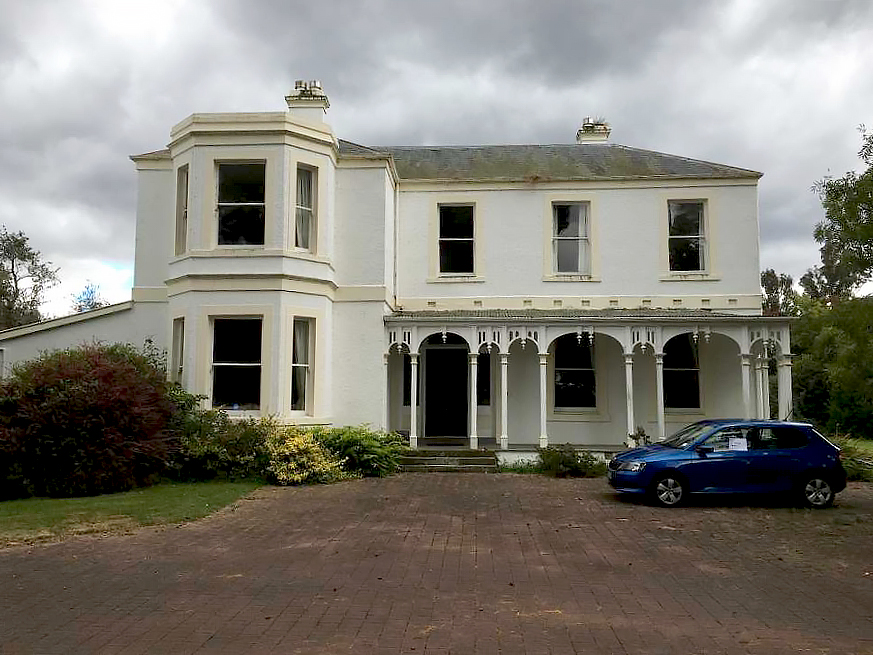
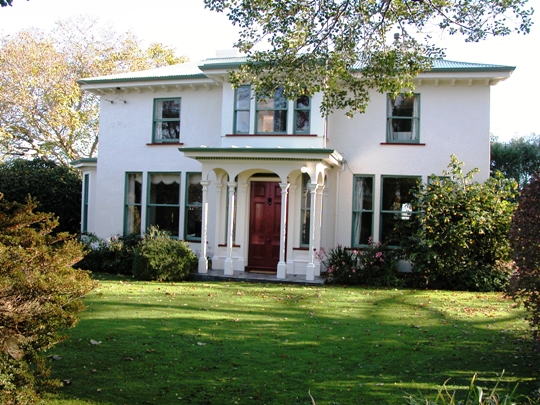
Salisbury is a substantial two-storey brick residence built as the home of prominent settler, farmer and politician Donald Reid (1833-1919) between 1863 and 1873 at North Taieri, Taieri Plains. The house was designed in two stages by Robert Arthur Lawson (1833-1902), one of New Zealand's finest colonial architects. The house has architectural and historical significance, as an example of Lawson’s early residences and as one of the Taieri Plains' most substantial estate homesteads built for Reid, who played an important role in the development of agricultural practices and business enterprises that remain important today.
From its source, the Taiari River flows almost entirely around Pātearoa (the Rock & Pillar Range) before discharging into Te Tai-o-Āraiteuru (the Otago coastline). Kōrero tuku iho tells us the Taiari and its various waterways was created by the taniwha Makaka who is immortalised as Pukemakamaka / Saddle Hill. Kāi Tahu ki Otago used all areas of the Taiari / Taieri Plain as evidenced by the hundreds of mahika kai sites associated with the numerous waterways, lakes and wetlands in the area, which was one of the most significant food baskets of the Otago region.
Salisbury from its establishment in 1857 in North Taieri by Donald Reid became the centre of early European settlement in the area. In 1856 he moved out to the Taieri Plain where his property ‘Salisbury’ was to become a model farm. His first house was a wattle and daub cottage which was expanded, upgraded and replaced with the current house. Reid used his business acumen during the 1861 goldrush to further expand and fund a bigger residence and in 1864 he employed architect R.A. Lawson to design a brick house. However, in the same year financial difficulties hit for Reid as pleuro-pneumonia affected his cattle and prices also fell for his produce as the gold rush population diminished. The house was not as grand as initially planned (that was to come in Stage 2) but did have improvements such as cement covered brick walls and a slate roof, as well as boasting a high-pressure hot water system and a large plunge bath with a cold shower – very rare for Otago country houses.
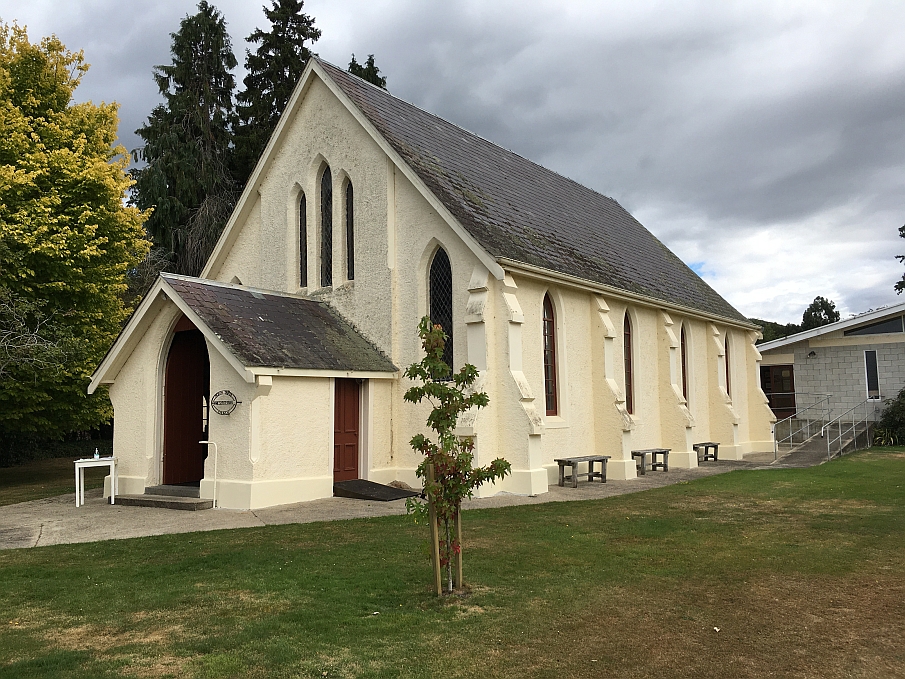
The Salisbury estate was an integral part of the wider landscape, with Reid donating land for the nearby North Taieri Church and Manse, and as a landlord for the development of tenant farms in the area. Reid was a busy politician and in his political roles he was significant in ensuring that European settlement in Otago would be by small holders on freehold farms. Reid became a very successful farmer and his stock and station agency ‘Donald Reid and Company’ founded in 1878 operated for over 100 years. The Estate's subsequent subdivision is also part of the landscape of the area, marked by the end of the larger estates, and the closer settlement of the Taieri Plains.
The design of Salisbury is significant as a restrained example of Lawson's residential work, as many of the original plans were not carried out, perhaps due to Reid's economic realities. The 1873 house had 14 rooms and took 9 months to complete. The outer brick walls were covered with cement and the interior brick division walls were thick, making the space soundproof. Joists were of black pine and the inside woodwork was mainly kauri. The roof was blue slate with ridging made of lead. The staircase had banisters of polished cedar and handrails and posts of mahogany. With limited resources, the house illustrates the technologies of the day with its hand burnt bricks made from local clay, and foundations of local stone. The exterior is plainly detailed with a sense of solidity, without the decorative detailing noted in Lawson’s commercial and religious architecture.
Salisbury, and the life of Donald Reid, reflects the change from settler to established citizen, a representative aspect of New Zealand history. The development from small cottage to substantial estate homestead was a path that epitomised the idea that European settlement should be small holders on freehold farms. It is an important example of the development of larger estates which were later broken up into smaller holdings.
From its source, the Taiari River flows almost entirely around Pātearoa (the Rock & Pillar Range) before discharging into Te Tai-o-Āraiteuru (the Otago coastline). Kōrero tuku iho tells us the Taiari and its various waterways was created by the taniwha Makaka who is immortalised as Pukemakamaka / Saddle Hill. Kāi Tahu ki Otago used all areas of the Taiari / Taieri Plain as evidenced by the hundreds of mahika kai sites associated with the numerous waterways, lakes and wetlands in the area, which was one of the most significant food baskets of the Otago region.
Salisbury from its establishment in 1857 in North Taieri by Donald Reid became the centre of early European settlement in the area. In 1856 he moved out to the Taieri Plain where his property ‘Salisbury’ was to become a model farm. His first house was a wattle and daub cottage which was expanded, upgraded and replaced with the current house. Reid used his business acumen during the 1861 goldrush to further expand and fund a bigger residence and in 1864 he employed architect R.A. Lawson to design a brick house. However, in the same year financial difficulties hit for Reid as pleuro-pneumonia affected his cattle and prices also fell for his produce as the gold rush population diminished. The house was not as grand as initially planned (that was to come in Stage 2) but did have improvements such as cement covered brick walls and a slate roof, as well as boasting a high-pressure hot water system and a large plunge bath with a cold shower – very rare for Otago country houses.
The Salisbury estate was an integral part of the wider landscape, with Reid donating land for the nearby North Taieri Church and Manse, and as a landlord for the development of tenant farms in the area. Reid was a busy politician and in his political roles he was significant in ensuring that European settlement in Otago would be by small holders on freehold farms. Reid became a very successful farmer and his stock and station agency ‘Donald Reid and Company’ founded in 1878 operated for over 100 years. The Estate's subsequent subdivision is also part of the landscape of the area, marked by the end of the larger estates, and the closer settlement of the Taieri Plains.
The design of Salisbury is significant as a restrained example of Lawson's residential work, as many of the original plans were not carried out, perhaps due to Reid's economic realities. The 1873 house had 14 rooms and took 9 months to complete. The outer brick walls were covered with cement and the interior brick division walls were thick, making the space soundproof. Joists were of black pine and the inside woodwork was mainly kauri. The roof was blue slate with ridging made of lead. The staircase had banisters of polished cedar and handrails and posts of mahogany. With limited resources, the house illustrates the technologies of the day with its hand burnt bricks made from local clay, and foundations of local stone. The exterior is plainly detailed with a sense of solidity, without the decorative detailing noted in Lawson’s commercial and religious architecture.
Salisbury, and the life of Donald Reid, reflects the change from settler to established citizen, a representative aspect of New Zealand history. The development from small cottage to substantial estate homestead was a path that epitomised the idea that European settlement should be small holders on freehold farms. It is an important example of the development of larger estates which were later broken up into smaller holdings.