

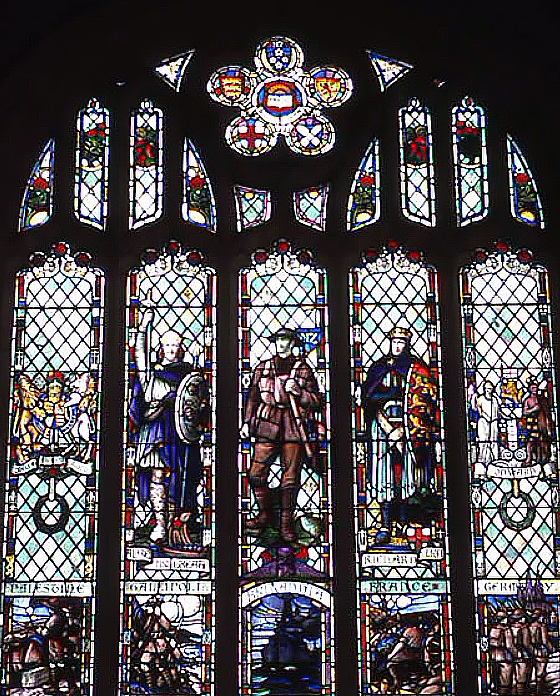
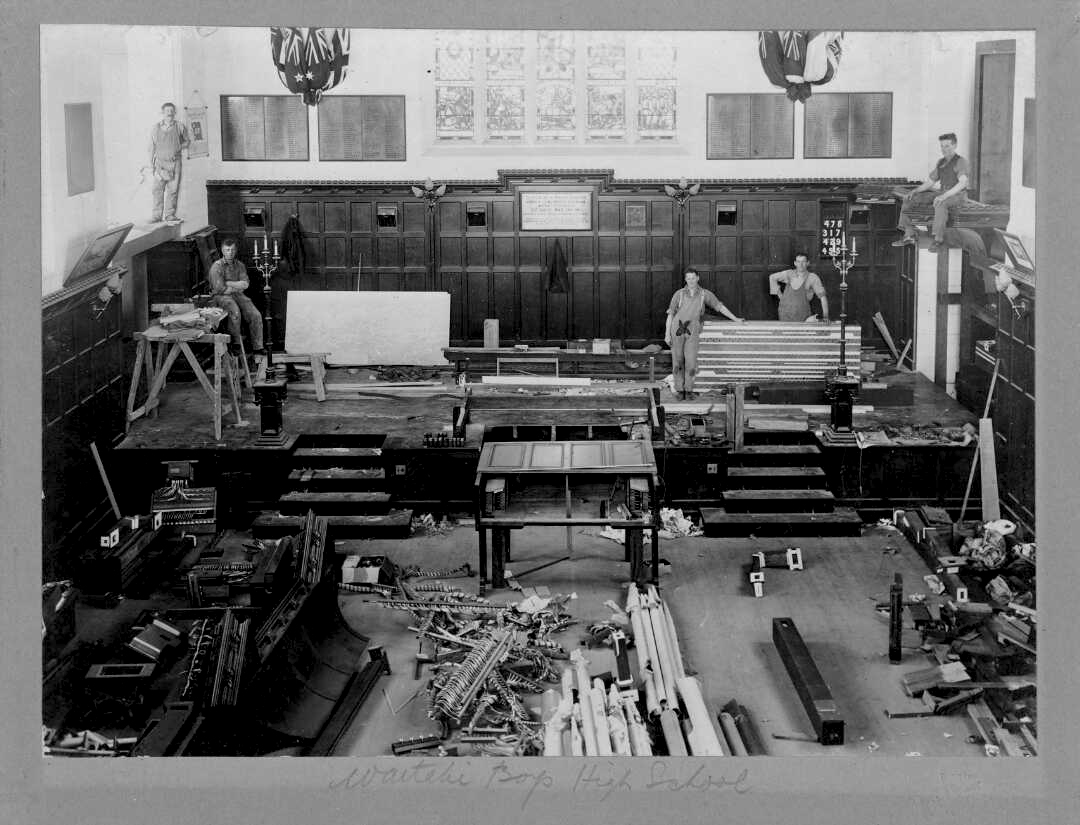
Like many other communities, World War One had a profound impact on the Waitaki Boys’ High School community. Around 700 old boys served during the First World War and 119 of them died. Rector Frank Milner believed that a hall, in the style of such buildings associated with English Public Schools, would be a fitting memorial. In 1920, a building committee launched a fundraising appeal. Governor-General Jellicoe laid the foundation stone in 1923 and the Duke of York performed the official opening ceremony on 16 March 1927. The building has memorial stained glass windows and a collection of memorabilia, including flags, trophies and plaques, emphasising the school’s significant associations. When Governor General Lord Jellicoe laid the foundation stone, he spoke of the importance of memorials as instilling pride in school, country and Empire. Jellicoe told his audience that the memorial recalled courage, loyalty and sacrifice, and those whose memories were enshrined within the building provided an example to all those who entered.
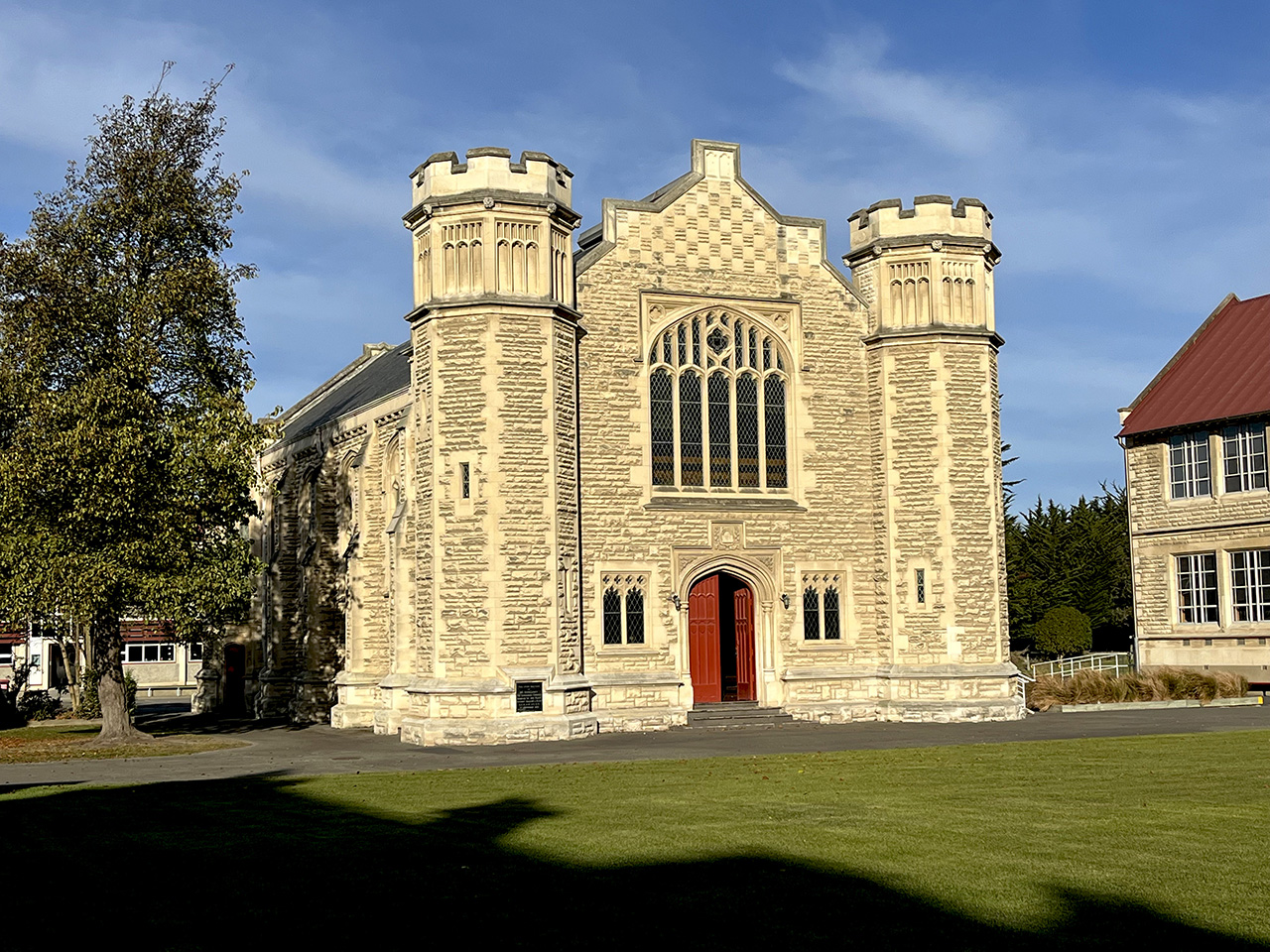
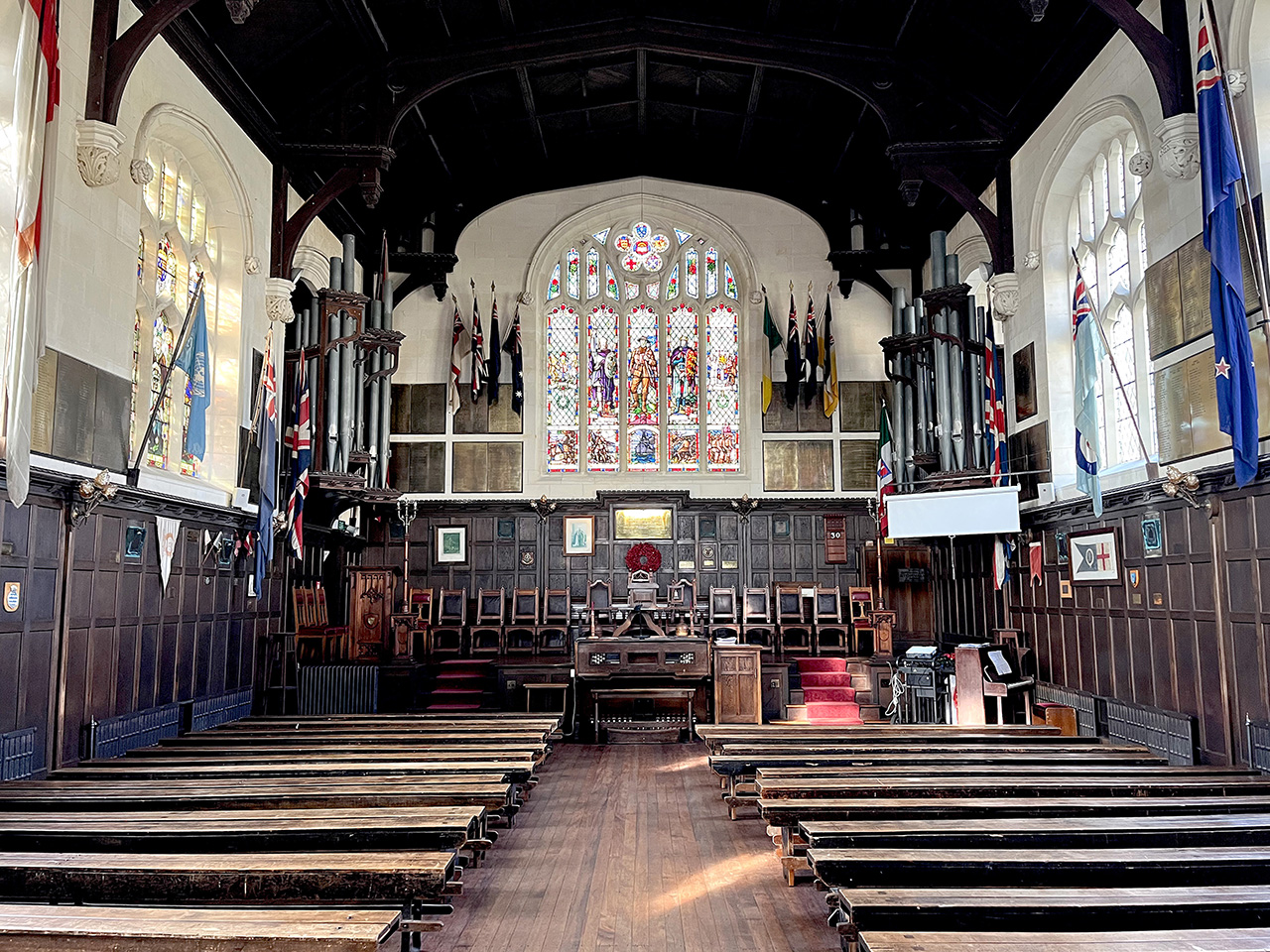
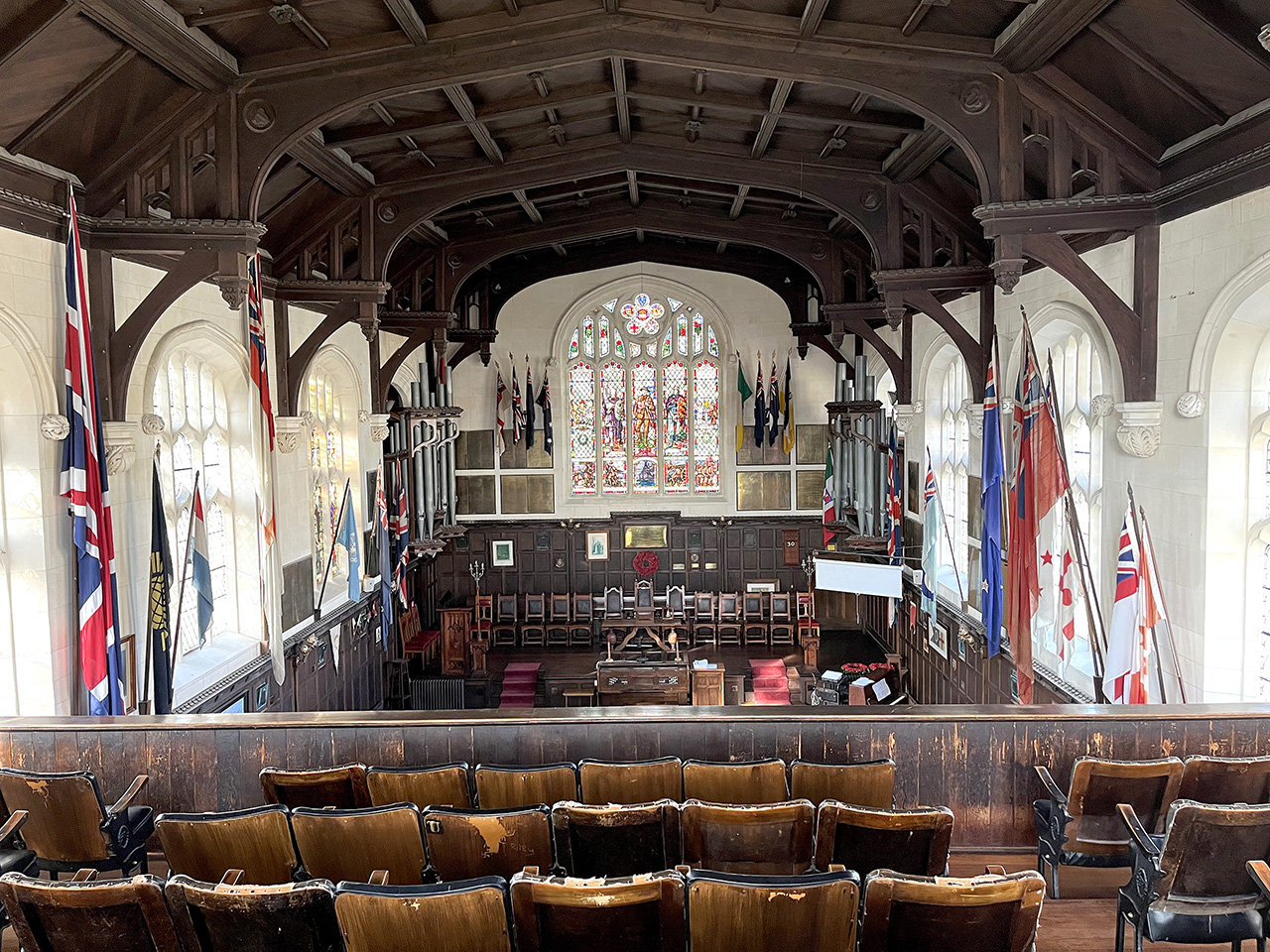
Historian A. R. Tyrrell writes that the Hall of Memories ‘confirms the emotional appeal of the blocks that comprise the frontage.’ The Hall of Memories is set in the quadrangle, with its ‘corner-towers and battlements give a fortress like atmosphere’ contrasting with the ‘more restrained architecture of the remainder of the building.’ He writes that the building has had an ‘incalcuable influence on Waitakians. The architectural beauty and balance of the interior, the principles of service and self-sacrifice embodied in the memorial, and the ideals of citizenship…have inspired generations of boys.’ The interior is significant, including its collection of memorabilia. Some of the furniture is made from teak salvaged from the World War One battle-cruisers New Zealand and Powerful. Beside the school crest in the vestibule of the hall is the ship's bell of H.M.S. Ajax, a battleship that took part in the Battle of Jutland. Inside the Hall, plaques record the names of Waitakians who served in the Armed Forces in both World War One and World War Two. In 2015, the Hall of Memories remains the spiritual centrepiece of Waitaki Boys’ High School.
List Entry Information
Status
Listed
List Entry Status
Historic Place Category 1
Access
Private/No Public Access
List Number
2309
Date Entered
2nd July 1987
Date of Effect
2nd July 1987
City/District Council
Waitaki District
Region
Otago Region
Extent of List Entry
The extent includes part of the land described as Pt Sec 15 Blk I Oamaru SD (RT OT237/140), Otago Land District and the Waitaki Boys High School Hall of Memories thereon. Refer to the extent map tabled at the Heritage New Zealand Board meeting on 30 April 2015.
Legal description
Pt Sec 15 Blk I Oamaru SD (RT OT237/140), Otago Land District
Status
Listed
List Entry Status
Historic Place Category 1
Access
Private/No Public Access
List Number
2309
Date Entered
2nd July 1987
Date of Effect
2nd July 1987
City/District Council
Waitaki District
Region
Otago Region
Extent of List Entry
The extent includes part of the land described as Pt Sec 15 Blk I Oamaru SD (RT OT237/140), Otago Land District and the Waitaki Boys High School Hall of Memories thereon. Refer to the extent map tabled at the Heritage New Zealand Board meeting on 30 April 2015.
Legal description
Pt Sec 15 Blk I Oamaru SD (RT OT237/140), Otago Land District
Why is this place significant?
Historic Significance
Historical Significance or Value The building was opened in 1927 by HRH The Duke of York (Later King George VI). It commemorates the war service of Waitakians in World Wars I and II, and, as a war memorial, it is unique in concept. It has been a focal point of school life for almost 60 years being used as an assembly hall and for all major functions in the school year as well as being visited by many distinguished persons. It is significant for its association with national education during the period and for its connections with a school noted for the achievements of its pupils. The building contains numerous items of historic and symbolic significance relating to the war service of Old Boys and New Zealand's history first as a Member of the British Empire and latterly of the Commonwealth.
Physical Significance
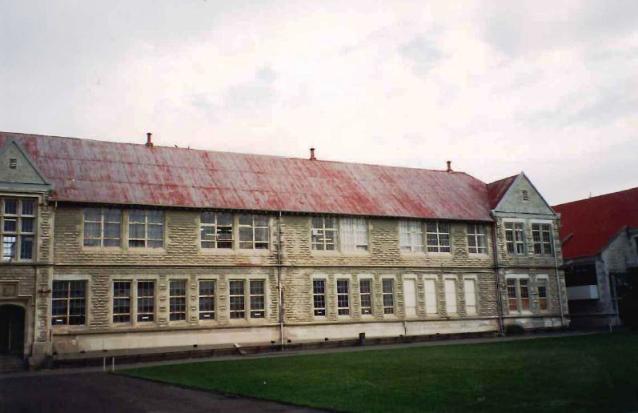
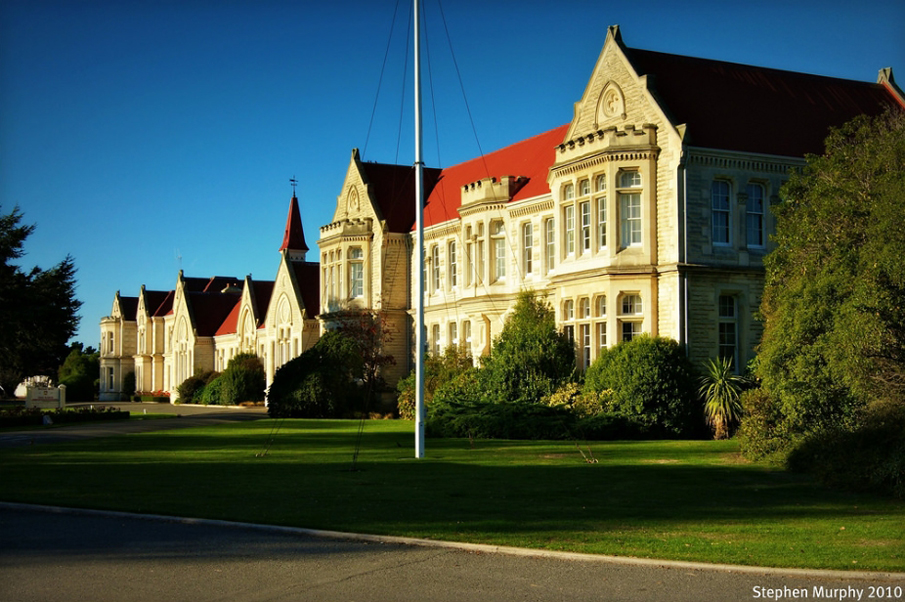
ARCHITECTURAL SIGNIFICANCE A fine Neo-Tudor building in the tradition of English public school architecture. It has been designed to harmonise with the other adjacent Oamaru stone school buildings nearby. It is particularly notable for the high standards of craftsmanship evident in both its exterior and interior construction. TOWNSCAPE/LANDMARK SIGNIFIANCE The Hall of Memories is a key building in the important precinct of late 19th and early 20th century Oamaru stone buildings comprising the main part of the school. The hall forms one side of the school quadrangle.
Why is this place significant?
Historic Significance
Historical Significance or Value The building was opened in 1927 by HRH The Duke of York (Later King George VI). It commemorates the war service of Waitakians in World Wars I and II, and, as a war memorial, it is unique in concept. It has been a focal point of school life for almost 60 years being used as an assembly hall and for all major functions in the school year as well as being visited by many distinguished persons. It is significant for its association with national education during the period and for its connections with a school noted for the achievements of its pupils. The building contains numerous items of historic and symbolic significance relating to the war service of Old Boys and New Zealand's history first as a Member of the British Empire and latterly of the Commonwealth.
Physical Significance
ARCHITECTURAL SIGNIFICANCE A fine Neo-Tudor building in the tradition of English public school architecture. It has been designed to harmonise with the other adjacent Oamaru stone school buildings nearby. It is particularly notable for the high standards of craftsmanship evident in both its exterior and interior construction. TOWNSCAPE/LANDMARK SIGNIFIANCE The Hall of Memories is a key building in the important precinct of late 19th and early 20th century Oamaru stone buildings comprising the main part of the school. The hall forms one side of the school quadrangle.
Construction Professional
Name
Forrester, John Meggett
Type
Architect
Biography
John Meggett Forrester (1866-1965) grew up in Oamaru where his father Thomas Forrester (1838-1907) was practising as an architect. Having been educated at Oamaru Grammar School, he entered the architectural profession and in 1890 took over his father's practice, Forrester and Lemon, following the death of John Lemon (1828-90). He was responsible for the Oamaru Opera House (1907), the Borough Council building, the World War I Memorial and the Waitaki Boys High School Hall of Memories, all in Oamaru. In 1919 he was joined in partnership by Ivan Steenson and he retired in 1931. Forrester was prominent in Oamaru public life. He was a Justice of the Peace for many years, an Oamaru Borough Councillor (1913-33) and Mayor of Oamaru (1931-33). When he died in 1965 he left a bequest for the establishment of an Art Gallery in North Otago. The Forrester Gallery was opened in 1983 in the former Bank of New South Wales building.
Name
D. Sinclair and the Winsley Brothers
Type
Builder
Biography
No biography is currently available for this construction professional
Name
A. Smith
Type
Stonemason
Biography
No biography is currently available for this construction professional
Construction Details
Start Year
1926
Type
Original Construction
Construction Materials
Oamaru stone; Blue slate roof; Oregon hammer-beam ceiling and Oak wall panelling.
Notable Features
Hammer beam ceiling and oak panelling in the interior and large stained glass window at the east end of the hall illustrating a World War I solider in full kit, flanked by Alfred the Great and Richard the Lion heart.
Construction Professional
Name
Forrester, John Meggett
Type
Architect
Biography
John Meggett Forrester (1866-1965) grew up in Oamaru where his father Thomas Forrester (1838-1907) was practising as an architect. Having been educated at Oamaru Grammar School, he entered the architectural profession and in 1890 took over his father's practice, Forrester and Lemon, following the death of John Lemon (1828-90). He was responsible for the Oamaru Opera House (1907), the Borough Council building, the World War I Memorial and the Waitaki Boys High School Hall of Memories, all in Oamaru. In 1919 he was joined in partnership by Ivan Steenson and he retired in 1931. Forrester was prominent in Oamaru public life. He was a Justice of the Peace for many years, an Oamaru Borough Councillor (1913-33) and Mayor of Oamaru (1931-33). When he died in 1965 he left a bequest for the establishment of an Art Gallery in North Otago. The Forrester Gallery was opened in 1983 in the former Bank of New South Wales building.
Name
D. Sinclair and the Winsley Brothers
Type
Builder
Biography
No biography is currently available for this construction professional
Name
A. Smith
Type
Stonemason
Biography
No biography is currently available for this construction professional
Construction Details
Start Year
1926
Type
Original Construction
Construction Materials
Oamaru stone; Blue slate roof; Oregon hammer-beam ceiling and Oak wall panelling.
Notable Features
Hammer beam ceiling and oak panelling in the interior and large stained glass window at the east end of the hall illustrating a World War I solider in full kit, flanked by Alfred the Great and Richard the Lion heart.
ARHITECTURAL DESCRIPTION (Style) A Neo-Tudor edifice with a castellated tower at each corner of the building, buttressed walls and Tudor style windows and doorways. A combination of rough hewn and dresses Oamaru stone gives added variety to the exterior. The interior is also Neo-Tudor in design. MODIFICATIONS The building is in largely original condition.
ARHITECTURAL DESCRIPTION (Style) A Neo-Tudor edifice with a castellated tower at each corner of the building, buttressed walls and Tudor style windows and doorways. A combination of rough hewn and dresses Oamaru stone gives added variety to the exterior. The interior is also Neo-Tudor in design. MODIFICATIONS The building is in largely original condition.
Historical and Associated Iwi / Hapū / Whānau
Completion Date
8th April 2015
Report Written By
Heather Bauchop
Information Sources
McCarthy, 2002
Conal McCarthy, Forrester and Lemon of Oamaru, architects, Oamaru, 2002
Otago Daily Times
Otago Daily Times, 1 Jun 1915, p.10.
Tyrrell, 1983
A R Tyrrell, Strong to endure : Waitaki Boys’ High School, 1883-1983, Oamaru, 1983
R. S. Drew (ed)
R. S Drew (ed), A Haul of Memories Waitaki Boys’ High School 125th Anniversary, Waitaki Boys’ High School Old Boys’ Association, Oamaru, 2008
McDonald, 1958
K.C. McDonald, A History of Waitaki Boys’ High School 1883-1958, Whitcombe and Tombs Limited, Christchurch, 1958
Other Information
This historic place was registered under the Historic Places Act 1980. This report includes the text from the original Building Classification Committee report considered by the NZHPT Board at the time of registration. Please note that entry on the New Zealand Heritage List/Rarangi Korero identifies only the heritage values of the property concerned, and should not be construed as advice on the state of the property, or as a comment of its soundness or safety, including in regard to earthquake risk, safety in the event of fire, or insanitary conditions. A fully referenced upgrade report is available on request from the Otago/Southland Office of Heritage New Zealand
Historical and Associated Iwi / Hapū / Whānau
Completion Date
8th April 2015
Report Written By
Heather Bauchop
Information Sources
McCarthy, 2002
Conal McCarthy, Forrester and Lemon of Oamaru, architects, Oamaru, 2002
Otago Daily Times
Otago Daily Times, 1 Jun 1915, p.10.
Tyrrell, 1983
A R Tyrrell, Strong to endure : Waitaki Boys’ High School, 1883-1983, Oamaru, 1983
R. S. Drew (ed)
R. S Drew (ed), A Haul of Memories Waitaki Boys’ High School 125th Anniversary, Waitaki Boys’ High School Old Boys’ Association, Oamaru, 2008
McDonald, 1958
K.C. McDonald, A History of Waitaki Boys’ High School 1883-1958, Whitcombe and Tombs Limited, Christchurch, 1958
Other Information
This historic place was registered under the Historic Places Act 1980. This report includes the text from the original Building Classification Committee report considered by the NZHPT Board at the time of registration. Please note that entry on the New Zealand Heritage List/Rarangi Korero identifies only the heritage values of the property concerned, and should not be construed as advice on the state of the property, or as a comment of its soundness or safety, including in regard to earthquake risk, safety in the event of fire, or insanitary conditions. A fully referenced upgrade report is available on request from the Otago/Southland Office of Heritage New Zealand
Former Usages
General Usage: Education
Specific Usage: School
Former Usages
General Usage: Education
Specific Usage: School
Location
Related listings
Stay up to date with Heritage this month
