DonateSupporterVisit Heritage
  • Tūrangawaewae
    Places
  • Tira Māori
    Māori Heritage
  • Poutairangahia
    Archaeology
  • Rauemi
    Resources
  • Mō Tātou
    About Us
  • New Zealand Heritage List
  • Nominate and submit
  • Explore the List
  • National Historic Landmarks
  • Plaques
  • Rainbow List Project
  • Lost heritage
  • Visit Heritage
  • Our properties
  • Turnbull House Project
  • Collections
  • Shop
  • Tohu Whenua
  • Tira Māori
  • Conserving Māori heritage
  • Marae built heritage
  • Māori heritage on the List
  • Hinemihi—Te Hokinga Mai
  • What is archaeology?
  • Is there a site on my property?
  • What are my legal requirements?
  • Affecting an archaeological site
  • Declaring an archaeological site
  • Archaeology FAQs
  • Archaeology Digital Library
  • Archaeology guidelines and templates
  • Resources
  • Funding
  • Publications
  • Sustainable management guides
  • Disaster recovery
  • Podcasts & digital resources
  • Education Hub
  • Conservation plans
  • About
  • Board
  • Māori Heritage Council
  • Senior Staff
  • Offices
  • Contact us
  • Careers
  • Covenants
  • Fast-track
  • Corporate documents
  • Currently consulting on
  • Our submissions
  • News
Quick links
Rārangi Kōrero | The List
Explore the List
National Historic Landmarks
Ngā Manawhenua o Aotearoa me ōna Kōrero Tūturu
Quick links
Tapuwae
A Vision for Places of Māori Heritage
Funding for Māori Heritage
Resources
Quick links
Archaeological Authority Portal
Applying for an archaeological authority
Archaeology FAQs
Browse the most frequently asked questions about archaeological authorities and the archaeological process.
Quick links
Quick links
Contact us
Offices
DonateSupporterVisit Heritage
  • Tūrangawaewae
    Places
  • Tira Māori
    Māori Heritage
  • Poutairangahia
    Archaeology
  • Rauemi
    Resources
  • Mō Tātou
    About Us
  • New Zealand Heritage List
  • Nominate and submit
  • Explore the List
  • National Historic Landmarks
  • Plaques
  • Rainbow List Project
  • Lost heritage
  • Visit Heritage
  • Our properties
  • Turnbull House Project
  • Collections
  • Shop
  • Tohu Whenua
  • Tira Māori
  • Conserving Māori heritage
  • Marae built heritage
  • Māori heritage on the List
  • Hinemihi—Te Hokinga Mai
  • What is archaeology?
  • Is there a site on my property?
  • What are my legal requirements?
  • Affecting an archaeological site
  • Declaring an archaeological site
  • Archaeology FAQs
  • Archaeology Digital Library
  • Archaeology guidelines and templates
  • Resources
  • Funding
  • Publications
  • Sustainable management guides
  • Disaster recovery
  • Podcasts & digital resources
  • Education Hub
  • Conservation plans
  • About
  • Board
  • Māori Heritage Council
  • Senior Staff
  • Offices
  • Contact us
  • Careers
  • Covenants
  • Fast-track
  • Corporate documents
  • Currently consulting on
  • Our submissions
  • News
Quick links
Rārangi Kōrero | The List
Explore the List
National Historic Landmarks
Ngā Manawhenua o Aotearoa me ōna Kōrero Tūturu
Quick links
Tapuwae
A Vision for Places of Māori Heritage
Funding for Māori Heritage
Resources
Quick links
Archaeological Authority Portal
Applying for an archaeological authority
Archaeology FAQs
Browse the most frequently asked questions about archaeological authorities and the archaeological process.
Quick links
Quick links
Contact us
Offices
  • Places
  • Nominate and submit
  • National Historic Landmarks
  • Places
  • Nominate and submit
  • National Historic Landmarks
  • Tira Māori
  • Conserving Māori heritage
  • Marae built heritage
  • Tira Māori
  • Conserving Māori heritage
  • Marae built heritage
  • Archaeological authorities
  • Archaeology Digital Library
  • Archaeological authorities
  • Archaeology Digital Library
  • All resources
  • Publications
  • Funding
  • All resources
  • Publications
  • Funding
  • FAQs
  • FAQs
Follow us on:
Places
  • Places
  • Nominate and submit
  • National Historic Landmarks
Tira Māori
  • Tira Māori
  • Conserving Māori heritage
  • Marae built heritage
Archaeology
  • Archaeological authorities
  • Archaeology Digital Library
Resources
  • All resources
  • Publications
  • Funding
FAQs
  • FAQs
Follow us on
HomePrivacyTerms and conditionsAbout this site
© Heritage New Zealand Pouhere Taonga 2026.
 
Otekaieke Station Woolshed

468-488 Special School Road, OTEKAIEKE

Private

Historic Place Category 2

List No. 2427

Quick links:
List GalleryLocationDetails
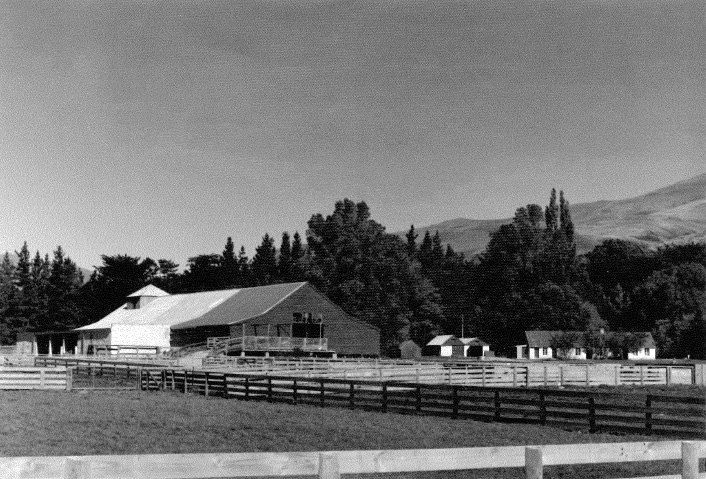
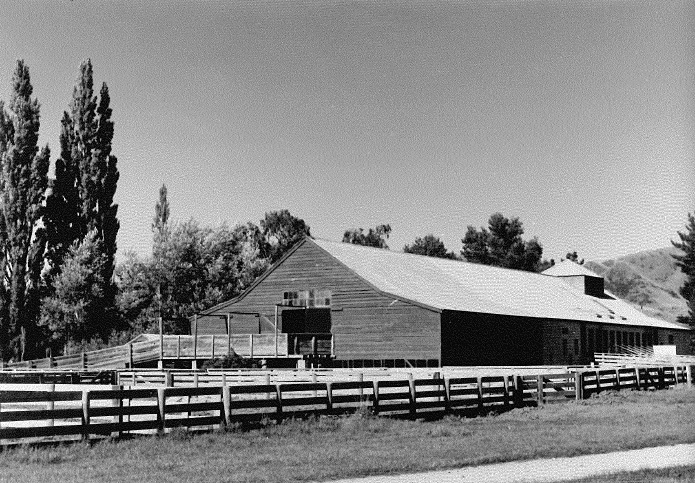
This stone woolshed, replacing an earlier timber woolshed, was built in the late 1860s or early 1870s and provided the working heart of the vast Otekaike pastoral run. The woolshed has historical, architectural, and archaeological significance.

Run 28 in the Waitaki Valley was leased to Samuel Pike in 1854, its original boundaries being Kurow and Otekaike Creek as far back as the Saint Mary Range. By 1855 Pike had transferred the run to John Parkin Taylor (1812-1875). Taylor sold the run to William Dansey. William Henry Dansey, youngest son of a scholarly rector, was educated at Exeter College, Oxford. He arrived in Port Chalmers in December 1854 and after visiting Port Nicholson and Nelson came to the Waitaki valley. Dansey had a house on Run 28 by early 1859. An 1861 survey plan shows a 92 acre block with house, stable and futtah, and an adjacent 11 acre block with ‘men’s house’ and woolshed.’ An 1865 sale notice provides more detail about the buildings: 92 acres with stone house, separate servants’ quarters, stone stable, carriage house, gardener’s cottage, two acres of garden, store, stockyards and next door a further 11 acres pre-emptive right with ‘a large well-built men’s stone HUT, with good dairy and coal-sheds’ and a ‘WEATHERBOARD WOOL-SHED, about 45 x 40 feet, with iron roof, and yards to work 10,000 sheep.’ Dansey’s efforts laid the foundation for the next runholder who would make the property one of the most significant in New Zealand.

The property was sold to Robert Campbell in March 1865. Campbell was the Eton-educated son of a wealthy gentleman. Campbell also owned Galloway Station in Central Otago, Benmore Station near Omarama, and three Southland runs, and was a member of the House of Representatives. Campbell employed managers to look after the daily running of the station. W.H. Ostler was probably the first manager. Ostler was replaced by William Gilbert Rees at the end of 1868. Rees is a significant figure in Otago’s pastoral history, earlier being a partner of a huge station near what would become Queenstown, a large part of which was declared a Goldfield, to Rees’ disadvantage. Rees became a manager, first at Otekaieke and then across the Waitaki River at Station Peak. Malcolm McKellar became manager at Otekaieke in 1871.

The timber woolshed was replaced or added to in the late 1860s or early 1870s. A report from the end of 1868 mentions a new building under construction at ‘Otekaike’ for Mr Reece [Rees, the station manager] with the stone quarried nearby. There was also a dispute between a shearer and Mr Rees from early 1870 mentions that the woolshed was not yet complete. The woolshed was the centre of station work – 60,000 sheep were shorn by 16 shearers in the 1869 season alone. An 1872 report describes a ‘large wool shed, sheep-wash, and boiling down place’ nearby.

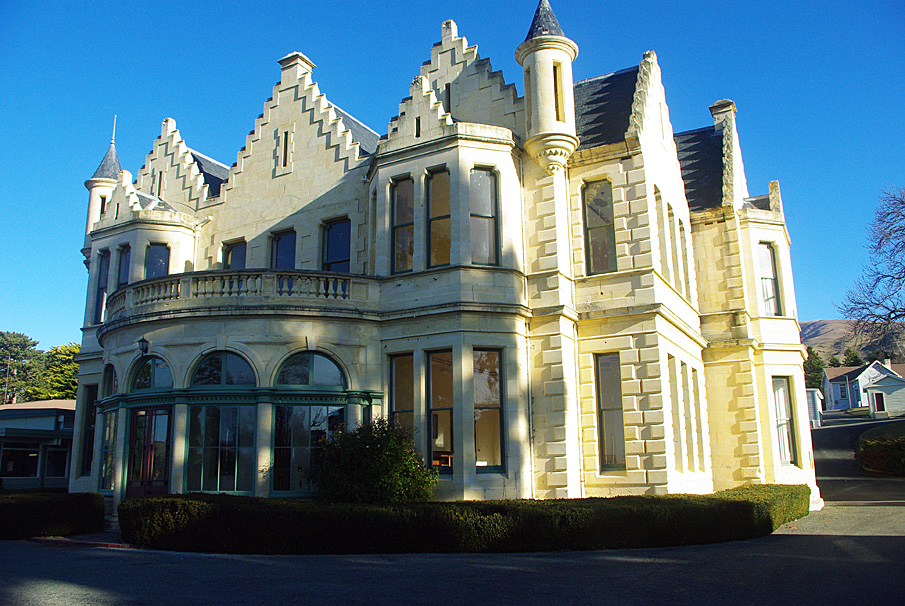
In the early years of the twentieth century Otekaieke Station was subdivided into seven small grazing runs, thirty seven farms and twelve smallholdings. Four properties were allocated as ‘preferential blocks’ and allocated to former employees of Robert Campbell and Sons Limited. Dickson (Dick) Jardine (the Company’s manager) was granted the homestead block – with the ‘large stone house, woolshed, scouring shed, blacksmith’s shop, men’s hut, cook house, two small cottages and a slaughter house. The adjoining grand homestead, stables and other buildings along with 342 acres of land was handed over the Education Department as a special school for boys.

Jardine sold the 5008 hectare property to William Munro in 1913. When Munro died in 1922 Otekaieke was run by his widow Jeannie and her foster son J. George McDonald, whose descendants still own the station. The lease specified the improvements – a dwelling, shearers’ quarters, tool shed; men’s quarters, woolshed, stable and barn, old shed, huts, yards, sheep-dip and fencing. Architect and historian Geoffrey Thornton described the woolshed as constructed of limestone and timber, and partly clad with weatherboards. It had a steep-pitched corrugated iron roof sweeping down to a shallow lean-to on either side. A wool press projects from the gable. The original capacity was a board of twenty-four stands until mechanical hand pieces were installed. In 2016, the Woolshed remains the heart of the 9700 hectare pastoral property.
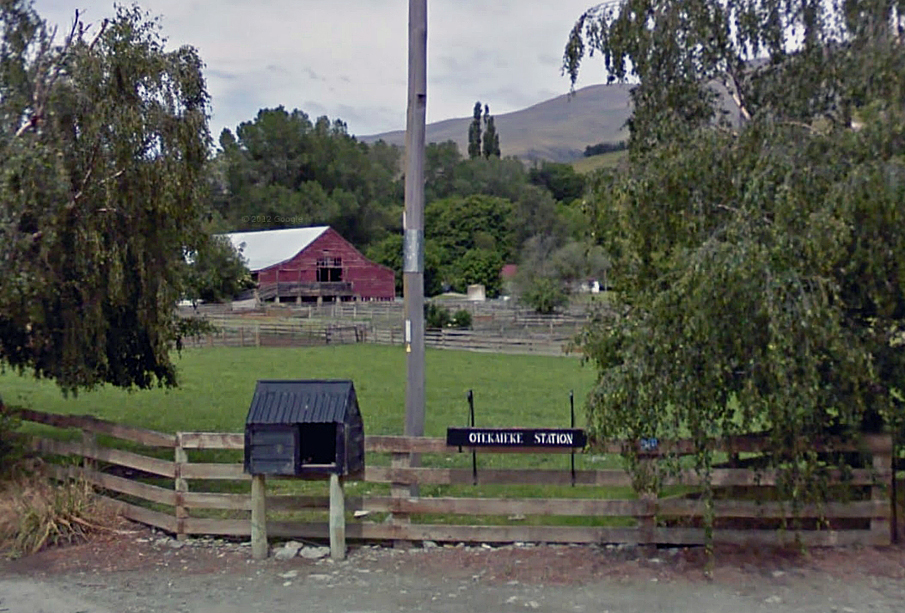
Otekaieke Station Woolshed. December 2009. Image courtesy of www.maps.google.co.nz | Google Maps 2012
Otekaieke Station Woolshed. April 1979. Original image from NZHPT Print Collection | E Hanson | Heritage New Zealand Pouhere Taonga
Otekaieke Station Woolshed. December 2009. Image courtesy of www.maps.google.co.nz | Google Maps 2012
Otekaieke Station Woolshed. April 1979. Original image from NZHPT Print Collection | E Hanson | Heritage New Zealand Pouhere Taonga

List Entry Information

Overview

Status
Listed

List Entry Status
Historic Place Category 2

Access
Private/No Public Access

List Number
2427

Date Entered
7th April 1983

Date of Effect
7th April 1983

City/District Council
Waitaki District

Region
Canterbury Region

Extent of List Entry

Extent includes part of the land described as Sec 117A Otekaieke Settlement (RT OT8A/800) Otago Land District, and the building known as the Otekaike Station Woolshed, thereon, as shown in the extent map tabled at the Rarangi Korero Committee meeting on 9 March 2017.

Legal description

Sec 117A Otekaieke Settlement (RT OT8A/800), Otago Land District

Detailed List Entry

Construction Details

Type

Addition

Description

Stone additions to woolshed and/or replacement of existing structure

Period

Late 1860s-early 1870s

Start Year

1860

Type

Original Construction

Reference

Completion Date

13th December 2016

Report Written By

Heather Bauchop

Information Sources

Dictionary of New Zealand Biography

Dictionary of New Zealand Biography

McDonald, 1962

K C McDonald, 'White Stone Country', Oamaru, 1962

New Zealand Journal of History

New Zealand Journal of History

Pinney, 1981

R. Pinney, Early Northern Otago Runs, Auckland, 1981

Thornton, 1986

Geoffrey Thornton, The New Zealand Heritage of Farm Buildings, Auckland, 1986

Petchey, 2003

Peter Petchey, ‘Campbell Park Heritage Assessment: History and archaeology of Otekaieke Estate, grounds and gardens’, 2003

Report Written By

This place was identified as significant under previous legislation with different information requirements. It remains significant under the current legislation. There is opportunity under our legislation and policies to add to this information. Further information about this place may be available from the Otago/Southland Office of Heritage New Zealand Pouhere Taonga. Please note that entry on the New Zealand Heritage List/Rarangi Korero identifies only the heritage values of the property concerned, and should not be construed as advice on the state of the property, or as a comment of its soundness or safety, including in regard to earthquake risk, safety in the event of fire, or insanitary conditions. A fully referenced upgrade report is available on request from the Otago/Southland Area Office of Heritage New Zealand.

Further Information

Current Usages

Former Usages

General Usage:: Agriculture

Specific Usage: Woolshed/Shearing Shed

Themes

Web Links

Overview

Status

Listed

List Entry Status

Historic Place Category 2

Access

Private/No Public Access

List Number

2427

Date Entered

7th April 1983

Date of Effect

7th April 1983

City/District Council

Waitaki District

Region

Canterbury Region

Extent of List Entry

Extent includes part of the land described as Sec 117A Otekaieke Settlement (RT OT8A/800) Otago Land District, and the building known as the Otekaike Station Woolshed, thereon, as shown in the extent map tabled at the Rarangi Korero Committee meeting on 9 March 2017.

Legal description

Sec 117A Otekaieke Settlement (RT OT8A/800), Otago Land District

Status

Listed

List Entry Status

Historic Place Category 2

Access

Private/No Public Access

List Number

2427

Date Entered

7th April 1983

Date of Effect

7th April 1983

City/District Council

Waitaki District

Region

Canterbury Region

Extent of List Entry

Extent includes part of the land described as Sec 117A Otekaieke Settlement (RT OT8A/800) Otago Land District, and the building known as the Otekaike Station Woolshed, thereon, as shown in the extent map tabled at the Rarangi Korero Committee meeting on 9 March 2017.

Legal description

Sec 117A Otekaieke Settlement (RT OT8A/800), Otago Land District

Construction Information

Construction Details

Type

Addition

Description

Stone additions to woolshed and/or replacement of existing structure

Period

Late 1860s-early 1870s

Start Year

1860

startYearCirca

Type

Original Construction

Construction Details

Type

Addition

Description

Stone additions to woolshed and/or replacement of existing structure

Period

Late 1860s-early 1870s

Start Year

1860

startYearCirca

Type

Original Construction

Reference

Historical and Associated Iwi / Hapū / Whānau

Completion Date

13th December 2016

Report Written By

Heather Bauchop

Information Sources

Dictionary of New Zealand Biography

Dictionary of New Zealand Biography

McDonald, 1962

K C McDonald, 'White Stone Country', Oamaru, 1962

New Zealand Journal of History

New Zealand Journal of History

Pinney, 1981

R. Pinney, Early Northern Otago Runs, Auckland, 1981

Thornton, 1986

Geoffrey Thornton, The New Zealand Heritage of Farm Buildings, Auckland, 1986

Petchey, 2003

Peter Petchey, ‘Campbell Park Heritage Assessment: History and archaeology of Otekaieke Estate, grounds and gardens’, 2003

Other Information

This place was identified as significant under previous legislation with different information requirements. It remains significant under the current legislation. There is opportunity under our legislation and policies to add to this information. Further information about this place may be available from the Otago/Southland Office of Heritage New Zealand Pouhere Taonga. Please note that entry on the New Zealand Heritage List/Rarangi Korero identifies only the heritage values of the property concerned, and should not be construed as advice on the state of the property, or as a comment of its soundness or safety, including in regard to earthquake risk, safety in the event of fire, or insanitary conditions. A fully referenced upgrade report is available on request from the Otago/Southland Area Office of Heritage New Zealand.

Historical and Associated Iwi / Hapū / Whānau

Completion Date

13th December 2016

Report Written By

Heather Bauchop

Information Sources

Dictionary of New Zealand Biography

Dictionary of New Zealand Biography

McDonald, 1962

K C McDonald, 'White Stone Country', Oamaru, 1962

New Zealand Journal of History

New Zealand Journal of History

Pinney, 1981

R. Pinney, Early Northern Otago Runs, Auckland, 1981

Thornton, 1986

Geoffrey Thornton, The New Zealand Heritage of Farm Buildings, Auckland, 1986

Petchey, 2003

Peter Petchey, ‘Campbell Park Heritage Assessment: History and archaeology of Otekaieke Estate, grounds and gardens’, 2003

Other Information

This place was identified as significant under previous legislation with different information requirements. It remains significant under the current legislation. There is opportunity under our legislation and policies to add to this information. Further information about this place may be available from the Otago/Southland Office of Heritage New Zealand Pouhere Taonga. Please note that entry on the New Zealand Heritage List/Rarangi Korero identifies only the heritage values of the property concerned, and should not be construed as advice on the state of the property, or as a comment of its soundness or safety, including in regard to earthquake risk, safety in the event of fire, or insanitary conditions. A fully referenced upgrade report is available on request from the Otago/Southland Area Office of Heritage New Zealand.

Further Information

Former Usages

General Usage: Agriculture

Specific Usage: Woolshed/Shearing Shed

Former Usages

General Usage: Agriculture

Specific Usage: Woolshed/Shearing Shed

Location

Loading
Related listings
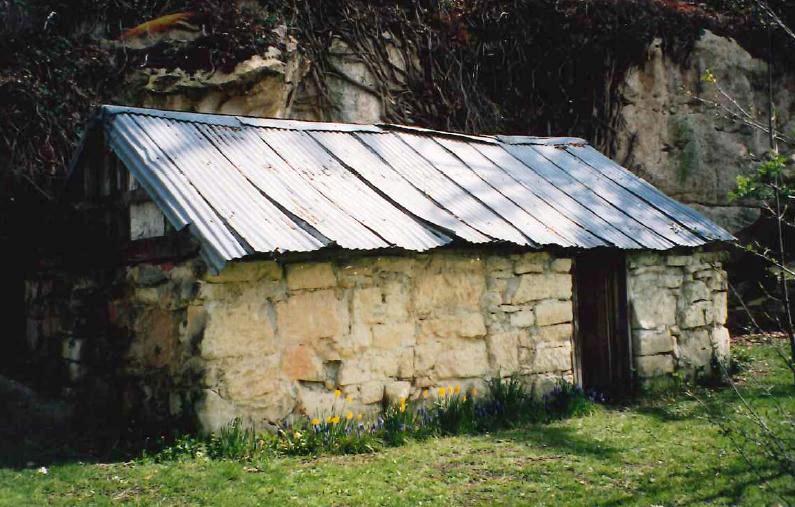
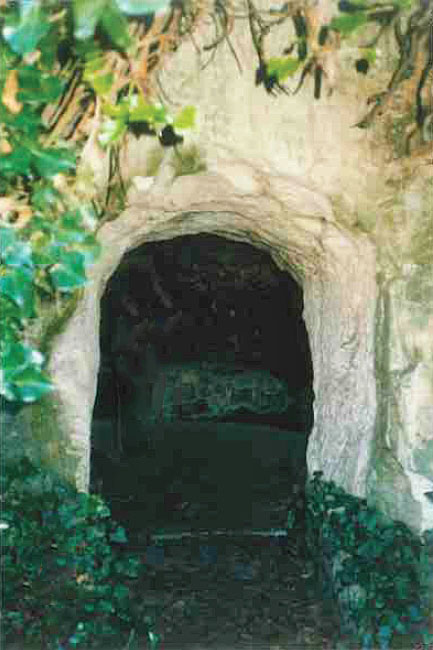
Hille's Cave. Image included in Field Record Form Collection
Hille's Cave
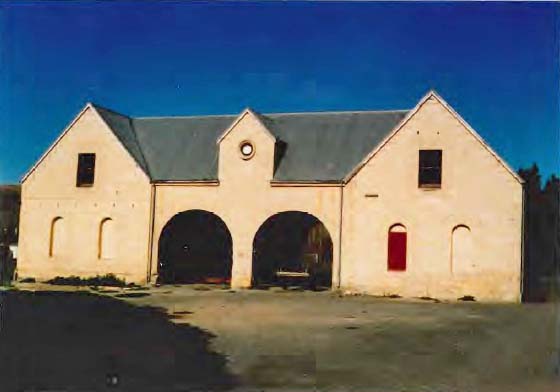
Campbell Park Stables (Former), Otekaieke
Campbell Park Stables (Former)
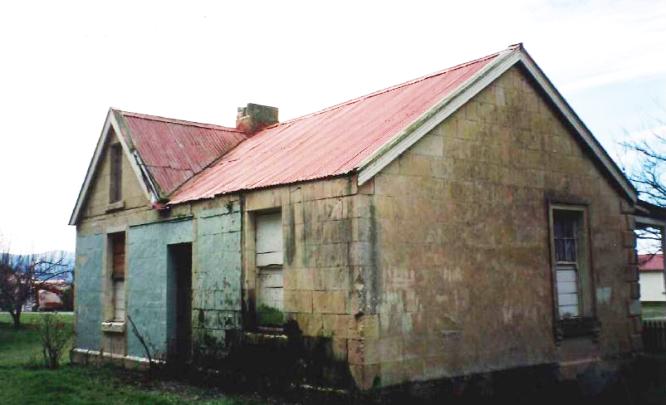
Campbell Park Cottage, Otekaieke
Campbell Park Cottage
Dansey’s Hut, Otekaieke
Dansey’s Hut
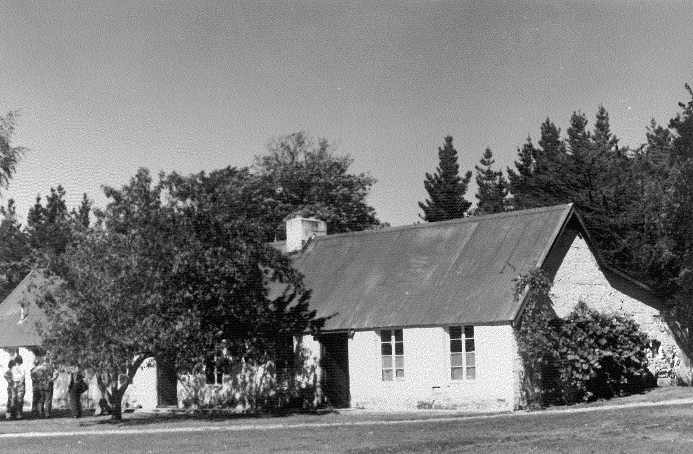
Otekaieke Station Cookshop and Men’s Quarters. April 1979. Original image from NZHPT Print Collection
Otekaieke Station Cookshop and Men’s Quarters
Campbell Park Homestead (Former), Otekaieke
Campbell Park Homestead (Former)
Dansey’s Hut, Otekaieke
Dansey’s Hut
Hille's Cave. Image included in Field Record Form Collection
Hille's Cave
Otekaieke Station Cookshop and Men’s Quarters. April 1979. Original image from NZHPT Print Collection
Otekaieke Station Cookshop and Men’s Quarters
Campbell Park Stables (Former), Otekaieke
Campbell Park Stables (Former)
Campbell Park Homestead (Former), Otekaieke
Campbell Park Homestead (Former)
Campbell Park Cottage, Otekaieke
Campbell Park Cottage
Sign up to hear more

Get the latest heritage news, features and events delivered
straight to your inbox.

Subscribe