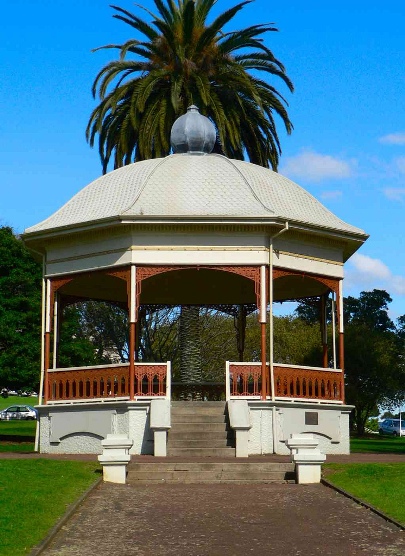
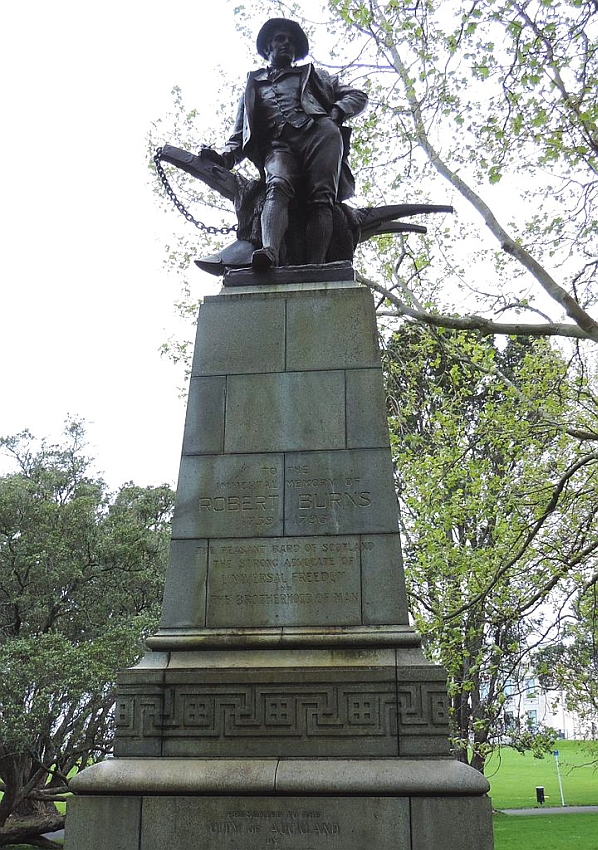
Erected in 1913, the bandstand reflects the importance of outdoor musical entertainment in public parks in late nineteenth- and early twentieth-century New Zealand. It also forms a tangible remnant of the Auckland Industrial, Agricultural and Mining Exhibition, held in Pukekawa / Auckland Domain to showcase the country’s economic progress in 1913-14. Built beside Domain Drive to a design by architect A. Sinclair O’Connor (1884–1943), the octagonal bandstand was gifted by prominent city councillor and philanthropic businessman James Milne Mennie (1842-1924), who also later financed the nearby Robert Burns Statue (1921; List No. 637). In the late Victorian and Edwardian eras, bandstands formed popular architectural features in New Zealand parks and reserves, being generally visually distinctive structures from which brass bands and other ensembles played music to open-air audiences. During the 1913-14 Exhibition, the newly built bandstand was utilised by various groups including Britain’s Royal Artillery Band. In subsequent years, the structure accumulated informal functions and has been employed for musical and other events into the twenty-first century. It remains an architecturally, aesthetically and historically distinctive component of Pukekawa / Auckland Domain, one of the country’s most popular parks and an area of high cultural and historical significance for its many associated layers of history and meaning.
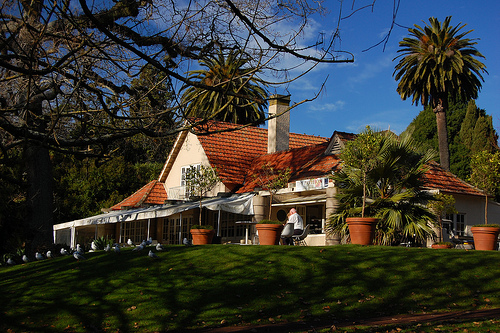
Pukekawa / Auckland Domain forms an important Māori landscape linked with many iwi and hapū. Incorporating fertile soils, north-facing slopes and a freshwater stream – Te Ako o Te Tui – it attracted extensive settlement including a pā at Pukekaroro / Pukekaroa. After Ngāti Whātua offered land for the establishment of Auckland in 1840, the whenua (land) became known as the Government Domain and was declared a park in 1844. At an early subsequent stage, it included a house occupied by the future Kiingitanga leader Pootatau Te Wherowhero, who referred to Pukekawa as ‘the hill of bitter memories’ in remembrance of Māori who fell in the intertribal Musket Wars of the late 1820s and early 1830s. During the later nineteenth century, the Domain was employed for varying purposes including sport and Chinese market gardening. In 1912, as New Zealand’s economic and cultural ties with imperial Britain strengthened, it was chosen for the site of a major fair promoting the country’s material progress – the Auckland Industrial, Agricultural and Mining Exhibition. Covering 23 hectares (59 acres), this was to reshape the area as a ‘new park’, create commercial displays in large temporary buildings and feature other attractions. Two structures intended to remain indefinitely were a tea house or kiosk (List No. 2648) and a permanent bandstand. The latter was to be underwritten by J. M. Mennie, a Scottish-born member of both the Exhibition Committee and Auckland City Council’s Works Committee, who was also a prominent biscuit, confectionary and jam manufacturer with trading interests throughout New Zealand, Australia and the South Pacific.
Construction of the Domain bandstand occurred in 1913, evidently under the direction of E. A. Pearce, supervisor of the general Exhibition works. Its position was considered beneficial for long-term use, being surrounded by sheltering mānuka trees beside Domain Drive. The new structure incorporated a raised octagonal plinth of plastered brick and concrete, an ogee-shaped canopy with metal roof cladding of fish-scale design, and a surmounting ball. It also encompassed a central flagstaff, cast-iron railings of ‘a new art pattern’ and similarly ornamental valances or brackets. A surrounding circular path had low approach steps. The bandstand’s designer, Australian-born A. Sinclair O’Connor, created other notable structures in Auckland, including Middle Courtville (1914-15; List No. 4487) and Corner Courtville (1919; List No. 2624). Between December 1913 and April 1914, Exhibition crowds heard a variety of performances from the rotunda including by the British Royal Artillery Band – reportedly arriving as ‘the first Imperial army band to cross the equator’. The bandstand was additionally co-opted for baby-show, elocution and singing competitions, as well as open-air movies and ‘gramophone entertainment’.
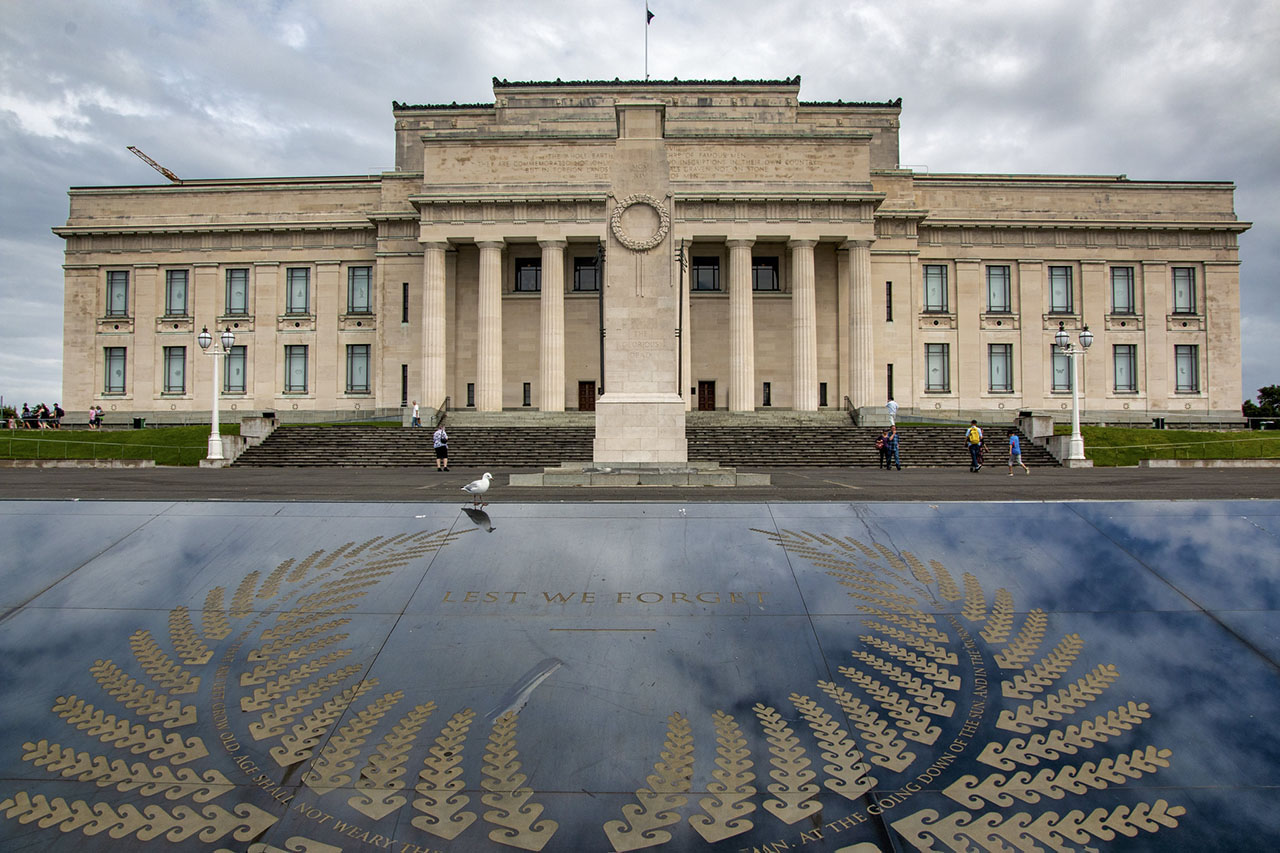
After the Exhibition, dedicated electric lighting was added. More occasional concerts were held, including by the Auckland Girls’ Brass Band – said to have been the first group of its type in the Dominion. The structure acquired informal uses, such as a venue for anti-war protest in 1931 and casual meetings by elderly men during the economic depression of the 1930s. Changes in the 1940s included replacing an original timber floor with concrete. Now utilised for over a century, the bandstand has continued to be used for musical performances linked with evolving popular tastes, as well as for events such as weddings. It remains a notable part of an important cultural and historical landscape at Pukekawa / Auckland Domain, which incorporates the nearby Auckland War Memorial Museum (List No. 94), Cenotaph (List No. 122) and other places of high heritage significance, including for Māori.