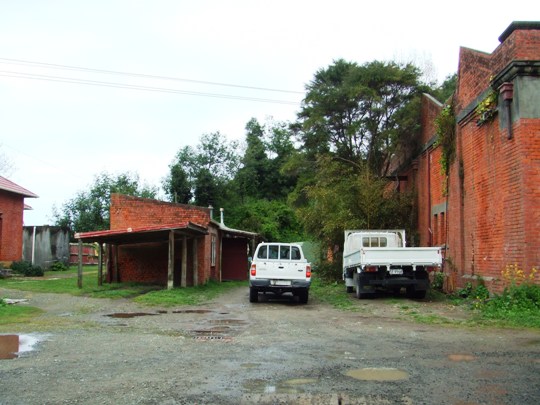
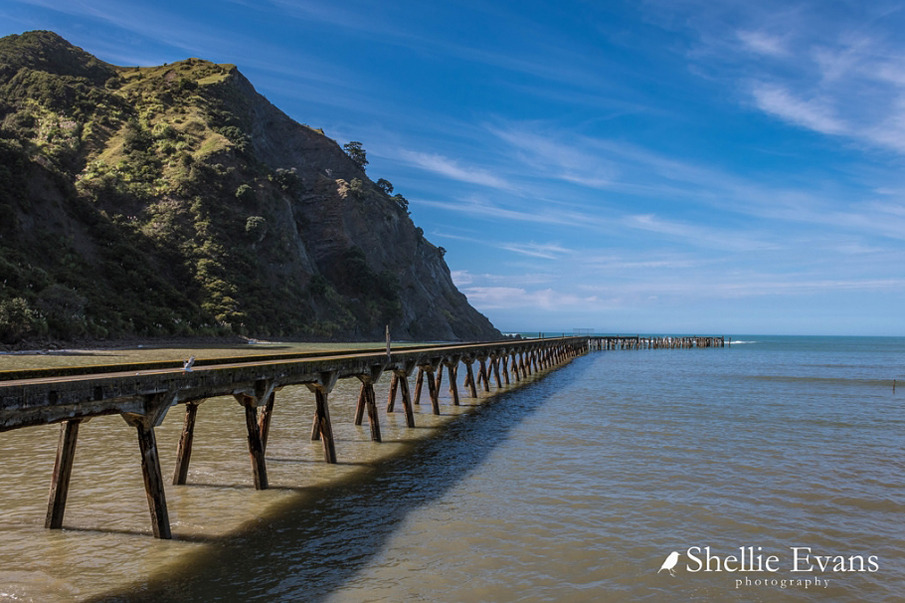
The Tokomaru Bay Freezing Works Ruins are a tangible reminder of the role that agriculture has played in the development of the Tairawhiti region, and its now-decayed state bears silent witness to the highs and lows of economic growth and decline in provincial and coastal New Zealand. 'While the opening of Taruheru and Kaiti works was good news for farmers closer to Gisborne,' writes Sheridan Gundry, 'those in the northern parts of the district still faced difficulties disposing of surplus stock and making money from both meat and wool.' Tired of driving stock to Gisborne and having it arrive in poor condition, or disposing of ewes at the boiling down works near Te Puia, local farmers formed the Tokomaru Sheep Farmers Freezing Co. Ltd on the 18 March 1909. The first directors were Sir Apirana Ngata, K. S. and H. B. Williams, E. R. Murphy, W Busby, G. M. Reynolds and H. D. deLatour; the first manager was H. C. Dawson. The company purchased land in the Tawhiti No.1 block, in a deal brokered by Sir Apirana Ngata that resulted in Te Whanau a Ruataupare, the owners, holding shares in the new company.
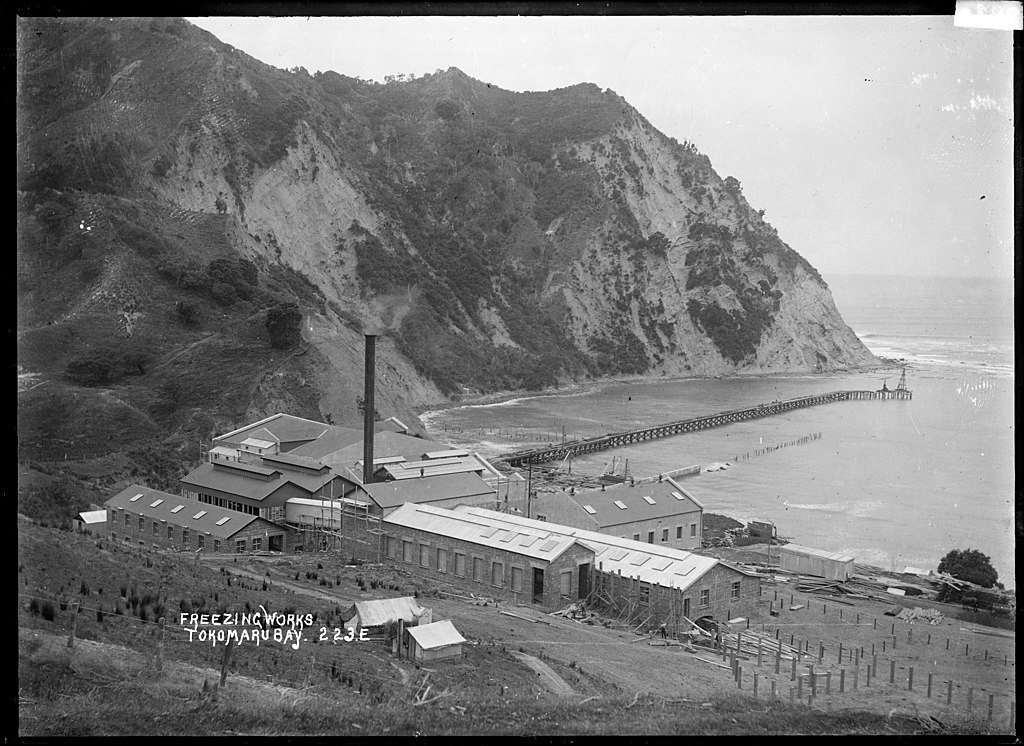
The new works were built at Waima, at the northern end of Tokomaru Bay. The Poverty Bay Herald reported in 1910 that it was proving difficult to get carpenters and labourers for the contract, and noted that the job was expected to last eight or nine months. The works were built of brick, for £39,000 by Bull Bros, Napier, and they opened on 24 January 1911.
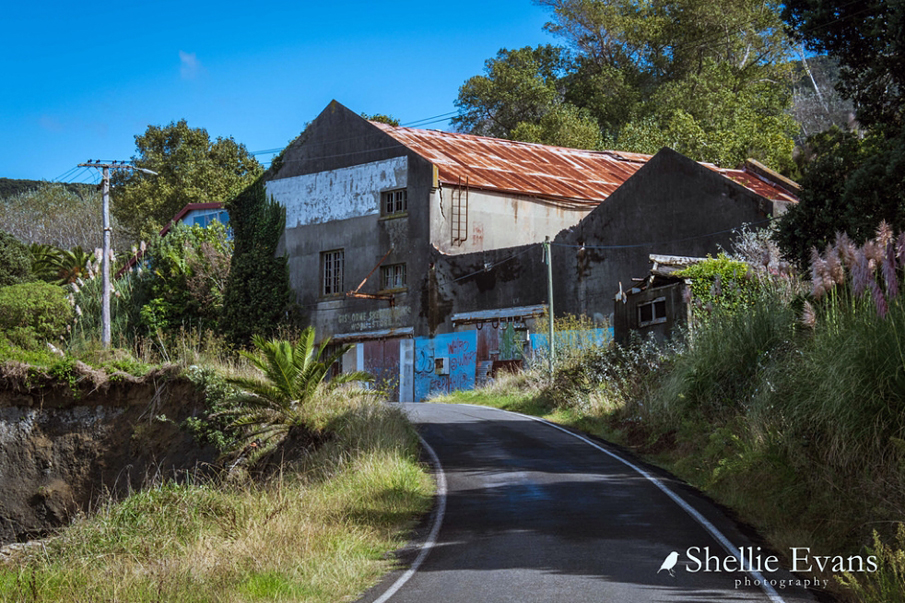
The works was a group of plastered-brick and concrete buildings with timber internal partitions and gabled roofs, between one and three storeys high. Several buildings were constructed adjoining each other and formed a continuous façade along the road. In August 1913 an estimated £15,000 of damage was caused by fire, which began in the battery room, then spread along the timber lined walls and roofs of the main corridor to the freezing chambers. By September 1913 renovation work by Messrs Bull Bros was steadily progressing.
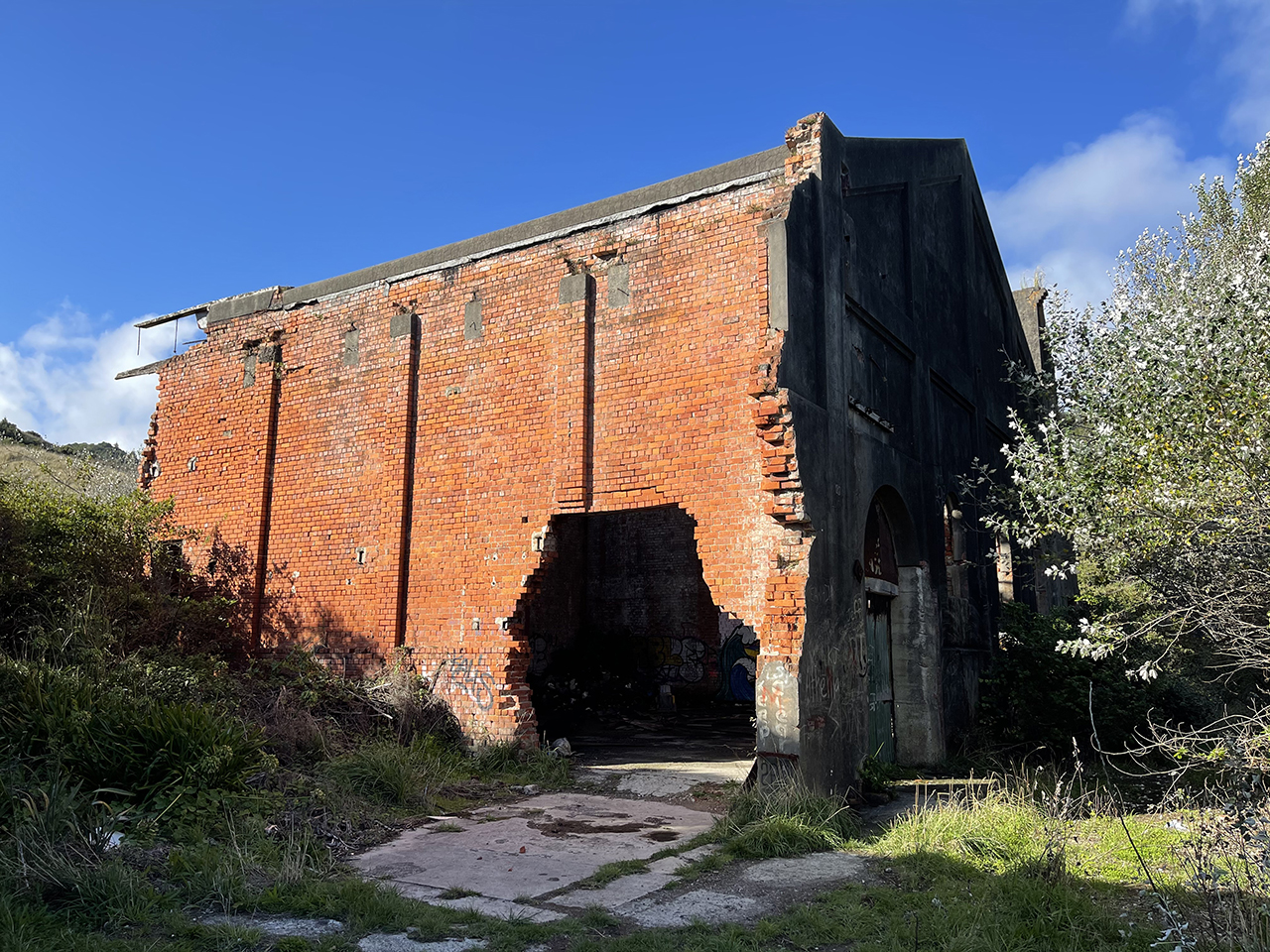
In 1917 the works was extended by the addition of a large three storey, concrete building over the Waihi stream.
In 1921 the Gisborne Sheep Farmers Frozen Meat and Mercantile Co. bought the works. They were sold again in 1944, to Borthwicks (NZ) Ltd. Improvement in overland transport routes, and the loss of overseas shipping from the Tokomaru Bay wharf in the early 1940s, meant that there was less benefit in local farmers taking their stock to the Tokomaru Bay freezing works. The loss of overseas shipping was a serious blow, and the works closed in 1952. The land was sold, and in 1953 the works were partially demolished and stripped, and the salvaged materials were utilised in various building projects around the district including houses, a yacht, and a bank building. Today, the 1917 building is the most intact. It has three storey walls with a projecting gable in the centre of the main façade. It was built across the creek and so has massive concrete piers several metres high for foundations. The original 1911 building has lost most of its façade and the interior is overgrown.
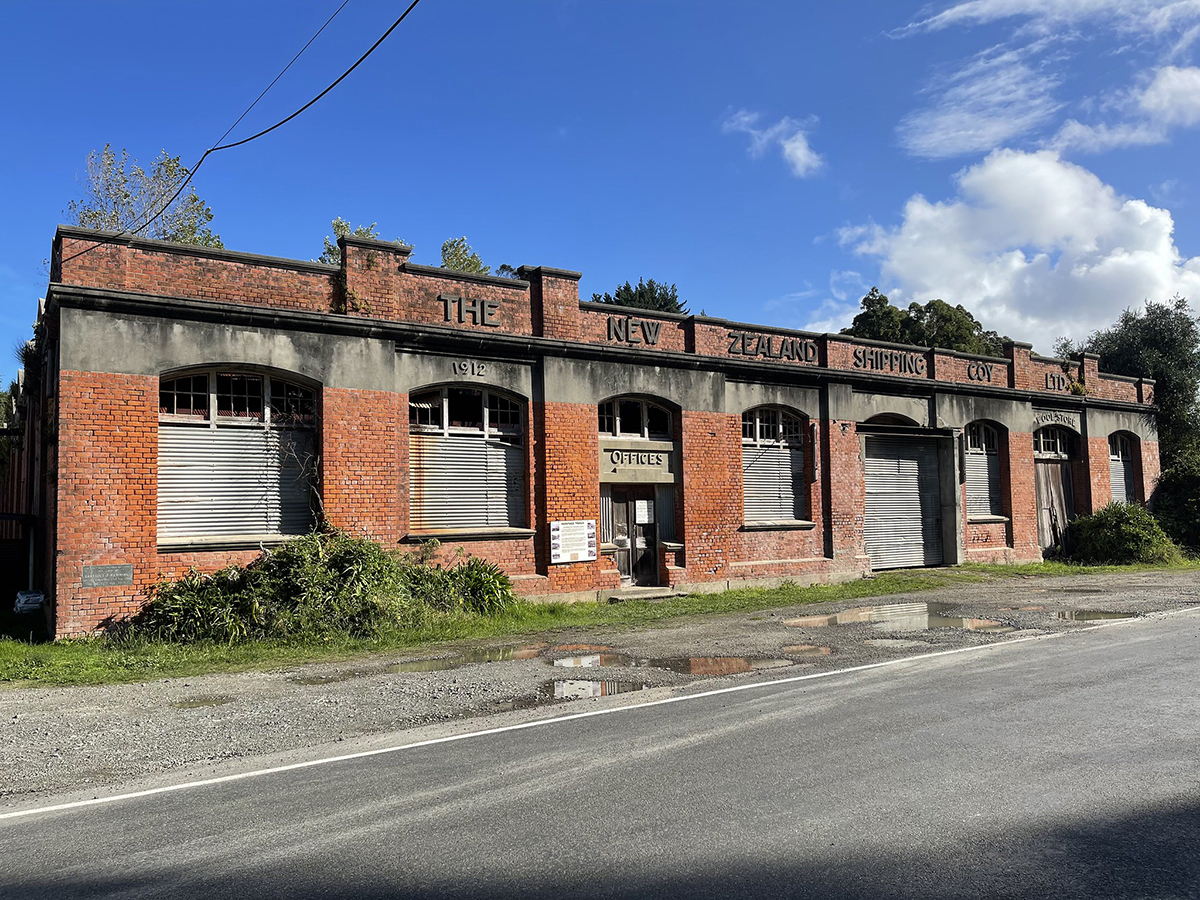
The Tokomaru Bay Freezing Works Ruins have significance as an industrial ruin. It is a rich statement about the failures of the promise of capitalism, and an escape from the predictability, sameness and sense of control found in the built environment. It has historical importance as the remaining evidence of Tokomaru Bay's only large scale industry, which between 1909 and 1952 provided jobs for thousands of people in the area. It is part of the Waima precinct, a group of buildings and structures of similar ages and interrelated functions which includes the New Zealand Shipping Co. building, stable, manager's house and wharf. The ruin speaks to the importance of farming in the Tairawhiti region, and as part of a network of freezing works ruins in Gisborne and Hicks Bay, indicates how extensive this industry was in the early years of the twentieth century.
The new works were built at Waima, at the northern end of Tokomaru Bay. The Poverty Bay Herald reported in 1910 that it was proving difficult to get carpenters and labourers for the contract, and noted that the job was expected to last eight or nine months. The works were built of brick, for £39,000 by Bull Bros, Napier, and they opened on 24 January 1911.
The works was a group of plastered-brick and concrete buildings with timber internal partitions and gabled roofs, between one and three storeys high. Several buildings were constructed adjoining each other and formed a continuous façade along the road. In August 1913 an estimated £15,000 of damage was caused by fire, which began in the battery room, then spread along the timber lined walls and roofs of the main corridor to the freezing chambers. By September 1913 renovation work by Messrs Bull Bros was steadily progressing.
In 1917 the works was extended by the addition of a large three storey, concrete building over the Waihi stream.
In 1921 the Gisborne Sheep Farmers Frozen Meat and Mercantile Co. bought the works. They were sold again in 1944, to Borthwicks (NZ) Ltd. Improvement in overland transport routes, and the loss of overseas shipping from the Tokomaru Bay wharf in the early 1940s, meant that there was less benefit in local farmers taking their stock to the Tokomaru Bay freezing works. The loss of overseas shipping was a serious blow, and the works closed in 1952. The land was sold, and in 1953 the works were partially demolished and stripped, and the salvaged materials were utilised in various building projects around the district including houses, a yacht, and a bank building. Today, the 1917 building is the most intact. It has three storey walls with a projecting gable in the centre of the main façade. It was built across the creek and so has massive concrete piers several metres high for foundations. The original 1911 building has lost most of its façade and the interior is overgrown.
The Tokomaru Bay Freezing Works Ruins have significance as an industrial ruin. It is a rich statement about the failures of the promise of capitalism, and an escape from the predictability, sameness and sense of control found in the built environment. It has historical importance as the remaining evidence of Tokomaru Bay's only large scale industry, which between 1909 and 1952 provided jobs for thousands of people in the area. It is part of the Waima precinct, a group of buildings and structures of similar ages and interrelated functions which includes the New Zealand Shipping Co. building, stable, manager's house and wharf. The ruin speaks to the importance of farming in the Tairawhiti region, and as part of a network of freezing works ruins in Gisborne and Hicks Bay, indicates how extensive this industry was in the early years of the twentieth century.