DonateMembershipVisit Heritage
  • Tūrangawaewae
    Places
  • Tira Māori
    Māori Heritage
  • Poutairangahia
    Archaeology
  • Rauemi
    Resources
  • Mō Tātou
    About Us
  • New Zealand Heritage List
  • Nominate and submit
  • Explore the List
  • National Historic Landmarks
  • Plaques
  • Rainbow List Project
  • Lost heritage
  • Visit Heritage
  • Our properties
  • Turnbull House Project
  • Collections
  • Shop
  • Tohu Whenua
  • Tira Māori
  • Conserving Māori heritage
  • Marae built heritage
  • Māori heritage on the List
  • Hinemihi—Te Hokinga Mai
  • What is archaeology?
  • Is there a site on my property?
  • What are my legal requirements?
  • Affecting an archaeological site
  • Declaring an archaeological site
  • Archaeology FAQs
  • Archaeology Digital Library
  • Archaeology guidelines and templates
  • Resources
  • Funding
  • Publications
  • Sustainable management guides
  • Disaster recovery
  • Podcasts & digital resources
  • Education Hub
  • Conservation plans
  • About
  • Board
  • Māori Heritage Council
  • Senior Staff
  • Offices
  • Contact us
  • Careers
  • Covenants
  • Fast-track
  • Corporate documents
  • Currently consulting on
  • Our submissions
  • News
  • Covid-19 response
Quick links
Rārangi Kōrero | The List
Explore the List
National Historic Landmarks
Ngā Manawhenua o Aotearoa me ōna Kōrero Tūturu
Quick links
Tapuwae
A Vision for Places of Māori Heritage
Funding for Māori Heritage
Resources
Quick links
Archaeological Authority Portal
Applying for an archaeological authority
Archaeology FAQs
Browse the most frequently asked questions about archaeological authorities and the archaeological process.
Quick links
Quick links
News
News Keep up to date with Heritage New Zealand Pouhere Taonga
Membership
Membership Find out more and sign up today
DonateMembershipVisit Heritage
  • Tūrangawaewae
    Places
  • Tira Māori
    Māori Heritage
  • Poutairangahia
    Archaeology
  • Rauemi
    Resources
  • Mō Tātou
    About Us
  • New Zealand Heritage List
  • Nominate and submit
  • Explore the List
  • National Historic Landmarks
  • Plaques
  • Rainbow List Project
  • Lost heritage
  • Visit Heritage
  • Our properties
  • Turnbull House Project
  • Collections
  • Shop
  • Tohu Whenua
  • Tira Māori
  • Conserving Māori heritage
  • Marae built heritage
  • Māori heritage on the List
  • Hinemihi—Te Hokinga Mai
  • What is archaeology?
  • Is there a site on my property?
  • What are my legal requirements?
  • Affecting an archaeological site
  • Declaring an archaeological site
  • Archaeology FAQs
  • Archaeology Digital Library
  • Archaeology guidelines and templates
  • Resources
  • Funding
  • Publications
  • Sustainable management guides
  • Disaster recovery
  • Podcasts & digital resources
  • Education Hub
  • Conservation plans
  • About
  • Board
  • Māori Heritage Council
  • Senior Staff
  • Offices
  • Contact us
  • Careers
  • Covenants
  • Fast-track
  • Corporate documents
  • Currently consulting on
  • Our submissions
  • News
  • Covid-19 response
Quick links
Rārangi Kōrero | The List
Explore the List
National Historic Landmarks
Ngā Manawhenua o Aotearoa me ōna Kōrero Tūturu
Quick links
Tapuwae
A Vision for Places of Māori Heritage
Funding for Māori Heritage
Resources
Quick links
Archaeological Authority Portal
Applying for an archaeological authority
Archaeology FAQs
Browse the most frequently asked questions about archaeological authorities and the archaeological process.
Quick links
Quick links
News
News Keep up to date with Heritage New Zealand Pouhere Taonga
Membership
Membership Find out more and sign up today
  • Nominate and submit
  • National Historic Landmarks
  • Nominate and submit
  • National Historic Landmarks
  • Conserving Māori heritage
  • Marae built heritage
  • Conserving Māori heritage
  • Marae built heritage
  • Archaeological authorities
  • Archaeology Digital Library
  • Archaeological authorities
  • Archaeology Digital Library
  • All resources
  • Publications
  • Funding
  • All resources
  • Publications
  • Funding
  • FAQs
  • FAQs
Follow us on:
Places
  • Nominate and submit
  • National Historic Landmarks
Tira Māori
  • Conserving Māori heritage
  • Marae built heritage
Archaeology
  • Archaeological authorities
  • Archaeology Digital Library
Resources
  • All resources
  • Publications
  • Funding
FAQs
  • FAQs
Follow us on
HomePrivacyTerms and conditionsAbout this site
© Heritage New Zealand Pouhere Taonga 2026.
 
Courthouse

119 Church Street, OPOTIKI

Private

Historic Place Category 2

List No. 3502
Quick links:
List GalleryLocationDetails
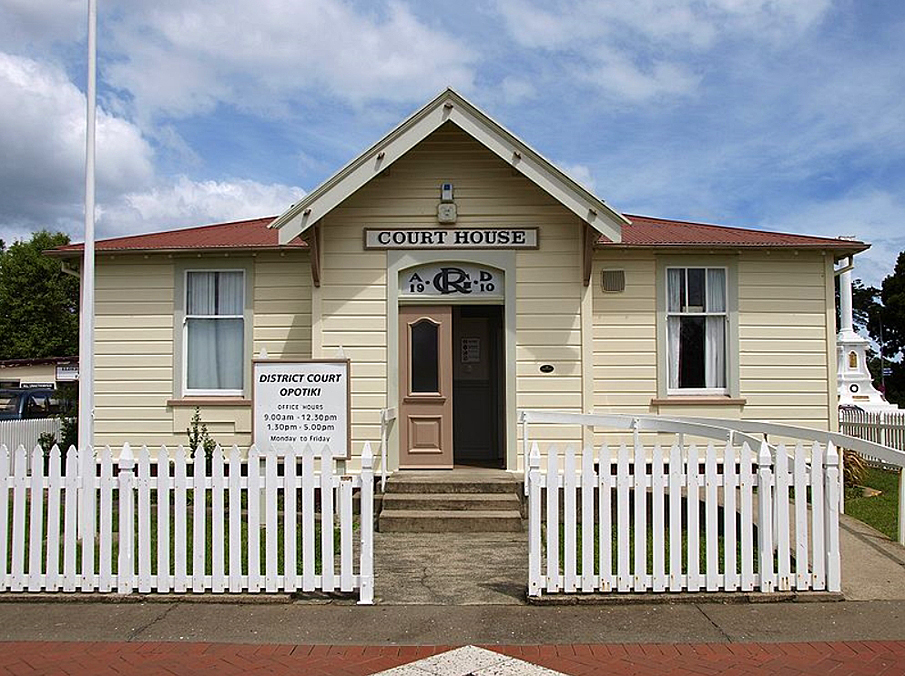
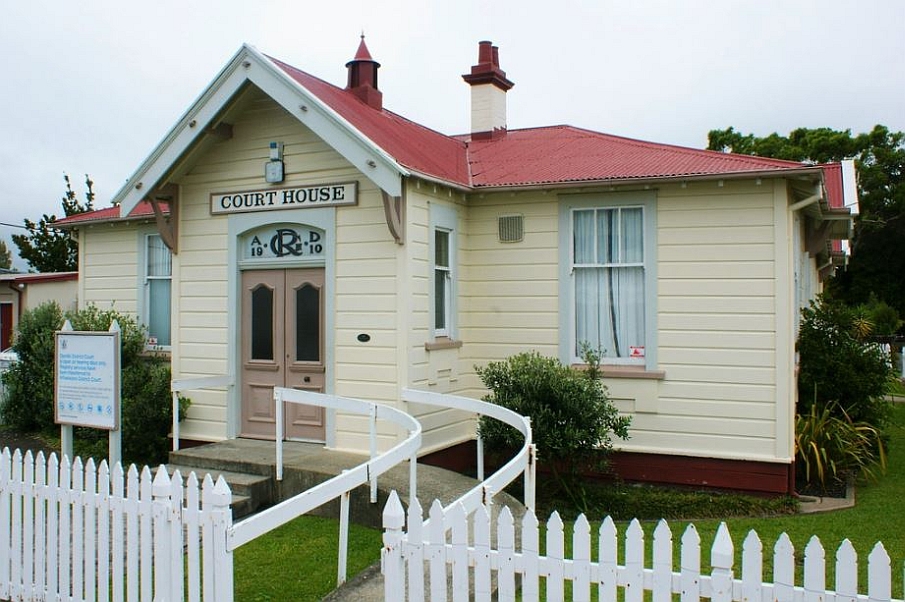
The courthouse at Opotiki reflects the town's historical role as a centre for the administration of law and order in the eastern Bay of Plenty. It is also linked with the ongoing improvement of government facilities following New Zealand's establishment as a Dominion in 1907. Built in 1910-1911, the timber building was erected on the corner of Church and Elliott Streets, the main crossroads in the settlement. The structure replaced an 1870s courthouse on the same site, which was part of a group of government buildings - including a post office and police station - that were rebuilt in the years immediately after 1910. The courthouse occupied the most prominent position of these buildings and was the first to be replaced.

As one of the most pre-eminent government buildings in Opotiki, the courthouse symbolised the presence and authority of government rule. The administration of government, and law and order in particular, was a significant issue in Opotiki, whose foundation as a military and commercial settlement in the 1860s had occurred on confiscated Te Whakatohea land. Erected at least partly as a result of local pressure, the courthouse was built not only shortly after New Zealand's Dominion status was achieved, but at the same time that civic government for the town was cemented. Opotiki was constituted as a borough in 1911, when its population was just over 1,000 inhabitants. The building fulfilled functions other than those connected with the judicial system, including the registration of births, deaths and marriages. The site had an important association with the first establishment of local government in the eastern Bay of Plenty, as a meeting in the previous courthouse in 1877 had founded the Whakatane County Council.

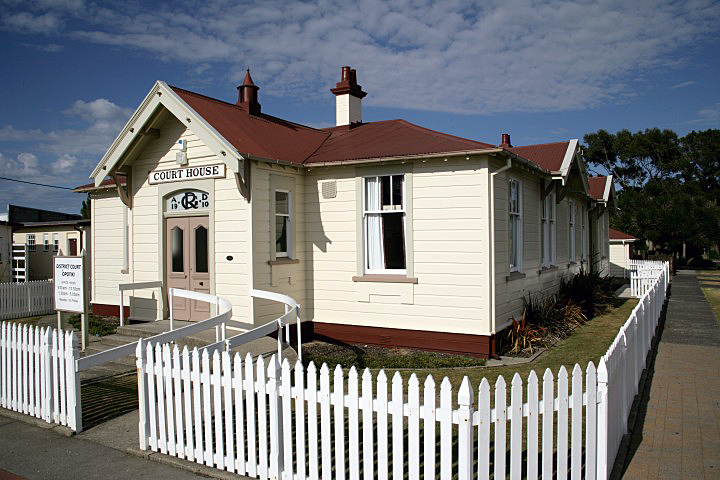
The courthouse was erected as a single-storey weatherboard structure, with a courtroom, judge's chamber, offices, and a strong room towards the rear. It was constructed at an initial cost of £1,073 under contract to C. M. Grant of Opotiki. Designed by the Public Works Department headed by John Campbell, the building incorporated influences from domestic architecture, including elements of transitional bungalow style. These included a low-pitch roof with cross gables, exposed rafters, and mouldings under the windows. Nevertheless, the scale of the courthouse and aspects such as the logo 'GR' ('George Rex', or King George V) above the main door, made it evident that it was a government building. The restrained ornamentation was part of a trend seen in other courthouses designed by John Campbell in the 1910s. This can be seen as displaying a more 'democratic' approach to the appearance of some government architecture in the years following the establishment of the Dominion. A strong influence from domestic architecture on the design of provincial courthouses was a common theme in northern New Zealand, extending back into the nineteenth century.

Although the building was formally opened in February 1911, additions were made using day labour by 1912. A long outbuilding to the rear may have been erected partly as a coach house, and was being used as a garage by 1948. For much of the century, prisoners were brought to the courtroom from a lock-up behind the police station next door. Following the closure of the station, a cell block wing was added to the courthouse in 1997. Earlier modifications included relocating the courtroom to the southern side of the building, partly to improve the waiting facilities and create additional office space. The structure avoided the fate of many small courthouses in the 1990s, when many were closed, and remains in regular use by the Department for Courts.

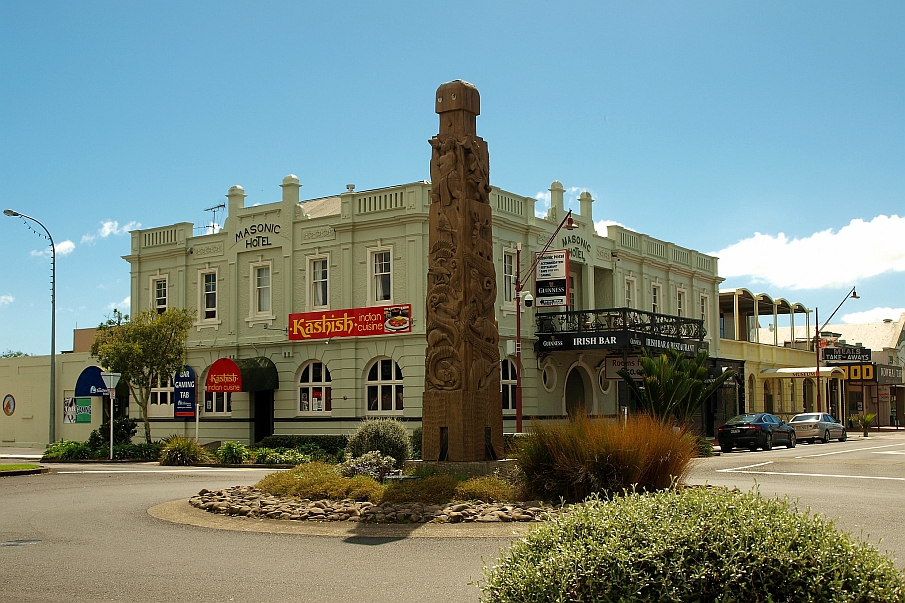
The courthouse at Opotiki is a well-preserved example of small-town judicial architecture from the early 1900s, still being used for its original purpose. It is linked with the improvement of the administrative infrastructure of New Zealand in the early years of the Dominion (1907-1947), and the architectural work of John Campbell. The building demonstrates Opotiki's administrative role in the Bay of Plenty region, and is believed to be the earliest purpose-built government building in the town to survive in its original location. It retains elements, such as an original safe, that are directly related to its early judicial and administrative functions. Located on the site of an earlier courthouse, its position directly reflects mid nineteenth-century ideas about the layout of new military and commercial settlements. The building adds to the streetscape and distinctive character of Opotiki, being located on a prominent corner. It is part of a valuable historical urban landscape of nineteenth and early-twentieth century date, which contains other heritage buildings, including the nearby Masonic Hotel and War Memorial.
Courthouse, Opotiki. Image courtesy of www.flickr.com | PhilBee NZ - Phil Braithwaite | 24/03/2017 | Phil Braithwaite
Courthouse, Opotiki. CC BY-SA 3.0 Image courtesy of commons.wikimedia.org | Ulrich Lange | 03/02/2010 | Ulrich Lange - Wikimedia Commons
Courthouse, Opotiki 2007 | K Pfeiffer | Heritage New Zealand
Courthouse, Opotiki. Image courtesy of www.flickr.com | PhilBee NZ - Phil Braithwaite | 24/03/2017 | Phil Braithwaite
Courthouse, Opotiki. CC BY-SA 3.0 Image courtesy of commons.wikimedia.org | Ulrich Lange | 03/02/2010 | Ulrich Lange - Wikimedia Commons
Courthouse, Opotiki 2007 | K Pfeiffer | Heritage New Zealand

List Entry Information

Overview

Status
Listed

List Entry Status
Historic Place Category 2

Access
Private/No Public Access

List Number
3502

Date Entered
5th April 1984

Date of Effect
5th April 1984

City/District Council
Ōpōtiki District

Region
Bay of Plenty Region

Legal description

Allot 447 Sec 2 Town of Opotiki, Justice Purposes Gaz 1991 p.3522

Detailed List Entry

Construction Professional

Name

Campbell, John

Type

Architect

Biography

John Campbell (1857-1942) served his articles under John Gordon (c1835-1912) in Glasgow. He arrived in Dunedin in 1882 and after a brief period as a draughtsman with Mason and Wales joined the Dunedin branch of the Public Works Department in 1883. His first known work, an unbuilt design for the Dunedin Railway Station, reveals an early interest in Baroque architecture. In November 1888 Campbell was transferred to Wellington where in 1889 he took up the position of draughtsman in charge of the Public Buildings Division of the Public Works Department. He remained in charge of the design of government buildings throughout New Zealand until his retirement in 1922, becoming in 1909 the first person to hold the position of Government Architect. Government architecture designed under his aegis evidences a change in style from Queen Anne to Edwardian Baroque. His best-known Queen Anne design is the Dunedin Police Station (1895-8), modelled on Richard Norman Shaw's New Scotland Yard (1887-90). Among his most exuberant Edwardian Baroque buildings is the Public Trust Office, Wellington (1905-09). Although Campbell designed the Dunedin Law Courts (1899-1902) in the Gothic style with a Scottish Baronial inflection, he established Edwardian Baroque as the government style for police stations, courthouses and post offices throughout New Zealand. In 1911 Campbell won the nation-wide architectural competition for the design of Parliament Buildings, Wellington. Although only partially completed, Parliament House is the crowning achievement of Campbell's career.

Name

Grant, C.M.

Type

Builder

Biography

No biography is currently available for this construction professional

Construction Details

Type

Other

Description

Site of earlier courthouse

Period

1870s

Start Year

1910

Finish Year

1911

Type

Original Construction

Description

Construction of Courthouse

Start Year

1912

Type

Addition

Description

Additions using day-labour

Start Year

1987

Type

Modification

Description

Internal alterations

Start Year

1997

Type

Addition

Description

Cell block wing on south-western corner

Notable Features

Registration covers the building, its fixtures and finishes. It also includes recent modifications. It is associated with an early outbuilding to the west, while archaeological deposits linked to the 1870s courthouse - as well as earlier colonial and Maori settlement - may also survive. The whare from which the Rev. Volkner was taken for his execution in 1865 is reputed to have been located on the post office site, a short distance to the south of the courthouse.

Reference

Completion Date

20th June 2003

Report Written By

Martin Jones & Shirley Arabin

Information Sources

Appendices to the Journals of the House of Representatives (AJHR)

Appendices to the Journals of the House of Representatives

Auckland Weekly News

Auckland Weekly News

Clark, 1977

Lindsay Clark (ed.), Opotiki 100 Years: 1877-1977, Whakatane, 1977

Richardson, 1988

Peter Richardson, 'An Architecture of Empire: The Government Buildings of John Campbell in New Zealand', MA Thesis, University of Canterbury, 1988

Report Written By

This place was identified as significant under previous legislation with different information requirements. It remains significant under the current legislation. There is opportunity under our legislation and policies to add to this information. Further information about this place may be available from the Lower Northern Office of Heritage New Zealand Pouhere Taonga. Please note that entry on the New Zealand Heritage List/Rarangi Korero identifies only the heritage values of the property concerned, and should not be construed as advice on the state of the property, or as a comment of its soundness or safety, including in regard to earthquake risk, safety in the event of fire, or insanitary conditions.

Further Information

Current Usages

Uses: Law Enforcement

Specific Usage: Courthouse

Former Usages

General Usage:: Law Enforcement

Specific Usage: Courthouse

Themes

Web Links

Overview

Status

Listed

List Entry Status

Historic Place Category 2

Access

Private/No Public Access

List Number

3502

Date Entered

5th April 1984

Date of Effect

5th April 1984

City/District Council

Ōpōtiki District

Region

Bay of Plenty Region

Legal description

Allot 447 Sec 2 Town of Opotiki, Justice Purposes Gaz 1991 p.3522

Status

Listed

List Entry Status

Historic Place Category 2

Access

Private/No Public Access

List Number

3502

Date Entered

5th April 1984

Date of Effect

5th April 1984

City/District Council

Ōpōtiki District

Region

Bay of Plenty Region

Legal description

Allot 447 Sec 2 Town of Opotiki, Justice Purposes Gaz 1991 p.3522

Construction Information

Construction Professional

Name

Campbell, John

Type

Architect

Biography

John Campbell (1857-1942) served his articles under John Gordon (c1835-1912) in Glasgow. He arrived in Dunedin in 1882 and after a brief period as a draughtsman with Mason and Wales joined the Dunedin branch of the Public Works Department in 1883. His first known work, an unbuilt design for the Dunedin Railway Station, reveals an early interest in Baroque architecture. In November 1888 Campbell was transferred to Wellington where in 1889 he took up the position of draughtsman in charge of the Public Buildings Division of the Public Works Department. He remained in charge of the design of government buildings throughout New Zealand until his retirement in 1922, becoming in 1909 the first person to hold the position of Government Architect. Government architecture designed under his aegis evidences a change in style from Queen Anne to Edwardian Baroque. His best-known Queen Anne design is the Dunedin Police Station (1895-8), modelled on Richard Norman Shaw's New Scotland Yard (1887-90). Among his most exuberant Edwardian Baroque buildings is the Public Trust Office, Wellington (1905-09). Although Campbell designed the Dunedin Law Courts (1899-1902) in the Gothic style with a Scottish Baronial inflection, he established Edwardian Baroque as the government style for police stations, courthouses and post offices throughout New Zealand. In 1911 Campbell won the nation-wide architectural competition for the design of Parliament Buildings, Wellington. Although only partially completed, Parliament House is the crowning achievement of Campbell's career.

Name

Grant, C.M.

Type

Builder

Biography

No biography is currently available for this construction professional

Construction Details

Type

Other

Description

Site of earlier courthouse

Period

1870s

Start Year

1910

Finish Year

1911

Type

Original Construction

Description

Construction of Courthouse

Start Year

1912

Type

Addition

Description

Additions using day-labour

Start Year

1987

Type

Modification

Description

Internal alterations

Start Year

1997

Type

Addition

Description

Cell block wing on south-western corner

Notable Features

Registration covers the building, its fixtures and finishes. It also includes recent modifications. It is associated with an early outbuilding to the west, while archaeological deposits linked to the 1870s courthouse - as well as earlier colonial and Maori settlement - may also survive. The whare from which the Rev. Volkner was taken for his execution in 1865 is reputed to have been located on the post office site, a short distance to the south of the courthouse.

Construction Professional

Name

Campbell, John

Type

Architect

Biography

John Campbell (1857-1942) served his articles under John Gordon (c1835-1912) in Glasgow. He arrived in Dunedin in 1882 and after a brief period as a draughtsman with Mason and Wales joined the Dunedin branch of the Public Works Department in 1883. His first known work, an unbuilt design for the Dunedin Railway Station, reveals an early interest in Baroque architecture. In November 1888 Campbell was transferred to Wellington where in 1889 he took up the position of draughtsman in charge of the Public Buildings Division of the Public Works Department. He remained in charge of the design of government buildings throughout New Zealand until his retirement in 1922, becoming in 1909 the first person to hold the position of Government Architect. Government architecture designed under his aegis evidences a change in style from Queen Anne to Edwardian Baroque. His best-known Queen Anne design is the Dunedin Police Station (1895-8), modelled on Richard Norman Shaw's New Scotland Yard (1887-90). Among his most exuberant Edwardian Baroque buildings is the Public Trust Office, Wellington (1905-09). Although Campbell designed the Dunedin Law Courts (1899-1902) in the Gothic style with a Scottish Baronial inflection, he established Edwardian Baroque as the government style for police stations, courthouses and post offices throughout New Zealand. In 1911 Campbell won the nation-wide architectural competition for the design of Parliament Buildings, Wellington. Although only partially completed, Parliament House is the crowning achievement of Campbell's career.

Name

Grant, C.M.

Type

Builder

Biography

No biography is currently available for this construction professional

Construction Details

Type

Other

Description

Site of earlier courthouse

Period

1870s

Start Year

1910

Finish Year

1911

Type

Original Construction

Description

Construction of Courthouse

Start Year

1912

Type

Addition

Description

Additions using day-labour

Start Year

1987

Type

Modification

Description

Internal alterations

Start Year

1997

Type

Addition

Description

Cell block wing on south-western corner

Notable Features

Registration covers the building, its fixtures and finishes. It also includes recent modifications. It is associated with an early outbuilding to the west, while archaeological deposits linked to the 1870s courthouse - as well as earlier colonial and Maori settlement - may also survive. The whare from which the Rev. Volkner was taken for his execution in 1865 is reputed to have been located on the post office site, a short distance to the south of the courthouse.

Reference

Historical and Associated Iwi / Hapū / Whānau

Completion Date

20th June 2003

Report Written By

Martin Jones & Shirley Arabin

Information Sources

Appendices to the Journals of the House of Representatives (AJHR)

Appendices to the Journals of the House of Representatives

Auckland Weekly News

Auckland Weekly News

Clark, 1977

Lindsay Clark (ed.), Opotiki 100 Years: 1877-1977, Whakatane, 1977

Richardson, 1988

Peter Richardson, 'An Architecture of Empire: The Government Buildings of John Campbell in New Zealand', MA Thesis, University of Canterbury, 1988

Other Information

This place was identified as significant under previous legislation with different information requirements. It remains significant under the current legislation. There is opportunity under our legislation and policies to add to this information. Further information about this place may be available from the Lower Northern Office of Heritage New Zealand Pouhere Taonga. Please note that entry on the New Zealand Heritage List/Rarangi Korero identifies only the heritage values of the property concerned, and should not be construed as advice on the state of the property, or as a comment of its soundness or safety, including in regard to earthquake risk, safety in the event of fire, or insanitary conditions.

Historical and Associated Iwi / Hapū / Whānau

Completion Date

20th June 2003

Report Written By

Martin Jones & Shirley Arabin

Information Sources

Appendices to the Journals of the House of Representatives (AJHR)

Appendices to the Journals of the House of Representatives

Auckland Weekly News

Auckland Weekly News

Clark, 1977

Lindsay Clark (ed.), Opotiki 100 Years: 1877-1977, Whakatane, 1977

Richardson, 1988

Peter Richardson, 'An Architecture of Empire: The Government Buildings of John Campbell in New Zealand', MA Thesis, University of Canterbury, 1988

Other Information

This place was identified as significant under previous legislation with different information requirements. It remains significant under the current legislation. There is opportunity under our legislation and policies to add to this information. Further information about this place may be available from the Lower Northern Office of Heritage New Zealand Pouhere Taonga. Please note that entry on the New Zealand Heritage List/Rarangi Korero identifies only the heritage values of the property concerned, and should not be construed as advice on the state of the property, or as a comment of its soundness or safety, including in regard to earthquake risk, safety in the event of fire, or insanitary conditions.

Further Information

Current Usages

Uses: Law Enforcement

Specific Usage: Courthouse

Former Usages

General Usage: Law Enforcement

Specific Usage: Courthouse

Current Usages

Uses: Law Enforcement

Specific Usage: Courthouse

Former Usages

General Usage: Law Enforcement

Specific Usage: Courthouse

Location

Loading
Related listings
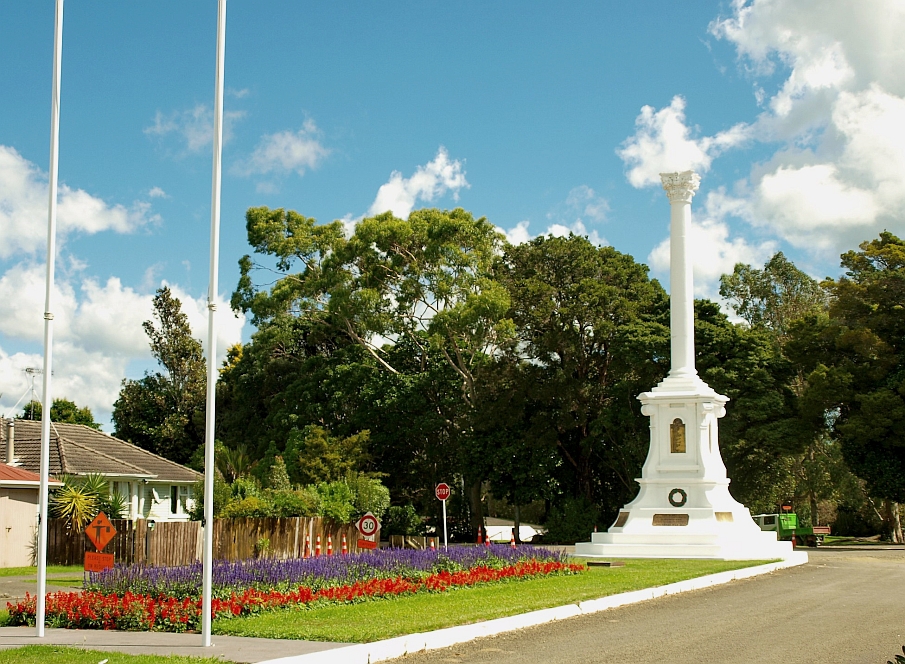
War Memorial, Opotiki. Image courtesy of www.flickr.com
War Memorial
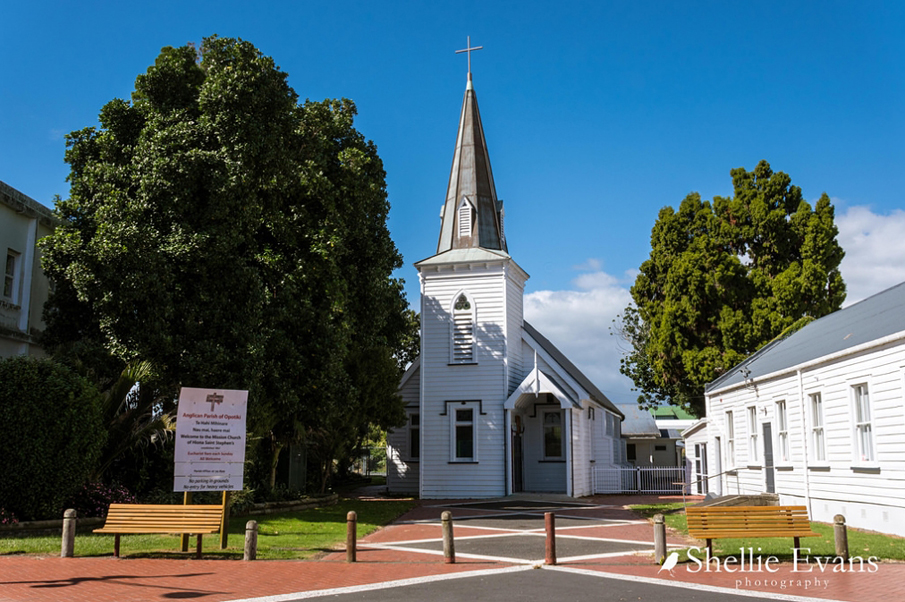
Hiona St Stephen's Church, Opotiki. Image courtesy of www.flickr.com
Hiona St Stephen's Church
Masonic Hotel, Opotiki. Image courtesy of www.flickr.com
Masonic Hotel
Hiona St Stephen's Church, Opotiki. Image courtesy of www.flickr.com
Hiona St Stephen's Church
War Memorial, Opotiki. Image courtesy of www.flickr.com
War Memorial
Masonic Hotel, Opotiki. Image courtesy of www.flickr.com
Masonic Hotel
Stay up to date with Heritage this month