Rostgard's Building is a reminder of Opotiki's prosperity as a port and supply town in the eastern Bay of Plenty during the early 1900s. An ornate two-storey structure containing shops and offices, it was erected in 1914. The brick building was constructed for the Coromandel draper, Hans Rostgard (1868-1941), who had come to New Zealand from Denmark. Up to 2,500 Danes migrated to the colony during the early 1870s, although the number of arrivals decreased in the later nineteenth century. Rostgard had first established a drapery in Coromandel in 1896 before setting up branches in Auckland and Opotiki. By 1906 Rostgard Bros. were operating a business in Church Street, Opotiki, probably under the management of Hans' brother Niels (?-1947). Expansion was partly made possible by renewed gold mining in the Coromandel, where Rostgard's original drapery kept late opening hours. This profited from miners and other customers who bought items after hotel closing time at 11 p.m.
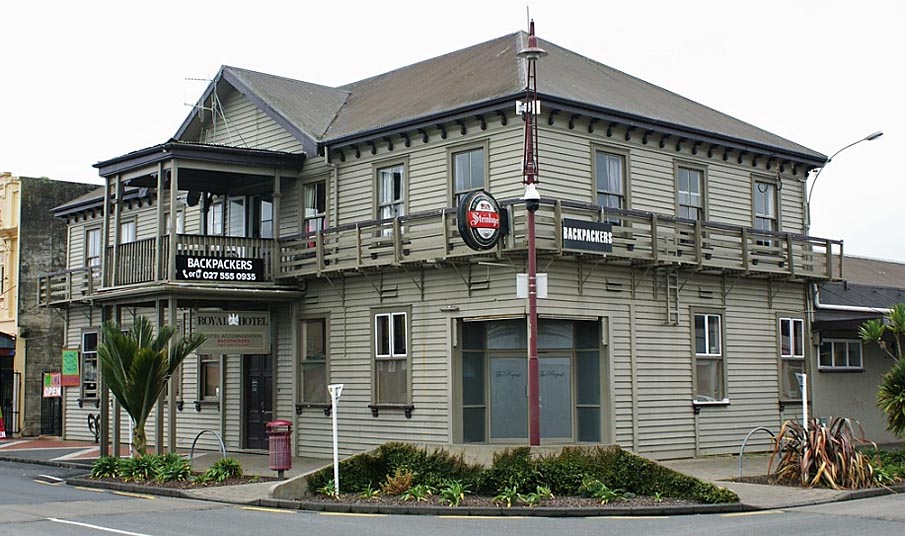
The new Rostgard's Building was prominently erected on a corner site in Opotiki's main commercial street, at the same crossroads as the Royal Hotel. It replaced a more modest timber shop, purchased by Hans Rostgard in 1908. It was divided into several shops at ground floor level, with the Rostgard business most likely occupying the corner premises. Other tenants included John Love, a tailor, and a saddler, W. McCready, who advertised himself as making any description of harness and saddlery on the site. Upstairs rooms were rented out as professional offices with Whincup and West, registered architects, advertising their presence in 1915. Rostgard Bros. remained only until 1916-1917, possibly forced out by competition from other drapers such as the successful Shalfoon Brothers. Specialist draperies also declined in importance through the early 1900s as their custom was taken by general and department stores.
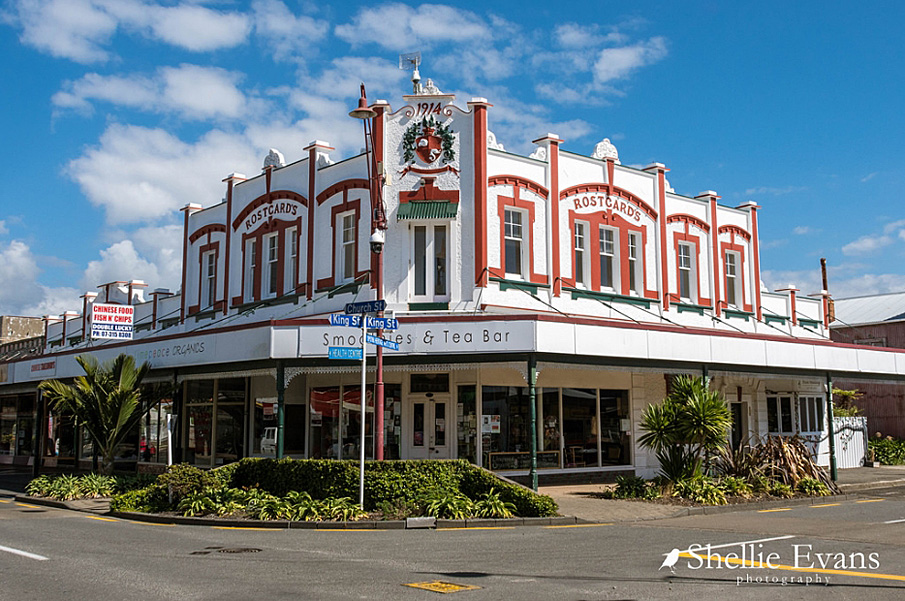
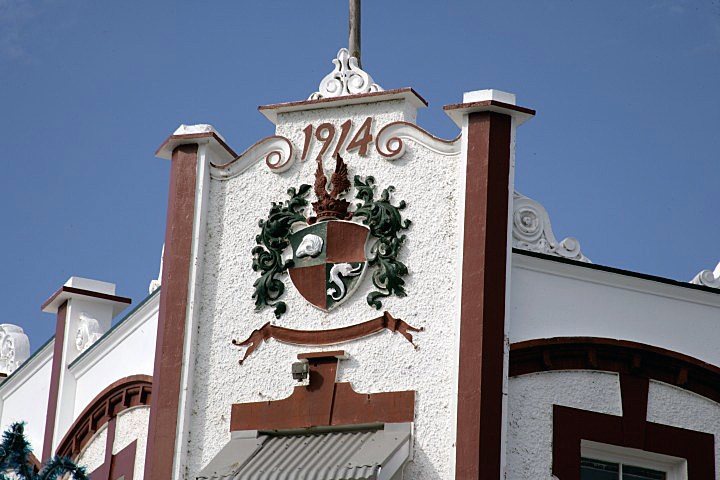
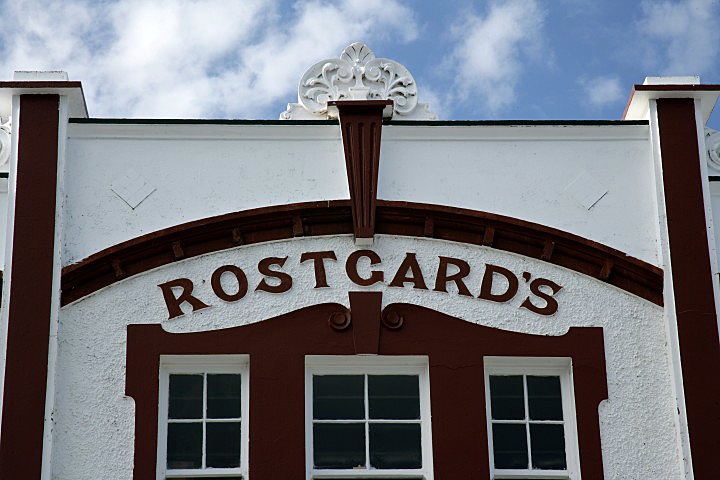
The Baroque-influenced building may have been designed by Whincup and West, although the architect T.H. White - who had considerable experience of commercial design in the Waikato and elsewhere - also practiced in Opotiki in 1914. As one of the most ornate structures in the town, it consciously associated notions of quality and prestige with the Rostgard's business. The burning down of several nearby timber shops in 1913 may have influenced the use of brick, although this material also provided an enhanced sense of architectural grandeur. The structure was erected with the Rostgard's name on both main street elevations, and a large continental European-style coat-of-arms overlooking the crossroads, bearing a ram and a marine animal or fish. These appear to symbolise Rostgard's profession as a draper and coastal trader. The large ground-floor windows and verandah encouraged window-shopping for goods such as clothing, curtains and other fabric. As fashion items, these items were prominently displayed by shopkeepers, encouraging an emerging consumerist trend.
The visual style of the building was copied by a structure immediately to the west although this was erected of corrugated iron with a plastered brick facade. After the drapery business withdrew, Rostgard's Building continued to attract 'high quality' tenants, with the Opotiki Club being founded in one of the upstairs chambers in 1919. The club was a prestigious gentleman's organisation, occupying the building until 1924. Later modifications included converting part of the first floor to residential use by 1947, when it was used as a dwelling by a returned serviceman and his wife during the housing shortage that followed the Second World War (1939-1945). The building remains in use for both commercial and residential purposes (2003).
Rostgard's Building is a visually interesting example of provincial commercial architecture in New Zealand. It reflects the commercial attitudes of the retail trade, and particularly specialist draperies, in the early 1900s, including the importance of advertising and display. The building is significant for its links with Danish immigration, and a multi-ethnic business community in Opotiki before the First World War (1914-1918). The structure also reflects the development of family-based enterprises in the early 1900s, and the importance of coastal communications for trade. It demonstrates the growing prosperity of Opotiki as a port and service town at a regional level, and is associated with the history of significant groups in the community such as the Opotiki Club. Having important aesthetic and landscape values, Rostgard's Building adds to the variety and impact of the historic centre of Opotiki. The building 's value is enhanced by its association with related historic structures in the town - such as Shalfoon's drapery and general store further north on Church Street - which demonstrate different approaches to retail including the development of the small-scale department store.
The new Rostgard's Building was prominently erected on a corner site in Opotiki's main commercial street, at the same crossroads as the Royal Hotel. It replaced a more modest timber shop, purchased by Hans Rostgard in 1908. It was divided into several shops at ground floor level, with the Rostgard business most likely occupying the corner premises. Other tenants included John Love, a tailor, and a saddler, W. McCready, who advertised himself as making any description of harness and saddlery on the site. Upstairs rooms were rented out as professional offices with Whincup and West, registered architects, advertising their presence in 1915. Rostgard Bros. remained only until 1916-1917, possibly forced out by competition from other drapers such as the successful Shalfoon Brothers. Specialist draperies also declined in importance through the early 1900s as their custom was taken by general and department stores.
The Baroque-influenced building may have been designed by Whincup and West, although the architect T.H. White - who had considerable experience of commercial design in the Waikato and elsewhere - also practiced in Opotiki in 1914. As one of the most ornate structures in the town, it consciously associated notions of quality and prestige with the Rostgard's business. The burning down of several nearby timber shops in 1913 may have influenced the use of brick, although this material also provided an enhanced sense of architectural grandeur. The structure was erected with the Rostgard's name on both main street elevations, and a large continental European-style coat-of-arms overlooking the crossroads, bearing a ram and a marine animal or fish. These appear to symbolise Rostgard's profession as a draper and coastal trader. The large ground-floor windows and verandah encouraged window-shopping for goods such as clothing, curtains and other fabric. As fashion items, these items were prominently displayed by shopkeepers, encouraging an emerging consumerist trend.
The visual style of the building was copied by a structure immediately to the west although this was erected of corrugated iron with a plastered brick facade. After the drapery business withdrew, Rostgard's Building continued to attract 'high quality' tenants, with the Opotiki Club being founded in one of the upstairs chambers in 1919. The club was a prestigious gentleman's organisation, occupying the building until 1924. Later modifications included converting part of the first floor to residential use by 1947, when it was used as a dwelling by a returned serviceman and his wife during the housing shortage that followed the Second World War (1939-1945). The building remains in use for both commercial and residential purposes (2003).
Rostgard's Building is a visually interesting example of provincial commercial architecture in New Zealand. It reflects the commercial attitudes of the retail trade, and particularly specialist draperies, in the early 1900s, including the importance of advertising and display. The building is significant for its links with Danish immigration, and a multi-ethnic business community in Opotiki before the First World War (1914-1918). The structure also reflects the development of family-based enterprises in the early 1900s, and the importance of coastal communications for trade. It demonstrates the growing prosperity of Opotiki as a port and service town at a regional level, and is associated with the history of significant groups in the community such as the Opotiki Club. Having important aesthetic and landscape values, Rostgard's Building adds to the variety and impact of the historic centre of Opotiki. The building 's value is enhanced by its association with related historic structures in the town - such as Shalfoon's drapery and general store further north on Church Street - which demonstrate different approaches to retail including the development of the small-scale department store.