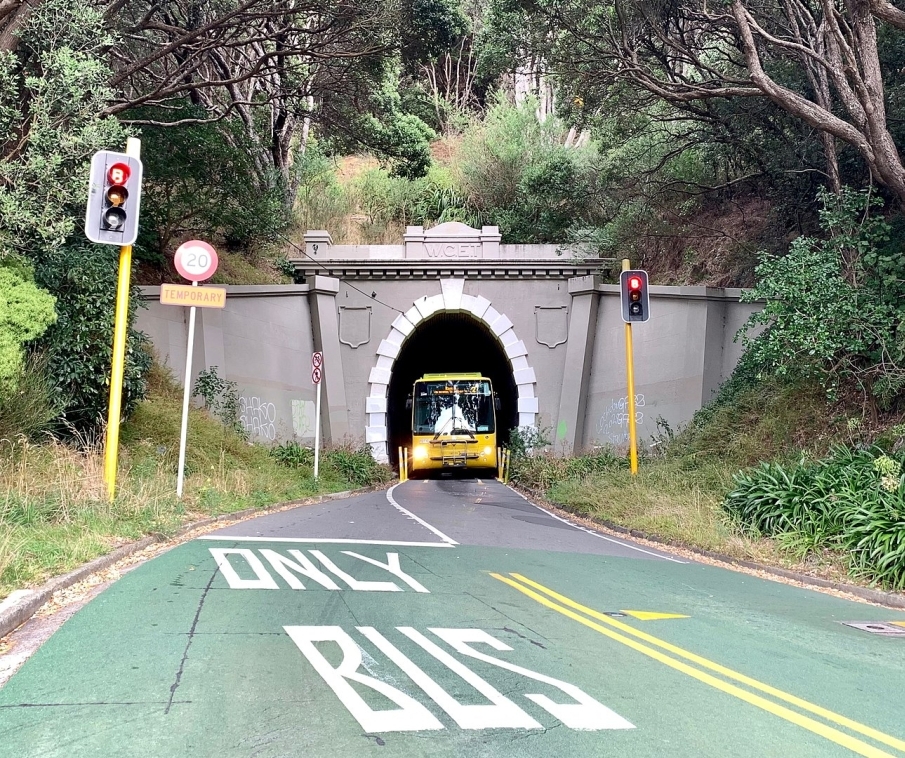
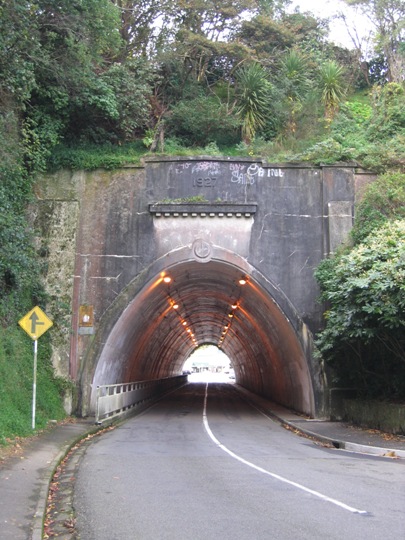
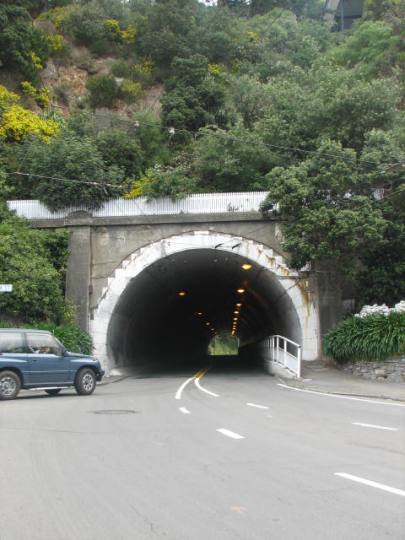
Wellington’s oldest road tunnel, the Karori Tunnel serves as a vital transport link between Wellington City and the large suburb of Karori. Opened in 1900 it is one of a group of early twentieth century road tunnels constructed to connect outlying suburbs with Wellington city via the developing tramway network. Beset by construction problems and a notorious court case that eventually reached the Privy Council, the Karori Tunnel nonetheless represents a significant milestone in the development of Wellington’s arterial road connections. Notable for its larger aperture and robust brickwork, the 75-metre tunnel connects Chaytor Street on the Karori side with Glenmore Street on the city side of what used to be known as ‘Baker’s Hill’. The tunnel’s position as an entrance and exit point between Wellington and Karori has cemented its status as a significant technological, social and historical landmark.
The renowned Polynesian navigator Kupe first explored the Wellington area during his voyage to Aotearoa from Hawaiki, the ancestral homeland of Māori. It is generally accepted that the first people to permanently occupy the Wellington area were the Whātonga people of Hawke’s Bay. Tara, son of Whātonga, travelled south from the Mahia peninsula and established a settlement at what came to be known as Te Whanganui-a-Tara, the great harbour of Tara. He founded the Ngai Tara iwi, which over time became known as Ngāti Ira. Many other tribes came and went through Wellington. Ngāti Mamoe, Ngāi Tahu ki Wairoa are said to have coexisted around the harbour with the Ngāti Ira people. Several migrations from Taranaki occurred between 1824 and 1834, with Taranaki hapū settling around the coastline of Te Whanganui-a-Tara and into Wairarapa. In 1835 Ngāti Mutunga and Ngāti Tama migrated to Wharekauri (the Chatham Islands) and Te Ātiawa hapū that had moved to Wairarapa returned to Te Whanganui-a-Tara. The name Karori is a transliteration of Kaharore, which itself is a contraction of Te Kaha-o-nga-rore, meaning “the rope of bird snares”. Prior to European arrival the area was covered in an abundant forest of Rimu, Kahikatea, Hinau, Matai and Totara hosting plentiful tūī, kākā and kererū. For Māori who were established in the southwest coastal settlements from Terawhiti to Owhariu, Karori was a rich hunting area renowned for its birdlife.
European settlement of Karori occurred from the 1840s, with the new suburb being part of Hutt County till 1891, when it was declared a separate borough. The steep terrain and circuitous route over Baker’s Hill made Karori a difficult place to reach at a time when Wellington was expanding rapidly and Karori was viewed as an ideal place for housing development. The Karori Borough Council decided to construct a new road that would include a tunnel through Baker’s Hill and appointed Thomas Ward to design the project. Construction began in 1897 but became fraught with difficulties, including slips and collapses that considerably delayed progress. Further problems occurred with the contractors undertaking the construction work. The primary contractor, John McWilliams abandoned the project 1898 and was replaced by Thomas Slowey who also failed to finish. The tunnel was finally completed by the Karori Borough Council in 1900.
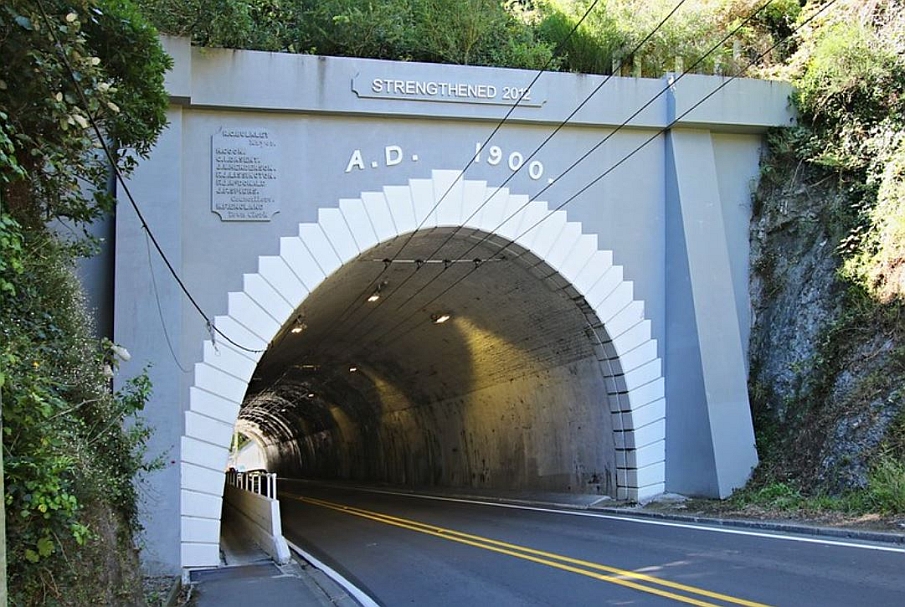
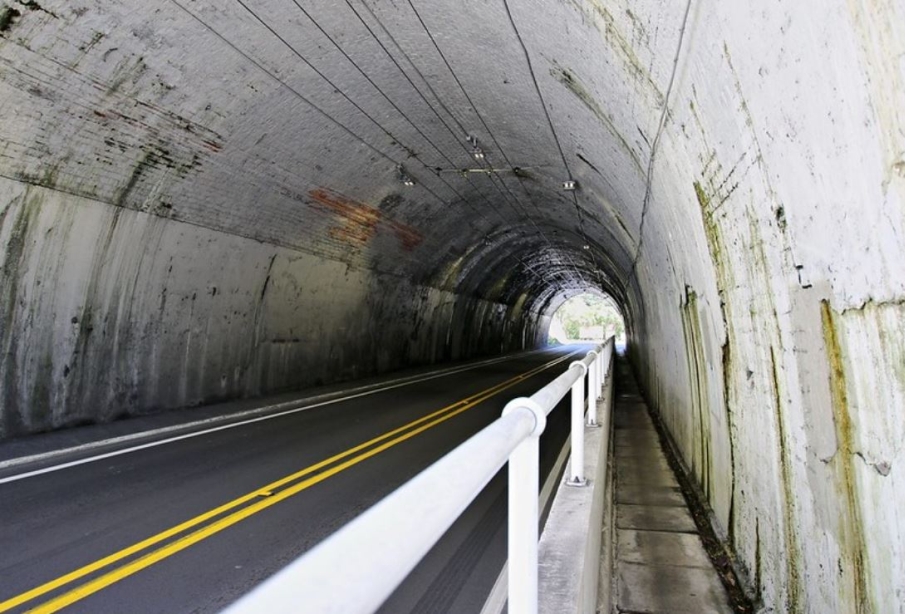
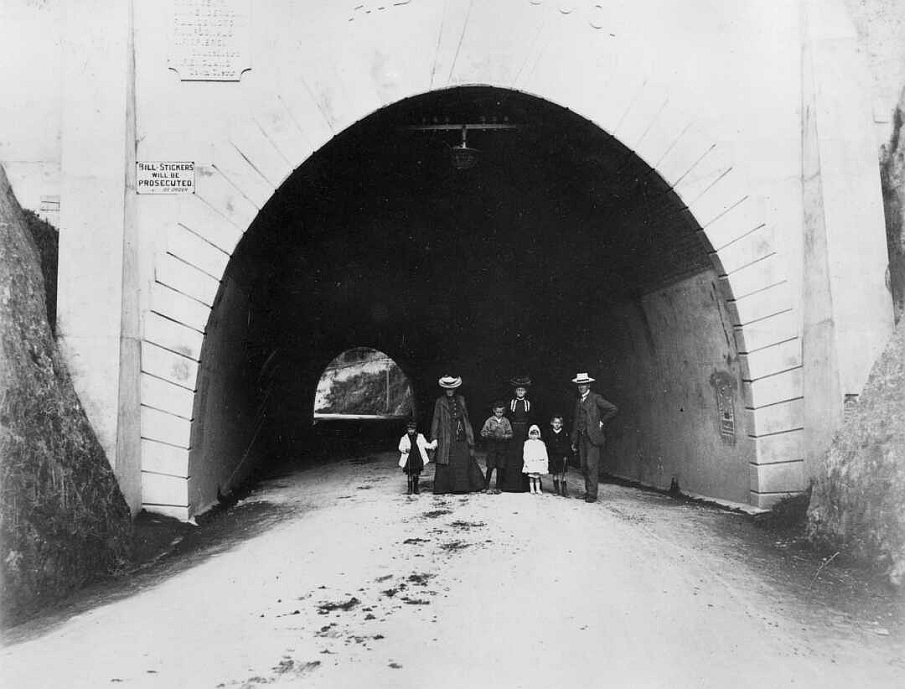
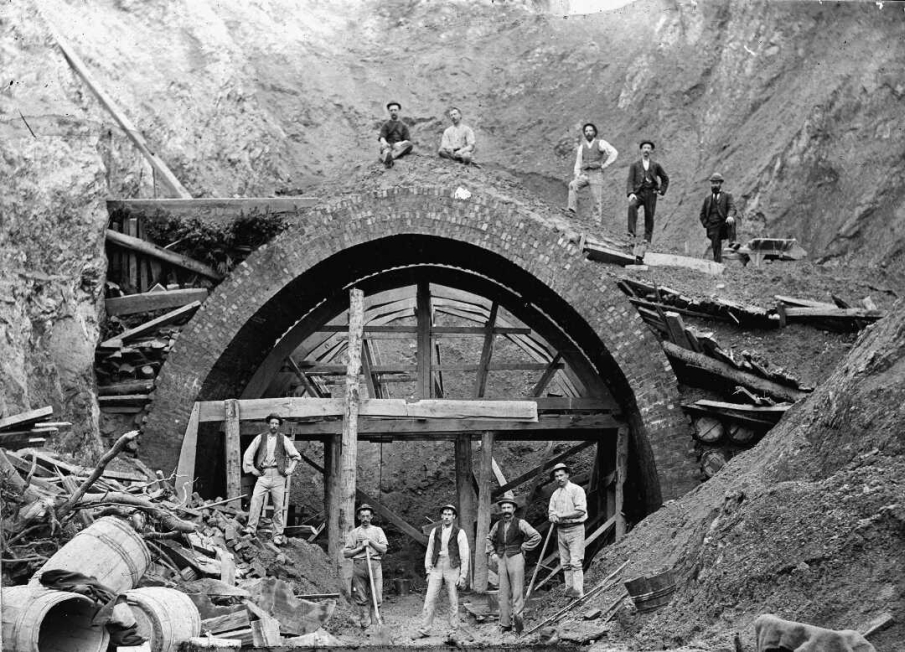
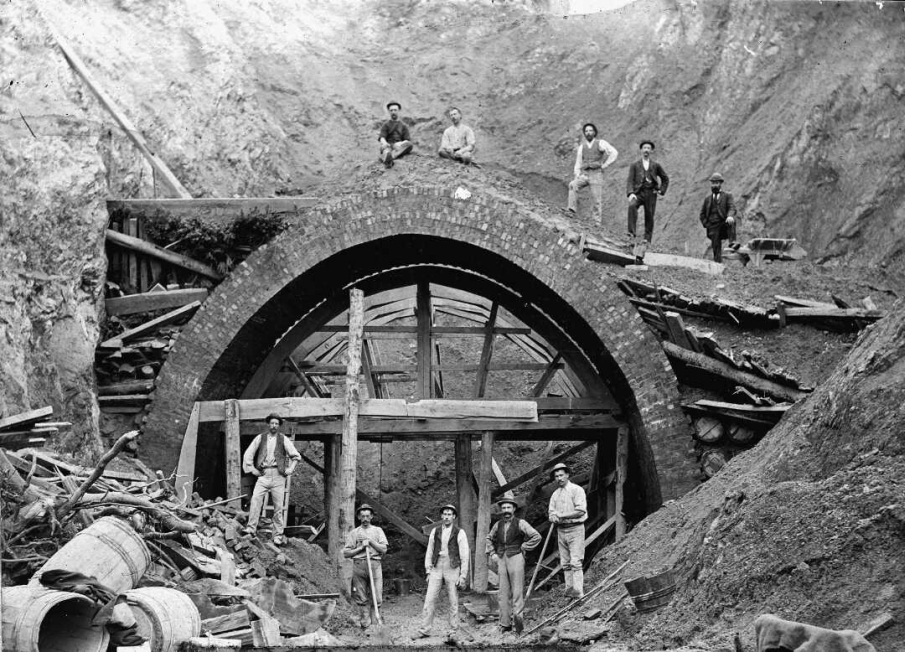
The Late-Victorian style tunnel is constructed of brick and concrete rendered in plaster, with plastered brick portals bearing plaster quoins on the face. An early photograph shows that the tunnel was started via a bore tunnel and then widened out and reinforced in brickwork and concrete.
On its completion, the tunnel was used almost exclusively by trams for the first half of the twentieth century before being converted to use for vehicles. Since its conversion the tunnel has seen vastly increased traffic flow. It is testament to the design capability of Thomas Ward that when seismic strengthening of the portals and banks took place in 2012, investigations showed that the barrel of the tunnel, due to its rounded nature has good load-bearing capacity and is not expected to collapse in an earthquake.
The renowned Polynesian navigator Kupe first explored the Wellington area during his voyage to Aotearoa from Hawaiki, the ancestral homeland of Māori. It is generally accepted that the first people to permanently occupy the Wellington area were the Whātonga people of Hawke’s Bay. Tara, son of Whātonga, travelled south from the Mahia peninsula and established a settlement at what came to be known as Te Whanganui-a-Tara, the great harbour of Tara. He founded the Ngai Tara iwi, which over time became known as Ngāti Ira. Many other tribes came and went through Wellington. Ngāti Mamoe, Ngāi Tahu ki Wairoa are said to have coexisted around the harbour with the Ngāti Ira people. Several migrations from Taranaki occurred between 1824 and 1834, with Taranaki hapū settling around the coastline of Te Whanganui-a-Tara and into Wairarapa. In 1835 Ngāti Mutunga and Ngāti Tama migrated to Wharekauri (the Chatham Islands) and Te Ātiawa hapū that had moved to Wairarapa returned to Te Whanganui-a-Tara. The name Karori is a transliteration of Kaharore, which itself is a contraction of Te Kaha-o-nga-rore, meaning “the rope of bird snares”. Prior to European arrival the area was covered in an abundant forest of Rimu, Kahikatea, Hinau, Matai and Totara hosting plentiful tūī, kākā and kererū. For Māori who were established in the southwest coastal settlements from Terawhiti to Owhariu, Karori was a rich hunting area renowned for its birdlife.
European settlement of Karori occurred from the 1840s, with the new suburb being part of Hutt County till 1891, when it was declared a separate borough. The steep terrain and circuitous route over Baker’s Hill made Karori a difficult place to reach at a time when Wellington was expanding rapidly and Karori was viewed as an ideal place for housing development. The Karori Borough Council decided to construct a new road that would include a tunnel through Baker’s Hill and appointed Thomas Ward to design the project. Construction began in 1897 but became fraught with difficulties, including slips and collapses that considerably delayed progress. Further problems occurred with the contractors undertaking the construction work. The primary contractor, John McWilliams abandoned the project 1898 and was replaced by Thomas Slowey who also failed to finish. The tunnel was finally completed by the Karori Borough Council in 1900.
The Late-Victorian style tunnel is constructed of brick and concrete rendered in plaster, with plastered brick portals bearing plaster quoins on the face. An early photograph shows that the tunnel was started via a bore tunnel and then widened out and reinforced in brickwork and concrete.
On its completion, the tunnel was used almost exclusively by trams for the first half of the twentieth century before being converted to use for vehicles. Since its conversion the tunnel has seen vastly increased traffic flow. It is testament to the design capability of Thomas Ward that when seismic strengthening of the portals and banks took place in 2012, investigations showed that the barrel of the tunnel, due to its rounded nature has good load-bearing capacity and is not expected to collapse in an earthquake.