

Te Whanganui-a-Tara/Wellington was first settled by the people of the chief Tara, from whom the area gets its name. From the seventeenth century onwards their descendants, Ngāi Tara, were joined in occupying the area by other tribes including Ngāti Ira, Rangitāne, Ngāti Kahungunu, Ngāti Māmoe, and Ngāi Tahu. The 1820’s and early 1830’s was a period of massive upheaval attributed to the introduction of European muskets to Aotearoa, causing the migration south of Ngāti Toa and Ngāti Raukawa from the Waikato, and Te Āti Awa, Ngāti Tama, and Ngāti Mutunga from Taranaki. Part of the area now known as Northland was originally a cultivation site known as Orangi-kaupapa, associated with Te Matehou hapu. This area was later sold to neighbouring farmers who had already been using the land for grazing cattle.
Edmund Platt was a respected master-plasterer and property speculator. He moved from to Wellington from England in 1876 and in 1890 he began his own decorative plastering firm, Edmund Platt and Sons. Some of his notable works includes the Supreme Court building, the Harbour Board Offices and Bond Store, and the Bank of New Zealand Head Office. Late nineteenth century advances in mass-produced, pre-cast plaster ornaments led to a decline in business for small family firms and in 1905 Edmund and his sons, Walter, Fred and Harry, turned to property development with a focus on the new subdivisions of Northland.
The area of Northland where the house is located was once a part of Charles Pharazyn’s estate which was subdivided and sold off by Harcourt and Co from 1900. The Platt family secured a number of these sections, with Walter claiming the land at 10 Farm Road for his own home. The house was built between 1901 and 1902 by Walter and his father, which is known from the inscribed plaque on the inside of the concrete perimeter ring foundations.
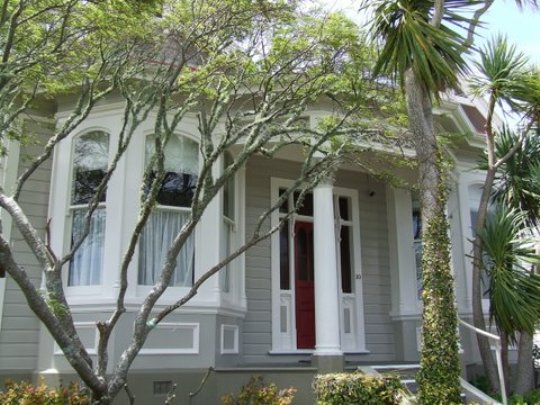
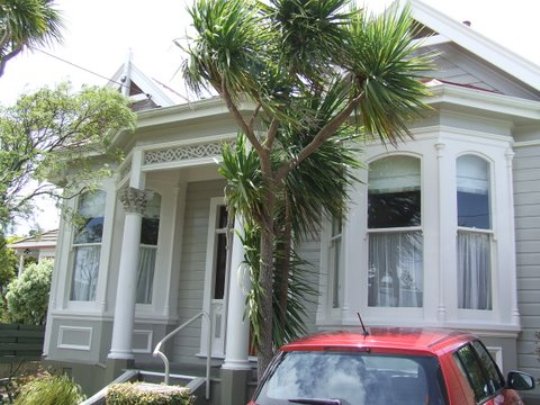
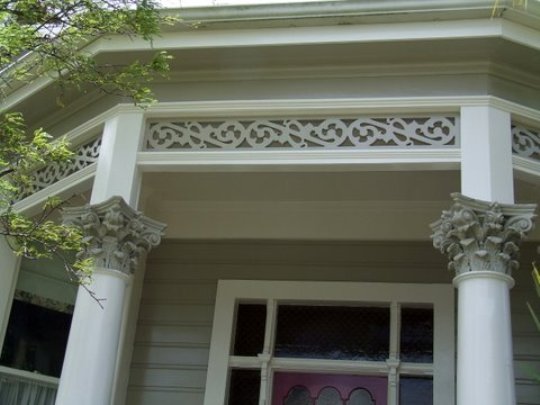
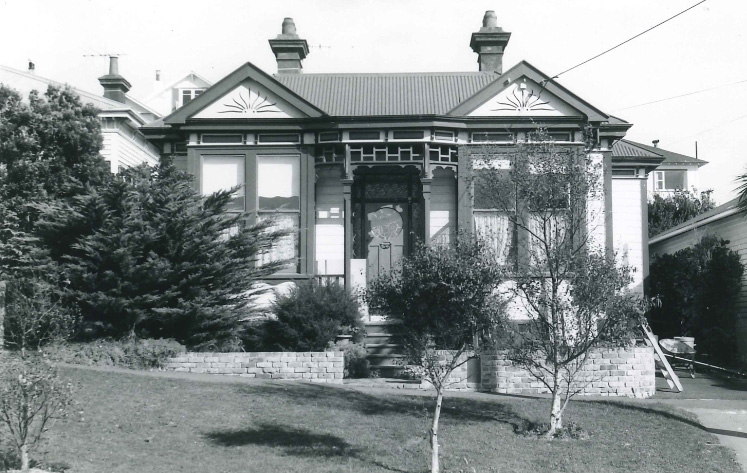
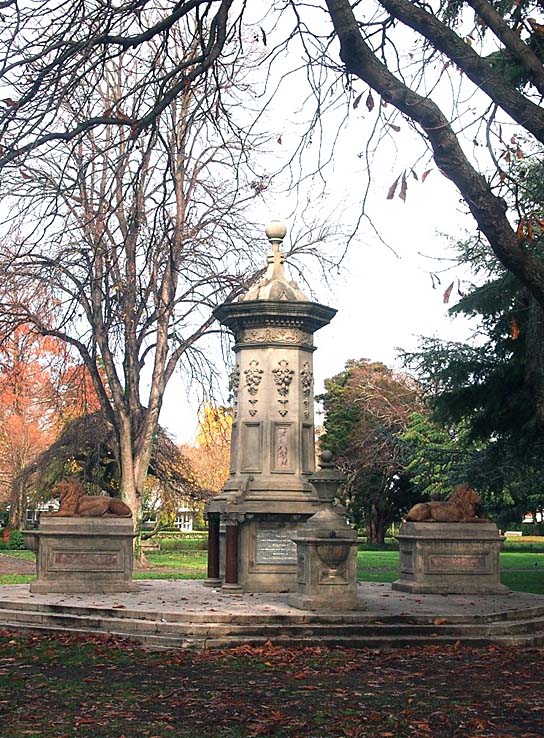
Walter and Edmund Platt took a basic double bay villa style that was typical of the time and enhanced it by adding fine decorations both externally and internally. The bay windows feature moulded panels and small columns between each double hung window. The verandah is supported by two Corinthian columns and features a lace-like frieze which was once complemented by decorative fan shaped brackets, though these have been removed. The original distinctive Platt chimneys are still intact, and the interior of the house is decorated with plaster work, such as centre roses, arches and cornices, of the high quality that Edmund Platt is known for. One of the most notable features is the reclining lion which presides over the front gate and gives the house it’s colloquial name, ‘The Lion House’. This lion was a test for the two situated at the Memorial Fountain in Cornwall Park, Hastings, which Edmund and Walter were contracted to build in 1911. They were modelled on Wellington Zoo’s lion ‘King Dick’, and were thought to be the largest ever lions cast in New Zealand.
Both Walter and his wife Emily lived in the house until their deaths in 1954 and 1971 respectively. Since then, the house has only changed hands three times and few alterations have been made. In the 1970’s new archways were added to the living spaces as well as a new kitchen, and in 1981 a new laundry; the rear chimney was demolished at that time. Aside from this, the house retains many of its original features.
List Entry Information
Status
Listed
List Entry Status
Historic Place Category 2
Access
Private/No Public Access
List Number
3605
Date Entered
28th June 1984
Date of Effect
28th June 1984
City/District Council
Wellington City
Region
Wellington Region
Extent of List Entry
Extent includes the land described as Lot 11 DP 1087 (RT WN559/52), Wellington Land District and the building known as House thereon, including the front fence and arch with plaster lion.
Legal description
Lot 11 DP 1087 (RT WN559/52), Wellington Land District
Status
Listed
List Entry Status
Historic Place Category 2
Access
Private/No Public Access
List Number
3605
Date Entered
28th June 1984
Date of Effect
28th June 1984
City/District Council
Wellington City
Region
Wellington Region
Extent of List Entry
Extent includes the land described as Lot 11 DP 1087 (RT WN559/52), Wellington Land District and the building known as House thereon, including the front fence and arch with plaster lion.
Legal description
Lot 11 DP 1087 (RT WN559/52), Wellington Land District
Construction Professional
Name
E & W Platt
Type
Builder
Biography
No biography is currently available for this construction professional
Construction Details
Start Year
1911
startYearCirca
Type
Modification
Description
Front fence remodelled to create lion archway.
Start Year
1939
startYearCirca
Finish Year
1945
Type
Other
Description
Bomb shelter constructed under hill in rear yard.
Start Year
1970
startYearCirca
Type
Modification
Description
New archways between dining room, living room and hallway, and new kitchen.
Period
1970s
Start Year
1981
Type
Modification
Description
Dwelling additions and alterations – laundry reconfigured; rear chimney demolished.
Start Year
1901
Type
Original Construction
Construction Professional
Name
E & W Platt
Type
Builder
Biography
No biography is currently available for this construction professional
Construction Details
Start Year
1911
startYearCirca
Type
Modification
Description
Front fence remodelled to create lion archway.
Start Year
1939
startYearCirca
Finish Year
1945
Type
Other
Description
Bomb shelter constructed under hill in rear yard.
Start Year
1970
startYearCirca
Type
Modification
Description
New archways between dining room, living room and hallway, and new kitchen.
Period
1970s
Start Year
1981
Type
Modification
Description
Dwelling additions and alterations – laundry reconfigured; rear chimney demolished.
Start Year
1901
Type
Original Construction
Historical and Associated Iwi / Hapū / Whānau
Completion Date
28th April 2024
Report Written By
Brie Gullery
Information Sources
Fill, 1985
Barbara Fill, ‘From an Age of Adornment’, Historic Places in New Zealand, no. 10, Sep 1985, p. 20-21.
Wellington City Council Heritage Inventory
Wellington City Council, ‘House, 10 Farm Road’ Heritage Inventory Report, 21 August 2003, https://www.wellingtoncityheritage.org.nz/buildings/1-150/113-house-10-farm-road
Other Information
This place was identified as significant under previous legislation with different information requirements. It remains significant under the current legislation. There is opportunity under our legislation and policies to add to this information. Further information about this place may be available from the Central Regional Office of Heritage New Zealand Pouhere Taonga. A fully referenced copy of the Upgrade Report is available upon request from the Central Regional Office of Heritage New Zealand Pouhere Taonga Disclaimer Please note that entry on the New Zealand Heritage List/Rarangi Korero identifies only the heritage values of the property concerned, and should not be construed as advice on the state of the property, or as a comment of its soundness or safety, including in regard to earthquake risk, safety in the event of fire, or insanitary conditions. Archaeological sites are protected by the Heritage New Zealand Pouhere Taonga Act 2014, regardless of whether they are entered on the New Zealand Heritage List/Rarangi Korero or not. Archaeological sites include ‘places associated with pre-1900 human activity, where there may be evidence relating to the history of New Zealand’. This List entry report should not be read as a statement on whether or not the archaeological provisions of the Act apply to the property (s) concerned. Please contact your local Heritage New Zealand office for archaeological advice
Historical and Associated Iwi / Hapū / Whānau
Completion Date
28th April 2024
Report Written By
Brie Gullery
Information Sources
Fill, 1985
Barbara Fill, ‘From an Age of Adornment’, Historic Places in New Zealand, no. 10, Sep 1985, p. 20-21.
Wellington City Council Heritage Inventory
Wellington City Council, ‘House, 10 Farm Road’ Heritage Inventory Report, 21 August 2003, https://www.wellingtoncityheritage.org.nz/buildings/1-150/113-house-10-farm-road
Other Information
This place was identified as significant under previous legislation with different information requirements. It remains significant under the current legislation. There is opportunity under our legislation and policies to add to this information. Further information about this place may be available from the Central Regional Office of Heritage New Zealand Pouhere Taonga. A fully referenced copy of the Upgrade Report is available upon request from the Central Regional Office of Heritage New Zealand Pouhere Taonga Disclaimer Please note that entry on the New Zealand Heritage List/Rarangi Korero identifies only the heritage values of the property concerned, and should not be construed as advice on the state of the property, or as a comment of its soundness or safety, including in regard to earthquake risk, safety in the event of fire, or insanitary conditions. Archaeological sites are protected by the Heritage New Zealand Pouhere Taonga Act 2014, regardless of whether they are entered on the New Zealand Heritage List/Rarangi Korero or not. Archaeological sites include ‘places associated with pre-1900 human activity, where there may be evidence relating to the history of New Zealand’. This List entry report should not be read as a statement on whether or not the archaeological provisions of the Act apply to the property (s) concerned. Please contact your local Heritage New Zealand office for archaeological advice
Current Usages
Uses: Accommodation
Specific Usage: House
Former Usages
General Usage: Accommodation
Specific Usage: House
Current Usages
Uses: Accommodation
Specific Usage: House
Former Usages
General Usage: Accommodation
Specific Usage: House
Location
Stay up to date with Heritage this month
