Relocated from their original sites, the two railway water vats in the Paekakariki Railway Station Historic Area are rare remaining examples of the water vats that were once a common feature of New Zealand's railways.
In the late nineteenth and early twentieth century, water vats were strategically placed along New Zealand's railway lines. Connected to pumps commonly powered by windmills, the vats supplied the vast amounts of water required to power steam trains. From the 1920s, electric trains began to feature on New Zealand railway lines. Steam trains were gradually phased out and, by the late 1960s, the water vats that had supplied them had largely become redundant. Many vats were demolished, or simply deteriorated through lack of maintenance.
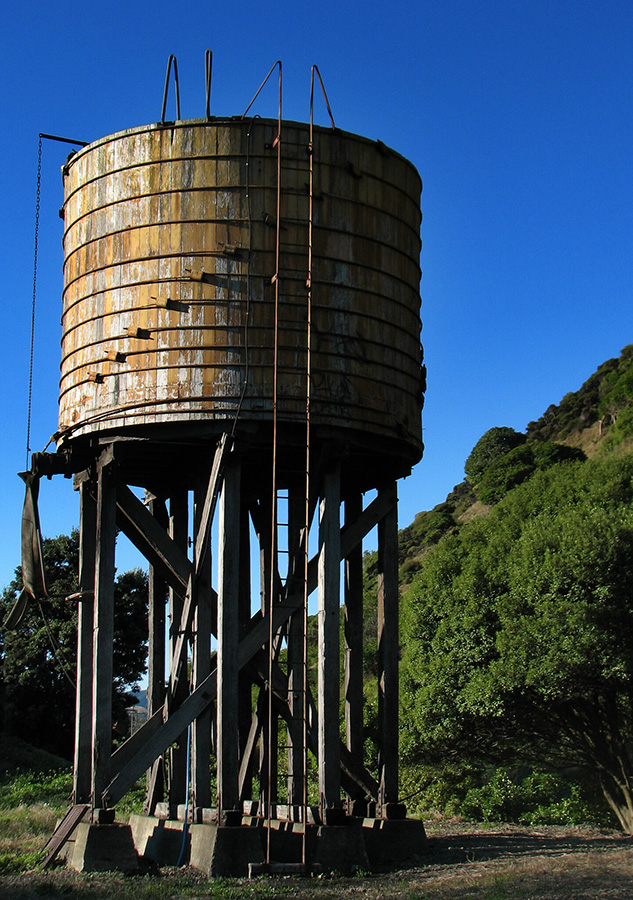
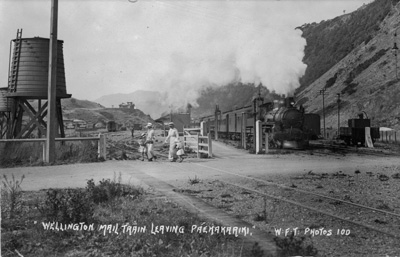
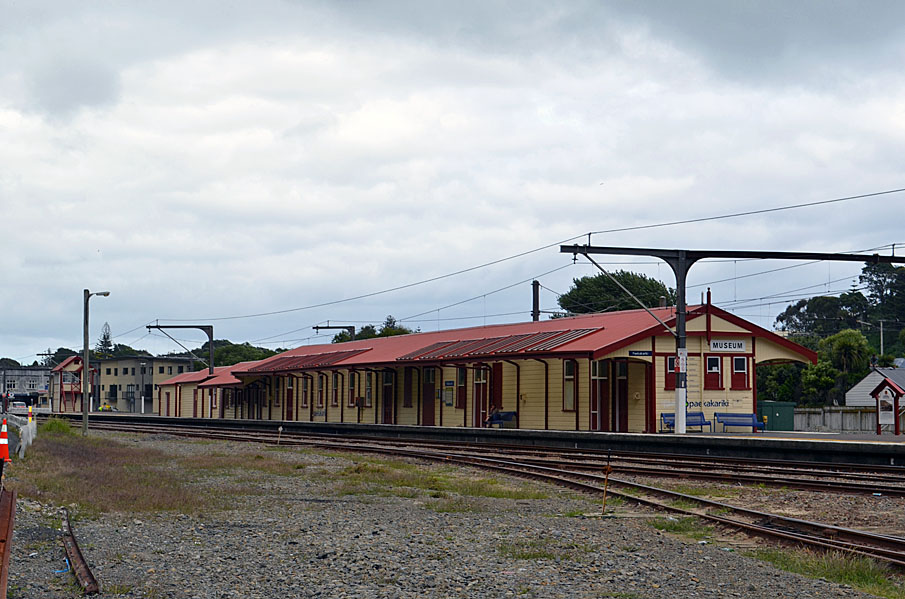
While a number of early structures associated with the Paekakariki Railway Station have been preserved, Paekakariki's single, large water vat was removed after the last steam train passed through the station in 1967. The two water vats currently located on the site were transferred to Paekakariki in the early 1970s by Steam Incorporated, a society established in 1972. Circular in shape, the vats were constructed from timber slats that had been pre-cut at the New Zealand Railways mill in Pokaka.
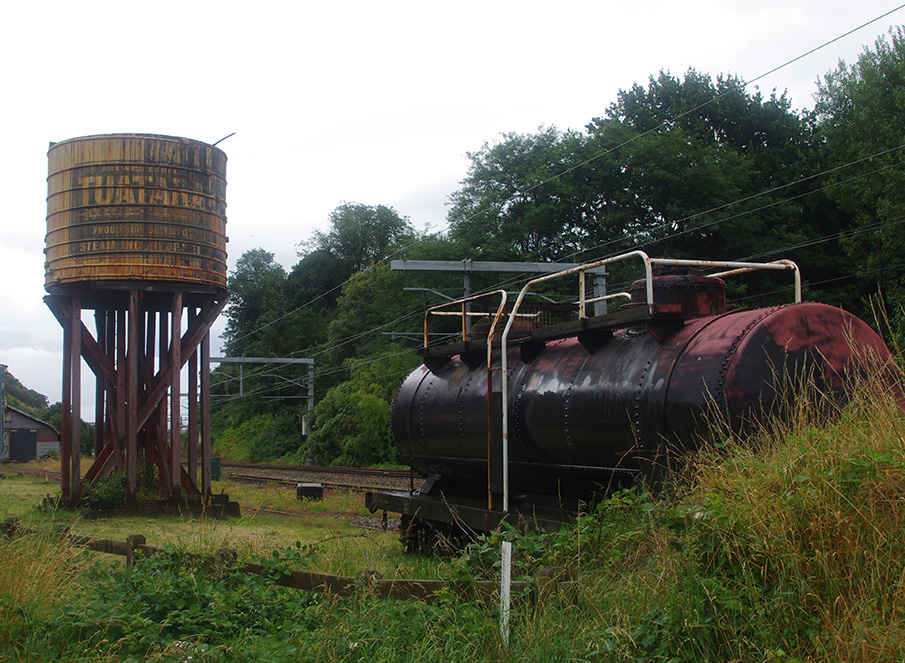
Intended to replace the original Paekakariki vats, the relocation of these two water vats reflect the trend in the 1960s and 1970s towards the creation of 'heritage precincts' of relocated buildings. While relocation is now avoided as a preservation measure due to increased importance now placed on context, both vats had been removed from their original sites prior to their relocation to Paekakariki. The southernmost vat originally serviced trains passing through Waiouru Station. Steam Incorporated acquired the vat from a farmer at Tangiwai. It is now mounted on a wooden base obtained from Raurimu. The vat at the northernmost end of the station precinct was originally from Ohakune Station. Prior to its relocation to Paekakariki, the vat was used for grain storage. It is mounted on a wooden base retrieved from Mangaweka. While some of the original structures associated with the Paekakariki Station have now been restored, little maintenance work has been carried out on the two vats at Paekakariki and both are currently in a poor state of repair.
The two water vats at Paekakariki are of significance as rare relics of a once common system of water supply on New Zealand railways. Both vats are typical examples of the water vats used in the early twentieth century and they provide a visible link with the steam locomotive era. The vats form part of the wider historical railway complex at Paekakariki and have considerable potential to increase public awareness about the networks that enabled steam trains to operate throughout the country. Despite relocation and the poor condition in which they are maintained, the wooden vats have technological significance and are landmarks on State Highway 1.
In the late nineteenth and early twentieth century, water vats were strategically placed along New Zealand's railway lines. Connected to pumps commonly powered by windmills, the vats supplied the vast amounts of water required to power steam trains. From the 1920s, electric trains began to feature on New Zealand railway lines. Steam trains were gradually phased out and, by the late 1960s, the water vats that had supplied them had largely become redundant. Many vats were demolished, or simply deteriorated through lack of maintenance.
While a number of early structures associated with the Paekakariki Railway Station have been preserved, Paekakariki's single, large water vat was removed after the last steam train passed through the station in 1967. The two water vats currently located on the site were transferred to Paekakariki in the early 1970s by Steam Incorporated, a society established in 1972. Circular in shape, the vats were constructed from timber slats that had been pre-cut at the New Zealand Railways mill in Pokaka.
Intended to replace the original Paekakariki vats, the relocation of these two water vats reflect the trend in the 1960s and 1970s towards the creation of 'heritage precincts' of relocated buildings. While relocation is now avoided as a preservation measure due to increased importance now placed on context, both vats had been removed from their original sites prior to their relocation to Paekakariki. The southernmost vat originally serviced trains passing through Waiouru Station. Steam Incorporated acquired the vat from a farmer at Tangiwai. It is now mounted on a wooden base obtained from Raurimu. The vat at the northernmost end of the station precinct was originally from Ohakune Station. Prior to its relocation to Paekakariki, the vat was used for grain storage. It is mounted on a wooden base retrieved from Mangaweka. While some of the original structures associated with the Paekakariki Station have now been restored, little maintenance work has been carried out on the two vats at Paekakariki and both are currently in a poor state of repair.
The two water vats at Paekakariki are of significance as rare relics of a once common system of water supply on New Zealand railways. Both vats are typical examples of the water vats used in the early twentieth century and they provide a visible link with the steam locomotive era. The vats form part of the wider historical railway complex at Paekakariki and have considerable potential to increase public awareness about the networks that enabled steam trains to operate throughout the country. Despite relocation and the poor condition in which they are maintained, the wooden vats have technological significance and are landmarks on State Highway 1.