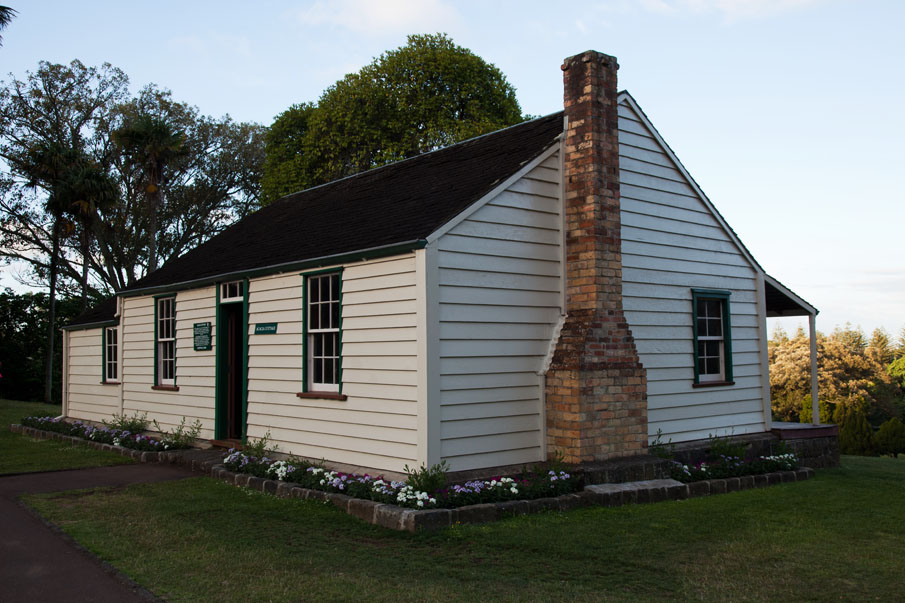
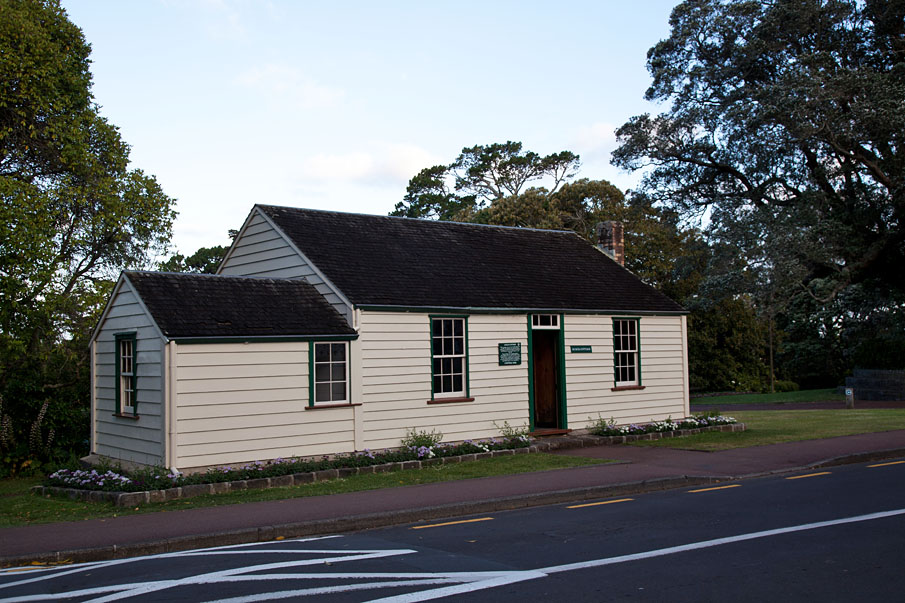
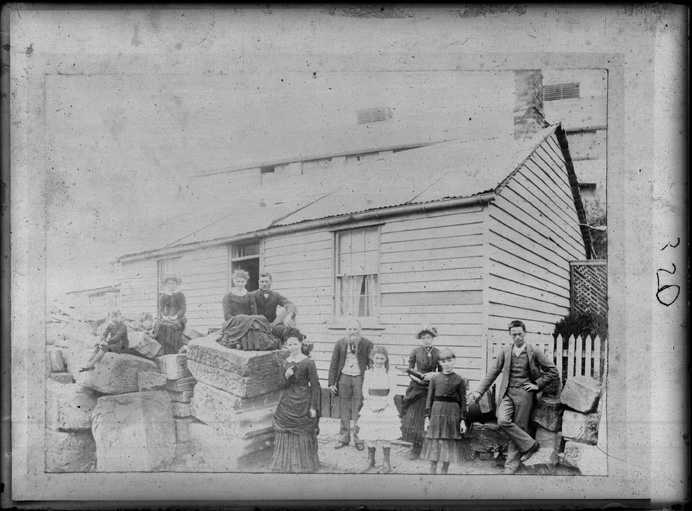
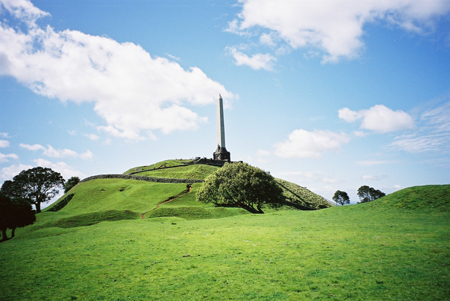
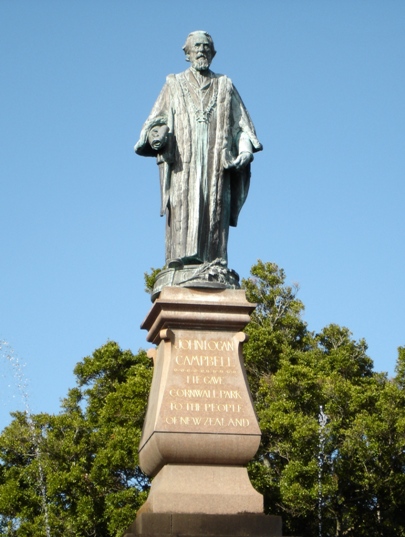
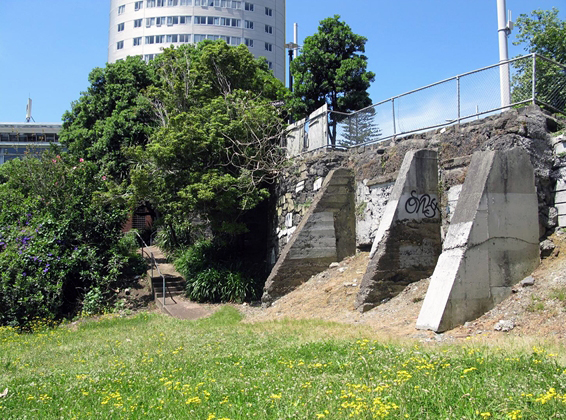
Acacia Cottage is a rare survivor from early colonial Auckland and an important symbol of the city's pioneering roots. Built in the heart of the early settlement in 1841, this small timber dwelling originally stood to the rear of the Shortland Street store run by William Brown and John Logan Campbell, two of the earliest traders in the town. Campbell, prominent in business and charitable circles, was also a mayor and benefactor who became known as the 'Father of Auckland'. Initially lived in by Campbell, Brown and Brown's wife, Jessie, the cottage was already known as the oldest surviving house in the settlement in 1844, and gained further prominence with the rise of pioneer nostalgia in the late nineteenth century. Threatened by redevelopment in the 1920s, it was moved to Cornwall Park, where it is now displayed and open to the public. The park had been donated to the nation by Campbell in 1901, and contains a number of other memorials to him.
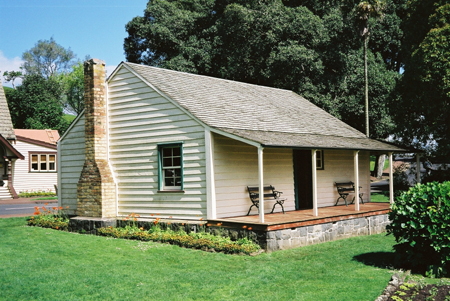
The cottage has undergone several transformations since its original construction. It started out as a simple, four-roomed dwelling of Georgian design, with a fifth room appended to one side. Built when most other settlers were living in tents, it was occupied by a succession of families after Brown and Campbell moved out. Modifications during this time included the addition of a brick chimney, bedroom and rear verandah, as well as an outhouse with a bath and toilet. Some of these elements were demolished as unsuitable when the cottage was transferred to Cornwall Park, as they were not considered to be part of its pioneer origins. The modified cottage was moved to a more prominent position within the park in 1956, since when successive restorations have been carried out. It now retains fabric from several periods of its use, including modern reconstruction and repair.
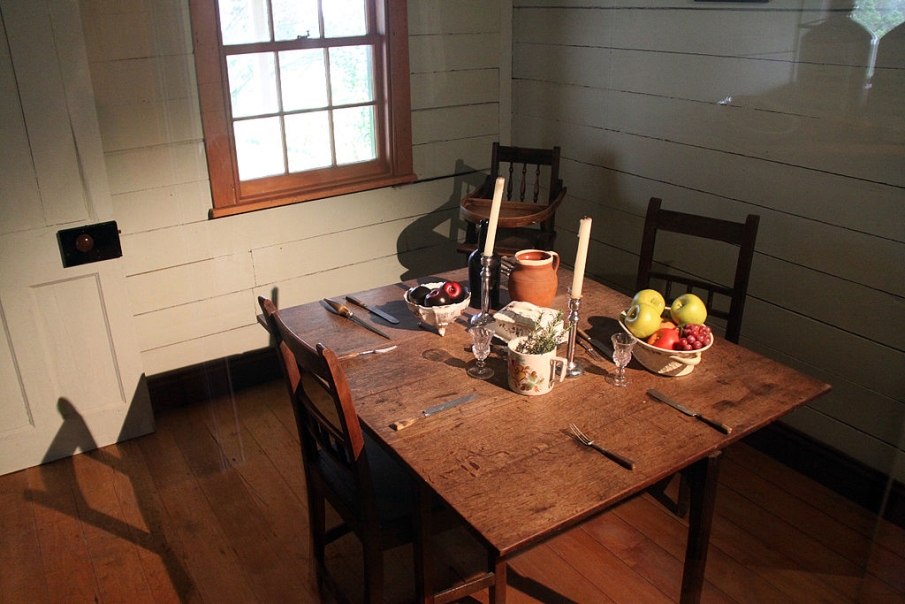
Acacia Cottage is nationally significant as one of the earliest surviving timber dwellings in the country and the oldest in Auckland. It is an important example of early vernacular architecture, demonstrating many aspects of pioneer technology. The building provides valuable insights about domestic life in early colonial New Zealand, and is closely linked to the development of trade and merchant activity. It is of particular significance for its associations with Sir John Logan Campbell, who became mayor of the city, and subsequent attitudes to 'pioneer' history and the conservation of buildings in the early twentieth century. The building has value as evidence of the educational role public parks played in the early 1900s, and for being part of a larger commemorative landscape that celebrates Campbell and the history of Auckland. It has important symbolic value for its associations with early colonial settlement, for which it enjoys high public esteem. It has educational value as a public museum, located in a popular and attractive setting.
The cottage has undergone several transformations since its original construction. It started out as a simple, four-roomed dwelling of Georgian design, with a fifth room appended to one side. Built when most other settlers were living in tents, it was occupied by a succession of families after Brown and Campbell moved out. Modifications during this time included the addition of a brick chimney, bedroom and rear verandah, as well as an outhouse with a bath and toilet. Some of these elements were demolished as unsuitable when the cottage was transferred to Cornwall Park, as they were not considered to be part of its pioneer origins. The modified cottage was moved to a more prominent position within the park in 1956, since when successive restorations have been carried out. It now retains fabric from several periods of its use, including modern reconstruction and repair.
Acacia Cottage is nationally significant as one of the earliest surviving timber dwellings in the country and the oldest in Auckland. It is an important example of early vernacular architecture, demonstrating many aspects of pioneer technology. The building provides valuable insights about domestic life in early colonial New Zealand, and is closely linked to the development of trade and merchant activity. It is of particular significance for its associations with Sir John Logan Campbell, who became mayor of the city, and subsequent attitudes to 'pioneer' history and the conservation of buildings in the early twentieth century. The building has value as evidence of the educational role public parks played in the early 1900s, and for being part of a larger commemorative landscape that celebrates Campbell and the history of Auckland. It has important symbolic value for its associations with early colonial settlement, for which it enjoys high public esteem. It has educational value as a public museum, located in a popular and attractive setting.