DonateMembershipVisit Heritage
  • Tūrangawaewae
    Places
  • Tira Māori
    Māori Heritage
  • Poutairangahia
    Archaeology
  • Rauemi
    Resources
  • Mō Tātou
    About Us
  • New Zealand Heritage List
  • Nominate and submit
  • Explore the List
  • National Historic Landmarks
  • Plaques
  • Rainbow List Project
  • Lost heritage
  • Visit Heritage
  • Our properties
  • Turnbull House Project
  • Collections
  • Shop
  • Tohu Whenua
  • Tira Māori
  • Conserving Māori heritage
  • Marae built heritage
  • Māori heritage on the List
  • Hinemihi—Te Hokinga Mai
  • What is archaeology?
  • Is there a site on my property?
  • What are my legal requirements?
  • Affecting an archaeological site
  • Declaring an archaeological site
  • Archaeology FAQs
  • Archaeology Digital Library
  • Archaeology guidelines and templates
  • Resources
  • Funding
  • Publications
  • Sustainable management guides
  • Disaster recovery
  • Podcasts & digital resources
  • Education Hub
  • Conservation plans
  • About
  • Board
  • Māori Heritage Council
  • Senior Staff
  • Offices
  • Contact us
  • Careers
  • Covenants
  • Fast-track
  • Corporate documents
  • Currently consulting on
  • Our submissions
  • News
  • Covid-19 response
Quick links
Rārangi Kōrero | The List
Explore the List
National Historic Landmarks
Ngā Manawhenua o Aotearoa me ōna Kōrero Tūturu
Quick links
Tapuwae
A Vision for Places of Māori Heritage
Funding for Māori Heritage
Resources
Quick links
Archaeological Authority Portal
Applying for an archaeological authority
Archaeology FAQs
Browse the most frequently asked questions about archaeological authorities and the archaeological process.
Quick links
Quick links
News
News Keep up to date with Heritage New Zealand Pouhere Taonga
Membership
Membership Find out more and sign up today
DonateMembershipVisit Heritage
  • Tūrangawaewae
    Places
  • Tira Māori
    Māori Heritage
  • Poutairangahia
    Archaeology
  • Rauemi
    Resources
  • Mō Tātou
    About Us
  • New Zealand Heritage List
  • Nominate and submit
  • Explore the List
  • National Historic Landmarks
  • Plaques
  • Rainbow List Project
  • Lost heritage
  • Visit Heritage
  • Our properties
  • Turnbull House Project
  • Collections
  • Shop
  • Tohu Whenua
  • Tira Māori
  • Conserving Māori heritage
  • Marae built heritage
  • Māori heritage on the List
  • Hinemihi—Te Hokinga Mai
  • What is archaeology?
  • Is there a site on my property?
  • What are my legal requirements?
  • Affecting an archaeological site
  • Declaring an archaeological site
  • Archaeology FAQs
  • Archaeology Digital Library
  • Archaeology guidelines and templates
  • Resources
  • Funding
  • Publications
  • Sustainable management guides
  • Disaster recovery
  • Podcasts & digital resources
  • Education Hub
  • Conservation plans
  • About
  • Board
  • Māori Heritage Council
  • Senior Staff
  • Offices
  • Contact us
  • Careers
  • Covenants
  • Fast-track
  • Corporate documents
  • Currently consulting on
  • Our submissions
  • News
  • Covid-19 response
Quick links
Rārangi Kōrero | The List
Explore the List
National Historic Landmarks
Ngā Manawhenua o Aotearoa me ōna Kōrero Tūturu
Quick links
Tapuwae
A Vision for Places of Māori Heritage
Funding for Māori Heritage
Resources
Quick links
Archaeological Authority Portal
Applying for an archaeological authority
Archaeology FAQs
Browse the most frequently asked questions about archaeological authorities and the archaeological process.
Quick links
Quick links
News
News Keep up to date with Heritage New Zealand Pouhere Taonga
Membership
Membership Find out more and sign up today
  • Nominate and submit
  • National Historic Landmarks
  • Nominate and submit
  • National Historic Landmarks
  • Conserving Māori heritage
  • Marae built heritage
  • Conserving Māori heritage
  • Marae built heritage
  • Archaeological authorities
  • Archaeology Digital Library
  • Archaeological authorities
  • Archaeology Digital Library
  • All resources
  • Publications
  • Funding
  • All resources
  • Publications
  • Funding
  • FAQs
  • FAQs
Follow us on:
Places
  • Nominate and submit
  • National Historic Landmarks
Tira Māori
  • Conserving Māori heritage
  • Marae built heritage
Archaeology
  • Archaeological authorities
  • Archaeology Digital Library
Resources
  • All resources
  • Publications
  • Funding
FAQs
  • FAQs
Follow us on
HomePrivacyTerms and conditionsAbout this site
© Heritage New Zealand Pouhere Taonga 2026.
 
1YA Radio Station Building (Former)

74 Shortland Street, AUCKLAND

Private

Historic Place Category 1

List No. 660

Quick links:
List GalleryLocationDetails
The former 1YA Building was purpose-built in 1934 as a radio broadcasting station, housing the first licensed radio station in New Zealand. It is a strikingly original structure, located on a ridge overlooking the commercial centre of Auckland. Designed with thick walls and a lack of external windows to prevent the transmission of sound, the building was one of a number commissioned by the Broadcasting Board to meet the rapid development and popularity of radio. Before the advent of television, radio was a significant force in the social and political life of the country.

The brick building was designed by the prominent local practice of Wade and Bartley, who had overseen the construction of other structures linked with technological advances in Auckland (see 'Landmark House'). Using a fortress-like Romanesque style on the exterior to mark it out as a new type of structure, the interior of the studios was inspired by Art Deco design, emphasising the progressive aspects of technology. Its single-storey frontage masks the large size of the interior, which contains several floor levels terraced into a descending slope. The later use of the building reflected changes in the form of public broadcasting, and in 1960 it became the first operational television station for the New Zealand Broadcasting Service. For a while it was the largest television studio in the country, before being vacated by Television New Zealand in 1989. In 2000-2001, the building was converted by the University of Auckland for use in teaching the performing arts, and it also houses an art gallery. Original elements in the foyer were conserved, although much of the remainder of the interior required modification.

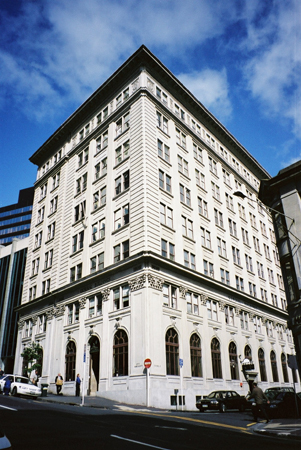
The former 1YA and Television New Zealand building is nationally significant as one of only a few remaining buildings in the country associated with early broadcasting. It has valuable connections with the beginnings of state-run radio and television, and changes in communications technology during the twentieth century. It is associated with many political and entertainment personalities, and has had a role in the formation of a New Zealand cultural identity. The building is an important example of pre-Second World War building technology, with much of its original external fabric intact. An Auckland landmark, it makes a significant contribution to the Shortland Street streetscape, with distinctive elements such as its galvanised steel transmission tower. Its value is enhanced by its proximity to other historic buildings of early twentieth-century date including the General Buildings and the South British Insurance Company Building.
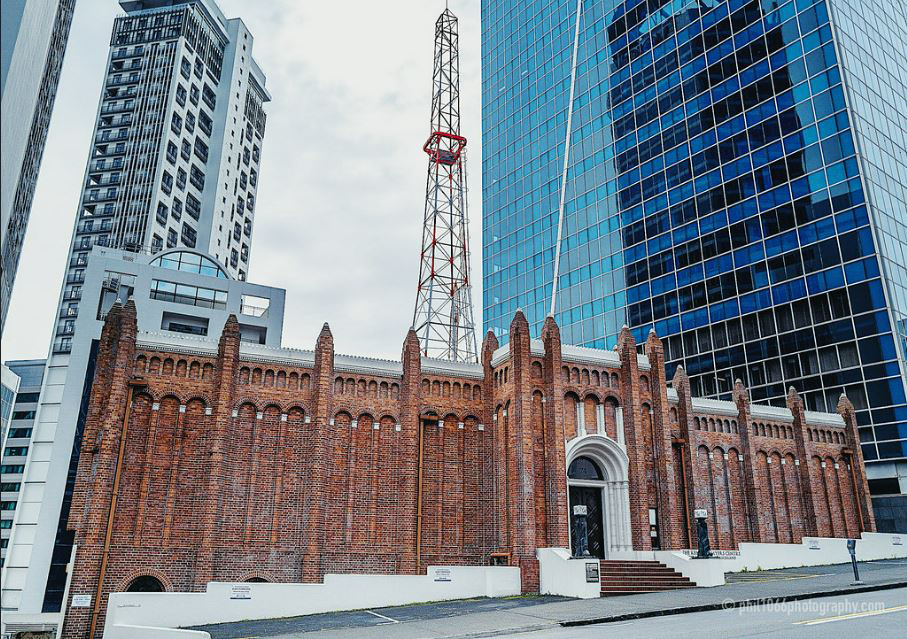
1YA Radio Station Building (Former), Auckland. Image courtesy of www.flickr.com | Phil Clark | 23/08/2020 | phil1066photography.com
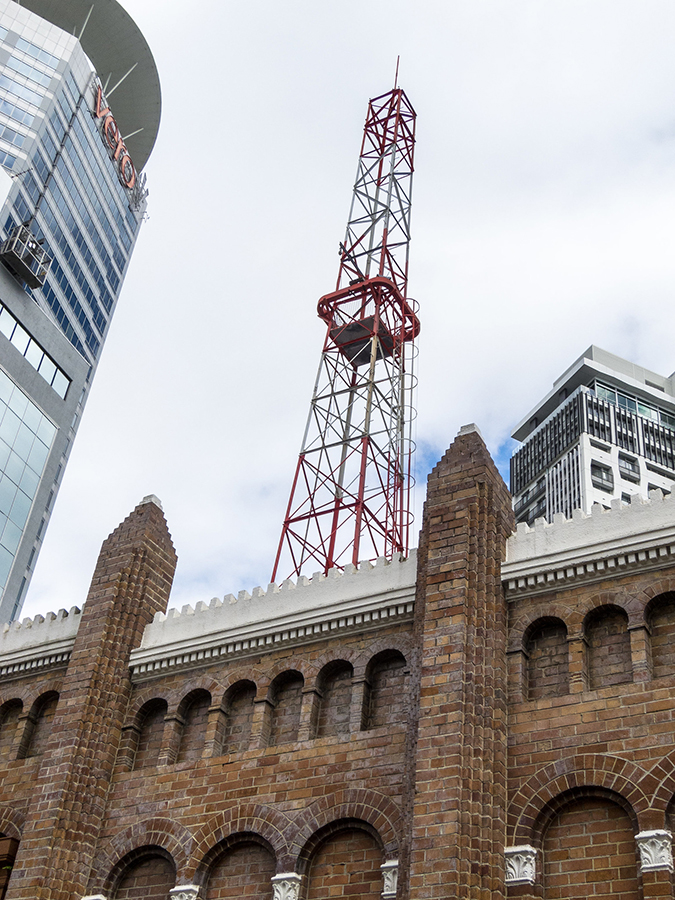
1YA Radio Station Building (Former), Auckland. CC BY-SA 2.0 Image courtesy of www.flickr.com | russellstreet | 26/11/2011 | russellstreet
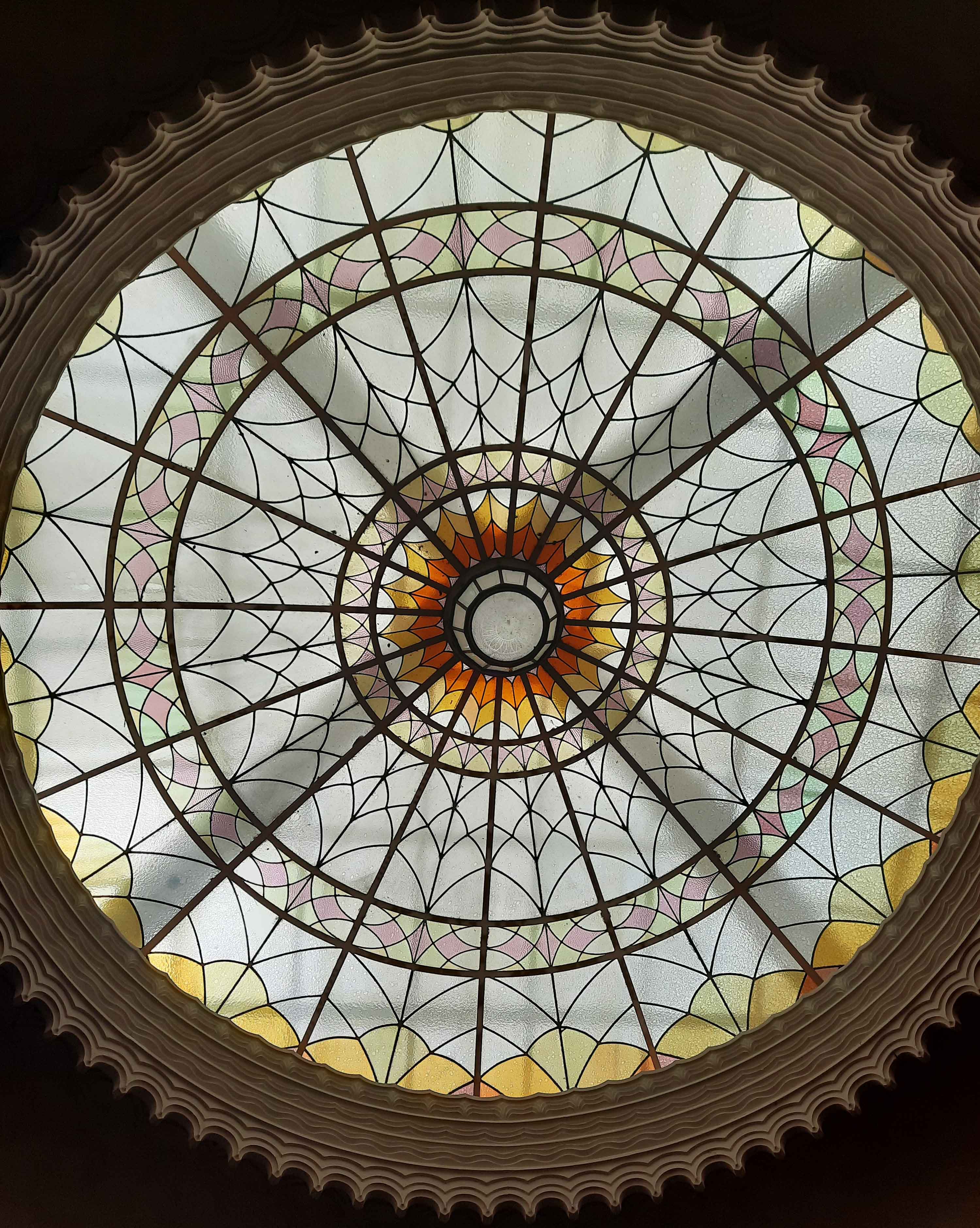
1YA Radio Station Building (Former), Auckland. Foyer Glass dome | Pauline Vela | 14/10/2022 | Heritage New Zealand Pouhere Taonga
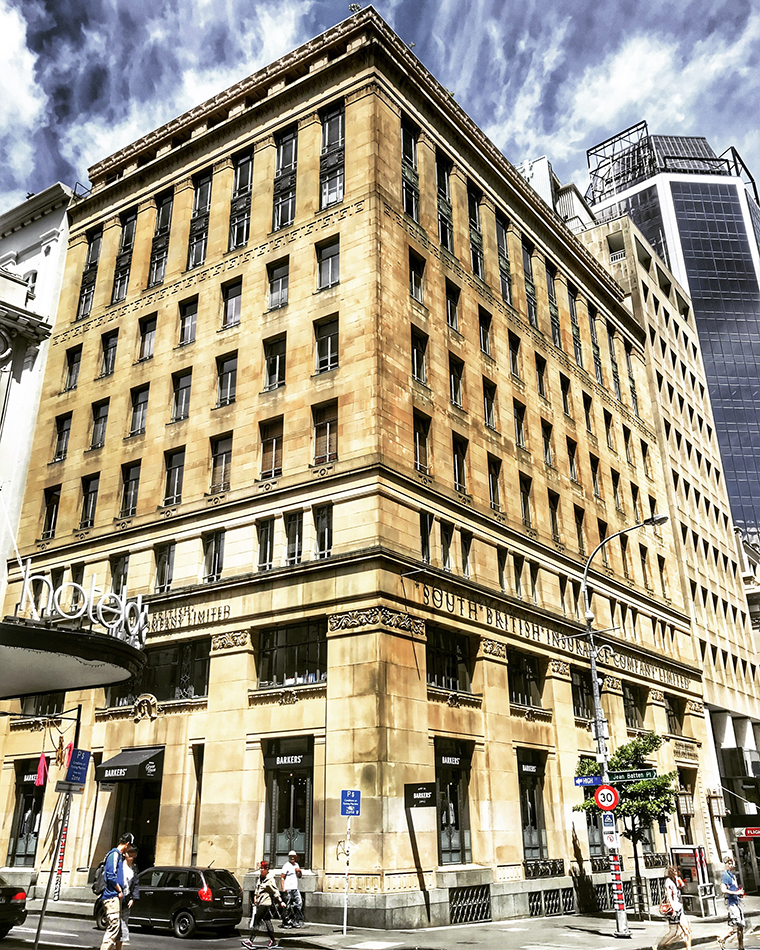
1YA Radio Station Building (Former), Auckland. Image courtesy of www.flickr.com | Phil Clark | 23/08/2020 | phil1066photography.com
1YA Radio Station Building (Former), Auckland. CC BY-SA 2.0 Image courtesy of www.flickr.com | russellstreet | 26/11/2011 | russellstreet
1YA Radio Station Building (Former), Auckland. Foyer Glass dome | Pauline Vela | 14/10/2022 | Heritage New Zealand Pouhere Taonga

List Entry Information

Overview

Status
Listed

List Entry Status
Historic Place Category 1

Access
Private/No Public Access

List Number
660

Date Entered
15th February 1990

Date of Effect
15th February 1990

City/District Council
Auckland Council

Region
Auckland Council

Extent of List Entry

Extent includes the land described as Pt Allots 10-11 Sec 3 City of Auckland defined on DP 874 (RT NA67C/507), Pt Allot 12 Sec 3 City of Auckland (RT NA152/135), North Auckland Land District, and the building known as 1YA Radio Station Building (Former) thereon.

Legal description

Pt Allots 10-11 Sec 3 City of Auckland (RT NA67C/507), Pt Allot 12 Sec 3 City of Auckland (RT NA152/135), North Auckland Land District

Detailed List Entry
Significance

Historic Significance

Historical Significance or Value 1YA was the first radio station to be licensed under the 1923 Radio Regulations. It operated initially from various modified existing buildings in Symonds Street, France Street and Karangahape Road. Radio broadcasting expanded rapidly in the 1930s despite the Depression. Vast technological change occurred in a very short space of time. Under the Broadcasting Board, new stations with improved facilities were opened in new buildings specifically designed for the purpose of radio broadcasting. The Shortland Street building was constructed as part of this upgrading. 1YA remained in this building until 1961. In 1959 test equipment for the transmission of television programmes was installed in the studio. AKTV2 became the first of the main centre television stations, commencing regular telecasts from the Shortland Street Studio in 1960. In 1966 Studio One was commissioned at Shortland Street as a custom designed television studio. It remained New Zealand's largest television studio until the opening of the Avalon complex. The Shortland Street building has played a crucial role in the establishment and development of both radio and television in New Zealand.

Physical Significance

ARCHITECTURAL SIGNIFICANCE: The demands of radio technology, a steep site and the lack of an established prototype or style for radio station buildings resulted in a highly unique design for the IYA radio station building (now the TVNZ Studios). The Shortland Street Studios were constructed on the former beach cliff and this steep site was of critical importance in designing the building. The main studio is two stories in height, one level down from the main entrance. The thick and windowless walls were necessary to stop the transmission of sound from studio to studio and from the street into the studio. The predominant style for American Radio Station buildings was what became known as 'moderne'. This style relied heavily on the use of glazing - both glass bricks and window strips. These elements were, however, inappropriate for stopping sound transmission and the Shortland Street Studios have 22 inch walls and triple glazing. The conception of the design was, like most Art Deco designs, highly romantic. The eclectic selection of motifs by the designers, ranging in source from ancient civilisations to modern machines, was characteristic of the times. The historicist ziggurat form of the pinnacles, typical of Art Deco design, contrasts with the radio transmitter mounted on the roof, indicative of the technological age. The interior featured elaborate decorative work and was described as a 'magnificent palace of Broadcasting'. When the 1YA radio station building was under construction the New Zealand Institute of Architects Journal stated that the architectural style of the building was 'not modern'. Although the designers of the building were, like 'modern' architects, concerned to fulfill the technological and functional requirements of their brief, they were also interested in decorating the form of the building with historical architectural elements such as arched arcades. TOWNSCAPE/LANDMARK SIGNIFICANCE: The unusual facade forms a well known Auckland landmark. There are a number of classified buildings on Shortland Street and the studios contrast with the Chicago style commercial buildings in the valley. Both the overall form and the intricacy of the decorative detailing are important features of the design which contribute to the townscape of the surrounding area.

Construction Professional

Name

Bartley & Wade

Type

Architectural Partnership

Biography

Alva Bartley was the son of Edward Bartley, a prominent Auckland architect. He trained in his father's office until he enlisted for military service. After the war he remained in London to study at the Architectural Association. He also became an Associate of the Royal Institute of British Architects. Wade and Bartley established a partnership about 1920 and it lasted until the late 1930s. Their major works include the Public Library and Borough Council offices, Dargaville (1922), the Commercial Hotel (now De Bretts, 1927), A and G Price Ltd, Quay Street (1927), Pascoes Jewellers, Karangahape Road, the former Auckland Electric Power Board building (1930) and the 1YA Studio building (now Television New Zealand, 1934), all in Auckland.

Construction Details

Start Year

1842

Type

Other

Description

Site of rear yard of colonial homestead

Type

Other

Description

Site of several timber dwellings

Period

pre-1886

Start Year

1934

Type

Original Construction

Description

Construction of 1YA Building (later known as Television New Zealand Studios). Formal Opening Ceremony 23 January 1935.

Start Year

1936

Type

Modification

Description

Installation of recording studios

Start Year

1961

Type

Modification

Description

Fire damage

Start Year

1966

Type

Modification

Description

Internal alterations

Start Year

2000

Finish Year

2001

Type

Modification

Description

Major refurbishment

Construction Materials

The studios have a reinforced concrete frame. The interior contained elaborate decorative plasterwork suspended beneath the roof structure. The foyer has a glazed dome with a lantern above with decorative plasterwork around the dome. The exterior is faced with Glenburn bricks and features 'cast stone' ornament.

Notable Features

Registration covers the building, its fixtures and finishes. It includes recent modifications. The building lies on the site of several pre-1886 dwellings and within the curtilage of an earlier, 1842 colonial homestead. Plaster and glass dome in the foyer. Eight or nine different colours of bricks were used ranging from black to almost white.

Physical Description

ARCHITECTURAL DESCRIPTION (STYLE): A broad term describing the style of the architecture is Art Deco. The fortress like detailing of the facade was inspired by Romanesque architecture and consists of a series of brick-faced piers each of which culminates in a pinnacle. There is a blind arcade running between the piers, which is also faced with brick and has 'cast stone' capitals. Between the pinnacles is a cresting motif. The main entrance in the centre of the Shortland Street facade has an elaborate Romanesque moulded doorway with blind arcading above. The portion of the facade which is visible from Shortland Street does not contain any windows (these are hidden behind the front retaining wall). As the building is constructed on a steep site the back (north) elevation extends three storeys below the Shortland Street (south) elevation. These side and back facades are relatively plain. The lowest two levels have rectangular windows and the third storey has windows with semi-circular heads. The main foyer featured a coloured glass dome, with a lantern above it, that was encircled by elaborately decorated plaster which was brightly painted in seven colours. The main studio also had elaborately decorated plaster pilasters and a ceiling supported on corbels. MODIFICATIONS: The building was used as a radio station from 1935 until 1960 when conversion into television studios began. Before the modifications were completed a fire started in a ventilating duct and smoke damaged the interior fittings and equipment. During the conversion the main dome in the foyer was enclosed and suspended ceilings and additional partitions were added throughout the building. Although not repainted in the original colours, the plasterwork and glass of the dome was exposed and repaired in 1985.

Reference

Completion Date

12th December 2001

Report Written By

Martin Jones

Information Sources

Auckland Star

Auckland Star

Barnes, 1996

Tony Barnes and Greg Bowron, 'Former TVNZ Studios, 74 Shortland Street, Auckland: Cultural Heritage Assessment', Auckland, 1996 (held by NZHPT, Auckland)

New Zealand Herald

New Zealand Herald, 12 July 1932, p. 6; 28 September 1933, p. 6.

New Zealand Woman's Weekly

New Zealand Woman's Weekly

New Zealand Institute of Architects Journal

New Zealand Institute of Architects Journal (NZIA), No.8, Aug 1974

School of Architecture Library

School of Architecture Library, Auckland

Boyd-Bell, 1985

Robert Boyd-Bell, New Zealand Television: The First 25 Years. Auckland, Reed Methuen, 1985.

Downes, 1976

Peter Edmund Downes and Peter M Harcourt. Voices in the Air: Radio Broadcasting in New Zealand: A documentary. Wellington, Methuen in association with Radio New Zealand, 1976.

Hall, 1980

John Herbert Hall, The History of Broadcasting in New Zealand: 1920-1954. Wellington, NZ: Broadcasting Corporation of New Zealand, 1980.

Stokes, 1986

John W Stokes, The Golden Age of Radio in the Hom,. Invercargill, Craig Printers and Publishers, 1986.

Conservation Plan

Conservation Plan

Report Written By

NZIA National Award Winner 1990 This historic place was registered under the Historic Places Act 1980. This report includes the text from the original Building Classification Committee report considered by the NZHPT Board at the time of registration. Please note that entry on the New Zealand Heritage List/Rarangi Korero identifies only the heritage values of the property concerned, and should not be construed as advice on the state of the property, or as a comment of its soundness or safety, including in regard to earthquake risk, safety in the event of fire, or insanitary conditions.

Further Information

Current Usages

Uses: Civic Facilities

Specific Usage: Art Gallery

Uses: Education

Specific Usage: University

Former Usages

General Usage:: Communication

Specific Usage: Radio Station

General Usage:: Communication

Specific Usage: Television Station

Themes

Web Links

Overview

Status

Listed

List Entry Status

Historic Place Category 1

Access

Private/No Public Access

List Number

660

Date Entered

15th February 1990

Date of Effect

15th February 1990

City/District Council

Auckland Council

Region

Auckland Council

Extent of List Entry

Extent includes the land described as Pt Allots 10-11 Sec 3 City of Auckland defined on DP 874 (RT NA67C/507), Pt Allot 12 Sec 3 City of Auckland (RT NA152/135), North Auckland Land District, and the building known as 1YA Radio Station Building (Former) thereon.

Legal description

Pt Allots 10-11 Sec 3 City of Auckland (RT NA67C/507), Pt Allot 12 Sec 3 City of Auckland (RT NA152/135), North Auckland Land District

Status

Listed

List Entry Status

Historic Place Category 1

Access

Private/No Public Access

List Number

660

Date Entered

15th February 1990

Date of Effect

15th February 1990

City/District Council

Auckland Council

Region

Auckland Council

Extent of List Entry

Extent includes the land described as Pt Allots 10-11 Sec 3 City of Auckland defined on DP 874 (RT NA67C/507), Pt Allot 12 Sec 3 City of Auckland (RT NA152/135), North Auckland Land District, and the building known as 1YA Radio Station Building (Former) thereon.

Legal description

Pt Allots 10-11 Sec 3 City of Auckland (RT NA67C/507), Pt Allot 12 Sec 3 City of Auckland (RT NA152/135), North Auckland Land District

Significance

Why is this place significant?

Historic Significance

Historical Significance or Value 1YA was the first radio station to be licensed under the 1923 Radio Regulations. It operated initially from various modified existing buildings in Symonds Street, France Street and Karangahape Road. Radio broadcasting expanded rapidly in the 1930s despite the Depression. Vast technological change occurred in a very short space of time. Under the Broadcasting Board, new stations with improved facilities were opened in new buildings specifically designed for the purpose of radio broadcasting. The Shortland Street building was constructed as part of this upgrading. 1YA remained in this building until 1961. In 1959 test equipment for the transmission of television programmes was installed in the studio. AKTV2 became the first of the main centre television stations, commencing regular telecasts from the Shortland Street Studio in 1960. In 1966 Studio One was commissioned at Shortland Street as a custom designed television studio. It remained New Zealand's largest television studio until the opening of the Avalon complex. The Shortland Street building has played a crucial role in the establishment and development of both radio and television in New Zealand.

Physical Significance

ARCHITECTURAL SIGNIFICANCE: The demands of radio technology, a steep site and the lack of an established prototype or style for radio station buildings resulted in a highly unique design for the IYA radio station building (now the TVNZ Studios). The Shortland Street Studios were constructed on the former beach cliff and this steep site was of critical importance in designing the building. The main studio is two stories in height, one level down from the main entrance. The thick and windowless walls were necessary to stop the transmission of sound from studio to studio and from the street into the studio. The predominant style for American Radio Station buildings was what became known as 'moderne'. This style relied heavily on the use of glazing - both glass bricks and window strips. These elements were, however, inappropriate for stopping sound transmission and the Shortland Street Studios have 22 inch walls and triple glazing. The conception of the design was, like most Art Deco designs, highly romantic. The eclectic selection of motifs by the designers, ranging in source from ancient civilisations to modern machines, was characteristic of the times. The historicist ziggurat form of the pinnacles, typical of Art Deco design, contrasts with the radio transmitter mounted on the roof, indicative of the technological age. The interior featured elaborate decorative work and was described as a 'magnificent palace of Broadcasting'. When the 1YA radio station building was under construction the New Zealand Institute of Architects Journal stated that the architectural style of the building was 'not modern'. Although the designers of the building were, like 'modern' architects, concerned to fulfill the technological and functional requirements of their brief, they were also interested in decorating the form of the building with historical architectural elements such as arched arcades. TOWNSCAPE/LANDMARK SIGNIFICANCE: The unusual facade forms a well known Auckland landmark. There are a number of classified buildings on Shortland Street and the studios contrast with the Chicago style commercial buildings in the valley. Both the overall form and the intricacy of the decorative detailing are important features of the design which contribute to the townscape of the surrounding area.

Why is this place significant?

Historic Significance

Historical Significance or Value 1YA was the first radio station to be licensed under the 1923 Radio Regulations. It operated initially from various modified existing buildings in Symonds Street, France Street and Karangahape Road. Radio broadcasting expanded rapidly in the 1930s despite the Depression. Vast technological change occurred in a very short space of time. Under the Broadcasting Board, new stations with improved facilities were opened in new buildings specifically designed for the purpose of radio broadcasting. The Shortland Street building was constructed as part of this upgrading. 1YA remained in this building until 1961. In 1959 test equipment for the transmission of television programmes was installed in the studio. AKTV2 became the first of the main centre television stations, commencing regular telecasts from the Shortland Street Studio in 1960. In 1966 Studio One was commissioned at Shortland Street as a custom designed television studio. It remained New Zealand's largest television studio until the opening of the Avalon complex. The Shortland Street building has played a crucial role in the establishment and development of both radio and television in New Zealand.

Physical Significance

ARCHITECTURAL SIGNIFICANCE: The demands of radio technology, a steep site and the lack of an established prototype or style for radio station buildings resulted in a highly unique design for the IYA radio station building (now the TVNZ Studios). The Shortland Street Studios were constructed on the former beach cliff and this steep site was of critical importance in designing the building. The main studio is two stories in height, one level down from the main entrance. The thick and windowless walls were necessary to stop the transmission of sound from studio to studio and from the street into the studio. The predominant style for American Radio Station buildings was what became known as 'moderne'. This style relied heavily on the use of glazing - both glass bricks and window strips. These elements were, however, inappropriate for stopping sound transmission and the Shortland Street Studios have 22 inch walls and triple glazing. The conception of the design was, like most Art Deco designs, highly romantic. The eclectic selection of motifs by the designers, ranging in source from ancient civilisations to modern machines, was characteristic of the times. The historicist ziggurat form of the pinnacles, typical of Art Deco design, contrasts with the radio transmitter mounted on the roof, indicative of the technological age. The interior featured elaborate decorative work and was described as a 'magnificent palace of Broadcasting'. When the 1YA radio station building was under construction the New Zealand Institute of Architects Journal stated that the architectural style of the building was 'not modern'. Although the designers of the building were, like 'modern' architects, concerned to fulfill the technological and functional requirements of their brief, they were also interested in decorating the form of the building with historical architectural elements such as arched arcades. TOWNSCAPE/LANDMARK SIGNIFICANCE: The unusual facade forms a well known Auckland landmark. There are a number of classified buildings on Shortland Street and the studios contrast with the Chicago style commercial buildings in the valley. Both the overall form and the intricacy of the decorative detailing are important features of the design which contribute to the townscape of the surrounding area.

Construction Information

Construction Professional

Name

Bartley & Wade

Type

Architectural Partnership

Biography

Alva Bartley was the son of Edward Bartley, a prominent Auckland architect. He trained in his father's office until he enlisted for military service. After the war he remained in London to study at the Architectural Association. He also became an Associate of the Royal Institute of British Architects. Wade and Bartley established a partnership about 1920 and it lasted until the late 1930s. Their major works include the Public Library and Borough Council offices, Dargaville (1922), the Commercial Hotel (now De Bretts, 1927), A and G Price Ltd, Quay Street (1927), Pascoes Jewellers, Karangahape Road, the former Auckland Electric Power Board building (1930) and the 1YA Studio building (now Television New Zealand, 1934), all in Auckland.

Construction Details

Start Year

1842

Type

Other

Description

Site of rear yard of colonial homestead

Type

Other

Description

Site of several timber dwellings

Period

pre-1886

Start Year

1934

Type

Original Construction

Description

Construction of 1YA Building (later known as Television New Zealand Studios). Formal Opening Ceremony 23 January 1935.

Start Year

1936

Type

Modification

Description

Installation of recording studios

Start Year

1961

Type

Modification

Description

Fire damage

Start Year

1966

Type

Modification

Description

Internal alterations

Start Year

2000

Finish Year

2001

Type

Modification

Description

Major refurbishment

Construction Materials

The studios have a reinforced concrete frame. The interior contained elaborate decorative plasterwork suspended beneath the roof structure. The foyer has a glazed dome with a lantern above with decorative plasterwork around the dome. The exterior is faced with Glenburn bricks and features 'cast stone' ornament.

Notable Features

Registration covers the building, its fixtures and finishes. It includes recent modifications. The building lies on the site of several pre-1886 dwellings and within the curtilage of an earlier, 1842 colonial homestead. Plaster and glass dome in the foyer. Eight or nine different colours of bricks were used ranging from black to almost white.

Construction Professional

Name

Bartley & Wade

Type

Architectural Partnership

Biography

Alva Bartley was the son of Edward Bartley, a prominent Auckland architect. He trained in his father's office until he enlisted for military service. After the war he remained in London to study at the Architectural Association. He also became an Associate of the Royal Institute of British Architects. Wade and Bartley established a partnership about 1920 and it lasted until the late 1930s. Their major works include the Public Library and Borough Council offices, Dargaville (1922), the Commercial Hotel (now De Bretts, 1927), A and G Price Ltd, Quay Street (1927), Pascoes Jewellers, Karangahape Road, the former Auckland Electric Power Board building (1930) and the 1YA Studio building (now Television New Zealand, 1934), all in Auckland.

Construction Details

Start Year

1842

Type

Other

Description

Site of rear yard of colonial homestead

Type

Other

Description

Site of several timber dwellings

Period

pre-1886

Start Year

1934

Type

Original Construction

Description

Construction of 1YA Building (later known as Television New Zealand Studios). Formal Opening Ceremony 23 January 1935.

Start Year

1936

Type

Modification

Description

Installation of recording studios

Start Year

1961

Type

Modification

Description

Fire damage

Start Year

1966

Type

Modification

Description

Internal alterations

Start Year

2000

Finish Year

2001

Type

Modification

Description

Major refurbishment

Construction Materials

The studios have a reinforced concrete frame. The interior contained elaborate decorative plasterwork suspended beneath the roof structure. The foyer has a glazed dome with a lantern above with decorative plasterwork around the dome. The exterior is faced with Glenburn bricks and features 'cast stone' ornament.

Notable Features

Registration covers the building, its fixtures and finishes. It includes recent modifications. The building lies on the site of several pre-1886 dwellings and within the curtilage of an earlier, 1842 colonial homestead. Plaster and glass dome in the foyer. Eight or nine different colours of bricks were used ranging from black to almost white.

Physical Description

ARCHITECTURAL DESCRIPTION (STYLE): A broad term describing the style of the architecture is Art Deco. The fortress like detailing of the facade was inspired by Romanesque architecture and consists of a series of brick-faced piers each of which culminates in a pinnacle. There is a blind arcade running between the piers, which is also faced with brick and has 'cast stone' capitals. Between the pinnacles is a cresting motif. The main entrance in the centre of the Shortland Street facade has an elaborate Romanesque moulded doorway with blind arcading above. The portion of the facade which is visible from Shortland Street does not contain any windows (these are hidden behind the front retaining wall). As the building is constructed on a steep site the back (north) elevation extends three storeys below the Shortland Street (south) elevation. These side and back facades are relatively plain. The lowest two levels have rectangular windows and the third storey has windows with semi-circular heads. The main foyer featured a coloured glass dome, with a lantern above it, that was encircled by elaborately decorated plaster which was brightly painted in seven colours. The main studio also had elaborately decorated plaster pilasters and a ceiling supported on corbels. MODIFICATIONS: The building was used as a radio station from 1935 until 1960 when conversion into television studios began. Before the modifications were completed a fire started in a ventilating duct and smoke damaged the interior fittings and equipment. During the conversion the main dome in the foyer was enclosed and suspended ceilings and additional partitions were added throughout the building. Although not repainted in the original colours, the plasterwork and glass of the dome was exposed and repaired in 1985.

ARCHITECTURAL DESCRIPTION (STYLE): A broad term describing the style of the architecture is Art Deco. The fortress like detailing of the facade was inspired by Romanesque architecture and consists of a series of brick-faced piers each of which culminates in a pinnacle. There is a blind arcade running between the piers, which is also faced with brick and has 'cast stone' capitals. Between the pinnacles is a cresting motif. The main entrance in the centre of the Shortland Street facade has an elaborate Romanesque moulded doorway with blind arcading above. The portion of the facade which is visible from Shortland Street does not contain any windows (these are hidden behind the front retaining wall). As the building is constructed on a steep site the back (north) elevation extends three storeys below the Shortland Street (south) elevation. These side and back facades are relatively plain. The lowest two levels have rectangular windows and the third storey has windows with semi-circular heads. The main foyer featured a coloured glass dome, with a lantern above it, that was encircled by elaborately decorated plaster which was brightly painted in seven colours. The main studio also had elaborately decorated plaster pilasters and a ceiling supported on corbels. MODIFICATIONS: The building was used as a radio station from 1935 until 1960 when conversion into television studios began. Before the modifications were completed a fire started in a ventilating duct and smoke damaged the interior fittings and equipment. During the conversion the main dome in the foyer was enclosed and suspended ceilings and additional partitions were added throughout the building. Although not repainted in the original colours, the plasterwork and glass of the dome was exposed and repaired in 1985.

Reference

Historical and Associated Iwi / Hapū / Whānau

Completion Date

12th December 2001

Report Written By

Martin Jones

Information Sources

Auckland Star

Auckland Star

Barnes, 1996

Tony Barnes and Greg Bowron, 'Former TVNZ Studios, 74 Shortland Street, Auckland: Cultural Heritage Assessment', Auckland, 1996 (held by NZHPT, Auckland)

New Zealand Herald

New Zealand Herald, 12 July 1932, p. 6; 28 September 1933, p. 6.

New Zealand Woman's Weekly

New Zealand Woman's Weekly

New Zealand Institute of Architects Journal

New Zealand Institute of Architects Journal (NZIA), No.8, Aug 1974

School of Architecture Library

School of Architecture Library, Auckland

Boyd-Bell, 1985

Robert Boyd-Bell, New Zealand Television: The First 25 Years. Auckland, Reed Methuen, 1985.

Downes, 1976

Peter Edmund Downes and Peter M Harcourt. Voices in the Air: Radio Broadcasting in New Zealand: A documentary. Wellington, Methuen in association with Radio New Zealand, 1976.

Hall, 1980

John Herbert Hall, The History of Broadcasting in New Zealand: 1920-1954. Wellington, NZ: Broadcasting Corporation of New Zealand, 1980.

Stokes, 1986

John W Stokes, The Golden Age of Radio in the Hom,. Invercargill, Craig Printers and Publishers, 1986.

Conservation Plan

Conservation Plan

Other Information

NZIA National Award Winner 1990 This historic place was registered under the Historic Places Act 1980. This report includes the text from the original Building Classification Committee report considered by the NZHPT Board at the time of registration. Please note that entry on the New Zealand Heritage List/Rarangi Korero identifies only the heritage values of the property concerned, and should not be construed as advice on the state of the property, or as a comment of its soundness or safety, including in regard to earthquake risk, safety in the event of fire, or insanitary conditions.

Historical and Associated Iwi / Hapū / Whānau

Completion Date

12th December 2001

Report Written By

Martin Jones

Information Sources

Auckland Star

Auckland Star

Barnes, 1996

Tony Barnes and Greg Bowron, 'Former TVNZ Studios, 74 Shortland Street, Auckland: Cultural Heritage Assessment', Auckland, 1996 (held by NZHPT, Auckland)

New Zealand Herald

New Zealand Herald, 12 July 1932, p. 6; 28 September 1933, p. 6.

New Zealand Woman's Weekly

New Zealand Woman's Weekly

New Zealand Institute of Architects Journal

New Zealand Institute of Architects Journal (NZIA), No.8, Aug 1974

School of Architecture Library

School of Architecture Library, Auckland

Boyd-Bell, 1985

Robert Boyd-Bell, New Zealand Television: The First 25 Years. Auckland, Reed Methuen, 1985.

Downes, 1976

Peter Edmund Downes and Peter M Harcourt. Voices in the Air: Radio Broadcasting in New Zealand: A documentary. Wellington, Methuen in association with Radio New Zealand, 1976.

Hall, 1980

John Herbert Hall, The History of Broadcasting in New Zealand: 1920-1954. Wellington, NZ: Broadcasting Corporation of New Zealand, 1980.

Stokes, 1986

John W Stokes, The Golden Age of Radio in the Hom,. Invercargill, Craig Printers and Publishers, 1986.

Conservation Plan

Conservation Plan

Other Information

NZIA National Award Winner 1990 This historic place was registered under the Historic Places Act 1980. This report includes the text from the original Building Classification Committee report considered by the NZHPT Board at the time of registration. Please note that entry on the New Zealand Heritage List/Rarangi Korero identifies only the heritage values of the property concerned, and should not be construed as advice on the state of the property, or as a comment of its soundness or safety, including in regard to earthquake risk, safety in the event of fire, or insanitary conditions.

Further Information

Current Usages

Uses: Civic Facilities

Specific Usage: Art Gallery

Uses: Education

Specific Usage: University

Former Usages

General Usage: Communication

Specific Usage: Radio Station

General Usage: Communication

Specific Usage: Television Station

Current Usages

Uses: Civic Facilities

Specific Usage: Art Gallery

Uses: Education

Specific Usage: University

Former Usages

General Usage: Communication

Specific Usage: Radio Station

General Usage: Communication

Specific Usage: Television Station

Location

Loading
Related listings
South British Insurance Building (Former), Auckland. Image courtesy of www.flickr.com
South British Insurance Building (Former)
General Buildings
General Buildings (including Yorkshire House)
General Buildings
General Buildings (including Yorkshire House)
South British Insurance Building (Former), Auckland. Image courtesy of www.flickr.com
South British Insurance Building (Former)
Stay up to date with Heritage this month
