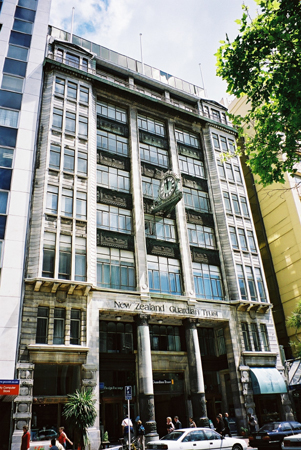
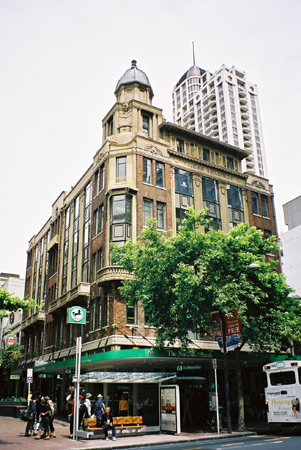
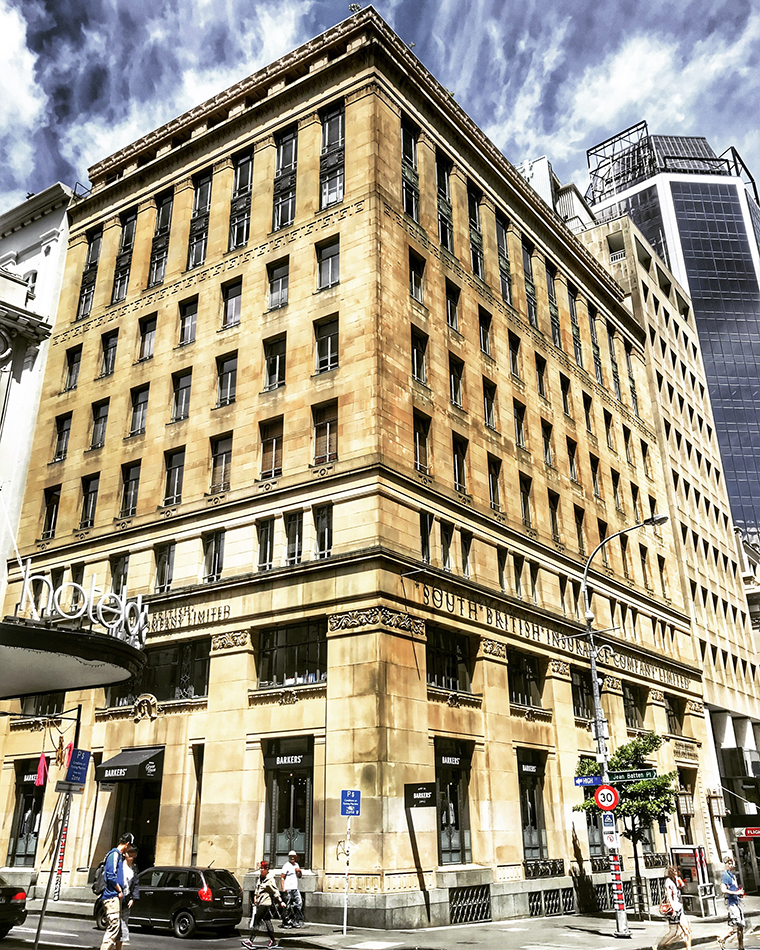
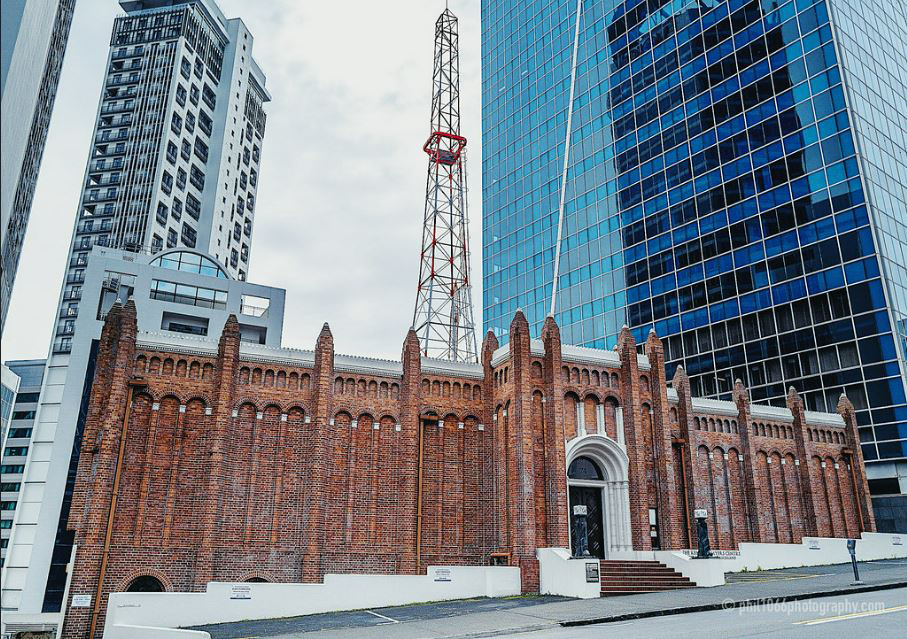
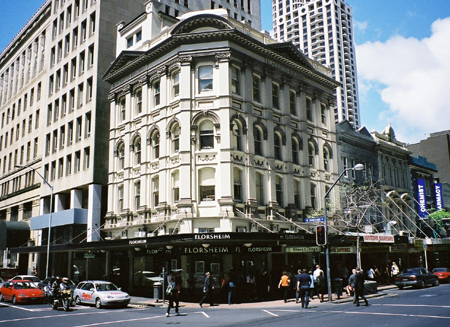
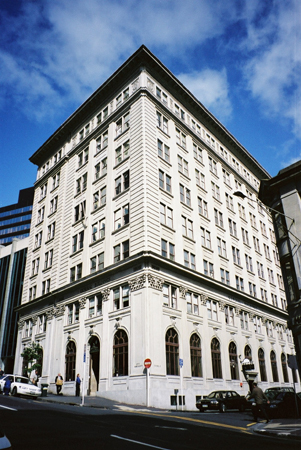
Yorkshire House was considered to be one of the finest buildings in Auckland when it opened, and like others of its type housed the offices and public rooms of the insurance company at ground floor level while most of the remaining floors were rented out to other businesses as office suites. The building was lauded for its use of hot water central-heating, large windows and electric lighting, enabling work to be carried out more comfortably and over longer hours. The building retains much of its original interior and character, being extended in the 1970s with a near-identical addition on Shortland Street.
The building is significant as one of the best-preserved Chicago-style high-rises in Auckland, and important for the unusually intact nature of its interiors. It demonstrates the growing influence of American prototypes in the commercial architecture of early twentieth-century New Zealand, and the link between such design and working practices. It makes a valuable contribution to Auckland's urban streetscape and is a reminder of Shortland Street's history as one of the main commercial thoroughfares in the town. The building has group value for its proximity to the 1920s South British Insurance Building and other historic buildings that were the original headquarters of similar financial institutions.
List Entry Information
Status
Listed
List Entry Status
Historic Place Category 1
Access
Private/No Public Access
List Number
106
Date Entered
2nd April 1985
Date of Effect
2nd April 1985
City/District Council
Auckland Council
Region
Auckland Council
Legal description
Lot 1 DP 75278
Status
Listed
List Entry Status
Historic Place Category 1
Access
Private/No Public Access
List Number
106
Date Entered
2nd April 1985
Date of Effect
2nd April 1985
City/District Council
Auckland Council
Region
Auckland Council
Legal description
Lot 1 DP 75278
Construction Professional
Name
Fletcher Construction Company
Type
Builder
Biography
Fletcher Construction Company was founded by Scottish-born James Fletcher (1886 - 1974), the son of a builder. Six months after his arrival in Dunedin in 1908, Fletcher formed a house-building partnership with Bert Morris. They soon moved into larger-scale construction work, building the St Kilda Town Hall (1911), and the main dormitory block and Ross Chapel at Knox College (1912). Fletcher's brothers, William, Andrew and John joined the business in 1911, which then became known as Fletcher Brothers. A branch was opened in Invercargill. While holidaying in Auckland in 1916, James tendered for the construction of the the Auckland City Markets. By 1919 the company, then known as Fletcher Construction, was firmly established in Auckland and Wellington. Notable landmarks constructed by the company during the Depression included the Auckland University College Arts Building (completed 1926); Landmark House (the former Auckland Electric Power Board Building, 1927); Auckland Civic Theatre (1929); the Chateau Tongariro (1929); and the Dominion Museum, Wellington (1934). Prior to the election of the first Labour Government, Fletcher (a Reform supporter) had advised the Labour Party on housing policy as hbe believed in large-scale planning and in the inter-dependence of government and business. However, he declined an approach by Prime Minister Michael Joseph Savage in December 1935 to sell the company to the government, when the latter wanted to ensure the large-scale production of rental state housing. Although Fletchers ultimately went on to build many of New Zealand's state houses, for several years Residential Construction Ltd (the subsidiary established to undertake their construction) sustained heavy financial losses. Fletcher Construction became a public company, Fletcher Holdings, in 1940. Already Fletchers' interests were wide ranging: brickyards, engineering shops, joinery factories, marble quarries, structural steel plants and other enterprises had been added the original construction firm. Further expansion could only be undertaken with outside capital. During the Second World War James Fletcher, having retired as chairman of Fletcher Holdings, was seconded to the newly created position of Commissioner of State Construction which he held during 1942 and 1943. Directly responsible to Prime Minister Peter Fraser, Fletcher had almost complete control over the deployment of workers and resources. He also became the Commissioner of the Ministry of Works, set up in 1943, a position he held until December 1945. In 1981 Fletcher Holdings; Tasman Pulp and Paper; and Challenge Corporation amalgamated to form Fletcher Challenge Ltd, at that time New Zealand's largest company. Williamson Construction Company - main contract
Name
Bloomfield & Hunt
Type
Architectural Partnership
Biography
No biography is currently available for this construction professional
Construction Details
Start Year
1926
Finish Year
1928
Type
Original Construction
Description
Construction of Yorkshire House (now part of the General Buildings)
Start Year
1976
Type
Addition
Description
Eastern addition
Notable Features
Registration covers the building, its fixtures and finishes. It includes the 1976 addition and more recent modifications. The building lies on the site of early colonial buildings.
Construction Professional
Name
Fletcher Construction Company
Type
Builder
Biography
Fletcher Construction Company was founded by Scottish-born James Fletcher (1886 - 1974), the son of a builder. Six months after his arrival in Dunedin in 1908, Fletcher formed a house-building partnership with Bert Morris. They soon moved into larger-scale construction work, building the St Kilda Town Hall (1911), and the main dormitory block and Ross Chapel at Knox College (1912). Fletcher's brothers, William, Andrew and John joined the business in 1911, which then became known as Fletcher Brothers. A branch was opened in Invercargill. While holidaying in Auckland in 1916, James tendered for the construction of the the Auckland City Markets. By 1919 the company, then known as Fletcher Construction, was firmly established in Auckland and Wellington. Notable landmarks constructed by the company during the Depression included the Auckland University College Arts Building (completed 1926); Landmark House (the former Auckland Electric Power Board Building, 1927); Auckland Civic Theatre (1929); the Chateau Tongariro (1929); and the Dominion Museum, Wellington (1934). Prior to the election of the first Labour Government, Fletcher (a Reform supporter) had advised the Labour Party on housing policy as hbe believed in large-scale planning and in the inter-dependence of government and business. However, he declined an approach by Prime Minister Michael Joseph Savage in December 1935 to sell the company to the government, when the latter wanted to ensure the large-scale production of rental state housing. Although Fletchers ultimately went on to build many of New Zealand's state houses, for several years Residential Construction Ltd (the subsidiary established to undertake their construction) sustained heavy financial losses. Fletcher Construction became a public company, Fletcher Holdings, in 1940. Already Fletchers' interests were wide ranging: brickyards, engineering shops, joinery factories, marble quarries, structural steel plants and other enterprises had been added the original construction firm. Further expansion could only be undertaken with outside capital. During the Second World War James Fletcher, having retired as chairman of Fletcher Holdings, was seconded to the newly created position of Commissioner of State Construction which he held during 1942 and 1943. Directly responsible to Prime Minister Peter Fraser, Fletcher had almost complete control over the deployment of workers and resources. He also became the Commissioner of the Ministry of Works, set up in 1943, a position he held until December 1945. In 1981 Fletcher Holdings; Tasman Pulp and Paper; and Challenge Corporation amalgamated to form Fletcher Challenge Ltd, at that time New Zealand's largest company. Williamson Construction Company - main contract
Name
Bloomfield & Hunt
Type
Architectural Partnership
Biography
No biography is currently available for this construction professional
Construction Details
Start Year
1926
Finish Year
1928
Type
Original Construction
Description
Construction of Yorkshire House (now part of the General Buildings)
Start Year
1976
Type
Addition
Description
Eastern addition
Notable Features
Registration covers the building, its fixtures and finishes. It includes the 1976 addition and more recent modifications. The building lies on the site of early colonial buildings.
Historical and Associated Iwi / Hapū / Whānau
Completion Date
15th August 2001
Report Written By
Martin Jones
Information Sources
Auckland Star
Auckland Star
Auckland Weekly News
Auckland Weekly News
Metro
Metro
New Zealand Architectural and Building Review
New Zealand Architectural and Building Review
Other Information
This place was identified as significant under previous legislation with different information requirements. It remains significant under the current legislation. There is opportunity under our legislation and policies to add to this information. Further information about this place may be available from the Northern Regional Office of Heritage New Zealand Pouhere Taonga. Please note that entry on the New Zealand Heritage List/Rarangi Korero identifies only the heritage values of the property concerned, and should not be construed as advice on the state of the property, or as a comment of its soundness or safety, including in regard to earthquake risk, safety in the event of fire, or insanitary conditions.
Historical and Associated Iwi / Hapū / Whānau
Completion Date
15th August 2001
Report Written By
Martin Jones
Information Sources
Auckland Star
Auckland Star
Auckland Weekly News
Auckland Weekly News
Metro
Metro
New Zealand Architectural and Building Review
New Zealand Architectural and Building Review
Other Information
This place was identified as significant under previous legislation with different information requirements. It remains significant under the current legislation. There is opportunity under our legislation and policies to add to this information. Further information about this place may be available from the Northern Regional Office of Heritage New Zealand Pouhere Taonga. Please note that entry on the New Zealand Heritage List/Rarangi Korero identifies only the heritage values of the property concerned, and should not be construed as advice on the state of the property, or as a comment of its soundness or safety, including in regard to earthquake risk, safety in the event of fire, or insanitary conditions.
Current Usages
Uses: Trade
Specific Usage: Office building/Offices
Uses: Trade
Specific Usage: Shop
Current Usages
Uses: Trade
Specific Usage: Office building/Offices
Uses: Trade
Specific Usage: Shop