Quick links


Quick links
Quick links
Quick links
Quick links
Quick links
19 Princes Street, Kitchener Street and Bankside Street, AUCKLAND
Private
Historic Place Category 1
List No. 663
List Entry Information
Status
Listed
List Entry Status
Historic Place Category 1
Access
Private/No Public Access
List Number
663
Date Entered
24th March 1988
Date of Effect
24th March 1988
City/District Council
Auckland Council
Region
Auckland Council
Legal description
Lot 1 DP 64556 (RT NA20B/782), North Auckland Land District
Status
Listed
List Entry Status
Historic Place Category 1
Access
Private/No Public Access
List Number
663
Date Entered
24th March 1988
Date of Effect
24th March 1988
City/District Council
Auckland Council
Region
Auckland Council
Legal description
Lot 1 DP 64556 (RT NA20B/782), North Auckland Land District
Why is this place significant?
Historic Significance
Historical Significance or Value In August 1869, nineteen men, mainly professionals, met and agreed to form a club, committing themselves in writing to a contribution to the cost of purchasing the building for the purpose of club headquarters. The members were 'gentlemen residing within 30 metres of the clubhouse', although there were provisions made for extra-provincial members to be admitted by nomination and voting. There was an elected President and Vice-President, and the Club was managed by a committee. The annual subscription for ordinary members was twelve guineas. The committee, on behalf of its members, purchased the large brick, almost new building in Princes Street. This building had been built in 1867 on land which had previously held a one-storeyed wooded building with wide verandahs, known as the Royal Hotel. The Royal Hotel had been erected in the 1840s by Samuel Wood. When Wood went bankrupt the hotel was taken over by Benjamin Lewis, who conveyed the property to his daughters in 1851. It was one of the daughters, Mrs Charles Ewen, who decided in 1866 to have the rather dingy looking Royal Hotel demolished, and a new hotel built in its place. Statements at the time described the new building as a commodious and handsome edifice, and the largest hotel in the city. At the time of purchase by the Northern Club, the building was in the occupation of the imperial government. Edward Rumsey, architect, was employed to carry out the alterations thought necessary. The whole of the interior was renovated and alterations were made with the view of providing suitable accommodation. Several apartments on the second storey were thrown into one with the object of forming a billiard room. Gas, water, and bells were installed. The furniture was bought from Melbourne and the building set up as a gentlemen's club. Since its establishment in 1870, the Northern Club has accommodated many distinguished guests, and in this sense its historical significance is in no small measure due to its associations with these people. Anthony Trollope was an early comer, while the Duke and Duchess of Cornwall and York (later King George V and Queen Mary) stayed there in 1901. Other guests have included the famous English historian, J A Froude. From its point of view of its position in the social history of Auckland therefore, the Northern Club stands as a tangible physical link between past and present, both in terms of the people who stayed in the building, and in terms of its architectural form which has enduring value to the present day.
Physical Significance
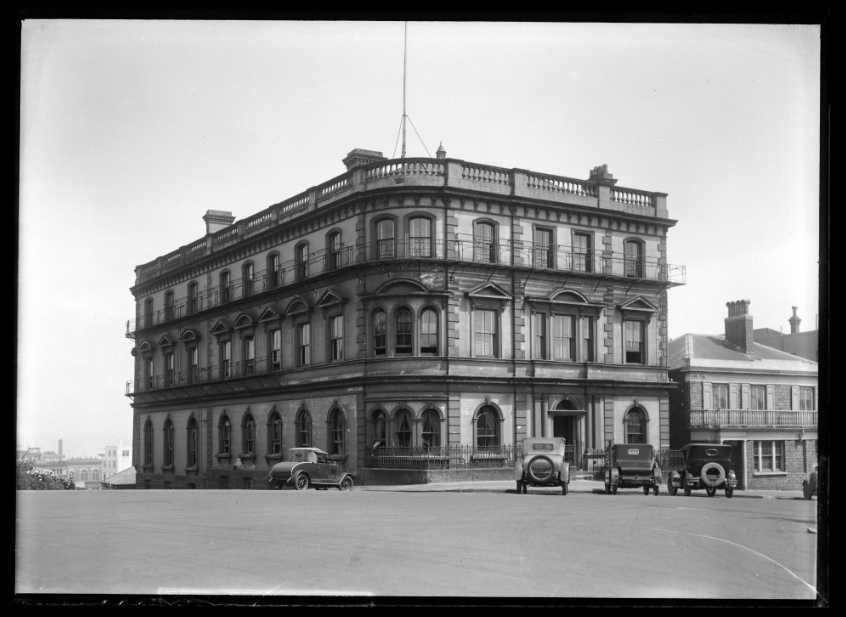
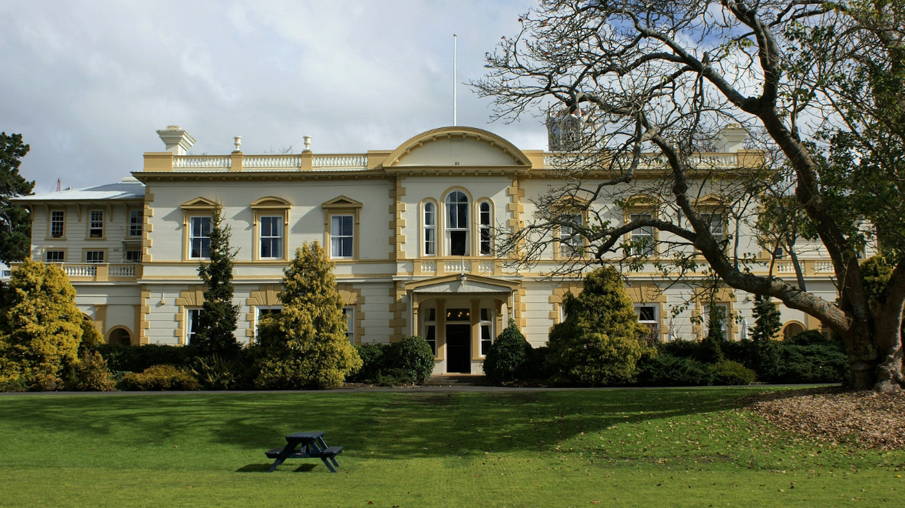
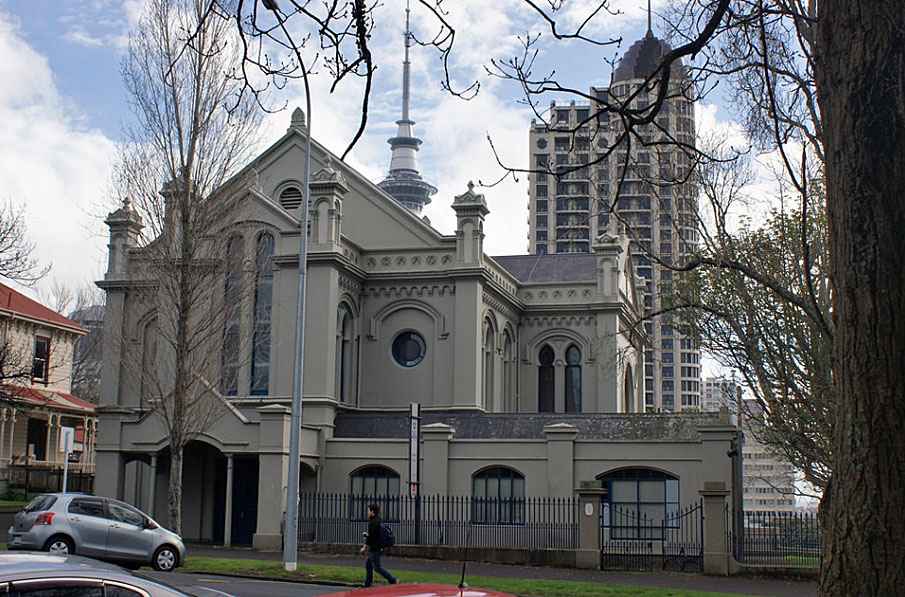
ARCHITECTURAL SIGNIFICANCE: In terms of the well mannered style of the building and the careful and articulated use of Italian Renaissance architectural themes, the building represents an extremely fine interpretation of European Italianate design. The original building was designed by James Wrigley, and as such it is a credit to his skill in interpreting in brick and cement a design which would traditionally be executed in stone. TOWNSCAPE/LAMDMARK SIGNIFICANCE: From the time it was built the Northern Club has occupied a prominent position in lower Princes Street. As the section it occupies it forms part of the Waterloo Quadrant, the Club stands in a precinctual relationship with other historic buildings nearby an d helps to define their historic character, these being the Old Government House, the former Jewish Synagogue and Princes Street houses.
Why is this place significant?
Historic Significance
Historical Significance or Value In August 1869, nineteen men, mainly professionals, met and agreed to form a club, committing themselves in writing to a contribution to the cost of purchasing the building for the purpose of club headquarters. The members were 'gentlemen residing within 30 metres of the clubhouse', although there were provisions made for extra-provincial members to be admitted by nomination and voting. There was an elected President and Vice-President, and the Club was managed by a committee. The annual subscription for ordinary members was twelve guineas. The committee, on behalf of its members, purchased the large brick, almost new building in Princes Street. This building had been built in 1867 on land which had previously held a one-storeyed wooded building with wide verandahs, known as the Royal Hotel. The Royal Hotel had been erected in the 1840s by Samuel Wood. When Wood went bankrupt the hotel was taken over by Benjamin Lewis, who conveyed the property to his daughters in 1851. It was one of the daughters, Mrs Charles Ewen, who decided in 1866 to have the rather dingy looking Royal Hotel demolished, and a new hotel built in its place. Statements at the time described the new building as a commodious and handsome edifice, and the largest hotel in the city. At the time of purchase by the Northern Club, the building was in the occupation of the imperial government. Edward Rumsey, architect, was employed to carry out the alterations thought necessary. The whole of the interior was renovated and alterations were made with the view of providing suitable accommodation. Several apartments on the second storey were thrown into one with the object of forming a billiard room. Gas, water, and bells were installed. The furniture was bought from Melbourne and the building set up as a gentlemen's club. Since its establishment in 1870, the Northern Club has accommodated many distinguished guests, and in this sense its historical significance is in no small measure due to its associations with these people. Anthony Trollope was an early comer, while the Duke and Duchess of Cornwall and York (later King George V and Queen Mary) stayed there in 1901. Other guests have included the famous English historian, J A Froude. From its point of view of its position in the social history of Auckland therefore, the Northern Club stands as a tangible physical link between past and present, both in terms of the people who stayed in the building, and in terms of its architectural form which has enduring value to the present day.
Physical Significance
ARCHITECTURAL SIGNIFICANCE: In terms of the well mannered style of the building and the careful and articulated use of Italian Renaissance architectural themes, the building represents an extremely fine interpretation of European Italianate design. The original building was designed by James Wrigley, and as such it is a credit to his skill in interpreting in brick and cement a design which would traditionally be executed in stone. TOWNSCAPE/LAMDMARK SIGNIFICANCE: From the time it was built the Northern Club has occupied a prominent position in lower Princes Street. As the section it occupies it forms part of the Waterloo Quadrant, the Club stands in a precinctual relationship with other historic buildings nearby an d helps to define their historic character, these being the Old Government House, the former Jewish Synagogue and Princes Street houses.
Construction Professional
Name
Wood, Reader Gilson
Type
Architect
Biography
Reader Gilson Wood (1821-1895) was born in England and his education in England included study under William Flint, architect and surveyor. Wood arrived in New Zealand in 1844 and from May 1846 shared accommodation with Frederick Thatcher assisting in his work for St John's College including the supervision of the Chapel (1847). Wood remained at St John's for a short time and then took a government appointment. The Selwynian influence can be seen in his later works such as the Melanesian Mission at Mission Bay, Auckland (1859). Wood carried out a large number of commissions, but displayed little originality. He had a notable career, however, which included service as a prominent local government official (1848-61) and as a member of the House of Representatives for Parnell (1861-65 and 1870-78) and for Waitemata, (1879-81). He retired from politics in 1881, and became Chairman of the Auckland Gas Company and a trustee of the Auckland Savings Bank.
Name
Rumsey, Edward
Type
Architect
Biography
Rumsey was an English born architect who had studied under the High Victorian Gothic Revivalist Sir George Gilbert Scott. Rumsey came to New Zealand to supervise the Gothic Revival styled Supreme Court Building, Auckland (1865) which he had designed. He remained in New Zealand for several years, practising in both Auckland and Dunedin. He worked on St Andrew's Anglican Church, Epsom (1867), though the Reverend John Kinder was responsible for the design of this building, and also on the Church of St Peter in the Forest, Bombay (1869) and the much larger St Luke's Church, Oamaru (1865). The design of the Oriental Hotel, Dunedin (1863), has been attributed to him.
Name
Avery, William
Type
Builder
Biography
No biography is currently available for this construction professional
Name
Mahoney, Edward
Type
Architect
Biography
Edward Mahoney (1824-1895) Edward Mahoney emigrated from Cork, Ireland with his wife Margaret and three children. The Mahoneys arrived in Auckland in 1856 where Edward set up as a building and timber merchant. In 1876 he established the architectural practice that later became Edward Mahoney & Sons, which for over thirty years designed and supervised construction of many Catholic buildings as well as churches for other denominations. The Church of St John the Baptist, Parnell (1861) and St Mary's Convent Chapel (1866) are two of the earliest surviving ecclesiastical buildings designed by Edward Mahoney and reflect the gradual evolution from simple Gothic Revival structures to more ambitious and creative use of the Gothic form such as may be seen in the Church of the Holy Sepulchre, Khyber Pass (1881); and St Patrick's Cathedral, the latter completed in 1901. Edward Mahoney was a founding member of the Auckland Institute of Architects, attending the first meeting in December 1880 where he was appointed honorary treasurer. He became president of the Institute in 1883. His sons Thomas (1855?-1923) and Robert (1862-1895) joined him in practice in 1876 and the early 1880s respectively. Upon Edward's retirement in 1885, Thomas and Robert carried on the practice. After Robert's death in 1895, Thomas changed the firm's name to E. Mahoney & Son. The Mahoneys designed a wide variety of buildings including the Auckland Customhouse, hotels, commercial buildings and houses, their best-known surviving domestic buildings being the Pah, at Hillsborough (1877) and the Dilworth Terrace Houses, Parnell (1899). Their ecclesiastical buildings included St Mary's Church of the Assumption, Onehunga (1888) and St Benedict's Church, Newton (1888). The firm of Edward Mahoney & Son continued to practice for a short period after Thomas Mahoney’s death in 1923, but was eventually dissolved in 1926. Source: NZHPT Registration Report for Bank of New Zealand (Former), Devonport (Register no. 4511).
Name
Wrigley, James (1838 - 1882)
Type
Architect
Biography
James Wrigley (1837?-1882) was born in Huddersfield, England. He served his articles with the firm of Pritchett and Sons of York, Huddersfield and Darlington, said to have been the leading firm in the North of England. After arriving in Auckland in 1859, he is reported to have erected many of the largest buildings in Auckland Province. Wrigley served for many years on the Auckland City Council, and was chairman of the Remuera and Newmarket Highway Board on several occasions. He was also the last elected member of the Provincial Council in New Zealand, although he did not take up his seat due to the Council’s subsequent abolition. Structures built to Wrigley’s design include St Andrew’s Presbyterian Church, Howick (1872), Holy Trinity Anglican Church, Waiuku (1873) and the Roman Catholic Church of St Peter and St Paul, Puhoi (1881). He is also believed to have designed the Wesleyan Chapel in Pitt Street (c.1860) and the Anglican Church of St Mathias, Panmure (1866). An elite merchant’s house at 29 Princes Street known as Hamurana (1876) is his work, as is the original portion of Carrington Hospital (1865) and substantial additions to the Northern Club in 1870. Wrigley's work in North Auckland included additions to the Waiwera Hotel (1880). He was also responsible for several cottages in Dargaville. Source: Registration Report for D. Graham and Company's Building (Former), May 2014
Construction Details
Start Year
1869
Finish Year
1870
Type
Modification
Description
Internal alterations during conversion to Northern Club
Start Year
1883
Finish Year
1884
Type
Addition
Description
Extension at rear in similar style
Start Year
1897
Type
Addition
Description
Stone boundary wall and railings
Start Year
1904
Type
Addition
Description
Laundry, outer offices and stable (later demolished)
Start Year
1924
Finish Year
1925
Type
Addition
Description
Staff quarters added on Bankside Street frontage and building to north converted into staff flats
Start Year
1927
Type
Modification
Description
Planting of Virginia Creeper to cover the main facades
Start Year
1971
Type
Addition
Description
North extension on site of staff flats
Start Year
1975
Finish Year
1993
Type
Modification
Description
Demolition of 1924-1925 staff quarters on Bankside Street frontage
Start Year
1990
Finish Year
1993
Type
Modification
Description
Internal refurbishment
Type
Other
Description
Possible pa site
Period
pre-1840
Start Year
1841
Finish Year
1866
Type
Other
Description
Site of Royal Hotel
Start Year
1866
Finish Year
1867
Type
Original Construction
Description
Construction of building, initialy known as the Imperial Hotel
Construction Materials
Brick, with the facades plastered with cement in imitation of stone.
Notable Features
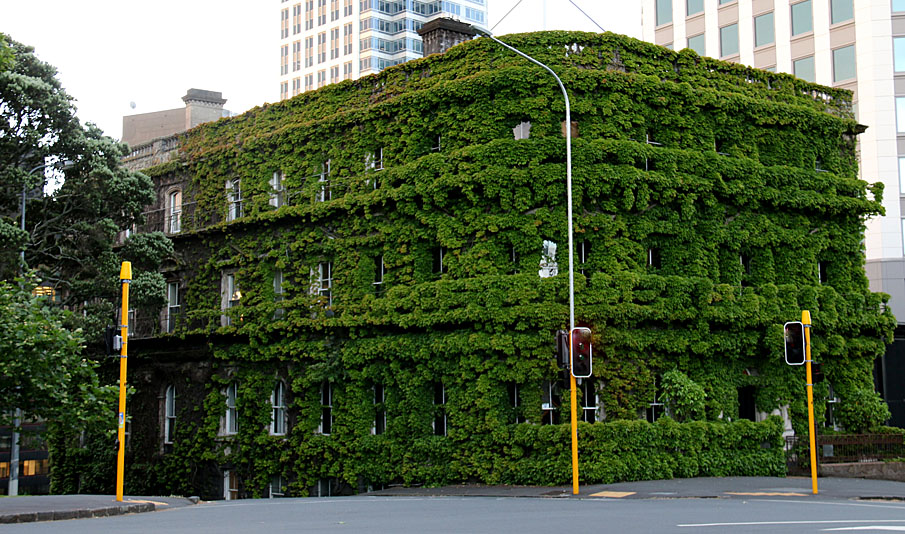
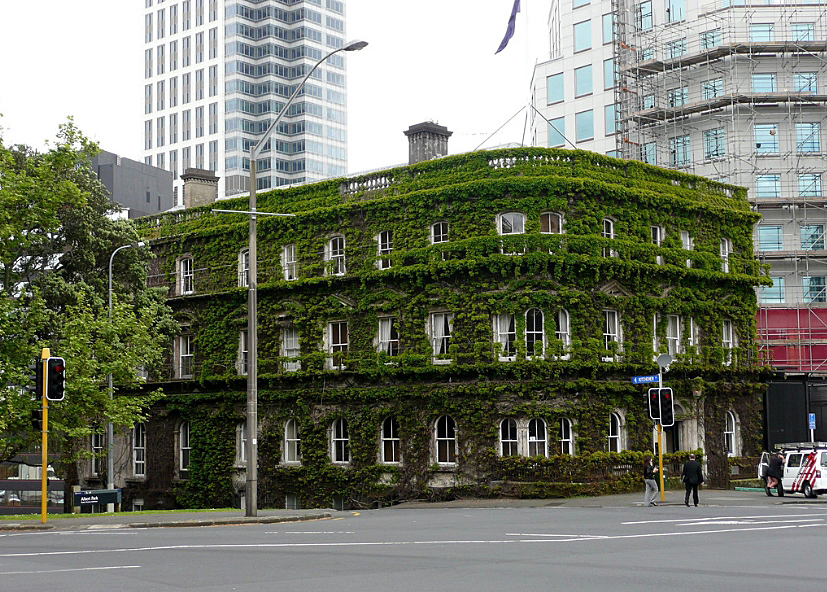
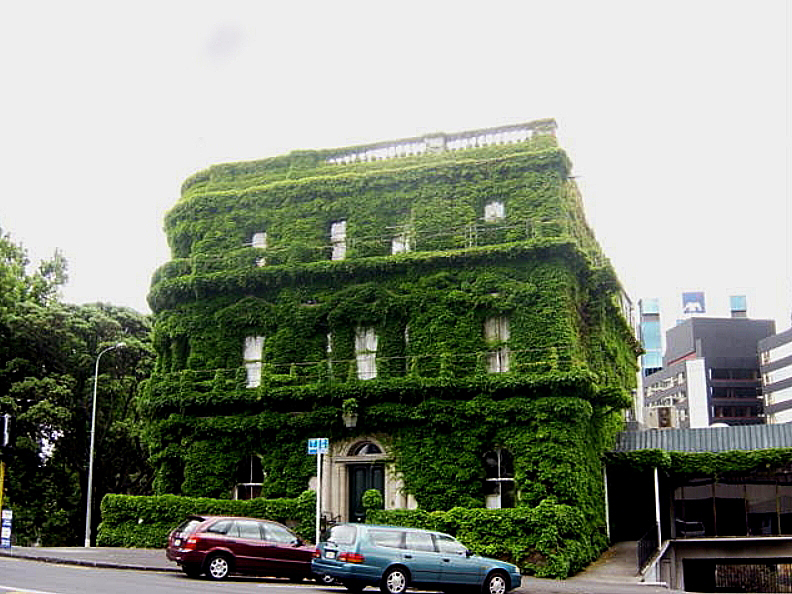
Registration covers the structure, its fixtures and finishes. It also includes recent modifications. The building lies on the site of an earlier hotel, and on or close to the site of a Maori pa - Te Reuroa. Some known remains, including a brick-lined well, survive as buried archaeological deposits. Special Features: The building is notable today for its Virginia creeper which has entirely covered the two street fronts, and which marks the change of seasons with spectacular changes of colour.
Construction Professional
Name
Wood, Reader Gilson
Type
Architect
Biography
Reader Gilson Wood (1821-1895) was born in England and his education in England included study under William Flint, architect and surveyor. Wood arrived in New Zealand in 1844 and from May 1846 shared accommodation with Frederick Thatcher assisting in his work for St John's College including the supervision of the Chapel (1847). Wood remained at St John's for a short time and then took a government appointment. The Selwynian influence can be seen in his later works such as the Melanesian Mission at Mission Bay, Auckland (1859). Wood carried out a large number of commissions, but displayed little originality. He had a notable career, however, which included service as a prominent local government official (1848-61) and as a member of the House of Representatives for Parnell (1861-65 and 1870-78) and for Waitemata, (1879-81). He retired from politics in 1881, and became Chairman of the Auckland Gas Company and a trustee of the Auckland Savings Bank.
Name
Rumsey, Edward
Type
Architect
Biography
Rumsey was an English born architect who had studied under the High Victorian Gothic Revivalist Sir George Gilbert Scott. Rumsey came to New Zealand to supervise the Gothic Revival styled Supreme Court Building, Auckland (1865) which he had designed. He remained in New Zealand for several years, practising in both Auckland and Dunedin. He worked on St Andrew's Anglican Church, Epsom (1867), though the Reverend John Kinder was responsible for the design of this building, and also on the Church of St Peter in the Forest, Bombay (1869) and the much larger St Luke's Church, Oamaru (1865). The design of the Oriental Hotel, Dunedin (1863), has been attributed to him.
Name
Avery, William
Type
Builder
Biography
No biography is currently available for this construction professional
Name
Mahoney, Edward
Type
Architect
Biography
Edward Mahoney (1824-1895) Edward Mahoney emigrated from Cork, Ireland with his wife Margaret and three children. The Mahoneys arrived in Auckland in 1856 where Edward set up as a building and timber merchant. In 1876 he established the architectural practice that later became Edward Mahoney & Sons, which for over thirty years designed and supervised construction of many Catholic buildings as well as churches for other denominations. The Church of St John the Baptist, Parnell (1861) and St Mary's Convent Chapel (1866) are two of the earliest surviving ecclesiastical buildings designed by Edward Mahoney and reflect the gradual evolution from simple Gothic Revival structures to more ambitious and creative use of the Gothic form such as may be seen in the Church of the Holy Sepulchre, Khyber Pass (1881); and St Patrick's Cathedral, the latter completed in 1901. Edward Mahoney was a founding member of the Auckland Institute of Architects, attending the first meeting in December 1880 where he was appointed honorary treasurer. He became president of the Institute in 1883. His sons Thomas (1855?-1923) and Robert (1862-1895) joined him in practice in 1876 and the early 1880s respectively. Upon Edward's retirement in 1885, Thomas and Robert carried on the practice. After Robert's death in 1895, Thomas changed the firm's name to E. Mahoney & Son. The Mahoneys designed a wide variety of buildings including the Auckland Customhouse, hotels, commercial buildings and houses, their best-known surviving domestic buildings being the Pah, at Hillsborough (1877) and the Dilworth Terrace Houses, Parnell (1899). Their ecclesiastical buildings included St Mary's Church of the Assumption, Onehunga (1888) and St Benedict's Church, Newton (1888). The firm of Edward Mahoney & Son continued to practice for a short period after Thomas Mahoney’s death in 1923, but was eventually dissolved in 1926. Source: NZHPT Registration Report for Bank of New Zealand (Former), Devonport (Register no. 4511).
Name
Wrigley, James (1838 - 1882)
Type
Architect
Biography
James Wrigley (1837?-1882) was born in Huddersfield, England. He served his articles with the firm of Pritchett and Sons of York, Huddersfield and Darlington, said to have been the leading firm in the North of England. After arriving in Auckland in 1859, he is reported to have erected many of the largest buildings in Auckland Province. Wrigley served for many years on the Auckland City Council, and was chairman of the Remuera and Newmarket Highway Board on several occasions. He was also the last elected member of the Provincial Council in New Zealand, although he did not take up his seat due to the Council’s subsequent abolition. Structures built to Wrigley’s design include St Andrew’s Presbyterian Church, Howick (1872), Holy Trinity Anglican Church, Waiuku (1873) and the Roman Catholic Church of St Peter and St Paul, Puhoi (1881). He is also believed to have designed the Wesleyan Chapel in Pitt Street (c.1860) and the Anglican Church of St Mathias, Panmure (1866). An elite merchant’s house at 29 Princes Street known as Hamurana (1876) is his work, as is the original portion of Carrington Hospital (1865) and substantial additions to the Northern Club in 1870. Wrigley's work in North Auckland included additions to the Waiwera Hotel (1880). He was also responsible for several cottages in Dargaville. Source: Registration Report for D. Graham and Company's Building (Former), May 2014
Construction Details
Start Year
1869
Finish Year
1870
Type
Modification
Description
Internal alterations during conversion to Northern Club
Start Year
1883
Finish Year
1884
Type
Addition
Description
Extension at rear in similar style
Start Year
1897
Type
Addition
Description
Stone boundary wall and railings
Start Year
1904
Type
Addition
Description
Laundry, outer offices and stable (later demolished)
Start Year
1924
Finish Year
1925
Type
Addition
Description
Staff quarters added on Bankside Street frontage and building to north converted into staff flats
Start Year
1927
Type
Modification
Description
Planting of Virginia Creeper to cover the main facades
Start Year
1971
Type
Addition
Description
North extension on site of staff flats
Start Year
1975
Finish Year
1993
Type
Modification
Description
Demolition of 1924-1925 staff quarters on Bankside Street frontage
Start Year
1990
Finish Year
1993
Type
Modification
Description
Internal refurbishment
Type
Other
Description
Possible pa site
Period
pre-1840
Start Year
1841
Finish Year
1866
Type
Other
Description
Site of Royal Hotel
Start Year
1866
Finish Year
1867
Type
Original Construction
Description
Construction of building, initialy known as the Imperial Hotel
Construction Materials
Brick, with the facades plastered with cement in imitation of stone.
Notable Features
Registration covers the structure, its fixtures and finishes. It also includes recent modifications. The building lies on the site of an earlier hotel, and on or close to the site of a Maori pa - Te Reuroa. Some known remains, including a brick-lined well, survive as buried archaeological deposits. Special Features: The building is notable today for its Virginia creeper which has entirely covered the two street fronts, and which marks the change of seasons with spectacular changes of colour.
ARCHITECTURAL DESCRITPION (Style): An Italianate palazzo style building. The façades are evenly articulated by the horizontal bands of three cornices distinguished each of the three storeys of the building. The windows are decorated with segmented-head and triangular-headed dressings of simple design. The third (top) storey is capped by an entablature and parapet. The only break in the symmetry occurs in the entrance loggia placed on the ground storey, Princes Street side. MODIFICATIONS: There have been two major modifications in the history of this building, taking place in 1869 and 1883-84 respectively. At the time the Northern Club took over the building in 1869, the whole of the interior was renovated with provision made for increased accommodation and a large billiard room. The 1884 additions consisted of a new dining room and 15 bedrooms: these additions were tied in to the purchase of the property at the rear of the Club on the Bankside Street side. Subsequent alterations of the 1920s include new staff quarters and flats, designed by the firm M K and R F Draffin.
ARCHITECTURAL DESCRITPION (Style): An Italianate palazzo style building. The façades are evenly articulated by the horizontal bands of three cornices distinguished each of the three storeys of the building. The windows are decorated with segmented-head and triangular-headed dressings of simple design. The third (top) storey is capped by an entablature and parapet. The only break in the symmetry occurs in the entrance loggia placed on the ground storey, Princes Street side. MODIFICATIONS: There have been two major modifications in the history of this building, taking place in 1869 and 1883-84 respectively. At the time the Northern Club took over the building in 1869, the whole of the interior was renovated with provision made for increased accommodation and a large billiard room. The 1884 additions consisted of a new dining room and 15 bedrooms: these additions were tied in to the purchase of the property at the rear of the Club on the Bankside Street side. Subsequent alterations of the 1920s include new staff quarters and flats, designed by the firm M K and R F Draffin.
Historical and Associated Iwi / Hapū / Whānau
Completion Date
7th November 2001
Report Written By
Martin Jones
Information Sources
Couch, 1986
Jane Couch, 'Northern Club', unpublished research notes for NZHPT, Wellington, 1986 (held by NZHPT, Auckland)
Nelson, 1987
Wayne Nelson, 'Northern Club, cnr Princes Street and Kitchener Street, Auckland', NZHPT Buildings Classification Committee Report, Wellington, 1987 (held by NZHPT, Auckland)
Stacpoole, 1976
John Stacpoole, Colonial Architecture in New Zealand, Wellington, 1976
Stacpoole, 1994
John Stacpoole, The Northern Club 1869-1994, Auckland, 1994
Porter, 1983 (2)
Frances Porter (ed.), Historic Buildings of New Zealand: North Island (2nd edn.), Auckland, 1983
Conservation Plan
Conservation Plan
Other Information
This historic place was registered under the Historic Places Act 1980. This report includes the text from the original Building Classification Committee report considered by the NZHPT Board at the time of registration. Please note that entry on the New Zealand Heritage List/Rarangi Korero identifies only the heritage values of the property concerned, and should not be construed as advice on the state of the property, or as a comment of its soundness or safety, including in regard to earthquake risk, safety in the event of fire, or insanitary conditions.
Historical and Associated Iwi / Hapū / Whānau
Completion Date
7th November 2001
Report Written By
Martin Jones
Information Sources
Couch, 1986
Jane Couch, 'Northern Club', unpublished research notes for NZHPT, Wellington, 1986 (held by NZHPT, Auckland)
Nelson, 1987
Wayne Nelson, 'Northern Club, cnr Princes Street and Kitchener Street, Auckland', NZHPT Buildings Classification Committee Report, Wellington, 1987 (held by NZHPT, Auckland)
Stacpoole, 1976
John Stacpoole, Colonial Architecture in New Zealand, Wellington, 1976
Stacpoole, 1994
John Stacpoole, The Northern Club 1869-1994, Auckland, 1994
Porter, 1983 (2)
Frances Porter (ed.), Historic Buildings of New Zealand: North Island (2nd edn.), Auckland, 1983
Conservation Plan
Conservation Plan
Other Information
This historic place was registered under the Historic Places Act 1980. This report includes the text from the original Building Classification Committee report considered by the NZHPT Board at the time of registration. Please note that entry on the New Zealand Heritage List/Rarangi Korero identifies only the heritage values of the property concerned, and should not be construed as advice on the state of the property, or as a comment of its soundness or safety, including in regard to earthquake risk, safety in the event of fire, or insanitary conditions.
Current Usages
Uses: Civic Facilities
Specific Usage: Club rooms/building
Former Usages
General Usage: Accommodation
Specific Usage: Hotel
General Usage: Civic Facilities
Specific Usage: Museum
Web Links
description:
Current Usages
Uses: Civic Facilities
Specific Usage: Club rooms/building
Former Usages
General Usage: Accommodation
Specific Usage: Hotel
General Usage: Civic Facilities
Specific Usage: Museum
Web Links
description:
Location
Get the latest heritage news, features and events delivered
straight to your inbox.
