List Entry Information
Status
Listed
List Entry Status
Historic Place Category 1
Access
Able to Visit
List Number
754
Date Entered
21st September 1989
Date of Effect
21st September 1989
City/District Council
Matamata-Piako District
Region
Waikato Region
Legal description
Lot 1 DPS 19768 (RT 484377; NZ Gazette 1989, p.6110), South Auckland Land District
Status
Listed
List Entry Status
Historic Place Category 1
Access
Able to Visit
List Number
754
Date Entered
21st September 1989
Date of Effect
21st September 1989
City/District Council
Matamata-Piako District
Region
Waikato Region
Legal description
Lot 1 DPS 19768 (RT 484377; NZ Gazette 1989, p.6110), South Auckland Land District
Why is this place significant?
Historic Significance
Historical Significance or Value This historic place was registered under the Historic Places Act 1980. This report includes the text from the original Building Classification Committee report considered by the NZHPT Board at the time of registration. The tower remains as the most obvious reminder of J.C. Firth's efforts in breaking in some 60,000 acres, at Matamata. Firth administered the estate producing crops of wheat, clover and hay and raised livestock. He also established the first commercial apiary in New Zealand. He exported mutton carcases from Auckland in 1885. A port, 11 km from the tower was opened at the boundary of the estate at Stanley Landing in 1881 after Firth had cleared the river from Paeroa to this point, a distance of 60km (40 miles), at a cost of £10,000 and from there dispatched produce to Auckland in his own ship. The protection of the fruits of this remarkably enterprising man's labour is symbolised by the tower. On this site in 1870, Firth, acting without government approval, met with Te Kooti to discuss possible conditions for an end to the campaign against Te Kooti. The talks did not resolve the problem (Belich 1986:283-4). Born in Yorkshire in 1826, Josiah Clifton Firth came to New Zealand from Melbourne to join his brothers-in-law in the flour milling venture which led eventually to the formation of the Northern Roller Flour Milling Company. Firth also founded Waharoa, a settlement which became a centre for the region after Firth had opened up a navigable waterway in the Thames River. Josiah Clifton Firth was a member of the House of Representatives for Auckland City. Eventually Firth was forced to relinquish his occupation of the Matamata Estate and hand over control to the Loan and Mercantile Company. However, he was the driving force behind the European occupation of the area.
Physical Significance
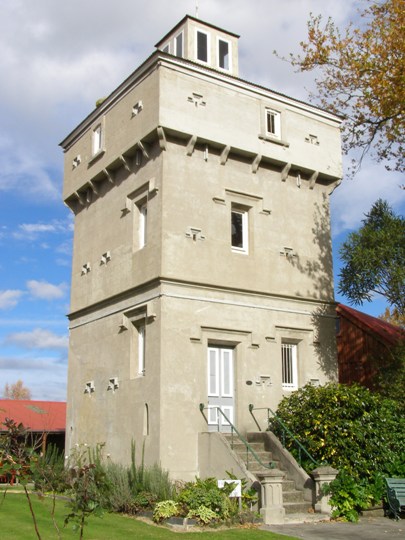
This historic place was registered under the Historic Places Act 1980. This report includes the text from the original Building Classification Committee report considered by the NZHPT Board at the time of registration. ARCHITECTURAL SIGNIFICANCE: This building has strong links to Auckland architecture of the 1870's (for example Thomas Mahoney's The Pah, Hillsborough Auckland (1877) which features an Italianate tower). This style really originated with Thomas Cubitt and Prince Albert's Osborne House, Isle of Wight, begun in 1845. The Firth Tower demonstrates an utilitarian adaption of this Neo-classical tower tradition to the new building material, concrete. TOWNSCAPE/LANDMARK SIGNIFICANCE: The tower is a dominating feature of the immediate area.
Why is this place significant?
Historic Significance
Historical Significance or Value This historic place was registered under the Historic Places Act 1980. This report includes the text from the original Building Classification Committee report considered by the NZHPT Board at the time of registration. The tower remains as the most obvious reminder of J.C. Firth's efforts in breaking in some 60,000 acres, at Matamata. Firth administered the estate producing crops of wheat, clover and hay and raised livestock. He also established the first commercial apiary in New Zealand. He exported mutton carcases from Auckland in 1885. A port, 11 km from the tower was opened at the boundary of the estate at Stanley Landing in 1881 after Firth had cleared the river from Paeroa to this point, a distance of 60km (40 miles), at a cost of £10,000 and from there dispatched produce to Auckland in his own ship. The protection of the fruits of this remarkably enterprising man's labour is symbolised by the tower. On this site in 1870, Firth, acting without government approval, met with Te Kooti to discuss possible conditions for an end to the campaign against Te Kooti. The talks did not resolve the problem (Belich 1986:283-4). Born in Yorkshire in 1826, Josiah Clifton Firth came to New Zealand from Melbourne to join his brothers-in-law in the flour milling venture which led eventually to the formation of the Northern Roller Flour Milling Company. Firth also founded Waharoa, a settlement which became a centre for the region after Firth had opened up a navigable waterway in the Thames River. Josiah Clifton Firth was a member of the House of Representatives for Auckland City. Eventually Firth was forced to relinquish his occupation of the Matamata Estate and hand over control to the Loan and Mercantile Company. However, he was the driving force behind the European occupation of the area.
Physical Significance
This historic place was registered under the Historic Places Act 1980. This report includes the text from the original Building Classification Committee report considered by the NZHPT Board at the time of registration. ARCHITECTURAL SIGNIFICANCE: This building has strong links to Auckland architecture of the 1870's (for example Thomas Mahoney's The Pah, Hillsborough Auckland (1877) which features an Italianate tower). This style really originated with Thomas Cubitt and Prince Albert's Osborne House, Isle of Wight, begun in 1845. The Firth Tower demonstrates an utilitarian adaption of this Neo-classical tower tradition to the new building material, concrete. TOWNSCAPE/LANDMARK SIGNIFICANCE: The tower is a dominating feature of the immediate area.
Construction Professional
Name
White, Thomas H.
Type
Architect
Biography
Thomas Henry White (1843-1923) was born in Birmingham, England, and was educated there and in Paris before briefly spending time in New Zealand in the early 1860s. After practising as an architect in Birmingham, he returned to New Zealand in 1873. White undertook architectural work in the Waikato from at least 1875 and was based in Hamilton from 1877 until 1881. He lived on his farm at Taupiri but maintained an office in Auckland as well. White undertook numerous architectural commissions in the Waikato, Auckland and Opotiki. His work ranged from bridges and substantial brick and plaster commercial buildings to timber shops, churches and dwellings. Notable buildings were the Catholic Church, Hamilton East (1877), Volunteer Hall, Hamilton (1879), the Waikato Cheese and Bacon Company factory (1882), a grandstand at Cambridge (1878), the re-build of the Royal Hotel, Hamilton East (1890) and a hotel at Runciman (1887). He was responsible for the design and construction of a concrete flour mill store at Ngaruawahia (1878), Firth Tower, Matamata (1881-82), St Peter’s Hall, Hamilton, the Royal Hotel, Opotiki, and St John's Presbyterian Church, Opotiki (1907). He designed shops in Matamata (1886) and Hamilton (various dates); houses in Hamilton, Ngaruawahia, Pirongia, Huntly, Waitoa, Whatawhata and Tamahere and six workman’s cottages, Huntly (1888). White was a trustee of the Kirikiriroa Highway Board, an elected member of the Kirikiriroa Licensing Committee, Honorary Secretary of the Taupiri Domain Board and a Justice of the Peace. He was also a musician, playing clarinet and violin. He died 16 June 1923. see obit Waikato Times 19 June 1923 p.4. Source: Registration Report for Woodside, List No. 2693, 12 July 2010, with additional biiographical information about his origins and training added by Heritage New Zealand in May 2019.
Construction Details
Start Year
1882
Type
Original Construction
Start Year
1977
Type
Modification
Description
completely renovated for the interior to be used as a museum.
Construction Materials
Reinforced concrete. Like the Ngaruawahia Flour Mill store, this building has been reinforced with single strand barbed wire. This was not galvanised.
Construction Professional
Name
White, Thomas H.
Type
Architect
Biography
Thomas Henry White (1843-1923) was born in Birmingham, England, and was educated there and in Paris before briefly spending time in New Zealand in the early 1860s. After practising as an architect in Birmingham, he returned to New Zealand in 1873. White undertook architectural work in the Waikato from at least 1875 and was based in Hamilton from 1877 until 1881. He lived on his farm at Taupiri but maintained an office in Auckland as well. White undertook numerous architectural commissions in the Waikato, Auckland and Opotiki. His work ranged from bridges and substantial brick and plaster commercial buildings to timber shops, churches and dwellings. Notable buildings were the Catholic Church, Hamilton East (1877), Volunteer Hall, Hamilton (1879), the Waikato Cheese and Bacon Company factory (1882), a grandstand at Cambridge (1878), the re-build of the Royal Hotel, Hamilton East (1890) and a hotel at Runciman (1887). He was responsible for the design and construction of a concrete flour mill store at Ngaruawahia (1878), Firth Tower, Matamata (1881-82), St Peter’s Hall, Hamilton, the Royal Hotel, Opotiki, and St John's Presbyterian Church, Opotiki (1907). He designed shops in Matamata (1886) and Hamilton (various dates); houses in Hamilton, Ngaruawahia, Pirongia, Huntly, Waitoa, Whatawhata and Tamahere and six workman’s cottages, Huntly (1888). White was a trustee of the Kirikiriroa Highway Board, an elected member of the Kirikiriroa Licensing Committee, Honorary Secretary of the Taupiri Domain Board and a Justice of the Peace. He was also a musician, playing clarinet and violin. He died 16 June 1923. see obit Waikato Times 19 June 1923 p.4. Source: Registration Report for Woodside, List No. 2693, 12 July 2010, with additional biiographical information about his origins and training added by Heritage New Zealand in May 2019.
Construction Details
Start Year
1882
Type
Original Construction
Start Year
1977
Type
Modification
Description
completely renovated for the interior to be used as a museum.
Construction Materials
Reinforced concrete. Like the Ngaruawahia Flour Mill store, this building has been reinforced with single strand barbed wire. This was not galvanised.
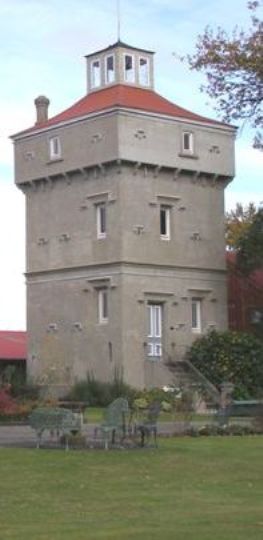
This historic place was registered under the Historic Places Act 1980. This report includes the text from the original Building Classification Committee report considered by the NZHPT Board at the time of registration. ARCHITECTURAL DESCRIPTION (STYLE): Victorian Neo-classical with regularly placed hooded windows. Pavilion roof and bracketed supports to the upper storey continue the classical flavour. The tower is 50-60' high with walls 18" thick and loopholed for rifles in 24 places. It cost £1,600 to build in 1881, and was built with campanile roof and lantern.
This historic place was registered under the Historic Places Act 1980. This report includes the text from the original Building Classification Committee report considered by the NZHPT Board at the time of registration. ARCHITECTURAL DESCRIPTION (STYLE): Victorian Neo-classical with regularly placed hooded windows. Pavilion roof and bracketed supports to the upper storey continue the classical flavour. The tower is 50-60' high with walls 18" thick and loopholed for rifles in 24 places. It cost £1,600 to build in 1881, and was built with campanile roof and lantern.
Historical and Associated Iwi / Hapū / Whānau
Completion Date
18th April 1989
Information Sources
Belich, 1986
James Belich, 'The New Zealand Wars and the Victorian Interpretation of Racial Conflict', Auckland, 1986
Other Information
A copy of this report is available from the NZHPT Lower Northern Area Office Please note that entry on the New Zealand Heritage List/Rarangi Korero identifies only the heritage values of the property concerned, and should not be construed as advice on the state of the property, or as a comment of its soundness or safety, including in regard to earthquake risk, safety in the event of fire, or insanitary conditions.
Historical and Associated Iwi / Hapū / Whānau
Completion Date
18th April 1989
Information Sources
Belich, 1986
James Belich, 'The New Zealand Wars and the Victorian Interpretation of Racial Conflict', Auckland, 1986
Other Information
A copy of this report is available from the NZHPT Lower Northern Area Office Please note that entry on the New Zealand Heritage List/Rarangi Korero identifies only the heritage values of the property concerned, and should not be construed as advice on the state of the property, or as a comment of its soundness or safety, including in regard to earthquake risk, safety in the event of fire, or insanitary conditions.
Current Usages
Uses: Civic Facilities
Specific Usage: Museum
Former Usages
General Usage: Accommodation
Specific Usage: House
Web Links
description:
Current Usages
Uses: Civic Facilities
Specific Usage: Museum
Former Usages
General Usage: Accommodation
Specific Usage: House
Web Links
description: