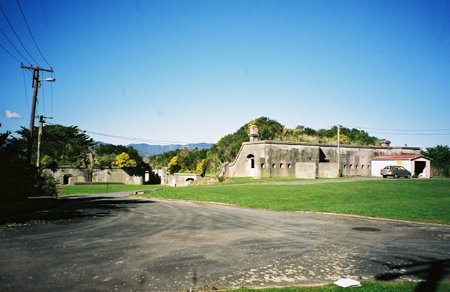
Constructed on former farmland in the midst of the residential suburb of Karori, the Wrights Hill Fortress is part of the biggest land-based defence network ever to be constructed in New Zealand.
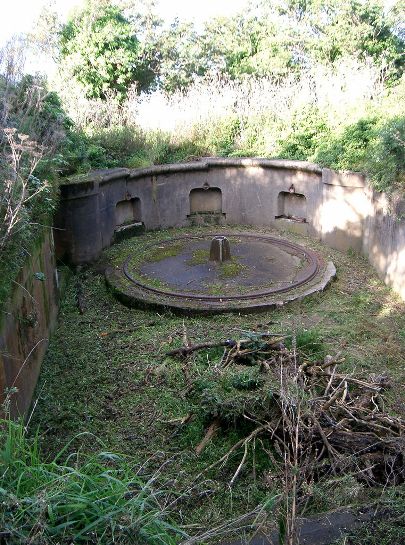
First conceived of in 1934, the enormous costs involved in its construction caused the continuous delay of the project until the outbreak of the Second World War in 1939 made defence a top priority for the Government. Designed to combat the threat posed by hostile cruisers carrying 8 and 11-inch armaments, the 9.2-inch battery served as the centrepiece in Wellington's defence network and provided cover for the Cook Strait and the Wellington harbour entrance.
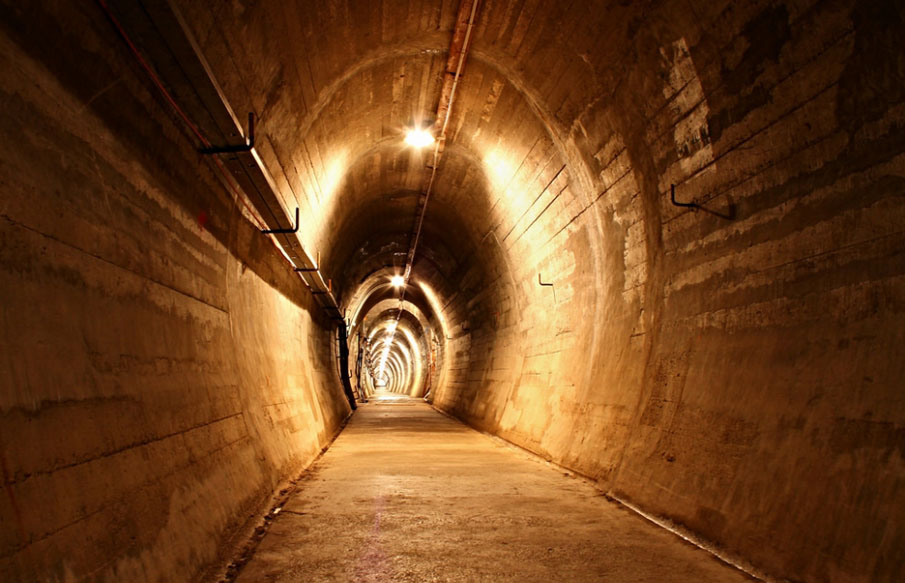
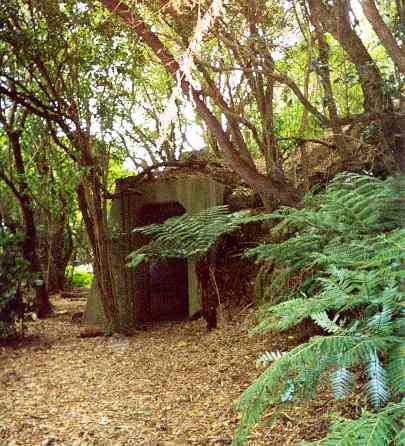
The battery was conceived of as a three-gun emplacement, complete with magazines, pump chambers, war shelters, engine and plotting rooms and a miniature range building. The plans were based on those developed by the British War Office, but were cleverly adapted for local conditions by the Public Works Department, who converted the plans to create an underground defence fortification. Erected by private contractors Downer & Co. Ltd with the aid of the Public Works Department staff, intensive construction was carried out from 1942 but slowed as the balance of power shifted to favour the Allies from late 1943. The site was completed in a modified form in 1944, and its two guns were first tested in 1946, a year after the end of the War.
With the end of the war, the site was consigned for training purposes only. All work on the complex ceased by 1949, and it was officially abandoned in 1957. Much of the equipment was removed in the early 1960s and the site suffered damage from vandals. In 1988 community interest in the site remained strong. The Karori Lions Club began a cleanup of the area and in 1989 it was made a recreation reserve. In 1992 a society was formed to protect and restore the site and it remains an important and recognised part of New Zealand's military history.
The Wrights Hill Fortress is of national significance. A study of New Zealand's non-registered coastal defences identified the site as one of the most significant or best representative examples of coastal defence. The site has historical significance for the insight it provides into the New Zealand response to the threat posed by the Second World War. One the biggest land based defensive batteries ever erected in New Zealand, the site is also of great physical importance. Its rapid construction in the early 1940s stands as a remarkable feat of civil engineering, while the skilful adaptation of standardised plans to suit local conditions distinguishes the site from others constructed by Allied countries. Wrights Hill has social value as one of the best known of the numerous coastal defence fortifications constructed around New Zealand. Open days continue to generate large crowds of lay people and it continues to convey the seriousness of the threat posed to New Zealand security during the Second World War to all those who experience it first hand.