Quick links


Quick links
Quick links
Quick links
Quick links
Quick links
Massey University Turitea Campus Tiritea and Refectory Roads Fitzherbert PALMERSTON NORTH
Private
Historic Area
List No. 9871
List Entry Information
Status
Listed
List Entry Status
Historic Area
Access
Private/No Public Access
List Number
9871
Date Entered
20th June 2024
Date of Effect
11th July 2024
City/District Council
Palmerston North City
Region
Horizons (Manawatū-Whanganui) Region
Extent of List Entry
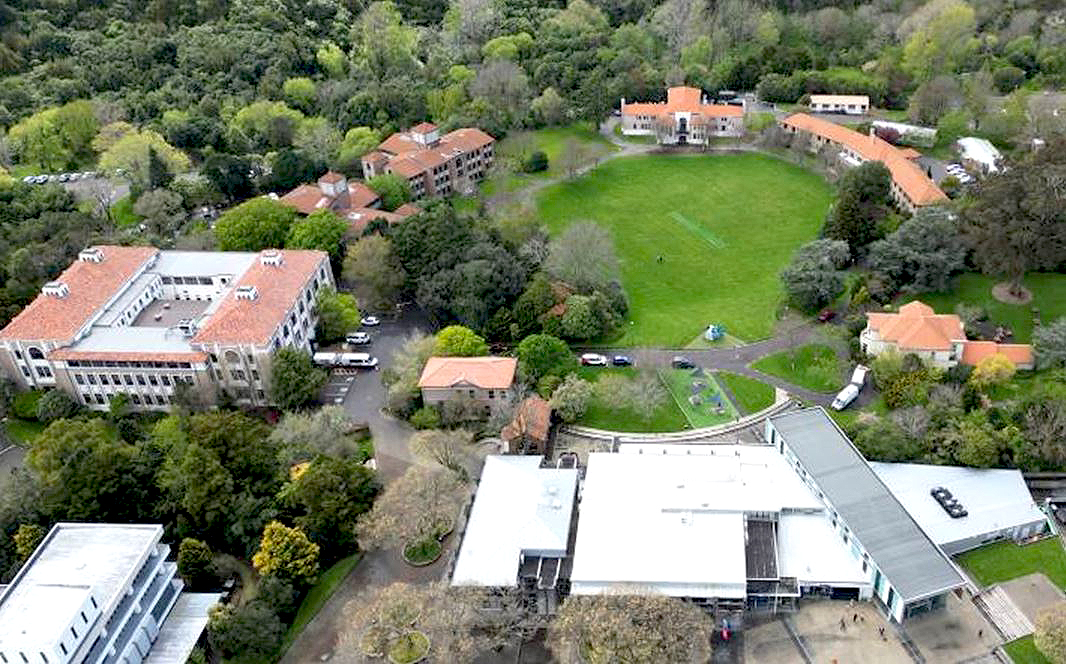
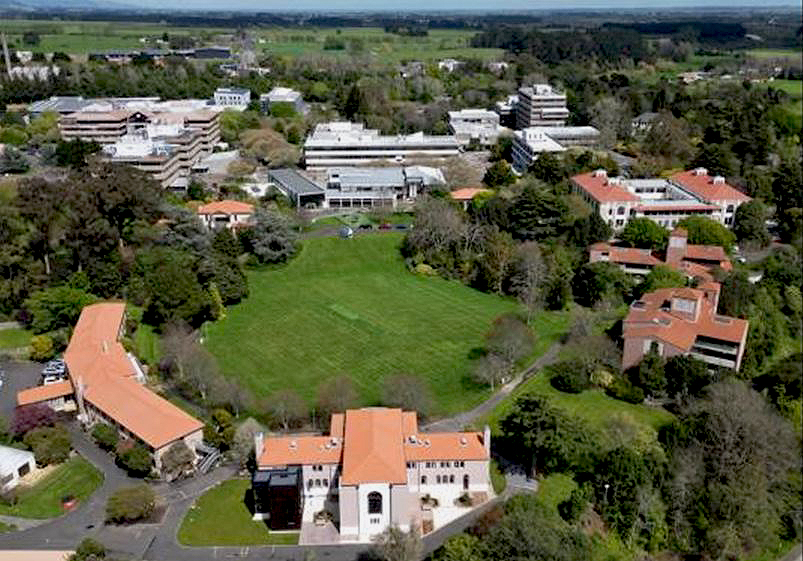
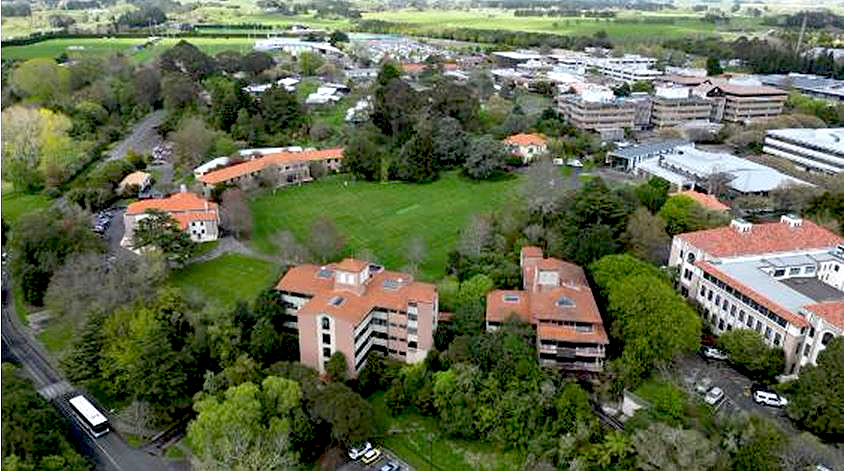
This historic area consists of an area of land that contains a group of inter-related historic places. The identified historic places that contribute to the values in this historic area are The Oval and notable trees and plantings, Sir Geoffrey Peren Building, Business Studies West, Business Studies Central, the Refectory, McHardy Hall, Tiritea House, the Student Centre, and the Old Registry. The area of land that encompasses these historic places, includes part of the land described as Lot 2 DP 8981 (RT WN40D/260, NZ Gazette 2018 In6395) and part of Lot 1 DP 53195 (RT WN38B/495, NZ Gazette 2018 In6395), part of Lot 1 DP 13616 (RT WN38B/448, NZ Gazette 2018 In6395) and part of Pt Sec 203 Town of Fitzherbert (RT WN38B/494); Wellington Land District. (Refer to map in Appendix 1 of the List entry report for further information).
Legal description
Lot 2 DP 8981 (RT WN40D/260, NZ Gazette 2018 In6395); Lot 1 DP 53195 (RT WN38B/495, NZ Gazette 2018 In6395); Lot 1 DP 13616 (RT WN38B/448, NZ Gazette 2018 In6395); Pt Sec 203 Town of Fitzherbert (RT WN38B/494). All parcels are in the Wellington Land District.
Location Description
NZTM: 1822328.91m; 5526276.23m
Status
Listed
List Entry Status
Historic Area
Access
Private/No Public Access
List Number
9871
Date Entered
20th June 2024
Date of Effect
11th July 2024
City/District Council
Palmerston North City
Region
Horizons (Manawatū-Whanganui) Region
Extent of List Entry
This historic area consists of an area of land that contains a group of inter-related historic places. The identified historic places that contribute to the values in this historic area are The Oval and notable trees and plantings, Sir Geoffrey Peren Building, Business Studies West, Business Studies Central, the Refectory, McHardy Hall, Tiritea House, the Student Centre, and the Old Registry. The area of land that encompasses these historic places, includes part of the land described as Lot 2 DP 8981 (RT WN40D/260, NZ Gazette 2018 In6395) and part of Lot 1 DP 53195 (RT WN38B/495, NZ Gazette 2018 In6395), part of Lot 1 DP 13616 (RT WN38B/448, NZ Gazette 2018 In6395) and part of Pt Sec 203 Town of Fitzherbert (RT WN38B/494); Wellington Land District. (Refer to map in Appendix 1 of the List entry report for further information).
Legal description
Lot 2 DP 8981 (RT WN40D/260, NZ Gazette 2018 In6395); Lot 1 DP 53195 (RT WN38B/495, NZ Gazette 2018 In6395); Lot 1 DP 13616 (RT WN38B/448, NZ Gazette 2018 In6395); Pt Sec 203 Town of Fitzherbert (RT WN38B/494). All parcels are in the Wellington Land District.
Location Description
NZTM: 1822328.91m; 5526276.23m
Why is this place significant?
Cultural Significance
Social Significance or Value For nearly a century Massey University has provided education and social connection for tens of thousands of New Zealanders and overseas students. For many, the Turitea Historic Area has been an iconic part of their university experience, whether gathering for classes, meals, hostel accommodation, social events, or peaceful recreation. Alumni relations remain strong, with a network of over 130,000 former students and staff expressing their continued bonds to the University. The substantial number of public and private donations towards the restoration of the Refectory and Sir Geoffrey Peren building demonstrates how much the continued existence of these buildings means to their community. Massey University has also shown pride and esteem for its institutional built heritage by initiating Plan Change J in 2021-2023, to secure long-term protection for the Turitea Historic Area in the Palmerston North City district plan.
Historic Significance
Historical Significance or Value The founding of Massey Agricultural College in 1926 exemplifies agriculture’s longstanding role as the primary pillar in New Zealand’s economy. It also reflects the country’s changing place in the international marketplace of the twentieth century, as the dairy industry transitioned from a domestic, subsistence industry to an international trade and upskilling was required to remain competitive. The Sir Geoffrey Peren Building demonstrates Massey’s founding intention to be part of a global scientific community. Scientific research at Massey resulted in improved techniques and farming conditions, and promoted a greater understanding of the importance in hygiene in not only producing improved agricultural products but also in extending animal and human life expectancy. The highly significant scientific research conducted here assisted with the economic development of New Zealand’s main export industries. The need for specialist training, research and development for the expanded farming population directly resulted from the transformation of North Island land from Māori-owned bush to pasture, via large-scale Crown acquisition, in the late nineteenth/early twentieth century. The buildings surrounding the Oval, from the original Tiritea homestead of the Palmerston North elite to the purpose-built Business Studies centre, represent Massey University’s evolution from provincially located specialist college to a modern multi-faculty university. The changing uses of the buildings over time reflect evolving national priorities in tertiary education, including diversification of courses and the commodification of education.
Physical Significance
Aesthetic Significance or Value The Oval remains reminiscent of Massey’s beginnings as an agricultural college situated in what was then a rural setting. The predominance of soft greenery – from the large expanse of grass, the established trees, and the dramatic backdrop of the escarpment - is a dramatic contrast to the overwhelmingly rectilinear concrete urban aesthetic of the 1960s phase of the Turitea campus. The placement of the historic area’s buildings and their repeated motifs, stylistic elements, materials and palette creates a harmonious ensemble. The strong relationships between these buildings are enhanced by the vistas across the oval lawn to each other on their respective axes; the view north from the Student Centre to the Refectory is particularly iconic. The Oval provides a strikingly large open space and a restful place within the campus. Architectural Significance or Value The buildings and landscape of the Oval are the heart of the Massey Turitea campus’s distinctiveness among New Zealand universities. While buildings from subsequent phases of Massey’s campus development are somewhat interchangeable with other university buildings, the Turitea Historic Area strongly represents the aesthetic and style of its founding designer, Roy Alstan Lippincott. The Refectory and Sir Geoffrey Peren building are visually linked by Lippincott’s American Collegiate/Beaux-Arts style of modernism, adapted to New Zealand conditions and with New Zealand references to produce outstanding buildings of elegant refinement. The Oval’s later buildings have repeated the aesthetic cues of the Refectory and Sir Geoffrey Peren buildings to create a cohesive assemblage. Tiritea House and the Old Registry connect stylistically to the campus’s other historic homesteads, and the award-winning Student Centre provides a transition between Lippincott’s vision of collegiate modernity in a pastoral setting with the New Brutalism and hard lines of the concrete block and pebble-dash 1960s campus. The Sir Geoffrey Peren Building has technological significance for the design and construction of its concrete frame, incorporating earthquake-proofing technology that was innovative at the time.
Why is this place significant?
Cultural Significance
Social Significance or Value For nearly a century Massey University has provided education and social connection for tens of thousands of New Zealanders and overseas students. For many, the Turitea Historic Area has been an iconic part of their university experience, whether gathering for classes, meals, hostel accommodation, social events, or peaceful recreation. Alumni relations remain strong, with a network of over 130,000 former students and staff expressing their continued bonds to the University. The substantial number of public and private donations towards the restoration of the Refectory and Sir Geoffrey Peren building demonstrates how much the continued existence of these buildings means to their community. Massey University has also shown pride and esteem for its institutional built heritage by initiating Plan Change J in 2021-2023, to secure long-term protection for the Turitea Historic Area in the Palmerston North City district plan.
Historic Significance
Historical Significance or Value The founding of Massey Agricultural College in 1926 exemplifies agriculture’s longstanding role as the primary pillar in New Zealand’s economy. It also reflects the country’s changing place in the international marketplace of the twentieth century, as the dairy industry transitioned from a domestic, subsistence industry to an international trade and upskilling was required to remain competitive. The Sir Geoffrey Peren Building demonstrates Massey’s founding intention to be part of a global scientific community. Scientific research at Massey resulted in improved techniques and farming conditions, and promoted a greater understanding of the importance in hygiene in not only producing improved agricultural products but also in extending animal and human life expectancy. The highly significant scientific research conducted here assisted with the economic development of New Zealand’s main export industries. The need for specialist training, research and development for the expanded farming population directly resulted from the transformation of North Island land from Māori-owned bush to pasture, via large-scale Crown acquisition, in the late nineteenth/early twentieth century. The buildings surrounding the Oval, from the original Tiritea homestead of the Palmerston North elite to the purpose-built Business Studies centre, represent Massey University’s evolution from provincially located specialist college to a modern multi-faculty university. The changing uses of the buildings over time reflect evolving national priorities in tertiary education, including diversification of courses and the commodification of education.
Physical Significance
Aesthetic Significance or Value The Oval remains reminiscent of Massey’s beginnings as an agricultural college situated in what was then a rural setting. The predominance of soft greenery – from the large expanse of grass, the established trees, and the dramatic backdrop of the escarpment - is a dramatic contrast to the overwhelmingly rectilinear concrete urban aesthetic of the 1960s phase of the Turitea campus. The placement of the historic area’s buildings and their repeated motifs, stylistic elements, materials and palette creates a harmonious ensemble. The strong relationships between these buildings are enhanced by the vistas across the oval lawn to each other on their respective axes; the view north from the Student Centre to the Refectory is particularly iconic. The Oval provides a strikingly large open space and a restful place within the campus. Architectural Significance or Value The buildings and landscape of the Oval are the heart of the Massey Turitea campus’s distinctiveness among New Zealand universities. While buildings from subsequent phases of Massey’s campus development are somewhat interchangeable with other university buildings, the Turitea Historic Area strongly represents the aesthetic and style of its founding designer, Roy Alstan Lippincott. The Refectory and Sir Geoffrey Peren building are visually linked by Lippincott’s American Collegiate/Beaux-Arts style of modernism, adapted to New Zealand conditions and with New Zealand references to produce outstanding buildings of elegant refinement. The Oval’s later buildings have repeated the aesthetic cues of the Refectory and Sir Geoffrey Peren buildings to create a cohesive assemblage. Tiritea House and the Old Registry connect stylistically to the campus’s other historic homesteads, and the award-winning Student Centre provides a transition between Lippincott’s vision of collegiate modernity in a pastoral setting with the New Brutalism and hard lines of the concrete block and pebble-dash 1960s campus. The Sir Geoffrey Peren Building has technological significance for the design and construction of its concrete frame, incorporating earthquake-proofing technology that was innovative at the time.
Construction Professional
Name
Patterson, R.A.
Type
Architect
Biography
No biography is currently available for this construction professional
Name
Public Works Department
Type
Builder
Biography
No biography is currently available for this construction professional
Name
Bedford, M
Type
Architect
Biography
Architect: Massey University: Tiritea House, Old Registry
Name
Opus Architecture
Type
Architect
Biography
Name
Jacques Brothers
Type
Builder
Biography
Name
Fletcher Construction Company
Type
Builder
Biography
Fletcher Construction Company was founded by Scottish-born James Fletcher (1886-1974), the son of a builder. Six months after his arrival in Dunedin in 1908, Fletcher formed a house-building partnership with Bert Morris. They soon moved into larger-scale construction work, building the St Kilda Town Hall (1911), and the main dormitory block and Ross Chapel at Knox College (1912). Fletcher's brothers, William, Andrew and John joined the business in 1911, which then became known as Fletcher Brothers. A branch was opened in Invercargill. While holidaying in Auckland in 1916, James tendered for the construction of the the Auckland City Markets. By 1919 the company, then known as Fletcher Construction, was firmly established in Auckland and Wellington. Notable landmarks constructed by the company during the Depression included the Auckland University College Arts Building (completed 1926); Landmark House (the former Auckland Electric Power Board Building, 1927); Auckland Civic Theatre (1929); the Chateau Tongariro (1929); and the Dominion Museum, Wellington (1934). Prior to the election of the first Labour Government, Fletcher (a Reform supporter) had advised the Labour Party on housing policy as hbe believed in large-scale planning and in the inter-dependence of government and business. However, he declined an approach by Prime Minister Michael Joseph Savage in December 1935 to sell the company to the government, when the latter wanted to ensure the large-scale production of rental state housing. Although Fletchers ultimately went on to build many of New Zealand's state houses, for several years Residential Construction Ltd (the subsidiary established to undertake their construction) sustained heavy financial losses. Fletcher Construction became a public company, Fletcher Holdings, in 1940. Already Fletchers' interests were wide ranging: brickyards, engineering shops, joinery factories, marble quarries, structural steel plants and other enterprises had been added the original construction firm. Further expansion could only be undertaken with outside capital. During the Second World War James Fletcher, having retired as chairman of Fletcher Holdings, was seconded to the newly created position of Commissioner of State Construction which he held during 1942 and 1943. Directly responsible to Prime Minister Peter Fraser, Fletcher had almost complete control over the deployment of workers and resources. He also became the Commissioner of the Ministry of Works, set up in 1943, a position he held until December 1945. In 1981 Fletcher Holdings; Tasman Pulp and Paper; and Challenge Corporation amalgamated to form Fletcher Challenge Ltd, at that time New Zealand's largest company. Williamson Construction Company - main contract
Name
Structon Group Limited
Type
Architect
Biography
Structon Group Limited developed in 1944 from the merger of two architectural practices: the partnership of John Sydney Swan and William Lavelle, and the firm Muston & Associates. The multi-disciplinary practice had offices in Wellington, Auckland, and Palmerston North, and their work spanned the country, with commissions extending over a wide range of building types. The projects for which the firm received New Zealand Institute of Architects awards include the War Memorial Library and Little Theatre (Lower Hutt, 1956), NZ Racing Conference Building (Wellington, 1961), Physics and Engineering Laboratory (Gracefield, 1983), and the Chapel of Our Lady’s Home of Compassion (Wellington, 1991). Significant members of staff included Ron Muston, Keith Cooper, Ross Brown, and Ian Athfield. Despite successes, the financial downturn that followed the 1987 stock market crash brought the practice to an end.
Name
Warren and Mahoney
Type
Architect
Biography
The practice was founded in 1955 by Sir Miles Warren in Christchurch where he was later joined in partnership by Maurice Mahoney in 1958; the partnership went on to design buildings that are now regarded as the benchmark of New Zealand Modernism: Harewood Crematorium (1963), College House (1966), Canterbury Students' Union (1967) and Christchurch Town Hall (1972), are amongst many examples of their mid- to late-twentieth century works. Sir Miles was knighted in 1985 for his services to architecture and in 2003 named one of ten inaugural ‘Icons of the Arts’ by the Arts Foundation of New Zealand. Since 1979, the practice has expanded to Wellington, Auckland, Queenstown, Sydney and Melbourne, where they have nurtured some of New Zealand’s finest architectural talent. Sir Miles Warren and Maurice Mahoney retired in in the early 1990s. Currently, Warren and Mahoney is an insight led multi-disciplinary practice working across all disciplines of architecture. The practice has a long association with the refurbishment and restoration of historic buildings in New Zealand and has worked closely with Heritage NZ to achieve best outcomes for these heritage buildings while ensuring the highest possible standards of modern functioning requirements are met. They are conversant with the ICOMOS New Zealand Charter for the Conservation of places of Cultural Heritage Value and the Burra Charters for the conservation of buildings.
Name
Lippincott, Roy Alstan
Type
Architect
Biography
Roy Alstan Lippincott (1885-1969) was born in Pennsylvania and graduated Bachelor of Architecture from Cornell University, New York, in 1909. He became involved with the "Chicago School" of architects including H.V. Von Holst, Marion Mahoney and Walter Burley Griffin who were in turn greatly influenced by Louis Sullivan and Frank Lloyd Wright. In 1912 Griffin won the competition for the design of Australia's Federal Capital, Canberra, and offered Lippincott a junior partnership shortly afterwards. They moved to Sydney in 1914 and to Melbourne about a year later. Lippincott entered several design competitions with draughtsman Edward F. Billson and in June 1921 they won the competition for the design of the Auckland University College Arts Building. Lippincott and Billson established a partnership and Lippincott moved to Auckland later that year. The Arts building with clock tower is the best known of the buildings designed by Lippincott for Auckland's University campus. The Students' Association building (1921-1926), Caretaker's Cottage (1928-31) and Biology building (1938) were also to his design, as was the north-west wing of Choral Hall added in 1925. Other buildings designed by Lippincott during his time in Auckland were Smith and Caughey's Department Store building (1927-29), Massey University Science building, Palmerston North (1929-31), Farmers Trading Company Tearooms (1934-36) and St Peter's Preparatory School, Cambridge (1936-37). He was elected Associate of the New Zealand Institute of Architects in 1922 and a Fellow in 1924. He was actively involved in both Auckland Branch and National Council Affairs, particularly in the field of architectural education. Lippincott remained in New Zealand until 1939 when he returned to the United States and practised in Los Angeles. He became a partner in the firm of Kaufmann, Lippincott and Eggers, Los Angeles, and retired in 1958 when he moved to Santa Barbara. Roy Alstan Lippincott (1885-1969) was born in Pennsylvania, USA. Lippincott gained a Bachelor of Architecture from Cornell University, New York, in 1909. Subsequently, he became influenced by the Chicago School of architects, who were a group of architects active in Chicago at the turn of the twentieth century. The group had parallels with the European Modernism movement and was amongst the first to promote the new technologies of steel-frame construction in commercial buildings. In circa 1912, Lippincott was offered a junior partnership with Chicago School architect Walter Burley Griffin, who had won a competition for the design of Australia's Federal Capital, Canberra. He moved to Sydney with Griffin in 1914 and to Melbourne the following year. In 1921, Lippincott and draughtsman Edward F. Billson won a competition for the design of the Auckland University College Arts Building - now known as the Old Arts Building, University of Auckland (NZHPT Registration # 25, Category I historic place). Lippincott moved to Auckland later that year and remained in New Zealand until 1939. In addition to designing the Old Arts Building, Lippincott designed several other buildings for Auckland University, including the Students' Association building (1921-1926), the northwest wing of Choral Hall (NZHPT Registration # 4474, Category I historic place) added in 1925, the Caretaker's Cottage constructed (1928-1931) and the Biology Building (1938). He also designed an addition circa 1927-1929 to Smith and Caughey's Department Store Building (NZHPT Registration # 656, Category I historic place), the Massey University Science Building in Palmerston North (1929-1931), the Berlei Factory in Auckland (1930-1931), the Farmers Trading Company Tea Rooms in Auckland (1934-1936) and St Peter's Preparatory School in Cambridge (1936-1937). Lippincott was elected Associate of the New Zealand Institute of Architects in 1922 and a Fellow in 1924. He was actively involved in the Auckland Branch and National Council Affairs, particularly in the area of architectural education. In 1939, Lippincott returned to the United States, where he became a partner in the Los Angeles practice Kaufmann, Lippincott and Eggers. He retired in 1958 and moved to Santa Barbara.
Construction Details
Start Year
1903
Type
Original Construction
Description
Tiritea Homestead constructed
Start Year
1928
Finish Year
1929
Type
Modification
Description
Modification/Relocation: Tiritea Homestead cut in two and relocated. One part retains the name Tiritea House; the other becomes the (Old) Registry.
Start Year
1929
Finish Year
1930
Type
Original Construction
Description
Old hostel constructed
Start Year
1929
Finish Year
1930
Type
Original Construction
Description
Development of the Oval
Start Year
1930
Type
Original Construction
Description
Refectory Building constructed
Start Year
1930
Finish Year
1931
Type
Original Construction
Description
Sir Geoffrey Peren Building constructed
Start Year
1942
Finish Year
1943
Type
Original Construction
Description
McHardy Hall constructed
Start Year
1966
Finish Year
1968
Type
Original Construction
Description
Student Centre constructed
Start Year
1981
Type
Refurbishment/renovation
Description
Student Centre renovated; Refectory renovated
Start Year
1986
Type
Demolished - Other
Description
Partial demolition: Old hostel partially demolished
Start Year
1986
Finish Year
1987
Type
Original Construction
Description
Business Studies West constructed
Start Year
1988
Type
Original Construction
Description
Business Studies Central constructed
Start Year
2006
Finish Year
2007
Type
Demolished - Other
Description
Partial Demolition/Addition/Modification: Student Centre modified – south extensions demolished; new addition
Start Year
2009
Type
Demolished - Other
Description
Remainder of Old Hostel removed
Start Year
2014
Finish Year
2015
Type
Structural upgrade
Description
Structural upgrade/Refurbishment/Renovation: Sir Geoffrey Peren Building strengthened and restored
Start Year
2020
Finish Year
2022
Type
Structural upgrade
Description
Structural upgrade/Refurbishment/Renovation: Refectory strengthened and restored
Construction Materials
Concrete, steel, bronze, timber, glass, stone, terracotta Marseille tiles, plaster
Notable Features
The Oval The Oval is an important open green space at the centre of what was phase one of the campus. It was constructed in 1929-1930 along with the Sir Geoffrey Peren Building and the Refectory Building. It is the focal point of the surrounding heritage buildings. The Oval contributes a sense of collegial history to the site. It has further historical significance for its use during World War Two by the New Zealand Army to place huts for soldier accommodation and training. The Oval has social significance for its use for garden parties, sporting events and casual and organised student activities. In 1992 Massey University characterised it as being `… likened to a village green. It has always been a focus for social and cultural activities and over recent years it has become a natural gathering space. It is the Campus’ historic heart.’ Its heyday of student use was when there were two hostels on the Oval; the students used the Oval as a gathering place to chat whilst waiting for their meals at the Refectory. It has been used for student sporting events such as the Lowland Games during Orientation and the cricket pitch, installed in 1978, has seen many inter-departmental matches, particularly during the 1980s and 1990s. In more recent years it has hosted outdoor concerts and events that have drawn in the wider population. After the completion of the Student Centre and Library in the late 1960s, the Concourse became the new heart of the campus because of its central location. However, the Oval retains its place as a more formal and central open green space amongst the older buildings. The longest axis (approximately 130 metres) of the Oval runs east-west, whereas the north-south axis is approximately 100 metres. The large expanse of cross-cut lawn is punctuated by the artificial turf of the cricket pitch at its centre, which is not the true centre of the ellipse due to the grove of trees (including copper beech, New Zealand red beech, Karaka, Holm Oak and an understorey of shrubs, ferns, grasses and groundcovers) that encroach onto the lawn at its western end. Copper beeches line the edges of the lawn, screening the vehicle driveway that defines the edges of the elliptical shape. Sir Geoffrey Peren Building (Old Main Building; Main Building, Science Building; Peren Building) Designed by Roy Alstan Lippincott, this architecturally significant building was given pride of place in Lippincott’s foundation plan for the new Massey Agricultural College campus in 1928-29. It is historically and socially significant as the principal teaching building on campus until the major building projects of the 1960s. Fletcher Construction began works in October/November 1929 and the foundation stone was laid by the Governor General, Sir Charles Fergusson, on 4 December 1929. The new Governor General, Lord Bledisloe, opened the building on 30 April 1931, with Prime Minister George Forbes in attendance. Now home to the Humanities and Social Sciences faculty, but originally containing twelve laboratories (Chemistry, Soils, Microtomy, Field Husbandry, Botany, Wool, Zoology and more), staff offices, lecture rooms and a library, the interior fittings and furniture were all designed by Lippincott. The building’s form is a block around a central lightwell, which is partly infilled by the Auditorium. Four internal stairwells provide vertical passage at each corner. The design and construction of the reinforced concrete frame incorporated earthquake-proofing techniques that were advanced for the time. Hip-roofed in Marseille tiles and clad in roughcast with marble accents, four roof-lights/ventilators protrude as small towers from the ridgelines of the west and east wings. Art Deco elements ornamenting the exterior include stylised motifs referencing Māori design and native flora and fauna; these are carried through to the interior, and contribute strongly to the building’s aesthetic significance. The Spanish Mission-style rounded windows on the third floor have influenced the style of other buildings on the Turitea campus (Refectory, Business Studies Central and West) and the Massey Auckland campus. A new storey was added above the east and west wings in 1978-1980, replacing copper roofing and ventilators added in 1959. In 2015 a major upgrade of the Sir Geoffrey Peren Building was completed, involving seismic strengthening and interior refurbishment, including restoration of heritage features and the extension of teaching facilities with flexible lecture rooms. Old Registry The Old Registry building is important historically for having originally been a part of the Tiritea Homestead and as one of the College’s foundational buildings. It is situated on a terrace looking out over the Oval, having been shifted approximately 50 metres south of its original location, making way for the construction of the Old Main Building. It was modified at the time from its original style to reflect the art deco period, and some of this detailing remains today. This is most notable in the two internal staircases, which have boxed-in timber surrounds as compared to the original ornate Edwardian timber balustrade that was retained in the other half of Tiritea. The original weatherboards were rendered with a stucco finish after being relocated. The original timber wall joinery from Tiritea Homestead is still present on the stairwell, ceilings and hallways. The sash windows and internal doors are intact as well. A new entrance way was created on what was the interior of the original building with a semicircular archway. This wall with the entranceway was the newly built external wall which had previously been the internal wall of Tiritea Homestead. The Registry Building has been used for many purposes over the years. It was first used as lecture rooms until the Main Building was opened and teaching moved there in 1931. The Registry building was then used for its original purpose as the College’s Administration building. In around 1972/73 the Registry Building became the Accounts Office, then in 1978/79, it was used as an information office and then also as the premises of the on-campus banking branches. There is an old iron safe which on Level One. From the early 1980s the banks shared the building with Massey’s Telephone Exchange and the Hostel’s Office. The annexe addition housed the campus Post Office and the Alumni Shop. The Old Registry has most recently been occupied by various University groups, and the Pro Vice-Chancellor’s office. Student Centre The Student Centre coincided with the second wave of building projects on the Massey University campus during the years 1963-71, and its location between Tiritea House and the Old Registry, overlooking the Oval, makes it a bridge between the two major phases of the campus development. The Student Centre is a Brutalist building designed by Warren and Mahoney in 1966-67. The cantilevered upper storey resulted from an earlier iteration of the design in which an accompanying ‘great hall’ would contain raked seating, extending out over the smaller footprint of the ground floor. Main contractors Jacques Bros completed construction in 1968. The building represents twenty years of aspirations by the Massey University Student Association (MUSA), who first pitched the idea in 1943 before a resurgence of motivation and fundraising in the early 1960s. This timing allowed MUSA to align construction of the building with the major phase two building works on campus, saving on some construction costs. Visited by Queen Elizabeth in 1970, the Student Centre remains an important social space for students to gather for meals, meetings and retail services. A coffee bar was added in 1971. The building was later given to Massey University, and MUSA remains as a tenant. The Student Centre at Massey University is described as an ‘adventurous exposed concrete structure that cradles the overhanging upper floor’. The building was almost doubled in size in 2004-2007 by a large postmodern addition to the east, designed by Opus International Consultants Ltd and distinguished from the raw concrete of the original by its boxy shapes, smooth and shiny cladding, and bold colours. The south end of the original building was demolished and a new double-height dining hall and food services/kitchen facility was built in 2004-2005; the old kitchen was then demolished and replaced with retail space, and a dining hall extension added along the north façade, in 2006-2007. McMillan and Lockwood were the building contractors. Tiritea House Tiritea was a substantial, 24-roomed homestead designed by Mr M. Bedford and built in 1903 for Richard Slingsby Abraham and his large family. The original house was described as facing a long curved driveway (today the Main Drive of the Massey Turitea campus), with double front doors opening into a grand hallway with a domed leadlight skylight above the six-foot-wide staircase. The reception and living rooms were on the ground floor, and bedrooms were accessed from a curved gallery that ran around the top of the stairs. Originally located where the Sir Geoffrey Peren building is today, between September 1928 and January 1929 the building (at that time known as the McHardy homestead) was divided in two and the larger part shifted 150 metres southwest to become the residence of the principal of the new Massey Agricultural College. This position transitioned to Vice Chancellor when the college became a university in 1964, and Vice Chancellors who have lived there include Dr A. Stewart (1959-1983), Dr T.N.M. Waters (1983-1995), Prof. J.A. McWha (1996-2002) and Prof. J.F. Kinnear (2003-2008). Since the Vice Chancellors vacated the property it has served as the Alumni organisation office, and now (2023) houses the Graduate research school and Ethics office. Tiritea House is the grander ‘half’ of the original homestead. Two storeyed with hipped roofs and projecting gables, a number of additions are obvious, including single-storey extensions to the south. Both Tiritea and the Old Registry building have been coated with a stucco finish whereas they originally had weatherboard exteriors. Sash joinery remains, but the interior spaces and finishes, particularly the spectacular timber-panelled stairwell, are the building’s most prominent heritage features. McHardy Hall (The Pink Hostel) McHardy Hall is historically and architecturally significant as a contributor to the collection of important buildings situated around the Oval. It was built in 1943 by the Public Works Department to a design by their architect R.A. Patterson, for the New Zealand Army’s use as the officer’s mess of the Army Staff College that was in occupation at the time. Its construction was ordered by the Prime Minister Peter Fraser who foresaw its post-war use as a hostel for Massey Agricultural College. Massey took over its ownership in March/April 1944. It was used as staff offices during the period between 1960-2000. Between 1990 and 2001 the building housed the Department of Accountancy, but is now operating as a student residence again. The Hall was designed to fit in with the other buildings around the Oval such as The Main Building and The Refectory in the Collegiate style used by Lippincott. Patterson adopted a similar stucco finish, terracotta roof tiles, arched entranceways and window profiles to those used by Lippincott. Named after Percy McHardy, who had owned the property just prior to its purchase for Massey Agricultural College, the building became known as The Pink Hostel because of its original colour. The Refectory The Refectory is historically, aesthetically and architecturally significant for its Art Deco design by Roy Alstan Lippincott and its placement overlooking the Oval as one the campus’s early purpose-built buildings. It was constructed as an eating, meeting and social area for staff and students in 1930, as was temporarily used as teaching space and student accommodation until campus facilities expanded. During World War Two, the New Zealand Army staff college used the Refectory between 1941-1944, and added a two-storey annex to its northeast, completed in January 1944. A new first floor and common room were built in 1964 to meet the increase in student numbers. In 1981, the Refectory was modernised and renovated to provide teaching and research space for the Faculty of Business Studies and the Student Health Service. Between 2020-2022 a large scale refurbishment of the Refectory was carried out, and seismic strengthening the building and restoring the large function spaces and decorative plasterwork. The 1944 annexe was demolished and replaced with a modern steel and glass addition, improving accessibility to the second storey. The Refectory is now a premium venue used by the Massey University Board and Palmerston North City Council, among others, for meetings and functions; it also houses some office space. The two-storey building centres around a high central wing housing the great hall; lower two-storey wings extend west and east from the hall. Single-storey wings extend forward to frame the central entrance. The Spanish Mission style is expressed through the tile roof, plastered exterior walls, and tall rounded-arch windows repeated throughout the design. Notable interior elements are the decorative plasterwork detailing throughout, the arched ceiling ribs in main hall, and the coffered ceiling of the entrance foyer. Business Studies West and Business Studies Central (Business Studies Centre) Designed by Dennis Quinn of Structon Group in 1985, construction on the first Business Studies building (which would become know as Business Studies West), was underway in 1986. The building comprises three floors of offices and seminar rooms, plus a basement and a smaller fourth-floor level over the north half of the main wing, The fourth floor contains a kitchen/lunch room with a small outdoor balcony overlooking the established trees at the buildings northwest corner. A central staircase and lift lobby also provides access to a smaller three-level eastern wing, and an additional staircase is located at the south end of the main wing, alongside an external entry porch. A covered bridge provides access from the second floor to the carparking area that surrounds the Sir Geoffrey Peren Building, which is at a higher ground level than the Business Studies complex. The lift machine room is housed in a central projecting tower that echoes the roof ventilators of the neighbouring Sir Geoffrey Peren Building. An enclosed bridge at second-floor level connects the building with its ‘sibling’ neighbour, Business Studies Central, constructed in 1988 after the Old Hostel had been partially demolished. Business Studies Central is of similar plan, with a smaller wing projecting north from the centre of the main wing, and two rooftop towers at the centre (housing the lift machine room) and northwest corner. Business Studies Central is more symmetrically T-shaped in plan than Business Studies West, which is more L-shaped. Both buildings have arched windows reminiscent of Lippincott’s Refectory and Peren buildings, and both are roofed in terracotta tiles. Unlike Business Studies West, which is closely surrounded by the tall trees of the established bush at The Oval’s northwest, Business Studies Central is more prominently located with a direct relationship to the Oval. Its main, central entrance door and foyer is accessed from the Oval and windows on its southern elevation have sweeping views of the Oval’s lawn and across to the trees between McHardy Hall and Tiritea.
Construction Professional
Name
Patterson, R.A.
Type
Architect
Biography
No biography is currently available for this construction professional
Name
Public Works Department
Type
Builder
Biography
No biography is currently available for this construction professional
Name
Bedford, M
Type
Architect
Biography
Architect: Massey University: Tiritea House, Old Registry
Name
Opus Architecture
Type
Architect
Biography
Name
Jacques Brothers
Type
Builder
Biography
Name
Fletcher Construction Company
Type
Builder
Biography
Fletcher Construction Company was founded by Scottish-born James Fletcher (1886-1974), the son of a builder. Six months after his arrival in Dunedin in 1908, Fletcher formed a house-building partnership with Bert Morris. They soon moved into larger-scale construction work, building the St Kilda Town Hall (1911), and the main dormitory block and Ross Chapel at Knox College (1912). Fletcher's brothers, William, Andrew and John joined the business in 1911, which then became known as Fletcher Brothers. A branch was opened in Invercargill. While holidaying in Auckland in 1916, James tendered for the construction of the the Auckland City Markets. By 1919 the company, then known as Fletcher Construction, was firmly established in Auckland and Wellington. Notable landmarks constructed by the company during the Depression included the Auckland University College Arts Building (completed 1926); Landmark House (the former Auckland Electric Power Board Building, 1927); Auckland Civic Theatre (1929); the Chateau Tongariro (1929); and the Dominion Museum, Wellington (1934). Prior to the election of the first Labour Government, Fletcher (a Reform supporter) had advised the Labour Party on housing policy as hbe believed in large-scale planning and in the inter-dependence of government and business. However, he declined an approach by Prime Minister Michael Joseph Savage in December 1935 to sell the company to the government, when the latter wanted to ensure the large-scale production of rental state housing. Although Fletchers ultimately went on to build many of New Zealand's state houses, for several years Residential Construction Ltd (the subsidiary established to undertake their construction) sustained heavy financial losses. Fletcher Construction became a public company, Fletcher Holdings, in 1940. Already Fletchers' interests were wide ranging: brickyards, engineering shops, joinery factories, marble quarries, structural steel plants and other enterprises had been added the original construction firm. Further expansion could only be undertaken with outside capital. During the Second World War James Fletcher, having retired as chairman of Fletcher Holdings, was seconded to the newly created position of Commissioner of State Construction which he held during 1942 and 1943. Directly responsible to Prime Minister Peter Fraser, Fletcher had almost complete control over the deployment of workers and resources. He also became the Commissioner of the Ministry of Works, set up in 1943, a position he held until December 1945. In 1981 Fletcher Holdings; Tasman Pulp and Paper; and Challenge Corporation amalgamated to form Fletcher Challenge Ltd, at that time New Zealand's largest company. Williamson Construction Company - main contract
Name
Structon Group Limited
Type
Architect
Biography
Structon Group Limited developed in 1944 from the merger of two architectural practices: the partnership of John Sydney Swan and William Lavelle, and the firm Muston & Associates. The multi-disciplinary practice had offices in Wellington, Auckland, and Palmerston North, and their work spanned the country, with commissions extending over a wide range of building types. The projects for which the firm received New Zealand Institute of Architects awards include the War Memorial Library and Little Theatre (Lower Hutt, 1956), NZ Racing Conference Building (Wellington, 1961), Physics and Engineering Laboratory (Gracefield, 1983), and the Chapel of Our Lady’s Home of Compassion (Wellington, 1991). Significant members of staff included Ron Muston, Keith Cooper, Ross Brown, and Ian Athfield. Despite successes, the financial downturn that followed the 1987 stock market crash brought the practice to an end.
Name
Warren and Mahoney
Type
Architect
Biography
The practice was founded in 1955 by Sir Miles Warren in Christchurch where he was later joined in partnership by Maurice Mahoney in 1958; the partnership went on to design buildings that are now regarded as the benchmark of New Zealand Modernism: Harewood Crematorium (1963), College House (1966), Canterbury Students' Union (1967) and Christchurch Town Hall (1972), are amongst many examples of their mid- to late-twentieth century works. Sir Miles was knighted in 1985 for his services to architecture and in 2003 named one of ten inaugural ‘Icons of the Arts’ by the Arts Foundation of New Zealand. Since 1979, the practice has expanded to Wellington, Auckland, Queenstown, Sydney and Melbourne, where they have nurtured some of New Zealand’s finest architectural talent. Sir Miles Warren and Maurice Mahoney retired in in the early 1990s. Currently, Warren and Mahoney is an insight led multi-disciplinary practice working across all disciplines of architecture. The practice has a long association with the refurbishment and restoration of historic buildings in New Zealand and has worked closely with Heritage NZ to achieve best outcomes for these heritage buildings while ensuring the highest possible standards of modern functioning requirements are met. They are conversant with the ICOMOS New Zealand Charter for the Conservation of places of Cultural Heritage Value and the Burra Charters for the conservation of buildings.
Name
Lippincott, Roy Alstan
Type
Architect
Biography
Roy Alstan Lippincott (1885-1969) was born in Pennsylvania and graduated Bachelor of Architecture from Cornell University, New York, in 1909. He became involved with the "Chicago School" of architects including H.V. Von Holst, Marion Mahoney and Walter Burley Griffin who were in turn greatly influenced by Louis Sullivan and Frank Lloyd Wright. In 1912 Griffin won the competition for the design of Australia's Federal Capital, Canberra, and offered Lippincott a junior partnership shortly afterwards. They moved to Sydney in 1914 and to Melbourne about a year later. Lippincott entered several design competitions with draughtsman Edward F. Billson and in June 1921 they won the competition for the design of the Auckland University College Arts Building. Lippincott and Billson established a partnership and Lippincott moved to Auckland later that year. The Arts building with clock tower is the best known of the buildings designed by Lippincott for Auckland's University campus. The Students' Association building (1921-1926), Caretaker's Cottage (1928-31) and Biology building (1938) were also to his design, as was the north-west wing of Choral Hall added in 1925. Other buildings designed by Lippincott during his time in Auckland were Smith and Caughey's Department Store building (1927-29), Massey University Science building, Palmerston North (1929-31), Farmers Trading Company Tearooms (1934-36) and St Peter's Preparatory School, Cambridge (1936-37). He was elected Associate of the New Zealand Institute of Architects in 1922 and a Fellow in 1924. He was actively involved in both Auckland Branch and National Council Affairs, particularly in the field of architectural education. Lippincott remained in New Zealand until 1939 when he returned to the United States and practised in Los Angeles. He became a partner in the firm of Kaufmann, Lippincott and Eggers, Los Angeles, and retired in 1958 when he moved to Santa Barbara. Roy Alstan Lippincott (1885-1969) was born in Pennsylvania, USA. Lippincott gained a Bachelor of Architecture from Cornell University, New York, in 1909. Subsequently, he became influenced by the Chicago School of architects, who were a group of architects active in Chicago at the turn of the twentieth century. The group had parallels with the European Modernism movement and was amongst the first to promote the new technologies of steel-frame construction in commercial buildings. In circa 1912, Lippincott was offered a junior partnership with Chicago School architect Walter Burley Griffin, who had won a competition for the design of Australia's Federal Capital, Canberra. He moved to Sydney with Griffin in 1914 and to Melbourne the following year. In 1921, Lippincott and draughtsman Edward F. Billson won a competition for the design of the Auckland University College Arts Building - now known as the Old Arts Building, University of Auckland (NZHPT Registration # 25, Category I historic place). Lippincott moved to Auckland later that year and remained in New Zealand until 1939. In addition to designing the Old Arts Building, Lippincott designed several other buildings for Auckland University, including the Students' Association building (1921-1926), the northwest wing of Choral Hall (NZHPT Registration # 4474, Category I historic place) added in 1925, the Caretaker's Cottage constructed (1928-1931) and the Biology Building (1938). He also designed an addition circa 1927-1929 to Smith and Caughey's Department Store Building (NZHPT Registration # 656, Category I historic place), the Massey University Science Building in Palmerston North (1929-1931), the Berlei Factory in Auckland (1930-1931), the Farmers Trading Company Tea Rooms in Auckland (1934-1936) and St Peter's Preparatory School in Cambridge (1936-1937). Lippincott was elected Associate of the New Zealand Institute of Architects in 1922 and a Fellow in 1924. He was actively involved in the Auckland Branch and National Council Affairs, particularly in the area of architectural education. In 1939, Lippincott returned to the United States, where he became a partner in the Los Angeles practice Kaufmann, Lippincott and Eggers. He retired in 1958 and moved to Santa Barbara.
Construction Details
Start Year
1903
Type
Original Construction
Description
Tiritea Homestead constructed
Start Year
1928
Finish Year
1929
Type
Modification
Description
Modification/Relocation: Tiritea Homestead cut in two and relocated. One part retains the name Tiritea House; the other becomes the (Old) Registry.
Start Year
1929
Finish Year
1930
Type
Original Construction
Description
Old hostel constructed
Start Year
1929
Finish Year
1930
Type
Original Construction
Description
Development of the Oval
Start Year
1930
Type
Original Construction
Description
Refectory Building constructed
Start Year
1930
Finish Year
1931
Type
Original Construction
Description
Sir Geoffrey Peren Building constructed
Start Year
1942
Finish Year
1943
Type
Original Construction
Description
McHardy Hall constructed
Start Year
1966
Finish Year
1968
Type
Original Construction
Description
Student Centre constructed
Start Year
1981
Type
Refurbishment/renovation
Description
Student Centre renovated; Refectory renovated
Start Year
1986
Type
Demolished - Other
Description
Partial demolition: Old hostel partially demolished
Start Year
1986
Finish Year
1987
Type
Original Construction
Description
Business Studies West constructed
Start Year
1988
Type
Original Construction
Description
Business Studies Central constructed
Start Year
2006
Finish Year
2007
Type
Demolished - Other
Description
Partial Demolition/Addition/Modification: Student Centre modified – south extensions demolished; new addition
Start Year
2009
Type
Demolished - Other
Description
Remainder of Old Hostel removed
Start Year
2014
Finish Year
2015
Type
Structural upgrade
Description
Structural upgrade/Refurbishment/Renovation: Sir Geoffrey Peren Building strengthened and restored
Start Year
2020
Finish Year
2022
Type
Structural upgrade
Description
Structural upgrade/Refurbishment/Renovation: Refectory strengthened and restored
Construction Materials
Concrete, steel, bronze, timber, glass, stone, terracotta Marseille tiles, plaster
Notable Features
The Oval The Oval is an important open green space at the centre of what was phase one of the campus. It was constructed in 1929-1930 along with the Sir Geoffrey Peren Building and the Refectory Building. It is the focal point of the surrounding heritage buildings. The Oval contributes a sense of collegial history to the site. It has further historical significance for its use during World War Two by the New Zealand Army to place huts for soldier accommodation and training. The Oval has social significance for its use for garden parties, sporting events and casual and organised student activities. In 1992 Massey University characterised it as being `… likened to a village green. It has always been a focus for social and cultural activities and over recent years it has become a natural gathering space. It is the Campus’ historic heart.’ Its heyday of student use was when there were two hostels on the Oval; the students used the Oval as a gathering place to chat whilst waiting for their meals at the Refectory. It has been used for student sporting events such as the Lowland Games during Orientation and the cricket pitch, installed in 1978, has seen many inter-departmental matches, particularly during the 1980s and 1990s. In more recent years it has hosted outdoor concerts and events that have drawn in the wider population. After the completion of the Student Centre and Library in the late 1960s, the Concourse became the new heart of the campus because of its central location. However, the Oval retains its place as a more formal and central open green space amongst the older buildings. The longest axis (approximately 130 metres) of the Oval runs east-west, whereas the north-south axis is approximately 100 metres. The large expanse of cross-cut lawn is punctuated by the artificial turf of the cricket pitch at its centre, which is not the true centre of the ellipse due to the grove of trees (including copper beech, New Zealand red beech, Karaka, Holm Oak and an understorey of shrubs, ferns, grasses and groundcovers) that encroach onto the lawn at its western end. Copper beeches line the edges of the lawn, screening the vehicle driveway that defines the edges of the elliptical shape. Sir Geoffrey Peren Building (Old Main Building; Main Building, Science Building; Peren Building) Designed by Roy Alstan Lippincott, this architecturally significant building was given pride of place in Lippincott’s foundation plan for the new Massey Agricultural College campus in 1928-29. It is historically and socially significant as the principal teaching building on campus until the major building projects of the 1960s. Fletcher Construction began works in October/November 1929 and the foundation stone was laid by the Governor General, Sir Charles Fergusson, on 4 December 1929. The new Governor General, Lord Bledisloe, opened the building on 30 April 1931, with Prime Minister George Forbes in attendance. Now home to the Humanities and Social Sciences faculty, but originally containing twelve laboratories (Chemistry, Soils, Microtomy, Field Husbandry, Botany, Wool, Zoology and more), staff offices, lecture rooms and a library, the interior fittings and furniture were all designed by Lippincott. The building’s form is a block around a central lightwell, which is partly infilled by the Auditorium. Four internal stairwells provide vertical passage at each corner. The design and construction of the reinforced concrete frame incorporated earthquake-proofing techniques that were advanced for the time. Hip-roofed in Marseille tiles and clad in roughcast with marble accents, four roof-lights/ventilators protrude as small towers from the ridgelines of the west and east wings. Art Deco elements ornamenting the exterior include stylised motifs referencing Māori design and native flora and fauna; these are carried through to the interior, and contribute strongly to the building’s aesthetic significance. The Spanish Mission-style rounded windows on the third floor have influenced the style of other buildings on the Turitea campus (Refectory, Business Studies Central and West) and the Massey Auckland campus. A new storey was added above the east and west wings in 1978-1980, replacing copper roofing and ventilators added in 1959. In 2015 a major upgrade of the Sir Geoffrey Peren Building was completed, involving seismic strengthening and interior refurbishment, including restoration of heritage features and the extension of teaching facilities with flexible lecture rooms. Old Registry The Old Registry building is important historically for having originally been a part of the Tiritea Homestead and as one of the College’s foundational buildings. It is situated on a terrace looking out over the Oval, having been shifted approximately 50 metres south of its original location, making way for the construction of the Old Main Building. It was modified at the time from its original style to reflect the art deco period, and some of this detailing remains today. This is most notable in the two internal staircases, which have boxed-in timber surrounds as compared to the original ornate Edwardian timber balustrade that was retained in the other half of Tiritea. The original weatherboards were rendered with a stucco finish after being relocated. The original timber wall joinery from Tiritea Homestead is still present on the stairwell, ceilings and hallways. The sash windows and internal doors are intact as well. A new entrance way was created on what was the interior of the original building with a semicircular archway. This wall with the entranceway was the newly built external wall which had previously been the internal wall of Tiritea Homestead. The Registry Building has been used for many purposes over the years. It was first used as lecture rooms until the Main Building was opened and teaching moved there in 1931. The Registry building was then used for its original purpose as the College’s Administration building. In around 1972/73 the Registry Building became the Accounts Office, then in 1978/79, it was used as an information office and then also as the premises of the on-campus banking branches. There is an old iron safe which on Level One. From the early 1980s the banks shared the building with Massey’s Telephone Exchange and the Hostel’s Office. The annexe addition housed the campus Post Office and the Alumni Shop. The Old Registry has most recently been occupied by various University groups, and the Pro Vice-Chancellor’s office. Student Centre The Student Centre coincided with the second wave of building projects on the Massey University campus during the years 1963-71, and its location between Tiritea House and the Old Registry, overlooking the Oval, makes it a bridge between the two major phases of the campus development. The Student Centre is a Brutalist building designed by Warren and Mahoney in 1966-67. The cantilevered upper storey resulted from an earlier iteration of the design in which an accompanying ‘great hall’ would contain raked seating, extending out over the smaller footprint of the ground floor. Main contractors Jacques Bros completed construction in 1968. The building represents twenty years of aspirations by the Massey University Student Association (MUSA), who first pitched the idea in 1943 before a resurgence of motivation and fundraising in the early 1960s. This timing allowed MUSA to align construction of the building with the major phase two building works on campus, saving on some construction costs. Visited by Queen Elizabeth in 1970, the Student Centre remains an important social space for students to gather for meals, meetings and retail services. A coffee bar was added in 1971. The building was later given to Massey University, and MUSA remains as a tenant. The Student Centre at Massey University is described as an ‘adventurous exposed concrete structure that cradles the overhanging upper floor’. The building was almost doubled in size in 2004-2007 by a large postmodern addition to the east, designed by Opus International Consultants Ltd and distinguished from the raw concrete of the original by its boxy shapes, smooth and shiny cladding, and bold colours. The south end of the original building was demolished and a new double-height dining hall and food services/kitchen facility was built in 2004-2005; the old kitchen was then demolished and replaced with retail space, and a dining hall extension added along the north façade, in 2006-2007. McMillan and Lockwood were the building contractors. Tiritea House Tiritea was a substantial, 24-roomed homestead designed by Mr M. Bedford and built in 1903 for Richard Slingsby Abraham and his large family. The original house was described as facing a long curved driveway (today the Main Drive of the Massey Turitea campus), with double front doors opening into a grand hallway with a domed leadlight skylight above the six-foot-wide staircase. The reception and living rooms were on the ground floor, and bedrooms were accessed from a curved gallery that ran around the top of the stairs. Originally located where the Sir Geoffrey Peren building is today, between September 1928 and January 1929 the building (at that time known as the McHardy homestead) was divided in two and the larger part shifted 150 metres southwest to become the residence of the principal of the new Massey Agricultural College. This position transitioned to Vice Chancellor when the college became a university in 1964, and Vice Chancellors who have lived there include Dr A. Stewart (1959-1983), Dr T.N.M. Waters (1983-1995), Prof. J.A. McWha (1996-2002) and Prof. J.F. Kinnear (2003-2008). Since the Vice Chancellors vacated the property it has served as the Alumni organisation office, and now (2023) houses the Graduate research school and Ethics office. Tiritea House is the grander ‘half’ of the original homestead. Two storeyed with hipped roofs and projecting gables, a number of additions are obvious, including single-storey extensions to the south. Both Tiritea and the Old Registry building have been coated with a stucco finish whereas they originally had weatherboard exteriors. Sash joinery remains, but the interior spaces and finishes, particularly the spectacular timber-panelled stairwell, are the building’s most prominent heritage features. McHardy Hall (The Pink Hostel) McHardy Hall is historically and architecturally significant as a contributor to the collection of important buildings situated around the Oval. It was built in 1943 by the Public Works Department to a design by their architect R.A. Patterson, for the New Zealand Army’s use as the officer’s mess of the Army Staff College that was in occupation at the time. Its construction was ordered by the Prime Minister Peter Fraser who foresaw its post-war use as a hostel for Massey Agricultural College. Massey took over its ownership in March/April 1944. It was used as staff offices during the period between 1960-2000. Between 1990 and 2001 the building housed the Department of Accountancy, but is now operating as a student residence again. The Hall was designed to fit in with the other buildings around the Oval such as The Main Building and The Refectory in the Collegiate style used by Lippincott. Patterson adopted a similar stucco finish, terracotta roof tiles, arched entranceways and window profiles to those used by Lippincott. Named after Percy McHardy, who had owned the property just prior to its purchase for Massey Agricultural College, the building became known as The Pink Hostel because of its original colour. The Refectory The Refectory is historically, aesthetically and architecturally significant for its Art Deco design by Roy Alstan Lippincott and its placement overlooking the Oval as one the campus’s early purpose-built buildings. It was constructed as an eating, meeting and social area for staff and students in 1930, as was temporarily used as teaching space and student accommodation until campus facilities expanded. During World War Two, the New Zealand Army staff college used the Refectory between 1941-1944, and added a two-storey annex to its northeast, completed in January 1944. A new first floor and common room were built in 1964 to meet the increase in student numbers. In 1981, the Refectory was modernised and renovated to provide teaching and research space for the Faculty of Business Studies and the Student Health Service. Between 2020-2022 a large scale refurbishment of the Refectory was carried out, and seismic strengthening the building and restoring the large function spaces and decorative plasterwork. The 1944 annexe was demolished and replaced with a modern steel and glass addition, improving accessibility to the second storey. The Refectory is now a premium venue used by the Massey University Board and Palmerston North City Council, among others, for meetings and functions; it also houses some office space. The two-storey building centres around a high central wing housing the great hall; lower two-storey wings extend west and east from the hall. Single-storey wings extend forward to frame the central entrance. The Spanish Mission style is expressed through the tile roof, plastered exterior walls, and tall rounded-arch windows repeated throughout the design. Notable interior elements are the decorative plasterwork detailing throughout, the arched ceiling ribs in main hall, and the coffered ceiling of the entrance foyer. Business Studies West and Business Studies Central (Business Studies Centre) Designed by Dennis Quinn of Structon Group in 1985, construction on the first Business Studies building (which would become know as Business Studies West), was underway in 1986. The building comprises three floors of offices and seminar rooms, plus a basement and a smaller fourth-floor level over the north half of the main wing, The fourth floor contains a kitchen/lunch room with a small outdoor balcony overlooking the established trees at the buildings northwest corner. A central staircase and lift lobby also provides access to a smaller three-level eastern wing, and an additional staircase is located at the south end of the main wing, alongside an external entry porch. A covered bridge provides access from the second floor to the carparking area that surrounds the Sir Geoffrey Peren Building, which is at a higher ground level than the Business Studies complex. The lift machine room is housed in a central projecting tower that echoes the roof ventilators of the neighbouring Sir Geoffrey Peren Building. An enclosed bridge at second-floor level connects the building with its ‘sibling’ neighbour, Business Studies Central, constructed in 1988 after the Old Hostel had been partially demolished. Business Studies Central is of similar plan, with a smaller wing projecting north from the centre of the main wing, and two rooftop towers at the centre (housing the lift machine room) and northwest corner. Business Studies Central is more symmetrically T-shaped in plan than Business Studies West, which is more L-shaped. Both buildings have arched windows reminiscent of Lippincott’s Refectory and Peren buildings, and both are roofed in terracotta tiles. Unlike Business Studies West, which is closely surrounded by the tall trees of the established bush at The Oval’s northwest, Business Studies Central is more prominently located with a direct relationship to the Oval. Its main, central entrance door and foyer is accessed from the Oval and windows on its southern elevation have sweeping views of the Oval’s lawn and across to the trees between McHardy Hall and Tiritea.
Early land history In the Palmerston North area, the Manawatū River, its tributaries and the mauri that flows through them are of immense cultural, spiritual, historical and traditional significance to Rangitāne o Manawatū. The ancestors of the Rangitāne gradually migrated south from the Hawke’s Bay, settling in Tāmaki-nui-a-Rua (around present-day Dannevirke), Manawatū, Wairarapa, Te Whanganui-a-Tara (Wellington), and Wairau in the South Island. These people traced their descent to the Kurahaupō and Aotea waka, and Ngāti Hineaute, Ngāti Te Rangitepaia, Ngāti Mairehau (Ngai Tuahuriri), Ngāti Te Rangiaranaki, Ngāti Te Kapuarangi ki Manawatū, Ngāti Tauira and Ngāti Poutoa became the principal hapū of the Palmerston North district. There were many seasonal and permanent pā and kāinga dotted along the river in the area that became Palmerston North, and the river was the main highway for travel and communication between them. The Turitea (‘bright water’ or ‘clear water’) Stream passes through the Massey campus and alongside the Oval as it flows into the Manawatū River. Another resource-rich feature was the area’s forest and parts of the fertile river flats which were cleared for cultivation. Pā and kāinga close to the Massey Turitea campus included Turitea Pā, Mokomoko, and Te Motu o Poutoa (List No. 9562), which, from the fifteenth century, formed part of a wider settlement known as Te Kuripaka. A feature of Turitea Pā was the nine- to fifteen-metre-tall sentry watchtower called Te Pūhara o Turitea. This was an important lookout point for Rangitāne to defend against incursions from the river, and was part of a network of pūhara placed at strategic locations inland and along the river. The pūhara was last used in the early nineteenth century, during Te Amiowhenua, when a taua (war party) of musket-bearing northern tribes passed through the area – Turitea Pā became a refuge point for those seeking shelter. While many pā were abandoned by the 1820s, such as Te Motu o Poutoa which was destroyed in an attack by Ngāti Apa, it appears other nearby kāinga were occupied by Rangitāne or others until the mid-nineteenth century – including Turitea Pā. The pūhara does not remain but has been reflected in a modern lookout structure built on the location. Within the wider Massey Turitea campus, a karaka grove of significance to Rangitāne, named Te Koha o Te Whenua, was preserved by European settler James Octavius Batchelar amidst his clearance of the native bush for farmland from 1880. The existing trees were once part of a much larger grove of karaka, the seeds of which were brought there by ancestors of the present mana whenua. The negotiation process between iwi and the Crown for purchase of the area was protracted. However, the Turitea site was eventually sold to the Crown in 1864, along with the rest of Te Ahuaturanga block. Soon after in 1866, Palmerston township (later renamed Palmerston North) was surveyed and settlement began. The town of Palmerston North was laid out on a forest clearing which was formerly a Rangitāne pā called Papaioea. Settlement only gained momentum in the 1870s when the government’s immigration and public works scheme enticed greater numbers of people to the area. Palmerston North’s surrounding district, including the land on the south side of the Manawatū River, was soon cleared for farming, by Batchelar and others. From 1871 to 1900 Sir James Prendergast (1826–1921), the Chief Justice of New Zealand who retired in 1899, owned the large ‘Tiritea’ Estate at the locality known as Fitzherbert. It was then bought by Richard Slingsby Abraham, partner in stock and station agents Abraham and Williams, who built the homestead, Tiritea, in 1903. In 1926 the Palmerston North Borough Council purchased it from then-owner Percy McHardy, for the purpose of donating the land to boost the establishment of an agricultural college earmarked for the adjacent Batchelar property. The ratepayers of Palmerston North agreed through a referendum to fund the purchase of the land for the college through an extra levy on their rates over a 20 year period. It was argued that they would experience the economic benefit of having a college on the outskirts of town. Massey Agricultural College Since colonisation, the export of agricultural products has been New Zealand’s main source of income as a nation. The state played an active role in the development of farming from its early days, regulating land management and animal health to ensure the quality of export products, and conducting research on state-owned farms under the Department of Lands and Surveys, formed in 1886, and Department of Agriculture, in 1892. The link between research and higher education was supported by the formation of The University of New Zealand in 1870. This overarching entity administered the examination and degree process, while affiliated colleges were the teaching centres. Otago University was New Zealand’s first university, opened in 1871, and by 1900 Auckland, Wellington and Christchurch also had university colleges. From the 1880s there was demand for a specialist agricultural college to be established in the North Island to meet the needs of its farming community, which grew massively when Crown acquisition of Māori land between 1892 and 1900 opened up 1.3 million hectares of bushland for new immigrants to convert into pasture. It was also necessary to help New Zealand keep up with agricultural developments taking place in the rest of the world. Farming was transforming from a craft passed on between generations, to a business that required new skills and scientific knowledge. Industrialisation, cheaper refrigeration and transportation costs, and better communication increased competition, and New Zealand’s position in the global network of the British Empire could be capitalised on. As historian Michael Belgrave summarises, ‘science promised to increase yields, reduce costs, eliminate pests and find new ways of producing foods and fibres for an increasingly urbanised population.’ However, it was not until the 1920s that real progress towards a specialist college was made. Geoffrey Sylvester Peren (1892–1980) was appointed to the Chair of Agriculture at Wellington’s Victoria University College in June 1924 and he soon started lobbying for a single North Island agricultural college. The newly appointed Auckland University College equivalent William Riddet (1896–1958) quickly joined Peren in promoting the idea to Prime Minister William Ferguson Massey (1856–1925). Massey had, since taking office in 1912, supported creating a college to function alongside the South Island’s agricultural college at Lincoln in Canterbury (opened in 1880). It was considered important to choose a site for the new college that would be centrally located in the North Island, near to a large town, have suitable land for farming and agricultural experiments and have access to a good water supply. Peren’s first choice was the Batchelar property in Palmerston North because it met his research facility requirements. The Palmerston North Borough Council’s donation of the adjacent ‘Tiritea’ (McHardy) Estate secured Palmerston North as the college’s location. In 1926 the New Zealand Agricultural College Act amalgamated the Wellington and Auckland agricultural schools and the site was acquired. The name was changed to Massey Agricultural College in 1927 to commemorate Massey and his role in the institution’s creation. Both Peren and Riddet were foundation staff. The Oval: centre of the new campus For its first few decades, activities at Massey’s Turitea campus were focused on the Oval and its surrounding buildings, which were located on the former McHardy farm. American architect Roy Lippincott, whose Arts Building had recently been completed at Auckland University, was appointed to design the new campus. Lippincott, who drew aspects of town planning into his work, formed his plan for Massey after studying North American colleges with attributes best suited for adaptation to New Zealand conditions. The Beaux-Arts School is considered to have been particularly influential, characterised by ‘vistas punctuated by symmetry, eye-catching monuments, axial avenues, uniform cornice heights, a harmonious "ensemble," and a somewhat theatrical nobility and accessible charm’. Lippincott’s experience assisting with the design of the new Australian capital, Canberra, was also influential. Lippincott’s vision arranged campus buildings around a central open space, which was rectangular in early versions of the design. However, the economic constraints of the Depression required using the existing drives and roadways as a first stage, until ‘circumstances permit a more formal and suitable entrance and approach.’ These conditions dictated the organic oval shape of the open space, which has endured beyond its original temporary nature. Trees that were already mature in the 1920s helped settle the campus into its new site. A short timeframe to ready the college for its first intake of 85 students in 1928 required temporary conversion of the Batchelar homestead, ‘Willowbank’, but longer-term plans were afoot to also make use of the existing McHardy homestead, Tiritea. Between September 1928-January 1929 the large 24-roomed Tiritea was shifted slightly to the southeast and divided into two parts. The larger portion became the residence (still named Tiritea House) for the principal, Professor Geoffrey Peren, and the smaller part (now known as the Old Registry) was positioned 75 metres away and was the college’s first teaching space and temporary home to the administration. Meanwhile, Lippincott’s designs for the first permanent buildings were underway. The college’s main building was to be the Science Building (now known as the Sir Geoffrey Peren Building): three storeys of offices, lecture rooms, laboratories and a library, located on Tiritea homestead’s original site. The building was designed to reflect ‘the thoroughly modern outlook of the institution at the time of its founding. Fletcher Construction started work in October/November 1929, and the building opened on 30 April 1931. The Refectory, however, was completed a year earlier, in May 1930. This Spanish Mission-style building housed a dining hall, kitchen, games and common rooms, and some staff quarters. It also served as temporary teaching space until the Science Building was completed, and a dormitory until its westward neighbour, the College Hostel, was opened in late 1930 or early 1931. The hostel was created from some outbuildings of the Batchelar homestead, with new additions. Away from The Oval, Lippincott’s Dairy Factory (List No. 7180) was completed in 1929. Construction of the Oval itself was underway in 1929, requiring earthworks to level and prepare the ground for the grass lawn. The landscaping also included creation of the building platforms on its perimeter, the sloped bank on its western side, and the terrace and planted slope at the southeast. It is possible that Fletcher Construction did this work as well as the building contract; the Massey project provided employment to many during the Depression. By May 1930 when the Refectory was opened, the Oval was mown and resembled its current form. Student enrolments grew year upon year, attracted by Massey’s programmes of practical training and applied research. From the outset, Massey promoted itself as ‘a temple to science’, with photos of students in white laboratory coats in all publicity material. Many of the college’s research outputs benefited farmers across the country. In the college’s early years, Francis Dry, senior lecturer in zoology, intensively researched wool fibre and developed the Drysdale breed of sheep, popular for carpet manufacture. Geoffrey Peren’s research, begun in the 1930s, would result in the Cheviot/Romney crossbreed long-wool ‘Perendale’ sheep, suited to the hard dry hill country. Innovations in the dairy department included the discovery of what caused failure in cheese starters, and solving problems with ‘openness’ in cheese. Other research included soil science and drainage, nutrient runoff, pasture for dairy and sheep farms, and seed technology, amongst other topics. All resulted in more reliable export product, and increased productivity for farmers. The majority of the college’s agricultural degree graduates went on to have academic or research careers. Māori students were present from the college’s early days, although likely in low numbers at first (for example, one Māori student is on record as attending in 1930). This is due to what historian Michael Belgrave characterised as the college ‘neglecting its relationship with Māori’, despite it having been founded at the same time as Sir Apirana Ngata was driving a movement for Māori to realise better economic returns from their land through the development of farming. Ngata and other Ngāti Porou leaders had long been pushing for a more structured approach to sheep farming on their East Coast stations, recognising the challenges for Māori as their previously communal interests in land became scattered by the individualisation of land titles under the many laws enacted to allow registration – and easy trading – of Māori land. When he was a cabinet minister, Ngata introduced the 1929 ‘Maori Land Development Scheme’ to give government grants for the development of the physical infrastructure of Māori-owned farms. This encouraged Māori to amalgamate fragmented land titles under single administrative structures. Education in contemporary farming methods was also encouraged, building on the leadership of, for example, Te Aute College which had sent five Māori students to study at an Australian agricultural college as early as 1926. Ngata had diversified his own farming operations into dairy in 1923, and he would have seen the benefit of Massey Agricultural College’s cutting-edge dairy programmes. His son Tipene attended Massey from 1932-1934, training in dairy manufacture. Māori returned servicemen who were to be allocated farms after World War Two were also trained in practical farming at Massey Agricultural College. World War Two During World War Two, many staff and students were called away to wartime service. The college responded by directing its research and production activities towards the war effort and hosting an Army Staff College on site from 1941; the Oval was transformed into a camp with military huts. The college hostel was used for quartering Army officers, and they took over operation of the Refectory and added an extension to it, but an additional officer’s mess was required. The next enduring addition to the Oval historic area resulted from this, when Prime Minister Peter Fraser ordered the construction of a building that could serve as a hostel for Massey Agricultural College after the war when no longer needed as the officers’ dining room. McHardy Hall, later known as ‘the Pink Hostel’ for its original colour, was built by the Public Works Department to R.A. Patterson’s design in 1943. The college took over McHardy Hall in March 1944. Massey University By early 1960 local and international demand for their degree and diploma courses was increasing and Massey had limited capacity to cope. In 1957 there were 410 students either taking degree or diploma courses at Massey College, but even with enrolment restrictions in place the college estimated that number would rise to 600 by 1963. Massey would have to change to grow. In this period the demand for tertiary education from ‘baby boomers’ meant Massey, like others around New Zealand, diversified its curriculum through the creation of its faculties of Veterinary Sciences, Science, Humanities and Social Sciences. For example, there were five courses for the 500 students to pick from in 1960, rising to 28 courses and 2000 students by 1970. For nearly two decades the only change to the Oval was the growth of its trees to partially obscure the buildings surrounding it. However, the mid-twentieth century demand for more tertiary education options and greater capacity motivated a major second phase of construction at the Turitea campus. This was contemporary with the institution becoming a fully autonomous university in 1964, renamed Massey University to reflect its broadened scope. The ‘Phase Two’ developments mostly consisted of Ministry of Works (MoW)-designed buildings positioned around the central open space of the Concourse, but also included Warren and Mahoney’s Student Centre (1966–68), which faces on to the Oval between Tiritea House and the Old Registry. This building presented a strikingly modern addition to the Oval, and, along with the numerous buildings of Phase Two, positioned Massey amongst its peers within a national programme of state-led expansion of universities (Waikato and Ilam being two notable comparators). The Brutalist-style concrete treatment of the Student Centre building, while not one of the standard MoW designs, complemented the Phase Two buildings (such as the Registry, Library/Arts Building, Science Towers, Social Sciences complex, Agricultural Engineering building) in which concrete was also the predominant material. Warren and Mahoney also designed the Student Union Buildings at Canterbury and Auckland Universities between the years 1964 and 1973. The firm also designed the more contemporary Students Centre at Waikato University, completed in 2011. A cricket pitch installed in the centre of the Oval in 1978 proved a popular drawcard, providing decades of social (but highly competitive) games. In the early 1980s the grassed area of the Oval was increased to its present size by reclaiming some of the driveway, particularly in front of McHardy Hall and the Refectory. A few years later, a substantial change to the Oval took place when half of the Old Hostel was removed, to accommodate the construction of two new buildings to house the Business Studies department at the north of the Oval. Structon Group’s Dennis Quinn designed Business Studies West (completed 1986-7) and Business Studies Central (1988) to harmonise with its prestigious flanking neighbours: the rounded windows and towers, cladding and colour schemes echoing the Refectory and Peren building. The remainder of the Old Hostel was removed in 2009. In 2004-2007 the appearance of the Student Centre as viewed from the Oval changed significantly, as the original building was engulfed by a large addition designed by Opus Architecture, replacing smaller extensions to the building’s eastern end. This included a double-height glass-fronted foodcourt/dining area that provided access - and views - between the Concourse and the Oval. The revamped building was reopened by the Prime Minister, the Right Honourable Helen Clark, on 22 February 2007. Chiara Corbelletto’s ‘Binary’ sculpture – representing ‘the fundamental and biological science disciplines promoted and cultivated at the campus’, was unveiled in 2014 at between the Oval’s southwest slope and the Student Centre, to commemorate 50 years since Massey gained university status. In 2015 a major upgrade of the Sir Geoffrey Peren Building was completed, involving seismic strengthening and interior refurbishment, including restoration of heritage features and the extension of teaching facilities with flexible lecture rooms. Between 2020-2022 a large scale refurbishment of the Refectory was also carried out, with fundraising led by the Massey University Foundation. The support from 1472 donors, including alumni, former staff, and Palmerston North City Council, shows the attachment people have for these buildings and the historic heart of the Massey Turitea campus. The Refectory is now a premium venue used by the Massey University Board and Palmerston North City Council, among others, for meetings and functions. It, along with outdoor concerts and film screenings held on The Oval, draws the Palmerston North public into the Turitea campus.
Early land history In the Palmerston North area, the Manawatū River, its tributaries and the mauri that flows through them are of immense cultural, spiritual, historical and traditional significance to Rangitāne o Manawatū. The ancestors of the Rangitāne gradually migrated south from the Hawke’s Bay, settling in Tāmaki-nui-a-Rua (around present-day Dannevirke), Manawatū, Wairarapa, Te Whanganui-a-Tara (Wellington), and Wairau in the South Island. These people traced their descent to the Kurahaupō and Aotea waka, and Ngāti Hineaute, Ngāti Te Rangitepaia, Ngāti Mairehau (Ngai Tuahuriri), Ngāti Te Rangiaranaki, Ngāti Te Kapuarangi ki Manawatū, Ngāti Tauira and Ngāti Poutoa became the principal hapū of the Palmerston North district. There were many seasonal and permanent pā and kāinga dotted along the river in the area that became Palmerston North, and the river was the main highway for travel and communication between them. The Turitea (‘bright water’ or ‘clear water’) Stream passes through the Massey campus and alongside the Oval as it flows into the Manawatū River. Another resource-rich feature was the area’s forest and parts of the fertile river flats which were cleared for cultivation. Pā and kāinga close to the Massey Turitea campus included Turitea Pā, Mokomoko, and Te Motu o Poutoa (List No. 9562), which, from the fifteenth century, formed part of a wider settlement known as Te Kuripaka. A feature of Turitea Pā was the nine- to fifteen-metre-tall sentry watchtower called Te Pūhara o Turitea. This was an important lookout point for Rangitāne to defend against incursions from the river, and was part of a network of pūhara placed at strategic locations inland and along the river. The pūhara was last used in the early nineteenth century, during Te Amiowhenua, when a taua (war party) of musket-bearing northern tribes passed through the area – Turitea Pā became a refuge point for those seeking shelter. While many pā were abandoned by the 1820s, such as Te Motu o Poutoa which was destroyed in an attack by Ngāti Apa, it appears other nearby kāinga were occupied by Rangitāne or others until the mid-nineteenth century – including Turitea Pā. The pūhara does not remain but has been reflected in a modern lookout structure built on the location. Within the wider Massey Turitea campus, a karaka grove of significance to Rangitāne, named Te Koha o Te Whenua, was preserved by European settler James Octavius Batchelar amidst his clearance of the native bush for farmland from 1880. The existing trees were once part of a much larger grove of karaka, the seeds of which were brought there by ancestors of the present mana whenua. The negotiation process between iwi and the Crown for purchase of the area was protracted. However, the Turitea site was eventually sold to the Crown in 1864, along with the rest of Te Ahuaturanga block. Soon after in 1866, Palmerston township (later renamed Palmerston North) was surveyed and settlement began. The town of Palmerston North was laid out on a forest clearing which was formerly a Rangitāne pā called Papaioea. Settlement only gained momentum in the 1870s when the government’s immigration and public works scheme enticed greater numbers of people to the area. Palmerston North’s surrounding district, including the land on the south side of the Manawatū River, was soon cleared for farming, by Batchelar and others. From 1871 to 1900 Sir James Prendergast (1826–1921), the Chief Justice of New Zealand who retired in 1899, owned the large ‘Tiritea’ Estate at the locality known as Fitzherbert. It was then bought by Richard Slingsby Abraham, partner in stock and station agents Abraham and Williams, who built the homestead, Tiritea, in 1903. In 1926 the Palmerston North Borough Council purchased it from then-owner Percy McHardy, for the purpose of donating the land to boost the establishment of an agricultural college earmarked for the adjacent Batchelar property. The ratepayers of Palmerston North agreed through a referendum to fund the purchase of the land for the college through an extra levy on their rates over a 20 year period. It was argued that they would experience the economic benefit of having a college on the outskirts of town. Massey Agricultural College Since colonisation, the export of agricultural products has been New Zealand’s main source of income as a nation. The state played an active role in the development of farming from its early days, regulating land management and animal health to ensure the quality of export products, and conducting research on state-owned farms under the Department of Lands and Surveys, formed in 1886, and Department of Agriculture, in 1892. The link between research and higher education was supported by the formation of The University of New Zealand in 1870. This overarching entity administered the examination and degree process, while affiliated colleges were the teaching centres. Otago University was New Zealand’s first university, opened in 1871, and by 1900 Auckland, Wellington and Christchurch also had university colleges. From the 1880s there was demand for a specialist agricultural college to be established in the North Island to meet the needs of its farming community, which grew massively when Crown acquisition of Māori land between 1892 and 1900 opened up 1.3 million hectares of bushland for new immigrants to convert into pasture. It was also necessary to help New Zealand keep up with agricultural developments taking place in the rest of the world. Farming was transforming from a craft passed on between generations, to a business that required new skills and scientific knowledge. Industrialisation, cheaper refrigeration and transportation costs, and better communication increased competition, and New Zealand’s position in the global network of the British Empire could be capitalised on. As historian Michael Belgrave summarises, ‘science promised to increase yields, reduce costs, eliminate pests and find new ways of producing foods and fibres for an increasingly urbanised population.’ However, it was not until the 1920s that real progress towards a specialist college was made. Geoffrey Sylvester Peren (1892–1980) was appointed to the Chair of Agriculture at Wellington’s Victoria University College in June 1924 and he soon started lobbying for a single North Island agricultural college. The newly appointed Auckland University College equivalent William Riddet (1896–1958) quickly joined Peren in promoting the idea to Prime Minister William Ferguson Massey (1856–1925). Massey had, since taking office in 1912, supported creating a college to function alongside the South Island’s agricultural college at Lincoln in Canterbury (opened in 1880). It was considered important to choose a site for the new college that would be centrally located in the North Island, near to a large town, have suitable land for farming and agricultural experiments and have access to a good water supply. Peren’s first choice was the Batchelar property in Palmerston North because it met his research facility requirements. The Palmerston North Borough Council’s donation of the adjacent ‘Tiritea’ (McHardy) Estate secured Palmerston North as the college’s location. In 1926 the New Zealand Agricultural College Act amalgamated the Wellington and Auckland agricultural schools and the site was acquired. The name was changed to Massey Agricultural College in 1927 to commemorate Massey and his role in the institution’s creation. Both Peren and Riddet were foundation staff. The Oval: centre of the new campus For its first few decades, activities at Massey’s Turitea campus were focused on the Oval and its surrounding buildings, which were located on the former McHardy farm. American architect Roy Lippincott, whose Arts Building had recently been completed at Auckland University, was appointed to design the new campus. Lippincott, who drew aspects of town planning into his work, formed his plan for Massey after studying North American colleges with attributes best suited for adaptation to New Zealand conditions. The Beaux-Arts School is considered to have been particularly influential, characterised by ‘vistas punctuated by symmetry, eye-catching monuments, axial avenues, uniform cornice heights, a harmonious "ensemble," and a somewhat theatrical nobility and accessible charm’. Lippincott’s experience assisting with the design of the new Australian capital, Canberra, was also influential. Lippincott’s vision arranged campus buildings around a central open space, which was rectangular in early versions of the design. However, the economic constraints of the Depression required using the existing drives and roadways as a first stage, until ‘circumstances permit a more formal and suitable entrance and approach.’ These conditions dictated the organic oval shape of the open space, which has endured beyond its original temporary nature. Trees that were already mature in the 1920s helped settle the campus into its new site. A short timeframe to ready the college for its first intake of 85 students in 1928 required temporary conversion of the Batchelar homestead, ‘Willowbank’, but longer-term plans were afoot to also make use of the existing McHardy homestead, Tiritea. Between September 1928-January 1929 the large 24-roomed Tiritea was shifted slightly to the southeast and divided into two parts. The larger portion became the residence (still named Tiritea House) for the principal, Professor Geoffrey Peren, and the smaller part (now known as the Old Registry) was positioned 75 metres away and was the college’s first teaching space and temporary home to the administration. Meanwhile, Lippincott’s designs for the first permanent buildings were underway. The college’s main building was to be the Science Building (now known as the Sir Geoffrey Peren Building): three storeys of offices, lecture rooms, laboratories and a library, located on Tiritea homestead’s original site. The building was designed to reflect ‘the thoroughly modern outlook of the institution at the time of its founding. Fletcher Construction started work in October/November 1929, and the building opened on 30 April 1931. The Refectory, however, was completed a year earlier, in May 1930. This Spanish Mission-style building housed a dining hall, kitchen, games and common rooms, and some staff quarters. It also served as temporary teaching space until the Science Building was completed, and a dormitory until its westward neighbour, the College Hostel, was opened in late 1930 or early 1931. The hostel was created from some outbuildings of the Batchelar homestead, with new additions. Away from The Oval, Lippincott’s Dairy Factory (List No. 7180) was completed in 1929. Construction of the Oval itself was underway in 1929, requiring earthworks to level and prepare the ground for the grass lawn. The landscaping also included creation of the building platforms on its perimeter, the sloped bank on its western side, and the terrace and planted slope at the southeast. It is possible that Fletcher Construction did this work as well as the building contract; the Massey project provided employment to many during the Depression. By May 1930 when the Refectory was opened, the Oval was mown and resembled its current form. Student enrolments grew year upon year, attracted by Massey’s programmes of practical training and applied research. From the outset, Massey promoted itself as ‘a temple to science’, with photos of students in white laboratory coats in all publicity material. Many of the college’s research outputs benefited farmers across the country. In the college’s early years, Francis Dry, senior lecturer in zoology, intensively researched wool fibre and developed the Drysdale breed of sheep, popular for carpet manufacture. Geoffrey Peren’s research, begun in the 1930s, would result in the Cheviot/Romney crossbreed long-wool ‘Perendale’ sheep, suited to the hard dry hill country. Innovations in the dairy department included the discovery of what caused failure in cheese starters, and solving problems with ‘openness’ in cheese. Other research included soil science and drainage, nutrient runoff, pasture for dairy and sheep farms, and seed technology, amongst other topics. All resulted in more reliable export product, and increased productivity for farmers. The majority of the college’s agricultural degree graduates went on to have academic or research careers. Māori students were present from the college’s early days, although likely in low numbers at first (for example, one Māori student is on record as attending in 1930). This is due to what historian Michael Belgrave characterised as the college ‘neglecting its relationship with Māori’, despite it having been founded at the same time as Sir Apirana Ngata was driving a movement for Māori to realise better economic returns from their land through the development of farming. Ngata and other Ngāti Porou leaders had long been pushing for a more structured approach to sheep farming on their East Coast stations, recognising the challenges for Māori as their previously communal interests in land became scattered by the individualisation of land titles under the many laws enacted to allow registration – and easy trading – of Māori land. When he was a cabinet minister, Ngata introduced the 1929 ‘Maori Land Development Scheme’ to give government grants for the development of the physical infrastructure of Māori-owned farms. This encouraged Māori to amalgamate fragmented land titles under single administrative structures. Education in contemporary farming methods was also encouraged, building on the leadership of, for example, Te Aute College which had sent five Māori students to study at an Australian agricultural college as early as 1926. Ngata had diversified his own farming operations into dairy in 1923, and he would have seen the benefit of Massey Agricultural College’s cutting-edge dairy programmes. His son Tipene attended Massey from 1932-1934, training in dairy manufacture. Māori returned servicemen who were to be allocated farms after World War Two were also trained in practical farming at Massey Agricultural College. World War Two During World War Two, many staff and students were called away to wartime service. The college responded by directing its research and production activities towards the war effort and hosting an Army Staff College on site from 1941; the Oval was transformed into a camp with military huts. The college hostel was used for quartering Army officers, and they took over operation of the Refectory and added an extension to it, but an additional officer’s mess was required. The next enduring addition to the Oval historic area resulted from this, when Prime Minister Peter Fraser ordered the construction of a building that could serve as a hostel for Massey Agricultural College after the war when no longer needed as the officers’ dining room. McHardy Hall, later known as ‘the Pink Hostel’ for its original colour, was built by the Public Works Department to R.A. Patterson’s design in 1943. The college took over McHardy Hall in March 1944. Massey University By early 1960 local and international demand for their degree and diploma courses was increasing and Massey had limited capacity to cope. In 1957 there were 410 students either taking degree or diploma courses at Massey College, but even with enrolment restrictions in place the college estimated that number would rise to 600 by 1963. Massey would have to change to grow. In this period the demand for tertiary education from ‘baby boomers’ meant Massey, like others around New Zealand, diversified its curriculum through the creation of its faculties of Veterinary Sciences, Science, Humanities and Social Sciences. For example, there were five courses for the 500 students to pick from in 1960, rising to 28 courses and 2000 students by 1970. For nearly two decades the only change to the Oval was the growth of its trees to partially obscure the buildings surrounding it. However, the mid-twentieth century demand for more tertiary education options and greater capacity motivated a major second phase of construction at the Turitea campus. This was contemporary with the institution becoming a fully autonomous university in 1964, renamed Massey University to reflect its broadened scope. The ‘Phase Two’ developments mostly consisted of Ministry of Works (MoW)-designed buildings positioned around the central open space of the Concourse, but also included Warren and Mahoney’s Student Centre (1966–68), which faces on to the Oval between Tiritea House and the Old Registry. This building presented a strikingly modern addition to the Oval, and, along with the numerous buildings of Phase Two, positioned Massey amongst its peers within a national programme of state-led expansion of universities (Waikato and Ilam being two notable comparators). The Brutalist-style concrete treatment of the Student Centre building, while not one of the standard MoW designs, complemented the Phase Two buildings (such as the Registry, Library/Arts Building, Science Towers, Social Sciences complex, Agricultural Engineering building) in which concrete was also the predominant material. Warren and Mahoney also designed the Student Union Buildings at Canterbury and Auckland Universities between the years 1964 and 1973. The firm also designed the more contemporary Students Centre at Waikato University, completed in 2011. A cricket pitch installed in the centre of the Oval in 1978 proved a popular drawcard, providing decades of social (but highly competitive) games. In the early 1980s the grassed area of the Oval was increased to its present size by reclaiming some of the driveway, particularly in front of McHardy Hall and the Refectory. A few years later, a substantial change to the Oval took place when half of the Old Hostel was removed, to accommodate the construction of two new buildings to house the Business Studies department at the north of the Oval. Structon Group’s Dennis Quinn designed Business Studies West (completed 1986-7) and Business Studies Central (1988) to harmonise with its prestigious flanking neighbours: the rounded windows and towers, cladding and colour schemes echoing the Refectory and Peren building. The remainder of the Old Hostel was removed in 2009. In 2004-2007 the appearance of the Student Centre as viewed from the Oval changed significantly, as the original building was engulfed by a large addition designed by Opus Architecture, replacing smaller extensions to the building’s eastern end. This included a double-height glass-fronted foodcourt/dining area that provided access - and views - between the Concourse and the Oval. The revamped building was reopened by the Prime Minister, the Right Honourable Helen Clark, on 22 February 2007. Chiara Corbelletto’s ‘Binary’ sculpture – representing ‘the fundamental and biological science disciplines promoted and cultivated at the campus’, was unveiled in 2014 at between the Oval’s southwest slope and the Student Centre, to commemorate 50 years since Massey gained university status. In 2015 a major upgrade of the Sir Geoffrey Peren Building was completed, involving seismic strengthening and interior refurbishment, including restoration of heritage features and the extension of teaching facilities with flexible lecture rooms. Between 2020-2022 a large scale refurbishment of the Refectory was also carried out, with fundraising led by the Massey University Foundation. The support from 1472 donors, including alumni, former staff, and Palmerston North City Council, shows the attachment people have for these buildings and the historic heart of the Massey Turitea campus. The Refectory is now a premium venue used by the Massey University Board and Palmerston North City Council, among others, for meetings and functions. It, along with outdoor concerts and film screenings held on The Oval, draws the Palmerston North public into the Turitea campus.
Construction Professionals Mr M. Bedford (Architect: Tiritea House, Old Registry); Roy Alstan Lippincott (Architect: Sir Geoffrey Peren Building, Refectory); R.A. (Robert Adams) Patterson, Government Architect (Architect: McHardy Hall); Warren & Mahoney (Architects: Student Centre); Dennis Quinn, Structon Group (Architect: Business Studies Central and Business Studies West); Opus Architecture (Architect: Student Centre 2007 addition); Fletcher Construction (Builders: Sir Geoffrey Peren Building, Refectory); Public Works Department (Builders: McHardy Hall); Jacques Brothers (Builders: Student Centre) Current Description Massey University Turitea campus sits to the south of Palmerston North city, across the Manawatū River. Approached from the Main Entrance off Tennant Drive, visitors turn off the highway into immediately leafy surrounds. The campus’ tree-lined Main Drive leads to Tiritea Road, which curves uphill to a plateau on which sits the Sir Geoffrey Peren Building, Old Registry, Student Centre and Tiritea House. The Oval and remainder of the Historic Area’s buildings sit below this level on a lower terrace that faces towards the Turitea Stream. University Avenue, which encircles the majority of the Turitea Campus, sits below the terrace at its the north, and across the stream the forested banks of an escarpment rise steeply up to Atawhai Road. Bill Alington’s distinctive Standard Reinforced Concrete Water Tower (one of only four built; the example at Bulls being the most well-known) adds a futuristic element to the skyline. The campus’s other historic buildings (historic homesteads Wharerata, List No. 1188 and Craiglochart, List No. 1185; Massey Agricultural College’s first purpose-built building, the Lippincott-designed Old Dairy Factory, List No. 7180), and the 1960s Colombo Hall hostel, List No. 9726) are all some distance away from the Turitea Historic Area and can’t be seen from there. From Tiritea Road’s vehicle driveway, the Sir Geoffrey Peren Building is the first of the historic area’s buildings encountered. Although it can no longer be seen from all around the campus as in earlier decades, the building’s height, monumentality and the vertical emphasis of its fenestration still create an imposing presence, holding its own amongst the larger buildings of the 1960s campus development that now neighbour it to the southwest. Its brick and plaster exterior and terracotta roof add contrasting colour to the more muted concrete tones of the nearby (1960s) Registry building. The northern and southern elevations are particularly ornate, featuring entrances highly ornamented with stylised, sculptural relief of Māori designs and native flora and fauna, accented by decorative metalwork. Further along Tiritea Road the northeastern elevation of the modest form of the Old Registry can be seen among the trees. The Old Registry, a two-storeyed timber villa, presents a plain stuccoed exterior punctuated regularly by windows: the upper storey has retained its sash joinery. It has been extended by a small, single-storey annexe to its south. Inside, although much altered in its conversion to office space, the timber panelled stairwell reveals a hint of its past as part of a larger homestead, although this was clearly the servants or secondary stairwell, compared to the staircase retained in Tiritea House. Between the Peren building and the Old Registry, a grove of established trees screens views of the Oval. These trees, which include copper beech, New Zealand red beech, karaka, Holm oak and an understorey of shrubs, ferns, grasses and groundcovers, were planted following the removal of large pine trees from this spot, after they were damaged by a storm in 1933. It is part of the original botanical plantings within the college grounds, established for educational purposes and still used by the University in ecology and plant science programmes. Moving to the south of the Old Registry, the Student Centre’s 2007 postmodern addition along its northeastern facade obscures the jutting concrete cradles of its 1960s form. The distinctive pre-cast concrete structural skeleton of Warren & Mahoney’s 1967-1968 design, with its cantilevered columns cradling the overhanging upper storey, is best viewed from the Concourse at the Student Centre’s western corner. The bulk of the 2007 addition is at the southeastern end of the building with a portion extending along the north elevation, and the north and south glass walls of the main dining hall/foodcourt provide both passage and views through to the Oval. Exiting the Student Centre’s food hall through the north of the pavilion, the open green space of the Oval is a striking contrast to the hard concrete surfaces of the Concourse and 1960s buildings. Viewed from here and looking north, perhaps the most defining vista of the Oval – certainly an iconic aspect – is encountered: down and across the wide expanse of the Oval’s green lawn, towards the Refectory and its backdrop of the vegetated Atawhai Road escarpment. Trees, especially a ring of copper beeches, are interspersed around the Oval’s edges between the buildings, and the Binary sculpture sits on the terrace edge. The Refectory is more or less on the same axis as the Student Centre and its prominent, symmetrical form of two lower-level wings on either side of a taller ‘tower-like’ section is enhanced by the two copper beech trees that flank its central entrance. Back on the upper-level terrace, Tiritea House sits to the east of the Student Centre. The two-storey villa is set within its own established garden, carving out private space when it was the residence of the Principal/Vice-Chancellor, and only the northwest elevation is visible from Tiritea Road. The main entrance, now at the northwestern corner, leads directly into the timber-panelled double-height grand staircase hall. A ground-floor lounge also retains the fireplace and panelled ceiling reminiscent of its origins as a grand country house. A curved driveway, following the form of the Oval, leads north and down from the upper platform to the lower terrace, passing through another stand of established trees, some of which were present in 1935. Conifers are predominant here; a notable specimen is a Blue Cedar (Cedrus atlantica). The two-storeyed McHardy Hall is aligned north-south but facing onto the Oval, its two hipped-roof wings extending either side of a central block to echo the curve of the Oval. A single-storey entrance foyer projects from the centre, and a small addition extends east from the building’s rear. Interior finishes are of hardwearing materials lending it an institutional character. Although on par with the Old Registry for its somewhat utilitarian appearance (revealing its wartime origins), McHardy Hall remains stylistically linked with the Oval’s predominant heritage character, through arched doorways, terracotta Marseille roof tiles and touches of Art Deco relief decoration. The driveway next curves around to the Refectory, which has another vehicle accessway (Refectory Road) at its northwest. The building’s previously symmetrical form of wings flanking a central, taller block, has recently been altered by a new two-storey addition containing access stairs and lift, at the building’s northeast corner – this replaced the annexe added by the Public Works Department during World War Two. Although modern in style, the dark timber cladding tinted glass, and its position tucked behind the east wing, render the new addition unobtrusive and sympathetic to the original building. The Refectory’s main entrance faces on to the Oval, the entrance doors below a prominent arched window. The scheme of arched windows is carried through to the wings, and the colour scheme uses light and darker shades to pick out the wealth of decorative detail. The ornamentation is most impressive inside, with door lintels, column capitals inserted between windows, and the balcony and ceiling of the great hall all decorated with relief-moulded patterns influenced by Toi Māori. Business Studies Central and its neighbour Business Studies West complete the ellipse of buildings and are nestled among established trees to their north and west. Business Studies West is fully surrounded by trees. From inside, the height of the buildings give impressive views north across the treetops, and south across the expanse of the Oval. These two buildings are clearly related though oriented differently, and are roughly T-shaped in form (Business Studies Central is more symmetrical than Business Studies West with its projecting wing positioned further north). An overbridge connects the two, and a bridge leads from Business Studies West to the plateau near the Sir Geoffrey Peren Building. Pathways through the bush also lead up from here through the northwestern grove. All the Oval’s buildings, apart from the Student Centre, are linked not only by their positioning around the lawn but also by the stylistic cross-references of their architecture, colour palette and materials. An especially strong defining feature, especially when viewed from a high vantage point, is their orange-coloured Marseille tiled roofs. The Student Centre is an outlier on these terms.
Construction Professionals Mr M. Bedford (Architect: Tiritea House, Old Registry); Roy Alstan Lippincott (Architect: Sir Geoffrey Peren Building, Refectory); R.A. (Robert Adams) Patterson, Government Architect (Architect: McHardy Hall); Warren & Mahoney (Architects: Student Centre); Dennis Quinn, Structon Group (Architect: Business Studies Central and Business Studies West); Opus Architecture (Architect: Student Centre 2007 addition); Fletcher Construction (Builders: Sir Geoffrey Peren Building, Refectory); Public Works Department (Builders: McHardy Hall); Jacques Brothers (Builders: Student Centre) Current Description Massey University Turitea campus sits to the south of Palmerston North city, across the Manawatū River. Approached from the Main Entrance off Tennant Drive, visitors turn off the highway into immediately leafy surrounds. The campus’ tree-lined Main Drive leads to Tiritea Road, which curves uphill to a plateau on which sits the Sir Geoffrey Peren Building, Old Registry, Student Centre and Tiritea House. The Oval and remainder of the Historic Area’s buildings sit below this level on a lower terrace that faces towards the Turitea Stream. University Avenue, which encircles the majority of the Turitea Campus, sits below the terrace at its the north, and across the stream the forested banks of an escarpment rise steeply up to Atawhai Road. Bill Alington’s distinctive Standard Reinforced Concrete Water Tower (one of only four built; the example at Bulls being the most well-known) adds a futuristic element to the skyline. The campus’s other historic buildings (historic homesteads Wharerata, List No. 1188 and Craiglochart, List No. 1185; Massey Agricultural College’s first purpose-built building, the Lippincott-designed Old Dairy Factory, List No. 7180), and the 1960s Colombo Hall hostel, List No. 9726) are all some distance away from the Turitea Historic Area and can’t be seen from there. From Tiritea Road’s vehicle driveway, the Sir Geoffrey Peren Building is the first of the historic area’s buildings encountered. Although it can no longer be seen from all around the campus as in earlier decades, the building’s height, monumentality and the vertical emphasis of its fenestration still create an imposing presence, holding its own amongst the larger buildings of the 1960s campus development that now neighbour it to the southwest. Its brick and plaster exterior and terracotta roof add contrasting colour to the more muted concrete tones of the nearby (1960s) Registry building. The northern and southern elevations are particularly ornate, featuring entrances highly ornamented with stylised, sculptural relief of Māori designs and native flora and fauna, accented by decorative metalwork. Further along Tiritea Road the northeastern elevation of the modest form of the Old Registry can be seen among the trees. The Old Registry, a two-storeyed timber villa, presents a plain stuccoed exterior punctuated regularly by windows: the upper storey has retained its sash joinery. It has been extended by a small, single-storey annexe to its south. Inside, although much altered in its conversion to office space, the timber panelled stairwell reveals a hint of its past as part of a larger homestead, although this was clearly the servants or secondary stairwell, compared to the staircase retained in Tiritea House. Between the Peren building and the Old Registry, a grove of established trees screens views of the Oval. These trees, which include copper beech, New Zealand red beech, karaka, Holm oak and an understorey of shrubs, ferns, grasses and groundcovers, were planted following the removal of large pine trees from this spot, after they were damaged by a storm in 1933. It is part of the original botanical plantings within the college grounds, established for educational purposes and still used by the University in ecology and plant science programmes. Moving to the south of the Old Registry, the Student Centre’s 2007 postmodern addition along its northeastern facade obscures the jutting concrete cradles of its 1960s form. The distinctive pre-cast concrete structural skeleton of Warren & Mahoney’s 1967-1968 design, with its cantilevered columns cradling the overhanging upper storey, is best viewed from the Concourse at the Student Centre’s western corner. The bulk of the 2007 addition is at the southeastern end of the building with a portion extending along the north elevation, and the north and south glass walls of the main dining hall/foodcourt provide both passage and views through to the Oval. Exiting the Student Centre’s food hall through the north of the pavilion, the open green space of the Oval is a striking contrast to the hard concrete surfaces of the Concourse and 1960s buildings. Viewed from here and looking north, perhaps the most defining vista of the Oval – certainly an iconic aspect – is encountered: down and across the wide expanse of the Oval’s green lawn, towards the Refectory and its backdrop of the vegetated Atawhai Road escarpment. Trees, especially a ring of copper beeches, are interspersed around the Oval’s edges between the buildings, and the Binary sculpture sits on the terrace edge. The Refectory is more or less on the same axis as the Student Centre and its prominent, symmetrical form of two lower-level wings on either side of a taller ‘tower-like’ section is enhanced by the two copper beech trees that flank its central entrance. Back on the upper-level terrace, Tiritea House sits to the east of the Student Centre. The two-storey villa is set within its own established garden, carving out private space when it was the residence of the Principal/Vice-Chancellor, and only the northwest elevation is visible from Tiritea Road. The main entrance, now at the northwestern corner, leads directly into the timber-panelled double-height grand staircase hall. A ground-floor lounge also retains the fireplace and panelled ceiling reminiscent of its origins as a grand country house. A curved driveway, following the form of the Oval, leads north and down from the upper platform to the lower terrace, passing through another stand of established trees, some of which were present in 1935. Conifers are predominant here; a notable specimen is a Blue Cedar (Cedrus atlantica). The two-storeyed McHardy Hall is aligned north-south but facing onto the Oval, its two hipped-roof wings extending either side of a central block to echo the curve of the Oval. A single-storey entrance foyer projects from the centre, and a small addition extends east from the building’s rear. Interior finishes are of hardwearing materials lending it an institutional character. Although on par with the Old Registry for its somewhat utilitarian appearance (revealing its wartime origins), McHardy Hall remains stylistically linked with the Oval’s predominant heritage character, through arched doorways, terracotta Marseille roof tiles and touches of Art Deco relief decoration. The driveway next curves around to the Refectory, which has another vehicle accessway (Refectory Road) at its northwest. The building’s previously symmetrical form of wings flanking a central, taller block, has recently been altered by a new two-storey addition containing access stairs and lift, at the building’s northeast corner – this replaced the annexe added by the Public Works Department during World War Two. Although modern in style, the dark timber cladding tinted glass, and its position tucked behind the east wing, render the new addition unobtrusive and sympathetic to the original building. The Refectory’s main entrance faces on to the Oval, the entrance doors below a prominent arched window. The scheme of arched windows is carried through to the wings, and the colour scheme uses light and darker shades to pick out the wealth of decorative detail. The ornamentation is most impressive inside, with door lintels, column capitals inserted between windows, and the balcony and ceiling of the great hall all decorated with relief-moulded patterns influenced by Toi Māori. Business Studies Central and its neighbour Business Studies West complete the ellipse of buildings and are nestled among established trees to their north and west. Business Studies West is fully surrounded by trees. From inside, the height of the buildings give impressive views north across the treetops, and south across the expanse of the Oval. These two buildings are clearly related though oriented differently, and are roughly T-shaped in form (Business Studies Central is more symmetrical than Business Studies West with its projecting wing positioned further north). An overbridge connects the two, and a bridge leads from Business Studies West to the plateau near the Sir Geoffrey Peren Building. Pathways through the bush also lead up from here through the northwestern grove. All the Oval’s buildings, apart from the Student Centre, are linked not only by their positioning around the lawn but also by the stylistic cross-references of their architecture, colour palette and materials. An especially strong defining feature, especially when viewed from a high vantage point, is their orange-coloured Marseille tiled roofs. The Student Centre is an outlier on these terms.
Historical and Associated Iwi / Hapū / Whānau
Completion Date
15th April 2024
Report Written By
Blyss Wagstaff, Karen Astwood, Annwyn Tobin
Information Sources
Brooking, 1979
T. W. H. Brooking, 'Massey its early years: a history of the development of Massey Agricultural College to 1943', Palmerston North, 1979
Cochran and Murray Conservation Architects, Michael Kelly and Sarah Poff
The Oval, Massey University Palmerston North Campus: Protection & Enhancement, 2019.
Belgrave, Michael, 2016
Michael Belgrave, From Empire’s Servant to Global Citizen: A History of Massey University, Massey University Press, Auckland, 2016
Other Information
A fully referenced copy of the Listing Report is available upon request from the Central Regional Office of Heritage New Zealand Pouhere Taonga Disclaimer Please note that entry on the New Zealand Heritage List/Rārangi Kōrero identifies only the heritage values of the property concerned, and should not be construed as advice on the state of the property, or as a comment of its soundness or safety, including in regard to earthquake risk, safety in the event of fire, or insanitary conditions. Archaeological sites are protected by the Heritage New Zealand Pouhere Taonga Act 2014, regardless of whether they are entered on the New Zealand Heritage List/Rārangi Kōrero or not. Archaeological sites include ‘places associated with pre-1900 human activity, where there may be evidence relating to the history of New Zealand’. This List entry report should not be read as a statement on whether or not the archaeological provisions of the Act apply to the property (s) concerned. Please contact your local Heritage New Zealand office for archaeological advice.
Historical and Associated Iwi / Hapū / Whānau
Completion Date
15th April 2024
Report Written By
Blyss Wagstaff, Karen Astwood, Annwyn Tobin
Information Sources
Brooking, 1979
T. W. H. Brooking, 'Massey its early years: a history of the development of Massey Agricultural College to 1943', Palmerston North, 1979
Cochran and Murray Conservation Architects, Michael Kelly and Sarah Poff
The Oval, Massey University Palmerston North Campus: Protection & Enhancement, 2019.
Belgrave, Michael, 2016
Michael Belgrave, From Empire’s Servant to Global Citizen: A History of Massey University, Massey University Press, Auckland, 2016
Other Information
A fully referenced copy of the Listing Report is available upon request from the Central Regional Office of Heritage New Zealand Pouhere Taonga Disclaimer Please note that entry on the New Zealand Heritage List/Rārangi Kōrero identifies only the heritage values of the property concerned, and should not be construed as advice on the state of the property, or as a comment of its soundness or safety, including in regard to earthquake risk, safety in the event of fire, or insanitary conditions. Archaeological sites are protected by the Heritage New Zealand Pouhere Taonga Act 2014, regardless of whether they are entered on the New Zealand Heritage List/Rārangi Kōrero or not. Archaeological sites include ‘places associated with pre-1900 human activity, where there may be evidence relating to the history of New Zealand’. This List entry report should not be read as a statement on whether or not the archaeological provisions of the Act apply to the property (s) concerned. Please contact your local Heritage New Zealand office for archaeological advice.
Current Usages
Uses: Civic Facilities
Specific Usage: Domain
Uses: Civic Facilities
Specific Usage: Sports ground/green/pitch
Uses: Cultural Landscape
Specific Usage: Historic Landscape
Uses: Education
Specific Usage: University Halls of Residence
Former Usages
General Usage: Accommodation
Specific Usage: House
General Usage: Civic Facilities
Specific Usage: Residential Buildings - other
General Usage: Defence
Specific Usage: Barracks/camp housing
General Usage: Defence
Specific Usage: Military Parade/ Training Ground
General Usage: Education
Specific Usage: Staff housing
General Usage: Education
Specific Usage: University
General Usage: Research
Specific Usage: Scientific building/ laboratory
Current Usages
Uses: Civic Facilities
Specific Usage: Domain
Uses: Civic Facilities
Specific Usage: Sports ground/green/pitch
Uses: Cultural Landscape
Specific Usage: Historic Landscape
Uses: Education
Specific Usage: University Halls of Residence
Former Usages
General Usage: Accommodation
Specific Usage: House
General Usage: Civic Facilities
Specific Usage: Residential Buildings - other
General Usage: Defence
Specific Usage: Barracks/camp housing
General Usage: Defence
Specific Usage: Military Parade/ Training Ground
General Usage: Education
Specific Usage: Staff housing
General Usage: Education
Specific Usage: University
General Usage: Research
Specific Usage: Scientific building/ laboratory
Location
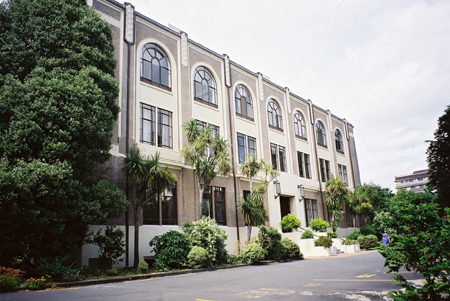
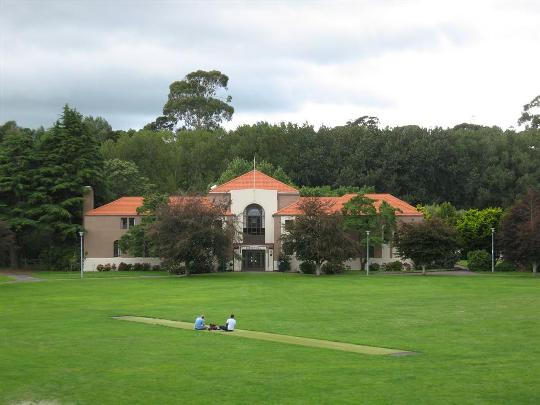
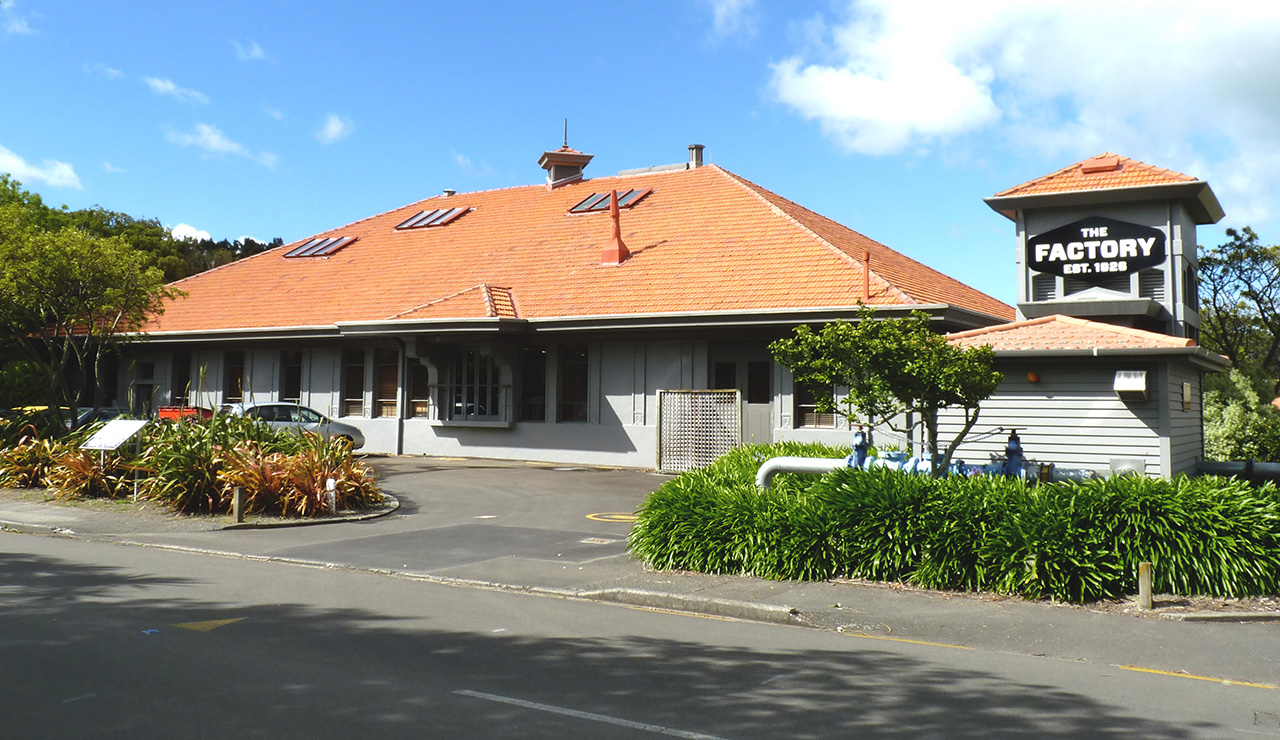
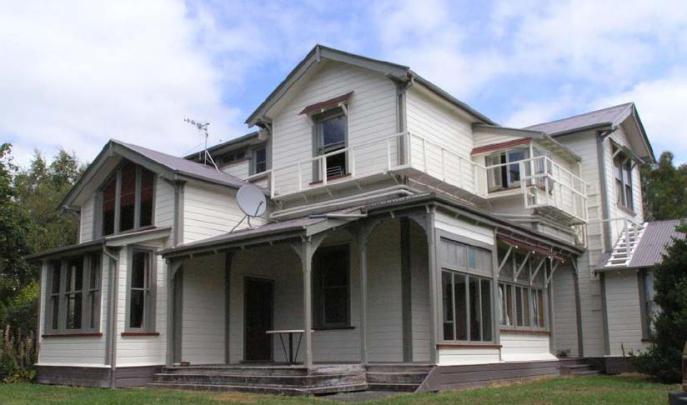
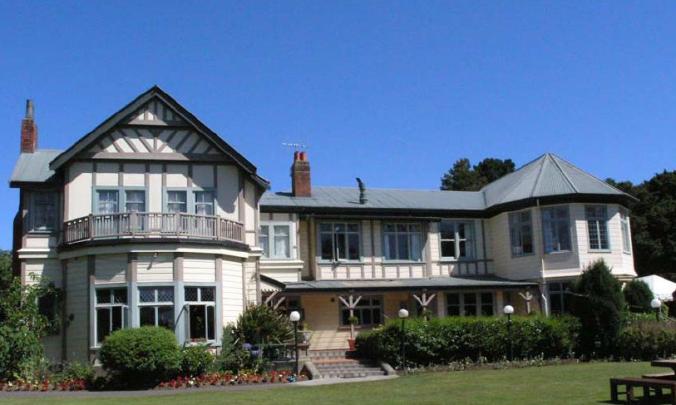
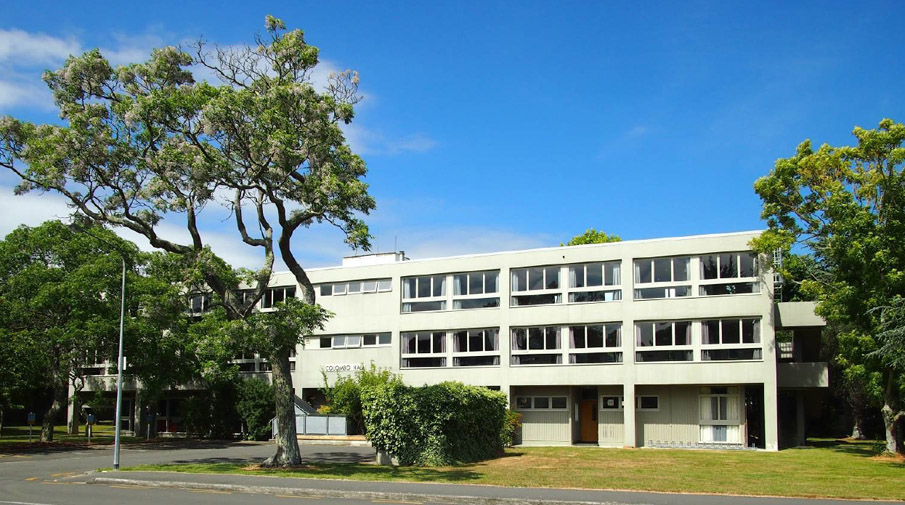
Get the latest heritage news, features and events delivered
straight to your inbox.
