Built in 1901, the Coldstream Homestead and Gardens at 1400 Ealing Road, Coldstream, south of Ashburton, tell stories of an early Canterbury sheep run with ongoing deep connections to generations of the Studholme family, farm workers and the broader community. The Coldstream Homestead and Gardens have aesthetic, architectural, cultural, historical and social significance.
The wider area where the property is situated, just north-east of the Rangitata River, had long been a mahinga kai. At Kai-Whareatua in the Rangitata River mouth area, there was an abundance of ducks, shags, swans, fish, eels, and freshwater crayfish (kōura). Fed by springs, a cold stream previously known as Pakihau-kuku/Pakikaukuku/Pukiakuku – said to allude to the freshwater mussels found there – flowed slowly through wetlands within an area that was later to become the settlements of Coldstream and Lowcliffe. Weka and wild pig were also in abundance there. When the first Pākehā settled at Coldstream, they recorded finding small piles of moa stones near the stream, as well as numerous broken moa bones scattered over a wide area. The land had tī kōuka and kōwhai trees, matagouri and mānuka, but mostly it was covered in tussock and native broom. Wetland areas along the coast were dense with flax, rushes and toetoe. Through colonial settlement, this large area transformed into pastoral and arable land.
Runs 453 and 454 (Coldstream Station) were taken up in 1854 by William Scott and Ernest Gray on around 55,000 acres of mainly flat land sloping down to the coast. They built a totara slab hut and a sod hut (both later burned), and by the early 1860s – prior to his marriage to Margaret MacPherson in 1863 – Ernest Gray had built a replacement double gabled timber homestead, downstream from the original site. However, after only a few years, Margaret was keen for the couple and their young children to move elsewhere. In 1867, John and Michael Studholme, early colonial settlers with a wide property portfolio, bought Gray’s Coldstream Station. In 1868 they appointed C.H. Dowding as manager. Dowding lived mostly in the homestead built by Gray, since the Studholmes were largely absent, and he managed staff, drained wetlands, added cropping and ran 26,000 sheep. In 1878 John and Michael dissolved their partnership, with Michael focusing on Te Waimate Station, and John taking Coldstream and other South Island runs. While John and his family spent more time at Coldstream, it was not an easy time and parts of the large property were sold off. In 1887/1890, when John Studholme junior (known as Jack) took over, the Coldstream Estate was much reduced in size and a progression of new managers and family were brought in to manage the property. Jack’s wife Aline (Alexandra, née Thomson) and young family found the Gray homestead too cold, so in around 1900-1901 they made the decision to build a new home in a sunnier and drier location on top of the terrace. Designs were drawn up by Christchurch architect, J. C. Maddison, and the builder was Peter Gourdie.
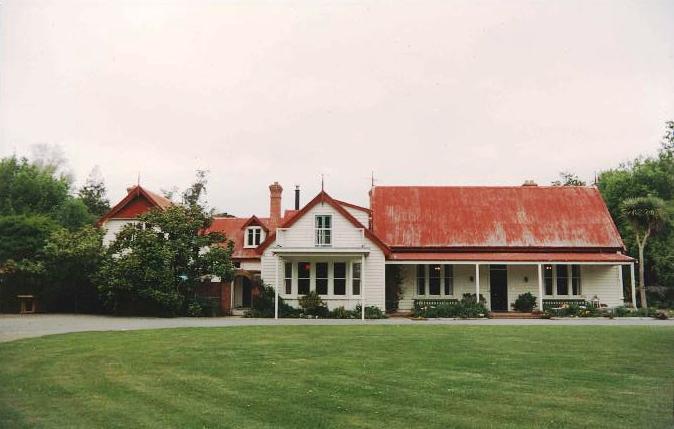
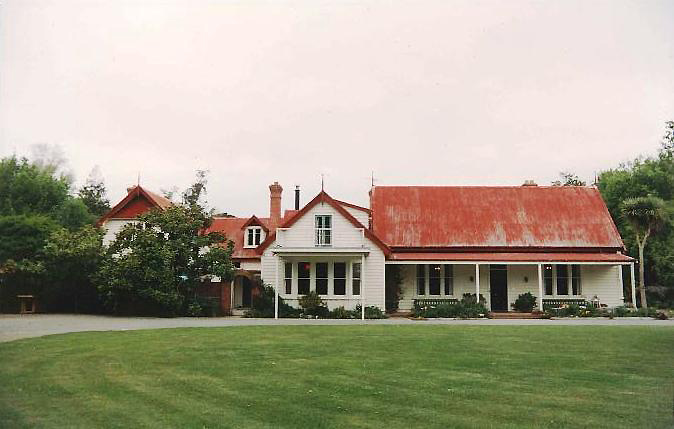
Accessed by a sweeping driveway and set within an established treed garden, the timber homestead has an asymmetrical appearance, both in plan and elevation. This is especially evident on the main (north) elevation, with differing size gables and changing roof lines. At the west side of the north elevation, with a north-facing verandah, is a wing known as ‘the hall’, the interior of which is an impressive 14 by seven metre room with a timber-beamed roof rising nine metres. Appearing like the medieval open halls of England and Europe, the hall is a particularly notable and unusual feature of the house. On the south side of the dining room and drawing room, windows look out over the well-established garden and two ponds.
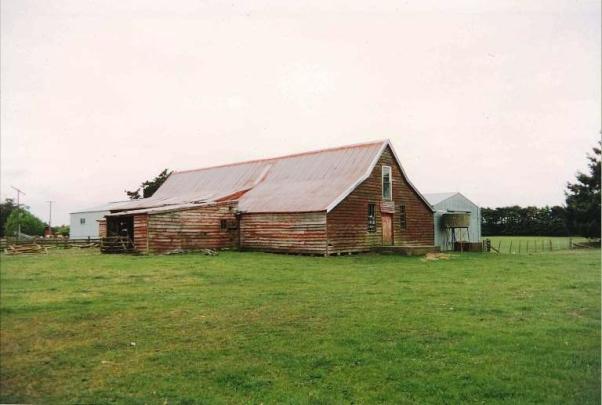
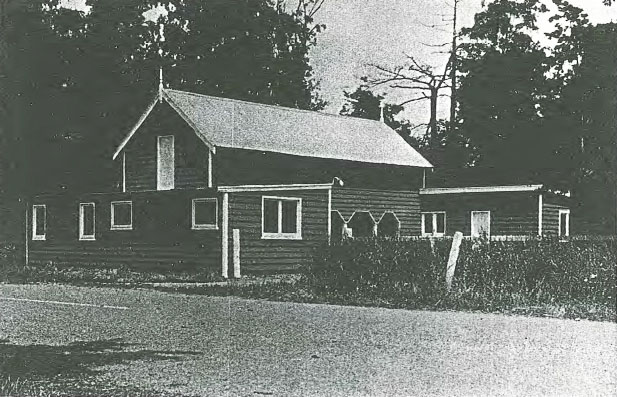
The house had two main bedrooms with dressing rooms, a nursery wing with schoolroom, two upstairs bedrooms, a bathroom and an attic room, and along the south side of the house (overlooking the garden) were four small maids’ bedrooms and pantry. Near the dining room was the kitchen, scullery and maids’ bathroom. Aline Studholme’s contribution to the garden design included winding paths such as a hazel walk, with camellias, bluebells and magnolias. In its early years, the hall served several functions – it was a living and billiards room, and heavy curtains were drawn across the centre to allow for church services to be held at its northern end. Previously such services were held in the Coldstream Woolshed. A particularly sad service was held in the hall in October 1907 after Aline’s unexpected death but happier occasions such as wedding services also took place there. Changes to the house have taken place over time, including the addition of a new bedroom above the office at the end of the north passage and, in 1959, the removal of a large seven-roomed north wing of the 1901 house.
The wider area where the property is situated, just north-east of the Rangitata River, had long been a mahinga kai. At Kai-Whareatua in the Rangitata River mouth area, there was an abundance of ducks, shags, swans, fish, eels, and freshwater crayfish (kōura). Fed by springs, a cold stream previously known as Pakihau-kuku/Pakikaukuku/Pukiakuku – said to allude to the freshwater mussels found there – flowed slowly through wetlands within an area that was later to become the settlements of Coldstream and Lowcliffe. Weka and wild pig were also in abundance there. When the first Pākehā settled at Coldstream, they recorded finding small piles of moa stones near the stream, as well as numerous broken moa bones scattered over a wide area. The land had tī kōuka and kōwhai trees, matagouri and mānuka, but mostly it was covered in tussock and native broom. Wetland areas along the coast were dense with flax, rushes and toetoe. Through colonial settlement, this large area transformed into pastoral and arable land.
Runs 453 and 454 (Coldstream Station) were taken up in 1854 by William Scott and Ernest Gray on around 55,000 acres of mainly flat land sloping down to the coast. They built a totara slab hut and a sod hut (both later burned), and by the early 1860s – prior to his marriage to Margaret MacPherson in 1863 – Ernest Gray had built a replacement double gabled timber homestead, downstream from the original site. However, after only a few years, Margaret was keen for the couple and their young children to move elsewhere. In 1867, John and Michael Studholme, early colonial settlers with a wide property portfolio, bought Gray’s Coldstream Station. In 1868 they appointed C.H. Dowding as manager. Dowding lived mostly in the homestead built by Gray, since the Studholmes were largely absent, and he managed staff, drained wetlands, added cropping and ran 26,000 sheep. In 1878 John and Michael dissolved their partnership, with Michael focusing on Te Waimate Station, and John taking Coldstream and other South Island runs. While John and his family spent more time at Coldstream, it was not an easy time and parts of the large property were sold off. In 1887/1890, when John Studholme junior (known as Jack) took over, the Coldstream Estate was much reduced in size and a progression of new managers and family were brought in to manage the property. Jack’s wife Aline (Alexandra, née Thomson) and young family found the Gray homestead too cold, so in around 1900-1901 they made the decision to build a new home in a sunnier and drier location on top of the terrace. Designs were drawn up by Christchurch architect, J. C. Maddison, and the builder was Peter Gourdie.
Accessed by a sweeping driveway and set within an established treed garden, the timber homestead has an asymmetrical appearance, both in plan and elevation. This is especially evident on the main (north) elevation, with differing size gables and changing roof lines. At the west side of the north elevation, with a north-facing verandah, is a wing known as ‘the hall’, the interior of which is an impressive 14 by seven metre room with a timber-beamed roof rising nine metres. Appearing like the medieval open halls of England and Europe, the hall is a particularly notable and unusual feature of the house. On the south side of the dining room and drawing room, windows look out over the well-established garden and two ponds.
The house had two main bedrooms with dressing rooms, a nursery wing with schoolroom, two upstairs bedrooms, a bathroom and an attic room, and along the south side of the house (overlooking the garden) were four small maids’ bedrooms and pantry. Near the dining room was the kitchen, scullery and maids’ bathroom. Aline Studholme’s contribution to the garden design included winding paths such as a hazel walk, with camellias, bluebells and magnolias. In its early years, the hall served several functions – it was a living and billiards room, and heavy curtains were drawn across the centre to allow for church services to be held at its northern end. Previously such services were held in the Coldstream Woolshed. A particularly sad service was held in the hall in October 1907 after Aline’s unexpected death but happier occasions such as wedding services also took place there. Changes to the house have taken place over time, including the addition of a new bedroom above the office at the end of the north passage and, in 1959, the removal of a large seven-roomed north wing of the 1901 house.