The Mangahao Hydroelectric Power Station has technological, architectural and historical significance as the New Zealand government’s first North Island power station constructed as part of a national initiative providing a steady supply of electricity throughout the country. Completed in 1924, the power station and its penstocks are the most visually accessible extant components of the Mangahao scheme, which was an important precedent for the ultimate establishment of a national power grid. Significant mechanical engineer Frederick Templeton Manheim Kissel (1881-1962) oversaw the realisation of the Mangahao hydroelectric power scheme and was involved with the key, early, government-sponsored projects for power generation.
The Public Works Department (PWD) advocated for the role of the government in providing a widespread and reliable supply of electricity for both urban and rural areas through studies, surveys, and reports created in the early twentieth century. At the time, comparatively modest and isolated generating systems run by local councils or private enterprises provided electricity for specific localities. The PWD focused closely on the development of hydropower to meet the nation’s needs. This resulted in the design and construction of the first government-funded hydroelectric power station at Lake Coleridge in Canterbury (1911-15), under the direction of resident water engineer Frederick Kissel.
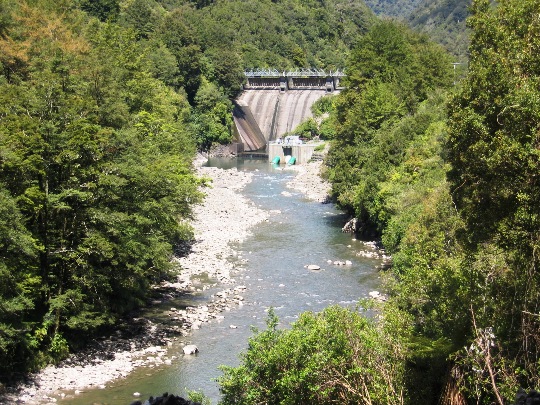
Survey work for the Mangahao hydroelectric power scheme began in 1915, but the realisation of Kissel’s plan would not begin in earnest until after World War I. In April 1921, over 200 men were working on the project; by February 1923, almost 900 men worked in eight hour shifts covering twenty-four hours per day. On 3 November 1924, Prime Minister William Massey officially opened the power station in a day-long celebration attending by numerous national and local officials. The scheme also included dams and reservoirs, a tunnel, an open surge chamber, steel penstocks and a tailrace.
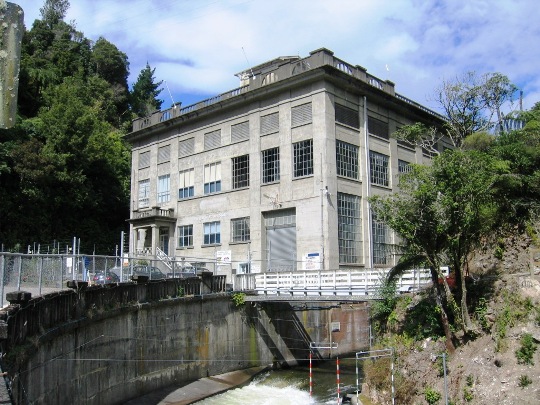
The imposing concrete powerhouse at Mangaore is 84 metres long by 24.4 metres wide by 16.1 metres high. The exterior style was typical for industrial architecture of the age with its largely utilitarian character enlivened by classical elements: a raised entrance portico on the north wall, a decorative balustrade along the roofline just above the cornice, and the three levels of regularly spaced window openings (fitted with steel sash) organized into vertical bays separated by plain pilasters rising up from the ground through to the cornice.
The powerhouse and its tailrace appear to remain largely intact to their period of original construction, which included the straightening of a bend in the Mangaore Stream in the vicinity of the powerhouse. Additional seismic upgrades, including the replacement of a portion of the roof parapet and the construction of two transverse sheer walls, began in 2015.
The Public Works Department (PWD) advocated for the role of the government in providing a widespread and reliable supply of electricity for both urban and rural areas through studies, surveys, and reports created in the early twentieth century. At the time, comparatively modest and isolated generating systems run by local councils or private enterprises provided electricity for specific localities. The PWD focused closely on the development of hydropower to meet the nation’s needs. This resulted in the design and construction of the first government-funded hydroelectric power station at Lake Coleridge in Canterbury (1911-15), under the direction of resident water engineer Frederick Kissel.
Survey work for the Mangahao hydroelectric power scheme began in 1915, but the realisation of Kissel’s plan would not begin in earnest until after World War I. In April 1921, over 200 men were working on the project; by February 1923, almost 900 men worked in eight hour shifts covering twenty-four hours per day. On 3 November 1924, Prime Minister William Massey officially opened the power station in a day-long celebration attending by numerous national and local officials. The scheme also included dams and reservoirs, a tunnel, an open surge chamber, steel penstocks and a tailrace.
The imposing concrete powerhouse at Mangaore is 84 metres long by 24.4 metres wide by 16.1 metres high. The exterior style was typical for industrial architecture of the age with its largely utilitarian character enlivened by classical elements: a raised entrance portico on the north wall, a decorative balustrade along the roofline just above the cornice, and the three levels of regularly spaced window openings (fitted with steel sash) organized into vertical bays separated by plain pilasters rising up from the ground through to the cornice.
The powerhouse and its tailrace appear to remain largely intact to their period of original construction, which included the straightening of a bend in the Mangaore Stream in the vicinity of the powerhouse. Additional seismic upgrades, including the replacement of a portion of the roof parapet and the construction of two transverse sheer walls, began in 2015.