The Manawatū region was settled by the Rangitāne people, whose ancestors were based in Hawke’s Bay, but the iwi gradually migrated south, to Tāmakinui-a-Rua (around present-day Dannevirke), Manawatū, Wairarapa, Te Whanganui-a-Tara (Wellington) and Wairau in the South Island. There were many seasonal and permanent pā and kainga dotted along the Manawatū River in the area of what became Palmerston North. Indeed, Palmerston North was the site of a Rangitāne pā called Papaioea. Aside from the river, other resource-rich features of the area were its forest and fertile river flats. While many pā were abandoned by the 1820s, such as Te Motu o Poutoa (near Massey University’s Manawatū campus) which was destroyed in an attack by Ngāti Apa, it appears other nearby kainga were occupied by Rangitāne or others until the mid-nineteenth century.
The negotiation process between iwi and the Crown for purchase of the area was protracted. However, the Massey University site was eventually sold to the Crown in 1864, along with the rest of Te Ahuaturanga block. Soon after in 1866, Palmerston township (later renamed Palmerston North) was surveyed and earnest European settlement began. However, settlement only gained momentum in the 1870s when the government’s immigration and public works scheme enticed greater numbers of people to the area. Palmerston North’s surrounding area, including the land on the opposite side of the Manawatū River, was soon cleared for farming. From 1871 to 1900 Sir James Prendergast (1826–1921), the Chief Justice of New Zealand who retired in 1899, owned the large Tiritea/Turitea Estate at Fitzherbert. The Palmerston North Borough Council purchased part of that property, from Percy McHardy, in 1928 for the purpose of then donating the land to establish a North Island-based agricultural college.
Massey University in the early to mid-twentieth century
From the 1880s there was demand for an agricultural college to be established in the North Island, to meet the needs of its farming community and to help New Zealand keep-up with international developments in agricultural practices. However, it was several decades before any real progress was made. Geoffrey Sylvester Peren (1892–1980) was appointed to the Chair of Agriculture at Wellington’s Victoria University College in June 1924 and he soon started lobbying for a single, specialist North Island agricultural college. His newly appointed Auckland University College colleague William Riddet (1896–1958) quickly joined Peren in promoting the idea to Prime Minister William Ferguson Massey (1856–1925). Massey supported creating a college to function alongside the South Island’s agricultural college at Lincoln in Canterbury (opened in 1880). In 1926 the New Zealand Agricultural College Act amalgamated the Wellington and Auckland agricultural colleges. The name was changed in 1927 to commemorate Massey and his role in the institution’s creation. Both Peren and Riddet were foundation staff. Courses began in 1928 and since then the institution has expanded, setting up additional campuses around the North Island, as well as offering extramural courses.
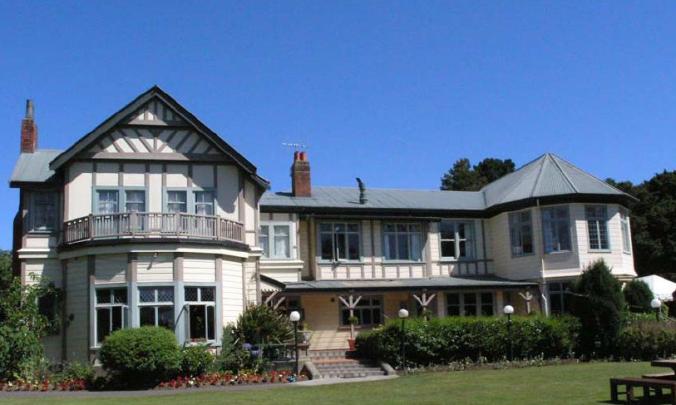
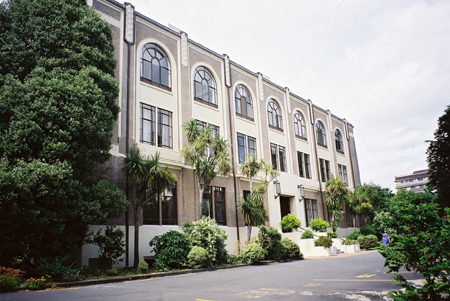
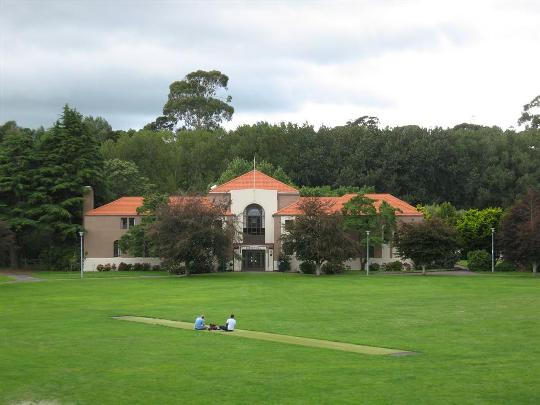
For its first few decades activities at the Manawatū Campus were focused on the Oval and its surrounding buildings, such as the Main Building, the Refectory and Wharerata. However, in the mid-twentieth century rapidly increasing demand for tertiary education led to a major second phase of construction, completed between 1963 and 1971, at the newly named Massey University of Manawatū (soon shortened to Massey University) campus. Indeed, Massey University Colombo Hall and another contemporary Colombo Plan building, the Riddet Building (opened 1966), were viewed as, ‘in effect, the first stage of [the] comprehensive development scheme’ at Massey University. The developments consisted of mostly MoW designed buildings positioned around the central open space of the Concourse and also included Warren and Mahoney’s Student Centre (1966–68).
In this period the demand for tertiary education from ‘baby boomers’ meant Massey University, like others around New Zealand, was also diversifying its curriculum through the creation of its faculties of Veterinary Sciences, Science, Humanities and Social Sciences. For example, there were five courses for the 500 students to pick from in 1960, rising to 28 courses and 2000 students by 1970. Therefore, in addition to Massey University Colombo Hall, many accommodation buildings were constructed or acquired during this growth period, including Fergusson Hall (1964), Elliot House and Fitzherbert/Bindaloe House (1966), and Walter Dyer Hall (1969). City, Egmont, and Rotary Courts (1970–71), as well as Kairanga Court (1977), were all designed by William (Bill) Alington (1929–).
The Colombo Plan and international students at Massey University
Massey University had connected on an international level from early in its history. However, early engagement was mostly because the campus was a ‘stop on the circuit for international visitors’, including academics and dignitaries. Students also visited, but it was only after World War Two that small numbers of Chinese and Indian students appear to have begun studying there. This was soon to change.
A rapid increase in demand for New Zealand’s mid-twentieth century higher educational offerings was not restricted to domestic students, thanks mostly to the Colombo Plan. The Colombo Plan was created in World War Two’s aftermath and in the context of the perceived threat of Communism’s spread, the Cold War, and de-colonisation in Asia. It had similar national and international security motivations to the Australia, New Zealand and United States treaty (ANZUS, signed 1951) and the South-East Asia Treaty Organisation (SEATO, established 1955). However, New Zealand is said to have ‘put more effort into the Colombo Plan’ than SEATO because it focused on stopping Communism’s spread through Asia by enhancing living conditions, rather than by defence. The scheme worked ‘[n]ot by imposing the will of the developed countries [such as New Zealand], but instead by hearing from the Asian nations what their needs were, and then working towards providing solutions’. Indeed, the Colombo Plan was not a single plan, but promoted the creation of individual cooperative arrangements between countries, based on ‘mutual endeavour and respect’, to achieve the overarching goals. For Massey University, in particular, the Colombo Plan is said to have been ‘vital in establishing the University’s links in Asia’.
The Colombo Plan (originally known as the Colombo Plan for Cooperative Economic Development in South and Southeast Asia) was different from contemporary treaties because it was underpinned by a certain amount of ‘benevolence and idealism’. It was developed by Commonwealth Foreign Ministers and finalised at Colombo, Sri Lanka, in 1950. When implemented in 1951, this included direct aid, but also the proffering of expertise and training opportunities, from ‘developed’ countries – Australia, Canada, New Zealand and the United Kingdom – to India, Pakistan and Sri Lanka. This list soon expanded beyond the British Commonwealth, with Japan and the United States of America joining to assist, among others: Cambodia, Indonesia, Laos, Malaya, Myanmar, Nepal, the Philippines, Thailand, Vietnam and Singapore. It has been said to be ‘one of history’s greatest programmes of international co-operation’ because it fostered ‘increased productive capacity and economic activity…[as well as] confidence and hope’. It has also been argued that involvement in the Colombo Plan helped mid-twentieth century New Zealanders shift their mind-set and begin to primarily see themselves as part of the Asia-Pacific region, rather than, first and foremost, a far-flung outpost of Britain.
New Zealand was not able to match the same amount of capital aid as the other donor/developed countries, so instead focused on providing expertise and training. However, on reviewing two decades of participation in the Colombo Plan, in 1971 Prime Minister Keith Holyoake (1904–1983) highlighted that New Zealand did not scrimp in any of the main modes of assistance under the Colombo Plan: ‘a country of fewer than 3 million people, has contributed more than $40 million…[o]ver 3,000 students have come to New Zealand for higher education and…[m]ore than 350 New Zealand experts have undertaken long-term assignments in Colombo Plan countries’.
Holyoake appears to have had considerable interest in promoting the Colombo Plan, which is indicative of its contemporary political importance. Holyoake presided at many events and occasions associated with the Colombo Plan, including making a point of personally meeting the 3000th Colombo Plan student to come to New Zealand. Colombo Plan Day (1 July) was established in 1961 and the 1971 celebrations were hosted by Holyoake at Parliament Buildings, Wellington, in conjunction with Mayoral receptions in Auckland, Christchurch and Dunedin. Indeed, publicity characterised New Zealand’s involvement in the Colombo Plan to the extent that it is said to have amounted to a ‘preoccupation with publicity’.
For the decade starting from March 1951, almost 900 Colombo Plan students travelled to New Zealand. A notable early Colombo Plan Massey University student was Dr Verghese Kurien in 1952-53, who was awarded the World Food Prize in 1989 for his dairy industry work in India. The process for selecting students like Dr Kurien involved them being nominated by their home country and, if selected by New Zealand’s Department of External Affairs, the New Zealand government then paid for their study and stay. The process of selecting Colombo Plan scholars was one reason given for the considerable extension of New Zealand diplomatic representation in Asia from the mid-1950s, which went from ‘non-existent’ to accounting for around half of all New Zealand’s diplomatic posts.
Early experience had demonstrated that New Zealand’s most effective Colombo Plan contribution was providing training opportunities. Therefore, from the late 1950s there was a concerted effort to cultivate this further and agricultural training was identified as a main area of focus, particularly dairying. However, by early 1960 Massey University had limited capacity to cope with local and international demand for their degree and diploma courses and it was increasing. In 1957 there were 410 students either taking degree or diploma courses at Massey University, but even with restrictions in place the university estimated that number would rise to 600 by 1963. The Colombo Plan scholarship programme raised the profile of New Zealand universities abroad and numbers of privately funded international students were also increasing. Therefore, Massey University lobbied the Department of External Affairs for additional educational and accommodation facilities.
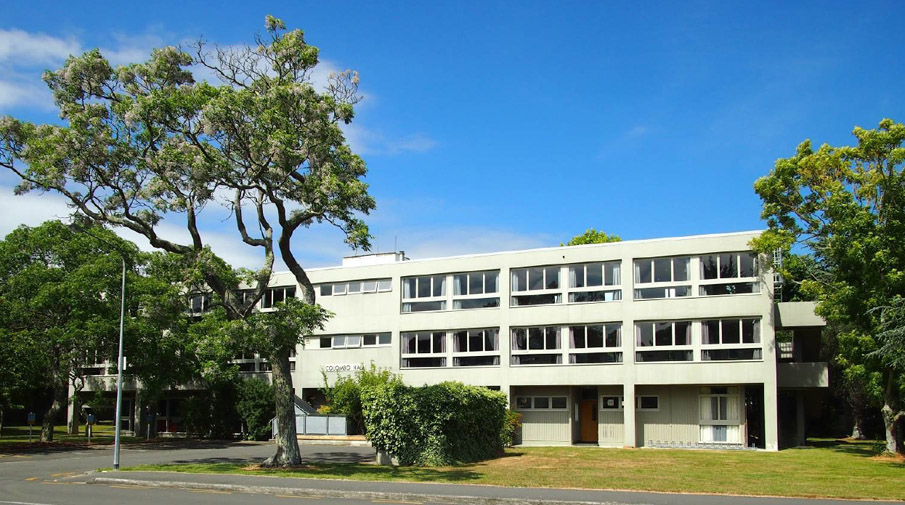
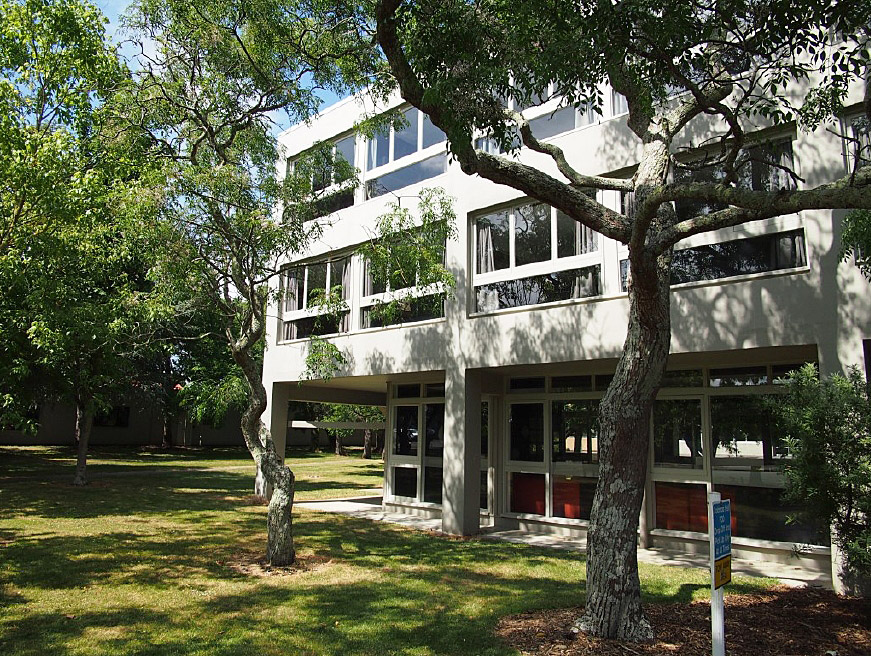
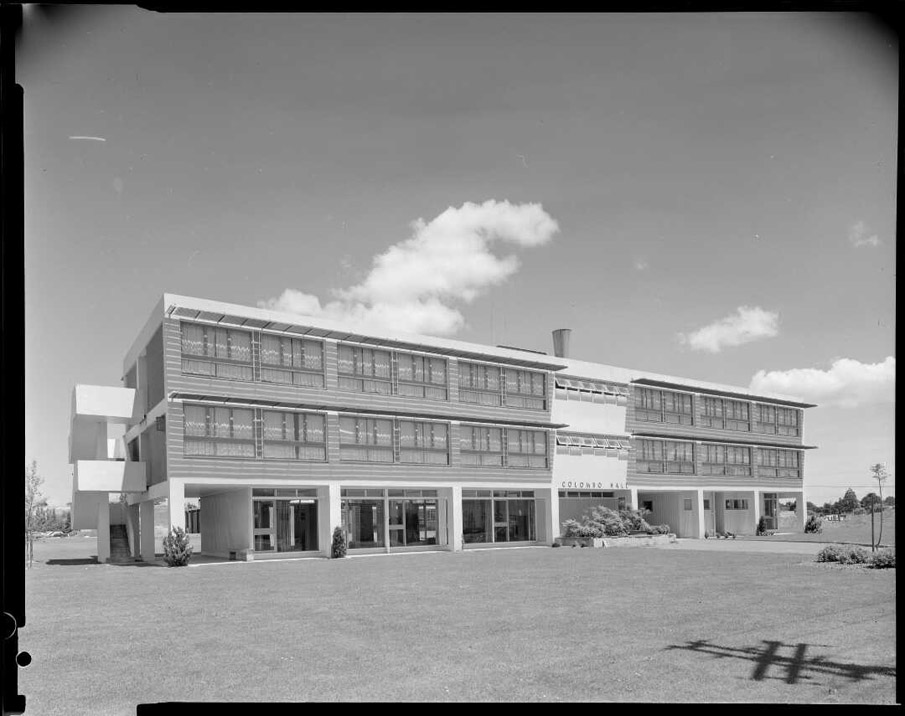
Principal Alan Stewart (1917–2004) stated the ‘most important single facility required for better provision for Colombo Plan students is hostel accommodation’. At the time over half Massey University’s students were housed off-campus in private accommodation and it was difficult for domestic students, let alone international ones who had varying levels of English language skills, to find suitable homes. Along with the construction of Riddet Building, which was a dairy technology unit, a new hostel at Massey University was announced by the government in September 1960 as one of the main ways of increasing New Zealand’s national capacity to host Colombo Plan students. The Department of External Affairs wanted Massey University Colombo Hall to be ‘a worthy and distinctive addition to the university hostels of New Zealand’. Planning by the MoW began in earnest in 1961 and an initial concept drawing was featured on the cover of Building Progress in September 1962 as part of the publication’s profiling of ‘outstanding new project[s]’. Construction on the basement level had begun by early December 1962.
Although partially occupied from February 1964, Massey University Colombo Hall was officially opened on 4 March 1964 by Holyoake. Other dignitaries at the well-publicised event included the High Commissioner for India VK Ahuja, William Henry Brown (1899–1967) who was the Member of Parliament for Palmerston North and Sheppard, as well as Department of External Affairs staff, County Councillors and a large crowd. The event ‘began as a solemn, dignified ceremony [and] ended up as a hilarious piece of slap-stick’, due to some student antics which Holyoake played along with. A spokesperson, dubbed ‘Lady Massey’, reprimanded the Prime Minister for letting the architects orientate the building incorrectly and not opening all the building’s facilities properly. Holyoake conceded that he could not legislate to change the sun’s position, but he was happy to unveil a telephone and a toilet roll holder.
Colombo Plan student housing became a focus around the country during the 1960s. A hostel in Christchurch, Warwick House (demolished 2011), had been purchased in 1960 and accommodation at other universities followed Massey University Colombo Hall, which was the first purpose-built Colombo Plan hall of residence facility completed. The others included additions to existing hostels at Otago University (Arana Hall/College) and Victoria University of Wellington (Weir House), and construction of International/Whittaker Hall at Auckland University, which were all completed in 1968. Lincoln University’s Colombo Hall opened in 1970.
Cognisant of the potential for international students to experience culture-shock, the Colombo Plan student accommodation facilities endeavoured to provide suitable, culturally safe spaces and hospitable home environments for international students. Being divided into single bedroom units, replete with bed, storage and study desk, meant students at Massey University Colombo Hall had a certain amount of privacy. The Common Room was a shared space, especially busy around dinner time, and the scene of group events, like ‘Asian meal night’. An initial challenge for some international students were the bathroom facilities (also communal), which were a new experience. Although originally a male-only hall (female visitors allowed until 10pm), Massey University Colombo Hall was not segregated further by being exclusively for Colombo Plan students. For example, in its inaugural year Massey University Colombo Hall was home to domestic and Australian students, as well as those from Indonesia, Malaysia and Sri Lanka. An early resident remembers Colombo Hall as ‘a happy comfortable place where everything worked well, and where lifelong friends were made’.
Of course, the classes the international students took were also integrated and it seems that most of the Colombo Plan scholars embraced ‘Kiwi culture’ and added diversity to New Zealand student life. One Massey University Colombo Hall resident who attended Massey University from 1965 to 1968, Dr Young In Park from South Korea, noted that language was challenging aspect of classes. However, his time at Massey University was:
‘…memorable because there were lots of outside activities such as social and hobby clubs, a Maori culture study group and international programmes. Drinking cold beer, eating pork trotters and singing Korean songs on Friday evenings always made us feel as if we were part of the young generation, and this really compensated for our hard course work’.
This also highlights that cultural exchange was a feature of New Zealand’s participation in the Colombo Plan. In 1961 Holyoake noted that through ‘the presence of these young people amongst our own, we have the opportunity to learn from countries whose cultural inheritance is in many ways richer and more varied than ours’. A Colombo Hall resident in the early 1970s agreed the benefits were ‘incalculable both to the [Colombo Plan] students and New Zealand in terms of goodwill and “soft” diplomacy. It was also an invaluable multicultural experience for locals like me’.
In the context of a shift in aid focus to the Pacific, as well as the beginnings of user-pays education, New Zealand stopped taking Colombo Plan students in the 1980s. Also, the Colombo Plan’s training role was increasingly incorporated into bilateral aid programmes instead. However, New Zealand remains a Colombo Plan member country, albeit considerably less actively than during the Colombo Plan’s peak decades: the 1950s to 1970s. In 2018 the focus of Colombo Plan activities was ‘public policy formulation in an environment of globalisation and market economy, private sector development as a prime mover for growth and in drug abuse and prevention in member countries’.
Beyond the Colombo Plan at Massey University Colombo Hall
Colombo Plan students appear to have resided at Massey University Colombo Hall into the 1970s, but had ceased by the time New Zealand officially stopped offering Colombo Plan scholarships. Despite only hosting Colombo Plan students for around a decade, the hall’s ‘distinct’ international character continued. However, other changes to hall policy in this period included opening it up to female students, which had occurred by 1974. Then, from 1976 first years students were prioritised for residency, in line with the university’s goal of attracting more students.
This would appear to have worked because in the mid-1980s , as was the case in the 1960s, Massey University was faced with increased demand for accommodation, particularly from first year students traveling from beyond Palmerston North to study there. A delayed government policy on student housing meant construction of a brand new hall of residence was shelved, but the housing problem was assessed by the university as being serious and in need of an immediate solution. Therefore, to ease the problem an addition to Massey University Colombo Hall was designed by well-known local architect David Chapple and constructed circa 1984 by prominent Palmerston North building firm, McMillan and Lockwood Limited.
Anyone who has lived in a university hall of residence is more than likely to have experienced a range of student antics. Massey University Colombo Hall, considered ‘rather elite’, appears to have been no different. One supervisor in the mid to late 1970s, who has fond memories of the place, remembers the long, uninterrupted, hallways being perfect for pumpkin rolling, and sheep seem to have made their way into the hall at various times. Former residents recall a student, in a compromising position, being locked outside and attempting other means of after-hours entry, but also that in the early years the rooms had no locks, meaning projectiles could be tossed in at inopportune moments to interrupt ‘amorous adventures’. Of course, not all these experiences were without consequences or injury, with supervisors also needing to take some students to hospital to be ‘patched up again’.
Like most of Massey University’s other Manawatū Campus halls of residence, Massey University Colombo Hall currently (2018) caters for all genders, and is open to domestic and international students. It is part of the Turitea Community Halls, a group of halls of residences, right in the heart of the Manawatū Campus and adjacent to many academic buildings. The building’s two wings offer single occupancy rooms for 66 students.